
Memories Matter
Featured blog Posts

READ THE LATEST POSTS
Life Story Links: April 19, 2022
If you're into family history, memoir, and memory-keeping, you'll want to check out this week's list of stories hand-picked by personal historian Dawn Roode.
“As for how to actually organize your memoir, my final advice is, again, think small. Tackle your life in easily manageable chunks. Don’t visualize the finished product, the grand edifice you have vowed to construct. That will only make you anxious.”
—William Zinsser
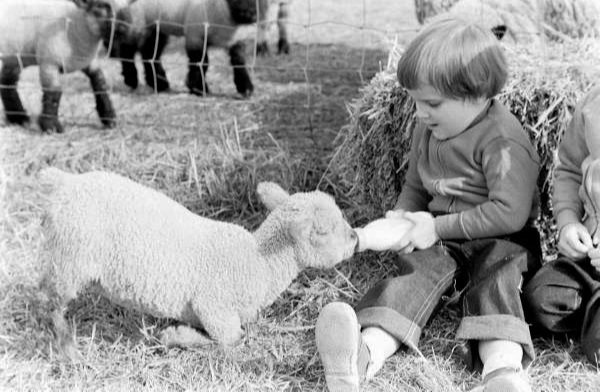
Vintage black and white photograph of a young girl in Illinois, spring 1962, by Francis Miller for Life magazine, © Time Inc.
History in our homes…
SUGGESTED INTERVIEW QUESTIONS
Mali Bain, a custom publisher in British Columbia, shares ten open-ended questions to ask in a family interview session so you may “naturally follow up on ideas without struggling to find a suitable next question or getting lost in brain fog.”
BEST PRACTICES
Before any family history interviews can begin, there’s a little prep involved. Read how professional oral historians set the stage for effective storytelling and secure saving.
THE FAMILY KNOWLEDGE GAP
A new survey from Ancestry.com found that while more than half (53%) of Americans can’t name all four grandparents, 66 percent of respondents said they want to learn more about their family history and over half (51%) want stories about when their ancestors were young.
“THE ITEM IS THE VEHICLE TO THE STORY”
“I can say this firmly: Along with your stories, your family members are going to want some of your possessions. They just might not be the ones you'd expect.” Matt Paxton on the sometimes surprising stuff of legacy.
HER GRANDFATHER’S STORIES
“He had taken to telling his grandchildren many, many stories. Unfortunately, at that time, we brushed it off, even choosing not to sit with him at restaurants, so that he would not ‘bore us’ with yet another story. But here we were—confronted, for the first time, by death. This protector, this legend and all his stories had a deadline.”
MAKING TIME
Think you’re too busy to write about your life? Think again. Here are three easy ways to make memoir writing more approachable—and more efficient, so you can finally fit it into your busy schedule.
HER UKRAINIAN HISTORY
In light of recent world events, StoryCorps looked into their online archive to explore Ukrainian voices recorded with their interview app. Here’s one:
…and history in a broader sense
LEGACY OF SILENCE
“A society can forget on a mass scale, not when the government imposes amnesia as a political project, but when people refuse to look within—to dig into the messy and complex family biographies that turn memory into a landmine, and forgetting into a psychological salve.” A compelling piece about historical reconciliation and one man’s discovery of a lynching in his family.
JEWISH BEACON HISTORY WALK
In researching the origins of the first and only synagogue in Beacon, New York, historian Anna Brady Marcus and her team uncovered a rich history of Jewish enterprise in the town. To coincide with its centennial, they have released a digital walking tour derived from a rich catalog of oral history interviews.
What we keep
OTHER WRITER’S WORDS
“If keeping a journal would be a way to look in the mirror and make an honest appraisal of myself, keeping a commonplace book is more like looking at myself out of the corner of my eye.”
PHONE PHOTOS
“You’re you, and your pictures are yours, and what you bring to a photograph is not separate from it.” So when attempting to curate your digital gallery, “scroll your roll, and find the pictures that please your eye and touch your heart and stir your feelings because you’re you”—and keep those.
DO YOU NAME YOUR POSSESSIONS?
“Some researchers believe that people write a biography of themselves with things, that our life stories aren’t complete without the items that matter to us”—but do we really need to name those things?
THE WELTY COLLECTION
A trove of letters from Eudora Welty’s family that has been made newly available to the public provides insight about the author’s parents; her siblings and their families; her grandmother and great grandmother and their children.
IS THAT GRANDMA?
How fun to follow the lost-and-found journey of a family photo album via this Twitter thread (click through to read the full thread):
Personal essays of note
WHOSE STORY IS IT?
“Day had written his family history after conducting archival research and reading the relevant sociocultural experts; I wrote mine after growing up in my family.” Tad Friend on a relationship reconsidered by reading between the lines.
KNOWING NIRVANA’S FRONTMAN
“‘Who put these fingerprints on my imagination?’ Elvis Costello once sang. I didn’t want someone else’s fingerprints on my memories [of Kurt Cobain],” Michael Azerrad writes in this New Yorker personal history column.
AN IMPULSE TO CONNECT
In this personal essay on Oldster, Robert Burke Warren recalls an impromptu visit he made to his estranged grandparents at 19. He writes of connection and gratitude and “compassion delayed.”
In the books
BACKDOOR MEMOIRS
“When writers get away from what’s going on inside their head, they just might see their own life in a new light and find something universal in the personal”: nine nonfiction authors who set out to investigate the outside world and ended up finding themselves.
BOOK REVIEW OF NOTE
“Ancestor Trouble represents decades of research into genealogic records, genetic science, and the cultural history of ‘ancestor hunger’ and reverence—as well as [Maud] Newton’s own coming to terms with how to face and honor her family history,” reads a review on NPR. This one in the NYT describes “the preoccupation of the entire book” as “the periphrastic construction of identity itself.”
...and a few more links
Read an excerpt from Osman Yousefzada’s memoir, The Go-Between: A Portrait of Growing Up Between Different Worlds
Austin–based video biographer Whitney Myers is profiled in this regional magazine Q&A.
A life documented: Winkfield, an enslaved man in colonial Virginia
Tech startup uses artificial intelligence to enliven family photographs.
The unique challenge of designing a book by incarcerated writers
Ohio mother and son pen personal history book about mom’s memories of living through Nazi-occupied France.
What the New York Public Library is doing to save the sounds of the early 20th century.
How to save time with these eight translation tools for genealogy.
Short Takes

Life Story Links: February 18, 2020
Vivian Gornick's book recommendations and Dani Shapiro's podcast; finding meaning in our—and our parents'—memories; capturing stories in words and pictures.
“History isn’t about dates and places and wars. It’s about the people who fill the spaces between them.”
—Jodi Picoult

Vintage valentine courtesy the Miriam and Ira D. Wallach Division of Art, Prints and Photographs: Picture Collection, The New York Public Library. “Love’s message.” New York Public Library Digital Collections.
Looking Back, Finding Meaning
“THE LAST CONVERSATION”
In the latest installment of The New Yorker Documentary series, Robert Kornberg examines his parents’ partnership through the lens of its ending. “The film, which animates the couple’s life through a stream of archival photos and videos, crescendoes to the moment when Robert visits Sarah [who has Alzheimer’s] to deliver the news of Isidore’s death.”

The difficult questions of dementia: How does a son tell his mother, who has been diagnosed with Alzheimer’s, about the death of her own husband? Listen to his recounting of the experience in the 10-minute short documentary “The Last Conversation.” Photograph courtesy “The Last Documentary,” The New Yorker Documentary series.
THE GIRL SHE ONCE WAS
“Without an archive, where is my evidence? What can I point to and declare: Those first twenty years of my life mattered?” Patricia Fancher writes. “I want someone to tell a story of an outspoken little girl, willing to take risks. But I’ve lost those memories and I have no family to tell me those stories.”
MY BIRTHDAY WISH
On the occasion of my fiftieth birthday, I decided to use social media for some story sharing—well, to ask for stories for my birthday, that is. Spoiler alert: The gifts I received in response were more touching and more generous than I ever could have anticipated (thank you!).
Collecting Stories
TRANSFORMATIVE STORYTELLING
Since 2012 students at Colby College in Maine have been visiting a retirement home to write residents’ biographies as part of the volunteer-based Legacy Storytellers. The intergenerational relationships that ensue are worth even more than the resulting books.
“COURTSHIP, MARRIAGE...AND MURDER”
A last minute offer of a cache of family letters, when finishing up a family memoir, led Massachusetts–based personal historian Marjorie Turner Hollman on the path of learning about an unsolved murder in her family.
PORTRAITS OF LIFE
“Each interview has been a journey in its own right and I listened to each individual’s life story as I photographed them. It was like taking a ride on the ‘train of life,’ trading significant and sentimental moments from their past,” says photographer Giuseppe Della Maria, creator of coffee table book Portraits of Tuscan Centenarians.
Recent Recommendations
READING LIST
These five books that made a difference in Vivian Gornick’s writing life will likely make a difference in yours, as well, with lessons including how to write a personal essay and how to find an organizing principle for a short biography.
FAMILY SECRETS
Season three of Dani Shapiro’s “Family Secrets” podcast launched this month. The show, derived from her wildly popular memoir of the same name (which I highly recommend), is worth a listen for a variety of reasons, from Shapiro's soothing voice to her warmly pointed interviewing style, from the intriguing stories to her well-chosen guests who, of late, are often memoir writers themselves (secrets, it would seem, make for fertile fodder).
...and a Few More Links
StoryCorps stories to celebrate Black History Month
Can a presidential memoir (even a ghostwritten one) give an honest picture?
Preserving family recipes is an act of love.
Short Takes
Dawn Roode’s curated roundup for the week of Sept. 23, 2026, is overflowing with recent reads on memoir, life story writing, and family history preservation.