
Memories Matter
Featured blog Posts

READ THE LATEST POSTS
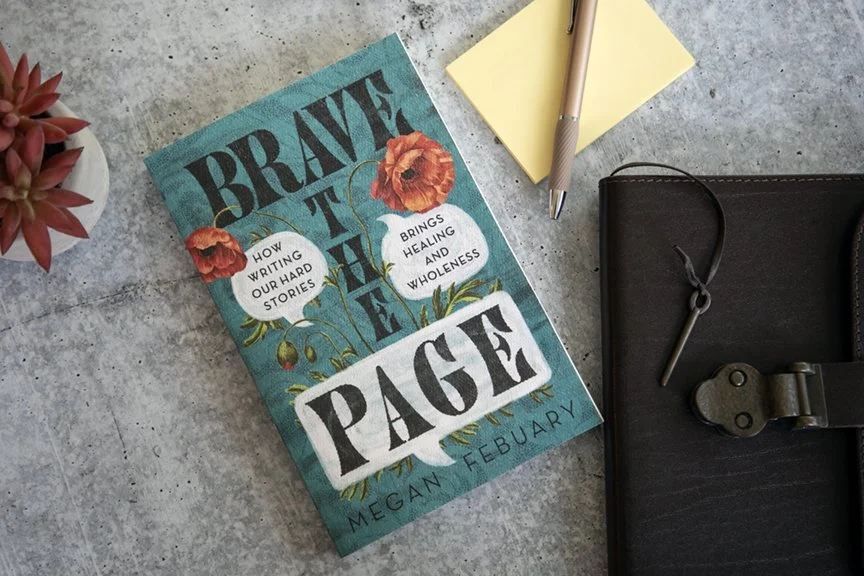
A new book to help you write the hard stories
Brave the Page by trauma-informed writing coach Megan Febuary shares how to probe memories, write about your hard experiences, and find healing.
Brave the Page: How Writing Our Hard Stories Brings Healing and Wholeness by Megan Febuary was released in June 2025 (Baker Books).
While many of my clients come to me wanting to undertake personal history interviews to capture their stories, others endeavor to write their stories themselves—with a little help. In those instances, I act as a memoir coach, meeting them at whatever stage they are currently at by providing guidance, support, and editing. When their stories delve into traumatic experiences from their past, we inevitably have to slow things down and focus as much on self-care as on the writing. That often comes as a surprise to them.
Writing hard stories is…well, hard. But as Megan Febuary puts forth in her new book, Brave the Page (Baker Books, June 2025), doing so may also bring healing and wholeness.
Inside “Brave the Page”
In Brave the Page, Febuary shares more than once that “story healing,” as she calls it, has nothing to do with being a writer—rather, “it is about paying attention to the stories within and digging into the deep questions that our stories ask of us.” Sound scary? It can—and perhaps, should—be: Going deep and writing about trauma will inevitably make one feel some of that trauma again; as the title of her book suggests, you’ll need to be brave.
What Febuary offers up in this book is a whole lot of support. That support takes the form of:
inspiring personal stories
research-driven approaches to self-care and trauma-focused writing
gentle encouragement (including a mantra at the beginning of each chapter)
and plenty of guidance (the writing prompts are generative and clear, and will certainly get your pen moving across the page).
There are moments in the book where, if you haven’t been in therapy, you may feel thrown by some of the psychology jargon (attachment styles, inner child healing, trauma responses)—but don’t be put off by this. In every instance that the author describes the rationale behind her approach to story healing, she (a) footnotes her references if you’d like to dig further; and (b) perhaps more importantly, describes how these concepts have played out in her own life and writing. There is an autobiographical bent to the book that lays the foundation for all the guidance and writing prompts that follow.
Are you ready to write about your trauma?
Febuary is deeply knowledgable about writing about trauma. She has journaled since her youth and braved the page quite literally when she began putting words to her shame around a childhood diagnosis of scleroderma, and later to abuse she suffered as a girl and sexual violence as an adult. She earned her master’s degree at a school that specialized in narrative-focused trauma care, and she “researched the body as storyteller, learning how it becomes the gatekeeper for the stories too tender to address until we are emotionally available for them.”
Brave the Page, I hope, will help you know when you are emotionally available for your own hard stories, as well as how to support yourself and heal while doing so. It will teach you how to be a “compassionate witness to your life” and to feel safe while doing the tender work of probing your memories.
Do you feel like you need permission to write about your challenges? Permission to put words to your feelings of shame? Permission to claim your story as your own? Permission to go slow—to unbury memories that have been long hidden, but at your own pace? You’ll find all that permission and more here.
Your story is not finished. It is ever-evolving, and writing about it, Febuary describes, is a “spiritual progression.”
And you must keep at it, even when it feels hard. “This work of using our voices,” she writes, “is a muscle we must train, and it becomes stronger each time we do it.”
Megan Febuary and I are in agreement: Writing through your trauma will be hard—but it will also be transformational. I recommend picking up a copy of her book to be your companion on your personal story healing journey. And she hopes that your copy will be well-loved and visibly used: “May [it] be dog-eared and highlighted, may its pages be torn out and posted as reminders, and may its edges be filled with your own brave reflections.” Mine is.
So, go forth and find your voice…and be gentle with yourself on the way ❤️

P.S. If something about this post stirred you, but you don’t feel quite ready to “brave the page,” I implore you to buy the book anyway. In my opinion, YOU are exactly who this book is for. Let it sit on your bedside table for a year if you must. Once you dip into it, those stirrings will become stronger, and so will your resolve to give voice to your memories and to put pen to paper. Let Megan Febuary plant the seeds; you will sow them when you are ready.
Note: This is an unsolicited review of a book I purchased at full price. I did not receive any compensation or free products in exchange, and any endorsements within this post are my own.














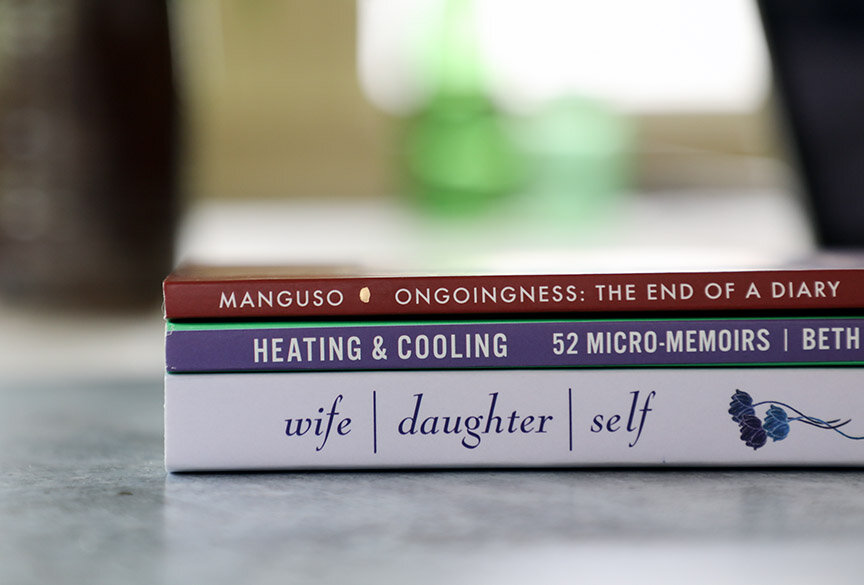

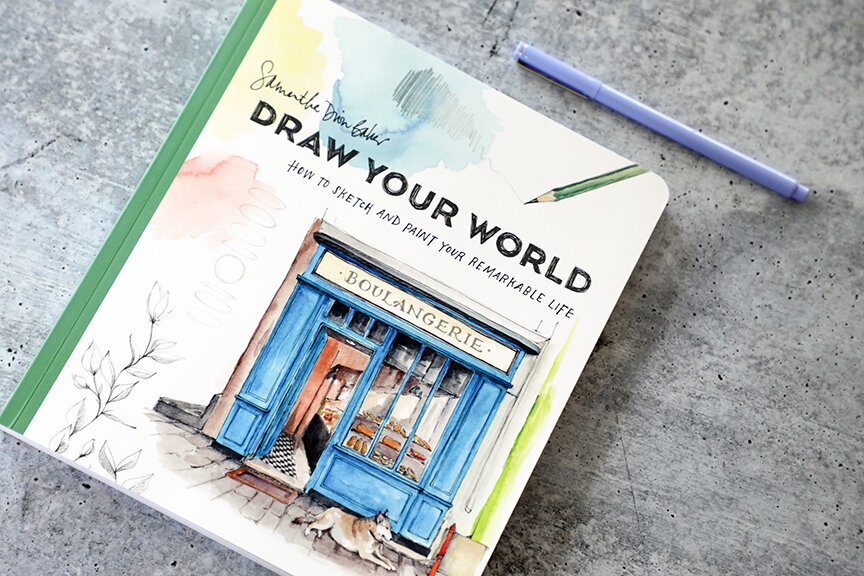


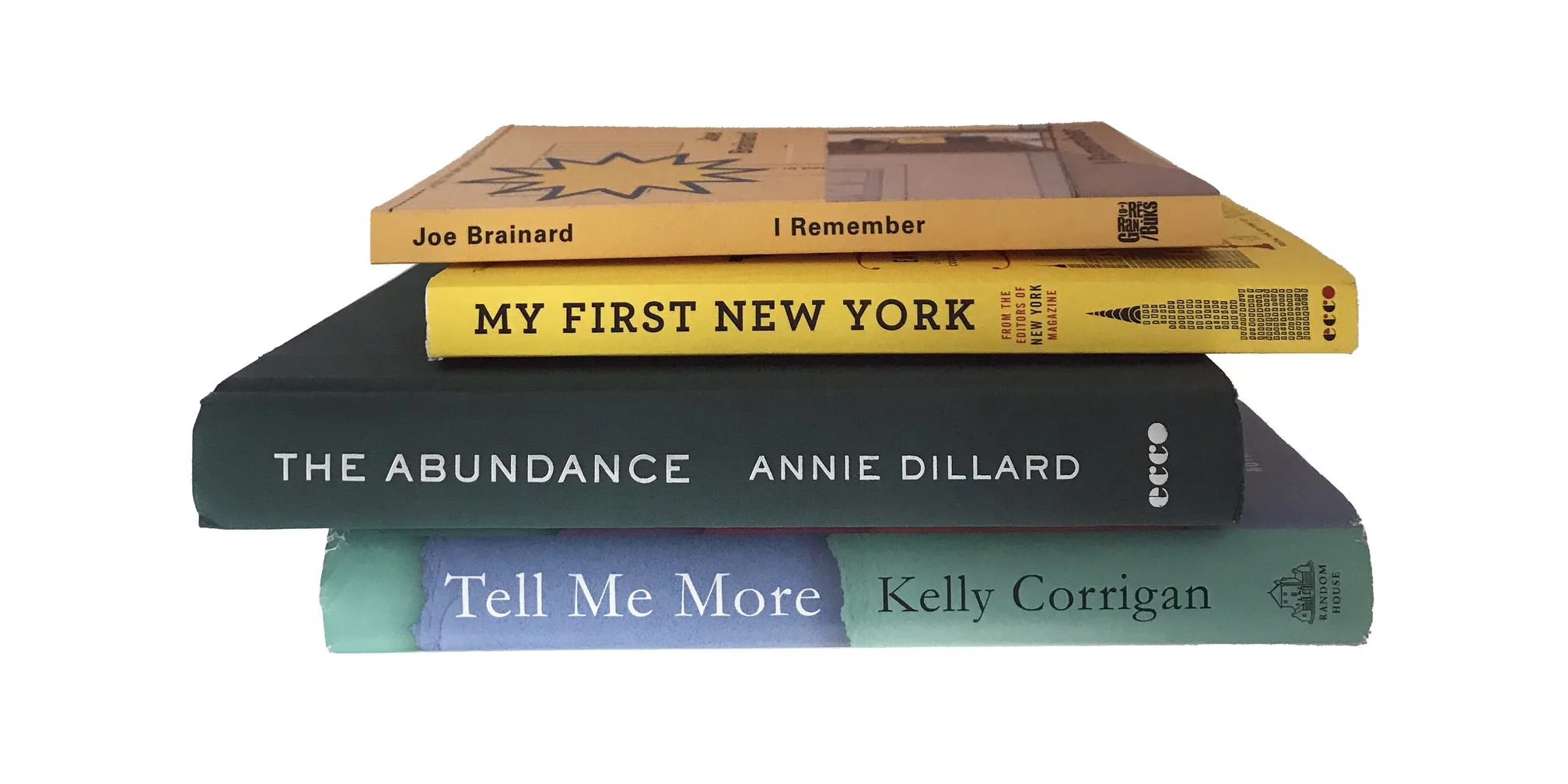



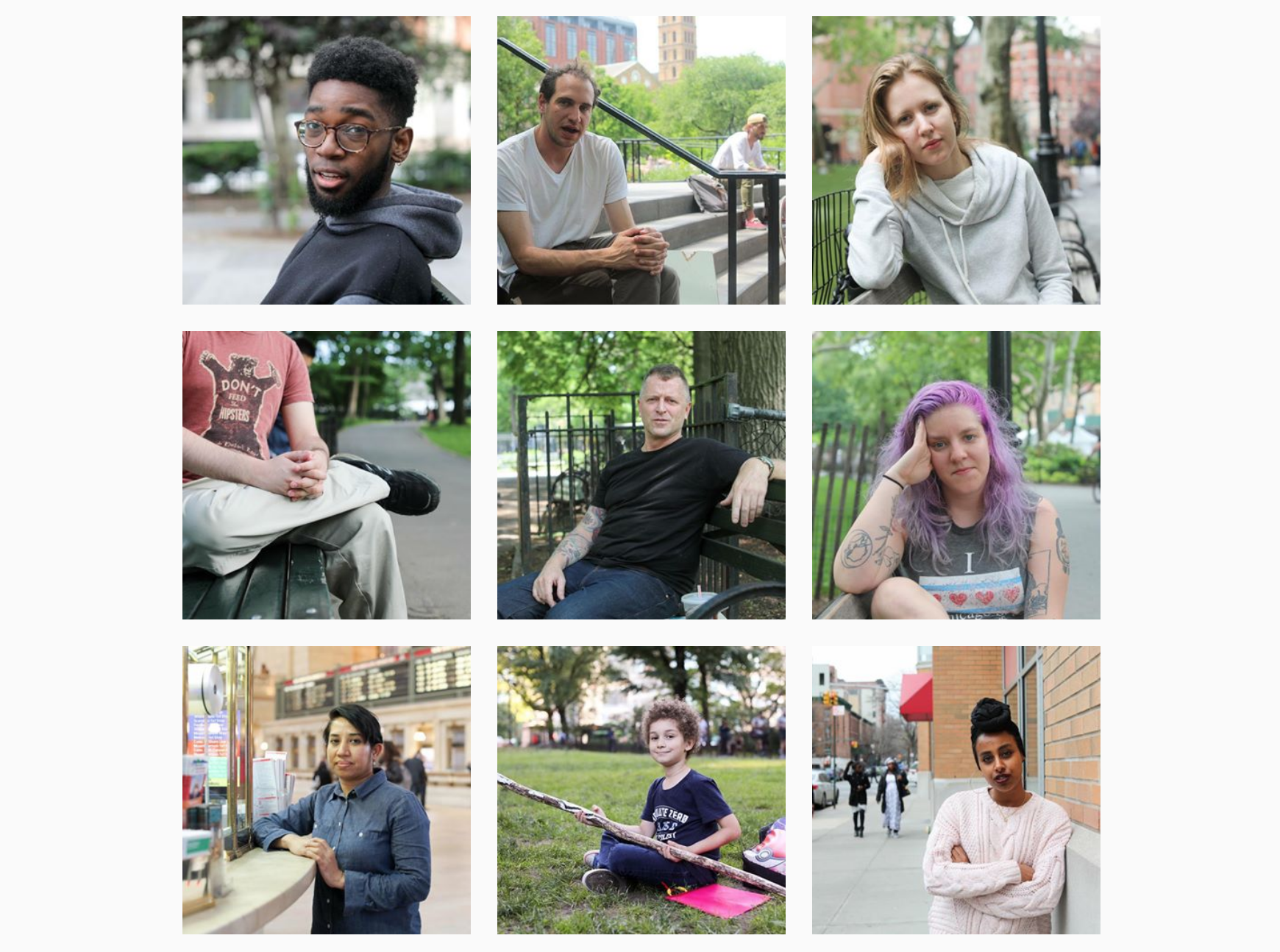


Before you gift someone our Write Your Life prompts (or, “Who this gift is NOT for?”)
Looking for a meaningful gift for your parents? An annual subscription to our Write Your Life memory and writing prompts may be just the thing—or, maybe not.
You want your loved one’s stories—how could that be perceived as anything but loving? (HOW you ask for them can make all the difference.)
I lovingly (and painstakingly) created Write Your Life over the course of a whole year:
I took notes on what was working—and what wasn’t—with my personal history and memoir clients.
I read, reread, and annotated books on the craft of life writing, on how to write memoir, and on how to write clearly.
I paid for and participated in multiple classes from other companies to explore what resonated and what didn’t (video delivery vs. email, for instance; lots of elevated writing guidance vs. more approachable tips, as another example).
I tested different approaches with a handful of volunteers, and really listened to (and incorporated) their feedback.
I tapped into more than 20 years of writing and editing experience to distill what would work best for novice and aspiring writers.
The decisions I made along the way helped me create a year-long subscription of open-ended memory and writing prompts accompanied by straightforward tips, inspiring examples, and just enough encouragement to keep participants going.
And while I did NOT design Write Your Life for people who call themselves writers, I DID design it for people who want to at least attempt to write.
The weekly prompts demand some commitment. That commitment can be enjoyable and fulfilling, without a doubt. But it can also be challenging for someone who really doesn’t have any interest in writing!
So before you click “BUY,” consider who it is you are buying for:
If it’s for YOU, ask yourself: Even if the prompts are inspiring (they will be 😉) and even if you can make the time (you can 👍🏼), “Will I write?”
If it’s as a GIFT for a loved one: Will they look at the prompts as a loving invitation to share their memories, or will they resent the ‘homework’ of needing to write? (If you’re unsure, maybe ask them first.)
Clearly I don’t want to discourage you from enrolling in Write Your Life. I created it with love and with the intent of helping people who couldn’t necessarily afford my personal history services. It’s my genuine hope that people enjoy it and find it fruitful!!
During my early market research, however, I read plenty of bad reviews and Reddit threads about gift recipients of Storyworth (the main player in the email-prompt-a-week space) not completing their subscriptions—in fact, many, many of them had barely answered more than a question or two even after a full year had passed. Here’s a sampling:


Over the years, too, I have had a number of clients who came to me after they felt they “failed” at Storyworth. (For what it’s worth, they didn’t FAIL—they were attempting to preserve their stories in a way that wasn’t serving them, that’s all; they all SUCCEEDED in sharing meaningful and fun stories during one-on-one personal history interviews, an approach many non-writers consider easy 🤗)
This is NOT a bash of Storyworth—in fact, their company is completely in line with my own mission and values, though we are aiming to serve parallel yet different audiences. Rather, it’s to show that writing is not for everyone—and gifting an expectation of writing to your parents, say, may come bound up with more guilt and pressure than you would ever intend.
With all that in mind, where do you fall?

YOU’RE READY!
If YOU want to write about your life—with thoughtful questions, helpful writing guidance, and plenty of low-pressure inspiration—and you’re ready to commit, click here to enroll in Write Your Life.

YOU WANT THEIR STORIES, but…
If you want to invite your parents’ stories, but you’re not sure if they’ll welcome all that WRITING (!), consider interviewing them yourself (it’s a rewarding experience!) or hiring me to interview them on your behalf. Schedule a free consultation to see how we might work together to preserve your family member’s stories.

YOU’RE CONSIDERING GIFTING
If you are THINKING of gifting Write Your Life to a loved one, but you’re still not sure if it’s a good idea, why not simply ask them what they think? Or, schedule a brief chat with me to weigh the pros and cons.

TEST THE WATERS?
If you really want to capture stories from your parent, grandparent, or other loved one, the best way is to ASK them about their life. Here is some related reading that may help you along, with no financial commitment at all:
All five-star reviews for Modern Heirloom Books!
What better way to scope out if a personal historian is a good fit for you than to hear about others’ experiences, in their own words? I am humbled and proud.
The clients with whom I work are incredibly private, and I respect their privacy to the utmost. It’s one of the reasons that so many of them aren’t keen on sharing a public review online. Without exception they are willing to send me their testimonials via email, and I have posted many of them on my site and on social media over the years.
But recently I’ve had a flurry of folks who were in fact willing to share their reviews online. I am always humbled by their kind words, their heartfelt appreciation, and their unmitigated joy at seeing their stories beautifully bound in heirloom books, at last. And I am beyond proud of the work I do to help my clients preserve their legacies in this way.
So here, let’s celebrate some of those “jobs well done”—and hopefully give you a taste of what working together could be like.
Some 5-Star reviews on Google

“Working with Dawn to create our family heirloom book was an extraordinary experience from start to finish. Her approach is meticulous and thoughtful. Dawn's dedication to perfection was evident as she conducted thorough research and carefully curated our family history materials and photos. What truly stood out was Dawn's compassionate and collaborative nature. Thanks to Dawn's expertise and unwavering support, the final result is a cherished masterpiece that beautifully preserves our family's legacy. We are immensely grateful for Dawn's outstanding work and wholeheartedly recommend her to anyone seeking to embark on a similar journey.” —Shannon P.
“Don’t hesitate....work with Dawn to write your stories. I had already begun writing my life stories and had gathered photos and then I was stuck. I contacted Dawn and she helped me put it altogether and moved me forward. My family and I love the results!” —Jane M.
“Preserving my father’s legacy and the wonderful memories of family events was something I wanted to do after my dad’s passing, but knew I needed professional help. I envisioned writings from my siblings eulogizing my father and memorializing my parents’ lives, their struggles, celebrations and accomplishments. A book filled with pictures and stories that would relate to the grandkids and great grandkids as they grew up. Fortunately, I got this and more! A beautiful bookl honoring my 95-year-old father’s life. Dawn Roode of Modern Heirloom Books was the angel that worked with me and members of my family who gathered the stories and pictures and gave the bookl the personal tone that captured my father’s essence. Every page is laid out purposely. Not just a collection of writings and pictures but a story about a successful man. An immigrant who achieved the American dream. Thank you, Dawn!” —Ligia F.
“I found Dawn and Modern Heirloom Books through a Google search after a sudden loss of my mentor and supervisor that I loved and admired greatly. I was looking for a tangible way to let my mentor’s family know just how much she meant to her work family and I wanted to present the book to her family at the celebration of life event that was scheduled a few weeks after she passed. I reached out to Dawn with my aggressive timeline and Dawn responded quickly with the details of how we could bring the ideas to life. She compiled tributes from 56 of my colleagues to create a beautifully curated, high quality book that was completed on time. The finished product was so beautiful and well done, I still cry every time I read the PDF. Dawn is a gift and I couldn’t recommend her business highly enough.” —Min P.
“Dawn Roode is an absolute gem. My sister and I wholeheartedly recommend her and her work…. Dawn brought tremendous creativity to her work…. Throughout the process, Dawn was a joy to work with. She listened carefully. She was diligent in working up drafts and gathering feedback. She was unfailingly patient. She brought her own ideas and didn’t hesitate to make suggestions. She even went above and beyond to deal with administrative hassles with printers due to our last-minute requirement changes. She delivered on time and within budget. In every interaction, Dawn conveyed that she cared as much about the book as we did. If you are looking for someone to create that special story or tribute to someone you care deeply about, look no further.” —Jenny P.
“Dawn helped me to create a tribute book for my mom. The process was emotional and painful but she made it a lot easier - from managing the layout of the book and the color palette to sourcing the printer and even finding a way to rush the production of the books. Modern Heirloom is not the cheapest option but what it created is truly beautiful. The book is something I'll keep forever and I could see how much it resonated with my extended family.” —Rich G.
“Dawn at Modern Heirloom Books is a joy to work with. She created a book of our mother’s nativity collection. We didn’t even really know what we wanted in the beginning and she produced an amazing result. It is a pleasure working through the creative process with her. Thank you! Thank you! Thank you!” —Amy H.
“Dawn was always ready to make the changes that were inevitable when putting a book together, with good cheer. She is quite well organized and intuitively understood order, placement, emphasis vs less. I was extremely happy with Dawn’s finished product and wholeheartedly recommend her.” —Gahl B.
“Dawn’s creativity, warmth, and professionalism helped turn an old stack of yellowed letters from my recently deceased father into the most beautiful book of memories. Her patience with me through this process was so appreciated, as was her genuine care for the product she produced. I highly recommend working with Dawn.” —Kristen C.
Plus a couple via email…
What follows are just a couple of examples of clients who chose not to leave their review on a public platform such as Google or Facebook—something I wholeheartedly respect. I am grateful they were comfortable with me sharing these in other ways, as I do feel it’s the words of those I have worked with who can best convey what that experience is like 💗

This one is from my client Patty, who created family history heirloom books for her grown children as well as her young grandchildren, a way to preserve their family’s legacy for generations.

This one was forwarded to me by my client Jane, who had “loaned” her book to a good friend. I worked with Jane as her memoir coach, then edited and designed the resulting heirloom book.
A coffee table book about quirky heirlooms? Yes, please!
Shana Novak photographed 100 personal keepsakes and shares the heartfelt stories behind each in her beautiful new coffee table book, “The Heirloomist.”
The latest addition to my own coffee table: this warm-and-fuzzy, beautifully photographed book from Shana Novak, The Heirloomist: 100 Treasures and the Stories They Tell (Chronicle Books, April 2024).
Back in 2016, when Modern Heirloom Books was yet a newborn baby, I was working on one of my first big projects—a retrospective of a family-owned film company that was celebrating 30 years in business. It was an in-depth undertaking, with multiple interviews with the founder and a series of interviews with a handful of other players in the company’s history. One of the most fun aspects of the initial research was first watching a bunch of their early footage, then getting to explore the basement archive of the physical media that held the original films. Having spanned three decades, their stash of films covered a whole landscape of moviemaking technology—formats included 35mm, 16mm, 2-inch video, 1-inch video, three-quarter-inch video, VHS, DV, DV-Cam, HDV, Beta, Beta SP, Digi-Beta, DVC-Pro, DVC-ProHD, XD-Cam, and on…and on. So, of course I wanted to photograph some of them for the book—a little visual timeline, if you will.
The photographer I tapped to capture these images was experienced in both editorial and commercial work, and we were connected through our tenure in national magazines—and her personal brand, The Heirloomist, was in many ways, like Modern Heirloom Books, a newborn business baby at the time. I adored her clean and creative approach to photographing things, but more so was drawn to her instinctive sense that she was photographing the stories behind the things. That’s what mattered to me, and it’s what mattered to her, too.

A spread from an heirloom book I created in 2016 celebrating the 30th anniversary of a family-run business—it shows an old film canister photographed by Shana Novak for the project. For this client, their films help tell their story, and the striking visuals help bring that story to vivid life.
I have been thrilled to watch from the sidelines as Shana Novak (aka The Heirloomist) has turned her love of quirky heirlooms and photography not only into a thriving business, but now, into a beautiful coffee table book from Chronicle! The Heirloomist: 100 Treasures and the Stories They Tell (Chronicle, April 2024), as you can no doubt tell from the subtitle, is a book after my own heart.
“The definition of heirloom, in my family, is clearly open to interpretation,” Shana writes in the book’s introduction (I won’t give away exactly what she is talking about—you’ll have to pick up a copy of the book for yourself).
And it’s that element of surprise that I love most about the book. Sure, there are what some might consider ‘traditional’ heirlooms within (think jewelry and baby shoes, for instance) but it’s the unexpected items—and the personal stories attached to them—that resonate with me.
“It’s garbage to anyone else but me,” one subject says about a fork—yes, a fork—that she treasures…with good reason, as the brief, vulnerable story accompanying the photograph of the fork attests. There are wonderfully touching, funny, and warm stories about heirlooms as idiosyncratic as a twenty-something-year-old Etch-a-Sketch (perhaps my favorite heirloom in the book) and a Styrofoam cup.
Memories are attached to these things, memories that those who hold onto the objects cherish—and through the majesty of her photography, Shana honors those memories in a most unique and lasting way.
Some of the treasures in The Heirloomist are expensive, and some are worth nothing from a monetary perspective. “But all are priceless, precisely because their stories will play your heartstrings like a symphony,” Shana writes. Indeed, they will.
For anyone who loves stories, I recommend this book.
For anyone who loves photography, I recommend this book.
And for anyone who might want some inspiration around telling the stories of your own family’s unique heirlooms, I highly recommend this book.
What (unique, unexpected) heirlooms are stashed in your family archive?
Note: This is an unsolicited review of a book I purchased at full price. I did not receive any compensation or free products in exchange, and any endorsements within this post are my own.

More Modern Heirloom inspiration: Heirlooms can be unexpected—such as the gorgeous glass doorknobs on this spread: “I was born into the bedroom with the glass doorknob and I didn’t leave it until I got married at age 23,” the subject remembers; she uses the object as a jumping-off point for stories from her life in that home (she even took the doorknob with her when the house was sold—a true heirloom). Read more about interesting graphics to consider adding to your family history book here.



“Which life writing book is best for me?”
While all five of these books add value to any memoirist or life writer’s library, I’ve identified which is best for you based on your goals and experience.
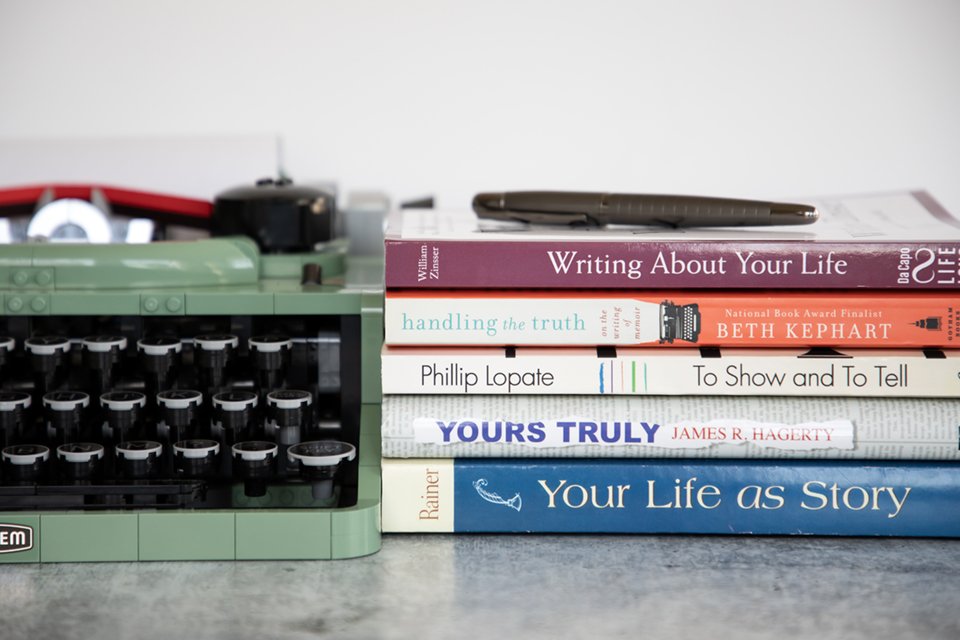
From the many, many craft books on my bookshelves, these are the five I consider essential for anyone endeavoring to write about their life.
If there’s a book out there about how to write memoir, autobiography, personal essays, or narrative nonfiction, I’ve probably read it. There are plenty that may be worth a read, but there are only a handful that I would consider essential for every life writer’s bookshelf.
Here I aim to classify my top five life-writing titles by who each one is best for. Click if you are…
a journalist or student aiming to up your personal essay game
anyone hungry for personal narrative guidance, including writers of every level
anyone who wants to make sure their story is told the way they want
And before we get to the heart of things below, I’ve written elsewhere about some books that are great choices for other scenarios, too; find those recommendations by clicking if…
“To Show and To Tell: The Craft of Literary Nonfiction” by Phillip Lopate

Best for:
Journalists and students aiming to up their personal essay game
in brief:
While the book jacket touts this title as a “nuts-and-bolts guide to writing literary nonfiction,” I would argue that it is more a collection of insightful lessons from this expert’s vast experience rather than a how-to guide. Widely regarded as one of the best personal essayists around, Phillip Lopate has here collected his ruminations and conclusions about the genre of personal narrative as a whole. If you’re in the mood for a well-informed, sometimes cheeky, always smart exploration of writing literary nonfiction, then this book’s for you. It’s an apt choice for anyone wanting to finesse their writing skills, to hone their craft, and to luxuriate in the history of the genre; if you’re in search of a book with more direct guidance, I recommend one of the last two entries on this list instead. [To Show and To Tell: The Craft of Literary Nonfiction, Free Press, 2013]
Author’s credentials:
Phillip Lopate directs the graduate nonfiction program at Columbia University. Among the 12 books he has written, three of them are personal essay collections.
“Handling the Truth: On the Writing of Memoir” by Beth Kephart

Best for:
Aspiring memoir writers
in brief:
“Teaching memoir is teaching vulnerability is teaching voice is teaching self,” Beth Kephart writes, a fair summation of her approach to teaching, in the classroom and in print. As I have written in a previous review, here the author “spends a good portion of the book on what she calls ‘not-yet-writing-memoir work’—preparatory ideas, tapping memories, conjuring beauty, exploring diversions, finding your story,” but she also delves into the nitty-gritty of getting words down on paper, of editing and honing and creating art from experience. Handling the Truth is a must-read for anyone at any stage in the memoir writing process. [Handling the Truth: On the Writing of Memoir, Gotham Books, 2013]
Author’s credentials:
Beth Kephart is the award-winning author of more than 30 books, including multiple memoirs. She is a longtime writing teacher—of creative nonfiction as a professor at the University of Pennsylvania, and as co-founder of Juncture Workshops.
Bonus:
If you relate more to the word “aspiring” than “memoirist,” you may want to check out Kephart’s companion workbook, Tell the Truth. Make It Matter (CreateSpace, 2017), in which prompts and exercises put you on the path to remembering and meaning-making.
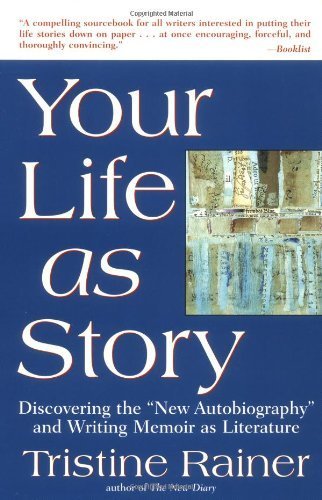
“Your Life as Story” by Tristine Rainer
Best for:
Anyone hungry for personal narrative guidance, including writers of every level
in brief:
When I first encountered this book years ago, it was a loaner from my local library. By its due date it had amassed a ridiculous number of yellow sticky notes hanging off the pages, each marking a passage I felt was revelatory or essential. Needless to say, I bought my own copy soon thereafter.
First published in 1997, this book’s subtitle and grounding premise—“discovering the ‘new autobiography’”—might seem off-putting. By now, I hope that we no longer need to define and justify memoir’s raison d’être, nor the assumption that it is “available to everyone.” That said, get past any reservations you may have about the book being dated, because it is chock-full of concrete writing advice, real inspiration, and helpful exercises. Rainer herself encourages readers to jump around, to use the table of contents and index to navigate the book to find what they are needing at that moment in their writing journey. As she says, “The purpose of this book is to give you the tools to see story in your life, and then, if you choose, to give it shape in writing so it can be shared.” So grab your highlighter and a blank journal and dig in! [Your Life as Story: Discovering the ‘New Autobiography’ and Writing Memoir as Literature, Tarcher/Putnam, 1998]
Author’s credentials:
Tristine Rainer’s first book, The New Diary, was written in 1977 and is still the bestselling book on journal writing, according to Amazon. She has taught writing at the university level for decades, and was a founder of the Center for Autobiographic Studies.
“Writing About Your Life: A Journey Into the Past” by William Zinsser

Best for:
Newbie life writers and family historians
in brief:
“My purpose in this book is to give you the permission and the tools” to write about your life, Zinsser puts forth in the introduction. His conversational, warm writing style is accessible and supportive. Readers learn about his writing choices—decisions he made about tone, language, structure, and all those fundamental elements of craft—as he takes them along on a wonderfully enjoyable ride of personal storytelling and instruction. He calls this a “double journey into memoir—yours and mine.” In addition to concrete tips for how to write your life story, Zinsser delivers hefty doses of confidence bolstering and inspiration by example. [Writing About Your Life: A Journey Into the Past, Marlowe, 2004]
Author’s credentials:
William Zinsser was a writer, editor, and teacher. His enduring classic, On Writing Well, grew out of a course he taught at Yale. Some of his other books include Inventing the Truth: The Art and Craft of Memoir and Extraordinary Lives: The Art and Craft of American Biography.
“Yours Truly: An Obituary Writer’s Guide to Telling Your Story” by James R. Hagerty

Best for:
Anyone who wants to make sure their story is told the way they want
in brief:
“When is the best time to get started? Before it’s too late. How about right now?” James Hagerty proffers in the introduction to this book. It’s advice I give often, as well, and the best part about his book Yours Truly is that he equips you with lots of straightforward writing advice and carefully selected first-person pieces as examples so you can hit the ground running. You may be surprised that a book with “obituary” in the subtitle is infused with humor, but make no mistake, this is a book about honoring life in all its weird and wonderful glory—not only a great read, but a model to write your own. [Yours Truly: An Obituary Writer’s Guide to Telling Your Story, Citadel Press, 2022]
Author’s credentials:
James R. Hagerty worked for more than four decades as a reporter and bureau chief at the Wall Street Journal and was for some time the paper’s only full-time obituary writer.
bonus
Check out this earlier post for a deeper dive, with five life writing (and life) lessons derived from Hagerty’s book.
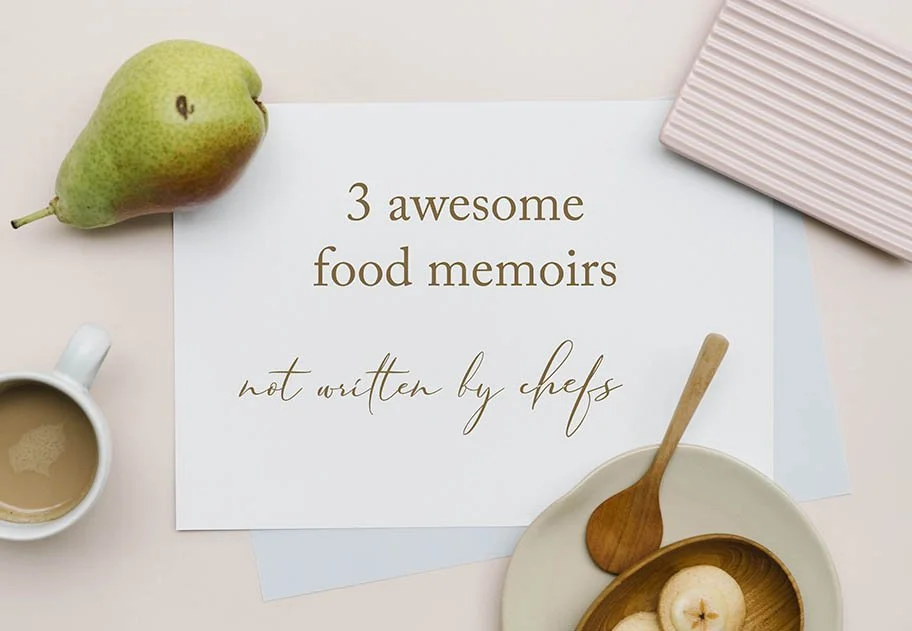
3 books to inspire your own family cookbook
These three titles—two hybrid cookbooks and one genealogical look at preserving food memories—dish up lots of inspiration for making your own family cookbook.
These books by Gena Philibert-Ortega, Gwyneth Paltrow, and Rachael Ray are not only brimming with recipes you’ll want to try, but they can serve as incredible inspiration for ways to approach making your OWN hybrid family history/cookbook.
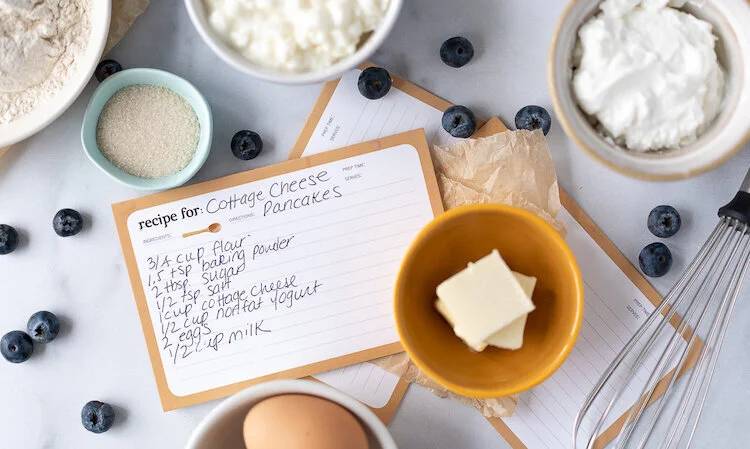
Whenever I share photos of family cookbooks or food heritage projects, I get a tremendous response—“I wish I had thought to do that before my mom passed,” “Oh, I HAVE to do this!!!” or, on occasion, more reluctant feedback such as “I would have no idea where to begin.”
Well, I’ve shared plenty in recent months about how to approach making your own heritage cookbook, including, most notably, an easy-to-follow 10-step plan for making a DIY (heirloom-worthy) cookbook, plus 3 surprising ways to elevate your family cookbook.
Now I thought I’d share some fun inspiration—books you can either buy or check out from your local library that guarantee to provide some, ahem, food for thought! These aren’t new books, just ones I’ve collected over time that, to me, epitomize great storytelling in beautiful formats in the food genre.
What follows are three book recommendations—two hybrid cookbooks and one genealogical look at preserving food memories—that I think you’ll love, too. Let me know which ones inspire you, and how!

“Rachael Ray 50: Memories and Meals from a Sweet and Savory Life” by Rachael Ray

Why you’ll be inspired:
With 25 essays depicting Rachael Ray’s personal life plus 125 recipes handpicked to correspond to her favorite memories, this book is a prime example of what a heritage cookbook can be. From vignettes about childhood movie night and special occasion dinners at NYC’s Mamma Leone’s all the way to moments with her famous friends and how she got to Carnegie Hall, the chef used her milestone fiftieth birthday as a spark to take stock.
“This is not a memoir,” she writes. “It’s a series of recollections, a scrapbook of my life so far.” Lots of those recollections are accompanied by recipes, sure, though “other episodes in the book have nothing to do with food, but they remain important ingredients that have helped give my life its particular flavor.” (Can you hear me cheering?!)
This book is stunningly bound and printed on matte paper with elegantly simple graphic section openers and an abundance of images, including nostalgic childhood photos as well as the expected styled food photos.
Fun quotes:
“I was marked to be in a kitchen when I burnt my finger on an industrial stove at age two.”
“I think I’m a nurturing person but I have resigned myself to the role of cooking vegetables rather than growing them. Upstate my husband is the farmer. I can pick the stuff, and prepare it, but I’m not allowed near it when it’s growing.”
My favorite recipe:
Carbonara (a classic done the authentic way!)
Buy or Learn More:
Rachael Ray 50: Memories and Meals from a Sweet and Savory Life by Rachael Ray (2019, Ballantine)
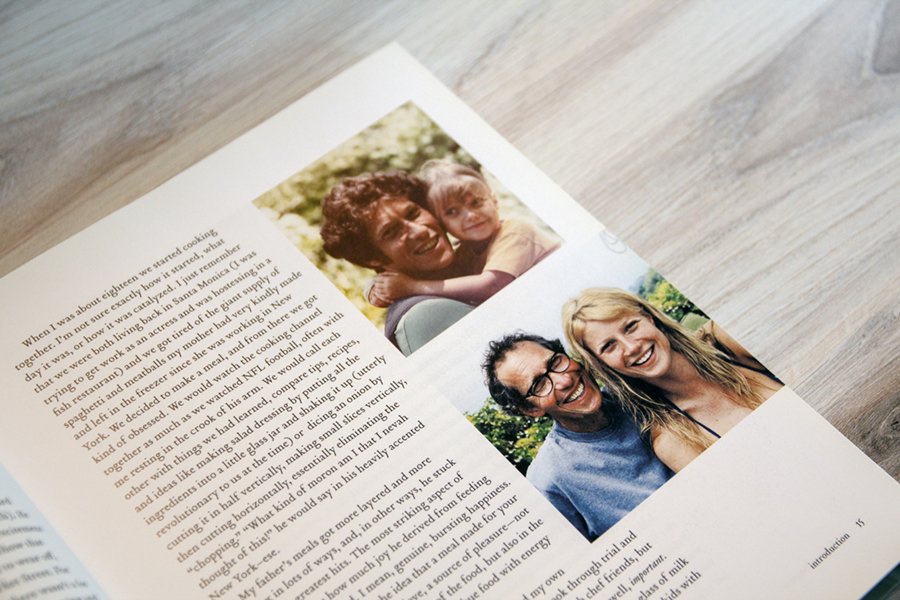
“My Father’s Daughter: Delicious, Easy Recipes Celebrating Family & Togetherness” by Gwyneth Paltrow

Why you’ll be inspired:
Long before she was crowned a lifestyle guru, actress Gwyneth Paltrow shared her journey of what friend and foreword author Mario Batali calls “blossoming as a mom cook” in this cookbook–cum–celebration. A self-proclaimed foodie (if you can find it, her PBS series Spain…On the Road Again is worth watching!), Gwyneth’s approach in this very personal title is familiar and laidback.
While there are lots of (mostly) healthy recipes in its pages, this book is truly a love letter to Gwyneth’s father. “I always feel closest to my father, who was the love of my life until his death in 2002, when I am in the kitchen,” she writes. “I can still hear him over my shoulder, heckling me, telling me to be careful with my knife, moaning with pleasure over a bite of something in the way only a Jew from Long Island can, his shoulders doing most of the talking. I will never forget how concentrated he looked in the kitchen, it almost looked like a grimace or a frown if you didn’t know him. He practiced incredible care and precision when he was preparing food. It was as if the deliciousness of the food would convey the love he felt in direct proportion.”
When I think of—and prepare—the foods my own mother cooked for me, her love comes through, even all these years after her passing. And I can almost guarantee there’s someone in your life whose food you equate with love. Flip through the pages of this cookbook to see how a minimal amount of text can introduce each recipe in a meaningful way—all it take is a paragraph to explain why a food matters to you, who it reminds you of, or what memories it calls forth!—and how even the simplest of dishes is worthy of inclusion (like Gwyneth’s four-ingredient, no-cook bruschetta).
Fun quotes:
“Unlike my daddy, who back in the day thought Oreos and a glass of milk were snack worthy, I became a bit obsessed with providing my kids with healthy, unprocessed foods.”
“This book is meant to channel the ethos of my father by sharing the greatest gifts that he imparted to me. Invest in what’s real. Clean as you go. Drink while you cook. Make it fun. It doesn’t have to be complicated. It will be what it will be.”
Favorite recipe:
Chicken & Dumplings
Buy or Learn More:
My Father’s Daughter: Delicious, Easy Recipes Celebrating Family & Togetherness by Gwyneth Paltrow (2011, Grand Central Publishing)

“From the Family Kitchen: Discover Your Food Heritage and Preserve Favorite Recipes” by Gena Philibert-Ortega
Why you’ll be inspired:
This book is like a primer for family historians who want to preserve their food heritage. Unlike the above titles, the author is not cataloguing her own family foods, but rather she is tapping her expertise as a longtime genealogy teacher. Philibert-Ortega offers up a menu heavy on history and how-to, with just a few (historical) recipes thrown in, and a keepsake recipe journal section meant to be filled in with your own handwritten recipes.
You won’t find luscious food photography or colorful coffee-table book design in this tome, but you will find lots of nitty-gritty insights on why documenting your family’s food heritage matters—and tips for doing it thoughtfully. Chapters include social history (including looks at food throughout time as well as how food traditions vary by region) and deep dives into historical recipes (from deciphering old food terms to discovering vintage advice among old “recipes”).
One of the author’s central themes is that exploring our own family food heritage is an effective way to learn more about our female ancestors: “The stories of women’s lives must be told by more than the government or institutional records they left behind. Their history is best expressed through the traditions, stories, and artifacts that were part of their lives.” Including, of course, their recipes.
Fun quotes:
“One day in the not-too-distant future, your children or grandchildren will be wishing they had the recipe for their favorite special dish you made every holiday because it reminds them of you…”
“Help your family get a glimpse into their ancestors’ lives by researching what food was available to your ancestors and the price of that food.”
Recipe least likely to try:
It’s a tie: Jell-O Cheese Loaf and Imitation Pattie de Foie Gras
buy or learn more:
From the Family Kitchen: Discover Your Food Heritage and Preserve Favorite Recipes by Gena Philibert-Ortega (2012, Family Tree Books)
Note: This is an unsolicited review of books I purchased at full price. I did not receive any compensation or free products in exchange, and any endorsements within this post are my own.












Want to use your life story to inform your fiction?
This new book by Ruta Sepetys, You: The Story, is a great tool for those who want to use their own life experiences to inform their fiction writing.
This new book from Ruth Sepetys, You: The Story, is a great resource for anyone who wants to write fiction informed by their own life experiences.
What if you don't want to write a memoir, but you know that stories from your life are compelling? What if you’re rereading your journal one night only to discover that the twists and turns in those pages read like a movie script? Maybe it's time to consider using your life experiences to inform a fictional book.
Why not? Transforming scenes from your life into scenes in a novel is a tried-and-true way to infuse a fictional account with an underlying truth that readers can relate to.
In her recent book You: The Story (Viking, 2023), Ruta Sepetys suggests you put a piece of yourself into your fiction: “When you do, you'll pull the reader to the page and share something resonant and meaningful that will keep them there.”
But how? I recommend you begin by picking up a copy of Sepetys’s book, subtitled “A Writer's Guide to Craft through Memory.” While I was drawn to it for the snippets of wisdom applicable to personal historians and memoirists, I soon realized it's a better resource for those who want to be inspired by their life, not depict it directly on paper.
3 ways you'll learn to effectively write from your life

You'll have a library of creative writing prompts at your fingertips.
Each chapter of You: The Story concludes with a handy recap (in easy-to-scan bullet points) as well as a series of writing prompts aimed to help you with that chapter's premise. Working on writing genuine-sounding dialogue? There are prompts for that. How about creating a setting that's immersive, believable? That, too.
Some of the suggestions may seem obvious, but I would argue that they will only seem so in retrospect. Sepetys encourages you to brainstorm a list of settings from your own life, for instance—addresses (including corresponding time periods and people around you) as well as memories you associate with each place. It's through detail, after all, that dialogue and setting and characters come to life. So detail is what she (and you) are after.
Here's an example of a writing prompt from the chapter called “Setting”:
Recall a time when you thought, What in the world am I doing here? Write for ten minutes about that time. Describe the setting and your feelings there.
Note that it's not just the color of the walls or the overarching smell of a place, it's also the way the place made you feel. Throughout the book the author implores you to consider, at every turn: How do these things from YOUR life impact your fictional characters? Mine your life for details, then fold them into your imaginative narrative.

You'll learn how to turn real people into characters.
Putting people you know into your book is generally a no-no (while it’s unlikely, lawsuits have even been brought by individuals who have recognized themselves in a story and took umbrage at their portrayal). Just about every fictional character, though, is an amalgamation of people we have come across in our lives. You want a reader to identify with a character—to feel like they recognize this person, whether in themselves or in someone they know—and the best way to do that is to root them in some reality.
Sepetys offers up an array of ways to do this, from tapping into archetypes and personality quirks to identifying a character's personal rhythms and rendering their nuances. She explores how you can create believable characters inspired by your life in three chapters—“Character Development,” “Voice,” and “Dialogue”—and it is here I think she provides the most value through concrete examples, instructive writing prompts, and helpful tips.
“Your true voice is layered deep within your life experience and your memories,” she writes. “It's the voice of your old diary, the voice of your desperation, and sometimes the voice you hope no one else will hear.”

You'll discover even more reasons to preserve your memories.
If you're here on this site, I'm fairly confident you're already a memory-keeper of one kind or another. I've been one since I was a child (really). And still I felt inspired by Sepetys’s words.
“Memories are like leaves,” she writes. “They fade, fall, and scatter beneath the slightest sigh of wind. So for now, think of ways to press them between wax paper and preserve them for one quiet day in the future.” One day when you might be in need of sensory details to bring a character to life. One day when you might need a glimpse of the you that you were 10 years ago. One day when your son or daughter asks you to recall something that has long since blown away on the breeze.
Whether you choose to tap into your life by writing a personal memoir or a fictional account, I encourage you to look inward and write what you find. As Sepetys says, “Work with your stories. Water them with your blood and tears and laughter. The world needs them.”

Your life is a story.
One of my favorite bits of wisdom from Ruta Sepetys’s book applies whether you are turning your life stories into fiction or nonfiction:
“Use your own best judgment about which memories you might be able to responsibly dig through and which ones you should avoid. Protect your head and your heart. Always.”
Note: This is an unsolicited review of a book I purchased at full price. I did not receive any compensation or free products in exchange, and any endorsements within this post are my own.
Two great resources to help you write an ethical will
Ethical wills—also called legacy letters—are great ways to pass on values and life lessons to your descendants. These two books will help you create your own.
One helpful resource to guide you in writing your own ethical will: this step-by-step book from Susan Turnbull, founder of Massachusetts–based Personal Legacy Advisors.
“What do I want my loved ones to inherit, in the broadest sense of the word?” Susan Turnbull asks in her guide, The Wealth of Your Life.
So, beyond the physical wealth you have accumulated in your lifetime, what else should you think about passing on? Things like your values, your stories, your family history—these things make up intangible wealth that, for many, is as important (if not more so) than your material assets. But how, exactly, to pass those on?
Leave your values, not just your valuables
The answer comes in the subtitle to Turnbull’s book, “A Step-by-Step Guide for Creating Your Ethical Will.”
An ethical will is simply a document you create to pass on wisdom, stories, and other information you feel is vital for your loved ones to know. It is an opportunity to share love, gratitude, and lessons with them. To leave a legacy with words.
Originally an ancient Jewish oral tradition, ethical wills have come to be known by more descriptive modern terms such as legacy letters and forever letters—but no matter what they are called, their intention is “to share the deepest truths of our lives for our loved ones to know and to hold even when, especially when, we are gone,” as Rabbi Steve Leader writes in For You When I Am Gone: Twelve Essential Questions to Tell a Life Story.
My life story?, you might be thinking. Well, yes, you may endeavor to preserve your full life story for the next generation (if you’re on my website, you know that’s undoubtedly something I champion!)—but most ethical wills are shorter documents (often between two and 10 pages, Turnbull suggests) and therefore much more approachable. It may evolve over time, too. “Start by creating a short message that captures the most important things you want to say,” she writes. “Peace of mind will be your immediate reward. You can add to that core message later, as time and inspiration allow.”
Here are two very different resources that I highly recommend for anyone interested in crafting your own ethical will.
The best books to help you craft your own ethical will
1 - a practical ethical will workbook

Susan Turnbull’s workbook is meant to be read and filled in—so get your pen ready!
Title: The Wealth of Your Life: A Step-by-Step Guide to Creating Your Ethical Will by Susan Turnbull
Who it is right for: A self-starter who wants to craft their own ethical will by the end of Turnbull’s book.
Biggest benefit: The nitty-gritty guidance (including, for instance, a list of values to consider writing about, and questions to narrow down your intentions) is thought-provoking; and the worksheets are incredibly helpful tools that also mark your progress as you go.
Consider: Buying one guide for yourself and another for your life partner, sibling, or a close friend—going on this journey together may provide both motivation and a means to grow closer.
This is a short, spiral-bound book that’s meant to be used as a tool. The author has broken out the steps to creating your ethical will not only clearly, but gracefully: Questions and prompts are accompanied by “lightbulb” asides that nudge you in the right direction, plus short examples of real-world answers that illustrate, among other things, that using your authentic voice is a powerful thing.
One of my favorite tips: You can convey values without sermonizing. “It is in your everyday life that your values find their expression.” In other words, use stories to reveal your values. Writes Turnbull, “In so doing, your values become obvious, you provide an interesting record of a slice of your life, and you will touch your audience in ways you can never imagine.” Indeed.
2 - an inspirational read that leads by example

I recommend reading Steve Leder’s book twice—once to relish the personal writings within, then again with the intention of answering his questions to craft your own ethical will.
Title: For You When I Am Gone: Twelve Essential Questions to Tell a Life Story by Steve Leder
Who it is right for: Anyone who wants to immerse themselves in years’ worth of wisdom, all the while becoming inspired to share your own.
Biggest benefit: Thoughtful, rich examples of excerpts from ethical wills from a wide variety of people of differing backgrounds and life experiences. The answers people provided to the 12 guiding questions Leder supplies are heartening and motivating.
Consider: Finishing your ethical will and then…writing more! For me, personally, answering the 12 questions in this book promises to yield more than my ethical will for my son—a whole lot more.
An ethical will can be both a way for descendants to remember a lost loved one and a primer on how to live a better, happier life.
Rabbi Steve Leder—who has presided over more than a thousand funerals over the past three decades—knows the value of stories in creating legacy. If you ask the right questions, he says, meaningful stories pour forth. In this book, he has distilled those questions for us. “These questions are deliberate and so is the order in which I ask them,” Leder writes. “They have helped countless families tell the deepest, most honest, and often beautiful truths by which their loved ones lived.”
Sound intimidating? It’s shouldn’t be. Not only can you do this, but you will also gain insights and feel a sense of peace upon completion, “a promise of continuity,” as Leder says. While he thought he would be imposing on those he asked to contribute to his book, on the contrary, most of the individuals thanked him for allowing them the opportunity to be thoughtful and to share their stories.
The 12 chapters in For You When I Am Gone each introduce one question, some rationale for its inclusion, and then varied answers from real people. I recommend reading this book in its entirety, then beginning again with the intention of answering each question yourself as you finish its chapter. That’s what I have done.
Two messages that resonated greatly with me: ““We cannot learn from a story no one has ever told us” and “To share our story with someone is to say, you matter to me.” Leder also professes urgency: “My message is, ‘Don’t wait.’ Because none of us ever really knows which conversation might be our last.”
For You When I Am Gone is the best book on life writing that I have read in years; it has become the book I have gifted most often since it was published last year. I hope you’ll pick it up, and that you’ll take the messages from Leder and Turnbull to heart and begin writing your own ethical will.
This clever turn of phrase from Turnbull’s guide says it all: “What you have learned is as valuable as what you have earned.” So pass it on—please!

Note: This is an unsolicited review of two books I purchased at full price. I did not receive any compensation or free products in exchange, and any endorsements within this post are my own.
Affiliate disclosure: As an Amazon Associate, we may earn commissions from qualifying purchases from Amazon.com.
Dawn Roode’s curated roundup for the week of Sept. 23, 2026, is overflowing with recent reads on memoir, life story writing, and family history preservation.