
Memories Matter
Featured blog Posts
READ THE LATEST POSTS
Life Story Links: October 6, 2026
Dawn Roode’s curated roundup for the week of October 6, 2026, includes recommended reads on writing memoir, preserving family history, and autobiographical memory.
“What started as a simple family history project has become this web of community. When I pull a thread in one part of the world, the story in another place changes. Your memories have become my landmarks, the symbols of my own past.”
—Rachael Cerrotti, We Share the Same Sky
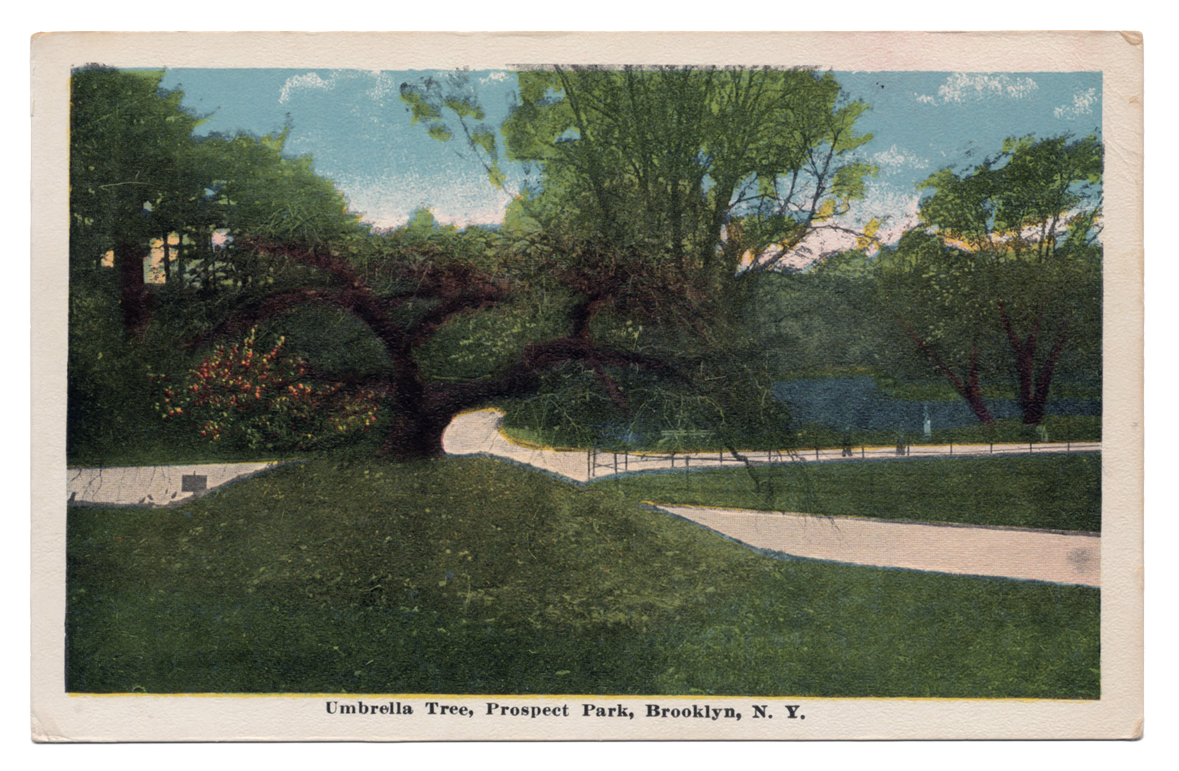
Vintage postcard captioned “umbrella tree, Prospect Park, Brooklyn, N.Y.”, early 20th century, from the personal ephemera collection of Dawn Roode.
Personal history & memoir miscellany
TWO NEW BOOKS
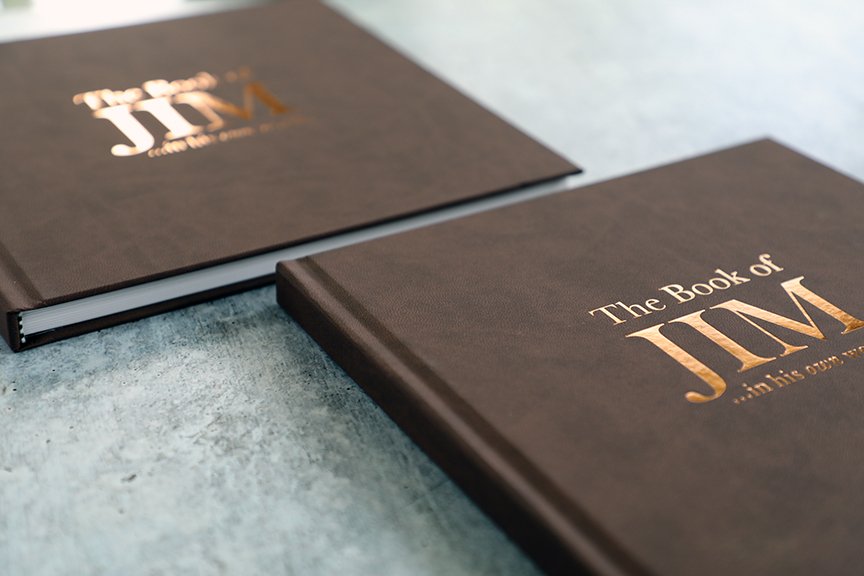
Announcing a real labor of love: two new books from MHB. They contain so much of what I have come to believe through my work: that every life is worthy of attention; that curiosity is an act of care; and that one of the greatest gifts we can offer another person is simply to listen.
‘LITTLE TEXTURAL POLAROIDS’
I love this quote from Maggie Smith’s recent scrapbook of vignettes (things she might have Tweeted back in the day): “The more we understand the past, the more we understand the present. The more legible now is.”
DON’T WAIT. ASK.
“[My dad] gave me the world, he showed me the world, he paid for my world, and he made a lot of great jokes. But I don’t know how he accomplished it, or what he thought about it, because I never asked.” Writer and cartoonist Peter Moore shares five questions he wishes he’d asked his father (“note,” he writes, “you can’t do that posthumously”).
ILLUMINATING THE CREATIVE PROCESS
Via a Literary Arts Fellowship and drawing on years of interviewing, teaching memoir workshops, and helping clients tell their stories, Lisa Napoli intends to create practical tools that make life writing feel less overwhelming.
THE SCIENCE OF AUTOBIOGRAPHICAL MEMORY
Scientists studied a teenager with HSAM, or hyperthymesia, which is an extremely rare memory ability. People with HSAM have highly superior autobiographic memory and incredible recall for events in their own lives (original study here).
‘ON ONE CONDITION’
“After several long Saturday mornings of recording, grandpa abruptly announced one day, ‘That’s all.’” Eli McCann on the “sacred act” of recording a life story, and the oral history passed down in his family.
A SOMATIC, TRAUMA-INFORMED APPROACH TO WRITING
Jessy Easton, who serialized her memoir after it was rejected by 100 publishers in five years, in conversation about “writing the hard thing—and how releasing the hard thing into the world frees us from the burden of carrying secrets and being anything less than our whole selves in the world” (transcript here):
...and a few more links
Read an excerpt from Food Is a Feeling: Recipes and Stories, with Love by Carla Lalli.
Tilda Swinton’s memoir will be unconventional (can you believe it?).
Scientists discover how the brain adds new information to old memories
How feminist activist Robin Morgan helped preserve the legacy of Sylvia Plath
Short takes
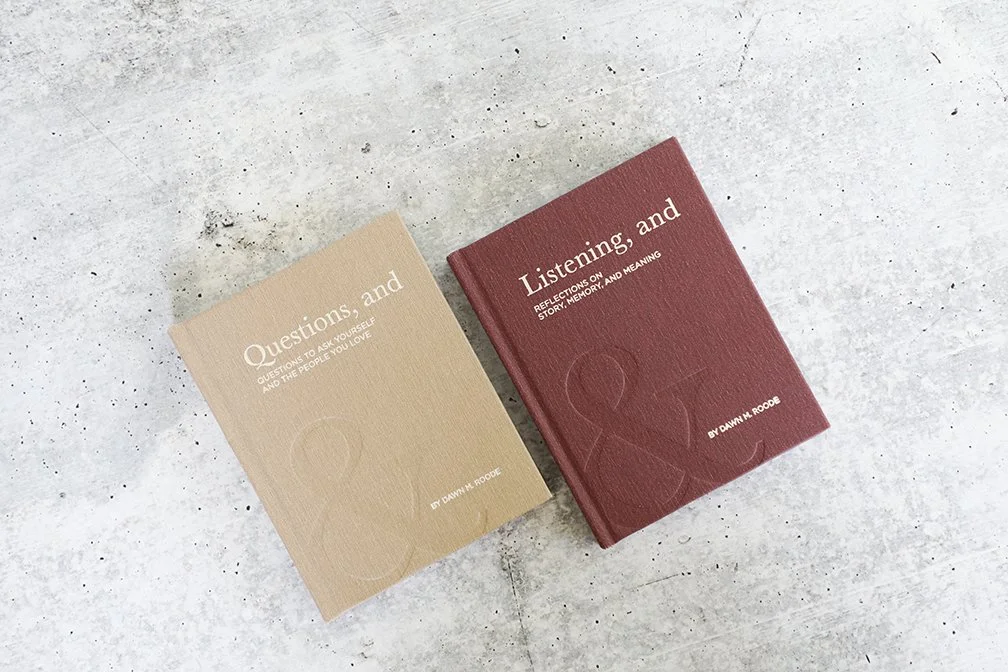
They’re here: two new books from Modern Heirloom Books
Two new books grew from years of listening to people’s stories. Meet Listening, and and Questions, and.
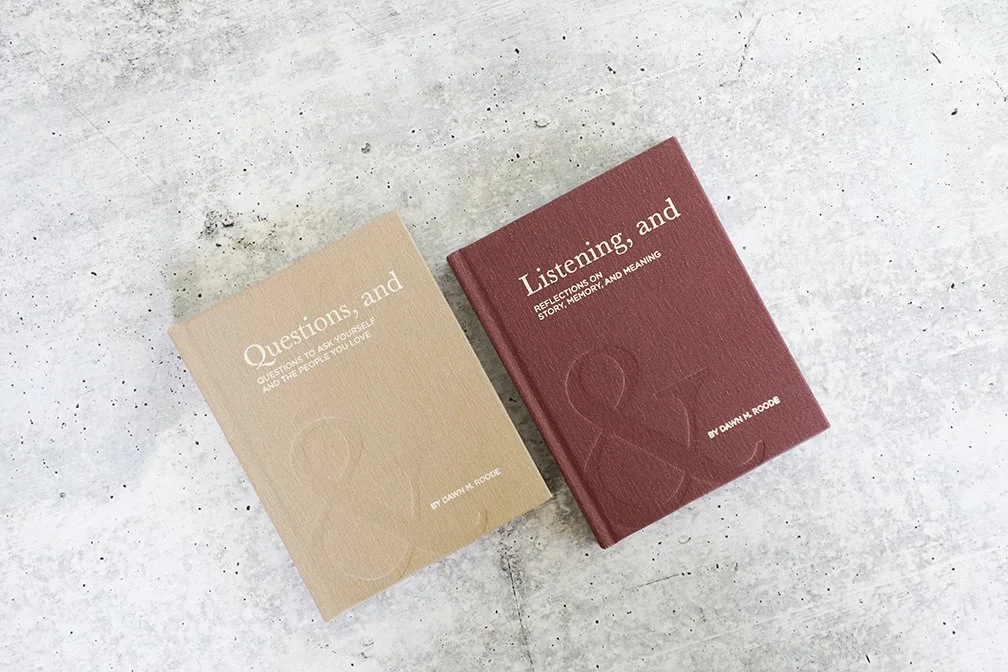
Both books—Questions, and: Questions to Ask Yourself and the People You Love and Listening, and: Reflections on Story, Memory, and Meaning—are available for purchase as a set now.
For more than a decade, I have spent my days listening to people tell the stories of their lives.
I’ve heard stories across kitchen tables and living room sofas, on long walks and Zoom calls. Stories told a hundred times. Stories spoken aloud for the first time. Stories about love and loss, family and identity, ordinary days and the moments that quietly changed everything.
Over the years, all that listening has taught me something: The stories themselves matter enormously. But so does the experience of being asked. Of being given time. Of having someone listen generously to the answer.
Two new books grew from that work.
Listening, and: Reflections on Story, Memory, and Meaning is a collection of vignettes about memory, creativity, grief, curiosity, writing, legacy—and what it means to pay attention to a life.
Its companion, Questions, and: Questions to Ask Yourself and the People You Love, is filled with questions meant to open doors: to memory, reflection, storytelling, and deeper conversation.
They can be read alone. Written alongside. Given as gifts. Left on a bedside table and opened at random.
But I especially hope they will be shared.
Ask your parent a question you’ve never thought to ask. Bring one to dinner with an old friend. Sit with your teenager, your sibling, your spouse, your grandparent.
Or turn the questions inward and see what stories surface for you.
These little books contain so much of what I have come to believe through my work at Modern Heirloom Books: that every life is worthy of attention; that curiosity is an act of care; and that one of the greatest gifts we can offer another person is simply to listen.
And there’s more to come
I’m also especially happy that these books will help support something else I’ve been working quietly to create.
A portion of proceeds from every copy sold will go to The Legacy Fund, a new Modern Heirloom Books initiative rooted in my belief that everyone deserves the opportunity to have their stories heard and preserved.
I’ll be sharing much more about that soon.
And there is more ahead for the books themselves, too.
I’ve created Questions & Conversations, a guided experience built around a wonderfully simple idea: Bring someone whose stories you don’t want to lose, sit across from one another, ask thoughtful questions—and listen.
In the coming weeks, I’ll share more about those gatherings, along with a complimentary guide for creating your own Questions & Conversations experience at home.
But for today, I simply want to say: They’re here.
After carrying these ideas with me for so long, I cannot wait to put these books into your hands—and, even more, to see where the questions and conversations lead.
Why we forget—and what it means for memoir writing
Memory is imperfect—but that shouldn’t stop you from tapping into yours to write your memoir. Learn how forgetting and bias can deepen truth in your life story.
When we look back on our lives, we like to believe we’re scrolling through an archive: a set of neatly labeled folders, each containing exact details of what happened and how we felt. But that’s not how memory works at all.
In truth, our recollections are constantly shifting, reinterpreted with every act of remembering. They’re less like recordings and more like retellings—edited, rearranged, and subtly reshaped each time we bring them to mind.
So: Memory is fallible, yes. Does that mean you shouldn’t tap into your memories to write your own memoir?
Nope. Honestly, that malleability of memory is one of the things that I think makes memoir so compelling.
Why we forget (and why that’s normal)
Scientists tell us that the brain’s job isn’t to preserve everything—it’s to help us survive. So our minds naturally prioritize the information most relevant to our safety, well-being, and identity.
We forget because the brain is selective. It keeps what matters and lets go of what doesn’t. And even what it keeps, it continually revises. Each time we recall a memory, it’s like opening a document, making a few edits, and saving over the original file. Over time, details shift—a color, a date, a conversation.
Layer onto that our human tendency toward confirmation bias (remembering things that affirm what we already believe) and rosy retrospection (looking back on the past more fondly than we felt in the moment), and it’s no wonder that siblings can recall the same event in entirely different ways.
But these imperfections aren’t flaws—they’re texture.
What that means for memoir writers
If you’ve ever worried that you don’t “remember enough” to write your story—or that your memories conflict with someone else’s—you’re not alone.
The truth is, memory doesn’t need to be perfect to be meaningful. Memoir isn’t about getting every detail right; it’s about revealing the truth of experience.
When differences arise (“My sister swears it was raining that day—I remember sunlight”), consider leaving them in. That contrast adds depth and honesty. It reminds readers—and ourselves—that our lives are filtered through perception, emotion, and time.
In the same way, partial memories or emotional impressions can be just as valuable as precise ones. A single sensory fragment—the smell of wet grass, the hum of a neighbor’s radio, the taste of hospital coffee—can transport both writer and reader far more powerfully than perfect chronology.
When you’re unsure what’s “true”: 3 ways to write anyway
Acknowledge uncertainty on the page. If you’re not sure whether a detail is exact, say so: “I think it was autumn—or at least it felt that way.” Readers appreciate honesty, and this kind of transparency builds trust.
Follow the feeling. Instead of forcing accuracy, focus on what the moment felt like: “I don’t remember what we said, but I remember how safe I felt sitting beside her.” Emotion is memory’s most reliable anchor.
Explore the differences. If someone else remembers it differently, include that contrast: “My brother insists we moved out of the house before my grandparents died; I am confident it was after. Either way, we were both impacted by the loss for years to come.”
Small divergences such as these show how perspective shapes story—and how memory itself is a conversation.
The beauty of imperfect memory
Forgetting is part of being human. It’s what makes our stories living things rather than static archives.
When you write a memoir, you’re not testifying in court—you’re offering your version of truth, shaped by love, loss, laughter, and the unsteady work of remembering.
So don’t let uncertainty stop you from writing. Let it deepen your storytelling. Use memory’s flaws as texture, its gaps as space for curiosity, and its contradictions as proof of life lived fully.
Because in the end, what we forget isn’t nearly as important as what we choose to remember—and what those memories reveal about who we are.
Further reading: memoirs that play with memory
If you’d like to see how other writers have embraced the imperfections of memory, these memoirs offer wonderful examples:
Joan Didion, The Year of Magical Thinking
Grief distorts time and recollection; Didion shows how writing through uncertainty can illuminate emotional truth.
Dani Shapiro, Hourglass
A fragmented, time-bending look at marriage and memory, proving that what’s forgotten can be just as revealing as what’s remembered.
Mary Karr, The Liars’ Club
Karr doesn’t hide her hazy recollections; instead, she acknowledges contradictions head-on, using them as evidence of her story’s complexity.
Jeannette Walls, The Glass Castle
Walls reconstructs an imperfect past with honesty and heart, reminding us that emotional accuracy matters more than factual precision.
Alice Walker, The Same River Twice
Juxtaposing journals written decades apart, Walker shows how perspective transforms memory over time.
Philip Roth, Patrimony
The interplay between Roth’s and his declining father’s memories becomes a meditation on what remains when both narrative and life begin to fade.
Each of these writers proves that memory’s flaws aren’t barriers; they’re invitations to look deeper, write braver, and embrace the shifting landscape of truth.















3 ways to bring an oral history interview to life
Learn how to transform oral history interviews into lasting keepsakes—from edited transcripts to personal podcasts and narrative family histories.
The type of family history interview you have conducted—and what other materials you have to help tell the story—will help you determine which route to take for transforming a straightforward interview into a lasting (and engaging!) legacy.
This post continues our series on preserving oral histories. If you haven’t yet read “Preserving Audio and Video Interviews: From Recording to Storytelling,” start there for tips on how to record, store, and safeguard your interviews before you begin shaping them into something new.
Once you’ve recorded an oral history interview—and backed it up, transcribed it, and maybe even listened again with a cup of tea—you might wonder: What now?
An interview is a living document. It’s filled with stories, emotion, and sometimes meandering details that don’t immediately fit together. But with care and a few creative choices, you can turn that conversation into something your family will actually return to—not just once, but for generations.
Here are three ways to shape your recorded interview into a lasting, shareable legacy.
1. Edit the transcript into a first-person narrative.
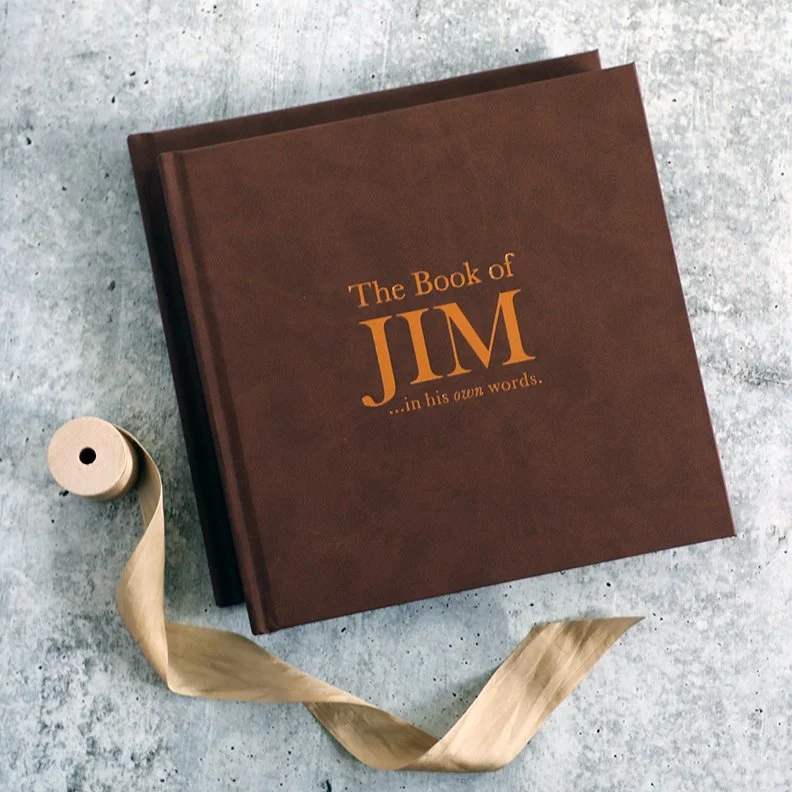
This approach keeps the speaker’s voice front and center—just as it sounded in conversation—while giving it structure and flow.
Lightly edit the transcript to remove filler words and small repetitions, then organize the story into natural sections. You might add short third-person lead-ins or subtitles to introduce themes and transitions (“In her early years,” “Life during the war,” “Finding her way in America”).
It’s also perfectly fine to rearrange the content so that related memories sit together—for example, gathering all stories about childhood, even if they appeared in different parts of the original interview.
Think of it as the kind of skillful editing used in magazine Q&As that combine multiple conversations into a seamless piece. The goal isn’t to alter the speaker’s story—it’s to clarify and honor it, allowing their personality and cadence to shine while helping the reader follow along more easily.
This format works beautifully in tribute books, family memoirs, and even framed story excerpts.
2. Create an edited audio file with themed chapters.
If you love the intimacy of a voice—the laugh, the accent, the pause before an emotional memory—consider turning your recording into a mini “family podcast.”
Using basic editing software like GarageBand, Descript, or Audacity, you can trim long pauses or tangents, then organize the audio into short themed chapters: Early Years, Marriage and Family, Work and Service, Reflections.
You might even add simple narration between segments, recorded by another family member—such as, “In this next section, Dad remembers his time stationed overseas.”
When complete, the result is deeply personal—a collection of spoken memories that future generations can hear exactly as they were told.
Save the edited audio file as both an .mp3 and .wav version, label it clearly, and share copies with your family or store it securely in the cloud.
3. Build a third-person narrative that weaves in the interview.
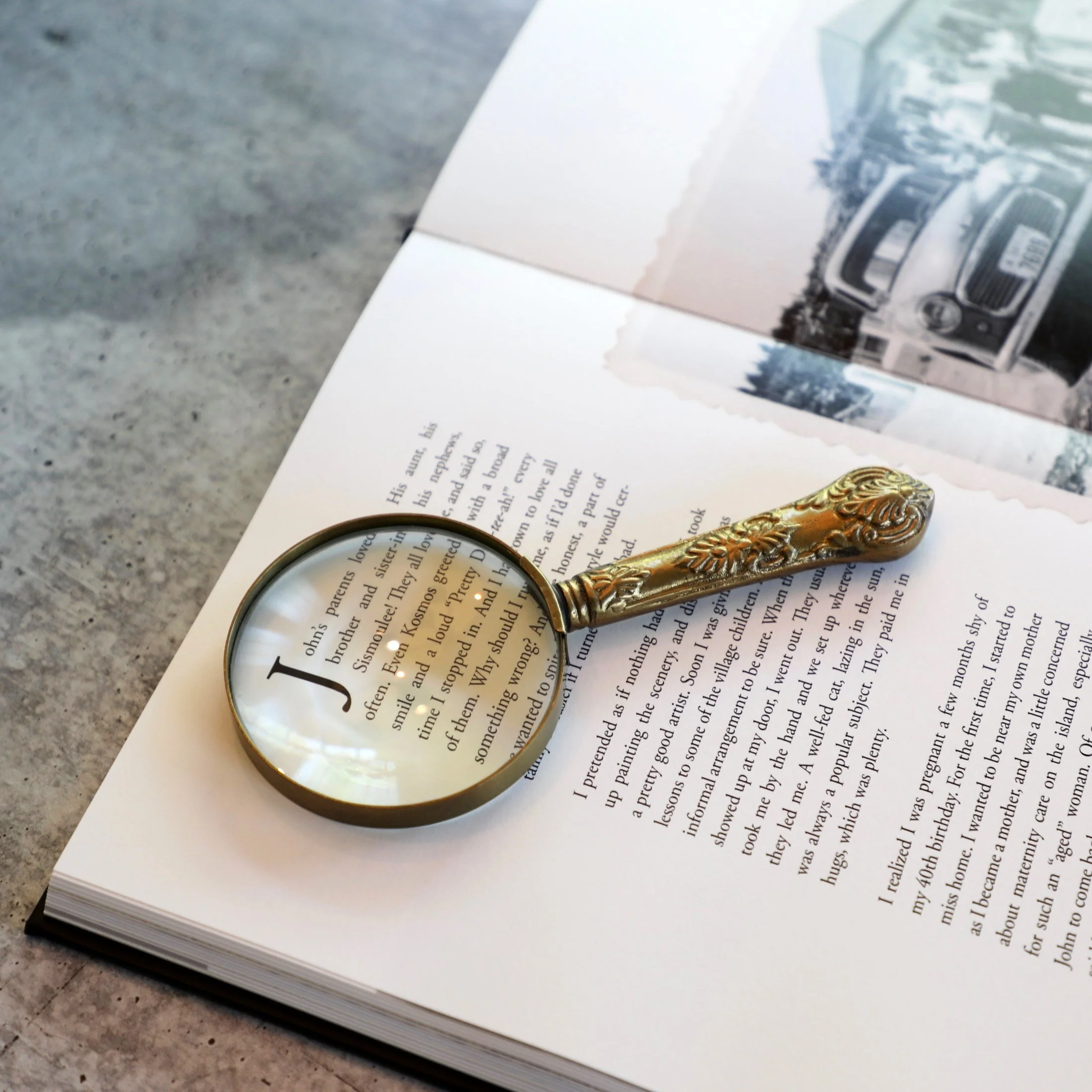
Sometimes an interview is only the beginning. If you’re working on a larger family history, you can use the transcript as a foundation for a narrative written in your own words—while weaving in select quotes to retain authenticity and voice.
This approach allows you to expand on the story through research, context, and reflection. Combine the interview with letters, photos, genealogy records, or other family members’ recollections. The result becomes a richly layered account—one that’s factual, textured, and emotionally true.
For example: “Ruth remembered her first years in Brooklyn as a blur of noise and possibility. ‘It felt like the city was breathing,’ she said—a far cry from the quiet village her family had left behind.”
This format works especially well in memoirs or heritage books where multiple voices and sources come together to form a single, coherent narrative.
An oral history is a gift—but it’s also raw material. Whether you shape it into a readable story, a personal podcast, or a written family chronicle, the goal is the same: to make the memories accessible, engaging, and lasting.
The stories you’ve recorded don’t truly come alive until they’re shared.

















Life Story Links: August 11, 2026
Dawn Roode’s curated roundup for the week of August 11, 2026, includes recent stories on memory-keeping, personal history interviews, and deciphering a life.
“If you are interviewing someone for an oral history, remember that you are not there simply to satisfy your personal curiosity. You represent future readers who will not know as much about the context of that person’s life and will need more explanations than are normally needed in conversations between people who know each other well.”
—James R. Hagerty, Yours Truly
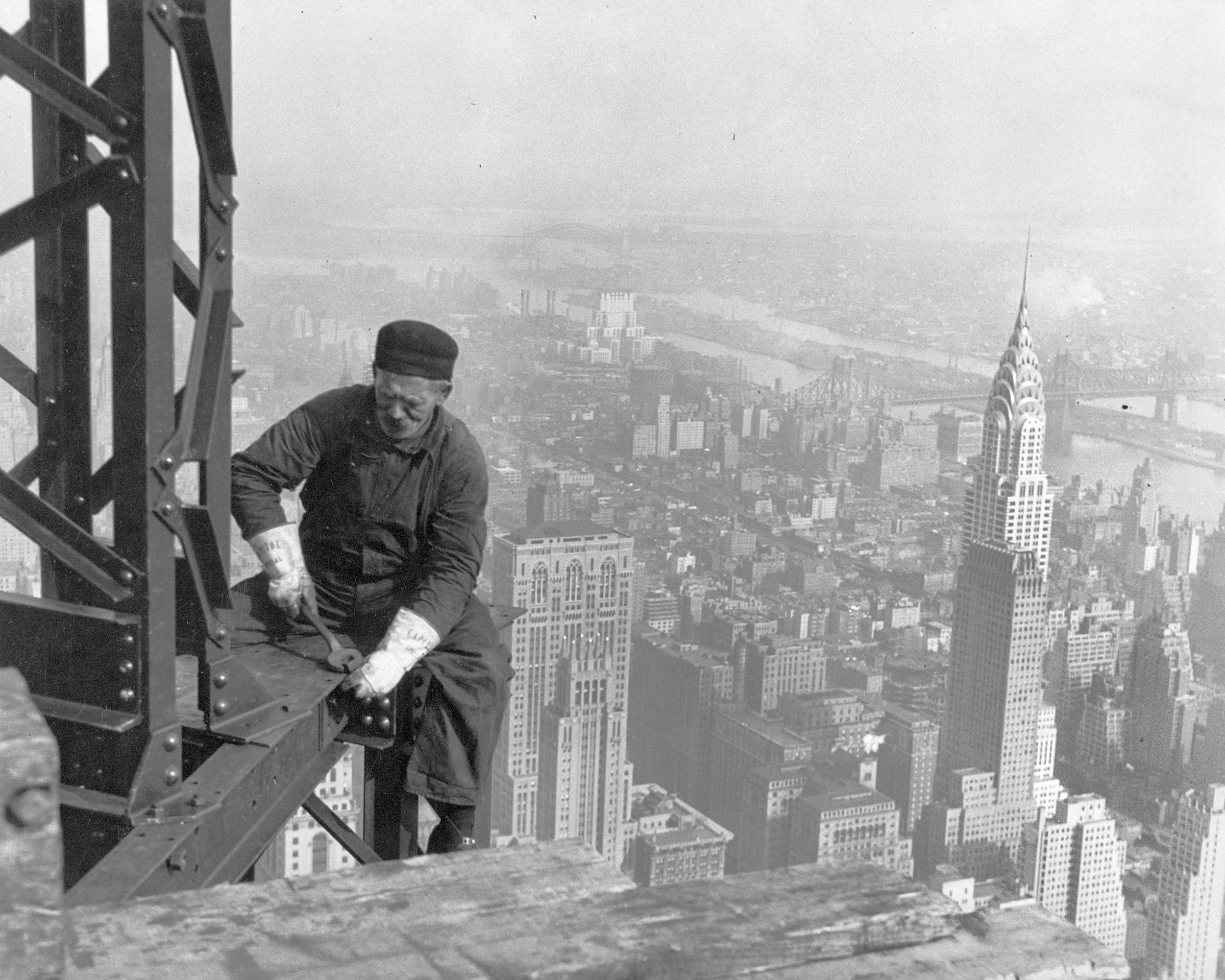
Vintage photograph “Keeping Up With the Boys,” an old-timer structural worker at the Empire State Building, New York City, 1930, by Lewis Hine; from a 1998 print. Records of the Work Projects Administration (69-RP-4K-1). Courtesy Picturing the Century Exhibition, National Archives.
Personal history hodgepodge
BEST PRACTICES FOR RECORDING INTERVIEWS
“Recording a great interview is only the first step. How you handle that recording afterward—from transcription to storage to storytelling—determines whether those memories will endure for years or disappear with a crashed hard drive.”
104-YEAR-OLD TIME CAPSULE
“The concept of printed photos assembled into a scrapbook with the little whimsical captions Mary Ellen wrote—the names, the places, and that kind of stuff—it’s just a lost art. It’s a relic of the past.” A reporter traces the unexpected path of his grandmother’s photo album.
WORDS FOR NOW
Maggie Smith, the author of one of my favorite memoirs (You Could Make This Place Beautiful), takes the Six-Word Memoir Interview, expounding a little on the mini-memoir that applies to her life today.
A TALE OF TWO NAMES
“The call upon any of us to interpret a life is convoluted—especially if said life is played out on the public stage.” The editor of Kitchen Confidential attempts to reconcile the paradox of Tony Bourdain upon the release of the new biopic Tony.
AN ARCHIVE INFORMED BY LIVED EXPERIENCE
When Shape Arts began creating the UK’s National Disability Movement Archive and Collection (NDMAC), they knew that preserving history was only part of the job. “We also needed to think about how that history and heritage would be collected, who would feel able to contribute and who could access it.” (Learn more about how the Heritage Fund is investing in disability heritage.)
WE THE PEOPLE
The stories of one Civil War soldier might have been lost to history, if it wasn’t for one businessman with a passion for the past. Watch a special episode detailing his journey.
QUOTE-WORTHY
“Every kid feels that the world around them is not under their control necessarily. They're not controlling every part of their experience, but on the page, it's all yours, and you can write this linear narrative that makes sense, and no one can mess with it.” Go straight to the 11-minute mark to listen to Dave Eggers talk about the benefits of storytelling for young students, or start at the beginning for a delightful interview with a master writer:
Short takes
Preserving audio and video interviews: from recording to storytelling
Learn how to record, transcribe, and store interviews with care. Tips on consent, ethics, and turning audio or video conversations into lasting family stories.
Recording a family history interview is as simple as using a voice recorder on a device such as a tablet or smart phone.
When someone trusts you with their memories—when they sit down in front of a microphone or camera and share their story—you’re holding something precious. But recording a great interview is only the first step. How you handle that recording afterward—from transcription to storage to storytelling—determines whether those memories will endure for years or disappear with a crashed hard drive.
At Modern Heirloom Books, I’ve learned that preserving interviews is as much about care as it is about craft. It’s about listening well, recording responsibly, and treating people’s stories with the respect they deserve.
Best practices for recording family history interviews
1. Recording with intention
The technical setup doesn’t have to be fancy, but it does have to be thoughtful.
Choose a quiet space. Avoid kitchens (appliances hum) and large echoey rooms. Soft furnishings, like curtains or carpets, help absorb sound.
Test before you begin. Record 20 seconds of conversation, then play it back. Adjust mic distance, reduce background noise, and double-check your battery or storage levels.
Back up immediately. Save the file to at least two locations—ideally an external drive and a cloud-based service. Name the file clearly (for example: Interview_MiriamRosen_2025-02-10).
Get permission in writing. Always explain how the recording will be used, and have participants consent—especially important for projects you plan to publish or share.
2. Working with older participants
Many of the most meaningful stories come from older generations—but that also means being sensitive to energy, comfort, and pacing.
Keep sessions short. One hour is usually enough. Fatigue affects memory recall.
Be patient with pauses. Silence often signals deep thought; don’t rush to fill it.
Bring visual prompts. A photo, newspaper clipping, or memento can help unlock memories.
Check the environment. Good lighting, a comfortable chair, and room temperature matter more than you think.
3. Ethical considerations and consent
When you record someone’s story, you become its steward. Handle that role with transparency.
Explain purpose and scope. Let them know whether the recording is for personal use, publication, or archival storage.
Clarify ownership. If possible, have a signed release stating who retains rights to the recording. (At Modern Heirloom Books, the storyteller always does.)
Honor boundaries. If someone asks for a section to be edited or omitted later, do it—no questions asked.
Protect privacy. Store sensitive recordings securely, and think carefully before sharing publicly.
4. Transcribing the conversation
Transcription is where the raw story begins to take shape. While automated tools like Otter.ai, Descript, Zoom, or ChatGPT can help, always review manually to correct errors—especially names, dates, and emotional nuance.
A few tips:
Timestamp key moments. It’s helpful when you later want to pull quotes.
Note tone and pauses. A soft laugh or a long silence can carry emotional weight.
Respect voice. Don’t over-edit for grammar; people’s natural rhythms make transcripts human.
Read aloud. If you’re planning to turn the interview into a narrative piece, read the transcript out loud. You’ll hear the music of their speech—and know which parts to keep verbatim.
5. Storing for the long term
Digital storage is fragile. Protecting your files now ensures they’ll still exist when future generations go looking.
Triple backup. Keep at least one local copy (external hard drive) and two cloud-based backups (like Google Drive and Dropbox, or an archival service such as Backblaze).
Name files consistently. Use clear labels: Lastname_Firstname_Interview_Date.
Store metadata. Keep a simple spreadsheet noting who was interviewed, when, by whom, and where. If you want to go a step further, include key phrases (many transcription software programs now use AI to help with this).
Create a preservation plan. Every few years, check your file formats and transfer them to updated storage—don’t leave them on aging technology. I recommend adding an annual reminder in your calendar for this task, as it’s otherwise likely to fall by the wayside.
6. Turning transcripts into stories
Once transcribed, interviews become rich material for narrative. But they shouldn’t be copied wholesale. Instead:
Look for patterns. Repeated phrases, values, or memories often form a natural thread.
Preserve voice. Keep their expressions and rhythms, even if you edit for flow.
Add historical context. Ground their experiences in time and place—what was happening around them.
Share drafts when possible. Let the storyteller (or their family) review before publishing; it builds trust and ensures accuracy.
Resources for further guidance
If you’d like to explore best practices in oral history and ethical recording, these organizations are invaluable:
StoryCorps
Promotes everyday storytelling and provides interview guides and consent templates.
The Oral History Association
Offers ethical standards, equipment advice, and transcription guidelines.
Library of Congress Veterans History Project
Excellent resource for interviewing veterans and preserving recordings for posterity.
Smithsonian Folklife & Oral History Guide
Comprehensive handbook on oral history methods and cultural respect.
Preserving a recorded story is both a privilege and a responsibility. Technology gives us incredible tools—but it’s the human care behind them that matters most.
When you record a voice, you’re capturing not just sound but presence: the laughter between sentences, the breath before a memory, the emotion carried in a pause. Those moments are what future generations will remember—not just what was said, but who was speaking.
Up next…
Once your interview is recorded and safely stored, the next step is bringing it to life. In Part Two, I share three creative ways to transform a raw conversation into a lasting family story.




Life Story Links: July 28, 2026
Dawn Roode’s curated roundup for the week of July 28, 2026, includes recent stories on memoir writing in the age of AI, the nature of personal legacy, and more.
“When I am writing fiction, I am trying to get at the literary truth; when I am writing nonfiction, I aim for both the literary and literal truth. If that seems a restriction on my authorial freedom, it is a small price to pay for retaining belief in the wonderful, gruesome, uncanny shimmer of the facts as they play out in life.”
—Phillip Lopate, To Show and To Tell
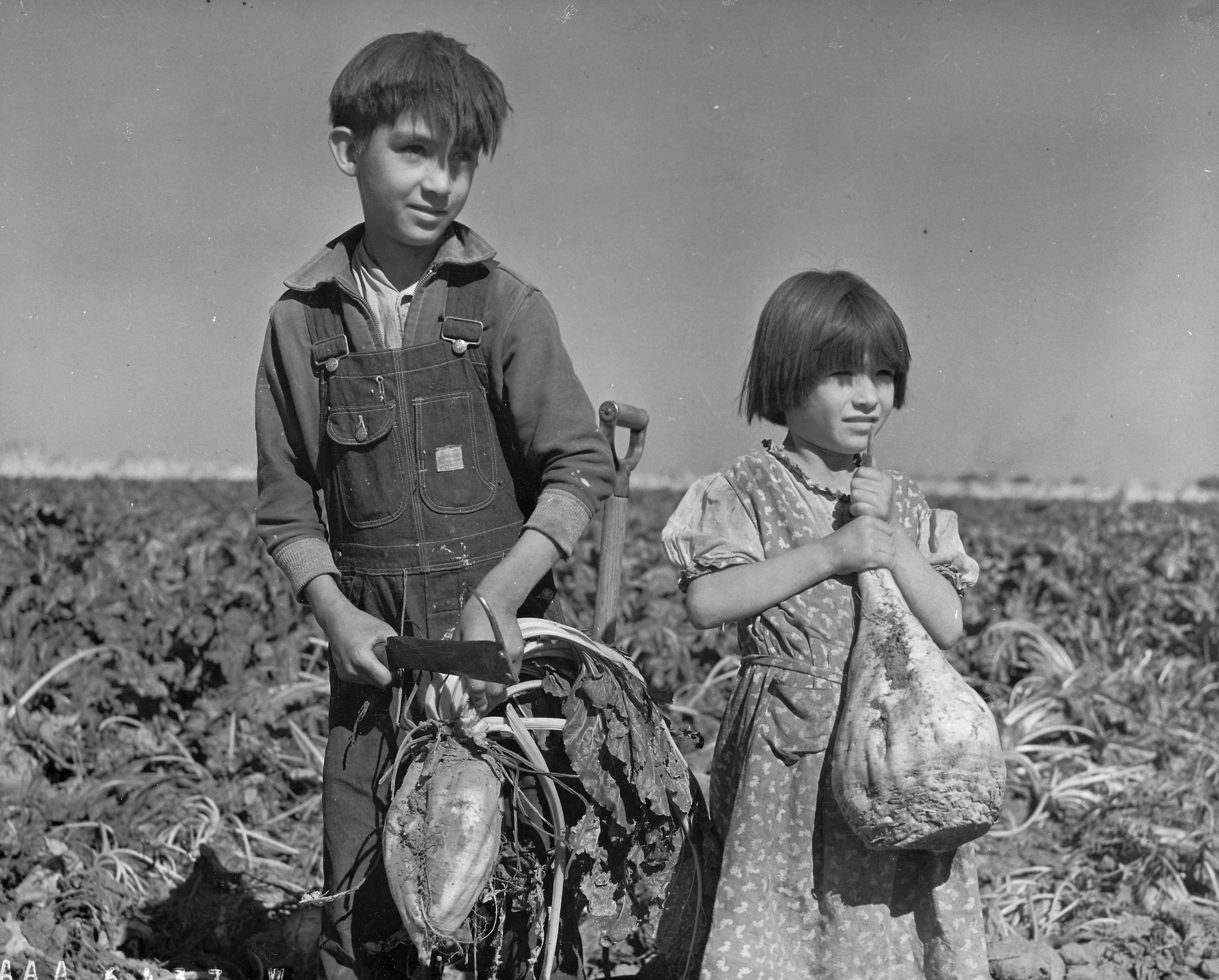
Vintage photograph titled “Children and Sugar Beets,” Hall County, Nebraska, October 17, 1940, by L. C. Harmon. Courtesy Picturing the Century Exhibition, National Archives.
Writing our lives
A FATHER-AND-SON MEMOIR
“I think I learned that there is a lot of myth-building we do as humans about our own experiences, because my dad had grown accustomed to telling his stories in set ways that felt comfortable for him to tell, but also captivated listeners. He was a survivor, a bit of a hero, in those versions.” Jason Prokowiew on turning 50 hours of interviews with his father into an engaging braided memoir.
UNEXPECTED MEMOIR TOOL
“The enduring appeal of the Proust questionnaire lies in its elegant simplicity: a series of deceptively straightforward questions that invite deep reflection.” Last week I wrote about how to use this century-old set of questions for memoir writing.
EMBRACING THE SPIRAL OF TIME
“Our lives are complex and weave in and out of time as our understanding of self and experience matures. And when we are diving deep into the tangled web of our stories, we sometimes need to return to a past self, seek out an ancestor, or lean on the future self all while remaining present and in the now of writing the story.”
ON WRITING LITERARY BIOGRAPHY
“Life is unparaphrasable; no self can ever be fully known. Literary biography is an interpretive art. Like other arts of literary interpretation,…it requires scrupulous accuracy and is at the same time dependent on moments of intuitive engagement.”
PRESERVING SOMETHING PRECIOUS
“Long before the fog of dementia crept in, Nana had been preserving pieces of her memory alongside the fleeting bounty of each season.” Chadwick Boyd writes about the one jar of tomatoes he still can’t bring himself to open.
Personal legacy in the modern age
‘SOMEONE USED A.I. TO WRITE MY BIOGRAPHY’
“Verified-author badges, provenance metadata, and retailer-side disclosure of AI authorship do not really exist at scale today, and the first marketplace to build them credibly will get to define what an "authentic" biography of a living person even means online,” AI Weekly reports on this original NYT article by Kashmir Hill.
CURATING PERSONAL ARCHIVES
“I’m part of a generation trained to scroll and yet I crave turning pages. I don’t want my life to be a tab on the computer screen. I want it to feel real and like a story that can literally fade. And I say all this while simultaneously being dedicated to digitizing what past generations have left behind. It’s a both/and situation.”
HOW WE DISAPPEAR
Stanford professor Thomas Mullaney has spent decades thinking about the unreliability of archival materials in understanding the past, but it wasn’t until his own father died and he scrambled to preserve the evidence of his life that he decided to write about how we disappear from the historical record and from the world. Listen to an interview with him:
EVERY STORY HAS A PLACE
“That’s what storytelling is supposed to do—not just entertain, but help people better understand one another.” Family memories, personal experiences, and historical moments only survive if someone is willing to tell them:
Short takes
How the Proust Questionnaire can unlock your memoir
Discover how the Proust Questionnaire can unlock your memoir. Reflective questions to spark memory, deepen insight, and reveal your authentic story.
Long before personality quizzes filled our social media feeds, there was the Proust Questionnaire, a simple yet profound set of prompts designed to reveal a person’s true nature.
The questionnaire’s origins trace back to a 19th-century parlor game known as a “confession album.” Marcel Proust, the French novelist and essayist, famously answered one as a teenager and again later in life. His thoughtful, introspective responses transformed what had been a lighthearted pastime into something enduring—a tool for exploring identity, values, and emotion.
Writers have been using versions of the Proust Questionnaire ever since. Journalist Bernard Pivot adapted it for French television interviews; decades later, James Lipton brought a shorter, creative version (see first comment below) to a new audience at the end of each episode of Inside the Actors Studio. And Vanity Fair has long featured entertainers and cultural icons answering the questionnaire on the magazine’s back page.
The enduring appeal of the Proust questionnaire lies in its elegant simplicity: a series of deceptively straightforward questions that invite deep reflection.
Why it works for memoir writing
The Proust Questionnaire offers a shortcut—not to a finished memoir, but to the heart of one. Each question nudges you toward the emotional truths that make a story come alive.
When you’re writing personal history, the hardest part is often identifying what really matters: the moments, beliefs, and relationships that define you. Proust’s questions bypass the timeline and reach directly for meaning.
Try answering them not as a rapid-fire quiz, but as a reflective exercise. Linger on the answers. Explore why you believe what you believe, or how your answers might have changed over time. The results can be illuminating—and often provide an authentic foundation for scenes, anecdotes, or reflections in your memoir.
The (original) Proust Questionnaire
What is your idea of perfect happiness?
What is your greatest fear?
What is the trait you most deplore in yourself?
What is the trait you most deplore in others?
Which living person do you most admire?
What is your greatest extravagance?
What is your current state of mind?
What do you consider the most overrated virtue?
On what occasion do you lie?
What do you most dislike about your appearance?
Which living person do you most despise?
What is the quality you most like in a man?
What is the quality you most like in a woman?
Which words or phrases do you most overuse?
What or who is the greatest love of your life?
When and where were you happiest?
Which talent would you most like to have?
If you could change one thing about yourself, what would it be?
What do you consider your greatest achievement?
If you were to die and come back as a person or a thing, what would it be?
Where would you most like to live?
What is your most treasured possession?
What do you regard as the lowest depth of misery?
What is your favorite occupation?
What is your most marked characteristic?
What do you most value in your friends?
Who are your favorite writers?
Who is your hero of fiction?
Which historical figure do you most identify with?
Who are your heroes in real life?
What are your favorite names?
What is it that you most dislike?
What is your greatest regret?
How would you like to die?
What is your motto?
(The Proust Questionnaire is part of the public domain; this version has been widely adapted and reinterpreted over time.)
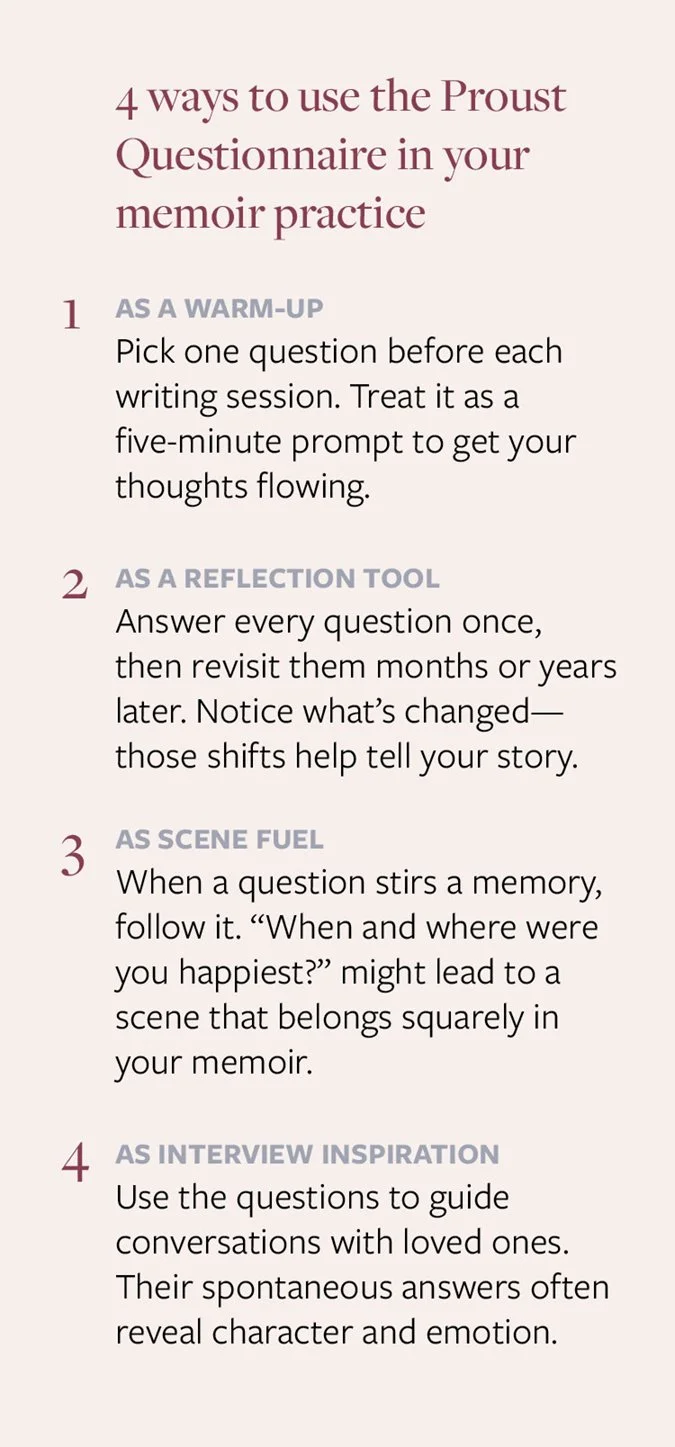
How to use it in your writing practice
as a warm-up
Pick one question before each writing session. Treat it as a five-minute prompt to get your thoughts flowing.
as a reflection tool
Revisit your responses every few years. Shifts in your answers reveal growth, changing priorities, and new perspectives.
as Scene Fuel
When a question stirs a memory, follow it. “When and where were you happiest?” might lead to a scene that belongs squarely in your memoir.
as interview inspiration
Try posing these questions to parents or grandparents. Their answers can form the basis for a rich oral history or tribute project, might inspire them to write their own memoir, or even provide you with context in yours.
Helpful ideas
Start with Spontaneity.
Don’t overthink—write your first, instinctive answers. You can always expand later.
leave a legacy snapshot
Print or handwrite your responses, date them, and tuck them into your journal, scrapbook, or memory box. Future generations will treasure such a discovery.
Why I love it as a memoir tool
I’ve always been drawn to exercises that reveal depth through simplicity—and this one never fails. The questions are timeless, the answers always specific. They bridge introspection and storytelling, reminding us that the best writing doesn’t begin with chronology or plot. It begins with truth.
Many of the most memorable stories I’ve helped shape at Modern Heirloom Books began with reflections such as these: small, personal revelations that grew into full portraits of a life. Whether you’re writing a full life story or just gathering memories for your family, the Proust Questionnaire offers a wonderfully accessible place to begin.



Dawn Roode’s curated roundup for the week of Sept. 23, 2026, is overflowing with recent reads on memoir, life story writing, and family history preservation.