
Memories Matter
Featured blog Posts


READ THE LATEST POSTS

How I’ve gotten to know more than 50 people I’ve never met this year
How lucky I am to "meet" your loved ones through the tributes you and others share in their honor! The stories that memorialize them live on for generations.
Kathy was an incredible mentor, a champion of women in the workforce, and a grandmother whose pride outshone other grandmothers everywhere.
Jim was an avid outdoorsman who found meaning in faith later in life, fell in love when he least expected it, and left a blueprint for how to live for his children.
Jen, who battled cancer like a warrior, embodied positivity, maintained lifelong friendships with her sorority sisters, bought a camper van to go on adventures with her twin daughters, and made killer chocolate chip pancakes.
Lena was a Russian Jewish immigrant who approached the world with a sense of wonder and gratitude, found great joy in motherhood, and once inspired a friend to buy half a cow (that one’s a long story, but well worth hearing!).
I never met Kathy, Jim, Jen, or Lena, but I feel like I knew them—the best of them, the pieces of them that friends, family, and colleagues wrote about in tributes that promise to keep their legacies alive for their loved ones and the next generation.
Tribute books that honor the legacy of lost loved ones
Since I launched Modern Heirloom Books in 2016 upon writing and designing a tribute book in honor of my mom, who had died suddenly shortly after I became a mom myself, I have helped more than 100 people honor their own lost loved ones in such books. It is, truly, one of the greatest honors of my career to memorialize people in this way.
When I help people tell their own stories through personal history interviews or memoir coaching, I often talk about how the journey is as important as the finished product. Similarly, when I talk with people who want to celebrate the life of someone they have loved and lost, I talk not just about the journey (because writing about loss can certainly be a healing path through grief), but about the experience after the book is printed: The book, I advise, should be a living memorial, something that you pull out to ‘visit’ with the deceased through the photos and words on the page.
Most people who come to me hoping to make a memorial tribute book do so with the intention of gifting them to the children of the deceased. Sometimes, those children are adults who have given the eulogy at their parent’s funeral service; other times, they are mere babies who will have no real memories of their parent.

Many times, a spouse, parent, or child wants to memorialize their relative in print for themselves and their family.

Either way, gathering stories about the deceased from a group of people ensures that many sides of their personality are highlighted. Work colleagues share stories that family members likely never heard before. Friends offer up remembrances from younger years that enlighten another side of the subject. And family members get to the heart of the person, telling everyday stories alongside monumental ones, revealing what they loved about the person, what they will miss, what they want to remember.
All of these tributes together create a lasting legacy of the deceased, and I am privileged and honored to help usher them into the world—just as I am privileged and honored to “get to know” these individuals through the love and words of those they have left behind.
Tribute book resources and ideas
8 tips for creating your own tribute book in honor of a lost loved one
If you’d like to create a book but would rather have professional guidance along the way, contact Dawn to learn how we could work together on a tribute book or other heirloom book project.





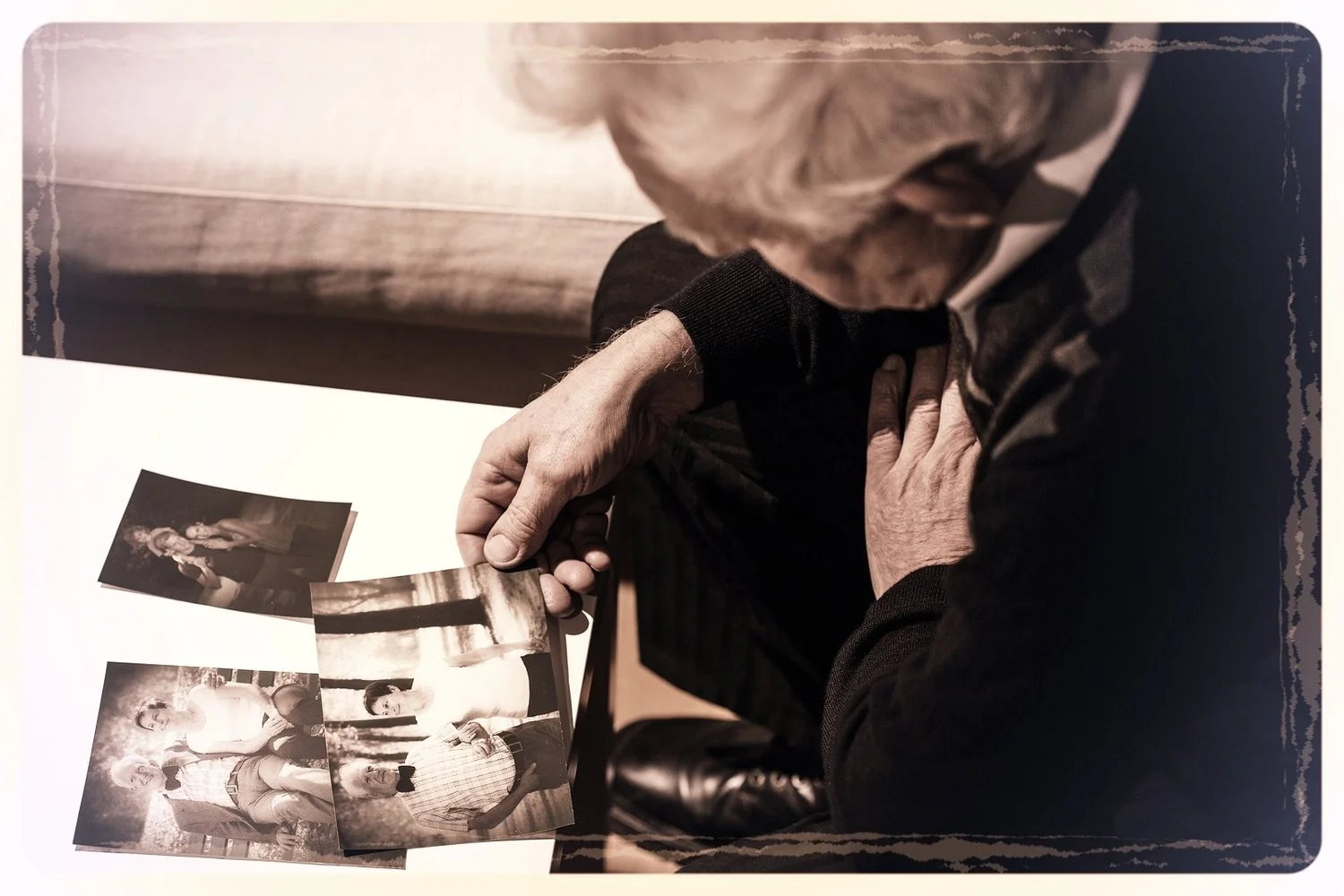


Who (or what) are you missing this holiday season?
I hope you'll take comfort in these personal stories of vulnerability and loss during the holidays. (Sharing memories about loved ones is always a good thing.)

The 2020 Christmas and Hanukkah season will be anything but normal—but one constant is that stories are always welcome!
There’s nothing “usual” about these December holidays. This pandemic year has taken us all for an unexpected ride. And while funny memes and abundant comfort food may ease our path, they do little to truly soothe our souls.
I recently shared a post on social media: A 2020 gift list for grievers curated by Allison Gilbert, author of the wonderful book Passed and Present: Keeping Memories of Loved Ones Alive. One commenter noted how “everyone is grieving something this year.” Ah, yes, I thought—maybe that’s why the post resonated more deeply than usual with me.
And maybe that’s why I feel compelled to share a few resources for anyone who is, indeed, grieving during this season.
I am no stranger to holiday grief, having lost my mom unexpectedly just three days after Christmas in 2009, and two of the very personal posts below reveal my vulnerability at this time of year—as well as how story sharing about our deceased loved ones can be healing (dare I say, even joyful). I hope you can take a measure of comfort from my words.
The middle post offers up a list of memory-provoking questions designed to elicit holiday stories from a family member. While the original intent was to use them to guide a personal history interview with a loved one, again, this pandemic year may challenge that approach… So, if you are physically apart from your relatives, consider interviewing them from afar via Zoom (or a good old-fashioned phone call)—just remember to hit record on your smart phone or on a recorder to ensure you capture their memories for posterity! Another idea: Set aside some of your own time to write about your memories; these questions work just as well as writing prompts, after all.
Wherever you are, whomever you are missing, know that I am with you in spirit and wishing you peaceful and happy holidays!


8 tips for creating your own tribute book in honor of a lost loved one
Writing a tribute book is a meaningful way to create a lasting legacy for a lost loved one. These expert tips from a personal historian will help.

Writing and designing a tribute book is a meaningful way to create a lasting legacy for a lost loved one.
After helping many individuals gather memories and express their love for a family member who has passed away, I have gathered my top eight tips for creating a tribute book on your own.
Remember: This is a labor of love. It may take some time, and you may get frustrated when you embark upon a part of the project with which you have no experience. That’s okay. Always think back to your why. Why you have decided to create this tribute book will motivate you to keep going, as I hope, too, will the advice that follows.
Top tips for gathering memories of a lost loved one:
Top tips for editing and designing a tribute book:
Click on any of the numbered items to go straight to that tip, or continue scrolling to read the whole story.
Gathering memories & tributes for your book

1 - It’s okay to be funny.
If your loved one was a vibrant and funny person in life, it stands to reason that tributes about them after their death should be infused with humor. It’s okay to step outside your grief and remember them with a smile, even a laugh. Happy memories provide comfort and help us heal, and will be a balm to the soul when you pull out this tribute book to visit with your lost loved one someday in the future.
2 - Be specific.
Be as specific as possible in your remembrances. This is the key to creating a moving tribute that holds meaning and calls the spirit of your loved one forth. Be heartfelt and open-hearted, and talk about distinct experiences you shared with the deceased. “That time Marc walked three miles to get Mom a cookie…” says so much more than “Marc was thoughtful”; “Deborah donned her Giants fan gear and ordered pizza from Sinapi’s every single Sunday” demonstrates her love of sports more than saying “Deborah was a Giants fan.” If everyone writes "Maria was a lovely person," it's not nearly as personal as saying WHY or sharing a story that illustrates the point!
3 - Be smart about gathering tributes from other people.
Chances are you won’t be the only person writing a tribute to your loved one who has passed away. Go ahead and ask family members, friends, work colleagues, and others to contribute to your tribute book. Ask for something concrete: “200-500 words about why you loved the person,” for example, or “please tell a story about a time they made you feel special.” Give contributors a deadline (even if you don’t need the book completed by a celebration of life or other event, choose a due date or you won’t get responses at all). Remember, too, that for some people, talking is easier than writing: If you think that may be the case for key family members, consider asking them to record their reminiscences, or record a conversation with them to capture their tributes, which you can type up later for the book.
4 - Include something in the deceased’s own words.
You don’t need to replicate full pages from their journal, but if you come across one or two things they have written that resonate, include them. Perhaps it’s a poem or a quote from a diary, a special letter to a family member, or even a handwritten recipe for that one comfort dish they always made. Hearing their voice come through in the pages of your tribute book will help keep their spirit alive.
Editing & designing your tribute book

1 - List relationships explicitly.
While it seems obvious to you as you’re creating a tribute book that the person you are honoring was your mother, someone else’s sister, friend, colleague…well, it won’t be so obvious in a few years’ time, and certainly not in a few decades. Make your tribute a lasting contribution to your family history archive. By providing full names and relationships to the person being honored, you ensure that the next generation may understand the bigger picture and get to know your deceased loved one more intimately.
2 - Include pictures—but not too many.
Will you include photos of the person being honored only? I recommend also including pictures of the people offering tributes. Alongside an individual’s quotes, include a photo of them with the deceased whenever possible. Include a curated selection of photos of the person you are honoring from different stages of their life—from childhood through old age—so you show their personality and experiences but do not overwhelm a reader. You want the photos to add to the stories within your tribute book, not distract from them.
3 - Consider transcribing handwritten notes.
While I love the idea of including handwritten tributes in your book, you run the risk of people not reading them if they don’t appear immediately legible. A design can get messy, too, if a book has page after page of scanned handwritten missives. Consider including portions of a note—such as a handwritten quote here and there—as design elements alongside typeset transcripts of everyone’s tributes. You can always save handwritten stories tied with a lovely ribbon or inside a special box; they’re destined to become a unique family heirloom all their own.
4 - Choose book materials wisely.
Whether you decide to use a digital on-demand printer to produce your book or go a more DIY scrapbooking route, plan for your tribute book to last. Use archival paper and acid-free adhesives in a scrapbook or hand-bound album; and save digital copies of your computer-designed book in multiple locations (an external hard drive or cloud backup, for instance). You and your family have worked hard to memorialize this special person who has passed away, so do what you can to ensure their legacy lives on.
Related resources
If you’d like to create a book but would rather have professional guidance along the way, consider our personal historian services: Explore our tribute book packages.
Contact Dawn to learn how we could work together on a tribute book or other heirloom book project.

FREE:
Questions to Help You Honor Them
This printable list of 35 questions to ask to prompt memories of your lost loved one is a helpful tool, especially to have on hand when gathering with family.
A gift to myself on my 50th birthday
As I turn 50, I have one wish: For those who knew my mother to share with me stories of her life, and for those who didn't, to share a remembrance with loved ones.

A look back at birthdays past…
I am turning 50 tomorrow. I don’t feel any of the pangs of “ugh” or “oh no!” that some of my friends have told me about upon hitting the half-century mark. On the contrary, I feel at peace and quite content to have reached this milestone, and excited about what’s to come in the decades ahead.
I don’t want much in the way of physical gifts (a box of chocolates would be nice ; ). One day recently, though, when I was on the massage table (where some of my most productive thinking happens!) I did hit upon something I truly want: to feel a connection to my mom.
Of course, I do feel incredibly connected to my mother, who has now been deceased for more than 10 years and who I think about with love every day. But I am missing her more viscerally than usual; I feel the hollow within so deeply, and crave…her glance, her hug, her presence.
My birthday wish: stories of mom
So I decided to ask for this on my birthday:
For anyone who knew my mother, could you please take a few minutes to share a remembrance of her with me? It could be a tiny moment or a big one, a faint glimmer of a memory or one you hold dear… Honestly, hearing stories of her through your eyes is a gift unlike any other, and one for which I would be most grateful.
For those who did not know my mom, please take the time to share memories of a lost friend or family member with another loved one! I have goosebumps thinking of the unanticipated joy you may bring to another, and the generous act of sharing your story will be rewarding for you, as well—I promise.
Whether the person you are remembering passed away a day ago or 50 years hence, the remembrance will be welcomed as a gift. It is my sincere belief that stories heal, that memories shared feed our souls, and that the legacies of those we have loved and lost are written upon our hearts.
With love and gratitude,
xo, Dawn

…and more recent ; ) I am grateful for my blessings on the eve of turning 50, and reflective on the past.
“It is my sincere belief that stories heal, that memories shared feed our souls, and that the legacies of those we have loved and lost are written upon our hearts.”
Ghosts of Christmases past
While the Christmas season can be difficult for those of us missing a loved one, remembering them—out loud, with others who knew them—is a balm to the soul.

The December holiday season can be one filled with joy and youthful anticipation, but for many individuals who have lost loved ones close to them, it can be a month-long reminder of that loss.
As I have written about before, I lost my mom on December 28, 2009, when my son was just three months old. My Christmases—indeed, all of my days—since then have been shaded by her absence.
Of course I feel immense pride and happiness when I see my son sharing gifts with his family and talking with Santa. And I do enjoy my shopping excursions and home decorating, the general jolliness that pervades my community. But I feel a pit in my stomach when I look across the room to see his cousins cuddling with their grandparents, knowing my son doesn’t have any grandparents left. And I mourn the loss of the many, many laughs and moments of connection he would have shared with my mom.
I miss her for me. I miss her even more so for him.
There is no remedy for our grief. As has been reiterated to me through experiences over the years, my grief is evidence of the great love I shared with her.
While there is no remedy, though, there is a balm to the grieving soul, and that is story sharing.
“There is no grief like the grief that does not speak.”
—Henry Wordsworth
Speaking their names, honoring their lives
I recently listened to an episode of the Real Connections Podcast, where host Cami Moss spoke from her heart about having lost her dad when she was just nine years old. She shares how during the time period immediately following her father’s death, people generously shared their memories of him. Shortly after the funeral, though, that heartfelt conversation subsided (something I can relate to all too well).
She remembers vividly, and with overwhelming gratitude, the most beautiful gift of support she received during that time: “My mom’s best friend was such an angel in our lives, because she didn’t shy away at all from totally being there for us as kids.”
Most importantly? “She’d talk to us about him, and tell us about him,” Moss recalls. “She still does that. She’ll still talk to me about ‘Oh, your dad loved that,’ or “oh, I see that that trait is just like your dad.’ Or just letting me talk about him, or asking me about him. Even now, I love it.”
I had, and continue to have, the same experience. “When I feel like there are no words, those are the words I want to say,” Moss asserts—meaning: “Tell me about your dad. What was he like? What do you miss about him?” She wants to speak to those questions, to be set free to remember out loud, to delve into her memories and visit with her father in the present tense.
Like Moss, I yearn for an invitation to talk about my lost loved one. I yearn to know that another person valued my mom and cares that she is missing, and cares how I am doing without her.
Giving the gift of space—and questions
I was profoundly changed by my mom’s death. And I am ever more cognizant of just how valuable being there for someone who has suffered a major loss is. These are small things, but I go to services—wakes and funerals and shiva calls, celebrations of life and ten-year remembrances; and I share memories—small stories, big ones, in person, and in handwritten letters.
I purposefully ask friends how they are doing months and years after a loved one’s loss. I ask questions on holidays about what the departed would have loved (or hated) about the day, what they might have cooked or gifted or thought.
I do these things because they are the things that meant—and mean—the most to me, and because I have heard from others how valued they are.
I do these things because, through my work, I witness how profound sharing stories can be. How healing and cathartic. How unexpectedly lightening.
I do these things because I know in my heart that visiting with loved ones in our memories can be a joy-filled communion, even when tears of sadness are released.
I hope that you may do the same for someone in your life this holiday season. Ask them about a relative who has passed—then listen generously, and engage with their stories. Share a memory—or two or three—about someone you loved with another person in their life. Pick up the phone to share an unexpected story, or craft a thoughtful Facebook post with an old photo of a mutual loved one.
The most cherished gifts I have ever received are stories of my mom since she has passed. Cari Moss and I can’t be alone in this most simple of wishes, can we?
This post, originally published on December 9, 2019, was updated on December 1, 2022.
Are my memories of my mother gone?
As the tenth anniversary of losing my mom approaches, I have been caught up in thoughts of the past—but where are those vivid memories that once flooded me?

Me and my mom in the front yard of our Putnam Lake, New York, home, June 1971
Lately I have been having a recurring dream. It’s not a good dream, and it haunts me throughout my days. Have I lost all memories of my mother?, I wonder. I awake not knowing, searching, afraid. Of course I haven’t lost them all…but my fears are real, grounded in my reality that I have no one in my life to talk to regularly—deeply—about this most special person in my life.
Usually I share advice-driven stories on this blog. I decided, instead, to share some recent writing I did about my mom, and my experience of grief, here. Why? Because I think personal stories connect us. Because I think the grieving process, while unique to each of us, is also universal in many ways.
And because too often I hear the words, “What stories do I have to tell that matter?”
And while everyone—truly, everyone—has stories to tell, sometimes it’s the stories we can’t tell that may resonate; the ones we have to search for, feel rather than see, that come forth. Just because I am not relating specific details of memories of my mother in this passage, it was worthwhile for me to write—cathartic, yes, but helpful too on my path to remembering yet more, and honoring my experience as it is being lived, right now.
Soon I will share a post about ways to access and trigger our memories in an effort to write meaningful memoir. But for now, as the tenth anniversary of my mother’s death approaches, I offer up this most personal (and brief) piece as an example of what may result when we focus on our experience of, well, not remembering.
Losing Her, Again
It is not reconstructed memory or exaggerated legacy to say that there are no superlatives great enough to convey my love for my mother. She was my role model, best friend, hero, and champion. My daily phone call. My witness.
Lately, I can’t remember her.
I want movie reels.
I want to see my mom lunging toward me for a hug, leaning back into a belly laugh that could go on for minutes. Pulling groceries out of the trunk of her brown Mazda, closing her eyes as I drive across a bridge. Smelling daisies in the kitchen, back-to-school shopping at Petrie’s five-and-ten. Playing kickball in the front yard in Brewster, making quiche in my galley kitchen in Brooklyn. I want to see Lillian Roode, here. Somewhere.
If my memories are silent films, that’s okay. Hearing her voice would bring me to tears, joyful tears; but seeing her in motion—well, maybe I could touch her, if I just reached far enough.
After she passed away I was feverish with intent.
I wrote her eulogy over the course of a fews hours in the middle of the night, between sessions breastfeeding my three-month-old son, in a nondescript motel room lit only by the glow of my laptop. I was hungry for stories of her—stories I had not yet heard that would shine a light on her soul, stories I had heard so many times they had become lore. The new kept her alive, the old brought comfort amidst the knowledge that she was, indeed, not alive.
At her wake, I listened to all that friends and families offered up, though I heard very little; I was present that day in body, not spirit.
Months later I would surrender to my insomnia and reach for the ornate journal I never wrote in for fear my musings would not live up to the grandeur of the leather-bound book, and I would write and write and write, hardly pausing for breath: bulleted lists in barely legible handwriting enumerating every single little memory I had of her. I wanted them all. When I would pause to think and memories did not wash over me immediately, I felt unworthy. Of my grief, of my happiness, of her belief in me.
Some nights I wrote the same memories I had scratched out the previous evening. No matter; I was desperate to not forget. My neat, deliberate script turned into sprawl as I raced to recover my dreams, convinced as I was that they held secrets of her in the beyond, glimpses of the memories I couldn’t access on demand.
Where did they go, my memories?
I have no one in my life who shares my familial grief, no one who knew my mother for the length of time that I have and who misses her the way I do. No one in my life with whom to reminisce, swap stories, or get lost in laughter.
I want to cry.
I want to occasionally swim in my grief. To allow myself to fill that hole inside me with buoyant water and float amidst my memories. To invite another in to see my mother’s reflection alongside me, to recognize her in me, and to find her somewhere in the void.
If not occasionally, perhaps once.
But.
The hole is there. The memories, the tears, are not.
Where did they go?
Announcing new resources toolkit
Discover family history, life story writing, and photo management guides in our Toolkit, where you can download free resources to help you preserve your legacy.
We have offered a variety of free resources over the years, but they have never before been presented in one convenient place.
Now all of our free guides can be browsed on our Toolkit page, easily found in the footer of the Modern Heirloom Books website in case you forget to bookmark it 😉

Our guides offer up some of our best advice on the topics of memory-keeping, engaging in family history, preserving (and finding the stories within) family photos, and writing about your life, among others.
We will undoubtedly add to these resources in the coming months. So:
What topics would you like to see covered?
What challenges are you facing in your efforts to preserve family stories?
Would you prefer more writing prompts or oral history questions?
I look forward to hearing from you, and as always, feel free to ask anything in the comments section of the blog!
Reaching out when someone is grieving
When someone you care about loses a loved one, it can be difficult to know what to say or how to help. Compassionate advice, found in a rather unlikely place.
I founded Modern Heirloom Books after the process of making a tribute book in honor of my mother, who had recently passed away, was so healing and joyful for me that I wanted to pay that experience forward.
Losing my mother was, simply, devastating. And it happened when my baby boy was just three months old; I was reeling from her death, and navigating life as a new mother myself…
The best balm to my soul at the time was hearing stories: stories I knew by heart about my mother, their having been part of our family lore for years, and even more so the stories I had never heard before—moments she shared with friends and acquaintances that they then shared with me during this difficult time. Those glimpses into her life and her being helped to keep her memory vividly alive, and allowed me to grieve as part of a community.
That experience was transformative, and I have since made it part of my personal mission to be there for others who are going through loss. People do not talk about death anymore; and, too often, they do not know how to interact with someone who is grieving.
“Death was so common in the 19th century that it was readily addressed. People wore black if they were in mourning and were treated accordingly.... It seems we’ve got out of the habit and the subject has become taboo.”
—Atalanta Beaumont, Psychology Today
Talking about death openly—and about the person who has died—is critical. But how?

I was pleasantly surprised recently when walking through my local drug store to find a thoughtful and instructive resource to help with just that. From Hallmark and CVS, amidst the sympathy and get-well cards, were a series of take-away cards for those grieving, or who were caring for someone battling cancer.
The advice was straightforward, compassionate, and easy. And it was exactly what I might offer to a friend:
Listen, be you, stay connected.
Be present: “Let the griever feel whatever he or she feels, without judgment.”
And be patient: “There’s no timeline for grief, so don’t pressure the griever to ‘move on’ or ‘get over’ the loss. Allow them time to grieve, feel, and heal…however long it may take.”
Listen, with an open heart. And when the time is right, share your own memories of the deceased—no matter how inconsequential they may seem to you, they will be received as a gift by someone who is grieving.
Related Reading:
Wish You Were Here, Mom: My most personal post, on the occasion of what would have been my mother’s 70th birthday.
Holiday Grief: We may yearn for a lost loved one even more during the holidays, but know that shared memories are a balm to the soul, and that grief is another form of love.
The Healing Power of Remembrance: “The prescription for joy and healing after loss is to remember.”
Mommy & Me: How a struggle to tell my mother’s whole story turned into a more intimate portrait of love.
Notes from a Funeral: Sharing memories about lost loved ones to heal—and why we don't honor our families through story sharing now.
Legacy Book FAQ: Answers to some common questions about what goes in a tribute legacy book, and how they are created
Learn about our Write Your Life course, providing memory prompts, writing guidance and a dose of inspiration to anyone who wants to preserve their stories now.