
Memories Matter
Featured blog Posts

READ THE LATEST POSTS
This Week in Personal History... September 13
From safeguarding family photos against natural disasters to remembering 9/11, a roundup of links of interest to memory-keepers & life story preservationists.

“So much of our future lies in preserving our past.”
—Peter Westbrook
Hurricanes Irma and Harvey have impacted far too many, in far too dire ways. While saving family photos may seem like a small thing in the wake of losing a home, those sentimental tokens of memory are often among the lost items most bemoaned. Personal historians may work to record the stories of those impacted by such natural disasters, and may also offer assistance or guidance on how to preserve your legacy for the future, however the winds may blow.
Guarding Your Legacy Against Natural Disaster
Natural disasters such as those that have befallen Texas and Florida will often “rob us of our material connections to our past,” as Des Moines–based personal historian Larry Lehmer laments.
From quilts and family photos, it is often telling to see what people save.
Storykeeping’s Clinton Haby outlines a single process that will have your legacy covered regardless of a hurricane, earthquake, fire, or flood.
Other news outlets provide advice for saving items damaged by water, including straightforward videos for DIY heirloom recovery and how to salvage photos and videos ruined by flood.
Remembering 9/11
WHOSE STORY TO TELL?
“As a New Yorker who knew people who experienced so much worse, it never really felt like a story that was mine to tell,” Ilana Wiles says of why she never wrote about 9/11 (until now). Having witnessed the towers falling from my Brooklyn window that day, I can deeply relate. But even as the years pass, we find comfort in hearing from people who were there—sharing the experience of this unimaginable moment in history—and finding meaningful ways to remember, and to bear witness.
WRITING THEIR OWN STORIES
“If how we remember is a process that never stops evolving, so too is how the children of 9/11 inspire.”
Help Delaney Colaio as she seeks to rally empowerment and recovery by allowing the children who lost parents on 9/11 to become the narrators of their own lives, telling their stories, their way, in the documentary film We Go Higher.
Telling Life Stories
It’s never been easier, according to AARP—telling the story of your life, that is. Personal historians from around the country offer their tips to retirees on how to preserve their legacy for kids and grandkids in a book, video, or digital archive.
Quick Takes

The (real) value of your parents’ stuff
When aging parents have lots of stuff, their children often do not want it when they die—but it’s the memories associated with the stuff that makes them heirlooms.
My friend Donna has no space to store the fine china her mother would love to pass on to her. Derek has no desire to display his deceased mother’s antique Chippendale furniture—the mahogany color and elaborate carving don’t mesh with his home’s modern decor—yet he wrangled with guilt and family pressure when he decided to sell it.

I have written before about the Tyranny of the Family Heirloom: Many people simply don’t want to hold on to much of their parents’ “stuff,” but often their “things” may hold memories. When an object from a loved one’s life holds stories, they can become the best heirlooms.
Of course, they still amount to “stuff,” and stuff you very well may not have room for. Discover meaningful ways to preserve the stories behind those items that do hold emotional value before you donate or sell them: the process of remembering, of reflecting on what your parents meant to you while they were alive, is healing and rewarding unto itself, and at the end you will have a family heirloom that is beloved—and takes up less physical space.
It’s the memories of the things that matter, after all.
Why am I revisiting this topic? Because an article in this week’s New York Times reminded me that it is a topic that is not only incredibly relevant now, but that will become even more so in the near future:
“As baby boomers grow older, the volume of unwanted keepsakes and family heirlooms is poised to grow—along with the number of delicate conversations about what to do with them. According to a 2014 United States census report, more than 20 percent of America’s population will be 65 or older by 2030. As these waves of older adults start moving to smaller dwellings, assisted living facilities or retirement homes, they and their kin will have to part with household possessions that the heirs simply don’t want.” —Tim Verde, NY Times, Aug. 18, 2017
Resources for Handling the Things You Inherit
If you are facing the quandary of soon disposing of the beloved things your parents would love for you to inherit, here are a few articles that may be of assistance:
Which heirlooms matter—and which ones are even “heirlooms”? How to determine which items hold dear memories, and how to capture those stories for posterity.
After a death: How to make the process of going through your parent’s photos easier.
Check out Allison Gilbert’s book Passed and Present: Keeping Memories of Loved Ones Alive, which describes 85 practical and innovative ways to remember and celebrate deceased family members, including how to transform their things into meaningful keepsakes.
And read Gilbert’s grief and resilience blog, which is worth a visit for anyone who has lost a loved one, no matter how long ago.
The Healing Power of Remembrance: Memories are the connective tissue that binds one generation to the next, and the active nature of remembering is healing.
Notes from a Funeral: Memories of even the smallest moments, once shared, provide comfort and connection. Stories are a balm to our bruised hearts.

Reflections on What to Do with All that “Stuff”
The comments section of the aforementioned NY Times article is rich with ideas that provoke thought—and are sure to keep this important conversation going. A few of my favorites:
Hasty Pudding
“...what I wish I held onto? [My father’s] journals and other writing. After the pain of grief subsides, it's a way to get to know someone over again. Hasty disposal of many things can lead to regret.” —Andrea
Antidote to Angst
The joy of giving your stuff to people who will really appreciate and use it (after all, the sterling silver fork is still only a fork) while you can still realize the benefit that these folks will receive is, to me, the antidote to the family-related angst... —Sfojeff
Downsize Now
“The best gift you can give your kids is to downsize BEFORE you're too sick to do it, and for the love of God, when your kids say they don't want your stuff, believe them and don't lay on the guilt trip.” —Layla1st
Go Green
“I do not expect my kids to want much of what we have, and this does not hurt my feelings at all.... However, as far as furniture goes, I might remind the younger folks that if they are really as environmentally conscious as they profess to be, they should realize that ‘antiques’ are furniture being recycled and reused.” —Coopmindy
Generations of Junk
“...you’re not only inheriting your parent’s items, you’re taking on everything they received from older generations that they couldn't part with.... Now they’re my problem. I’m 53; I don’t plan to pass on the problem to the next generation.” —Larry
Unnecessary Conversation?
“Ms. Beauregard doesn’t have to keep the Lenox dinnerware, but why does she have to ‘break it to her mother’ that she’s going to get rid of it? What will that accomplish except for causing her mother pain?” —Diane
The Practical Approach
“Just use the china and silver—for everyday use. It doesn't need to sit in a closet.” —Arb
One Millennial’s Perspective
“I donate every month just to clear my clutter because it drives me nuts and I know others my age who do the same. It's just a different mentality. It’s not that we don’t care about memories or treasured items from generations past—we just connect with those memories differently. (In a simpler, less-cluttered, no-storage-unit-required kind of way). :) —Andrea
Verdict?
“Stuff is not memories.You get to keep the latter when you get rid of the former.” —Peter Scanlon
This Week in Personal History... August 21
A post-eclipse roundup of blogs, tweets & videos about preserving your family history, life story and memoir writing, making—and saving—good memories, & more.
“If you cannot get rid of the family skeleton, you may as well make it dance.”
—George Bernard Shaw
Where did you watch the eclipse from yesterday? My 8-year-old son and I spied the sky through our handmade cereal box viewer while we alternately had a backyard baseball catch and talked about the meaning of the world and the possibility of time travel—heady stuff, indeed. If we’re not making memories, what would we have to preserve?!
Roundup of Personal History Links - August 21, 2017
On the Blogs
EXCUSES, EXCUSES
In her post “Recording Family History: The 5 Biggest Mistakes,” Orange County, CA video biographer Jane Shafron doesn’t offer tips on recording equipment or technique; rather, she hones in on the faulty reasoning for not preserving one’s story (such as believing your story must be filled with high drama) and other “reasons” for not moving forward.
HANDMADE GIFTS WITH LASTING MEANING
“What I know is that in the giving, in the making of this present, I’ve been given yet another gift as well, of thankfulness for what has been passed down to me, and what has been passed on,” writes Massachusetts-based personal historian Marjorie Turner Hollman of the baby blankets she learned to make from her mom—and continues to gift to friends and loved ones in a now time-honored tradition.
THE QUEST FOR TRUTH
In Tell the Truth. Make It Matter, Beth Kephart offers up a wonderfully original series of memoir-writing prompts that encourage self-reflection and striving toward the universal. I review her workbook, which is a wonderful companion for anyone on a journey to find—and write—their truth.
HEALING THOUGHTS
Personal historian Beth LaMie, of Write on Track in Central Illinois, shares her very personal journey as she battles Stage 4 Ovarian cancer: “I decided to blog about my experiences to help other people understand how my life has changed.” Beth, we send you strength and best wishes, and thank you for your courage in writing so openly—may others who are impacted by cancer find comfort in your words.
Worth Checking Out
BURNING GENEALOGY QUESTION?
For any aspiring genealogists in our midst, D. Joshua Taylor and Susan R. Miller of New York Genealogical & Biographical Society hosted an informative YouTube Q&A, answering participant questions with very specific advice. Read tips from that session here; or register and submit your own questions for the next YouTube Live Q&A, scheduled for this Wednesday, August 23 at 1:00 pm ET.
Quick Takes
#MemoriesMatter #Legacy #LifeStories #Memoir #OralHistory #FamilyHistory

The quest for truth
In Tell the Truth, Beth Kephart offers up a wonderfully original series of memoir-writing prompts that encourage self-reflection & striving toward the universal.
In a previous post I recommended 5 books for autobiographical writing—books helpful to you even if you are not a writer, but you want to explore and record your life stories anyway.
As memoirist Beth Kephart writes, “Journal keeping, diary making, blogging—it’s all a curious thing, and it isn’t…memoir. But it’s a start, an inroad, a gesture.” And, in my opinion, an undertaking worthwhile in its own right.
Tell the Truth. Make It Matter.
Memory is an ever-changing, elusive thing. Jogging our memory to call forth stories may not be easy, but there are ways to make your memories more accessible—to probe and to explore and to revisit them in ways that tease out not just recollections, but strands of truth that connect us to the universal. Personal writing is never more powerful than when a reader sees himself in new—hopefully deeper—ways through the writer’s experiences.
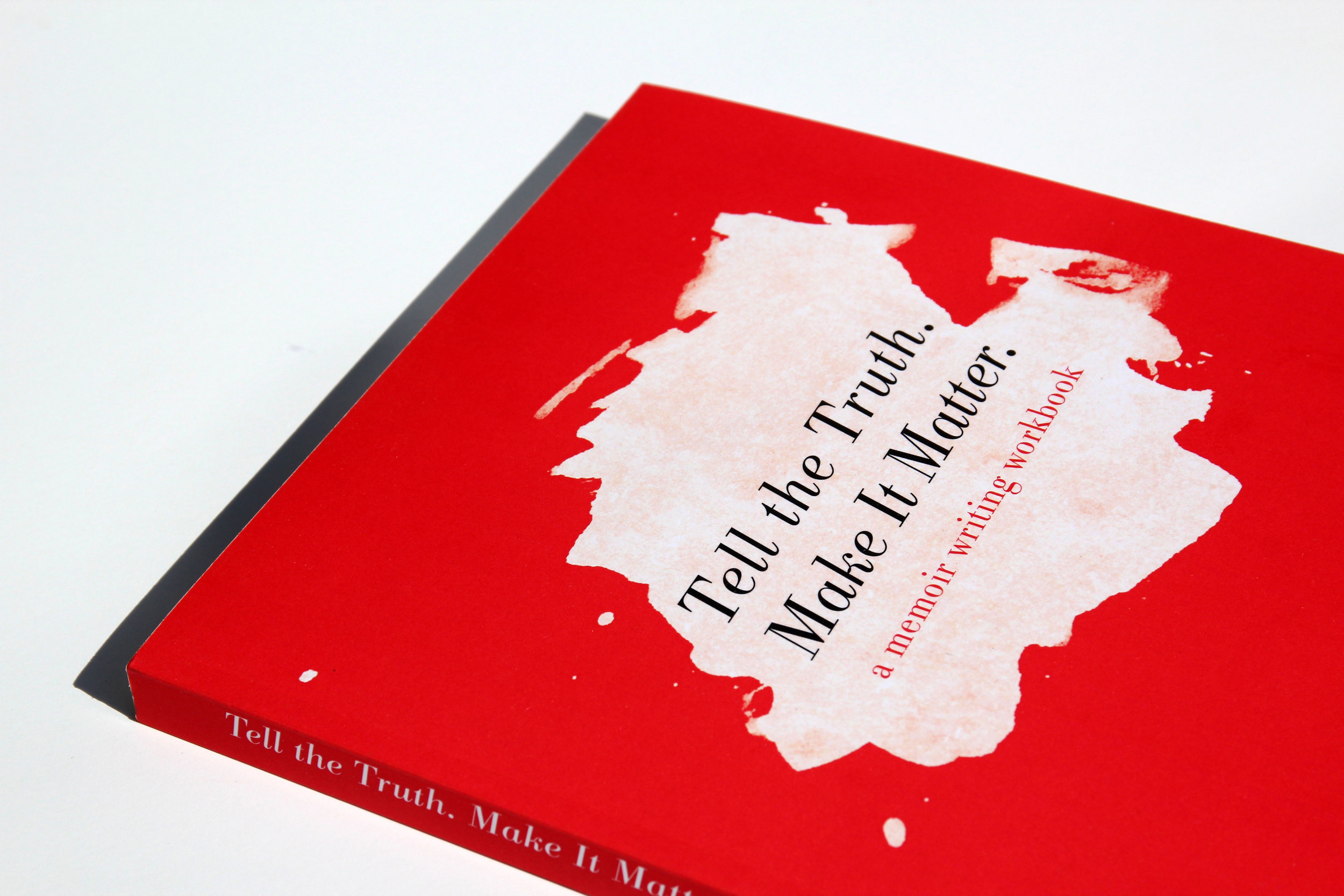
The greatest value in this workbook, in my opinion, is that it makes room for the truth. For your truth. For universal truths. It clears away the cobwebs of memory, sets your intention squarely in the direction of meaningful self-reflection, and encourages you to choose words that matter, too.
In Tell the Truth. Make It Matter (CreateSpace 2017, $18.95), National Book Award Finalist Beth Kephart encourages us to “move away from anecdote toward meaning,” to discover what matters most to you through the actual process of writing. Writing becomes an act of creating the self as much as creating memoir.
“Search for the truth, and write that truth, and you’re not just putting words on a page. You’re shaping your own sense of who you are and what you’re capable of.” —Beth Kephart
Tell the Truth is billed as “an illustrated memoir workbook created for those who write and teach memoir, those who recognize the power of truth in our everyday lives, and those who simply (though it is never simple) wish to remember.”
The prompts and exercises within are wonderfully original, expertly crafted (Kephart is, in fact, a seasoned memoirist and compassionate teacher), and simultaneously pointed and open-ended enough to have you furiously filling in those blank pages with purpose.
You are prompted to “tiptoe toward the writing of truth by writing a little bit of fiction,” to glimpse the truth through writing about objects and photographs and secrets, to write freely then build upon your thoughts, to experiment with language. Do you tend toward fine writing or plain prose? Either way, this workbook stretches you to try new approaches, and to understand which words have that “magnificent power to penetrate,” as Annie Dillard wrote.

Beth Kephart’s writing speaks to me on a visceral level; I luxuriate in her language, feel her words. Even in this workbook, where blank pages abound and words are spare, every word matters—hers (which will inspire) and yours (which I hope you will begin to put down on paper).
A small section of the book titled “On the Hunt for Memory” asks us to ponder how we remember—where do we go to find the past? In my work I often hear, “I don’t remember enough to share my stories.” Through guided reminiscence and conversational interviews, though, the stories and specificity of memories that emerge are often astounding. In this section of the workbook, Kephart offers a series of highly effective exercises for tapping into your memories, for rediscovering them as the raw materials for writing your life stories.
Life story writing of any kind is a journey, and Kephart recognizes that one workbook will not be your sole guiding force. “Your true story is a question waiting to be answered,” she writes.
Answer the questions in this workbook. Answer the questions in these unexpected resources. Most of all, answer the questions you write for yourself. What preoccupies you? What do you dream about? What probing conversations do you return to again and again around the dinner table over a bottle of wine?
Truth, Kephart says, “is a raw and quivering thing.” Are you ready to begin a journey to find—and write—your truth?
Tell us about your life story writing.
I would love to hear about your own journey towards writing your life. What are your biggest struggles? How do you access memory? Please comment below so we can keep the conversation going.

Related Reading
Read sample pages from Tell the Truth. Make It Matter. by Beth Kephart.
In need of inspiration? Read an excerpt from Beth Kephart’s book Still Love in Strange Places, and learn more about her memoir writing workshops.
“If not now, when?” What you can learn from Gloria Vanderbilt and Anderson Cooper.
Lots of food memories & family recipes passed down through generations? Consider making an heirloom book documenting those—but first, read from our Taste of the Past series for inspiration.
Note: This is an unsolicited review of a book I purchased at full price. I did not receive any compensation or free products in exchange, and the endorsements within this post are my own.
This Week in Personal History... August 15
Our life story links for Aug. 15, 2017 include a sweeping wartime oral history project & a most personal endeavor to preserve the memories of one man.
“Sharing tales of those we’ve lost is how we keep from really losing them.”
—Mitch Albom
This week’s links look at life story from a wide range of perspectives, including a sweeping wartime oral history project and a most personal endeavor to preserve the idiosyncrasies of voice and memories of one man.
Roundup of Personal History Links - August 15, 2017
In the News
A SON’S QUEST TO GIVE HIS FATHER ETERNAL LIFE
“If even a hint of a digital afterlife is possible, then of course the person I want to make immortal is my father.” Using hours of interviews with his dying father to create a Dadbot, writer James Vlahos creates a means for conversing with a “low-resolution representation” of his dad. Will it be a balm to those who knew the man dearly, or will it be best received by the younger generation who have fewer memories of him?
“WOMEN’S STORIES ARE DIFFERENT”
“There are no heroes and incredible feats, there are simply people who are busy doing inhumanly human things.” The Atlantic calls Nobel laureate Svetlana Alexievich “a witness to witnesses who usually go unheard,” and her collected testimonies of women under Soviet rule are examples of how—and why—such oral histories have staying power.
On the Blogs
WORD BY WORD
Samantha Shubert of NYC’s Remarkable Life Memoirs is a cheerleader for a hitherto little-known lexicographer who works for Merriam-Webster: Kory Stamper, known for her witty Twitter presence and video series “Ask the Editor,” and, most recently, her book Word by Word.
WRITING & INTERVIEW PROMPTS
Three unexpected resources for thought-provoking conversation starters: Often provocative, occasionally off the wall, and always open-ended, these are questions that you can ask relatives or yourself on your journey of documenting your life stories. (The best questions yield the best answers.)
TIME, MEMORY, LOVE
“Is memory produced by us, or is it us?” Superb, eclectic musings on the nature of memory and personal identity from poet and philosopher Etel Adnan, via Brain Pickings.
AUSTRALIA’S LIFE STORY ASSOCIATION
Life story writers, personal historians, memoir writers, ghost writers, biographers, film makers—what’s in a name? While professionals who are involved in producing a permanent record of a person’s life are called many things, their mission is shared, and their industry evolving.
Worth Checking Out
“Start talking to people—just don’t be shy to learn about it,” advises a young filmmaker who explored her own parents’ personal history during a family camping trip that turned into a 15-minute documentary.
Quick Takes
#MemoriesMatter #Legacy #LifeStories #Memoir #OralHistory #FamilyHistory

3 unexpected places to discover great life story questions
While there are lots of lists of family history questions on the web, here are 3 places to find unexpected questions that lead to meaningful life story writing.

There are abundant resources online and in libraries for family history questions. You know the kind I mean: checklists of all the possible questions you can ask the grandparents, military veterans, immigrants, distant cousins. One of my recent favorites is the #52Stories project from Family Search, which provides 52 prompts for capturing one brief story about your life every week, hopefully motivating you to begin shaping your family’s intergenerational narrative.
But if you’re in the market for more thought-provoking conversation starters—deeper questions that you can ask relatives or yourself on your journey of documenting your life stories—then we’ve got three unexpected resources for you. The questions included in these recommendations are often provocative, occasionally off the wall, and always open-ended to encourage a full, meaningful answer using the subject’s own experience and feelings.
The Best Questions Yield the Best Answers
If you select questions thoughtfully, you’re sure to get revealing answers. Whether you choose to use those answers to inform writing your own memoir, as episodic stories in a personal history book, or merely as a means of self-development or family bonding, you’re guaranteed to learn something new about yourself in the process!
1 - Gravitas: The Little Box of Big Questions
Gravitas is a powerhouse of thought-provoking questions. This parlor game of sorts engages “players” in conversation with questions that call for reflection yet can be dealt with in a thoughtful or a more lighthearted manner. While the goal of the game is ostensibly to declare a philosopher king of the occasion, the real value in this “Little Box of Big Questions” is to get everyone offering thoughts on life’s big questions as a way of discovering who we really are and how we have lived.

Here is a sampling of the prompts (there are 429 questions in the box), designed to spark meaningful conversation and profound insights.
What takes your breath away?
What is your gold standard for a good friend?
How do you ‘carpe diem’?
Describe the gap between life as you imagined it and life as it is.
How do you practice kindness?
When they say you have to work hard at love, what do they mean?
And a few less profound options to keep the banter flowing—questions that could as easily invite surprising insights and wisdom as they could a punchline:
If we are what we eat, who are you?
When does the fun stop?
What is the best thing you have ever found?
They say that Seinfeld is a TV series about nothing. Any ideas for an episode?
Who would you like to eavesdrop on?
2 - Know Yourself: Cards for Self-Exploration
This small box of 60 prompt cards is less about conversation with others, like the Gravitas questions above, but rather about conversation with oneself. They delve straight into big-picture, deep ideas and often read like prototypical “head shrink” questions—but when approached with an open mind and a truly self-aware lens, these prompts can undoubtedly help us understand ourselves better.
Some of the questions in the Know Yourself box are clearly intended for private introspection, such as “What things would deeply alarm your loved ones if they knew them about you?” and “What are you currently lying to certain people around you about?”

Many of them, though, are wonderful prescriptions for prolonged thought or writing assignments that will yield worthwhile insights:
When do you cry or want to cry (as an adult)?
What did you learn about relationships from your parents?
List everything you are worried about, from the very large to the very small.
And some, well, simply invite interesting answers:
What are you trying to say through your clothes?
If a really kind person wanted to praise me, they’d say… If a really tough person assessed me, they’d say…
Name three works of art (music, literature, and visual art/architecture) that mean a lot to you.
I recommend consulting these questions if you are an aspiring memoirist or avid journaler who wants to be challenged to explore who you are, or just a curious soul craving a gentle nudge towards deeper self-reflection.
The cards are produced by The School of Life, who bills itself as “a global organization dedicated to developing emotional intelligence [applying] psychology, philosophy, and culture to everyday life.” Visit their site for a treasure trove of resources to enlighten and entertain. And if you decide to check out their Confessions Game—“a series of questions around career, sex, money, relationships, family, gently inviting everyone to share important bits of themselves in an intimate and playful atmosphere”—please let me know what you think, particularly if the questions might be helpful for memory-keepers and life story writers, too!
3 - If… (Questions for the Game of Life)
Writing one’s life stories requires not just looking towards the past, but also looking towards the future. It is our hopes and dreams and the life we imagine for ourselves that define us as much as the paths we have already taken—and preserving those thoughts for future generations is a worthwhile endeavor.
“Fantasies are what inspire us all; to work, marry, raise families, create, improve our world…. We imagine in order to learn, to understand, to strive, to attempt, to predict, to avoid, to correct, to describe, to solve,” write the authors of If: (Questions for the Game of Life) (Villard 1995). As you may have guessed, every question in this book begins with the word “if.”

Perhaps some of these questions lean towards the cliché (there are plenty of the if-you-could-dine-with-anyone-from-history variety), but that in no way diminishes from their purpose: to spark your imagination, and to provide glimpses into your personality and life. It is their accessibility, and their ability to make you step outside your everyday worries, that make them worthwhile.
These are a few of the questions that, in my opinion, go beyond the expected and provide impetus for life-story writing or conversation geared toward meaningful reminiscence:
If your plane were about to crash and you had time to write one quick note, to whom would you write, and what would you say?
If you could, in retrospect, change one thing about your childhood, what would it be?
If you could discover that something you thought was true was actually false, what would you wish it to be?
If you could gain total memory of one year of your life so far, which year would you pick?
If is a book that can be tucked away in your car’s glove compartment to make long road trips bearable, or it is a book that can be stashed in your bedside stand for instant journaling inspiration.
And now, some questions for YOU.
What is the one question that you find always elicits interesting stories?
If you could have asked one question of a deceased family member, what would you have asked, and to whom?
What other sources of interesting questions are in your repertoire? Books, websites, podcasts?
Please share your thoughts in the comments below—I’d love to hear from you!
Related Reading:
Who Will Tell Your Life Story? It can be daunting to think of writing (or even telling!) your life story. So don’t. Start saving your stories, one at a time.
35 Questions to Ask to Prompt Memories of a Lost Loved One
How to Use Photographs as Prompts for Writing Life Stories
This Week in Personal History... August 8
How the stories we tell about ourselves shape our lives, how to handle family photographs after a loved one dies, & more #lifestories links you’ll love.
“If you want a happy ending, that depends, of course, on where you stop your story.”
—Orson Welles
From “sharenting” to editing, from how the stories we tell about ourselves shape our lives to how to handle family photographs after a loved one dies, this week’s links run the storytelling gamut. Which is your favorite—and why? Share your thoughts with our generous contributors, if you will.
And, of course, let us know if you swing by Times Square to pick up the telephone!
Roundup of Personal History Links - August 8, 2017
In the News
OVERSHARING?
Many of us have the urge to document our lives, but for one segment of the American population this has become an almost obsessive compulsion: parents. I count myself among this group and understand both the draw and drawbacks of digital sharing. Check out two varying perspectives in “I’m Giving Up the ‘Sharenting’–for the Sake of My Children” and “X Marks the Mylestone.”
NARRATIVE IDENTITY
“When we want people to understand us, we share our story or parts of it with them; when we want to know who another person is, we ask them to share part of their story.” How subtly reframing your narrative can help you to live more purposefully.
On the Blogs
GIVE GRANDMA A CALL
This one’s an oldie but a goodie, rediscovered when a colleague shared it on social media: Genealogies tend to focus on names and dates, but oral traditions add flesh to the skeleton. Are you listening to your grandmothers?
AFTER A DEATH
When cleaning out your parent’s home after a death, don’t let all those boxes of family photos, and the stories they hold, be a burden; instead, allow them to help you heal.
THE WRITE CONVERSATION
Have you written your life story? If you’re ready to take the next step, Shreveport, LA–based Sarah Hamer discusses the value—and different types—of editing.
AN ARCHIVE OF INFORMATIVE LINKS
Longtime editor and writer Pat McNees, who is based in Maryland, provides a wealth of information on her site about memoir and life story writing. Warning: Don’t click unless you’re willing to get lost in a web of links—one good story leads to another here!
Worth Checking Out
At the intersection of pop culture and oral history, this brilliant interactive art installation in NYC's Times Square creates a platform for immigrant voices. Visitors are invited to open the door of one of three repurposed telephone booths, pick up the receiver, and listen to oral histories of immigration from the newest New Yorkers.
Visitors can also open the phone book inside each booth to read more about the storytellers' communities both here in New York and the countries they have traveled from, and to leave behind a part of their own story if they wish. The installation includes 70 different stories that will last anywhere between 2 and 15 minutes. Through September 5.
#MemoriesMatter #Legacy #LifeStories #Memoir #OralHistory
This Week in Personal History... August 1
This week’s collection of personal history links includes meaningful first-person storytelling, tips for family historians, & a fun Finding Your Roots TV teaser.
“Be the silence that listens.”
—Tara Broch
This week’s collection of links includes some meaningful first-person storytelling, tips for family historians, and a fun TV teaser—enjoy, memory-keepers!
Roundup of Personal History Links - August 1, 2017
In the News
A LIFE IN THEATER
“I was compelled by the idea of a grieving daughter going through her father’s boxed up treasures in the theater that made his name,” writes Michael Paulson in the NYT. What James Houghton left behind: keepsakes from a life in theater.
HIGHLIGHT REEL
Interested in family history? Then, like me, you're probably a fan of Henry Louis Gates, Jr.’s Finding Your Roots. The series returns on October 3, and here’s a sneak peek at some of the guests.
On the Blogs
VIETNAM-ERA ACCOUNT
“I would soon realize arriving in the middle of the night in a strange place was the Air Force’s first step in ripping us away from the civilian life we had left,” writes Doug Elwell in “Falling Through the Rabbit Hole.”
Personal historian Sarah White, who conducts life-writing workshops through her Madison, Wisconsin–based First Person Productions, is always looking for creative nonfiction contributions like this one.
THE PHOTO LEGACY YOU LEAVE YOUR KIDS
Prepare your family photos so they provide comfort—not a burden—to your children when you're gone. It’s one of the most meaningful legacies you can leave your kids.
CHEERS!
The story of how wine glasses made Katelyn Burns, a trans woman, feel more connected to three generations of women in her family than ever before. A powerful true story of identity, belonging, and names.
Worth Checking Out
For newbies to the world of personal history, this thorough and easy-to-follow toolkit is a step-by-step guide to doing a successful oral history project. It's a great resource for anyone wanting to preserve an individual’s unique memories & life stories. Thanks to @FionaCosson for sharing!
#MemoriesMatter #Legacy #LifeStories #Memoir
Dawn Roode’s curated roundup for the week of Sept. 23, 2026, is overflowing with recent reads on memoir, life story writing, and family history preservation.