
“People still buy handmade shoes.”
Will there ever come a day when we are so reliant on artificial intelligence that our appreciation for and need for handmade goods and in-person services are gone?
In my professional circles, there is much talk about AI and the impact it will have on our work lives. Some of the talk is excited—how AI can help us streamline processes, for example. Some of the talk is panicked—how we’re being led down a path of no return, when artificial intelligence becomes smarter than people and AI takes over (conspiracy theory?).
Of course, the reality is somewhere in the middle. And with the technology evolving so quickly, how should I, as a professional personal historian, incorporate it into my work for YOU?
This is a question I think about often—and undoubtedly, my answer to this will shift as the technology does.
Despite typically being a tech early adopter, I have currently dipped my toes into the AI waters with caution: I have readily integrated some things such as AI transcription into my workflow (a godsend!!) but have remained more of an educated lurker. I have concerns—privacy chief among them—yet at the same time know that there is a revolution at hand. So, I test the evolving AI interfaces, listen to friends and colleagues who have embraced AI more readily, and learn from them and from experts I trust.
Listening to a recent Tim Ferriss podcast in which he speaks briefly about how we may adopt AI in the long run, I took note of one seemingly offhand remark he made: “I mean, people still buy handmade shoes, right?”
I was driving while listening to this podcast, and I kept turning this phrase over in my mind even after I had reached my destination; it struck a chord. “People still buy handmade shoes.” Sure, the majority of shoes sold around the world are likely made in factories—but there is a market for bespoke shoes, even now.
This led me to think about all the things that make my service as a personal historian unique, and in particular, different from any app- or AI-driven storytelling services out there (they abound, and are proliferating more and more). Because I DO believe that there will always be a place for one-on-one personal history services…even if the day comes when every single individual records aspects of their life story using AI.
What makes in-person storytelling special?
It’s not just about the end-product—it’s about the journey.
All of my experience to date with AI models has shown me one thing: They can be used effectively as tools with me guiding—very carefully—our trajectory. But compelling conversation (a back-and-forth with another being)…well, not so much.
I do believe that story sharing apps and online memory-keeping services are strong tools that make story sharing accessible to the masses—but they are by no means my favorite option. I would much prefer a family member interview their loved ones and hit “record” on their phone than for an email prompt to be sent weekly from a random cache of questions, to be answered in isolation. Because having someone to receive your story, having a person to connect with and reflect pieces of your narrative back to you, is so valuable.
As a personal historian, I am a generous listener who gives my undivided attention to my interview subjects. How rare is it these days to have someone’s full attention? To be listened to and heard? How rare an opportunity is it to give ourselves time to reflect so intentionally?! It’s all of these things combined that have inspired many of my clients to tell me, each in their own words, how the story sharing itself was even more valuable to them than the book that resulted. Would they have felt this way if I weren’t there to receive their stories? I know they would not have.
It’s about community.
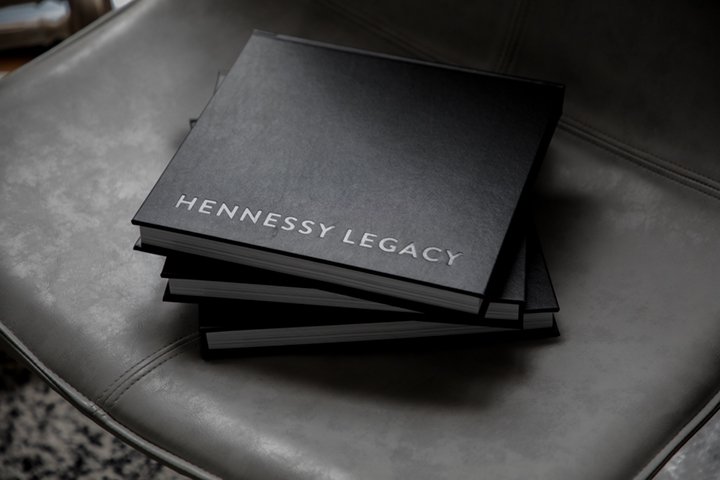
I always, always tell my clients that my greatest hope is that the book they hold in their hands at the end of our time together—the book that holds their stories—will become a vehicle for even MORE story sharing with their friends and loved ones. I hope their readers will ask questions, will learn and feel and grow even more curious about the book’s author. I hope that the authors will pull their book out with their grandchildren, and allow the photos within to spark more memories that they share in person. I hope the next generation will pull the book out with THEIR children and recount stories they heard, and add in their own experiences, too. A book that originates as part of an in-person story sharing experience has this sense of community written in its DNA.
It’s about finding meaning through follow-ups.
Follow-up questions are at the heart of any good personal history interview. We may start with a small script of questions, but I generally prefer to identify a theme for the interview and proceed from there. One story leads to another. Details that are not initially shared by the interview subject may be drawn out by the interviewer. How did you feel? How did it smell? WHY do you think you did that? One day AI will inevitably get better at the art of the follow-up question, but for now I believe in my heart that the connection between an interviewer and their subject yields one-of-a-kind stories and meaning-making—and that connection leads to intuitive, sensitive follow-ups; the rapport that develops leads to a sense of trust that allows a subject to go deep; and the back-and-forth nature of in-person conversation leads to revelations and humor and surprises that can only happen with a fellow human.
It’s about making art.
“That sense of interplay, or the ability to react in the moment, is something that artificial intelligence can’t reproduce,” musician Yosvany Terry says in this piece from The Harvard Gazette that asks the question, “If it wasn’t created by a human artist, is it still art?”
I have a feeling this philosophical conundrum will persist forever, even as AI advances to create art that reliably evokes emotions and is deemed ‘original.’ But I tend to agree with this line of thought: “AI currently requires a level of supervision and feedback that means a human touch and eye still very much have their place in the art world.”
As a human writer and editor, I am creating an original piece of art from my clients’ stories. My decisions—about tone, about structure, about design aesthetic, about what to highlight and what to leave out—are informed by years of experience, and by my human interactions with those clients. There is a dialogue infused with values spoken and inferred; there is a sensitivity to family relationships and other intangibles that may impact how a story is received; and there is a real collaboration towards turning stories into art.
Like those who still buy handmade shoes, there will always be people who prefer in-person story sharing to AI-led preservation—and as a personal historian, I am proud and honored to be the cobbler of your memories.
Conversation starters
I wonder if I read this post in just a few years time whether my thoughts will have changed much?
I wonder what you think about the value of human interplay in story preservation?
I wonder what concrete ways you have found to incorporate AI use into your own work or family history preservation?
I wonder what ways you so far resist using AI, and why?
I wonder if you are interested in collaborating on a personal history project? Let’s talk.



















At Modern Heirloom Books, privacy is sacred. Learn why we never share clients’ stories publicly—and how discretion builds trust and honors every legacy.