
Memories Matter
Featured blog Posts

READ THE LATEST POSTS

Life Story Links: Blog Roundup, May 15, 2018
Mining letters, journals, and homes for life story material; the latest personal history-themed podcasts; plus family history help & a memoir writing contest.

“But in the end, stories are about one person saying to another: This is the way it feels to me. Can you understand what I’m saying? Does it also feel this way to you?” —Kazuo Ishiguro
On Process and Progress
JUST DO IT
Ignoring an instinct to preserve family stories can be an expensive trade-off. And most of us know this—so we do we wait? Last week on the blog I explored the perils of procrastination.
FROM JOURNAL TO MEMOIR
Patricia Charpentier of Florida-based Writing Your Life discusses the benefits of keeping a Five-Year Journal and how to mine your entries for your memoir.
FAMILY HISTORY RESEARCH
Ever wonder if you could benefit from a professional genealogy consultation? The New York Genealogical & Biographical Society tackles the issue in helpful detail.
THE BLUE BACKPACK
Object writing is a technique of constraining your writing to the concrete and specific, letting a “thing you could drop on your foot” be a firm central point around which the story unfolds, says Sarah White of First Person Productions in Madison, Wisconsin, who offers up this essay as inspiration.
TAKE NOTE
In honor of Mother’s Day, Lisa Lombardi O’Reilly, founder of Your Stories Written in California, dives into some family letters to get to know the women in her family a little better.
WHERE TO BEGIN?
Try creating a place-line, instead of a timeline, to aid with organizing your memoir, suggests Massachusetts–based editor Nancy West: a list of places you’ve called home throughout your life—each “a tangible repository of memories.”
New & Noteworthy
LEGACY MOMENTS
Legacy Republic is among the first developers to be a part of the Google Photos partner program, and will be one of the first to launch the integration with Google Photos to their customers.
THE WALLS BETWEEN US
“Every division—metaphorical or real—is a story,” observes award-winning writer Beth Kephart, who invites writers to submit true, previously unpublished memoiristic stories of between 300 and 3,000 words that speak to or illuminate the place of walls in our personal lives or world.
FUTURE OF HISTORY?
On May 5, The Phi Centre and the MIT Open Documentary Lab presented Update or Die: Future Proofing Emerging Digital Documentary Forms.
Listen Up!
Grab a pair of headphones or plug in during your morning commute for these recent podcast offerings from our colleagues:
- Kansas City–based Amy Woods Butler speaks to Denis Ledoux of the Memoir Network on how to grow business as a memoir professional in episode 15 of The Life Story Coach podcast.
- California–based Peta Roberts’s podcast Storyical, which offers encouragement from ordinary people about how they started recording their life histories, features memoirist Libby Atwater in the latest episode.
WHAT PODCASTS DO YOU LOVE???? I am looking for recommendations for storytelling, family history, documentary, and memoir themed podcasts for an upcoming post—please share in the comments below!
Short Takes

The plague of procrastination
Ignoring your instinct to preserve your family stories can be an expensive trade-off. And most of us know this—so we do we wait? The perils of procrastination.

One of the first things I ever had published was an essay in defense of procrastination. It was somewhat tongue-in-cheek, but then, as now, I do find a certain allure to “productive procrastination”—that is, I often put things off because an idea is still germinating, and needs time. Many of my creative endeavors are enriched by time spent doing other things; I often sort out editorial structure while exercising, or brainstorm and troubleshoot while running mindless errands. Maybe “procrastination” isn’t really the right word for that, after all.
True procrastination, however—undesired delay—is too often self-defeating.
Recent studies have indicated that procrastination is not simply a matter of poor time management, but that there is a clear emotional element to our tendency to put things off. “You know what you ought to do and you’re not able to bring yourself to do it. It’s that gap between intention and action,” says Timothy Pychyl of Carleton University, in Canada.
Lately I have been faced with a rash of such procrastination among friends and potential clients. I am not talking about leaving a sink full of dishes for tomorrow, but rather a box full of photos and a head full of questions for…well, for “someday.”
It’s one thing to be self-defeating by putting off homework or exercise. It’s another to ignore big things that we know hold tremendous meaning.
From “Must Do” to Forgotten Task
When people learn what I do for a living, their eyes light up, and so often they recite a list of people whose stories they wish to preserve:
“I am visiting with my entire extended family next month and I absolutely should capture their stories.”
“My father is in the hospital with signs of early dementia, but he still has days of clarity. His stories of growing up in Prague are so precious—I must do something to preserve them soon!”
“My son adores sitting with his grandmother listening to her tales of childhood in Brooklyn! I hope he remembers them when he gets older!”
“My dad was in the Secret Service during my entire childhood. He is retired now, and sometimes I overhear him telling incredible stories to his cronies. I wonder if he would share them with me?”
Every one of these statements, while not quoted verbatim, is from actual conversations I have had in the past few months.
And every one of these individuals continues to find ways to put off gathering stories from their loved ones.
Why Wait?
While on a professional level I of course would love for these individuals to hire me to help preserve their stories in an heirloom book, on a personal level it saddens me that their procrastination just may result in a loss of family stories. Photographs will become mysteries for the next generation to solve. Memories will be lost to time. Their undocumented family history will become a genealogical puzzle.
If no one cared about these stories and memories, none of this would matter. But they not only care, they care deeply. I hear it in their voices when they are talking to me; I know it from my own experience.
Ignoring your instinct to preserve your family stories can be an expensive trade-off. And most of us know this. So we do we wait?
Studies show that we are most likely to procrastinate when we are unsure how to proceed—and that is often the case with “big” preservation projects.
Moreover, we tend to jump more quickly on tasks that provide instant gratification—and most of our storytelling efforts take time.
Lastly, when our perceived value of the task is high (how fun, how meaningful?), we are more likely to do it.
I am here to help you figure out how to proceed—so there is no worry (and no excuse!) in saying “yes” to starting today. And what could be of greater value than preserving your stories—your wisdom, your experiences, your adventures—for the next generation?
Knowing those two things, please don’t let the draw of instant gratification keep you from beginning. Some things in life are worth the wait, and preserving your memories, meaningfully and beautifully, is certainly one of them.
As the motivational wizards at Nike say:
Related Reading:
While there are lots of lists of family history questions on the web, here are 3 places to find unexpected questions that lead to meaningful life story writing.
Meet Josh: He plans to write his biography someday. Yet he has told his adult kids none of his life stories. How about you—are you waiting for “someday,” too?
No one will tell your life stories but you. Start small by saving family photos & preserving stories so you create a lasting, meaningful legacy, one step at a time.
Life Story Links: Blog Roundup, May 1, 2018
You want help writing your memoir—who do you search for? Plus, history brought to life through oral testimony, and time travel through old photos & beloved stuff.
“When nothing else subsists from the past...the smell and taste of things remain poised, a long time, like souls...bearing resiliently, on tiny and almost impalpable drops of their essence, the immense edifice of memory.” —Marcel Proust
Buried Treasure
TIME TRAVEL
Plenty of historians have studied the booming time period when New York City’s population fast approached five million, but other than one or two super-centenarians, nobody actually remembers New York in 1911. This immaculately restored film lets us all take a virtual trip there.
REST IN PIECES
Giving up things we've grown attached to can be tough, writes designer Susan Hood of NY–based Remarkable Life Memoirs. How she continues to value those significant possessions after they’re past their prime.
SUMMER OF ’78
Six months ago, a New York parks official came across 2 cardboard boxes that had been sitting around for decades. Inside were 2,924 color slides, pictures made in parks across NYC in the summer of 1978. No one had looked at them for 40 years.

Photo by Paul Hosefros | More photos from the collection will be on view from May 3 through June 14 at the Arsenal Gallery in Central Park, 830 Fifth Avenue, near 64th Street in Manhattan.
Telling Tales
YOUR SINGULAR STORY?
Why write your life story when telling your life stories is likely to be more compelling? Thoughts on memoir, biography, and the power of first-person narrative.
HEALTH BENEFITS, TOO
“Engaging your brain to write your memoirs can leave a recorded history for your descendants as it helps improve your cognitive fitness,” reports Harvard Health Publishing.
THE WORDS WE USE
Personal history, life stories, memoirs—what words are people using when they search online for our services? Kansas City–based Amy Woods Butler thoughtfully explores this important topic.
ECHOES THROUGH GENERATIONS
Family traits, mannerisms, preferences—how often do we say, “You’re just like...”? We take for granted that these connections exist, writes Marjorie Turner Hollman, but keeping the stories going just may ensure those connections remain intact.
AFRICAN AMERICAN LEGACIES
The opening of a lynching memorial in Alabama inspires Clinton Haby of Storykeeping in San Antonio to reflect on the personal biography industry’s role in capturing African-American legacies.
WITNESS TO HISTORY
Patricia Pihl of Real Life Legacies in Mayville, NY, looks back at the 50th anniversary of the Martin Luther King assassination and the benefits of reminiscence through the lens of a very public event.
Short Takes

Your life story—or life stories?
Why write your life story when telling your life stories is likely to be more compelling? Thoughts on memoir, biography & the power of first-person narrative.
It can be a daunting endeavor to undertake writing one’s “life story.” It sounds so big—and so definitive. Maybe there’s another way.

The Allure of First-Person Storytelling
When I think of traditional life story books I think of lengthy tomes, told chronologically. The first autobiography I ever read was The Autobiography of Benjamin Franklin, which was assigned by my ninth-grade English teacher; it is undoubtedly a remarkable work, and one I feel compelled to revisit someday soon—but my 14-year-old self was less than thrilled with our focus on remembering the history Franklin presented. I never got lost in his narrative, never felt like I recognized something of myself in the man.
That unimpressive first encounter with the autobiographical form was formative. I was never drawn to biographies, despite my deep love of reading and tendency to have a nose buried in a book at all times.
Then I discovered memoir. I came across first-person accounts that read like literature: Frank McCourt’s Angela’s Ashes, Susanna Kaysen’s Girl, Interrupted. I barely realized I was reading nonfiction. And most staggeringly, How I Became Hettie Jones—a work so moving and resonant to me at the time I read it that I sought out more: more first-person accounts, more poignant and self-reflective takes on life.
Then, in the late nineties I worked at a series of lifestyle magazines where personal profiles were a mainstay. Our highest paid writers were often those who could conduct the best interviews—for while the writing itself was important, it was the substance that the subjects revealed during their interviews that was compelling.
I devoured The New Yorker’s weekly profiles, those journalistic biographical sketches that David Remnick describes as “a concise rendering of a life through anecdote, incident, interview, and description (or some ineffable combination thereof.” I gained a new appreciation for character development through storytelling—and for voice.
And I valued the interview process itself, becoming a fan of Esquire’s Cal Fussman (who “has transformed oral history into an art form,” as Tim Ferriss describes) and Emily Nussbaum, whose byline appeared across myriad titles.
First person writing, when done well, I realized, could be as powerful as any literary fiction. It had become my new addiction.
Memoir vs. Biography
It’s pretty clear, I suppose, that chronological, all-encompassing biographies are not my thing. But is there really a difference between memoir and biography?
One definition of “memoir,” after all, is “biography.” Another is “autobiography.” Merriam-Webster does not consider the words to be direct synonyms, however.
Memoir
: a narrative composed from personal experience
: autobiography
: biography
Biography
: a usually written history of a person's life
Autobiography
: the biography of a person narrated by himself or herself
Most editors consider memoir to be a first-person telling of one aspect or time period of an individual’s life—not the typically chronological account of birth through old age that constitutes biography.
“It’s this greater truth that a memoir is after, the understanding that leads to wisdom and the resounding bell of connection—that’s what drives us to read memoirs,” says Ron Seybold.
One of my favorite memoirists, Dani Shapiro (check out her most recent book, Hourglass), has a keen awareness of the differences between these two forms of writing. “What is the job of the memoirist? Is it to tell all? Or is it to carve a story out of memory?” she asks.
“Autobiography presumes that the person writing the book is important, and the reader is drawn to the book out of a desire to know more about that person…. Memoirs are stories, hewing as closely to the truth of the writer’s memory as possible—but not letting it all hang out. Part of the art of memoir is seeing, and recognizing the story itself.” —Dani Shapiro
There is a legitimate reason that the notion of writing your “life story” (a.k.a. your “autobiography”) feels intimidating. It is a formidable task. Is it the right choice?
Your Stories—Plural
Continued story sharing—THAT is a main goal of every Modern Heirloom Book we create. I want family and friends to not only read your book, but to want to revisit it, again and again. To be able to pick up your book and flip to any page and dive into an alluring story. To “visit” with and feel close to you any time they want via the stories in your book.
Your stories will feel and read like memoir, and yet they are are not fully memoir. We transform your words (captured via personal interviews) into smaller narratives, vignettes that can be read on their own yet when taken all together create a broad picture of your life; a mosaic of mini profiles, if you will (yes, my magazine days have influenced my approach enormously here!).
Another bonus of telling your life stories, plural: It is that much easier to get started.
Tell one story.
Go on, do it. I bet you can’t stop at just one.
Related Reading:
From the New York Times Archives, How to Write a Profile Feature Article
Book Review: In Tell the Truth, Beth Kephart offers up a wonderfully original series of memoir-writing prompts that encourage self-reflection & striving toward the universal.
You’ve got reasons why you aren’t telling your story. I’ve got reasons why you should.
Life Story Links: Blog Roundup, April 16, 2018
Why we need memoirs of ordinary people and stories of redemption; why visiting our ancestors’ homes is rewarding; and thoughts on history versus genealogy.
“Time present and time past
Are both perhaps present in time future
And time future contained in time past.”
—T. S. Eliot
Close to Home
REDEMPTION STORY
Clinton Haby reflects on how the story of his company, San Antonio-based StoryKeeping, mirrors the stories of challenge and triumph he helps his clients to capture in video. A must-read for the entrepreneurs among us, and for those who just might be lugging up their own metaphorical hill at this moment.
ALL IN THE FAMILY
A wonderfully interesting slideshow of family homesteads around the country is supplemented with a piece about homes as family heirlooms—and what happens when those homes can no longer stay in the family.
FIELD TRIP
Getting out and visiting the sites of your ancestors’ homes and workplaces will reward you with a greater understanding of the imprint they left during their lives, writes Lisa O'Reilly of Your Stories Written in Carpenteria, California.
LEGACY OF LOVE
When someone you care about loses a loved one, it can be difficult to know what to say or how to help. Recently I found compassionate advice in a rather unlikely place.
NO DELAYS, NO DISTRACTIONS
When Nancy West first started her memoir-writing business, she expected her clients to be people who couldn’t write, or who or didn’t like to. “But actually, most of my clients are eminently capable of writing their own memoirs—they just acknowledge that they never will.”
SOMETHING BLUE
While my website doesn’t yet reflect this new signature product (it will soon!), my Dear Daughter, On Your Wedding Day heirloom gift book has proven to be among the most joyful personal history projects I have undertaken. My latest guest post for The Photo Organizers explains why imminent weddings are a great time to walk down memory lane.
The Big Picture
SURVIVING THE ORDINARY
“Give me jaw-dropping true stories, yes indeed, but also give me life stories that leave my jaw alone and move my mind and heart instead, toward a better understanding of myself, of friends and strangers, and of the world we live in every day. What a gift that understanding is when we share it with each other.” Yes!! Mary Laura Philpott on why we need memoirs of regular lives (plus 14 books for your how-to-be-a-person memoir shelf).
HISTORY VS. GENEALOGY
“This is the lesson of America: We are all family here.” Too often historians scorn the imaginative storytelling that often accompanies a genealogical find. History can make use of that transporting empathic power, though, writes John Sedgwick in this opinion piece.
FROM THE HEARTS OF SYRIANS
“I said to one of them, ‘I would like to write the story of what has happened to you.’ He said, ‘I want to forget this.’ ... I said, ‘It’s very painful to remember what happened, but it’s important for your daughter who is two years old. She needs to know the story of how her father crossed the border and reached safety.’”
Short Takes

Reaching out when someone is grieving
When someone you care about loses a loved one, it can be difficult to know what to say or how to help. Compassionate advice, found in a rather unlikely place.
I founded Modern Heirloom Books after the process of making a tribute book in honor of my mother, who had recently passed away, was so healing and joyful for me that I wanted to pay that experience forward.
Losing my mother was, simply, devastating. And it happened when my baby boy was just three months old; I was reeling from her death, and navigating life as a new mother myself…
The best balm to my soul at the time was hearing stories: stories I knew by heart about my mother, their having been part of our family lore for years, and even more so the stories I had never heard before—moments she shared with friends and acquaintances that they then shared with me during this difficult time. Those glimpses into her life and her being helped to keep her memory vividly alive, and allowed me to grieve as part of a community.
That experience was transformative, and I have since made it part of my personal mission to be there for others who are going through loss. People do not talk about death anymore; and, too often, they do not know how to interact with someone who is grieving.
“Death was so common in the 19th century that it was readily addressed. People wore black if they were in mourning and were treated accordingly.... It seems we’ve got out of the habit and the subject has become taboo.”
—Atalanta Beaumont, Psychology Today
Talking about death openly—and about the person who has died—is critical. But how?
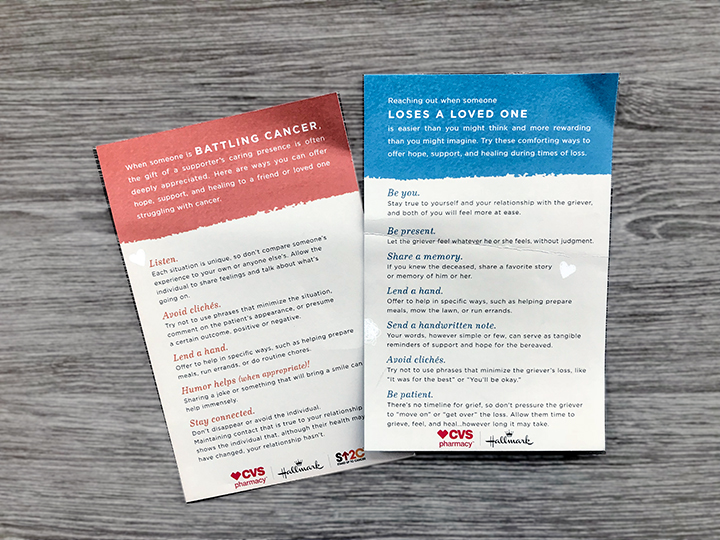
I was pleasantly surprised recently when walking through my local drug store to find a thoughtful and instructive resource to help with just that. From Hallmark and CVS, amidst the sympathy and get-well cards, were a series of take-away cards for those grieving, or who were caring for someone battling cancer.
The advice was straightforward, compassionate, and easy. And it was exactly what I might offer to a friend:
Listen, be you, stay connected.
Be present: “Let the griever feel whatever he or she feels, without judgment.”
And be patient: “There’s no timeline for grief, so don’t pressure the griever to ‘move on’ or ‘get over’ the loss. Allow them time to grieve, feel, and heal…however long it may take.”
Listen, with an open heart. And when the time is right, share your own memories of the deceased—no matter how inconsequential they may seem to you, they will be received as a gift by someone who is grieving.
Related Reading:
Wish You Were Here, Mom: My most personal post, on the occasion of what would have been my mother’s 70th birthday.
Holiday Grief: We may yearn for a lost loved one even more during the holidays, but know that shared memories are a balm to the soul, and that grief is another form of love.
The Healing Power of Remembrance: “The prescription for joy and healing after loss is to remember.”
Mommy & Me: How a struggle to tell my mother’s whole story turned into a more intimate portrait of love.
Notes from a Funeral: Sharing memories about lost loved ones to heal—and why we don't honor our families through story sharing now.
Legacy Book FAQ: Answers to some common questions about what goes in a tribute legacy book, and how they are created
Life Story Links: Blog Roundup, March 28, 2018
Writing about decisions that shaped your life, inspiration for personal historians who want to improve their craft, and why World Backup Day matters to you.
“I solemnly swear to back up my important documents and precious memories on March 31st.”
Did you know that March 31st is World Backup Day? That’s the pledge quoted above.
“We all know someone who has lost critical data, whether it was their videos, photos, music, book reports, or personal stuff,” says World Backup Day founder Ismail Jadun. In fact, it is estimated that people now create and generate over 1.8 zettabytes of data per year, with 30 percent of people never having backed it up at all.
For business owners, that means protecting the “data” that is our clients’ stories and our livelihood. And for everyone, that means doing something to ensure precious family photos and other digital family history information is not lost.
Take the pledge, and spread the word: I have no doubt that if you are reading this, then you are invested in saving our digital heritage for future generations, too.
Business Minded
HUNTING FOR BOOKS
Because life story books are intended for a small, private audience, they can be hard to find. But for a new personal historian, they can be a goldmine for learning the craft, writes The Life Story Coach Amy Woods Butler of Kansas City, Missouri.
ORIGIN STORY
Bethesda-based longtime personal historian Pat McNees chronicles the history of the Association of Personal Historians, from 20 years of winding success to its sad demise in 2017.
Memoir, Legacy, Memories
DECISIONS, DECISIONS
A historic tragedy in her hometown inspires Patricia Pihl of Real Life Legacies in Western New York to think about the determining forces which shape our lives—events that happen outside of our control as well as the paths we consciously decide to take.
VINTAGE, UNKOWN
While I love browsing nostalgic #foundphotos on Instagram, my scrolling is always accompanied by a twinge of sadness. It’s the storytellers who renew my hope.
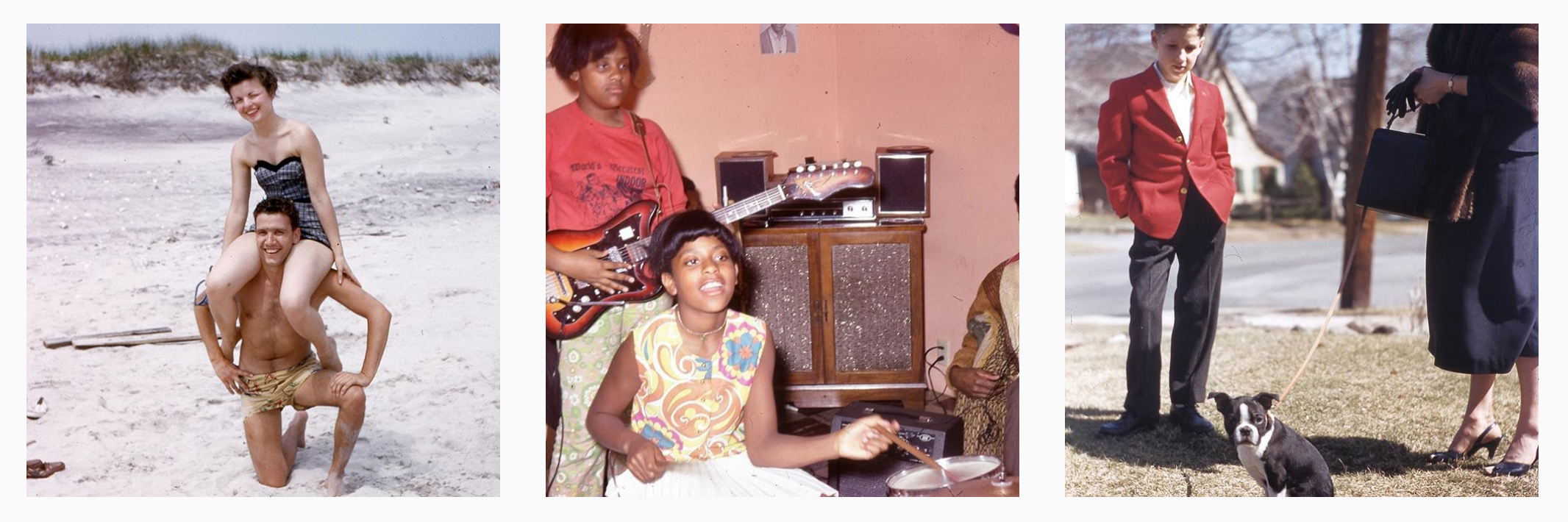
Vintage “found photos” from the Anonymous Project’s Instagram feed.
BEQUEATHING A LEGACY
“In spite of the importance of the family history, when clients are asked if they know their great-grandparents’ stories, the answer is too often silence,” writes Michael A. Cole, president of Ascent Private Capital Management. Yet “they don’t want their story to be lost. They want to leave a legacy that lasts for generations.”
SURVIVAL STORY
One man’s resilience in the wake of devastating fires and floods and mudslides encourages California-based personal historian Lisa O'Reilly to remind us of the value of forging meaning from our stories.
FOR YOUR HEALTH
Ruminations on the power of memoir from an unexpected source, Harvard Medical School: “You have a unique firsthand account of your culture and history that others don’t, and leaving a recorded history of your life can be an important gift to both you and your descendants.” Indeed.
Short Takes
#MemoriesMatter #Legacy #LifeStories #Memoir #OralHistory #FamilyHistory

Vintage, unknown
While I love browsing nostalgic #foundphotos on Instagram, my scrolling is always accompanied by a twinge of sadness. It’s the storytellers who renew my hope.
As an avid Instagrammer, I have followed with interest—and plenty of enjoyment—many vintage photo collectors. It is fun to scroll through a feed of old black-and-white images that bring to life times past: to see families gathering in their linoleum-floored ’60s kitchens, kids adorned in their ’70s patterned outfits playing outside in their yards, multiple generations sitting around on ’50s-era lawn chairs while someone barbecues. And all those car shots—what could feel more nostalgically American?!

Vintage “found photos” from the Anonymous Project’s Instagram feed.
These photos are weighted with a sense of time that is palpable. The curvy edges of print snapshots are often included in the digital representations of these images—they are clearly of another time. And yet, they are recognizable; they capture moments and milestones and emotions that often mirror our own. In their anonymity they become universal...in a most personal way.
I find the whole “found photo” movement intriguing. I am attracted to it for the aforementioned reasons. And yet, while I am “liking” image after image that makes me smile and remember, I feel a twinge of sadness. For while these photos are recognizable to me in their universality, their individual stories have been lost.
A recent New York Times article explores the phenomenon in “Moments Big and Small in Vintage Photos.” It’s what got me thinking about found photos again, and what renewed that ache I often feel when looking at them.
Sarah Moroz writes:
And while fashion and fads may have changed, these faintly remembered slices of life still resonate with contemporary viewers. “I realized that what a guy was doing in the 1940s, I did in the ’70s and ’80s,” Mr. Schulman said of the range of both playful and emotional vignettes. “The themes of today are also the themes of earlier times — we’re not different.”
So true, and so clearly why I, like thousands of others, gravitate to these images.
And yet…
I wish the stories attached to these photos were real.
I wish the memories associated with them belonged to the subjects and their kin, not anonymously to the world at large.
I wish we all valued our personal family archives enough to preserve and document them.
And yet…
I will continue to follow accounts such as The Rescued Photo and China Lost and Found, and to double-tap the pictures that resonate with me.
But I will cherish even more the vintage family photos shared by storytellers: the people who attach slice-of-life vignettes to their images, who share personal recollections and memories, places and dates and names to their pictures. The family archivists, personal historians, and memory keepers who use photographs as a means to remember to remember.
I am talking about:
Rachel Labour Niesen, the steward of the #savefamilyphotos movement and one of the best at promoting this message.
Kay Evans Little, who is “remembering my ancestors and family, one photo and story at a time,” and others like her using social media to share and celebrate the stories behind their family photos (two of my favorites: Rosa Rucco and Vivian Love).
And the many folks who have taken up the #genealogyphotoaday challenge.

On the Save Family Photos Instagram feed, it is not only about the photos: what’s not pictured here are the captions that accompany the photos, which are submitted by the more than 34 thousand followers and tell the stories behind the photos!
I’d love to hear your thoughts below! Please comment and share—
Who are your favorite #familyphoto storytellers on Instagram?
What is your take on the attraction to #foundphotos (also often referred to as vernacular photography)?
Are YOU doing anything to capture the stories behind your photos???
Dawn Roode’s curated roundup for the week of Sept. 23, 2026, is overflowing with recent reads on memoir, life story writing, and family history preservation.