
Memories Matter
Featured blog Posts

READ THE LATEST POSTS
Photographing our everyday
Our photos tell the stories of our lives—and our lives, frankly, are not merely birthdays & weddings. Our lives are lived in the in-between. Capture the moments.

We all take pictures of the milestones, big and little: the first days of school, the first lost tooth, high school graduation, and of course, birthdays. But what of the everyday moments? The in-between that, really, is the essence of our lives?
Ordinary days filled with extraordinary moments
I’m willing to bet you can conjure images in your mind of many of these—they are what make up the fabric of our memories, after all.
dad pulling into the driveway after a full day at work
grandma knitting on the front porch
little brother building Legos
mom doing the crossword with a cup of tea
kids brushing their teeth before bed
spring cleaning the garage
Have you ever taken pictures of these moments?
The extremes of documenting the everyday
There is a genre of photography known as documentary family photography, which takes this idea to great heights, elevating the everyday into beautiful art.
At the other end of the spectrum, some people find the urge (popular among many younger Instagram fans) to document every last morsel of their existence, well, a bit much. As Meredith Fireman wrote in a Fast Company article entitled “How Instagram Almost Ruined my Life”:
“Sometimes I want to talk to my friends and celebrate someone’s birthday without needing to see them blow out the candles in a photo uploaded by five people in attendance.”
I’m not advocating either of these approaches (though for anyone interested in hiring a family photographer, I do think choosing a pro with a strong photo-journalistic sensibility often yields a wonderfully unexpected result!).
I am, however, suggesting that you use the camera that’s with you (most often, your phone) to snap photos that represent your real life. That will remind you down the road of what it was like to live in that house, to go to school in that town, to be you at that age.
Details of time and place
Why do we all love looking at old photos so much? The nostalgia, of course, is infectious and charming. The scalloped edges and white frames of those old black-and-white photos feel cemented in time, like artifacts of another reality.

And they are. It’s not just the fading photographs themselves that lend to this feeling, though; it’s the details within the images that resonate: the curly phone cord tethered to the wall, the wood paneling so indicative of the Seventies, the beehive hairdos of the Sixties, the shape (and size!) of our eyeglasses.
When I look back at pictures of my own son from just a few years ago, I am most drawn to those that reorient me in time. The ones that transport me back to the feelings of new motherhood in a Brooklyn apartment, and the memories of juggling work and home life.
When I shuffle through the boxes of my mom’s old photos, it’s the ones that reveal what her everyday life was like that I cherish. Sure, her high school graduation picture is stunning, and framed in my room. But the shot of her walking down a city street in her Inwood neighborhood as a teenager is compelling—I want to sit down with that young woman and be her friend; I want to hear her stories.

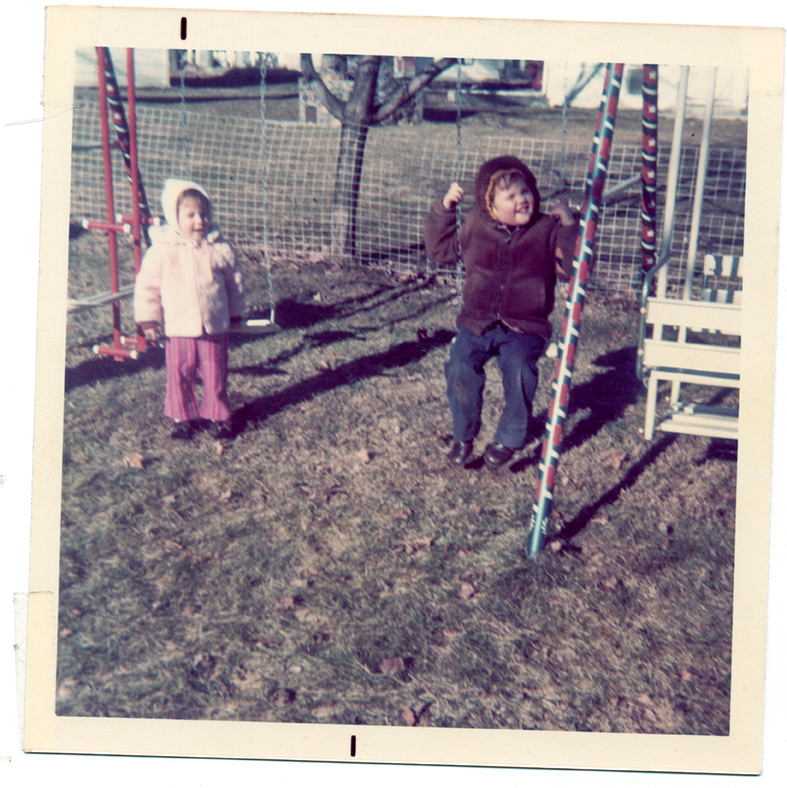
My mom interacting in everyday ways with my cousin Kim (left) in the Seventies, and my brother in the Eighties.
Our stories, in pictures
Our photos tell the stories of our lives. And our lives, frankly, are not merely birthdays and weddings. Our lives are lived in the in-between.
So tell those stories. Write about them, and photograph them.
Your memories matter. Why not make preserving them a priority?
Getting inspired

Photograph Copyright Kristen Lewis Photo
Browse the photo gallery of documentary family photographer Kirsten Lewis for ideas for creative ways to capture your own everyday moments artfully.
On Instagram, search #thefamilynarrative and #lifewellcaptured to see what other families are photographing (and sharing).
Got a box of disorganized photos from your childhood—or even your parents’? Go through it and find the photos showcasing everyday moments: Do you gravitate toward them? Why? Find one or two you might want to recreate from your present-day life.
Tell the stories of your photos. And no, not every story needs to have high drama or represent a major turning point to be interesting.
Track down a copy of Joe Brainard’s classic book I Remember to see how everyday memories can transform from mundane to magical.
Share your own photos on Instagram and tag @modernheirloom #photographtheeveryday —we’ll share a gallery of reader submissions in a future post!

Life Story Links: Blog Roundup, October 24
Finding the universal in the particular, owning the truth, & why we must tell our life stories: roundup of links for memory-keepers, writers & preservationists.

“In the particular is contained the universal.”
—James Joyce
It’s been a while since I rounded up the stories I’ve been reading to share here—but after a few weeks where I focused on my own writing (at a fabulous retreat with Dani Shapiro in the Berkshires) and my own business (exciting changes coming soon!), I’m back to it.
You may have noticed the new header and photo above; what do you think?
I try to include a wide array of links here, of interest to oral historians, bookmakers, videographers, memoirists, and those with just an inkling of wanting to share their own stories. I never want what we call ourselves to be alienating, nor confusing. I do believe we all have a passion for life stories and legacy, though...so hopefully the name change will be a welcome one. If you’ve got other ideas, please do share!
Our Stories, Our Selves
WHO’S ASKING THE QUESTIONS?
“To be an oral historian is to be a student of life.” As Meghan Vigeant of Stories To Tell in Maine aimed to teach a class of budding oral historians, she soon rediscovered that sometimes, the teacher becomes the student.
TIPS FOR LEGACY KEEPERS
Four ways to make your role as the unofficial family historian easier—and more meaningful, a guest post on The Photo Organizers blog.
IMPERFECT MEMORIES & FAMILY STORIES
“As you preserve your memories, take the time to bask in them. Remember the sensory settings of stories—the sounds, smells, and feel. Remember the associated emotions. Most importantly, enjoy yourself as you share them,” writes Michigan-based author Laura Hedgecock in this post on the fallibility of memory—and why that shouldn’t stop you from writing your life stories.
“DOES MY STORY EVEN MATTER?”
“The smallest moments of average individuals have more depth of meaning that any documentary on a celebrity or political leader imaginable,” writes Devon Noel Lee of Pennsylvania-based America’s Footprints.
Writing Down the Bones
OWNING THE TRUTH
“For writers of memoir, the thin line between fact and fiction must not be crossed, but we face the demands of reducing complex events to comprehensible stories,” says Sarah White of Madison, WI–based First Person Productions. See how an honest, informative disclaimer may inspire compassionate readers.
ONE STORY AT A TIME
“No one will tell your stories but you. And you must: Tell them, and preserve them.” Five ideas for preserving one chapter of your life story, my own most recent post.
WRITING PERSONAL ESSAYS WITH HELP FROM THE NEW YORK TIMES
This piece is a year old, but it is brimming with quality advice, glorious writing, and links and links and links that lead you to even more inspiring personal stories, writing prompts, and fruitful ideas.
AMY TAN ON MEMOIR
“...just as memories can inspire a story, writing can also trigger memories.” Amy Tan revisits the roots of her writing career in her memoir Where The Past Begins.
Finding the Universal in the Particular
- For Decades, One Family’s Vietnam War Pain Lay Hidden Behind a Wall
[Washington Post]
- Photographer Ernesto Bazan’s new book, Before You Grow Up, is a family album in which elegant photographs are mixed with drawings, letters, his mother’s journal entries, memorabilia and notebook pages. “I made this book as a legacy for my sons, a visual testament that they can carry with them, and share with the people that they love,” he said, “and always love each other as my wife and I have been teaching them to do.”
[New York Times]
- Celebrating the History of Jews in America: Created by the National Museum of American Jewish History, Re:collection is a new—free—digital platform for preserving and sharing family stories that illustrate Jewish life in America.
Podcast Scene
RESEARCHING WITH GENEALOGY & ARCHAEOLOGY
In the latest episode of her Life Preservers podcast, Pam Pacelli Cooper of Massachusetts-based Verissima Productions explores how you reconstruct a full picture of a person using archaeology and genealogy research—using the unexpected example of prostitutes in 19th century Boston.
GENEALOGY VS. FAMILY HISTORY STORIES
In this most recent episode of The Legacy Café, host Robb Lucy converses with the president of the Southern California Chapter of the Association of Professional Genealogists about tying your family history to your family legacy. Where should one start: with the leaves on their family tree, or with the family stories passed down through generations?
WHY BIOGRAPHY?
I’m currently in the middle of reading Walter Isaacson’s Leonardo Da Vinci, the former Time magazine chief’s most recent bio (others include Steve Jobs; Einstein: His Life and Universe; Benjamin Franklin: An American Life; and Kissinger: A Biography). In an in-depth interview with Tim Ferriss, Isaacson delves into his writing process, lessons he has learned from his subjects, and so much more. “I like writing biography because it connects us with people,” he says. “The narrative of a human life is particularly exciting.”
Quick Takes

Do something special with one story
No one will tell your life stories but you. Start with one, & go beyond sharing it: Do something with it! 5 ideas for preserving one chapter of your life story.
No one will tell your life stories but you. Start with one—and go beyond sharing it: Do something with it! We've come up with 5 unique—and easy!—ideas for preserving one chapter of your life story.
Who knows, one chapter might turn into two...

If you don't tell your life stories, who will?
Taking the first step on the road to preserving your memories
I previously posed the question, “Who will tell your life story?” How would you answer that question? If your answer wasn’t a resounding “me!” then, well, you answered wrong.
No one will tell your stories but you. And you must: Tell them, and preserve them.
In that post I recommend an easy 3-step plan for how to take the first steps on the road to preserving your stories. Step No. 2 involves sharing one story—whether around the dinner table with your family or over the phone with your grandkids, whether in writing or out loud, just tell one story. It might be one so often recounted it’s like an old friend, or it might be a distant memory you haven’t pulled out in decades.
Here’s the rub, though: Once you fulfill step No. 2, I implore you to move on to step No. 3: Do something with it.
5 ideas for what to do with your little life story
Remember, this isn’t your whole life story. There’s no need to publish it to Amazon or strive to write a bestselling memoir. You focused on telling one engaging story and telling it well. Now let’s do something to ensure your story lives on.
For what good is a story if you don’t breathe life into it, if it isn’t shared?
Here are a few ideas for things to do with your little life story. These are just the tip of the iceberg, and we’d love to hear other creative ways you have found for keeping your memories alive; please share in the comments below!
1. Eat, drink, and be merry.
What is it about finger foods and wine and an informal gathering of loved ones that spark storytelling? It’s as good as being around a proverbial campfire! Invite an interesting mix of people to a dinner party (think a mix of ages, a mix of relatives and close friends, and a mix of those who may be familiar with your story and those who are not).
Get creative with the place settings—scan some old family photos related to your story for name cards, for example—or get really down and dirty and place cushions on the floor for a good old-fashioned buffet of food and stories.
The important thing is this: Don’t be shy about revealing your goal of story sharing. If being the center of attention makes you nervous, ask a loved one to help set the stage, or ask a few guests to come prepared to share their own stories, too.
2. Embrace technology.
Maybe it’s as simple as sending an email to your family: Type your story into the body of an email, and hit “send.”
Or: Begin a story circle with one post on Facebook. If you’ve got a vibrant community of friends on the social media site, share your whole story there (trust us, if it’s personal and from the heart, they WILL read the whole post!) and—most importantly—ask your friends to share related stories in the comments. When people begin sharing (about a loved one who passed away, for instance, or about an old #ThrowbackThursday photo) and then commenting on one another’s comments, that’s social media at its absolute best, in my opinion.
3. Start a new tradition.
Don’t stop at one story. Weave story sharing into the fabric of your life. Make it a habit. If you invite others to participate (whether as a regular audience to your stories or as memory keepers themselves), then that habit becomes a meaningful new tradition.
The more you can truly integrate your specific means of story preservation into your life, the deeper connections among family you will make, the more value you will derive from the process, and the more you will cement your legacy for the next generation.
4. Grab a pen.
When’s the last time you wrote more than your signature in longhand? If your story is short enough, pick up a pen and a beautiful piece of paper and transcribe your words in your own handwriting.
If it is one page, consider framing and hanging it. If it revolves around a food memory, why not have it memorialized on a lovely food-safe platter? If you’ve really got the writing bug, write it out in letter form, once for each of your children or grandchildren, and mail it to them.
5. Go pro.
If you would like to preserve your words and images together in an heirloom book or video, consider hiring a professional personal historian. We will
guide the storytelling process
elicit details & emotion
add context
to present your memories in a most engaging way.
Here at Modern Heirloom Books, we specialize in bespoke coffee table books that tell your stories. Find out more.
If you prefer to preserve your story in a medium other than a book, I may be able to recommend videographers or audio specialists near you. Give us a call—we’re here to help you tell your stories beautifully!
One chapter at a time
You are living your story. Don’t let your memories fade, and don’t wait until it’s too late to begin recording them. Start with one story that you love to tell—you won’t regret it, and your family will thank you a million times over!
Related reading:
#familyhistorymonth #memoriesmatter #legacy #storytelling #loveandloss #familyhistory
This Week in Personal History... September 13
From safeguarding family photos against natural disasters to remembering 9/11, a roundup of links of interest to memory-keepers & life story preservationists.

“So much of our future lies in preserving our past.”
—Peter Westbrook
Hurricanes Irma and Harvey have impacted far too many, in far too dire ways. While saving family photos may seem like a small thing in the wake of losing a home, those sentimental tokens of memory are often among the lost items most bemoaned. Personal historians may work to record the stories of those impacted by such natural disasters, and may also offer assistance or guidance on how to preserve your legacy for the future, however the winds may blow.
Guarding Your Legacy Against Natural Disaster
Natural disasters such as those that have befallen Texas and Florida will often “rob us of our material connections to our past,” as Des Moines–based personal historian Larry Lehmer laments.
From quilts and family photos, it is often telling to see what people save.
Storykeeping’s Clinton Haby outlines a single process that will have your legacy covered regardless of a hurricane, earthquake, fire, or flood.
Other news outlets provide advice for saving items damaged by water, including straightforward videos for DIY heirloom recovery and how to salvage photos and videos ruined by flood.
Remembering 9/11
WHOSE STORY TO TELL?
“As a New Yorker who knew people who experienced so much worse, it never really felt like a story that was mine to tell,” Ilana Wiles says of why she never wrote about 9/11 (until now). Having witnessed the towers falling from my Brooklyn window that day, I can deeply relate. But even as the years pass, we find comfort in hearing from people who were there—sharing the experience of this unimaginable moment in history—and finding meaningful ways to remember, and to bear witness.
WRITING THEIR OWN STORIES
“If how we remember is a process that never stops evolving, so too is how the children of 9/11 inspire.”
Help Delaney Colaio as she seeks to rally empowerment and recovery by allowing the children who lost parents on 9/11 to become the narrators of their own lives, telling their stories, their way, in the documentary film We Go Higher.
Telling Life Stories
It’s never been easier, according to AARP—telling the story of your life, that is. Personal historians from around the country offer their tips to retirees on how to preserve their legacy for kids and grandkids in a book, video, or digital archive.
Quick Takes

The (real) value of your parents’ stuff
When aging parents have lots of stuff, their children often do not want it when they die—but it’s the memories associated with the stuff that makes them heirlooms.
My friend Donna has no space to store the fine china her mother would love to pass on to her. Derek has no desire to display his deceased mother’s antique Chippendale furniture—the mahogany color and elaborate carving don’t mesh with his home’s modern decor—yet he wrangled with guilt and family pressure when he decided to sell it.

I have written before about the Tyranny of the Family Heirloom: Many people simply don’t want to hold on to much of their parents’ “stuff,” but often their “things” may hold memories. When an object from a loved one’s life holds stories, they can become the best heirlooms.
Of course, they still amount to “stuff,” and stuff you very well may not have room for. Discover meaningful ways to preserve the stories behind those items that do hold emotional value before you donate or sell them: the process of remembering, of reflecting on what your parents meant to you while they were alive, is healing and rewarding unto itself, and at the end you will have a family heirloom that is beloved—and takes up less physical space.
It’s the memories of the things that matter, after all.
Why am I revisiting this topic? Because an article in this week’s New York Times reminded me that it is a topic that is not only incredibly relevant now, but that will become even more so in the near future:
“As baby boomers grow older, the volume of unwanted keepsakes and family heirlooms is poised to grow—along with the number of delicate conversations about what to do with them. According to a 2014 United States census report, more than 20 percent of America’s population will be 65 or older by 2030. As these waves of older adults start moving to smaller dwellings, assisted living facilities or retirement homes, they and their kin will have to part with household possessions that the heirs simply don’t want.” —Tim Verde, NY Times, Aug. 18, 2017
Resources for Handling the Things You Inherit
If you are facing the quandary of soon disposing of the beloved things your parents would love for you to inherit, here are a few articles that may be of assistance:
Which heirlooms matter—and which ones are even “heirlooms”? How to determine which items hold dear memories, and how to capture those stories for posterity.
After a death: How to make the process of going through your parent’s photos easier.
Check out Allison Gilbert’s book Passed and Present: Keeping Memories of Loved Ones Alive, which describes 85 practical and innovative ways to remember and celebrate deceased family members, including how to transform their things into meaningful keepsakes.
And read Gilbert’s grief and resilience blog, which is worth a visit for anyone who has lost a loved one, no matter how long ago.
The Healing Power of Remembrance: Memories are the connective tissue that binds one generation to the next, and the active nature of remembering is healing.
Notes from a Funeral: Memories of even the smallest moments, once shared, provide comfort and connection. Stories are a balm to our bruised hearts.

Reflections on What to Do with All that “Stuff”
The comments section of the aforementioned NY Times article is rich with ideas that provoke thought—and are sure to keep this important conversation going. A few of my favorites:
Hasty Pudding
“...what I wish I held onto? [My father’s] journals and other writing. After the pain of grief subsides, it's a way to get to know someone over again. Hasty disposal of many things can lead to regret.” —Andrea
Antidote to Angst
The joy of giving your stuff to people who will really appreciate and use it (after all, the sterling silver fork is still only a fork) while you can still realize the benefit that these folks will receive is, to me, the antidote to the family-related angst... —Sfojeff
Downsize Now
“The best gift you can give your kids is to downsize BEFORE you're too sick to do it, and for the love of God, when your kids say they don't want your stuff, believe them and don't lay on the guilt trip.” —Layla1st
Go Green
“I do not expect my kids to want much of what we have, and this does not hurt my feelings at all.... However, as far as furniture goes, I might remind the younger folks that if they are really as environmentally conscious as they profess to be, they should realize that ‘antiques’ are furniture being recycled and reused.” —Coopmindy
Generations of Junk
“...you’re not only inheriting your parent’s items, you’re taking on everything they received from older generations that they couldn't part with.... Now they’re my problem. I’m 53; I don’t plan to pass on the problem to the next generation.” —Larry
Unnecessary Conversation?
“Ms. Beauregard doesn’t have to keep the Lenox dinnerware, but why does she have to ‘break it to her mother’ that she’s going to get rid of it? What will that accomplish except for causing her mother pain?” —Diane
The Practical Approach
“Just use the china and silver—for everyday use. It doesn't need to sit in a closet.” —Arb
One Millennial’s Perspective
“I donate every month just to clear my clutter because it drives me nuts and I know others my age who do the same. It's just a different mentality. It’s not that we don’t care about memories or treasured items from generations past—we just connect with those memories differently. (In a simpler, less-cluttered, no-storage-unit-required kind of way). :) —Andrea
Verdict?
“Stuff is not memories.You get to keep the latter when you get rid of the former.” —Peter Scanlon
This Week in Personal History... August 21
A post-eclipse roundup of blogs, tweets & videos about preserving your family history, life story and memoir writing, making—and saving—good memories, & more.
“If you cannot get rid of the family skeleton, you may as well make it dance.”
—George Bernard Shaw
Where did you watch the eclipse from yesterday? My 8-year-old son and I spied the sky through our handmade cereal box viewer while we alternately had a backyard baseball catch and talked about the meaning of the world and the possibility of time travel—heady stuff, indeed. If we’re not making memories, what would we have to preserve?!
Roundup of Personal History Links - August 21, 2017
On the Blogs
EXCUSES, EXCUSES
In her post “Recording Family History: The 5 Biggest Mistakes,” Orange County, CA video biographer Jane Shafron doesn’t offer tips on recording equipment or technique; rather, she hones in on the faulty reasoning for not preserving one’s story (such as believing your story must be filled with high drama) and other “reasons” for not moving forward.
HANDMADE GIFTS WITH LASTING MEANING
“What I know is that in the giving, in the making of this present, I’ve been given yet another gift as well, of thankfulness for what has been passed down to me, and what has been passed on,” writes Massachusetts-based personal historian Marjorie Turner Hollman of the baby blankets she learned to make from her mom—and continues to gift to friends and loved ones in a now time-honored tradition.
THE QUEST FOR TRUTH
In Tell the Truth. Make It Matter, Beth Kephart offers up a wonderfully original series of memoir-writing prompts that encourage self-reflection and striving toward the universal. I review her workbook, which is a wonderful companion for anyone on a journey to find—and write—their truth.
HEALING THOUGHTS
Personal historian Beth LaMie, of Write on Track in Central Illinois, shares her very personal journey as she battles Stage 4 Ovarian cancer: “I decided to blog about my experiences to help other people understand how my life has changed.” Beth, we send you strength and best wishes, and thank you for your courage in writing so openly—may others who are impacted by cancer find comfort in your words.
Worth Checking Out
BURNING GENEALOGY QUESTION?
For any aspiring genealogists in our midst, D. Joshua Taylor and Susan R. Miller of New York Genealogical & Biographical Society hosted an informative YouTube Q&A, answering participant questions with very specific advice. Read tips from that session here; or register and submit your own questions for the next YouTube Live Q&A, scheduled for this Wednesday, August 23 at 1:00 pm ET.
Quick Takes
#MemoriesMatter #Legacy #LifeStories #Memoir #OralHistory #FamilyHistory

The quest for truth
In Tell the Truth, Beth Kephart offers up a wonderfully original series of memoir-writing prompts that encourage self-reflection & striving toward the universal.
In a previous post I recommended 5 books for autobiographical writing—books helpful to you even if you are not a writer, but you want to explore and record your life stories anyway.
As memoirist Beth Kephart writes, “Journal keeping, diary making, blogging—it’s all a curious thing, and it isn’t…memoir. But it’s a start, an inroad, a gesture.” And, in my opinion, an undertaking worthwhile in its own right.
Tell the Truth. Make It Matter.
Memory is an ever-changing, elusive thing. Jogging our memory to call forth stories may not be easy, but there are ways to make your memories more accessible—to probe and to explore and to revisit them in ways that tease out not just recollections, but strands of truth that connect us to the universal. Personal writing is never more powerful than when a reader sees himself in new—hopefully deeper—ways through the writer’s experiences.
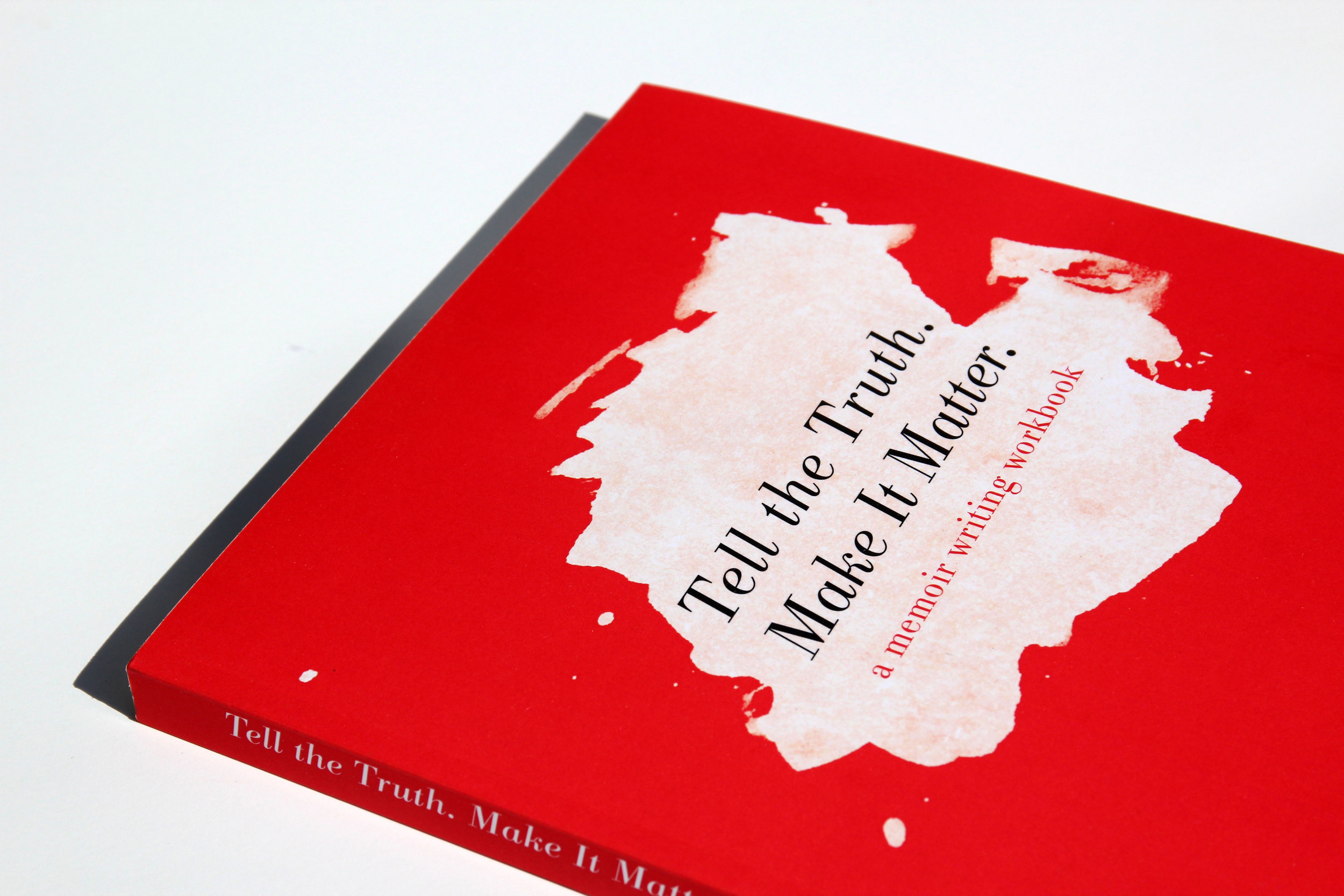
The greatest value in this workbook, in my opinion, is that it makes room for the truth. For your truth. For universal truths. It clears away the cobwebs of memory, sets your intention squarely in the direction of meaningful self-reflection, and encourages you to choose words that matter, too.
In Tell the Truth. Make It Matter (CreateSpace 2017, $18.95), National Book Award Finalist Beth Kephart encourages us to “move away from anecdote toward meaning,” to discover what matters most to you through the actual process of writing. Writing becomes an act of creating the self as much as creating memoir.
“Search for the truth, and write that truth, and you’re not just putting words on a page. You’re shaping your own sense of who you are and what you’re capable of.” —Beth Kephart
Tell the Truth is billed as “an illustrated memoir workbook created for those who write and teach memoir, those who recognize the power of truth in our everyday lives, and those who simply (though it is never simple) wish to remember.”
The prompts and exercises within are wonderfully original, expertly crafted (Kephart is, in fact, a seasoned memoirist and compassionate teacher), and simultaneously pointed and open-ended enough to have you furiously filling in those blank pages with purpose.
You are prompted to “tiptoe toward the writing of truth by writing a little bit of fiction,” to glimpse the truth through writing about objects and photographs and secrets, to write freely then build upon your thoughts, to experiment with language. Do you tend toward fine writing or plain prose? Either way, this workbook stretches you to try new approaches, and to understand which words have that “magnificent power to penetrate,” as Annie Dillard wrote.

Beth Kephart’s writing speaks to me on a visceral level; I luxuriate in her language, feel her words. Even in this workbook, where blank pages abound and words are spare, every word matters—hers (which will inspire) and yours (which I hope you will begin to put down on paper).
A small section of the book titled “On the Hunt for Memory” asks us to ponder how we remember—where do we go to find the past? In my work I often hear, “I don’t remember enough to share my stories.” Through guided reminiscence and conversational interviews, though, the stories and specificity of memories that emerge are often astounding. In this section of the workbook, Kephart offers a series of highly effective exercises for tapping into your memories, for rediscovering them as the raw materials for writing your life stories.
Life story writing of any kind is a journey, and Kephart recognizes that one workbook will not be your sole guiding force. “Your true story is a question waiting to be answered,” she writes.
Answer the questions in this workbook. Answer the questions in these unexpected resources. Most of all, answer the questions you write for yourself. What preoccupies you? What do you dream about? What probing conversations do you return to again and again around the dinner table over a bottle of wine?
Truth, Kephart says, “is a raw and quivering thing.” Are you ready to begin a journey to find—and write—your truth?
Tell us about your life story writing.
I would love to hear about your own journey towards writing your life. What are your biggest struggles? How do you access memory? Please comment below so we can keep the conversation going.

Related Reading
Read sample pages from Tell the Truth. Make It Matter. by Beth Kephart.
In need of inspiration? Read an excerpt from Beth Kephart’s book Still Love in Strange Places, and learn more about her memoir writing workshops.
“If not now, when?” What you can learn from Gloria Vanderbilt and Anderson Cooper.
Lots of food memories & family recipes passed down through generations? Consider making an heirloom book documenting those—but first, read from our Taste of the Past series for inspiration.
Note: This is an unsolicited review of a book I purchased at full price. I did not receive any compensation or free products in exchange, and the endorsements within this post are my own.
This Week in Personal History... August 15
Our life story links for Aug. 15, 2017 include a sweeping wartime oral history project & a most personal endeavor to preserve the memories of one man.
“Sharing tales of those we’ve lost is how we keep from really losing them.”
—Mitch Albom
This week’s links look at life story from a wide range of perspectives, including a sweeping wartime oral history project and a most personal endeavor to preserve the idiosyncrasies of voice and memories of one man.
Roundup of Personal History Links - August 15, 2017
In the News
A SON’S QUEST TO GIVE HIS FATHER ETERNAL LIFE
“If even a hint of a digital afterlife is possible, then of course the person I want to make immortal is my father.” Using hours of interviews with his dying father to create a Dadbot, writer James Vlahos creates a means for conversing with a “low-resolution representation” of his dad. Will it be a balm to those who knew the man dearly, or will it be best received by the younger generation who have fewer memories of him?
“WOMEN’S STORIES ARE DIFFERENT”
“There are no heroes and incredible feats, there are simply people who are busy doing inhumanly human things.” The Atlantic calls Nobel laureate Svetlana Alexievich “a witness to witnesses who usually go unheard,” and her collected testimonies of women under Soviet rule are examples of how—and why—such oral histories have staying power.
On the Blogs
WORD BY WORD
Samantha Shubert of NYC’s Remarkable Life Memoirs is a cheerleader for a hitherto little-known lexicographer who works for Merriam-Webster: Kory Stamper, known for her witty Twitter presence and video series “Ask the Editor,” and, most recently, her book Word by Word.
WRITING & INTERVIEW PROMPTS
Three unexpected resources for thought-provoking conversation starters: Often provocative, occasionally off the wall, and always open-ended, these are questions that you can ask relatives or yourself on your journey of documenting your life stories. (The best questions yield the best answers.)
TIME, MEMORY, LOVE
“Is memory produced by us, or is it us?” Superb, eclectic musings on the nature of memory and personal identity from poet and philosopher Etel Adnan, via Brain Pickings.
AUSTRALIA’S LIFE STORY ASSOCIATION
Life story writers, personal historians, memoir writers, ghost writers, biographers, film makers—what’s in a name? While professionals who are involved in producing a permanent record of a person’s life are called many things, their mission is shared, and their industry evolving.
Worth Checking Out
“Start talking to people—just don’t be shy to learn about it,” advises a young filmmaker who explored her own parents’ personal history during a family camping trip that turned into a 15-minute documentary.
Quick Takes
#MemoriesMatter #Legacy #LifeStories #Memoir #OralHistory #FamilyHistory
Dawn Roode’s curated roundup for the week of Sept. 23, 2026, is overflowing with recent reads on memoir, life story writing, and family history preservation.