
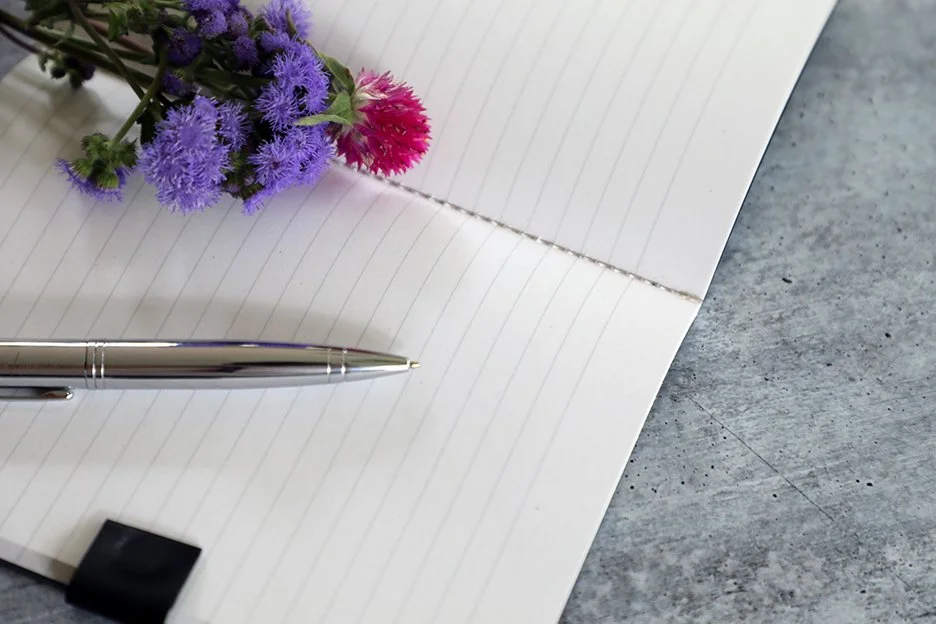
“Every notebook is a possibility.”
“Every notebook is a possibility,” I heard Patti Smith tell an interviewer recently. A paper person like me—she was browsing a stationery store during the interview, drawn in by every notebook, pen, and paper clip (!!!)—the musician and memoirist also spoke about the connection between brain and hand, pen and paper.
But that quote lingered with me: “Every notebook is a possibility.” Yes!!!
Each blank page offers the same quiet invitation: Begin anywhere. Whether you’re journaling your thoughts, recording a memory before it fades, or collecting fragments for a family story, a notebook isn’t just paper—it’s potential.
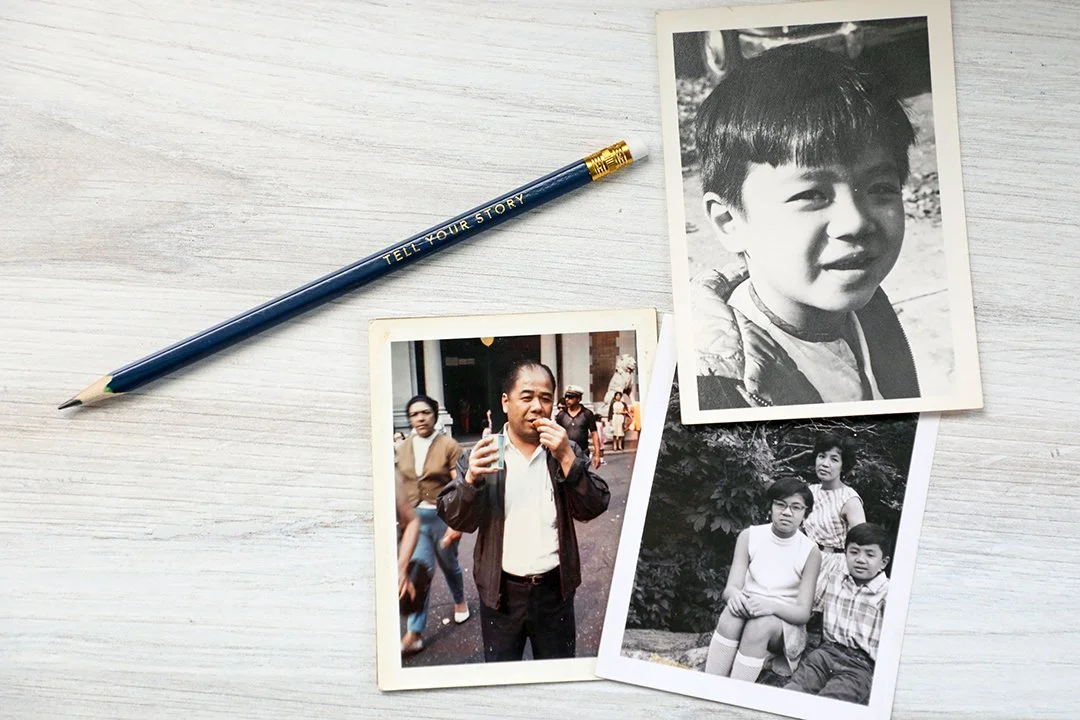
We often think of legacy as something monumental, but most family histories start small. A sentence scribbled in a margin. A recipe jotted down on a grease-splattered sheet. A note to remember who sat where at a long-ago table. Over time, those fragments add up—and they can become the foundation of a story that outlives us.
And you know what? Even if you don’t curate and elucidate on those fragments—even if you have zero plans to turn them into some grand legacy project—everything you put into that notebook holds value. To you, as an individual who strives to find meaning through writing, as a person who finds joy in preserving memories for memories’ sake. And to your descendants, who may one day flip through one of your notebooks as an artifact of a life only you could have lived.
A place for anything
A notebook is forgiving. It doesn’t demand structure or perfection. It welcomes half-formed ideas, unsteady handwriting, and thoughts that trail off mid-sentence. It’s the safest place for honesty (especially when you’re not sure yet what you’re trying to say).
When you begin with pen and paper, you tap into something tactile and timeless. You start to listen differently—to your thoughts, to your memories, to your instincts.
How to use a notebook for legacy writing
Capture what catches your attention. A scent, a phrase, a face that flickers through memory. Don’t worry about whether it “fits” in a story. You can always find its place later…or not.
Keep one notebook for story sparks. Think of it as your catch-all for family lore, overheard lines, or questions you want to ask an elder relative. It just may become your go-to for self-made writing prompts when you’re in need of a little inspiration.
Date your entries. Months or years from now, you’ll be glad to see when those memories first surfaced. It’s a timeline of your creative and emotional life. Paste in an occasional ticket or receipt with the date imprinted on it, too—it’ll add some wonderful texture even as it helps orient you in time.
Don’t censor. The private pages are for you. Messy, funny, sad, unpolished—it all belongs. (If you’re worried about what will happen to your journals when you’re gone, read this.)
Revisit, don’t revise. Every few months, flip back through old pages. You may find patterns you didn’t see before— small moments that begin to form the shape of a story. Or, maybe more alluringly, you may simply get lost in the past, immersing yourself in the nostalgia of your own life…enjoy.
A possibility, realized
Every time you open a notebook, you’re saying yes to remembering. Yes to meaning-making. Yes to the possibility that something you write might matter, to you now, or to someone else later.
The only rule is that there are no rules.

















Memory is imperfect—but that shouldn’t stop you from tapping into yours to write your memoir. Learn how forgetting and bias can deepen truth in your life story.