
Memories Matter
Featured blog Posts

READ THE LATEST POSTS
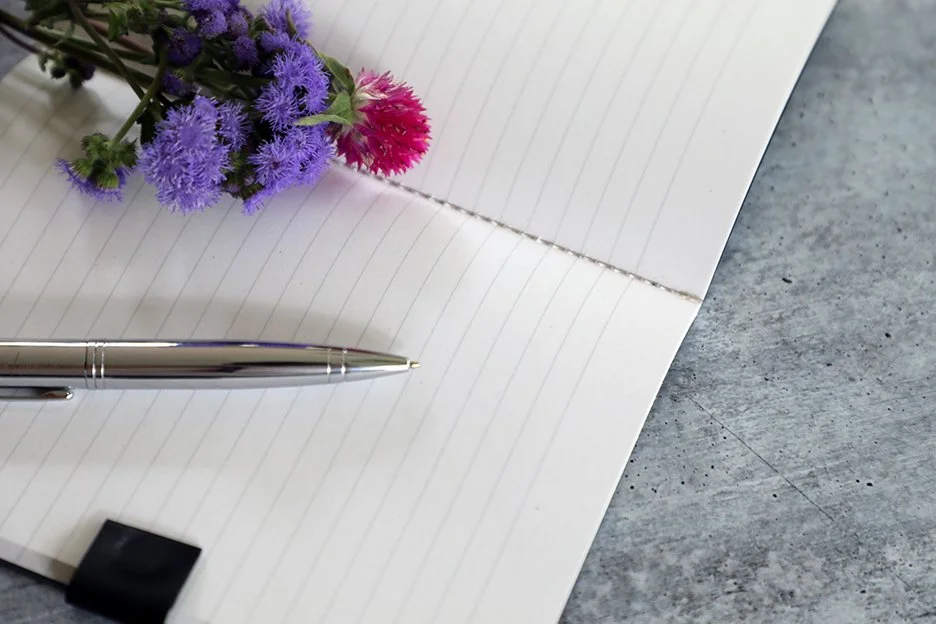
“Every notebook is a possibility.”
Learn how keeping a notebook can nurture memoir and legacy writing—each blank page a new possibility for memory and meaning.
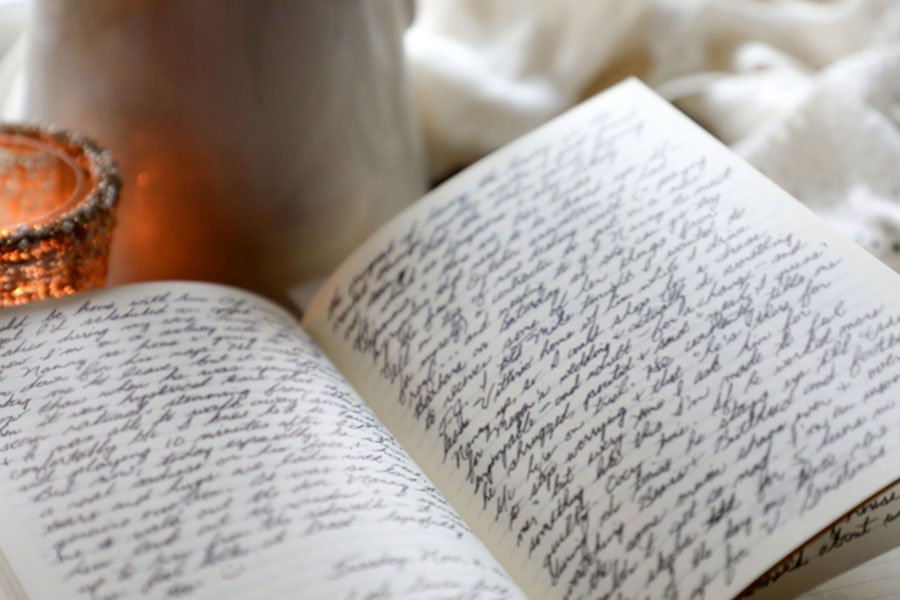
“Every notebook is a possibility,” I heard Patti Smith tell an interviewer recently. A paper person like me—she was browsing a stationery store during the interview, drawn in by every notebook, pen, and paper clip (!!!)—the musician and memoirist also spoke about the connection between brain and hand, pen and paper.
But that quote lingered with me: “Every notebook is a possibility.” Yes!!!
Each blank page offers the same quiet invitation: Begin anywhere. Whether you’re journaling your thoughts, recording a memory before it fades, or collecting fragments for a family story, a notebook isn’t just paper—it’s potential.
We often think of legacy as something monumental, but most family histories start small. A sentence scribbled in a margin. A recipe jotted down on a grease-splattered sheet. A note to remember who sat where at a long-ago table. Over time, those fragments add up—and they can become the foundation of a story that outlives us.
And you know what? Even if you don’t curate and elucidate on those fragments—even if you have zero plans to turn them into some grand legacy project—everything you put into that notebook holds value. To you, as an individual who strives to find meaning through writing, as a person who finds joy in preserving memories for memories’ sake. And to your descendants, who may one day flip through one of your notebooks as an artifact of a life only you could have lived.
A place for anything
A notebook is forgiving. It doesn’t demand structure or perfection. It welcomes half-formed ideas, unsteady handwriting, and thoughts that trail off mid-sentence. It’s the safest place for honesty (especially when you’re not sure yet what you’re trying to say).
When you begin with pen and paper, you tap into something tactile and timeless. You start to listen differently—to your thoughts, to your memories, to your instincts.
How to use a notebook for legacy writing
Capture what catches your attention. A scent, a phrase, a face that flickers through memory. Don’t worry about whether it “fits” in a story. You can always find its place later…or not.
Keep one notebook for story sparks. Think of it as your catch-all for family lore, overheard lines, or questions you want to ask an elder relative. It just may become your go-to for self-made writing prompts when you’re in need of a little inspiration.
Date your entries. Months or years from now, you’ll be glad to see when those memories first surfaced. It’s a timeline of your creative and emotional life. Paste in an occasional ticket or receipt with the date imprinted on it, too—it’ll add some wonderful texture even as it helps orient you in time.
Don’t censor. The private pages are for you. Messy, funny, sad, unpolished—it all belongs. (If you’re worried about what will happen to your journals when you’re gone, read this.)
Revisit, don’t revise. Every few months, flip back through old pages. You may find patterns you didn’t see before— small moments that begin to form the shape of a story. Or, maybe more alluringly, you may simply get lost in the past, immersing yourself in the nostalgia of your own life…enjoy.
A possibility, realized
Every time you open a notebook, you’re saying yes to remembering. Yes to meaning-making. Yes to the possibility that something you write might matter, to you now, or to someone else later.
The only rule is that there are no rules.
















What should I do with my journals?
Have you ever thought about what will happen to your diaries—who will read them, how you may one day use them? Join me as I consider this profound question.

So many factors come into play when considering whether to save or destroy your personal journals. What’s your thinking?
As an off-and-on journaler since young adulthood, there are two main things that stop me from being consistent with my journaling: finding time, and wondering what on earth I should do with them after they are written.
The first challenge—time—is fairly easily addressable. I have tried gratitude journals or other short memory-keeping prompts that can be completed in just 10 to 15 minutes with great success. I also firmly believe that we make time for what matters to us—so if keeping a diary can make its way atop your priority list, chances are you can squeeze it into even the busiest schedule.
But that second question troubles me more.
The case for destroying my journals upon completion?
A personal journal has value, in my opinion, because it is a place where we can be our unfettered selves—free from the constraints of worrying about what other people will think, or worrying about the quality of that writing. A diary is a place to be vulnerable, even to work out problems through the very act of writing about them.
Are they something I envision other people reading? No.
At times I have formatted my journal as an ongoing correspondence with my deceased mom. It helps orient me, feel like I am speaking to someone rather than sending messages out into the ether, and imagine a compassionate soul receiving my words. Perhaps if she were still alive I could envision her actually reading them. But, well, I wouldn’t want anyone else to read them.
Which poses a dilemma if I ever want to use those diaries as a touchstone for future memoir writing, as so many life writers do (and as I often recommend!). Because if I hold onto them, someone else may find them. If I hold onto them, someone else will certainly discover them when I am gone.
Let me be clear: It’s not like I am writing anything awful in those journals. On the contrary, the types of things I share—the overwrought emotions and unprocessed (often reactionary) thoughts—are likely universal in many ways. But they’re not necessarily how I want to be remembered. It’s why at some point in my 30s I destroyed my diaries from my teen years (I am ashamed now to say how dreadfully embarrassed I felt upon rereading them as an adult—I hadn’t yet learned to be compassionate with my former selves). I am still not even sure if I am happy or regretful of that decision to get rid of those angsty handwritten pages.
In the introduction to A Writer’s Diary, the collected journals of Virginia Woolf, Woolf’s husband writes:
“At the best and even unexpurgated, diaries give a distorted or one-sided portrait of the writer, because, as Virginia Woolf herself remarks somewhere in these diaries, one gets into the habit of recording one particular kind of mood—irritation or misery, say—and of not writing one’s diary when one is feeling the opposite. The portrait is therefore from the start unbalanced…”
…a fairly adequate description of why I don’t intend my diaries to be read by anyone other than me.
When I ponder the question of whether to save or destroy my journals, though, I sometimes come to the conclusion that I should save them, but that I should write with an audience of my child or future descendants in mind. That’s certainly what some famous diarists have done. But, as Joan Didion wrote in the essay “On Keeping a Notebook”:
“…our notebooks give us away, for however dutifully we record what we see around us, the common denominator of all we see is always, transparently, shamelessly, the implacable ‘I.’ We are not talking here about the kind of notebook that is patently for public consumption, a structural conceit for binding together a series of graceful pensées; we are talking about something private, about bits of the mind’s string too short to use, an indiscriminate and erratic assemblage with meaning only for its maker.”
Ah, so much fodder for thought, and yet I reach no conclusions—“to save or to destroy my journals” still exists as an unanswered question for me.
Where do you stand on this?
The case for saving our journals
Of the many reasons one might have for keeping a journal, here are a few that, in my opinion, merit their safekeeping:
keeping a journal as an autobiographical record
Whether as a tool for future memoir writing or as a piece of your legacy you pass down to loved ones as is, a journal can be an important piece of your personal history to preserve. Read this post for a specific writing prompt that will yield fodder for your autobiographical writing.
keeping a journal as a personal record
Such personal writing can be a valuable resource for you to look back on later in life. They can help you to remember important events, to track your progress, and to reflect on your thoughts and feelings. Read a thought-provoking exploration of what it means to write memoir as a tool for self-understanding (“like a good therapist”) in this old New York Times article.
keeping a journal as a source of inspiration
Perhaps you plan to use your journal as a source of inspiration for your writing, art, or music. They can also help you to come up with new ideas for projects or to solve creative problems. Read these thoughtful reflections from The Marginalian by Maria Popova on celebrated writers and their ideas about the creative benefits of keeping a diary (there are, unsurprisingly, conflicting notions on whether or not to keep said diaries!).
Ultimately, the decision of what to do with your journals is up to you. There is no right or wrong answer, and the best option for you will depend on your individual circumstances and preferences. That said, I would absolutely love to hear what you think about this! Please share in the comments—I promise to reply and get a conversation going.



The low-pressure, high-yield memory-keeping project I’ve recently started
I might not have time for the full-fledged memoir I want to write, but I can make time every day for this easy and significant journal exercise—and so can you.
Not every memory-keeping project we undertake needs to be ambitious—even getting one short memory down on paper each night can be both enjoyable and fruitful.
I help people preserve their family stories and personal legacies for a living, and yet I am way behind in documenting my own (the cobbler’s shoes and all that).
Don’t get me wrong, it’s not like I haven’t begun—I started my business after creating an heirloom book in my mom’s memory, after all. And I do create family annual books that are predominantly photo books with some text. But these don’t tell my stories—or my family stories—in the in-depth way I know I’d like to.
For the moment, I don’t have time to delve into a big project of my own, not when I am juggling so many for my clients. But that doesn’t mean I can’t do some things along the way to work towards those goals.
For example, down the road I hope to undertake (and finish!) a family heritage cookbook. This has been on my mind for a few years now. So I do little things when I can: I have scanned all my mom’s and grandmother’s handwritten recipes that mean something to me; I have handwritten the recipes for some of my son’s favorite foods, and digitized those, as well. And about twice a year when I am making something I know I’d like to include in the cookbook, I get out my good camera and take some beautifully lit shots of the ingredients, prep, and finished dish. When it comes time to make this “a project,” I’ll be well on my way.
Similarly, I have begun early steps towards a more in-depth storytelling book about my own experiences. I have made a life timeline, and brainstormed topics and themes I would like to write about. But I am still mulling over how I’d like that book to take shape, and I don’t presently have the time to devote to it.
Yet, NOT doing these things now gives me pause. I won’t say it keeps me up at night, but it did preoccupy me on a recent night when I couldn’t sleep. I am more conscious than most of how often people miss the opportunity to capture their loved ones’ stories. All too often I am helping people preserve stories through second-hand accounts—what someone remembers their father having told them before he died; or scouring a grandmother’s meager journals for snippets of her own stories.
It’s not for nothing that the single most resonant quote I share with people is this one from William Zinsser (the quote appears on the home page of my website for this reason):
“One of the saddest sentences I know is ‘I wish I had asked my mother about that.’ ”
I don’t want that to ever be a sentence my own son utters.
And so, while I am moving at a snail’s pace with the bigger memory-keeping projects I aspire to, I recently vowed to devote some time every night to a more simple memory-keeping endeavor: I have designated a journal as my “I Remember” book. In it, I try every night to write at least one sentence, maybe more, that begin with the words “I remember.”
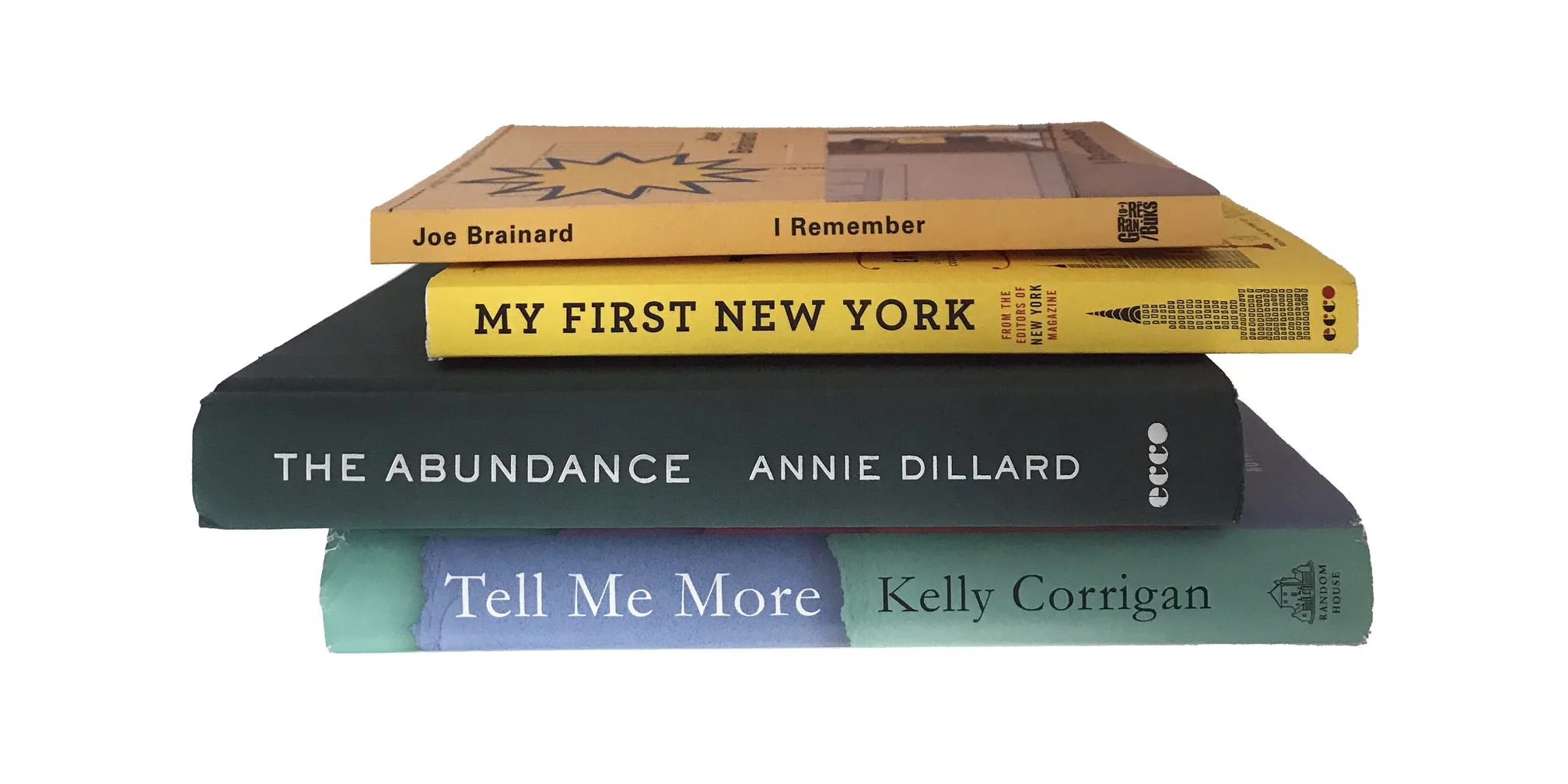
I was inspired first by the prevalence of easy-to-maintain journals such as this line-a-day memory journal or this five-minute gratitude journal. I see these posted across my social media feeds by friends and influencers alike, and am drawn to their low-pressure approach to diary keeping. But because I want to focus right now on recording memories from my past, not my current day-to-day, I took inspiration as well from a book I was first introduced to by Dani Shapiro: I Remember, by Joe Brainard.
I have written about the value of this book before, and even shared some wonderful remembrances written by colleagues and friends here (it’s great inspiration!). So why did I never think of making this a nightly practice? Probably, I imagine, because I always tend to “think big.”
But I’ve thought of it now, and I’ve begun. And I am loving it.
How you can start your own low-pressure memory-keeping practice
Would you like to start your own low-pressure, high-yield memory keeping project?
Simply:
Buy a journal or create a new document on your computer.
Open this journal or document every day to write down one (or a few!) short remembrances. Just a sentence or two each, even a phrase if you feels it’s evocative.
Optional:
Date your entries if you like, or simply keep a continual list without regard for when you wrote them.
Set a regular time for writing in your “I Remember” journal, or carry it with you for whenever a few moments present themselves.
Consider that one day you may use this journal as a jumping-off point for a bigger personal history project—but know that by no means do you have to! This book will be chock-full of memories that I assure you will run the gamut from fun and lighthearted to deep and reflective—and it may one day be cherished by your own next of kin.
See what I mean about low pressure? Won’t you join me in this intentional remembering? Honestly, it’s one of my favorite things to do every evening, and I feel so wonderfully accomplished as the pages continue to be filled. One memory at a time…





Life Story Links: February 1, 2022
Stories about journaling, memoir writing, and preserving individual accounts of WWII—they're all in this week's curated reading list for personal historians.
“There is not one big cosmic meaning for all, there is only the meaning we each give to our life, an individual meaning, an individual plot, like an individual novel, a book for each person.”
—Anaïs Nin
"Narihira’s journey east," a 1770 book illustration, courtesy of Spencer Collection, The New York Public Library Digital Collections.
Writing Our Lives
GETTING TO THE FINISH LINE
For anyone stuck in the middle of a life story project—or hesitating to even begin because finishing seems like a pipe dream—setting a deadline can be a game-changer.
DAILY DIARY
Martha McPhee carries a journal with her, she says, “because it helps me track the uncharted territory of the present moment. In this act of gathering—scrawls about things noticed on the way to a store, the playbill for my son’s brief acting career, glue-sticked to the page—I’m forced to slow down and tend to the parts that evoke a whole. Sometimes they plant the seed for an idea that I might write about later on.”
THE AUDACITY OF BEING SEEN
“Revealing oneself is an act of radical generosity: Letting oneself be seen allows others to do so the same. And this vulnerability creates connection; this connection creates community.” Robin MacArthur on the courage to write.
Memories Flow from Varied Places
MUSIC THAT MEANT THE MOST TO HIM
“When BBC correspondent Dan Johnson posted on Twitter shortly before Christmas that he had finished editing a project capturing the voice of his late father Graeme, he was surprised by the reaction. It made him consider the importance of preserving the memories of loved ones.”
BOOKS THAT LINED HER SHELVES
Books from the home library shelves of Ruth Bader Ginsburg, artifacts that reflect aspects of her life from student to U.S. Supreme Court justice, are up for auction, including her annotated edition of the 1957–58 Harvard Law Review (how I would love to see that marginalia) to a signed copy of Toni Morrison’s Beloved.
DIARY DISCOVERIES
Sally MacNamara has found universal feelings that span generations in the thousands of diaries she has read. Listen in as she shares words from a few handpicked favorites (they’re truly moving) and talks of how her great-grandmother’s handwritten journal helped her navigate grief after her husband’s death.
If you enjoyed Sally’s TedX Talk, you may also be interested in checking out her podcast Diary Discoveries.
War Stories
WWII GENERATION PASSING ON
“The kids and grandkids of the greatest generation have stories to tell. It's up to us to tell them to our kids and for our kids to tell them to theirs. Haul out the family archives. The pictures and the Purple Hearts and the letters from the war front. And the home front.”
VOICES OF THE HOLOCAUST
Timed to International Holocaust Remembrance Day, January 27, 2022, The National WWII Museum in New Orleans has curated a collection of some of their most notable programs on the Holocaust, including numerous first person testimonies.
MORE FROM THE NATIONAL WWII MUSEUM
Browse the museum’s compelling digital collections of photographs and oral histories that tell stories of the war through the people who were there. The entries marked “Curator’s Choice,” like this one about a soldier’s letter home, are among my favorites.
...and a Few More Links
Julia Cameron on the enduring power of The Artist’s Way and morning pages
Emma Knight finds comfort in the diaries of Virginia Woolf.
The many meanings of family estrangement for female immigrants
Short Takes

Artful memory-keeping ideas from the world of sketch journaling
If writing about your life isn't for you, how about drawing it? Ideas for using a sketch journal to capture your memories, plus the book that will inspire you.
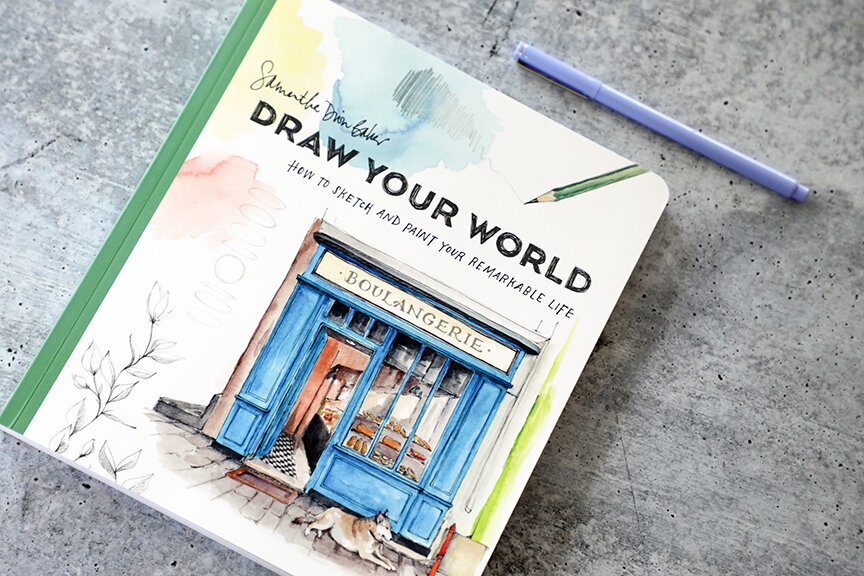
Have you ever thought of keeping a sketch journal? If the idea piques your interest, then Samantha Dion Baker's new book is a must-read. If you've never even heard of a sketch journal—but think that adding some colorful visuals to your handwritten journal might be a fun new idea—then this book is a great read for you, as well.
Draw Your World: How to Sketch and Paint Your Remarkable Life is filled with vibrant pages from the author's own art journals (inspiration in its own right) coupled with reflections on how her journal-keeping journey has evolved over time. Better yet: Baker offers up specific journaling prompts to help you put pencils and paintbrushes to paper.
Sketch-journaling as memory-keeping
"My entire art-making practice has evolved into a memory-tracking practice,” the Brooklyn–based mom and artist writes. Indeed, she sketches everything in her always-at-hand journals, from her morning coffee and the dog sitting across from her while she drinks it to a fabulous bag spotted on the subway during her commute. Why record the seemingly mundane? Well, paying attention to the present so acutely is a form of meditation, Baker has said; and from my perspective, honoring our daily routines—how we live the bulk of our lives—is equally as important as capturing milestone moments such as birthdays and graduations.
"A sad day, a happy day, a milestone day, a holiday, a sick day—all of these days are filled with tiny moments that, when drawn or written about, will help transport me back,” Baker wrote in her first book, Draw Your Day. "It is fun for me to capture the life of a working mom living in New York City by writing down all of the things I manage to do in one day. " These drawing can invoke sense memories later on—when you look back at that lip gloss you used every day for two years, you'll not only remember the color but the smell and feel of it, too.
Art-inspired ideas for capturing the memories that matter most to you
Samantha Dion Baker is all about honoring the present and the past. In addition to the “bits of the ordinary” that she includes on most every journal page, she suggests striving to capture ideas and emotions. And while, certainly, she provides specific technical advice and tips for what tools you'll need to begin a sketch journaling practice, she stresses that anyone—even a non-artist—can undertake to capture memories through art. “Drawing your world is accessible to anyone compelled to translate the outside world onto a flat surface,” she writes.
The full pages shown from her travel journals in Draw Your World are especially inspiring, as they weave together written observations, sketched remembrances, and tiny details that create such a vibrant and emotional picture of days spent in places from Iceland to Brooklyn. “When we travel,” Baker writes, “my practice becomes more of a family affair, and the artwork and recorded memories in my journal are a gift to all of us as we look at them later on, bringing us back to those precious moments.”
I love her idea of gluing hotel envelopes from family trips right into your sketch journal and stashing receipts, ticket stubs, and other vacation ephemera in there (scrapbook inspired, for sure, but what a surprise when discovering that dimensional element within a two-dimensional journal!).
A few other prompts that I think are relevant for memory-keepers of all kinds:
Present-tense, or ongoing:
every year on your child's birthday, draw a portrait of them (if that's too intimidating, draw some of their favorite things or quote something they've said that year)
celebrate a lost loved one through art
draw souvenirs or scenes from your vacations
Past-tense, or reflective:
"Think back to your happiest moments, jot them down in a notebook, and then create abstract paintings titled as those memories,” Baker suggests.
If your recall your first car, draw it (you can search online for reference photos if you don't have a picture of your own), then—my favorite part!—“record any adventures and road trips you remember in it."
What other ideas come to mind for you? A fair number of family history interview prompts could easily translate into sketch journaling ideas—consider drawing your grandmother in the kitchen, or painting the pie she made for you as a child that never failed to bring a smile; or sketch out what you wore—and carried in your bag—on the first day at a big new job. The possibilities are endless!

A few squares from the Instagram feed of Samantha Dion Baker showing sketches from her journals, where she captures both details from her everyday life and bigger moments from vacations and family milestones.
Get inspired by Samantha Dion Baker:
Follow her Instagram feed, where she shares vibrant pages and sketches from her journals.
Buy her first book, Draw Your Day: An Inspiring Guide to Keeping a Sketch Journal, for an introduction to art journaling and inspiration to pay attention: “Let the small pages of your sketch journal become a personal lens, a way to organize and creatively make sense of the world around you.”
Pick up a copy of her most recent book, Draw Your World: How to Sketch and Paint Your Remarkable Life, for a more expansive way to approach your sketch journaling (and to see how the author’s personal pages have evolved over time).
Up next for the artist and author: Draw Your Day for Kids! This book will include sketch pages for young readers to record their memories and feelings, and will become an original keepsake as they grow up (oh, how I love THAT!).
Note: This is an unsolicited review of a book I purchased at full price. I did not receive any compensation or free products in exchange, and any endorsements within this post are my own.
Affiliate disclosure: As an Amazon Associate, we may earn commissions from qualifying purchases from Amazon.com.










Let’s be kind to ourselves
I can feel overwhelmed by all the ways I “should” be spending my newfound time at home. It’s okay, though, to get lost in a good book or stare out a window.

My news and social media feeds are filled with articles on how to maximize my time at home. How to make the most of home-schooling. How to revive old hobbies, finish abandoned projects, take part in viral video challenges and bake bread and educate myself more and more and more. Zoom calls and Google Hangouts and radical self care (huh?).
I’m feeling a sense of overwhelm. There are days I ride the waves of productivity and move forward with ease, and others where I walk around the house unfocused and feeling a sense of unidentified dread.
Can you relate?
These are strange times, indeed, and there is no precedent in our lives for how things “should” be, how we “should” feel.
Press pause
I just wanted to say: Let’s be gentle with ourselves.
Let’s allow for days where not “enough” gets done.
Let’s allow for days when, rather than organizing our photo archives (a project on my list, for example), we browse our old photos and get lost in the memories they stir.
Let’s skip the journaling for a day to escape into the pages of a long-favorite novel.
Let’s take time to honor our feelings, and to allow ourselves to just be—no judgment, no expectations.
Personally, I will continue to jot down ideas on my own to-do list, and professionally, to offer up family history activities and memoir writing tips on this site, just in case you’re ready for them.
Just remember: It’s okay for some items to remain on our to-do lists indefinitely, and to bookmark activities for later.
I’m here as a personal historian to listen to your stories when you feel ready to share, to move forward with a legacy project that’s been on your mind for ages, and to offer wisdom for your DIY projects, too. And I’m here as a fellow human navigating this new normal with vulnerability and good intentions—let’s do our best, together.
❤️❤️❤️
4 easy ways to find your way into life story writing
When the idea of telling your life story is intimidating, write your way in, one memory at a time. These tactics will help you finally get that memoir started.

You’ve thought about writing your life story. Perhaps it’s even on your long-term to-do list. But how to go from a theoretical wish for yourself (to get to “someday”) to an actual thing that you do, a practice that you begin and develop (day after actual day)?
Here are a few specific tactics for helping you begin to write about your life’s journey. As I have written about before, don’t let the idea of embarking on a full-blown memoir intimidate you; rather, start by writing your way in, one memory at a time.
1. Diagram your life.
Some people have one burning story to tell. Others find it difficult to immediately pinpoint anything.
Tristine Rainer, author of Your Life as Story, recommends diagramming your life to gain perspective. To do this, get in a retrospective mood, enlist the help of a friend or spouse (martinis also work), and plot your life’s six most significant moments. When you do it thoughtfully and honestly, there will usually be one pivotal event that stands out as particularly intriguing and/or meaningful.
If there isn’t, don’t worry. There are many different ways to diagram a life. Try dividing yours by critical choices, influential people, conflicts, beliefs, lessons, even mistakes. Experiment until you find the one story that wants to be told, the one experience that really fashioned you.
This exercise asks you to focus on formative experiences—a fork in the road or a small decision that ultimately had great impact on your life. If you prefer to start smaller, skip to No. 2.
2. Brainstorm persistent memories.
By persistent memories I mean ones that return to you again and again, often unbidden. Perhaps it’s memories of cooking with your Nana after school that repeatedly return to your consciousness. Or maybe you can’t let go of that one time you lost out on a promotion to a much-younger colleague. If an experience haunts you, it probably holds greater meaning than even you realize—and writing (or even talking) about it will often help plumb those depths.
Lisa Dale Norton refers to a recurring memory such as this as a shimmering image, one “that rises in your consciousness like a photograph pulsing with meaning.”
“These shimmering images are the source of your most potent stories,” she writes. “They have energy; if you squint at them you will see the edges of the image shimmer, wiggle with potential…. This shimmering is the energy of the story that waits inside the image to be told. That’s why you have remembered these images all these years. Over and over they come back, knocking at the door of your creative soul, waiting to shed light on your life, waiting to share the wisdom that resides inside them.”
So go ahead: Grab a piece of paper and jot down those memories that you revisit often. They’re familiar to you, so a simple phrase will likely suffice to jog your memory later (biking in Yellowstone, working at MoMa, that hand-me-down prom dress). When you are ready to write, use this as your own personal cheat sheet of customized writing prompts.
3. Use guided writing prompts.
There are plenty of family history and life review questions available across the web, including some here on my own site. And while I find that they can be powerful guides for life story writing of all kinds, I am here recommending slightly less direct writing prompts to get your memoir writing going.
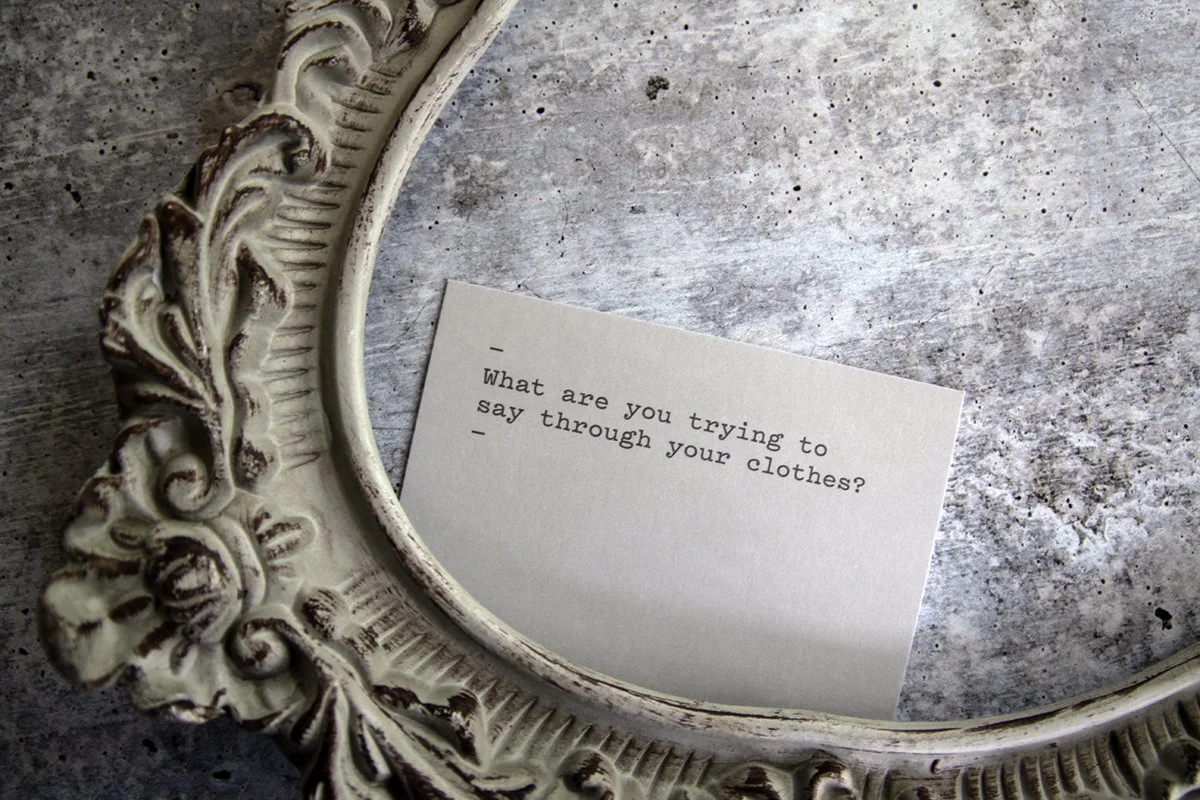
Rather than walking through the front door, come in through a side window. Rather than doing a brain dump of your experiences from birth till now, hone in on a particular (unexpected) moment. A feeling as opposed to a plot. A peek inside your home instead of a drawing of your house.
Don’t ask yourself, “What was going to college like?” Do, as Beth Kephart prompts in her memoir writing workbook, “Write about leaving. Write with the understanding that you won’t remember all the details, but you will remember how leaving felt.”
Marion Roach Smith encourages us to “think in propinquities.” Don’t write about turkey and stuffing and saying grace on Thanksgiving, for instance. Instead, give us “an angle shot…a sidelong glance at how you learned new ways to be grateful.”
A few “sideways” writing prompts to consider:
Recall a time you felt unheard.
When have you wanted to turn around and go home?
What do you wish a friend would ask you?
Find more such thought-provoking questions in these Q-and-A card decks and in Beth Kephart’s latest workbook, Journey: A Traveler’s Notes. And discover some of my own favorite life story vignette writing prompts that use your senses to help get the writing flowing.
4. Revisit the past.
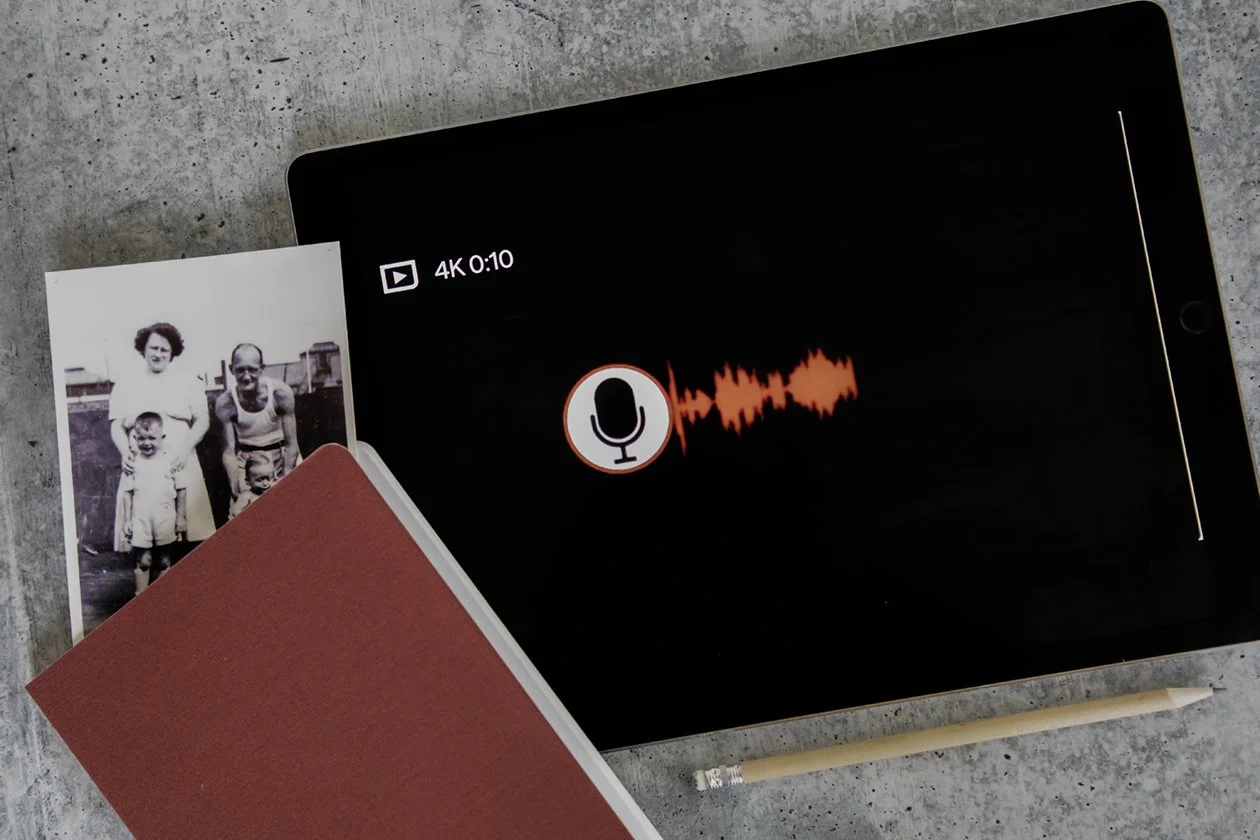
Forget about writing. Instead, talk about your memories. Walk down memory lane with a loved one, gather with siblings to reminisce about your childhoods, interview an older relative, or hit “record” on your smart phone during a family reunion or holiday gathering.
The mere act of letting your mind wander back in time will bring memories to the surface and make them accessible when you sit down to write. Also consider jotting down notes while you are chatting with family, or using a voice recorder and an auto-transcription app to generate pages to use during your writing later.
Other ways to revisit the past for inspiration? Read your old journals (even—maybe especially—if they make you cringe!). Pull out some old family photos to jog your memory (check out this free download full of tips if this approach appeals to you.) And, my favorite, go for a walk in nature: As Henry David Thoreau wrote in his journal, “Methinks that the moment my legs begin to move, my thoughts begin to flow.”

Memory & writing prompts sent weekly to your phone
Short courses for anyone who wants to write about their life—just $15 for 8 weeks of guidance & inspiration!
Dawn Roode’s curated roundup for the week of Sept. 23, 2026, is overflowing with recent reads on memoir, life story writing, and family history preservation.