
Skip a generation: Share your memories with your grandkids
Spending time with your grandchildren—whether cooking together, learning about their favorite things, or telling stories—is not only joyful, but good for your (and their!) mental health.
Early on in the pandemic, when sheltering in place began to seem like it might be our new normal for a while, I was frantic to find things (other than video games) to keep my then 11-year-old son engaged. He was eager to help me with any work tasks, and when the organizational stuff was done, we decided to take on a bigger creative project.
Together we created what would soon become the most popular free offering on my website: an e-book with family history questions designed specifically for school-aged kids to ask their grandparents. We had fun with it, and I felt proud to be offering something of substance that might help bridge generations—and keep folks connected.
Then something magical happened: I began to hear from families who wanted to say “thank you.” And all of their gratitude was tinged with surprise:
“I never could have imagined that I could have such a wonderful conversation with my grandson,” Lila Montgomery of Mountain Brook, Alabama, wrote to me.
“My own daughter never cared to hear my stories, but her daughter couldn’t get enough!” Los Angeleno Charles Naught emailed. “We laughed about my childhood exploits, and I even cried telling her a little about my time in Korea.”
I wrote back to many of these individuals, and was thrilled to learn that what they figured would be a one-time conversation (like a school assignment) often turned into regular chats. All it took was opening those lines of communication across the generations.
A case for being proactive
I have since thought: Why should we rely on our children and grandchildren to prompt these exchanges? Instead, let’s flip the script and reach out. You might not think calling your grandkids on the phone could invoke more than clipped answers—“school was okay,” “I have a flag football game later…”—but I guarantee using video and a few of the ideas below will rouse spirited—and meaningful—conversation.
And you know what? This young-old connection is good for our mental health, too.
“When a grandparent and grandchild are together—in person, on Zoom, or over the phone—they often feel a joyful and unique connection of unconditional love,” Sharon Rose, M.S., a social gerontologist in Florida says. “This intergenerational social engagement can be described as special, even when it’s a brief exchange of simple pleasures.”
“These loving ‘grand-relationships,’ as I like to call them, help build meaningful memories for one another and an appreciation of family heritage—a feeling that this time together really counts for both parties. The feelings of contentment and connection that result contribute directly to increased mental health for both generations, which becomes a foundation for a healthier approach to life.”
3 fun ways to connect meaningfully with your grandchildren
Try a little role reversal.
Ask your grandchild to teach you something! Intentionally inviting them to share their expertise gives them a boost of confidence—and gives you a fun opportunity to broaden your horizons. Anything to do with technology will likely get them excited. A few ideas: How to make a playlist of favorite songs; how to make a TikTok video; how to edit a video on your smart phone; how to play Pokémon, draw Darth Vader, or kick a soccer ball…you get the idea.
Cook up some treats (together).
Does your grandchild have a favorite dish that you prepare? Even if you can’t prep it in the same kitchen, use technology to show them how to make it: Film yourself with your smart phone and—using your newfound video editing skills—cut together an episode of your own cooking show. Or send them a list of ingredients to gather, then prop up your respective tablets on the counter and get cooking over Zoom! Who knows, maybe this will become a new monthly tradition.
Pull out some pictures.
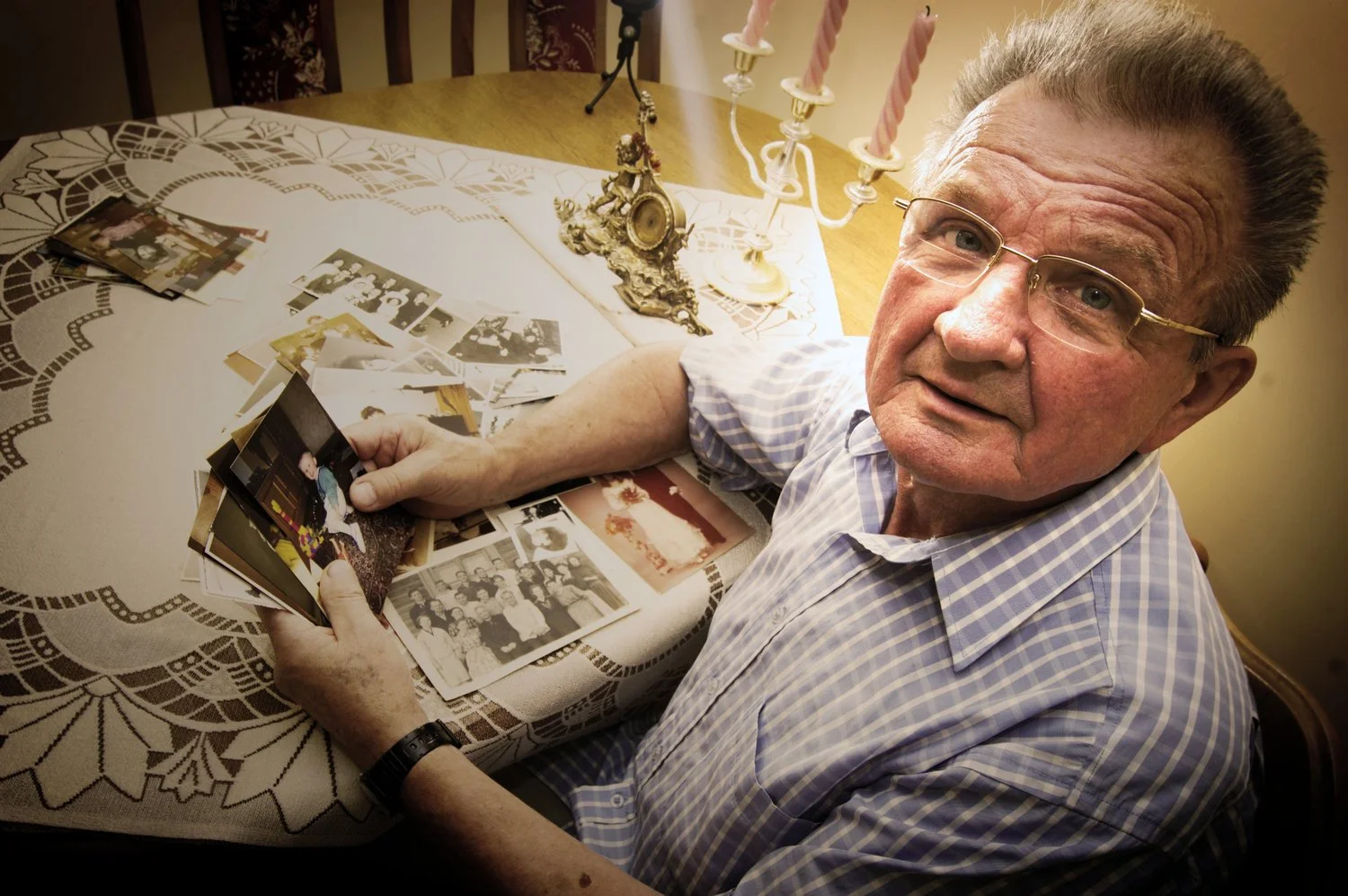
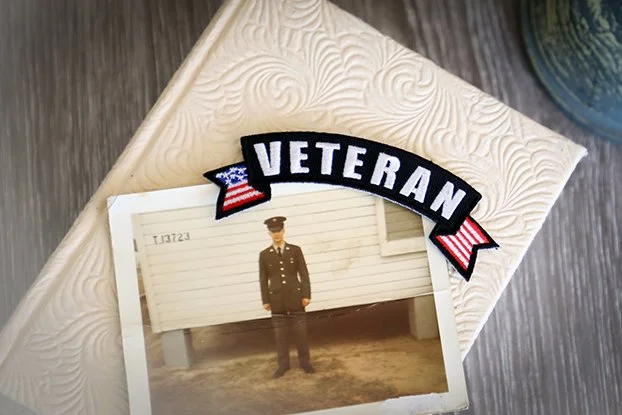
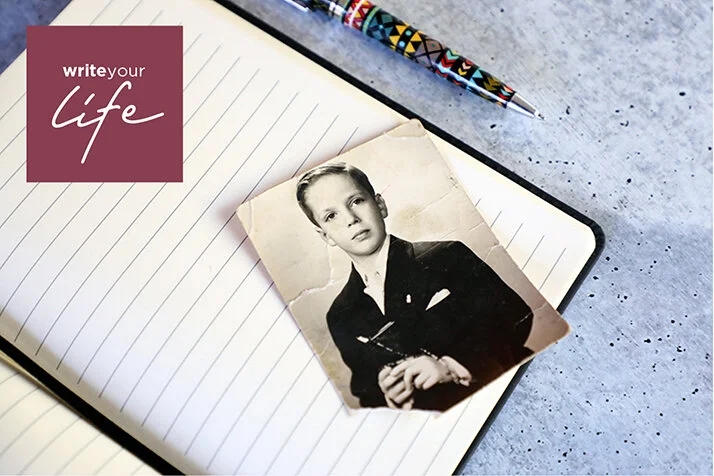
No matter how old your grandchildren are, their idea of a photo is on a screen. Pull out a few old family photos of the print variety that will spark stories (and likely some smirks)—think funky clothes, crazy hairdos, even a cool car. Maybe you want to invite the kids on a photo scavenger hunt—you each find pictures of yourselves at one year old, for instance, or in a Halloween costume. Share them during a video chat or, if your grandchild is older, begin an email exchange where you send photos and stories back and forth regularly.
More than just good old fun
Having a new audience for your tried-and-true family tales will undoubtedly be fun, and seeing your grandkids “see” you in new ways is, well, kind of cool. But there’s more going on here than mere storytelling; there’s self-reflection that can be both healing and revelatory.
“There is power in telling stories, of course,” Bruce Feiler writes in Life Is in the Transitions. “There is power in hearing them. But there is greater power in the interaction between the two.”
Indeed, having an engaged listener helps anyone craft their stories more thoughtfully—and responding to a listener’s questions can help us uncover aspects of our own story we hadn’t considered before. If you're anything like most people, your own kids have never seemed all that interested in life before your were their parent (am I right?). Which makes it all the more thrilling when their offspring ask questions that show they’re really interested—and that help you revisit the past with intention.
As you gather photos from boxes and frames, for example, you’re allowing yourself to reminisce about your life, to follow your winding path and reflect on how you ended up here, now. Sure, chances are you won’t reveal all you’re thinking about to your grandchild, but I bet you’ll weave in a lesson or two—and I bet you’ll continue thinking about your experiences, and shaping them into a cohesive narrative for yourself. And as research shows, that's good for mental health and, believe it or not, for bolstering our immune systems, too.
Even better? Your grandkids benefit from hearing your stories, too. According to research, kids who know parts of their family history are more resilient—they handle stress better (could there be a better skill during this time we're living through?), they're more confident, and they are generally “happier.”
Why not invite the grandkids along for some story sharing? I think you'll both like (and be better for) it.
















Story-sharing is a great tech-free connector: How a few phone conversations can help grandparents connect with their grandchildren—and plain-old feel good.