
Memories Matter
Featured blog Posts

READ THE LATEST POSTS

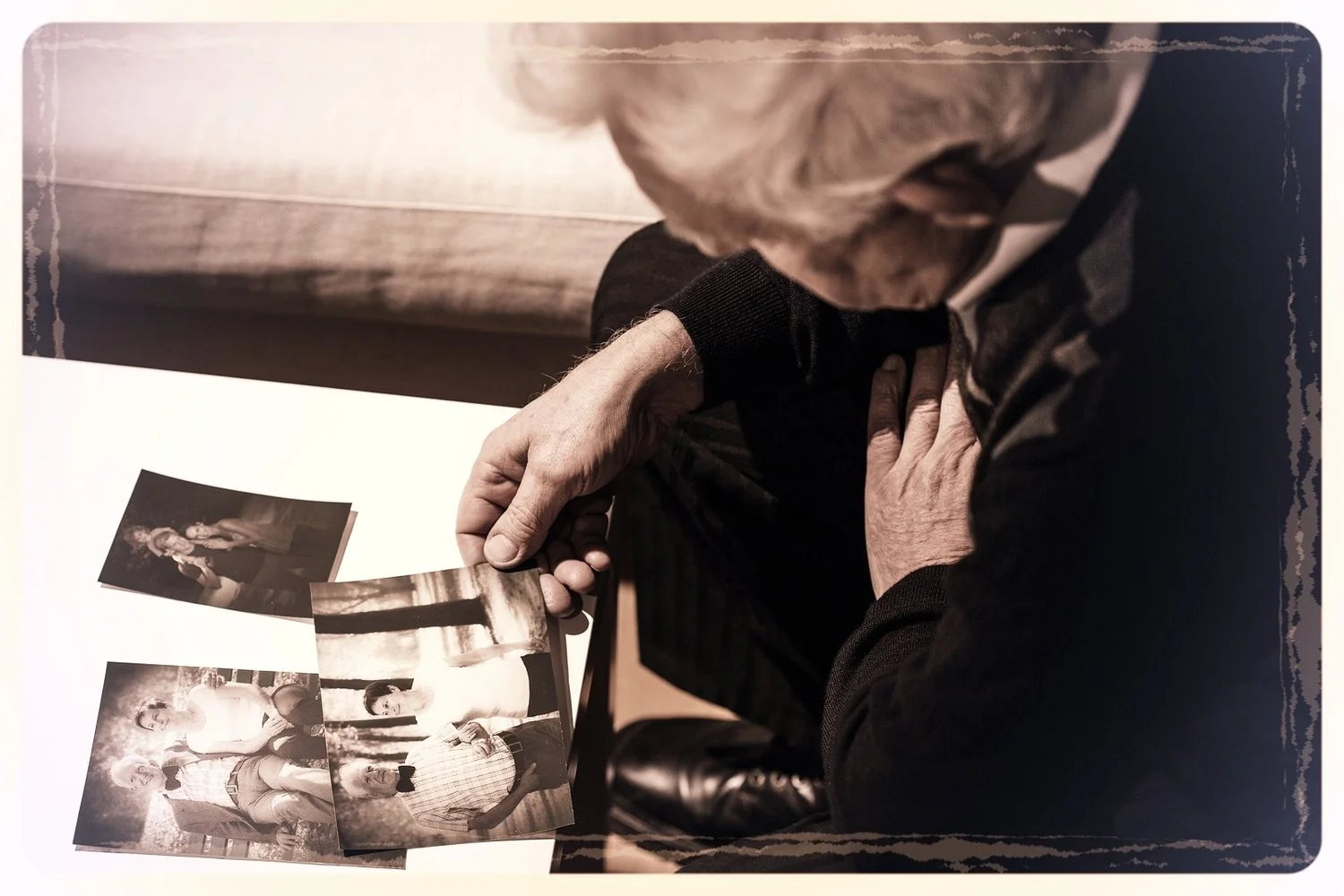
How to use photographs as prompts for writing life stories
Use these tips to tell the stories behind your family photos and leave a visual AND narrative history to your children—a gift from the past to the future.
“Your photography is a record of your living, for anyone who really wants to see.” —Paul Strand
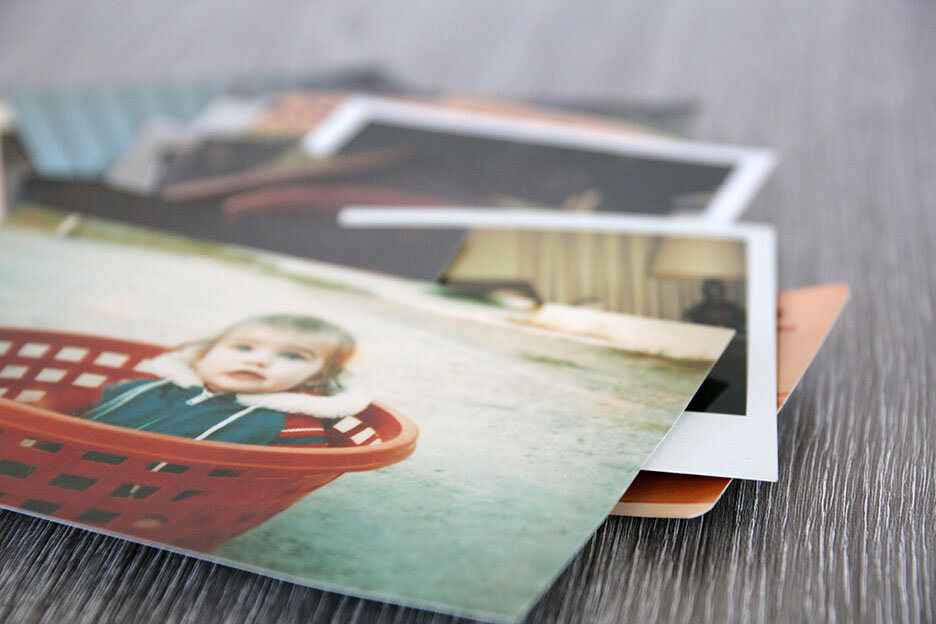
If writing a life story book seems overwhelming, write shorter stories from your life using some favorite family photos to jog your memory.
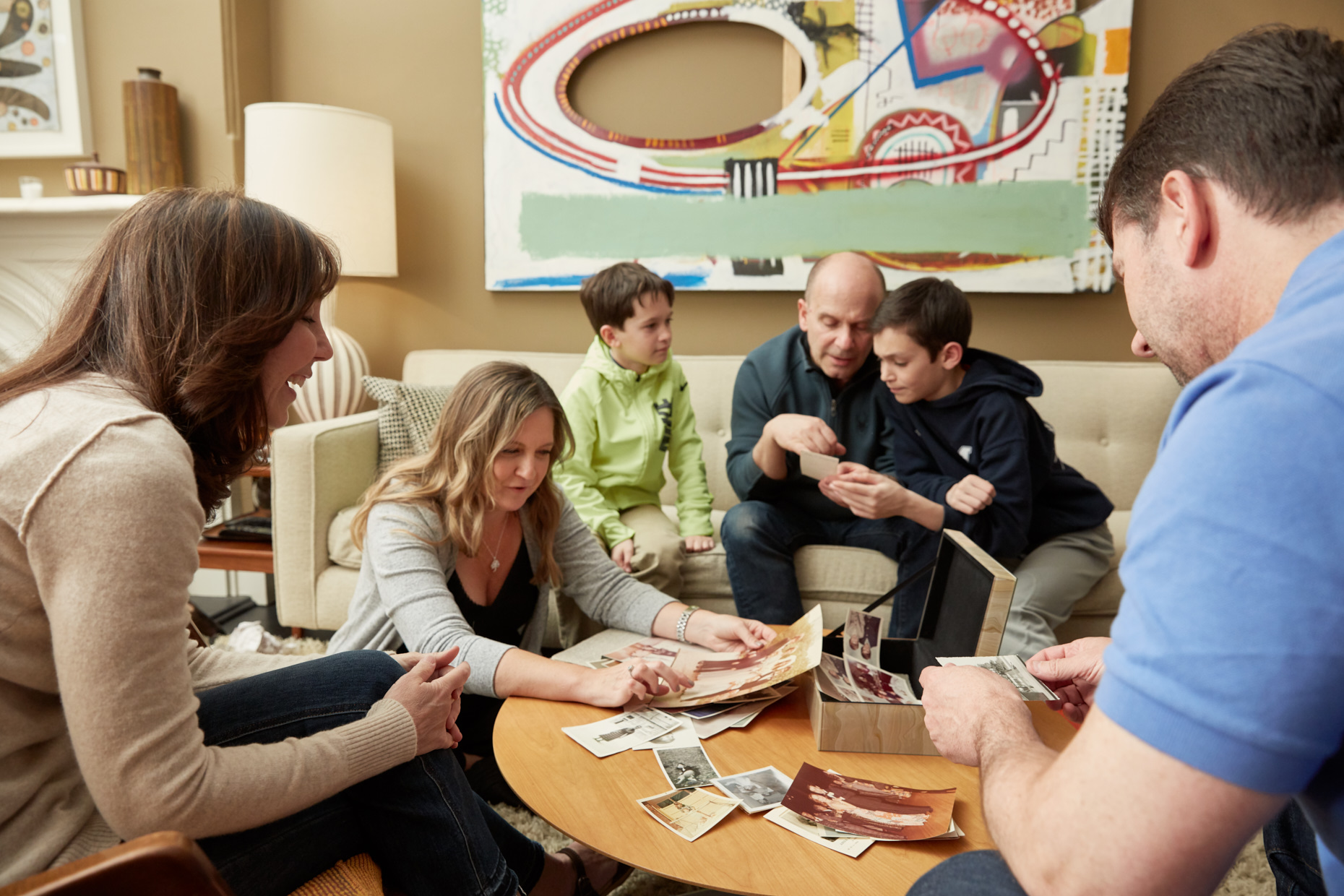
My generation knows the pleasure, both tactile and emotional, of exploring a box of dusty old photographs: the sense of discovery, of time travel, the good fortune of glimpsing our parents as carefree teenagers, of seeing ourselves as Garanimals-clad kids.
But this is becoming a thing of the past. Do you even have a box of photos in your home?
It saddens me to think of our children inheriting a box of old devices (your iphone will be extinct one day, you know!) and wondering how they can access the digital trove of photos they know must be stored within. And they likely won’t be able to retrieve those images, as the technology will have changed by then.
Just as I wish my mother and grandmother had jotted names and dates on the back of their old photos, our kids will one day be wishing we left some clues about our own pictures (metadata, anyone?).
I urge you to go a few steps further, to not only record the details of important photographs, but to elucidate the stories associated with them. To leave a visual AND narrative history to your children, a gift from the past for the future.
How to Shape Your (Small) Life Stories
I’ve written about this before, but it’s worth reiterating: Shorter is often better, especially when it comes to autobiographical writing. That’s why using photos as jumping-off points for your stories can be such an effective method.
Don’t worry about length when you sit down to write. Just choose a photo, and begin sharing. A few initial ideas:
1 - Talk, don’t write.
Pick up a digital recorder (or use the function on your smart phone) and talk into it. Often spoken language is more direct. You won’t get hung up on sentence structure or finding the perfect words. Rather, your language will flow and have a natural rhythm. Your words will be honest and forthright. You can transcribe your recording later.
2 - Find a partner.
Having someone to listen to your story can be a powerful aid. Even if that person doesn’t engage you or ask questions, the very act of listening—an occasional nod, an understanding expression—let’s the speaker know that what they are saying matters. The more you converse with someone about your life stories, the easier it becomes to share them, shape them, and delve even deeper.
3 - Be specific.
Small details. Moments. A focus on life as it is truly lived. Did your mother enjoy a cup of room-temperature tea every night before bed? What did the hand-me-down pajamas you’re wearing in the Christmas-morning picture feel like? It wasn’t just a red car, it was a 1955 crimson Cadillac convertible that your dad referred to as “My Dorado.” This is not to say get lost in the details: Do not go overboard describing every object and movement in your story with multiple modifiers. This is to say that the specificity of the right details brings an era or a person to life in a most vibrant and revealing way. Choose wisely.
4 - Interview you.
If you hadn’t taken the picture, what would you want to know? Make believe you’re interviewing yourself. This is a helpful exercise in making sure the most essential (often obvious to you but not others) elements do not get left out of your story. And then, like HONY’s Stanton, edit, edit, edit: whittle your interview down to the bone, keeping in those details that surprise, delight, enlighten. I suggest waiting at least a day, longer if you have the luxury of time, to do the editing; it’s amazing how such distance enables us to better self-edit.
Let’s get started: Choose a picture, and use it as a prompt to write a life story vignette
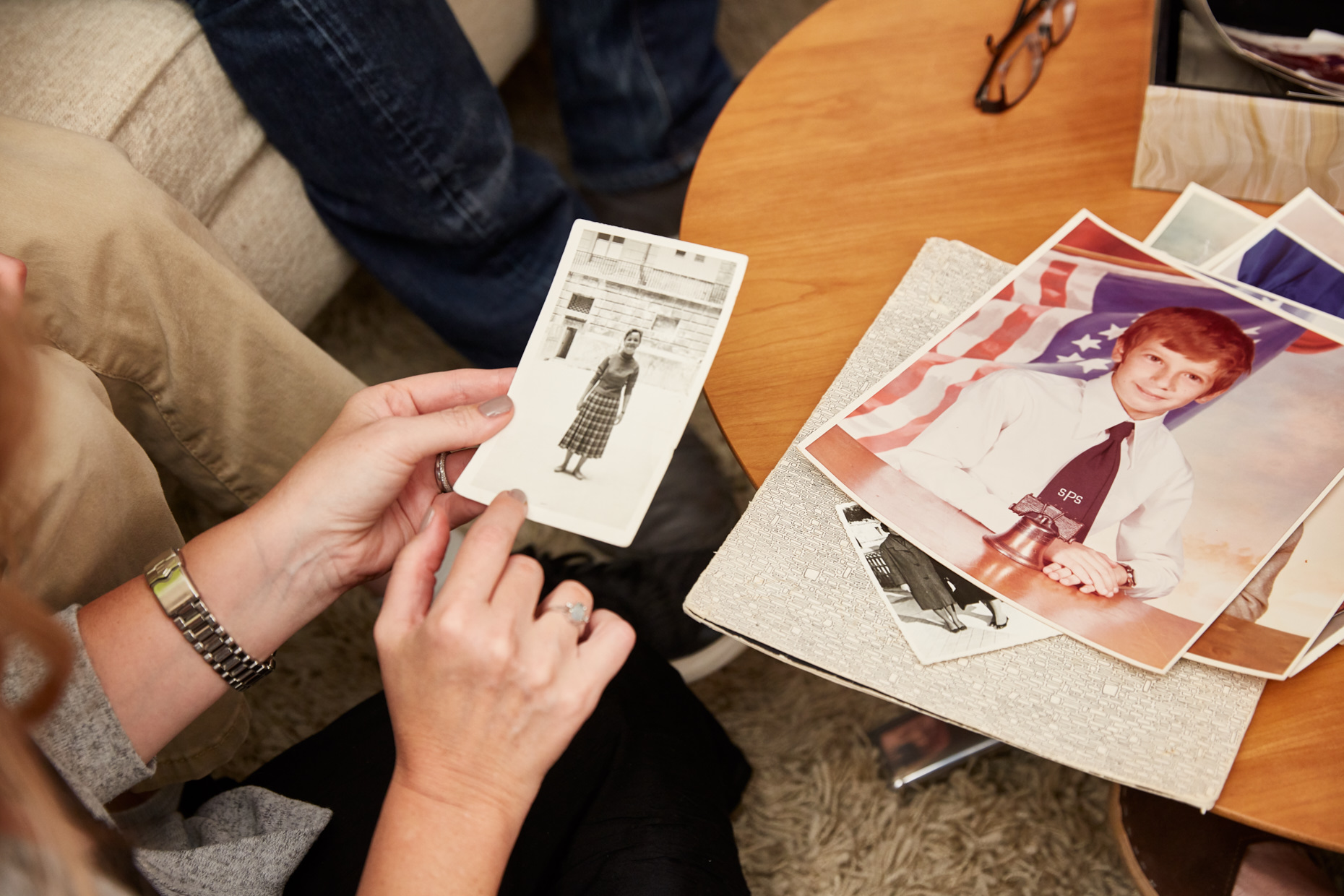
Step 1: Look at your chosen photo.
Study it; ignore it. Eat some lunch and let the memories the picture elicits percolate. Now sit down at your computer to free write: Don’t worry about story structure or creating something for an audience, just write from your heart. If you are more comfortable with pen and paper, you might forego sentences altogether and jot down phrases, recollections, adjectives. The key to both approaches, whether stream-of-consciousness writing or brainstorming, is to go fast and to not worry about anything. Just do it.
thumbs up?
You may find that this one photo has stirred a wealth of memories for you to mine. Perhaps it recalls one vibrant scene from your childhood. Consider yourself lucky if either of these is the case! You’ve got the makings of a life story vignette at your fingertips.
thumbs down?
If the photo you’ve chosen reveals nothing more than a string of boring observations, don’t fret. First, go through this list to see if you get anywhere:
What is your personal connection to the photo?
What would you caption the photo (include as much basic factual information as possible, answering Who, What, Why, When?)
Write a question the photo brings to mind.
Write a detailed observation about the photo.
Still boring…? Don’t worry, just move on to the helpful exercise below to get the story behind your photo!
Step 2: Go beyond the frame.
Next, try this exercise from author Beth Kephart, an early assignment she would give to her creative nonfiction students at the University of Pennsylvania, as detailed in her book Handling the Truth:
Study the background of any chosen photograph. Not the foreground, the background. What’s in the picture that you didn’t see when you were snapping? What lies beyond the chosen subject—just to the right or the left? … What does the startle of the once-unnoticed detail suggest to you? What would happen if this small thing—and not the obvious thing, the central thing, the thing easily seized and snatched—was the start of your story?
Still nothing of interest?
Step 3: Enlist Help.
If you are convinced there is a worthy story attached to the photo, show it to a sibling or other relative to see what memories they may have. If you have other pictures from the same period, gaze at those for clues. Maybe it means something to you not for the story it tells, but for the one it does not tell: Who is the subject gazing at? What happened right before the camera was snapped? Who was left out of the moment—was it you? Or was the picture in a frame at your grandparents’ home, and your memory of that is what’s important?
If nothing more reveals itself and yet you are still compelled to include the photograph in your life story, ask yourself, why? Draft a caption that at least puts the image in context, reveals a mystery, or taps an emotion. Then leave it at that, and turn to your next photo. It is likely that after taking this approach with more of your family snapshots, this one will eventually find its way into your narrative or, rightfully, be edited out in favor of others that weave a more textured and colorful tapestry.
FREE Printable Guide
Download our FREE GUIDE, “How to Use Photographs as Prompts for Writing Life Stories” and get started asap on your journey of preserving your memories!
Next steps, and advice for non-writers
If all of this appeals to you but you’re not a DIYer, that’s what we are here for.
You may want to begin the journey of remembering and selecting photos on your own, using much of the advice provided on the blog—and then hand it over for refining and shaping; our expert editors and designers will transform your memories into a beautiful heirloom that reveals even more than you had imagined.
If you only get as far as piling up those boxes, no worries: We’ll walk you through the whole process! Set up a free consultation to learn how we can work together.

Books to help you write your family’s stories, even if you are not a writer
These books will help you write engagingly and concisely about your loved ones, yourself, or your family members, even if you don't call yourself a "writer."
We all have stories within us. Eliciting those stories from family elders, or getting our own down on paper, though, is not always easy.
Here at Modern Heirloom Books, we do not strive to publish full biographies or memoirs; rather, we want to help you curate your family’s stories—through words and pictures—in a way that your children (and hopefully their children’s children) will want to interact with them. A book of family memories, after all, is worth nothing if no one connects with it. We most often use what is referred to as a quilt-work approach to storytelling: weaving vignettes and small narratives around photographs or other mementos that spark memory and serve as a touchstone to the past, carefully connecting them to a broader theme to create a textured picture of an individual.
We’re at your disposal: Some folks like to hand over a few boxes of photos and memorabilia, and guide the book-making process from afar.
Others prefer to do much of the heavy-lifting in terms of story gathering themselves. With that in mind, I have read piles of books that promise to help you write your family’s stories, and narrowed a long list down to a manageable 5 titles that we recommend. These are especially helpful for non-writers, but even for professional editors and wordsmiths, there is much wisdom to be gleaned specifically about writing about your own life and your family.
(Note: These are in no particular order!)
5 Top Book Titles for Autobiographical Writing, Reviewed
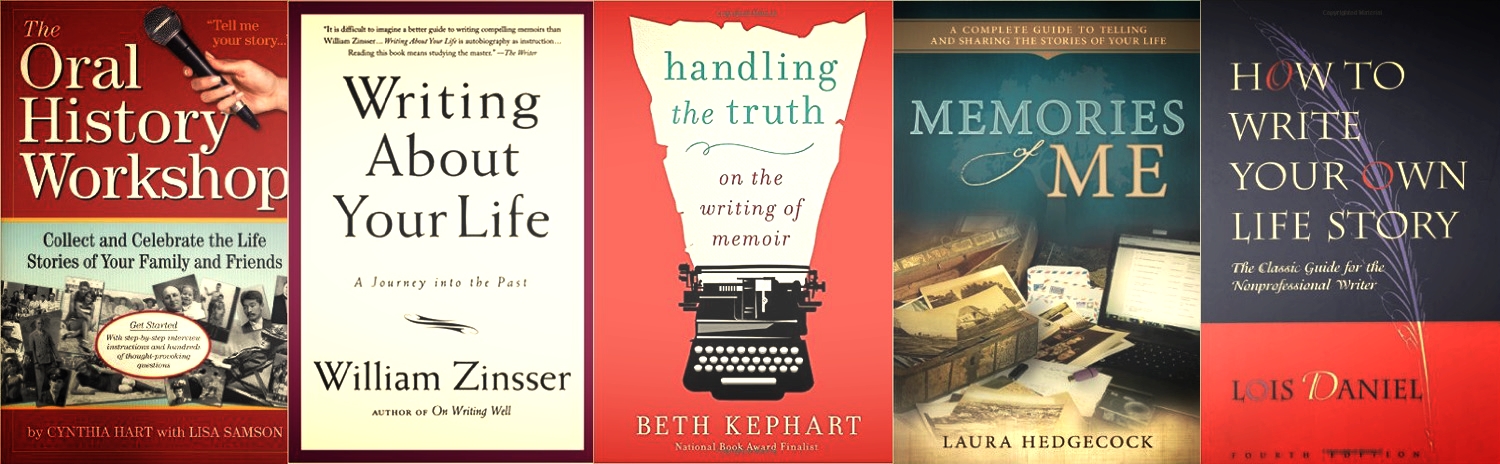
1 The Oral History Workshop
The Oral History Workshop: Collect and Celebrate the Life Stories of Your Family and Friends by Cynthia Hart with Lisa Samson (Workman 2009)
Once upon a time, a book such as this would not have been necessary, as the authors are quick to point out: “...when people lived in small, tight-knit communities, with or within a stone’s throw of their families. When stories, lore, and family history were essential parts of everyday life.” These days, not so much.
This book is concerned with an oral history, and as such doesn’t provide much in the way of writing help—so why include it? Well, it is the most complete source I have found for helping people prepare for interviews. And since your memory alone cannot convey an entire family’s stories (not to mention the fallibility of memory in general), interviewing loved ones may be the quickest and most accurate route to capturing what you want.
The Oral History Workshop lays out plenty of preliminary guidance, from technical aspects such as recording and archiving your interviews to ethical considerations including listening with compassion and sharing sensitive information. It even includes a chapter with basic ideas for, as the authors write, “turning your interviews into something more,” like scrapbooks and an inheritance for future generations.
It is the longest central chapter, though, entitled “Ask a Question, Gather a Story” that propels me to recommend this book to you. While interviews are highly personal endeavors, and each interviewee will have a unique past from which to draw stories, sometimes getting the ball rolling can be challenging. Hart and Samson provide an array of sample questions to inspire the reader. More than 800 questions are bulleted in 64 categories. And if that seems overwhelming, well, it can be—but the editors have been careful to make the chapter skimmable, and have included a sidebar, “The Terrific Twenty,” which lists 20 “all-around great questions” as a shortcut to getting started. I suggest tackling this chapter in the evening—you can even do so while watching some brainless TV show—and highlighting categories and questions that resonate (or do so on photocopies of the pages, with a set for each person you plan to interview).
You’ll of course want to focus on specific content for every individual—it’s virtually impossible to chronicle a person’s life from birth to retirement, yet of even greater importance is that doing so would bore your audience to death! Decide on a likely story arc before your interview, and choose questions accordingly. Just remember that, through attentive listening and thoughtful follow-up questions (think of your interview as a conversation, with one person doing most of the talking) you’re likely to get off course from your planned questions—as you should. As the authors write: “It’s possible that the interviewee has his own map for the interview, his own priorities and interests, his own list of things he wants to express…. Encourage him to talk about the things that matter so much to him. Don’t feel that you’ve gone astray by setting aside your questions and exploring uncharted territory.” See where the conversations lead, and be open to new directions.
Paperback, $10.55 at Amazon.
2 Writing about Your Life
Writing about Your Life: A Journey into the Past by William Zinsser (Marlowe 2004)
William Zinsser, who was a lifelong journalist, is most well-known for his landmark book On Writing Well, a mainstay resource for writers for generations. In this title, he focuses on memoir writing specifically, and does so with his typical eloquence and wisdom.
This book has two main premises:
One, don’t plan out your entire personal history; rather, let the stories take you on a journey. “Be ready to be surprised by the crazy, wonderful events that will come dancing out of your past when you stir the pot of memory. Embrace those long-lost visitors. If they shove aside some events you originally thought you wanted to write about, it’s because they have more vitality.”
“To write well about your life you only have to be true to yourself.”
And two: Think small. Zinsser wisely advises not to think about the “important” events in your life. Instead, write about “small, self-contained incidents that are still vivid in your memory.” These are likely the ones that contain a morsel of universal truth, that will resonate with readers. And they should not be 5,000 words. Brief stories told with meaningful details and palpable emotion are more evocative than lengthy treatises any day. One of my favorite tips: “Be content to tell your small portion of a larger story. Too short is always better than too long.”
Zinsser focuses on writing a memoir, and I imagine most of you who follow Modern Heirloom Books are not especially interested in completing a full biography. That doesn’t mean, though, that this book doesn’t contain sage words for you, as well, as it assuredly does. When writing scenes from your life—short stories that capture the essence of a person, a time, or a place—all the same memoir-driven lessons apply.
Indeed, Zinsser weaves what he refers to as “mini-memoirs” into this teaching book: Readers are taken along on a captivating journey through Zinsser’s own past while being given instructional notes along the way. The book is a pleasure-read with advice woven in, not a typical self-help book by any stretch.
Zinsser’s main message is clear and so on par with our own opinion here: “To write well about your life you only have to be true to yourself.” His demonstration of craftsmanship in this book will enhance your writing, and give you the tools to take pen to paper without fear. You’ll be inspired by Zinsser’s example (his words and stories are wonderful) as well as by his teaching.
Paperback, $12.43 at Amazon.
3 Handling the Truth
Handling the Truth: On the Writing of Memoir by Beth Kephart (Gotham Books, 2013)
I’ll state this upfront: This book is written for writers. Aspiring memoir writers, to be precise.
Why share this in this forum, then, you might ask? Because it is the book I wallowed in: I luxuriated in Kephart’s language, savored her insights, letting the lyricism and rhythms of the writing wash over me. Feel her words:
“Time is the memoirist’s salvation and sin. Time is the tease and the puzzle. Time is the trickster, the tormentor, the vexer. Time solved or resolved is memoir mostly mastered.”
While Kephart writes for writers, there is such value in immersing oneself in her attitudes about writing the self, about opening oneself to vulnerability, about the startle of details and discovering truth at the edge of the frame and the nature of love...all of this is wisdom even the non-writers among us will grasp at, cling to, think upon. And regarding love, take note: “Love,” she writes, “is where life stories start, no matter what one is writing about.”
Allow yourself to embark on this journey with Kephart. Just as reading biographical writing will inspire and inform your own life story practice, so too will reading Handling the Truth. For amidst the technical advice and deep dives into honing the meat of your memoir, this book weaves so many golden nuggets for you, too.
“Journal keeping, diary making, blogging—it’s all a curious thing, and it isn’t...memoir. But it’s a start, an inroad, a gesture.” Kephart spends a good portion of the book on what she calls “not-yet-writing-memoir work”—preparatory ideas, tapping memories, conjuring beauty, exploring diversions, finding your story. I am betting you will relish those parts. And in the relishing, there will be epiphanies that will make you see your life in new ways, write your life with your authentic voice.
One of my favorite gems from the book, I offer up as a call to action: “Let your words uncover you. Let your words prove you.”
Paperback, $13.29 at Amazon
4 How to Write Your Own Life Story
How to Write Your Own Life Story: The Classic Guide for the Nonprofessional Writer by Lois Daniel (Chicago Review Press, Fourth Edition 1997)
While the aforementioned two books were written largely with “writers” in mind, this next title was explicitly created to address non-writers, and it holds some key truths—and highly specific exercises—that may help you on your journey as a non-writer endeavoring to write your life story.
Written with a warm-hearted tone by a college professor, this book is built around 52 assignments, which parallel assignments Daniel used for years teaching inexperienced writers the craft of autobiographical writing. So if you were to write one assignment per week, theoretically you would have the raw material for your life story book in one year!
In a chapter entitled “Your Stories Don’t Actually Have To Be ‘Stories,’” Daniel provides a few examples of compelling pieces that might be considered essays rather than stories (which have a beginning, middle, and end). These composites of memories and ideas may be easier for many people to write, as they don’t have the pressure of conforming to traditional story structure, yet they are often equally revealing. She also encourages inclusion of “brief encounters,” snippets describing interesting encounters that occurred throughout a person’s life, giving your readers wonderful glimpses into your everyday life. Sometimes, short is sweet, and oh-so-evocative!
Daniel does not focus on polishing the writing (the final chapter does a shallow dive into how to approach revisions), focusing instead on how to efficiently and effectively record memories and start the process. Her assignments are akin to writing prompts, and what I find most helpful are the variety of examples of other students’ writing included throughout the book.
“I do believe that as a society we are emotionally undernourished in terms of understanding and feeling kinship with our heritage. Ours has been a society on a headlong dash into the future,” Daniel writes. “Consequently, unlike many older cultures which have been built on generations of traditions we have, to some extent, misplaced our past.”
"We have, to some extent, misplaced our past.”
We can help future generations have a meaningful link to their heritage by writing about our own lives and experiences—writing about the past, and writing “about today, which will be history tomorrow.”
Paperback, $13.59 at Amazon.
5 Memories of Me
Memories of Me: A Complete Guide to Telling and Sharing the Stories of Your Life by Laura Hedgecock (Plain Sight Publishing)
There’s a reason our first diaries come with a lock and key, notes Hedgecock: “For most of us, sharing our more vulnerable side—let alone our most personal thoughts and stories—does not come easily or naturally.” Of course, it’s precisely those personal stories that resonate and connect our loved ones to our journeys.
Hedgecock was inspired to write her book by a gift left to her by her grandmother: a spiral notebook filled with what she coined a “Treasure Chest of Memories,” writings that included stories about her childhood, recipes, nuggets of wisdom, and other heartfelt remembrances from her life.
In her book, formerly titled Treasure Chest of Memories: How to Capture and Share the Stories of Your Life, Hedgecock offers practical advice for novice memory keepers. Grounded in the world of scrapbooking, blogging, and social media, her tips do not merely cover writing and memory-jogging, but also span creative means of sharing your stories, whether in an old-fashioned journal or via more technologically savvy outlets, down to such nitty-gritty details as choosing an appealing and easy-to-read font and using photo-organizing software for digital images.
While Hedgecock does not offer as much guidance on the subtleties of strong writing (Kephart and Zinsser offer the most in terms of crafting lyrical prose and fine-tuning language), she goes much further in terms of rounding out family stories beyond the text. Her insights on using visual aids, including photographs, historical documents, and drawings; her out-of-the-box ideas for building a “treasure chest of memories,” including prayers, letters to loved ones, and even lists; and her heartfelt understanding of what an important journey the reader is undertaking, make this a perfect book for a non-writer who wants to leave a meaningful legacy behind.
Indeed, Hedgecock writes, “My goal is to assist you as you establish a rich endowment of memories, not to teach the art of writing.” And she does that with flair and enthusiasm, generously providing some psychological bolstering for those reluctant to write, as well as concrete tips for finding your voice and writing colloquially.
This book is available to buy in paperback, but I advise purchasing the e-book, which is not only cheaper but easier to navigate via search functionality and text highlighting capabilities.
E-book, $6.99 at Amazon.
Honorable Mention: To Our Children’s Children
To Our Children’s Children: Preserving Family Histories for Generations to Come by Bob Greene and D. G. Fulford (Doubleday 1993)
This compact book reminds me of the myriad memory journals found in bookstores today—the kind that prompt parents and grandparents to answer one question a day—only this book does not provide space to write those memories down. It is rather a companion to the writer, offering questions designed to open the doors to memory. “The particulars,” the authors say, are what your family will treasure most. Hear, hear!
Organized into thematic chapters, questions are easy to browse strategically (for example: High School; Holidays and Celebrations; Favorites; The House You Raised Your Family In), and the book is inviting enough to skim and quickly find a gem or two that appeals to your storytelling self (I loved, for instance, “Are you usually late or early?”, which prompted a number of telling and funny stories I would otherwise have forgotten all about!).
Hardcover, $17.19 at Amazon
You're on the road to reminiscing— and sharing your stories.
There are shelves of how-to books at your library about how to write—how to write better, how to write more clearly, how to write to persuade and sell, how to write to get published, how to write for marketing and SEO… None of those titles, however, will help you to write engagingly and concisely about your loved ones, yourself, or your family members. The books detailed above will hopefully put you on the road to reminiscence and retelling.
Be sure to follow us, as well, for an upcoming in-depth storytelling series on this blog with advice on: identifying the best family stories to tell; dealing with painful memories and stories about estranged family members; sparking your memory; interviewing techniques and tips; using photographs as prompts for life stories; and more.
No matter where you are in your storytelling process—if it’s just a flickering flame of an idea in your head or a fleshed-out drama written in journals for the past decade—we at Modern Heirloom Books are here to guide you along the process. Want to see what we can do together? Let’s create a legacy book that will become a family heirloom destined to be treasured for generations to come. Set up a consultation now!
Disclaimer: None of these books were provided to me. Before narrowing down this list, I frequented my local library a LOT, and ultimately purchased the five books I recommend via the reviews above. I hope you find a gem among them!

Your kids’ natural smiles make most authentic photos
It’s pretty cool when, as parents, we get some slick shots of our kids posing in trendy duds, looking like they belong on a J. Crew billboard. Plenty of amazing family photographers can capture those shots for you, and they’re a hoot, as my grandmother would say. Indulge in those photo shoots, to be sure—the kids will (most often) have fun, and you’ll be rewarded with some magazine-worthy pictures. But don’t showcase those in frames and books at the expense of showing your kids for who they really are, too.

When I worked at Child magazine, we orchestrated the first-ever children’s runway show at New York Fashion Week. It was a big deal, with some impressive casting (including Lindsay Lohan’s then little-known siblings Ali and Dakota as well as Russell and Kimora Lee Simmons' daughter, Ming Lee) and a 6am call time to the Bryant Park tents. The coiffed kids wore clothes by Tommy Hilfiger, Nicole Miller, Kenneth Cole, Escada, Lucy Sykes, and Gap Kids, and they strutted their stuff down the runway under the bright lights.
It was 2005, pre-Instagram and Twitter. So while there were plenty of camera flashes going off, the pictures were mainly seen in mainstream media. There was a glossy and aspirational quality to the shots, kids all dolled up like their adult counterparts, lighting just so…you got it, like they stepped out of the pages of a magazine. Because they did.
It’s pretty cool when, as parents, we get some slick shots of our kids posing in trendy duds, looking like they belong on a J. Crew billboard. Plenty of amazing family photographers can capture those shots for you, and they’re a hoot, as my grandmother would say: your son with a felt fedora jauntily tipped over his brow, your daughter donning a faux-fur vest and Ray Bans, giving the camera some attitude.
Indulge in those photo shoots, to be sure—the kids will (most often) have fun, and you’ll be rewarded with some magazine-worthy pictures. But don’t showcase those in frames and books at the expense of showing your kids for who they really are, too (unless, of course, your kindergartener really does wear a fedora around the neighborhood). Ask the photographer to take a handful of more natural shots, such as your son and daughter laughing in the clothes they themselves picked out. A real laugh elicits the best images, in my opinion; eyes light up and joy shines through.
“A real laugh elicits the best images, in my opinion; eyes light up and joy shines through.”
When you look back on your kids’ photos years from now, you want to recall their personalities. You want to be able to get clues about the time period from their clothes and accessories—their hairstyles (or lack thereof!). You want context.
Remember the Glamour Shots you insisted your mom let you get at the mall back in the day? You were made over to look more like Olivia Newton-John in Grease than yourself, but that was the point. The backlit hair. The excessive retouching that smoothed skin to porcelain… Would you want those pictures hanging on your wall now? Do they feel like you? Didn’t think so. #embarrassing
Let your photos tell your family’s stories. Your true stories. You’ll be glad one day.

Here's an example of a shot from a professional shoot where the natural light and everyday clothing choices make it feel natural, not contrived. (Before heading out to Central Park, the photographer shot my son in the studio leaning on a skateboard, looking like he was in a clothing ad—cute as a button, but not at all indicative of my child's interests or personality!). Photo by PhotoOpNYC
Are you telling your stories at all?
Here I am lecturing you about letting your kids’ personalities shine through in the pictures you choose, but chances are that aside from social media, you’re not doing much to document their stories. Who has time, really?
Let Modern Heirloom Books accommodate you. We’re here to help you identify and hone your stories, with pictures and words. Find out how we can work together to get your pictures out of cyberspace and into books.
P.S. We’ll even include yours and your kids’ glamour shots if you prefer!
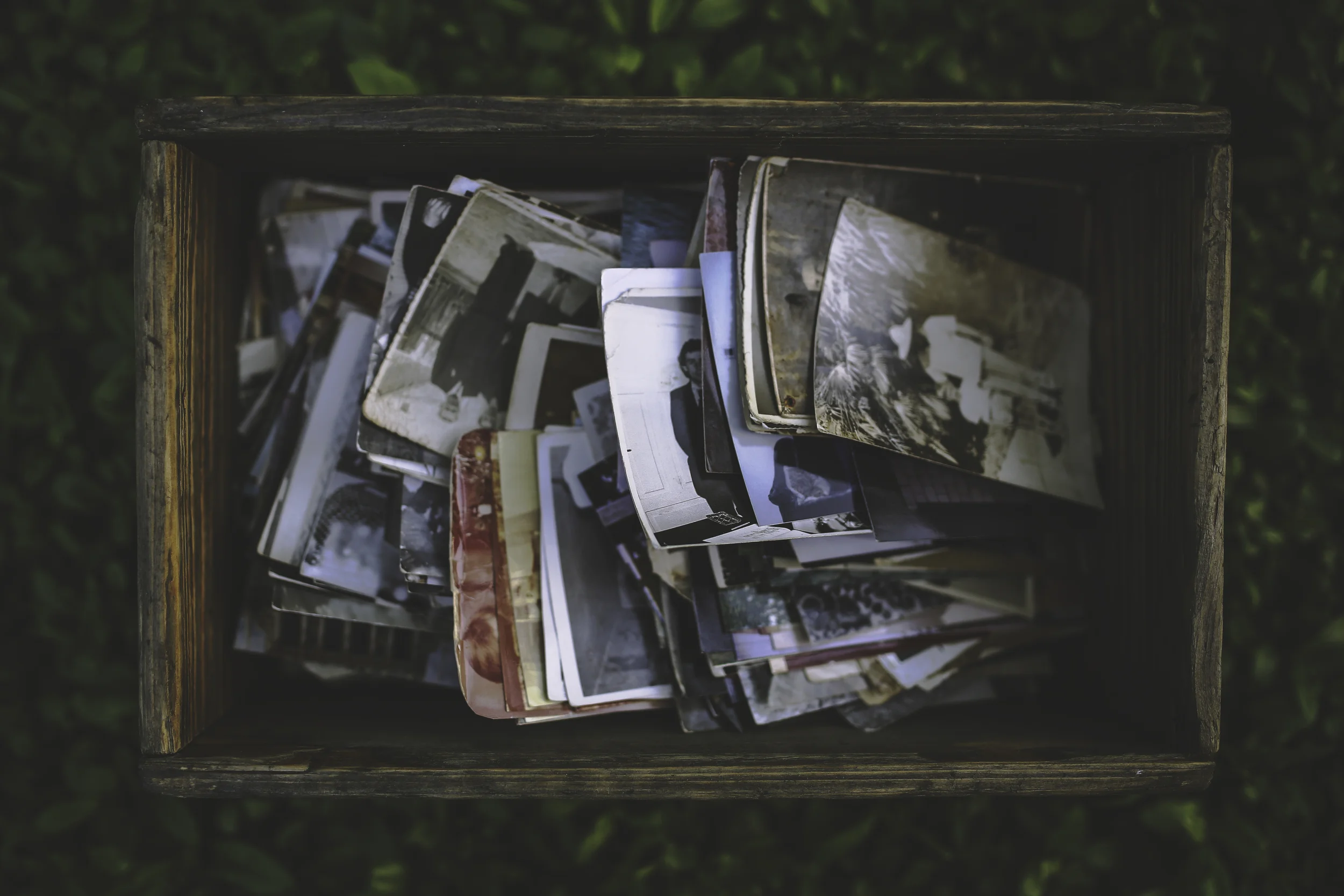
It’s time to start spring cleaning your photographs!
Leave the Windex and broom in the closet for now—all you need to undertake this spring cleaning project are a few boxes, post-it notes, and a pencil. Oh, and all those scattered photographs you've got lying around the house! While spring cleaning might not be ‘your thing,’ the deeper meaning in this organization project will hopefully spur you into action...and score some winning #ThrowbackThursday pics in the process!
Forget about spring cleaning in your closet and basement—those are musty chores, no fun at all. (Writers have been known to say they don’t relish the process of writing, but “having written”; I don’t like cleaning, but love the effects of “having cleaned”!).
Delving into myriad boxes of curling photos might not sound like an enjoyable task, either, but it can be. And the rewards, for you and particularly for future generations, are plenty.

Why even begin such a daunting task as sorting boxes of old pictures?
Well for starters, you saved those boxes for a reason. The pictures they contain are treasures, glimpses of the past with stories to tell. But they do no one any good fading away in the back of your closet.
Beyond that: You just might enjoy the process. As you discover forgotten gems among the piles of photos, your memory will spark and you’ll want to share them. Sort pictures into piles that make sense for how to store them, but more importantly, how to share them:
a stack of perfect Throwback Thursday #TT pics;
some unexpected candids to enlarge and frame;
some that don’t hold great meaning for you but certainly do for a friend or family member—your perfect excuse to write a genuine letter and send them off.
While spring cleaning might not be ‘your thing,’ the deeper meaning in this organization project will hopefully spur you into action.
Is there a right way to sort my photos?
There’s no one right way, of course—but there is a wrong way: You can’t keep everything. Well you can, but why? Photo hoarders can never find what they’re looking for amidst the mass, and you don’t want to leave such a mess to your heirs, do you? You must learn to throw some pictures away. In previous posts I explored the ABCs of photo organizing, in which I explain in simple terms how to sort and store your photos; plus ways to minimize your digital footprint and manage your digital images across your devices.
Today, we’re addressing how to begin the process of cleaning through your physical photographs. We’ll take a deeper dive into digital another day.
Set priorities, and make a realistic plan.
1. Determine the best place to make your mess.
Because you will make a mess. A few piles will certainly turn into many, many piles, and your sorting process will get interrupted by dinner duties and TV time. Find a corner or a room that you’re comfortable storing this stuff for a period of time, and where a family pet or your cleaning person won’t disturb your work.
2. Decide on a realistic time frame.
If you are just tackling the six boxes you’ve accumulated, a couple of days will suffice—and kudos to you for not letting things get too out of control!
On the other hand, if your array of boxes has been collected from family members and you don’t want to even venture a guess as to how many actual pictures are filling up those plastic tubs, then setting a goal is key to your success. The worst thing is starting the project, getting overwhelmed by the scope, then abandoning it.
So set mini-goals to start: Choose a few boxes you believe contain some special photos, and make that part-one of your project; hide the others from your sight. Alternatively, choose a few you think contain mostly junk: It may be easiest to throw away the obvious rejects and feel invigorated by the dent you’ve made.
Write down your objective and your due date, and post it within view so you are always aware of the mission.
GOAL: Sort Grandma’s 3 boxes and my 4 childhood photo albums into manageable piles, storing them in archival photo storage boxes, and throwing away pictures along the way.
COMPLETE BY: May 12
3. Keep an informal inventory as you go.
This will prove most helpful if you’ve got years’ worth of stuff. It doesn’t have to be formal--just some notes on a pad, such as:

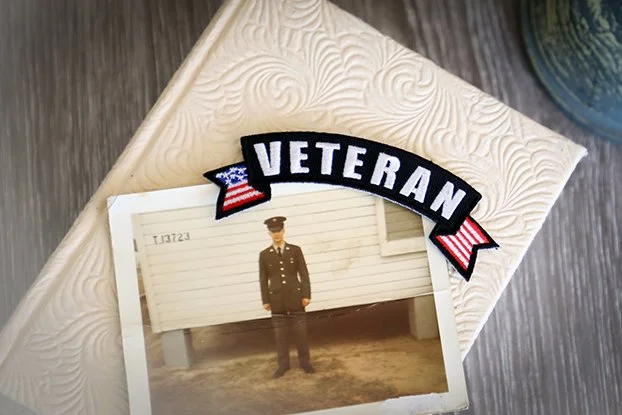
Box #1 - all Dad’s military pics with a few random childhood shots; finished sorting
Box #2 - completely random, in terrible shape from being stored without a top in garage; have set aside favorites that need scanning and restoring, and piles for family to look at before throwing away
Box #3 - includes family milestone photos; aim to go through before Denise’s bridal shower, so we can make photo book in time!
When you get further into sorting thematically for storing in photo boxes, then your accounting of what is in each pile can get more detailed. In that case, you are labeling for posterity.
4. Follow up on projects.
Don’t let your “A” photos languish—do something with them.
Scan your favorites so they are backed up digitally.
Enlarge some pictures for framing, and hang them in your home and at work.
Frame a small photo for a loved one or friend for no reason other than you know they’d appreciate it!
Find a story arc or theme and let us help you put together a most special photo book.
Scan a pile of black-and-whites and put them in a #TT folder on your computer, where they’ll be accessible when Thursdays roll around.
5. Be inspired to move on to part-two of your spring cleaning project.
Seeing your beloved photos displayed on the walls of your home, or reading the warm comments from Facebook friends on your latest nostalgic share, should provide the inspiration you need to keep going.
Remember: Spring cleaning starts in the spring, but it’s easiest when maintained all year long. Then “spring cleaning” isn’t even a THING anymore. You’ll feel liberated and empowered once you get your old photographs under control.

When your wedding photographer doesn’t do albums, “I do”!
Many destination-wedding brides return home married, with a boatload of special memories and a disk of digital images but no wedding album. Ordering an heirloom-quality album once the couple returns home is not such a simple thing, as I learned from experience. With Modern Heirloom Books, now it's easier than ever.
My own destination wedding
I had a storybook wedding on the Ligurian Coast of Italy, in a thirteenth-century church high above the ocean, waves crashing romantically below. To say this locale made for some stunning photographs would be an understatement.
My now-husband and I planned our wedding from afar, with the help of a tremendous company called Moonrings (also not local to us). Besides the fact that I wanted the smallest wedding possible—we had 4 guests travel with us, then celebrated back home in New York City with a much bigger party upon our return—I was a pretty laidback bride.
Whatever flowers are in season, please. No, I don’t need to hear the violinist you recommend beforehand. I allowed Moonrings to guide me, stressed a bit only about the choice of photographer. If we were traveling across an ocean and embarking upon the trip of a lifetime (both literally and figuratively), I wanted the images to capture the magic of the moments and the essence of the place.
And then, coming from a magazine and design background myself, I wanted the resulting wedding album to be perfect, and to beautifully reflect my own aesthetic. I chose to purchase only the high-resolution images from my photographer, giving me the flexibility to order a book to my specifications once I got home rather than negotiate language barriers and time differences.
I have since learned that this is a common choice for many destination-wedding brides, who return home married, with a boatload of special memories, and a disk of digital images but no wedding album. I also soon learned that ordering an heirloom-quality album on your own is not as easy as I had thought.

Overlooking the resplendent Ligurian Coast from just below St. Peter's Church in Portovenere. Photograph by David Bastianoni
No access to wedding album vendors
Like most brides, I wanted my wedding book to be special—to feel more substantial than the year-end albums I would order from Blurb or Shutterfly. But the companies who print those luxurious wedding albums cater only to professional photographers. I ended up discovering an exquisite handmade album of the old-fashioned variety—with a leather cover with a relief of angels and vellum overlays between every page—and, after having my photos professionally retouched and printed, I adhered them into the book with good old photo corners (albeit silver ones).
My book is a handmade treasure, to be sure, but it was a pain in the you-know-what to produce. And I don’t think that DIY approach is for everyone. Indeed, if I had an alternative back then, it would not have been my preference, either.
Since launching Modern Heirloom Books—and now having access to the book vendors that I had not years before—I redid my own wedding book. Of course I still keep my original, scrapbook-like version. But I now also have an archival, modern book that I adore.
I mentioned that we had four guests at our Italian wedding. Three of them—mine and my husband's mothers, and my grandmother—have since passed away. The pictures that include our matriarchs have even more meaning to us now, and we decided to include a few more of them in this updated version, making the endeavor even more meaningful.
What about your wedding album?
Did you get married in a destination wedding and choose not to order a book from your photographer? Could you, perhaps, not afford the amazing wedding album you wanted back when you married, and now want to order something befitting the occasion? I’d love to help bring your vision to life (and to see—and do justice to—your pictures) with a professionally designed and printed wedding book.
Since Modern Heirloom Books always offers the option of purchasing a digital edition of your book, too (and we archive everything for our clients), the chance of your losing your precious photos is minimized greatly when you order from us. Which makes it a wonderful idea for a milestone anniversary gift, as well: We can easily transform your parents’ old wedding album, digitizing, restoring, and retouching old photos, even adding in current pictures celebrating their years together.
Interested? Contact us to discuss the options (and relive some incredibly happy memories in the process!).

You might not buy into the old adage that a rainy wedding day brings good fortune, but you can't deny that often—with the right photographer behind the lens—Mother Nature styles some powerful photos. This one is cover-worthy, don't you think? Photograph by Hugo Juarez

Out-of-the-box ideas for making your photo book truly unique
Heirlooms shouldn’t be stuffy or overly conservative: They should reflect the values and real lives of their subjects. And—we hope—for most of you that means lives filled with joy, music, and good company. If you're tackling your own DIY photo book, here are a few out-of-the-box ideas for adding color to your homemade books, from thought bubble captions (with a free download) to flip-book fun!

What's your family listening to? Add a playlist to your photo book to add yet one more fun layer to your memories!
We’re all about high-end books here at Modern Heirloom, but that doesn’t mean we ignore the fun factor! Heirlooms shouldn’t be stuffy or overly conservative: They should reflect the values and real lives of their subjects. And—we hope—for most of you that means lives filled with joy, music, and good company.
When you come to us, we will do way more than design a book for you—we’ll help you sift through ALL those photos, make suggestions for storylines and book angles, and ultimately curate and visually edit your story to create a wonderful end product. And we’re always open to creative twists and add-ons.
Sometimes, though, you might just want to create your own books. We know that not every photo book needs to be handcrafted and archival (though, we’re always here for you to create those!). For example, you might want to create a cheaper book for your toddler with pictures for every letter of the alphabet, or with pictures of faraway relatives—something that your child can actually play with, and get pureed carrots on without consequence. Or you might want your teens to put together their own version of a family annual, so you memorialize their point of view and favorite photos.
No matter the reason, there are times you’ll want to do your own thing. With that in mind, here are a few out-of-the-box ideas for adding color to your homemade books.

Blow some cartoony thought bubbles.
You might not be a designer, but that doesn’t mean you can’t add a few graphic elements to your book that’ll look professionally done. One of my favorite lighthearted design additions is the classic thought bubble. We’re all used to annotating our images these days on Instagram and Facebook, so why not let that sense of humor shine through in your photo books, too? Just search online for “free clip art thought bubbles,” or find fun templates in software such as Canva.
Add a book soundtrack.
Did you know that sensory cues can help trigger memories? Like the smell of bread baking eliciting memories of Grandma’s house, for instance. And while smell may most strongly evoke emotions, I have yet to find a way to produce a scratch-and-sniff photo book. You can, however, create a good old-fashioned print book and add in a musical component.
Brainstorm a music playlist to listen to while viewing your book. If it’s a family album, ask everyone to check back on their devices for their most played songs; think of the songs that marked occasions such as summer road trips or your kid’s camp performance. If your book is celebrating an occasion, record the obvious: songs played at the bar/bat mitzvah or wedding reception. A fiftieth wedding anniversary? Maybe you select a couple of songs per decade that have meaning to the golden couple.
Definitely typeset the list of songs and artists and include as a Playlist Epigraph in your book. If you’ve got the means, burn a CD of the music as well and keep in a plastic sleeve at the back of your book. For Modern Heirloom Books customers who decide to purchase a digital version of their book in addition to the hard copy, we can include the digital music files on the same flash drive.
Have some fill-in-the-blank fun.
Go a little Mad Libs with fun fill-in-the-blank statements scattered throughout your book. This is not appropriate for certain topics, of course, but there are a few that would benefit from the levity. One we love: A mini book in celebration of a half-birthday. Some ideas:
In these past six months, I have gotten so much more ________ and __________. I’m __________ now.
All I want for my half-birthday is ________________________.
Typeset the sentences and fill in the blanks with your handwriting, which makes the photo book that much personal, adding the human touch.
Animate your story with flip book corners.
Do you remember those little books when we were kids that you flipped the pages and the stick figures moved? I haven’t seen one of those in ages, but Pinterest and YouTube are filled with creative ideas for making them.
If you can draw, why not create a series of illustrations that grace the bottom right corner of your photo book, so there is an animated story running parallel to your photographic one? If you’re working with us and want to incorporate this idea into a book, we can hire an illustrator to customize your book corners with your own flip book. We especially love this idea for a Proposal book—share the story of your relationship through photographs and simultaneously show a cartoon-you going down on bended knee to pop the big question, flip-book-style!
We'd love to hear other creative ideas you have—or see the results of your own designs! Please share in the comments below or on social media.
How a struggle to tell my mother’s whole story turned into a more intimate portrait of love
The first legacy book I designed was as personal as it gets: a book honoring my beloved mother. But after struggling to find a way to tell her whole story, I realized that simply was not possible. And I didn't want some long, boring biography, anyway. What resulted is a book that is precious to me, and I hope will one day be inspiring to my son...and the children I envision he will someday have himself. May you be inspired to tell the story of one of your loved, ones, too!

Mother & daughter: an enduring friendship cut too short
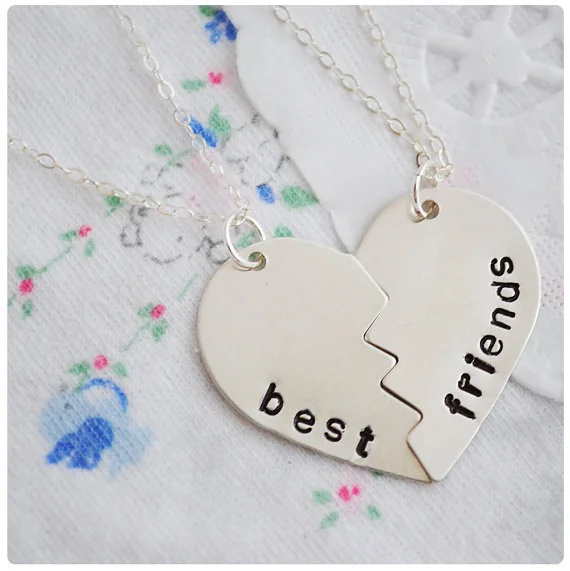
When I was a teenager I gifted my mom with one of those split-heart necklaces declaring each bearer the other’s “best friend.” It never occurred to me to be embarrassed. My relationship with my mother was beyond special, and I always felt keenly aware of how blessed I was to have it.
Three months after I delivered my son, my mother died unexpectedly. At exactly the moment I felt most close to her, I lost her.
That was 2009. Every day since, well, I think of her. I ache for her, love her still. Remember her. And try to honor her memory by being the best person and mother I can be.
That my mother was able to meet her grandson, that I have a few beautiful photos of her holding my son, 12 weeks’ worth of memories of her bonding with him—just, thank God. Conversely, none of that makes up for the fact that my boy won’t remember his grandmother. He won’t know her purity of heart, her generosity, her surprising sense of humor.
I talk about my mom often, sometimes sharing stories that reveal her character or my favorite memories from my own childhood. Occasionally I just drop small references: Your grandmother adored daisies. She would have loved that dance move! I learned how to make this spinach quiche from my mom.
My mother’s spirit permeates my life. But without having other family members to talk of her with, without having relatives with whom I might be able to relive memories...I worry the memories will fade.
“Without having relatives with whom I might be able to relive memories...I worry the memories will fade.”
Procrastinating, or ruminating?
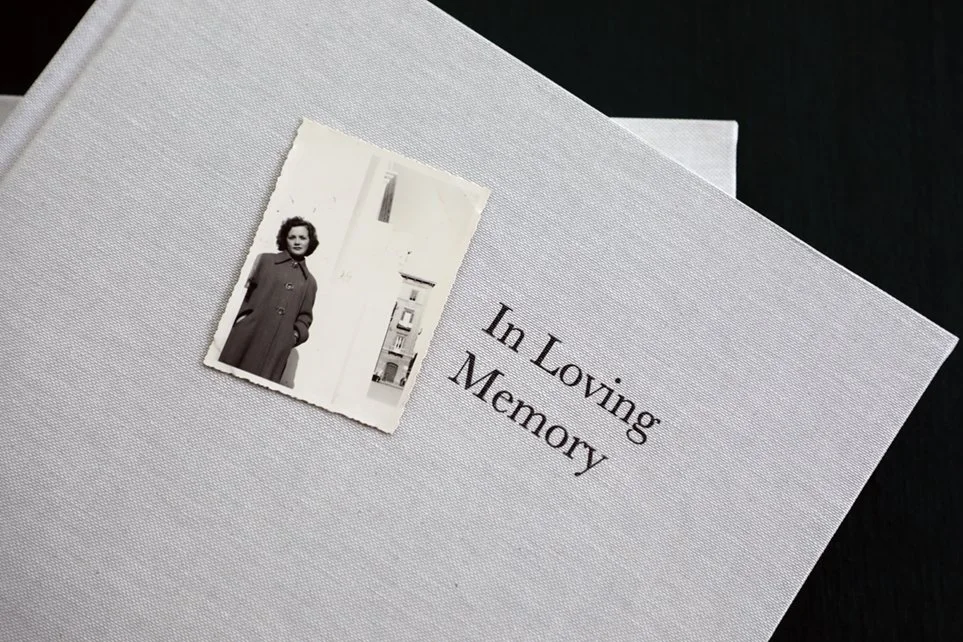
I spent countless hours going through boxes of old photos: black-and-whites of my mother, mostly from her teenage years. Many of my favorites were of her posed in some fashionable ensemble epitomizing the decade: festooned in a sleek belted dress in the late ’50s, donning a leopard-print faux-fur jacket in the ’60s, rocking a hand-crocheted pom-pom hat in the ’70s.
I cherish the scattered few pictures from her early childhood. And seeing photographs that showed everyday scenarios got me excited—they gave me visuals of her life before me.
When it came time to sit down and put together a photo book honoring my mother, though, I was stumped. At first I struggled with how to adequately bring this woman to life. How could I make others see—really see—how remarkable she truly was? How could I give a rounded impression of the person I knew and loved?
I couldn’t.
This depressed me for a while. I abandoned the book idea, and instead lost myself from time to time in re-examining the pictures in all those boxes. The sense of joy that came with happening upon a photo of her laughing, or again picking up one of her that reminds me of my son now, became addictive. I would begin to sort the photographs, setting aside a few favorites each time to scan, but would soon find myself down a rabbit hole, replacing the stacks back in the boxes to be rediscovered a different day. I was frustrated that I had made no progress in organizing the images or putting together a book. Yet I think I subconsciously relished the idea of being able to come back to the boxes anew, preserving some sense of serendipity: The boxes were a treasure chest, and I wanted to touch and feel the golden treasures within at will.
One day it dawned on me: Don’t make a book about her. Tell our story.
“Mommy & Me: A Love Story”
I knew I’d never be able to paint a full enough picture of my mother. And I didn’t want a boring (typically lengthy) biography, anyway. I had a trove of letters we each had saved over the years, from our correspondence when I was in college (at a time before the Internet made snail-mail almost obsolete) all the way until I got married and then pregnant. Despite daily phone calls, we both still felt compelled to share our love and feelings in writing. What a gift.
The process of putting this book together was cathartic and healing. I know now that I procrastinated in doing so because I needed time—time to let the ideas percolate in the back of my mind, and time to be ready to finish the grieving process. No, I’ll never truly be done grieving; but I do feel (almost) whole again, and proud of the book I have made in my mother’s honor.
This book, a gift to myself and eventually to my son, is as personal as it gets. Rather than post the entire book, I decided to share a slightly condensed version: I want to give you ideas for crafting your own story, plant some seeds of inspiration. And give you a glimpse into my relationship with my beloved mother.
The full book—with pages that reveal some incredibly personal letters and depict details from my life—I am reserving for my son...and hopefully the family he bears in the future.
Who would you like to honor?
I waited until my mother was gone from this Earth before endeavoring to tell our story in book form; but we were creating our story all along. As you are doing with those you love, I hope--living life out loud and mindfully, being present in the moment, allowing yourself to truly experience the full gamut of emotions.
Writer Allison Gilbert recently posted a quote that moved me on Instagram: “Make this year the year to remember loved ones intentionally.”
Who would you choose to honor with a legacy book? A grandparent who has recently deceased? A great-grandparent you’ve never met but heard plenty of family stories about over the years (preserve those!)? What about your living parents? What a gift to be able to interview your parents now, to not take their stories and wisdom for granted!
I can’t wait to “meet” the members of your family legacies and to help you honor them. Please reach out today to see how we can work together to create the book of your dreams.
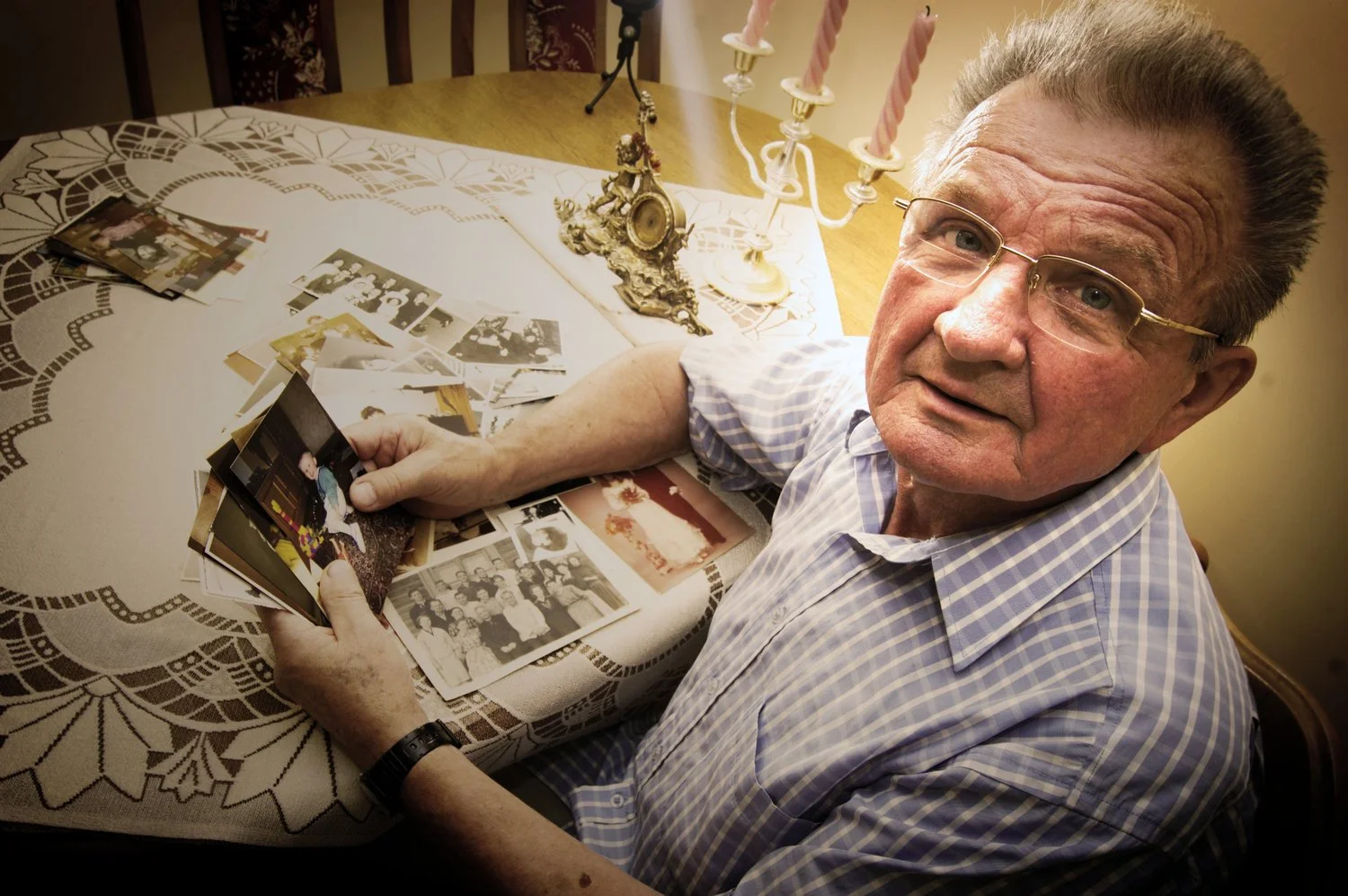






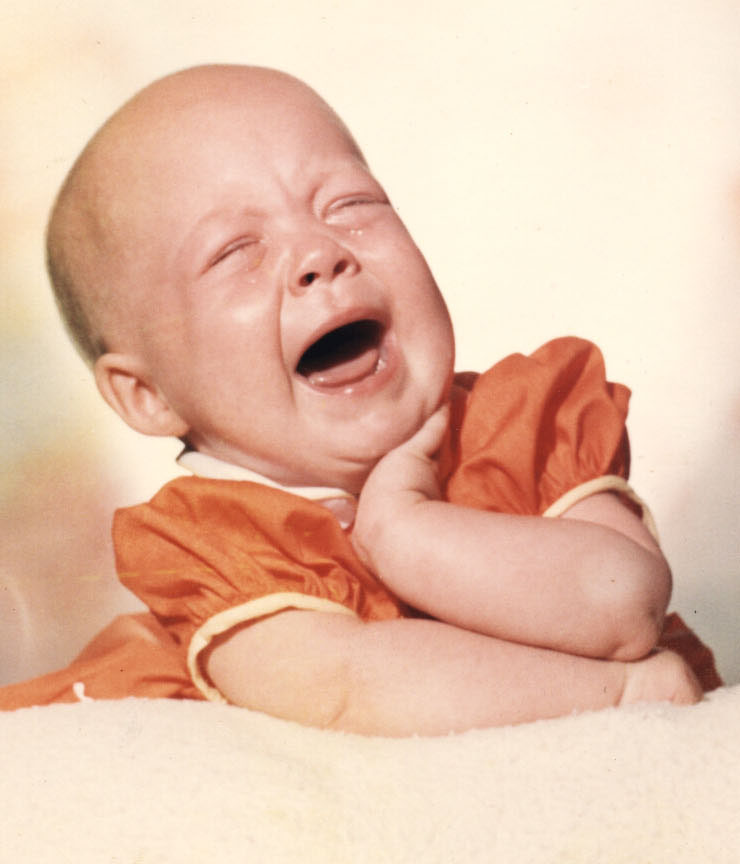
Sometimes it’s the outtakes that matter. #unfiltered
From the crying baby to the teenage 'tude captured on Instagram, the less-than-perfect moments in our photo feeds should not be throwaways—heck, those are some of the most fun (and honest) pictures we have! Our top 5 reasons why the outtakes might matter more than your professionally posed pictures in the end.
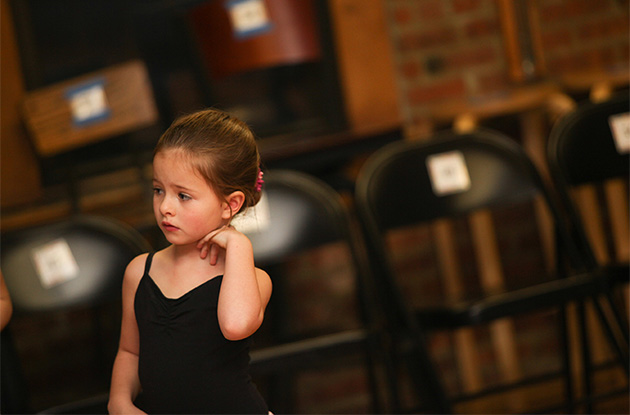
That moment of pre-show jitters makes for as memorable a shot as her big recital debut! Photograph by Marc Goldberg
Why the photos you threw away might really be keepers.
That posed shot of your family sitting in front of the Christmas tree? Lovely, perhaps even frame-worthy. The one of your 3-year-old son looking wide-eyed and contrite after dropping a delicate ornament? Priceless.
Many a Facebook and Instagram feed boasts one near perfect shot after another—online, anyway, we’re living the life of our dreams. But putting aside “friend” envy and FOMO concerns, take note of what pictures you really respond to when browsing your social media feeds: You might LIKE the formal wedding portrait, but you smiled and laughed at the groom’s own boisterous snapshots from the reception. You probably LIKED your sister’s latest (professionally taken) profile picture, but you loved her imperfectly perfect #TT picture shot in your parents’ dark basement 10 years ago.
“Online, anyway, we’re living the life of our dreams.
When we sit down to consider what images to include in a photo book, it’s common to gravitate first to all those perfect shots. We want our family albums to be beautiful—hell, we want to look beautiful in all our pictures, right? And those shots just might make up the backbone of your book. Just don’t discount the outtakes. Here’s why.
1. It’s often the moments right before and after the “big moments” that matter.
Here’s an obvious example: After the wedding vows comes the kiss—a moment no wedding photographer worth her salt would miss. But how about after a graduation? The pensive times your graduate is reflecting on the imminent changes in his life—did you snap him looking a little lost? He might not think so now, but that picture is one he’ll want in later years, reminding him of the magnitude of the moment (and it’ll mean a little more to him upon reflection…and well past the time of worry!). So don’t post that one on Facebook now, but do hold onto it for a book he’ll cherish down the road.
2. Tears are part of life.
When your kid fell off his bike after taking off the training wheels, he cried; you captured the moment because you were snapping away. Include it in your book. Learning to ride a bicycle is a process, and the sense of accomplishment is best felt in light of that fall. You may consider a triumphant picture after he’s mastered his two-wheeler—make it big. Then complement that with a few smaller shots—like stills from a movie—adding color and detail: his tears, his dad removing the training wheels, your child adjusting his helmet.
And speaking of tears: Have you ever been to a wedding where the bride’s parents cried? Tears of joy, well worth recounting. A newborn? Come on—if your child’s baby book doesn’t include some wailing shots, something’s not right!

A smiling baby is always cute, but c'mon...is there anything cuter than a crying baby (sans volume)?
3. Creative cropping can bring a scene into focus.
And “bad” photos can be transformed into artistic images. With digital imaging so accessible these days—from Instagram filters and collage makers to PhotoShop Elements—everyone’s able to alter their pictures for the better. But so much of this post-processing is about making an already good picture stronger with light or subtle retouching effects. Never underestimate the power of good old cropping.
By cropping a picture, we redraw its borders and change the scale of its elements in relation to the overall picture. You can close in on a detail, crop out extraneous people or distracting signs, or just crop a touch from the edges to redirect the eyes. So even if Aunt Sally is smirking in the corner of the picture or a little imp photo-bombed your family shot, crop out what offends and hone in on an otherwise meaningful moment!
4. Everyone has a sense of humor.
Bloopers are a perennial TV hit for a reason. And you are familiar with Awkward Family Photos, are you not?! If a picture makes you laugh uncontrollably, smile knowingly, or blush with memory, chances are it’s a winner.
Like the baby who peed during his newborn session. The muddy dog who jumped on your pristine dress (animals can make for some of the most fun bloopers!). A trip-and-fall at a big moment, a dropped birthday cake, a twisted face as if she just tasted sour grapes…you get the idea!
These inopportune pictures might not make it onto your Christmas cards (though I’m willing to bet your friends and family would hang them front and center!) but they should have a place in your books and albums, for sure.

Photo by Kristen Livingston
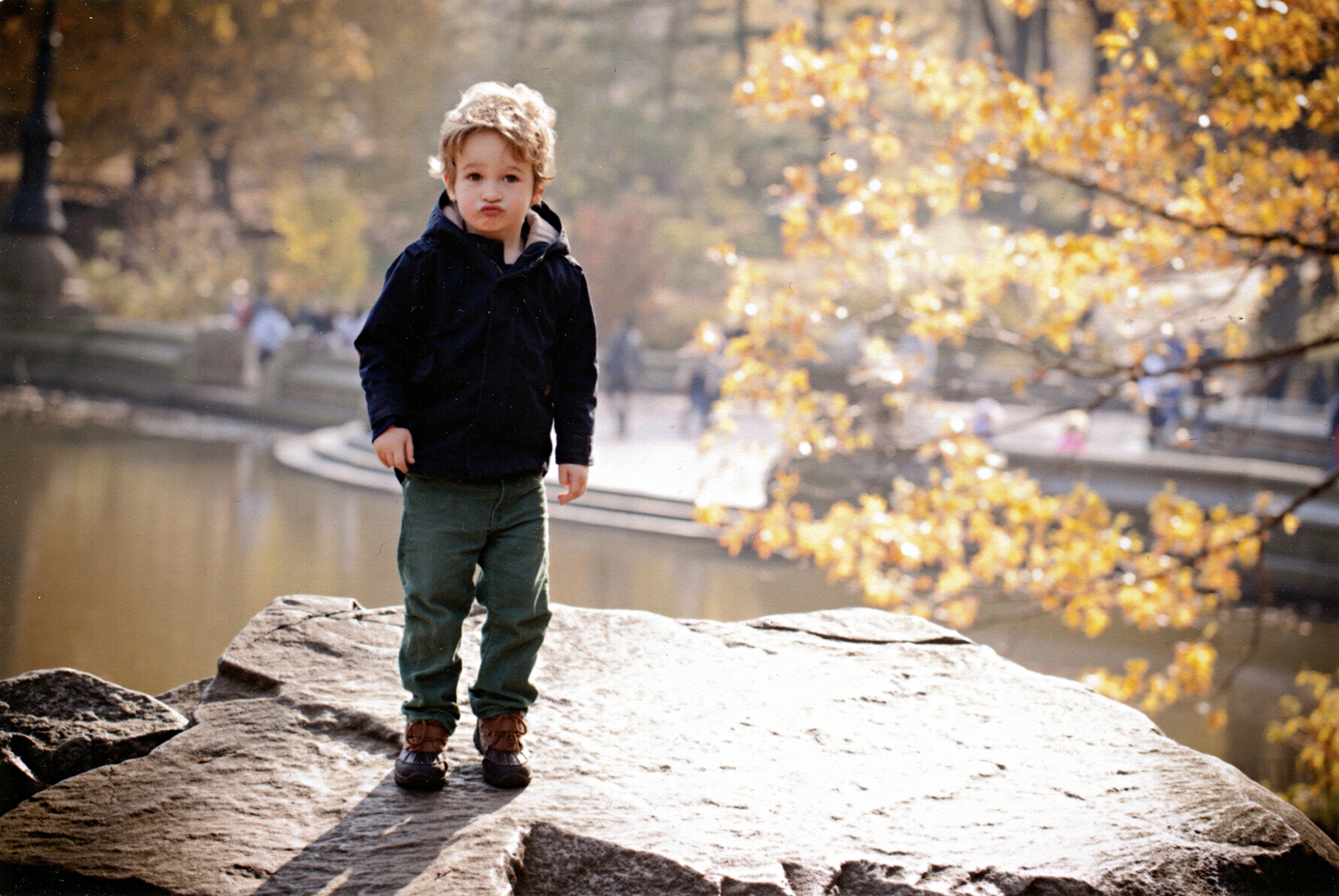
You might not want to showcase that pout in a frame, but in a photo book? Heck, yeah!
5. Stars: They’re just like us. Well, so are we.
Us magazine tapped into just how much we all love to see celebrities doing everyday things—they get coffee, ride the subway, pump their own gas! I admit, I could flip through those photo pages for days.
No, I’m not advocating having someone photograph you at the gas pump. But remember that pictures that offer a glimpse into our everyday lives might be cherished in years to come. They’re revealing. They provide the truest sense of time.
Some of my favorite shots from my family’s archives are of the everyday variety—my grandmother cooking a roast in her housecoat (a “housecoat”!), seeing my father put together a bike in the driveway. These shots offer a glimpse into what their lives were like. It’s not as if our parents came of age in “the olden days,” as we used to say—but let’s face it, the ’60s and ’70s were a very different time! Just imagine what our ’80s hair will seem like to our kids in 20 years! (Oh, and phones had those long, twisty cords!)
When we had to pay to get film developed, every shot counted, so those everyday snapshots made their way into our albums and drawers. These days we can snap away forever, and deleting a shot that seems unremarkable is easier. Just remember to keep a few of them. Like the one of your kid doing the dishes—that’s a keeper, and will seem like a relic when he gets married.

Photograph by Colie James, a professional photographer who sees the beauty and importance of chronicling our everyday lives.
6. Remember that there are some shots that should be off-limits.
Respect your subjects’ dignity and privacy. It’s one thing for J. Lo’s wardrobe malfunction to go viral, it’s another entirely for your girlfriend’s see-through blouse or your sister's Marilyn-dress moment to be shared. Don’t save or share pictures that would embarrass or humiliate anyone. It’s that essential “do unto others” rule: Would you want a picture of you like THAT shared? Didn’t think so.
What are your favorite outtakes and photo bloopers? Do share!!
Tweet at us and use hashtag #photoblooper.
Share on our Facebook page and on Instagram.
We’ll compile the best into an updated blog post!
Dawn Roode’s curated roundup for the week of Sept. 23, 2026, is overflowing with recent reads on memoir, life story writing, and family history preservation.