
Memories Matter
Featured blog Posts

READ THE LATEST POSTS

Holiday grief: Find comfort & connection in memories
We may yearn for a lost loved one even more during the holidays, but know that shared memories are a balm to the soul, and that grief is another form of love.

There is no timetable for grief, and sometimes our journeys of missing a lost loved one will be lifelong. The intensity of the grief we feel, though, is often magnified around the holidays—that sense of yearning for someone, of remembering them in a most visceral manner (through the tastes of the holiday food, the smells of an evergreen tree, say, or the feel of the hugs and stockings and warmth of the fire)...
Even amidst the joy, we may still feel sadness—and that’s not only okay, it is normal.
Here, I wanted to share two simple ideas—principles that have helped me on my healing path, and ones that I do believe can have a worthwhile impact on others.
Shared memories are a gift.
“Nothing makes me happier than someone asking me about my dad and what he was like,” writes Jahanvi Sardana, who lost her father to brain cancer in early 2017.
My own mother died thirteen years ago this month (three days after Christmas, to be precise), and I still feel exactly as Sardana does: The best gift—for Christmas or at any time of year—is simply, definitively, a shared memory of my mother.
I cherish when people share specific memories: That time my mother made everyone in the car laugh so hard that they had to pull away from the McDonald’s drive-thru because no one could talk through their guffaws. The time my mother hugged a coworker when he was having a bad day. The time she made spinach quiche for the elderly couple she saw at chemo every week. Or how, after wearing one blue sock and one black sock to the office, she combated her color blindness by having a friend help her label her laundry by color.
These are not monumental memories. They are moments.
But in their specificity, my mother comes alive for me.
I, too, feel connected to the person sharing the memory—they knew my mother, they experienced her. As I have so few people with whom to reminisce, these moments of sharing are even more precious to me when they happen.
“Keep your loved ones alive in your conversations, your memories, the way you live because end of life in no way translates to end of relationship,” Sardana says.
Remember that your recollections are a balm to the soul. Don’t ever refrain from sharing, or thinking that your memories may prove too painful; on the contrary, I can almost guarantee that your stories—no matter how inconsequential they may seem—are welcome to someone who has experienced a loss, whether that loss occurred yesterday or a decade ago.

Grief is another form of love.
At the memorial service for my grandmother, there were lots of sympathetic hugs. I remember those and the many words of support vaguely, through the fog of loss that shrouded me on that day.
One memory, though, is vivid: My friend Marc told me, “Your sadness is big because your love was big.” Those weren’t his exact words, but they capture his meaning, an idea that seemed new and comforting and obvious all at the same time. In his Marc way, he told me how lucky I was to have experienced such a loving relationship with my grandmother, and how my grief was proof of that love. What a revelation.
It was also evocative of my mother’s enduring philosophy, that we should be ever grateful. In that moment of loss, thanks to a friend’s words, I felt connected to my mom, and blessed to have had my grandmother in my life.
“The greater the love the greater the grief,” wrote C.S. Lewis, echoing my friend’s wisdom.
Jahanvi Sardana, who wrote about her father’s recent death, would agree, it seems: “Grief numbs your body, breaks your heart, and drains your veins, but grief also is just another form of love.”
Be patient with yourself, and gentle in your grief.
“Grief is tremendous, but love is bigger,” Cheryl Strayed says. “You are grieving because you loved truly. The beauty in that is greater than the bitterness of death. Allowing this into your consciousness will not keep you from suffering, but it will help you survive the next day.”
Yes. Yes.
Resources & more for those who are grieving
When I first wrote this article in 2017, Sheryl Sandberg’s book Option B—which she wrote in the wake of her husband’s death, when she feared she would never feel true joy again—was a bestseller, and I noted with gratitude that she had created a community around the idea of resilience in the face of adversity. The Option B website continues to offer ways to
connect with people who understand
immerse oneself in inspiring stories—or share your own
get practical advice for talking about loss and other challenges.
More recently, I have been listening to Anderson Cooper’s thoughtful, inspiring podcast called “All There Is” in which he vulnerably explores grief as he goes through his mother’s things after her death. I highly recommend listening, whether your loss is fresh or years behind you. I related to so very much he and his guests had to say; I think you will, too.
Related Reading:
The Healing Power of Remembrance: “The prescription for joy and healing after loss is to remember.”
Mommy & Me: How a struggle to tell my mother’s whole story turned into a more intimate portrait of love.
Notes from a Funeral: Sharing memories about lost loved ones to heal—and why we don't honor our families through story sharing now.
Keeping memories alive: How tribute books can create a lasting legacy of your deceased family member
This post, originally published on December 19, 2017, has been updated on November 30, 2022.

Life Story Links: Blog Roundup, December 11
Oral history during the holidays, how not to conduct an interview, power of voice to evoke memories & a few first person accounts to whet your life story whistle.

“We tell ourselves stories in order to live.”
—Joan Didion
With so many diverse links of interest to storytellers and family historians this week, why don’t we skip introductions and dive right in—shall we?
Listen Up
(JUST) AUDIO?
Meghan Vigeant of Stories To Tell in Maine is making a change to her personal history business: She’s paring away the multitude of offerings she once listed, including book production and memoir coaching, and is now focusing on her audio services: audio memoirs & oral histories. Read why this time, it’s all about the audio.
FROM PHONE MESSAGES TO FAMILY STORIES
“When I was a kid spending the night at my grandmother’s house in Harrisville, Michigan, I’d stay up past my bedtime and lay on the bedroom floor with an ear pressed against the heat grate, straining to hear the conversations of the adults in the parlor below,” says Rebekah Smith. She was “seeking out good company and soaking up their stories” then, something she continues to do now in her QuOTed podcast. Check out the 30 mini episodes the Minneapolis-based Smith posted as part of National Podcast Post Month in November 2017.
Signs of the Times
THE FAMILY TABLE
“Occasionally, I would come home from work and find a strange, unshaven man dressed in rags, sitting at our kitchen table,” Ellie Kahn's grandmother told her. Ellie learned of her great-grandmother’s Depression-era generosity (serving strangers entire meals in her home, “from soup to dessert”) while the family shared stories around the Chanukah table. There is no better time to tell such precious stories than during the holidays, and Ellie Kahn, a Los Angeles-based oral historian and owner of Living Legacies Family Histories, offers up myriad suggestions for starting new storytelling traditions this year.
HOW NOT TO CONDUCT AN INTERVIEW
“Those of us who interview others for a living can learn a lot from [Matt] Lauer’s disastrous outing,” writes NYC personal historian Samantha Shubert, who goes on to detail four strategic & substantive ways to get the most out of any conversational interview—not à la the former Today Show host’s example.
Visual Storytelling
When a photographer sets out to live with and document the everyday lives of an order of contemplative nuns in New Zealand, the silent observance reveals a rich narrative.

A photograph by Cam McLaren on display at the New Zealand Geographic Photographer of the Year exhibition
First Person Reflections
ON CARS...
After reading Sarah White’s recent post about her first car (“The Pinto”), guest writer Dorothy Ross submitted a tale of her own youthful automotive daring to True Stories Well Told. (“I named my sweet car Daisy, after the girl in The Great Gatsby,” reflects Ross.) Consider adding your voice to the reminiscences about first cars on Madison, WI-based Sarah White’s blog.
...AND MORE...
- Carol McLaren of Unique Life Stories in Pinon, Arizona writes about her father on the occasion of his 91st birthday.
- Hear, Here is an oral history project in LaCrosse, Wisconsin, that focuses on place-based stories that bring the experiences of the everyday person to light.
Little #LifeStory Links
#MemoriesMatter #Legacy #LifeStories #Memoir #OralHistory #FamilyHistory
Life Story Links: Blog Roundup, November 28
A whole lotta links about preserving life stories, from dealing with family stories that are painful to why preserving your own memories is urgent.
“If a story is in you, it has to come out.”
—William Faulkner
Time Is of the Essence
BEFORE IT’S TOO LATE
In the process of saving family histories, procrastination not only steals time, it steals stories from future generations. A cautionary tale with a true sense of urgency this holiday season from Pam Pacelli-Cooper of Cambridge-based Verissima Productions.
“SOMEDAY” IS TODAY
Meet Josh: He plans to write his biography someday. Yet he has told his adult kids none of his life stories. How about you—are you waiting for “someday,” too?
When Family Stories Are Painful
FAMILY HISTORY & SHAME
Growing up, Julie Lindahl felt an indescribable guilt, a feeling she could never understand. Once she discovered that her grandfather had been a brutal SS officer during World War II, she decided to devote her life to digging into the truth. Unlocking the secrets of her family showed Julie the worst, and then the best, of humankind.
“Shame, you can’t contribute anything, but responsibility, you can do a lot with,” she says. “It’s a challenging story, but one that gives me a great deal of hope…”
Lindahl is the founder of Stories for Society, a nonprofit that works with storytelling for learning and communication. Her memoir, The Pendulum, will be published in September 2018, and is currently available to educators in a shorter version.
THE PERSPECTIVE OF YEARS
“Considering that my parents were children of The Great Depression and I was of the much more prosperous post–World War II generation, it was, perhaps, inevitable that we wouldn’t always see things eye to eye,” writes Des Moines-based personal historian Larry Lehrer. “Of course, I lost most clashes with Dad, many of them ending with ‘because I say so.’” Lehrer remembers his dad with a new perspective on the 97th anniversary of his birth.
Books & Beyond
MAKING WORDS WORK
Memoir writers in need of an editor will be interested in Sarah Sally Hamer’s primer on the different types of editing that shape a book. In this installment, the Louisiana-based writing teacher talks about line editing—“where, finally, you make it pretty.”
A LIFE WORTH REMEMBERING
“Honoring a life well-lived doesn’t just benefit the younger generations—it empowers the elders themselves, and in the process, assigns meaning to their life and permanence to their story.” Forbes highlights The Role of Family Historians in Preserving Wealth by Defining a Legacy.
Little #LifeStory Links
#MemoriesMatter #Legacy #LifeStories #Memoir #OralHistory #FamilyHistory

Don’t wait for “someday”
Meet Josh: He plans to write his biography someday. Yet he has told his adult kids none of his life stories. How about you—are you waiting for “someday,” too?
“I am going to write my biography,” Joshua told me exuberantly. I met Josh in Central Park last week, and was interviewing him for an upcoming feature story for a professional association. For the past 15 minutes he had been discussing with me the reasons that, no, he does not tell his children stories from his childhood. “Why would they care?” he said with a laugh, before proudly telling me how close he is to them, and bragging of all their accomplishments.

Joshua in NYC's Central Park on November 9, the day we spoke. Photograph by Katie Bellini
Joshua’s children are adults, working professionally in cities far from their dad, but in regular contact with him. They are indeed close, as Joshua was to his own father—who, by the way, led an extraordinary life of which Joshua only knows some of the details firsthand.
Joshua, a 60-something man of Japanese descent who has lived in New York City for more than 40 years, is far from typical in his experiences. He enthused about his life, sharing stories in rapid-fire succession about everything from his father’s “double Holocaust” (he lost his family in a concentration camp, then, Joshua told me, in later years his wife took everything their young family owned and left Josh’s father to raise three children alone) to his aversion to books (“I’d rather watch people in the park”) to his enduring positive attitude (“no one can take that away from me”).
Empowered by a Listener
After a reluctant two minutes where he told me there was no way to do his story justice in a brief conversation—“that would take years!” he said on another laugh—Joshua launched into his storytelling. No prodding necessary.
This was no interview, really—once Joshua began to share, he couldn’t stop. I asked an occasional question in response to his stories, but he, so positively impacted by an eager listener, I think, was on a roll.
I was enthralled by Joshua’s stories, and by his enthusiasm. He radiated positivity, roaming Central Park with his adopted dog (whose collar, as Josh pointed out, read “Don’t shop - Adopt”) and punctuating his sentences with glorious belly laughs and expansive hand gestures.
And while I view Joshua’s experiences as singular, his attitude of guardedness with his own family is anything but.
The Myth of Disinterest
Josh’s stories were so clearly intriguing—to me, a stranger. Why wouldn’t they be of interest to his own children?
Joshua valued his life experiences enough to dream of writing his autobiography one day, but not of sharing his stories in person with his family. This is the case with so many people I speak with. And it saddens me.
They think that “the time will come” for them to share their stories.
They figure one day, when their kids get older and aren’t so busy, maybe the kid will ask questions.
Or they assume that no one cares; that their story matters to them, but not really to others.
I have heard a litany of excuses as to why people are waiting for “some other day” to tell their stories.
My opinion? Stop making excuses.
Today’s Lesson (There Will Be a Quiz)
Your stories matter. Share them. Don’t wait for “someday.” Someday is today.
Why?
Why should you share your stories?
Perhaps you want to leave a legacy.
Enrich the family history for the next generation.
Help others learn from your experiences.
Provide a few laughs.
There are so, so many reasons to share your life stories.
The one that I regard as of utmost value, however, is probably the least talked about: It will enrich your life.
Sharing stories with those you love is enriching, plain and simple. Whether you are telling tales of struggle and triumph, love and loss, hardship and pain, rollicking good fun and misadventures…whatever directions your stories veer, they will be welcomed.
There is joy in the telling, and gratitude in the receiving. Storytelling can be cathartic, healing, challenging, difficult. Always, though, storytelling will be rewarding.
Quiz (I Said There’d Be a Quiz, Didn’t I?)
When should you tell your stories?
Joshua would have failed this quiz. He is waiting for “someday.”
How about you?
Next Steps
If your “someday” is today, congratulations!
You’ll find plenty of tips & resources on our blog, including:
And we’re always here to partner with you on creating a professional heirloom coffee table book, with stories gathered through one-on-one interviews (the heart of our process!). If you would like help capturing your life stories, see how we can work together.
Life Story Links: Blog Roundup, November 14
May these links inspire you to make family storytelling a regular part of everyday life, not just something done during holidays like Thanksgiving & Christmas.
“Thanksgiving, after all, is a word of action.”
—W.J. Cameron
Storytelling abounds during the holidays. That which all personal historians strive for on a daily basis—memory preservation, communal story sharing, meaningful (and fun!) reminiscence—often comes to the forefront for families during the holiday season.
What better time to tell stories than around the Thanksgiving table? What better opportunity to ask questions of family elders than when generations are gathered together in one place?
It is my sincere hope that everyone takes advantage of these opportunities for story sharing—and that, once the turkey leftovers are eaten and the December decorations are stored away, those feelings of gratitude and recognition that come with reminiscence linger indefinitely, urging you to make story sharing a regular part of your everyday lives.
Veterans Day
Communities big and small across the nation gathered this past weekend to honor our military veterans. When I was a kid, Veterans Day meant parades and plastic poppies. As a parent, I strive to expose my son to individuals who served our country, giving him an opportunity to hear stories firsthand. Last year, we toured the Battleship New Jersey and spoke to WWII Veterans. This year, we traveled to Philadelphia, engaging with numerous Veterans in heartwarming conversations at the Independence Seaport Museum. Did you bear witness to a Vet’s story?

EXPLORE VETERANS’ STORIES
The Veterans Legacy Program aims to memorialize Veterans by telling the stories of those buried in VA national cemeteries, ensuring their stories live on beyond their final resting place.
BEYOND THE HOLIDAY
While Veterans Day has passed, remember that any day is a good day to ask a Vet questions—and to listen.
“As a Vietnam Vet, I find it easier to share war stories with fellow Vets than with non-Vets,” writes Tom Cormier, cofounder of Legacy Stories. “But there's a lot more to military life than the worst of the worst... There are lots of fascinating stories to be told about other aspects of military life. In fact, most Veterans would be happy to share their military stories about coming of age, buddies for life, humorous situations, exotic cultures, travels, and more. All they need (and want) is for someone to ask. Problem is, most people don't know how.” Thank you, Tom, for helping us discover how with these 10 thoughtful conversation starters.
Thanksgiving
THE GREAT THANKSGIVING LISTEN
Truly listening to someone reminds them that their life matters. StoryCorps leads the way in creating a culture of listening that echoes across the nation, encouraging everyone—especially young people—to interview elders during Thanksgiving gatherings. Their goal: to create an oral history of the contemporary United States, one interview at a time.
Interviews recorded on the StoryCorps App become part of the StoryCorps Archive at the American Folklife Center at the Library of Congress. The Great Thanksgiving Listen is now in its third year, providing families with a priceless piece of personal history.
FAMILY MEMOIR OPPORTUNITY?
Maybe you think you’ve heard all your family’s stories. But ask yourself this, suggests Nancy West, who provides memoir services in Carlisle, Massachusetts: “Could you retell the details of their stories to your own children or grandchildren? Could you explain the connections, nail the chronology, put the pieces together so that it made sense even when told secondhand?” If not, the holidays may be the time to embark on capturing stories for your family memoir.
More Holiday Reads
- Soldiers Are More than Just Symbols: David Abrams on seeing the individuality of veterans [LitHub]
- This Year, Pass the Turkey AND the Family Photos [SF Gate]
Any Old Day of the Week

Our photos tell the stories of our lives—and our lives, frankly, are not merely birthdays & weddings. Our lives are lived in the in-between. Are you capturing those moments for the next generation?
What Are You Reading?
I’m generally reading many books at once—one nonfiction book (always learning!), one cheesy romance (I’ve got to escape once in a while!), one literary work (often a classic I somehow skipped as an English major), one impulse check-out from my local library…and always, these days, at least one memoir.
Currently I am finishing up Leonardo DaVinci by Walter Isaacson, with Amy Tan’s latest, Where the Past Begins: A Writer’s Memoir, up next. What first-person writing inspires you?
#MemoriesMatter #Legacy #LifeStories #Memoir #OralHistory #FamilyHistory
Photographing our everyday
Our photos tell the stories of our lives—and our lives, frankly, are not merely birthdays & weddings. Our lives are lived in the in-between. Capture the moments.

We all take pictures of the milestones, big and little: the first days of school, the first lost tooth, high school graduation, and of course, birthdays. But what of the everyday moments? The in-between that, really, is the essence of our lives?
Ordinary days filled with extraordinary moments
I’m willing to bet you can conjure images in your mind of many of these—they are what make up the fabric of our memories, after all.
dad pulling into the driveway after a full day at work
grandma knitting on the front porch
little brother building Legos
mom doing the crossword with a cup of tea
kids brushing their teeth before bed
spring cleaning the garage
Have you ever taken pictures of these moments?
The extremes of documenting the everyday
There is a genre of photography known as documentary family photography, which takes this idea to great heights, elevating the everyday into beautiful art.
At the other end of the spectrum, some people find the urge (popular among many younger Instagram fans) to document every last morsel of their existence, well, a bit much. As Meredith Fireman wrote in a Fast Company article entitled “How Instagram Almost Ruined my Life”:
“Sometimes I want to talk to my friends and celebrate someone’s birthday without needing to see them blow out the candles in a photo uploaded by five people in attendance.”
I’m not advocating either of these approaches (though for anyone interested in hiring a family photographer, I do think choosing a pro with a strong photo-journalistic sensibility often yields a wonderfully unexpected result!).
I am, however, suggesting that you use the camera that’s with you (most often, your phone) to snap photos that represent your real life. That will remind you down the road of what it was like to live in that house, to go to school in that town, to be you at that age.
Details of time and place
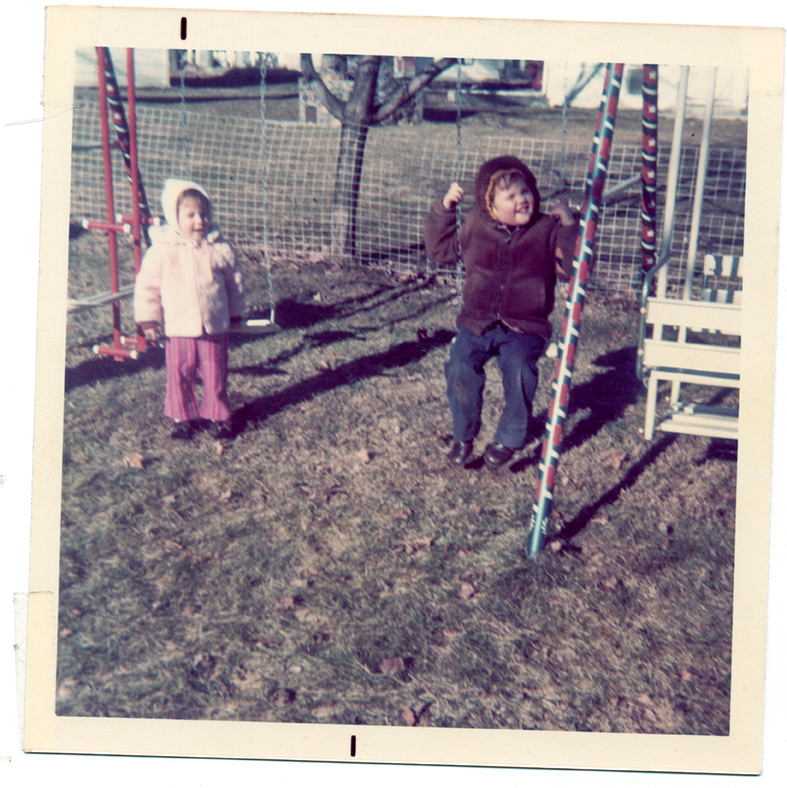
Why do we all love looking at old photos so much? The nostalgia, of course, is infectious and charming. The scalloped edges and white frames of those old black-and-white photos feel cemented in time, like artifacts of another reality.

And they are. It’s not just the fading photographs themselves that lend to this feeling, though; it’s the details within the images that resonate: the curly phone cord tethered to the wall, the wood paneling so indicative of the Seventies, the beehive hairdos of the Sixties, the shape (and size!) of our eyeglasses.
When I look back at pictures of my own son from just a few years ago, I am most drawn to those that reorient me in time. The ones that transport me back to the feelings of new motherhood in a Brooklyn apartment, and the memories of juggling work and home life.
When I shuffle through the boxes of my mom’s old photos, it’s the ones that reveal what her everyday life was like that I cherish. Sure, her high school graduation picture is stunning, and framed in my room. But the shot of her walking down a city street in her Inwood neighborhood as a teenager is compelling—I want to sit down with that young woman and be her friend; I want to hear her stories.

My mom interacting in everyday ways with my cousin Kim (left) in the Seventies, and my brother in the Eighties.
Our stories, in pictures
Our photos tell the stories of our lives. And our lives, frankly, are not merely birthdays and weddings. Our lives are lived in the in-between.
So tell those stories. Write about them, and photograph them.
Your memories matter. Why not make preserving them a priority?
Getting inspired

Photograph Copyright Kristen Lewis Photo
Browse the photo gallery of documentary family photographer Kirsten Lewis for ideas for creative ways to capture your own everyday moments artfully.
On Instagram, search #thefamilynarrative and #lifewellcaptured to see what other families are photographing (and sharing).
Got a box of disorganized photos from your childhood—or even your parents’? Go through it and find the photos showcasing everyday moments: Do you gravitate toward them? Why? Find one or two you might want to recreate from your present-day life.
Tell the stories of your photos. And no, not every story needs to have high drama or represent a major turning point to be interesting.
Track down a copy of Joe Brainard’s classic book I Remember to see how everyday memories can transform from mundane to magical.
Share your own photos on Instagram and tag @modernheirloom #photographtheeveryday —we’ll share a gallery of reader submissions in a future post!
Life Story Links: Blog Roundup, October 24
Finding the universal in the particular, owning the truth, & why we must tell our life stories: roundup of links for memory-keepers, writers & preservationists.
“In the particular is contained the universal.”
—James Joyce
It’s been a while since I rounded up the stories I’ve been reading to share here—but after a few weeks where I focused on my own writing (at a fabulous retreat with Dani Shapiro in the Berkshires) and my own business (exciting changes coming soon!), I’m back to it.
You may have noticed the new header and photo above; what do you think?
I try to include a wide array of links here, of interest to oral historians, bookmakers, videographers, memoirists, and those with just an inkling of wanting to share their own stories. I never want what we call ourselves to be alienating, nor confusing. I do believe we all have a passion for life stories and legacy, though...so hopefully the name change will be a welcome one. If you’ve got other ideas, please do share!
Our Stories, Our Selves
WHO’S ASKING THE QUESTIONS?
“To be an oral historian is to be a student of life.” As Meghan Vigeant of Stories To Tell in Maine aimed to teach a class of budding oral historians, she soon rediscovered that sometimes, the teacher becomes the student.
TIPS FOR LEGACY KEEPERS
Four ways to make your role as the unofficial family historian easier—and more meaningful, a guest post on The Photo Organizers blog.
IMPERFECT MEMORIES & FAMILY STORIES
“As you preserve your memories, take the time to bask in them. Remember the sensory settings of stories—the sounds, smells, and feel. Remember the associated emotions. Most importantly, enjoy yourself as you share them,” writes Michigan-based author Laura Hedgecock in this post on the fallibility of memory—and why that shouldn’t stop you from writing your life stories.
“DOES MY STORY EVEN MATTER?”
“The smallest moments of average individuals have more depth of meaning that any documentary on a celebrity or political leader imaginable,” writes Devon Noel Lee of Pennsylvania-based America’s Footprints.
Writing Down the Bones
OWNING THE TRUTH
“For writers of memoir, the thin line between fact and fiction must not be crossed, but we face the demands of reducing complex events to comprehensible stories,” says Sarah White of Madison, WI–based First Person Productions. See how an honest, informative disclaimer may inspire compassionate readers.
ONE STORY AT A TIME
“No one will tell your stories but you. And you must: Tell them, and preserve them.” Five ideas for preserving one chapter of your life story, my own most recent post.
WRITING PERSONAL ESSAYS WITH HELP FROM THE NEW YORK TIMES
This piece is a year old, but it is brimming with quality advice, glorious writing, and links and links and links that lead you to even more inspiring personal stories, writing prompts, and fruitful ideas.
AMY TAN ON MEMOIR
“...just as memories can inspire a story, writing can also trigger memories.” Amy Tan revisits the roots of her writing career in her memoir Where The Past Begins.
Finding the Universal in the Particular
- For Decades, One Family’s Vietnam War Pain Lay Hidden Behind a Wall
[Washington Post]
- Photographer Ernesto Bazan’s new book, Before You Grow Up, is a family album in which elegant photographs are mixed with drawings, letters, his mother’s journal entries, memorabilia and notebook pages. “I made this book as a legacy for my sons, a visual testament that they can carry with them, and share with the people that they love,” he said, “and always love each other as my wife and I have been teaching them to do.”
[New York Times]
- Celebrating the History of Jews in America: Created by the National Museum of American Jewish History, Re:collection is a new—free—digital platform for preserving and sharing family stories that illustrate Jewish life in America.
Podcast Scene
RESEARCHING WITH GENEALOGY & ARCHAEOLOGY
In the latest episode of her Life Preservers podcast, Pam Pacelli Cooper of Massachusetts-based Verissima Productions explores how you reconstruct a full picture of a person using archaeology and genealogy research—using the unexpected example of prostitutes in 19th century Boston.
GENEALOGY VS. FAMILY HISTORY STORIES
In this most recent episode of The Legacy Café, host Robb Lucy converses with the president of the Southern California Chapter of the Association of Professional Genealogists about tying your family history to your family legacy. Where should one start: with the leaves on their family tree, or with the family stories passed down through generations?
WHY BIOGRAPHY?
I’m currently in the middle of reading Walter Isaacson’s Leonardo Da Vinci, the former Time magazine chief’s most recent bio (others include Steve Jobs; Einstein: His Life and Universe; Benjamin Franklin: An American Life; and Kissinger: A Biography). In an in-depth interview with Tim Ferriss, Isaacson delves into his writing process, lessons he has learned from his subjects, and so much more. “I like writing biography because it connects us with people,” he says. “The narrative of a human life is particularly exciting.”
Quick Takes

Do something special with one story
No one will tell your life stories but you. Start with one, & go beyond sharing it: Do something with it! 5 ideas for preserving one chapter of your life story.
No one will tell your life stories but you. Start with one—and go beyond sharing it: Do something with it! We've come up with 5 unique—and easy!—ideas for preserving one chapter of your life story.
Who knows, one chapter might turn into two...

If you don't tell your life stories, who will?
Taking the first step on the road to preserving your memories
I previously posed the question, “Who will tell your life story?” How would you answer that question? If your answer wasn’t a resounding “me!” then, well, you answered wrong.
No one will tell your stories but you. And you must: Tell them, and preserve them.
In that post I recommend an easy 3-step plan for how to take the first steps on the road to preserving your stories. Step No. 2 involves sharing one story—whether around the dinner table with your family or over the phone with your grandkids, whether in writing or out loud, just tell one story. It might be one so often recounted it’s like an old friend, or it might be a distant memory you haven’t pulled out in decades.
Here’s the rub, though: Once you fulfill step No. 2, I implore you to move on to step No. 3: Do something with it.
5 ideas for what to do with your little life story
Remember, this isn’t your whole life story. There’s no need to publish it to Amazon or strive to write a bestselling memoir. You focused on telling one engaging story and telling it well. Now let’s do something to ensure your story lives on.
For what good is a story if you don’t breathe life into it, if it isn’t shared?
Here are a few ideas for things to do with your little life story. These are just the tip of the iceberg, and we’d love to hear other creative ways you have found for keeping your memories alive; please share in the comments below!
1. Eat, drink, and be merry.
What is it about finger foods and wine and an informal gathering of loved ones that spark storytelling? It’s as good as being around a proverbial campfire! Invite an interesting mix of people to a dinner party (think a mix of ages, a mix of relatives and close friends, and a mix of those who may be familiar with your story and those who are not).
Get creative with the place settings—scan some old family photos related to your story for name cards, for example—or get really down and dirty and place cushions on the floor for a good old-fashioned buffet of food and stories.
The important thing is this: Don’t be shy about revealing your goal of story sharing. If being the center of attention makes you nervous, ask a loved one to help set the stage, or ask a few guests to come prepared to share their own stories, too.
2. Embrace technology.
Maybe it’s as simple as sending an email to your family: Type your story into the body of an email, and hit “send.”
Or: Begin a story circle with one post on Facebook. If you’ve got a vibrant community of friends on the social media site, share your whole story there (trust us, if it’s personal and from the heart, they WILL read the whole post!) and—most importantly—ask your friends to share related stories in the comments. When people begin sharing (about a loved one who passed away, for instance, or about an old #ThrowbackThursday photo) and then commenting on one another’s comments, that’s social media at its absolute best, in my opinion.
3. Start a new tradition.
Don’t stop at one story. Weave story sharing into the fabric of your life. Make it a habit. If you invite others to participate (whether as a regular audience to your stories or as memory keepers themselves), then that habit becomes a meaningful new tradition.
The more you can truly integrate your specific means of story preservation into your life, the deeper connections among family you will make, the more value you will derive from the process, and the more you will cement your legacy for the next generation.
4. Grab a pen.
When’s the last time you wrote more than your signature in longhand? If your story is short enough, pick up a pen and a beautiful piece of paper and transcribe your words in your own handwriting.
If it is one page, consider framing and hanging it. If it revolves around a food memory, why not have it memorialized on a lovely food-safe platter? If you’ve really got the writing bug, write it out in letter form, once for each of your children or grandchildren, and mail it to them.
5. Go pro.
If you would like to preserve your words and images together in an heirloom book or video, consider hiring a professional personal historian. We will
guide the storytelling process
elicit details & emotion
add context
to present your memories in a most engaging way.
Here at Modern Heirloom Books, we specialize in bespoke coffee table books that tell your stories. Find out more.
If you prefer to preserve your story in a medium other than a book, I may be able to recommend videographers or audio specialists near you. Give us a call—we’re here to help you tell your stories beautifully!
One chapter at a time
You are living your story. Don’t let your memories fade, and don’t wait until it’s too late to begin recording them. Start with one story that you love to tell—you won’t regret it, and your family will thank you a million times over!
Related reading:
#familyhistorymonth #memoriesmatter #legacy #storytelling #loveandloss #familyhistory
Dawn Roode’s curated roundup for the week of Sept. 23, 2026, is overflowing with recent reads on memoir, life story writing, and family history preservation.