
Memories Matter
Featured blog Posts

READ THE LATEST POSTS
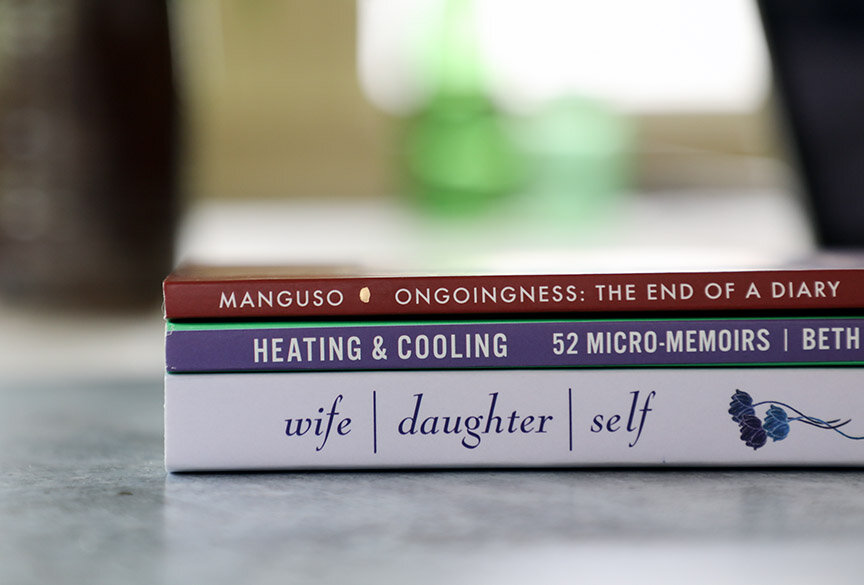
Three writers use vignettes to craft moving memoirs
Memoirs by Sarah Manguso, Beth Ann Fennelly, and Beth Kephart each weave together short narratives to create evocative, textured self-portraits of the writers.
I have written often about using vignettes to tell the stories of your life, and I feel strongly that reading works by others to inspire your own writing is a humbling and essential practice. The three books that follow have one big thing in common: The writers weave together fragments—called alternatively essays, micro-memoirs, and meditations—to create a multi-faceted self-portrait. I recommend reading each of these to get a sense of just how powerful and evocative it can be to craft your memoir…vignette by vignette.
memoir in vignettes no. 1
Ongoingness: The End of a Diary
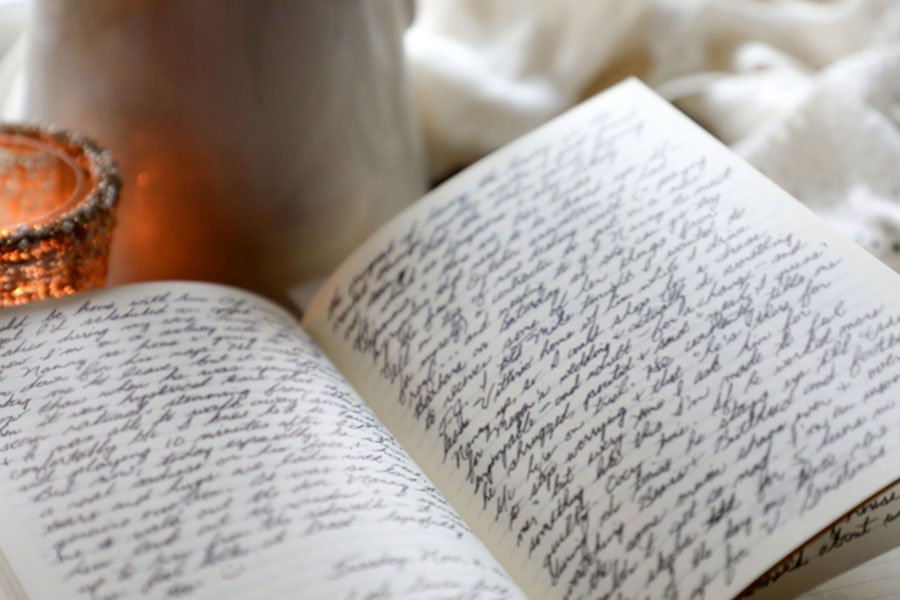
Ongoingness: The End of a Diary by Sarah Manguso (Graywolf Press, 2015) is a series of meditations on the author’s compulsion to keep a continuous diary. She writes early in the book, “From the beginning, I knew the diary wasn’t working, but I couldn’t stop writing. I couldn’t think of any other way to avoid getting lost in time.”
Manguso recalls a time in childhood when she didn’t yet need a diary because “I wasn’t yet aware of how much I was forgetting.” That’s at the heart of it here—the fear of losing memories, of losing pieces of oneself. So she records, she memorializes, and she fights the forgetting…until she has a child of her own, that is. And in Ongoingness, she explores the “welcome amnesia,” as the book jacket calls it, of the next chapter of her life.
Some of Manguso’s insights and observations are elliptical in nature: She circles back to them once and again, each time drawing more or new or different meaning from the same experience. Her prose is crystalline. Her insights are resonant.

Ongoingness: The End of a Diary by Sarah Manguso is a fine example of:
how everyday moments deserve primacy in our writing
how paying attention to details—select, apropos details—can elevate the personal to the universal
how memory is malleable and often elusive—and how, even then, we can mine truth from it in our writing
how “brief” does not mean “lacking”
memoir in vignettes no. 2
Heating & Cooling: 52 Micro-Memoirs
Heating & Cooling: 52 Micro-Memoirs by Beth Ann Fennelly (W.W. Norton & Co., 2017) is another sleek volume that brings the writer to life through what she calls “micro-memoirs” and what I would refer to as “vignettes.”
Don't be fooled: The autobiographical vignettes in Heating & Cooling were not randomly gathered from the author's journals; rather, they were thoughtfully woven together. There is a fine balance between entries that delve into deep waters and ones that skim lightly along the surface. There is a rhythm not only to the words, but to the pieces themselves (which range in length from a single sentence to six pages). There is a layering of themes and a range of moods, a sense of both evocative poetry and direct truth-telling.
Consider reading this book twice: Once, read a vignette or two every night (Ann Patchett calls each entry a “perfect pearl of memory,” and indeed they are worthy of relishing morsel by morsel); then, binge-read the book in one sitting (it's just over a hundred pages, after all, and I promise you the layered themes I mentioned will be all the more apparent to you this way).

Heating & Cooling: 52 Micro-Memoirs by Beth Ann Fennelly is a great example of:
making every word count (Daniel Wallace said, “Every sentence in this book could be sent to the Smithsonian Institution in case future readers want to know what a great sentence looks like.)
how to use humor effectively in your memoir writing
how to curate and compile telling moments from a life to reveal broader themes—and delight the reader
how to be wonderfully vulnerable and alive in your writing
how to construct a book of vignettes that build upon one another and all together draw a richly textured portrait of the writer
memoir in vignettes no. 3
Wife | Daughter | Self: A Memoir in Essays
Ah, perhaps my favorite of the bunch here, Beth Kephart's latest memoir, Wife | Daughter | Self (Forest Avenue Press, 2021) is a book to be savored. And for those of us who open to the first page with the intent of inspiring our own writing, how lucky we are that Kephart has included notes on how she created it in a thoughtful postscript. To wit:
"I write parts whose purpose is to find their way into an implicating whole, the choreography of the thing being the thing, the adjacencies and half sums. The rain that won't come answered, pages later, by the rain that will. The dead communicating with the living.”
Or:
"…the aggregation of parts that constitute this memoir reflect my belief that truth is not continuous, that stories live in the seams, that we remember in bursts and find wisdom in the juxtaposed…”
Kephart is a perpetual seeker of truth—of her truth, of the universal truth; she is on a quest for meaning, and it is through writing that she is most often able to find it. Does she find herself, though—the "self" in the title of this memoir? Do we as readers find her?
We glimpse her, we feel her, we intuit and recognize and yearn for her in the push and pull of her words. We find her in the seams (oh, how I love this notion: that “stories live in the seams,” as Kephart writes and teaches and ultimately manifests in this memoir). We are left to find traces of her and to piece together a fragmented whole ourselves—a whole I envision as a mobile made of shimmering stained-glass mosaics, blowing in the wind, simultaneously reflecting and catching the sun. We know her, even if perhaps we can't summarize who she is in words.
"If you asked about my process, I'd say music,” Kephart writes in the addendum. And there it is: While we are caught up in the music of her life, of her writing, then her craftsmanship—her cognizance of form and her attention to weaving fragments together so they convey more than the sum of their parts—all of that is invisible to us as readers. Beautifully, conspicuously invisible.

Wife | Daughter | Self: A Memoir in Essays by Beth Kephart is a stellar example of:
how to orchestrate a symphony from otherwise disjointed notes
how to carefully choose and weave details so that they become "telling details"
how to write towards truth, allowing the journey of writing to become part of the story; as Kephart says, “the truth is in the trying”
how “writing the same story twice is to puzzle out dimensions”
how considering yourself in relation to others—"Father's daughter. Husband's wife. Son's mother."—can be a gateway to finding oneself, period.

Download Free Writing Prompts Guide
Get all our life story vignette writing prompts in one easy-to-read printable guide!
Discover more posts to help with writing vignettes about your life



Affiliate disclosure: As an Amazon Associate, we may earn commissions from qualifying purchases from Amazon.com.
Life Story Links: October 5, 2021
This week’s roundup includes the best in first-person storytelling, the scoop on new memoirs, explorations of how memory works, & plenty of family history fun.
“Put it before them briefly so they will read it, clearly so they will appreciate it, picturesquely so they will remember it and, above all, accurately so they will be guided by its light.”
—Joseph Pulitzer

Vintage photo of kids playing football, October 1947, by Wallace Kirkland for LIFE magazine; © Time.
Celebrating Hispanic Heritage
VIVAN LOS VOCES
in collaboration with StoryCorps, AARP has launched “Vivan Las Voces” (Long Live the Voices), a national audio story collection project dedicated to capturing the diverse stories and experiences of the U.S. Latino community. Head to StoryCorps Connect to record your conversation, and tag it #VivanLosVoces to become part of the permanent collection.
KICKOFF STORYTELLING EVENT OCT. 25
The Power of YOUR Stories—Hispanic Heritage Celebration is a free online event on Monday, October 25, 2021 at 12pm ET. Panelists will weave stories connected to caregiving, food, family, and more, and hope to inspire folks at home to record their own stories.
TAKING IT TO SOCIAL MEDIA
Latino individuals “from San Francisco to Seattle to Miami are reflecting on their family’s history and contributions in celebratory social media posts highlighting their relatives' and ancestors' work and journeys.”
Meet the Storytellers
A CONVERSATION BETWEEN STORYTELLERS
“I’m always surprised. I still can’t believe that I gave birth to you. And I feel the same way about the stories.” Writer Meg Wolitzer interviews her mother, Hilma, also a writer, for the first time.
“TAKING BACK MY OWN HISTORY”
“Betty has an amazing ability to share her own story in a really personal and vulnerable way—not so people know more about her, but so they understand that they too have a story. We all have a history—and it’s just as important as the history we learn in school.” Meet the fabulous, 100-year-old park ranger Betty Reid Soskin.
GRATITUDE, ALWAYS
For years I’ve shied away from sharing praise about the books I create (and the experiences clients have partnering with me to make them). Thanks to a few fellow creative entrepreneurs for the push to not only share some testimonials, but to celebrate them!
Memoir & First-Person Storytelling
MEMORY, IDENTITY, AND STORY
“Rather than prioritizing confession and catharsis, today’s authors are focusing on the question of who gets to share their version of things and interrogating the form, along with themselves.” Megan O’Grady on how recent literary memoirs take a different tack.
WALDORF STORIES
In honor of its 90th anniversary, NYC’s Waldorf Astoria hotel has created a website to share stories through videos, memorabilia, and essays. The oral history hub kicks off with curated selections from workers and guests (including a couple who hid a time capsule in their wedding suite).
THE TALENTED MS. HIGHSMITH
“The eight thousand pages of diaries and notebooks [novelist Patricia Highsmith] left behind—an edited version of which will be published this November—depict an engaged, social, and optimistic youth.”
NAMING THAT EXPERIENCE
“Eldest daughter of an immigrant household. For a phrase I’d never heard before, it immediately summoned an avalanche of memories.” Ruth Madievsky with an interesting take on learning lessons on diasporic identity from meme culture.
“THE STORYTELLER”
W.G. Sebald’s books suggest that we are powerless to remember adequately and powerless to forget, according to a review of new biography Speak, Silence: In Search of W.G. Sebald by Carole Angier.
Family History Fun
ROAD TRIP TO THE PAST
After being a stranger to family reunions for 64 years, Zoe Morrison, a personal historian in Florida, drove more than 3,000 miles in search of bits of her own family history.
GAMIFYING HISTORY?
Svoboda 1945: Liberation, a new video game from an independent Prague-based studio (preview below), includes interviews with real actors and historically accurate memories of people who lived through WW2. “We believe that games are a great medium for telling stories and have the power to tackle serious issues,” the lead designer said.
Memory Bank
THE LONG GAME
“Memory is an unruly machine, embedded in a Russian nesting doll of systems and circuits that is the brain,” Hannah Seo writes in this thoughtful look at how making predictions may impede memories from encoding.
POSSIBLE BOOST TO MEMORY RETENTION
A new discovery about the effects of magnetic brain stimulation could provide a way to improve episodic memory in people with conditions such as dementia.
...and a Few More Links
Would it surprise you to learn that the original paper ship manifests from Ellis Island no longer exist?
How making Nuclear Family helped documentarian Ry Russo-Young come to terms with her past
Are video games “crucial to the ‘creation of public knowledge of the past’”?
Jim Sheeler, who turned the simple obituary into a high and reverent art, has died.
Short Takes

What’s it like to create an heirloom book together? Let some folks with experience tell you...
Ever wonder what it might be like to work together on your OWN heirloom book project? Listen to past clients' feedback—and words of thanks!—to get inspired.
When I’m not interviewing clients or working directly with families to curate their photos and mementos, I can usually be found at my computer editing and designing your heirloom books.
I get goosebumps when I open a letter or an email from a grateful client. It’s rare that they just say “thanks” and leave it at that. Many wax poetic about the experience and their awe upon receiving the finished book. They almost always express surprise at just how much they actually enjoyed the process of making their book (I try to convey that to prospective clients, but it’s hard to put into words—and why should they trust me, after all, who is trying to sell them a product…?).
Well, let me say that sales is not my thing. I founded Modern Heirloom Books to help people preserve their stories, and sure, it is my livelihood, but it’s my passion first and foremost. So if we’re not a good fit, or you don’t want to move forward, or simply can’t afford to—well, I am not going to give you the hard sell. I may feel bad, I may wish we could have worked together, but it’s got to be a good fit (and timing is so important!).
When I do work with someone, we form a bond—honestly, it’s inevitable. Once trust is established and the stories begin flowing, the bond is initiated. When editing and deeper questions ensue, the bond deepens. And by the end of the process, when a book is almost finished and the excitement is palpable, the bond is even more firmly cemented. How blessed I feel to have a “job” that provides such a sense of connection and meaning.
I’ve been told that I don’t share testimonials from my clients enough. Maybe it’s due partly to a humble nature, perhaps it’s a discomfort with being bold…but I am taking a page from some special fellow creative entrepreneurs and sharing some of the gratitude that’s come my way. It is my hope that you’ll feel comfortable with me, and gain an understanding of what it’s like to work together.
Thank you to ALL of my clients—for trusting me with your stories, and for sharing the love once your project has been completed!
xoxo,
Dawn
Testimonials from past clients: What it’s like to make a Modern Heirloom Book
creating heirlooms to treasure forever
Here’s one I received recently that warmed my heart:
Dear Dawn,
I have just looked through your book again, as I have many times before. As always, I am amazed and gratified by your presentation, layout, and descriptions. THANK YOU SO VERY MUCH. It is all I could have hoped for—even more! From the Table of Contents through the final comment—I loved it all! (All!!)
I started a list of things I wanted to mention to you but it became so lengthy, I had to give it up!
It is a book to treasure—which I do—and I will always be grateful for the beautiful job you have done. IT IS PERFECT!!
I plan to have a splurge and send a copy to all of my family and friends! Once again, I can’t thank you enough!
Fondly,
Judy D.
a process that involves collaboration & care
Here’s a snippet of a review, speaking especially to the twists and turns a project can take:
Throughout the process, Dawn was a joy to work with. She listened carefully. She was diligent in working up drafts and gathering feedback. She was unfailingly patient. She brought her own ideas and didn’t hesitate to make suggestions. She even went above and beyond to supplement our research and to deal with administrative hassles with printers due to our last-minute requirements. She delivered on time and within budget.
In every interaction, Dawn conveyed that she cared as much about the book as we did.
Dawn is a special bookmaker. If you are looking for someone to create that special story or tribute to someone you care deeply about, look no further.
—Jenny P.
…and another about vision and collaboration:
We didn’t even really know what we wanted in the beginning and Dawn produced an amazing result. It is a pleasure working through the creative process with her.
—Amy H.
…plus one about process:
Dawn was always ready to make the changes that were inevitable when putting a book together, with good cheer. She is quite well organized and intuitively understood order, placement, emphasis vs. less. I was extremely happy with Dawn’s finished product and wholeheartedly recommend her.
—Gahl B.
…and one about writing, editing, and curating:
Dawn is a therapist, a storyteller, a magician, and an artist with words—how she took what we said and wove it into a story. It truly blew us away!
The process of sorting through 27 years of pictures and mementos was joyfully reflective, but what brought it all together was Dawn’s vision.
—Susan M.
…ah, and then there are the interviews!
Dawn is a warm and engaging person who makes it easy to open up during interviews—even for me, a pretty reserved girl!
—Samantha D.
finished products that awe & inspire
Dawn is a consummate interviewer, a terrific storyteller, and understands how to combine the graphic elements. She took the cream and really brought it to the top.
—Vern O.
My book was simply stunning! And Dawn was a joy to collaborate with.
—Lily R.
words that hold meaning—and bring joy, comfort
We all hope we can pass something of value on to family and friends. The tribute book did just that for Ann. She was ecstatic and we all had to fight back tears watching her flip through the book. She shows it off to whoever comes in the house.
—Terry C.
I still tear up when I look at this book, almost a year later. It is my most cherished possession.
—Maria C.
Thank you, Dawn, for sharing your gifts with us, and for becoming a part of our family story.
—Joe M.
The book was like a bear hug from my dad. I can’t wait to share it with my future children some day!
—Kayla V.
Would you like to see firsthand what it’s like to work together to bring your dream book to life? Reach out if your’e interested in sharing your own memories in a life story book; or honoring a loved one through stories in a tribute book. I can’t wait to hear from you!
**Because privacy of my clients is of utmost concern, I have not disclosed last names for these testimonials.

Life Story Links: September 21, 2021
From memories out of the box (the boxes in your attic, that is) to the craft of writing memoir, this week's curated roundup has plenty to inspire and instruct.
“When you write your family history, be a recording angel and record everything your descendants might want to know.”
—William Zinsser
Vintage photo of Mr. and Mrs. Harold Garrity and family at home in Yonkers, New York, circa 1942, photographed by Arthur Rothstein.
Stories from Life
HISTORY THROUGH A PERSONAL LENS
“I don’t know if the horse had died or simply fainted with heat exhaustion. The peddler was slapping the horse in the face, yelling and cursing at the stricken animal in a futile attempt to force it to stand up.” Scenes from the Great Depression in NYC through the eyes of a boy.
DELVING INTO THE PAST
“The people from my past became like characters…. I found a lot of information that shows how people in my family tree thought alike. We would have been like best friends had we grown up at the same time.” On building a family legacy.
FINDGING HEMINGWAY
“Interweaving his eventful biography—a life lived at the ultimately treacherous nexus of art, fame, and celebrity—with carefully selected excerpts from his iconic short stories, novels, and non-fiction, the [now-streaming] series reveals the brilliant, ambitious, charismatic, and complicated man behind the myth, and the art he created.”
“In order to have something new to write, he had to have something new to live.” This panel discussion, “Hemingway and Biography,” happened back in May but I only just discovered it and thought others might be interested, as well.
The Craft of Memoir
OUT OF THE DARK
“So when you write about your life, don’t skip over the hard parts. What would be the point? Who would you be fooling? Yourself? Oh please.” Abigail Thomas asserts that vulnerability is a memoirist’s strength.
TALKING ABOUT TOURETTE’S
Salt Lake City–based personal historian Elizabeth Thomas offers up a few tips for memoirists who want to address a physical disability in their writing, using recent book The World's Strongest Librarian by Josh Hanagarne as a model.
Memories Out of the Box
THE VOICE OF THINGS
“I found that going through my accumulations became an ongoing encounter with everyone I’ve been on the way to whoever I am now,” Sven Birkirts writes in this meditation on why we keep what we keep.
PHOTO LEGACY
“Long after I’m gone, and my son becomes the steward of our family stories, these photos will remain. They will live on. They will speak across generations, saying, ‘I was here. I mattered to someone. I left a legacy of love. I helped start your story.’” Rachel LaCour Niesen on leaving a legacy of love.
YOUR LIFE IN 30 THINGS
Listen in as Martie McNabb discusses a community challenge she recently launched around choosing 30 objects that can tell your life story—and why so many people have trouble discerning which sentimental items to keep and which to get rid of:
In the Books
DRAW YOUR LIFE
Last week I shared some artful memory-keeping ideas from the world of sketch journaling plus the books to help you begin to draw your life, no pressure.
ONE-HOUR INTERVIEW = 5,000-WORD CHAPTER
“I realized that if writing was not my strong point, it didn’t make much sense to start with it, over-invest, and become frustrated with a behavior I personally found hard to do.” Barry O’Reilly on working with a writing partner.
...and a Few More Links
Journalist Ron Steinman shares memories of helping his Vietnamese family resettle in Maryland after the Vietnam War, and makes parallels to the plight of Afghan refugees today.
Ancestry corrals three leaders from tech world to help grow business.
On getting past writer’s block (and the kitchen table as hub for story sharing)
Short Takes
Artful memory-keeping ideas from the world of sketch journaling
If writing about your life isn't for you, how about drawing it? Ideas for using a sketch journal to capture your memories, plus the book that will inspire you.
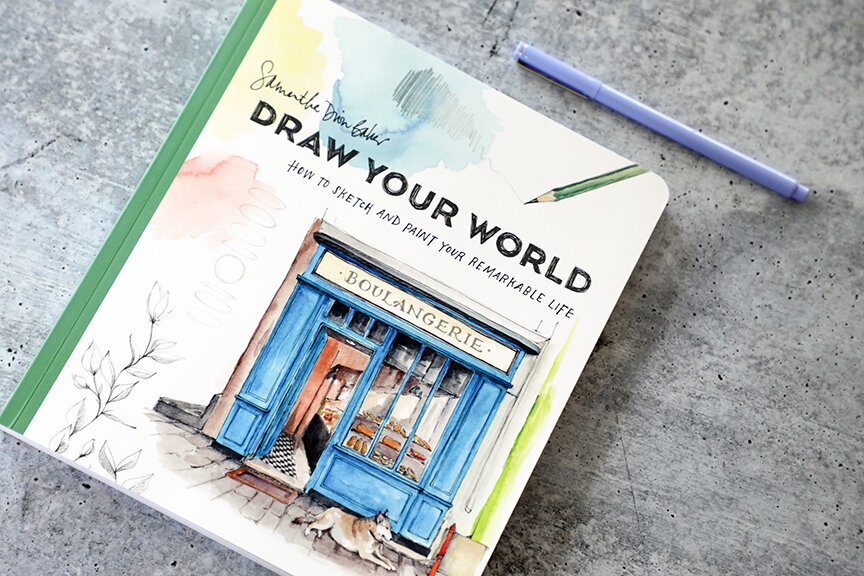
Have you ever thought of keeping a sketch journal? If the idea piques your interest, then Samantha Dion Baker's new book is a must-read. If you've never even heard of a sketch journal—but think that adding some colorful visuals to your handwritten journal might be a fun new idea—then this book is a great read for you, as well.
Draw Your World: How to Sketch and Paint Your Remarkable Life is filled with vibrant pages from the author's own art journals (inspiration in its own right) coupled with reflections on how her journal-keeping journey has evolved over time. Better yet: Baker offers up specific journaling prompts to help you put pencils and paintbrushes to paper.
Sketch-journaling as memory-keeping
"My entire art-making practice has evolved into a memory-tracking practice,” the Brooklyn–based mom and artist writes. Indeed, she sketches everything in her always-at-hand journals, from her morning coffee and the dog sitting across from her while she drinks it to a fabulous bag spotted on the subway during her commute. Why record the seemingly mundane? Well, paying attention to the present so acutely is a form of meditation, Baker has said; and from my perspective, honoring our daily routines—how we live the bulk of our lives—is equally as important as capturing milestone moments such as birthdays and graduations.
"A sad day, a happy day, a milestone day, a holiday, a sick day—all of these days are filled with tiny moments that, when drawn or written about, will help transport me back,” Baker wrote in her first book, Draw Your Day. "It is fun for me to capture the life of a working mom living in New York City by writing down all of the things I manage to do in one day. " These drawing can invoke sense memories later on—when you look back at that lip gloss you used every day for two years, you'll not only remember the color but the smell and feel of it, too.
Art-inspired ideas for capturing the memories that matter most to you
Samantha Dion Baker is all about honoring the present and the past. In addition to the “bits of the ordinary” that she includes on most every journal page, she suggests striving to capture ideas and emotions. And while, certainly, she provides specific technical advice and tips for what tools you'll need to begin a sketch journaling practice, she stresses that anyone—even a non-artist—can undertake to capture memories through art. “Drawing your world is accessible to anyone compelled to translate the outside world onto a flat surface,” she writes.
The full pages shown from her travel journals in Draw Your World are especially inspiring, as they weave together written observations, sketched remembrances, and tiny details that create such a vibrant and emotional picture of days spent in places from Iceland to Brooklyn. “When we travel,” Baker writes, “my practice becomes more of a family affair, and the artwork and recorded memories in my journal are a gift to all of us as we look at them later on, bringing us back to those precious moments.”
I love her idea of gluing hotel envelopes from family trips right into your sketch journal and stashing receipts, ticket stubs, and other vacation ephemera in there (scrapbook inspired, for sure, but what a surprise when discovering that dimensional element within a two-dimensional journal!).
A few other prompts that I think are relevant for memory-keepers of all kinds:
Present-tense, or ongoing:
every year on your child's birthday, draw a portrait of them (if that's too intimidating, draw some of their favorite things or quote something they've said that year)
celebrate a lost loved one through art
draw souvenirs or scenes from your vacations
Past-tense, or reflective:
"Think back to your happiest moments, jot them down in a notebook, and then create abstract paintings titled as those memories,” Baker suggests.
If your recall your first car, draw it (you can search online for reference photos if you don't have a picture of your own), then—my favorite part!—“record any adventures and road trips you remember in it."
What other ideas come to mind for you? A fair number of family history interview prompts could easily translate into sketch journaling ideas—consider drawing your grandmother in the kitchen, or painting the pie she made for you as a child that never failed to bring a smile; or sketch out what you wore—and carried in your bag—on the first day at a big new job. The possibilities are endless!

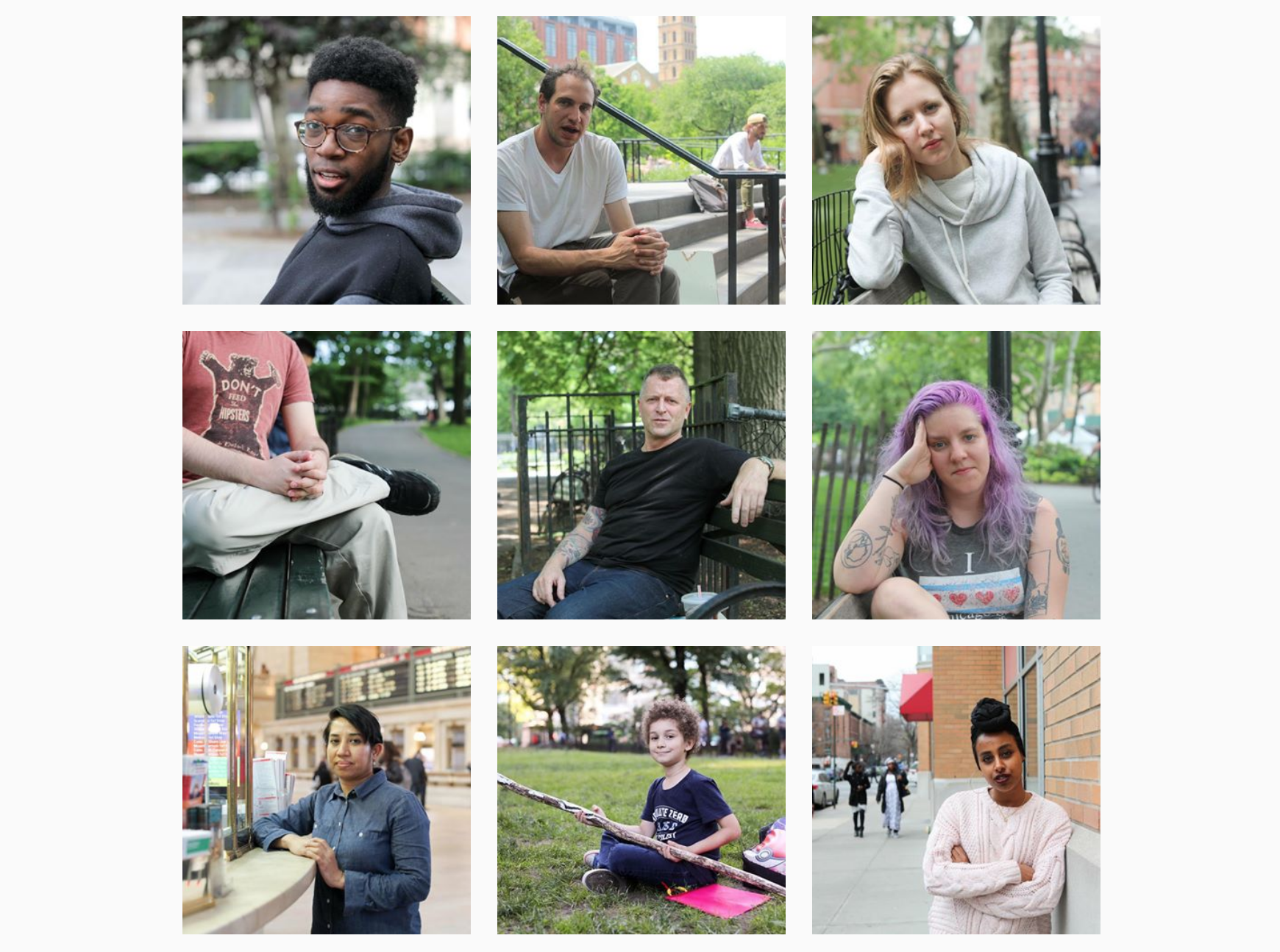
A few squares from the Instagram feed of Samantha Dion Baker showing sketches from her journals, where she captures both details from her everyday life and bigger moments from vacations and family milestones.
Get inspired by Samantha Dion Baker:
Follow her Instagram feed, where she shares vibrant pages and sketches from her journals.
Buy her first book, Draw Your Day: An Inspiring Guide to Keeping a Sketch Journal, for an introduction to art journaling and inspiration to pay attention: “Let the small pages of your sketch journal become a personal lens, a way to organize and creatively make sense of the world around you.”
Pick up a copy of her most recent book, Draw Your World: How to Sketch and Paint Your Remarkable Life, for a more expansive way to approach your sketch journaling (and to see how the author’s personal pages have evolved over time).
Up next for the artist and author: Draw Your Day for Kids! This book will include sketch pages for young readers to record their memories and feelings, and will become an original keepsake as they grow up (oh, how I love THAT!).
Note: This is an unsolicited review of a book I purchased at full price. I did not receive any compensation or free products in exchange, and any endorsements within this post are my own.
Affiliate disclosure: As an Amazon Associate, we may earn commissions from qualifying purchases from Amazon.com.













Life Story Links: September 7, 2021
A thoughtfully curated list of recent stories on how to write memoir, preserve memories, organize photos, and leave a legacy for the next generation.
“History isn’t about dates and places and wars. It’s about the people who fill the spaces between them.”
—Jodi Picoult
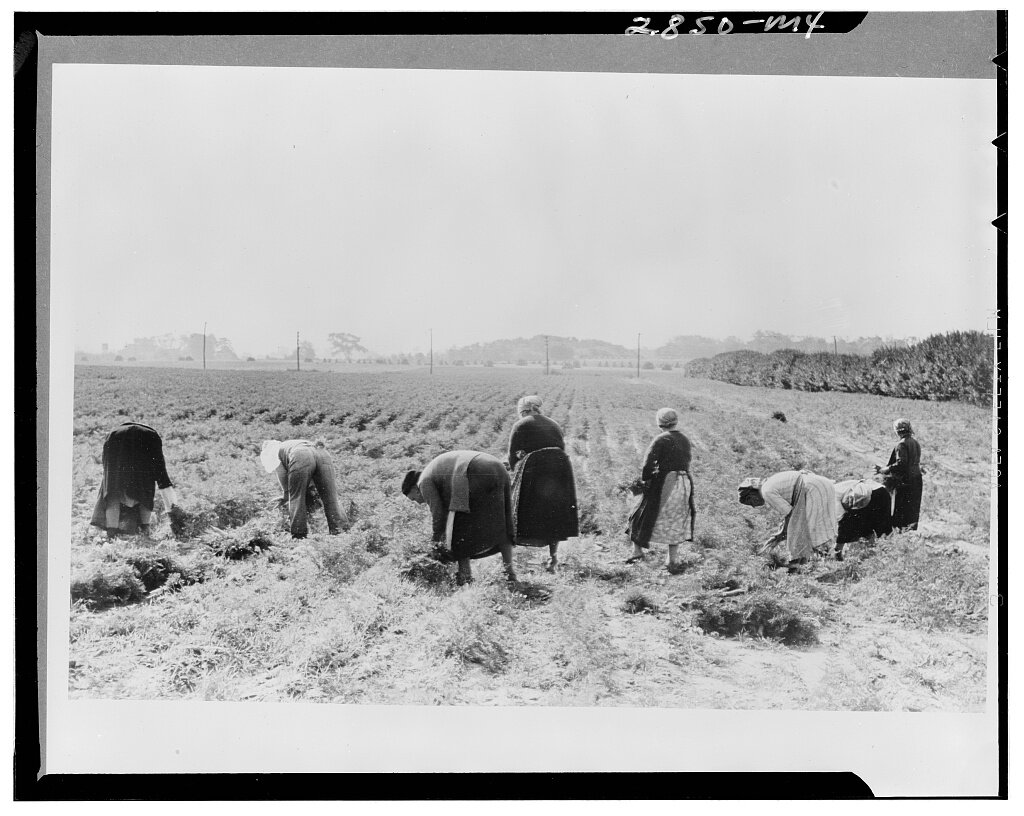
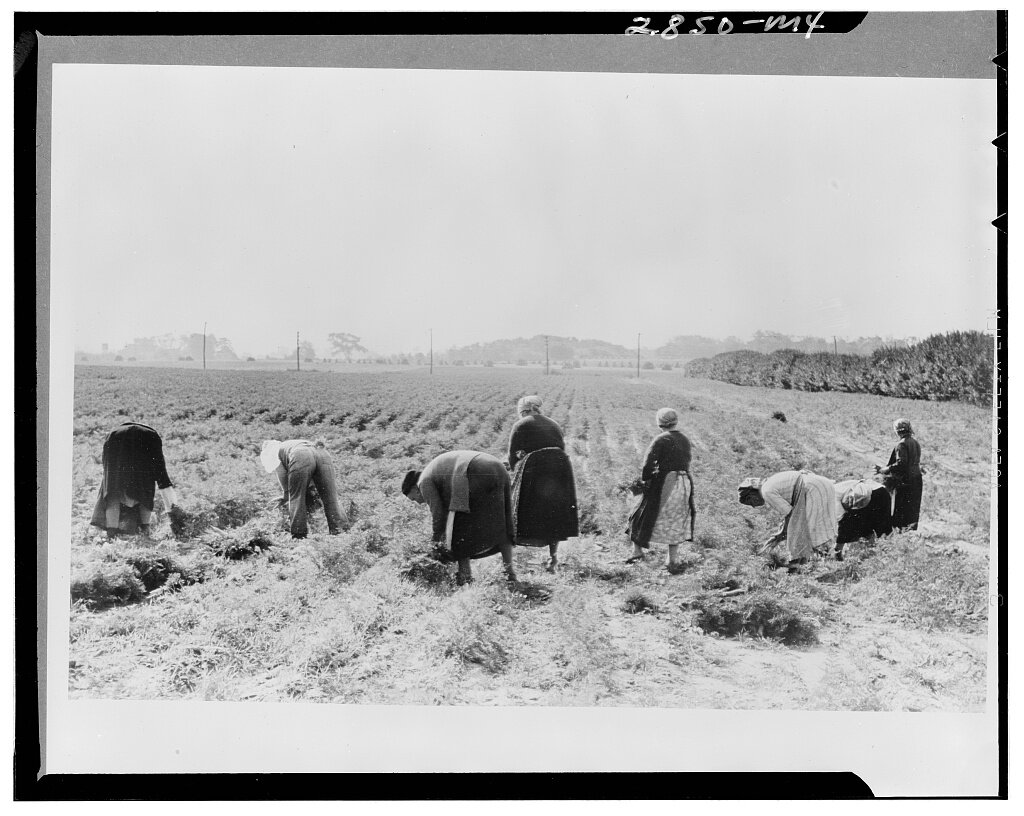
Vintage photograph of women picking carrots in Camden County, New Jersey, October 1938, by Arthur Rothstein, Farm Security Administration, Office of War Information Photograph Collection, courtesy Library of Congress Photo Archive.
Safeguarding Photo Memories
EDUCATIONAL OPPORTUNITIES
September is Save Your Photos Month and there are a wealth of free video sessions geared to DIY memory-keepers. You can register once to gain access to all the workshops throughout the month. A few to have on your radar:
Three simple ways to create a photo legacy
Five tips for downsizing prints and memorabilia
Treasure hunt: finding the gems
Capturing family stories
Manageable memory keeping
Create a family archive
Tell your story: family history
SAME AS IT EVER WAS
“I remember the bonding and the togetherness of those times maybe even more than the actual photographs,” Kenneth Dickerman writes about huddling around a slideshow of family photos when he was a child in this review of Snapshots 1971-77.
Fragments of Recent Memoir Writing
THE PROMISE OF THE AMERICAN DREAM
“Most of all, I liked that I could help Ba Ba believe that one day, no one would think we were immigrants, that we really and truly belonged here.” Read an excerpt from Beautiful Country: A Memoir by Qian Julie Wang.
DIVERGING PATHS
Dawn Turner, author of Three Girls From Bronzeville, visits the neighborhood where she grew up in Chicago—where she saw “drug dealers beside surgeons, prostitutes beside university scholars”—and reflects on different paths taken from the same place.
Memory-Keeping Miscellany
CARETAKERS OF AN INVALUABLE ARTIFACT
A family hid their Bible in an attic as Nazis invaded. Almost 80 years later, it was reunited with the family’s heirs; a small postcard tucked inside the Bible confirmed its original owner.
WISDOM FROM ADVERSITY
Last week I wrote about three professional lessons I learned during the pandemic, including that human connection transcends technology.
ROSH HASHANAH FOOD HERITAGE
The recipe for chef Michael Solomonov’s coffee-braised brisket, a signature family recipe that began with his grandmother Betty, has evolved with each generation.
Write Your Life
FREE 5-DAY WRITING CHALLENGE NEXT WEEK
“We specifically look at key firsts throughout each decade of your life and demystify how to write these defining stories,” Patricia Charpentier says of her new FREE weeklong course. Registration closes at 11:59 p.m. ET on Monday, September 13, 2021. Click here to see a video invitation from Patricia with more details about the challenge.
...and a Few More Links
Matthew Nickerson, founder of the Private Historian, is profiled in Classic Chicago Magazine.
Book Riot’s list of 12 great indigenous memoirs
Creative activities to plot your life and revisit your memories
The story of J.P. Morgan’s ‘personal librarian’—and why she chose to pass as white
Raphael Simon on whose material is whose when everyone in the family is a writer
Some fun back-to-school memories
Check out the latest issue of Dorothy Parker’s Ashes.
Short Takes

3 lessons I re-learned during the pandemic
This ongoing pandemic has challenged some long-held beliefs—including that personal history interviews must be done in person (nay!). Wisdom from adversity...
We are living through history as this pandemic continues to ebb and flow and wreak havoc on what we consider normal. Some of my long-held beliefs have been challenged, particularly around my personal history work.
I am a hugger.
I’ve been elated when at the close of a book project a client reaches in for a hug—usually, they pull back, considering the potential impropriety of hugging someone they are paying for a project, before realizing that I quickly leaned in to accept that hug, propriety be damned.
The kind of work I do with my clients is personal, often intimate. We develop a mutual trust and affinity during the interview process. A hug often seems like a natural development, especially at such a celebratory moment as finishing a book.
During this pandemic, though, hugs have been in short supply beyond my immediate family. I made an exception over the summer of 2020 to hug a friend who had lost her husband, and another when I was tackled by my young, adorable, equally hug-addicted niece when I was delivering Christmas presents to her home. Those exceptions fortified me, even if they were a calculated risk.
With more people getting vaccinated, we have perhaps restored our comfort level for hugs and mask-less gatherings, but news of variants and Covid continuing to spread in pockets of our country has me wondering if (when?) we may be going back to social distancing.
Two years ago, like at the beginning of this pandemic, I would have been worried for both my business and our collective well-being. Now, though, I know we can not only survive, but thrive—if we are careful, and if we tap into this wisdom:
1 - Human connection transcends technology.
Before Covid, I thought doing in-person interviews was essential. Since then I have realized that people want to connect in any form, and with everyone getting more comfortable with technology, remote interviews CAN indeed work.
I learned that as an interviewer, I simply need to be more intentional about setting the stage for trust—maybe a little more chitchat at the outset to establish my subject's comfort level before diving right into deep questions, for example. That's something that happens naturally during in-person interviews—when I enter someone's home, and during setup of my recorders and other equipment. On Zoom or FaceTime, though, that easing-in period may take a bit longer, an effort that's well worth it for promoting real, intimate exchange during the interview.
Any parent knows that there's a reason talking to your kid (especially your tween or teenager) in a car can be a smart approach: When no eye contact is needed, someone may feel more free to share difficult things—and feel less judged. This carries forth during phone interviews or even video chats, where even though we can see one another direct eye contact is almost impossible. It's amazing what we can feel comfortable enough to share with our interviewer, essentially a stranger, when not looking directly into each other's eyes.
2 - Sometimes it takes tragedy to make us realize what's really important.
We all think we want to get meaningful gifts for our loved ones’ birthdays, but somehow we default to the cool new thing we saw at the store (random), or the thing that's easy and quick to ship from Amazon (lazy), or maybe the gift card to the place we know they frequent (unoriginal). During the pandemic, people FELT what it was like to be kept from our loved ones; we began to take our relationships a little less for granted—and dug deep to come up with gifts that really expressed our love.
Before I had my business I always encouraged experiential gifts: Please, take my son to the zoo! Please, arrange an escape room outing for me and you together! And while I still think shared experiences make incredible gifts, I also root for legacy books of one kind or another—these combine an experience (yes, getting interviewed about your life is an AMAZING experience!) with a cherished heirloom. Our most popular offering during the past year and a half has been a celebratory tribute book for milestone birthdays—a book filled with heartfelt stories about the subject, a book that never fails to bring an exclamation of, “This is the best thing I've ever gotten!” I hope beyond measure that this trend toward expressive gift giving continues long after social distancing ends.
3 - No matter what, I will always want hugs.
Yep, I re-learned during this time that I will forever be a hugger. I also saw anew how some of my family members were glad to not have to hug their greetings—and I have been respecting their wish for distance ever since, waving from across the room or patting them on the back as a form of hello. It's all about paying attention, really—a great approach to life that helps us live in the moment, catalog memories for future writing or recollection, and better honor those in our lives. That's a pandemic lesson I am grateful for.
What have you learned during this strangest of times?




Life Story Links: August 24, 2021
A curated collection of recent stories about writing—and reading—memoir, creating lasting legacies, and telling family stories in engaging, truthful ways.
“A writer—and, I believe, generally all persons—must think that whatever happens to him or her is a resource. All things have been given to us for a purpose, and an artist must feel this more intensely. All that happens to us, including our humiliations, our misfortunes, our embarrassments, all is given to us as raw material, as clay, so that we may shape our art.”
—Jorge Luis Borges
Vintage postcard of Trinity Church in Boston, 1899. Photograph courtesy of The Miriam and Ira D. Wallach Division of Art, Prints and Photographs: Photography Collection, The New York Public Library Digital Collections, 1898-1931.
Conversations Worth Having
JOURNEY TOGETHER
A memoir should be a conversation, not a monologue, Beth Kephart opines in this excerpt from her latest craft book, We Are the Words: The Master Memoir Class. “Find a place for a ‘we’ inside your pages. Step down from the stage. Lower the lights. Mingle with the audience.”
INTERVIEW SUBJECTS, GET READY!
Know someone who is about to be interviewed about their life? Share these six tips for getting comfortable with the idea of stepping up to the mic and telling great stories.
Behind the Memoirs
WHEN GUILT, GRIEF, AND SHAME COLLIDE
“I’m revealing major flaws about myself that I’m going to get judged for, but that’s what makes a story interesting,” memoirist Rachel Michelberg tells Marion Roach Smith on the QWERTY podcast. “I wrote it because it was my truth, and there was shame at the time, but there isn’t shame anymore.”
“WE SHARE THE SAME SKY”
“‘I had so much of my grandmother’s stuff that I probably could have written a biography of her life without ever leaving my bedroom,’ said [Rachael] Cerrotti, while sitting in her apartment in Portland. ‘But I wanted to hear the language, see the landscape, and explore what it all meant in my life.’” (I am completely engrossed in this the memoir right now, fyi!)
GUIDE TO GRIEVING
“It wasn’t even a year since my father had died, I hadn’t completed my Jewish mourning cycles and rituals, I was still a raw and cracked egg, and this book was born amidst my half-cooked grief.” Merissa Nathan Gerson on writing her grief in Forget Prayers, Bring Cake.
‘REMEMBERINGS’ OF A SINGER-SONGWRITER
“Early on, [Sinéad O’Connor] realizes, ‘In real life you aren’t allowed to say you’re angry but in music you can say anything.’ It turns out that she thought real life and music were the same thing.”
THE MORRIS SISTERS
“It didn’t take me long to realize that for women who were so famous within my family, there didn’t seem to be much written about them in the world.” Julie Klam on tracking down the truth and telling the story of her notable relatives.
Creating Legacies
PRESERVING HER FATHER’S PHOTO LEGACY
“I am so proud of my father’s body of work and the fact that his legacy will now live on in perpetuity…. Also, this legacy will no longer be my responsibility. For that, I am greatly relieved.” Houston–based video biographer Stefani Elkort Twyford prepares and ships off her father’s photo archive, with pride and a twinge of sadness.
HONORING A QUIETLY JOYFUL SOUL
While most people visit StoryCorps to interview a loved one, Libby Stroik recorded memories of her grandfather on her own, as his memories were fading. “If I could ask him something now I think I would probably ask him what his secret was,” she said, “cause he always seemed so grateful for living.”
HIDDEN HISTORY
How Vancouver–based personal historian Mali Bain went from a box of photos and ephemera to a richly researched book about the uncle her client never met.
Video Inspiration
LIFE INSPIRES ART
“Dear son, Charles wrote on the last page of the journal, ‘I hope this book is somewhat helpful to you. Please forgive me for the poor handwriting and grammar. I tried to finish this book before I was deployed to Iraq. It has to be something special to you.’” The upcoming movie A Journal for Jordan, due out in December and based on a true story, was inspired by this original New York Times article by Dana Canedy and the 200-page father’s journal her partner wrote for their son. Here’s a preview of the film:
A NEW CHANNEL FOR FAMILY STORYTELLING
Jamie Yuenger, who has long produced legacy videos for families as founder of StoryKeep, is now offering private podcasting as another medium for story sharing and preservation. Here she gives a brief intro to the concept:
...and a Few More Links
North Carolina documentarian aims to preserve family histories with video heirlooms.
How blockchain could have saved the Library of Alexandria (and what it can do for future historical preservation)
Netflix’s Misha and the Wolves is “as much about storytelling as it is about the Holocaust.”
Why Billie Jean King finally took control of her own story
Short Takes
Dawn Roode’s curated roundup for the week of Sept. 23, 2026, is overflowing with recent reads on memoir, life story writing, and family history preservation.