I’ve been there—bought a nice new notebook with the intent to write about my life…then never cracked it open. It’s one thing to tell yourself to JUST START ALREADY!—and another entirely to pick up the pen and put that first word on paper.
“We all want to get to the masterpiece of our writing lives by the shortest route possible,” Bill Roorbach writes. “Trouble is, the shortest route possible is always the road ahead.”
In other words, taking the first step is always the first step!
For many of us, the hardest part of writing isn’t the revision or even the vulnerability of sharing our words—it’s beginning. That moment when the blank page stares back and all your doubts line up, ready to talk you out of trying.
You might tell yourself you’re not ready, that you need to do a little more research, or that someone else could tell the story better. But the truth is, there’s no “ready.” There’s only start.
The myth of the perfect beginning
We imagine we’ll sit down one morning and the words will simply flow — the voice clear, the structure elegant, the meaning profound. But writing doesn’t work that way, especially personal writing. The clarity comes from doing the work, not from waiting until we’re sure.
Every family story, every tribute book, every legacy project I’ve helped create began with something imperfect — a rambling voice memo, a half-formed thought, a list of memories scribbled in the margins. The masterpiece isn’t born; it’s built, one hesitant sentence at a time.
The fear behind your hesitation
So often, what we call procrastination is really protection. The stories we most want to tell—the ones closest to our hearts—can also feel the most intimidating.
What if I can’t do it justice?
What if it’s too painful to revisit?
But here’s the paradox: Writing is how we answer those questions. You discover what you mean to say by saying it. You find the emotional shape of the story by stepping into it, not by circling around it.
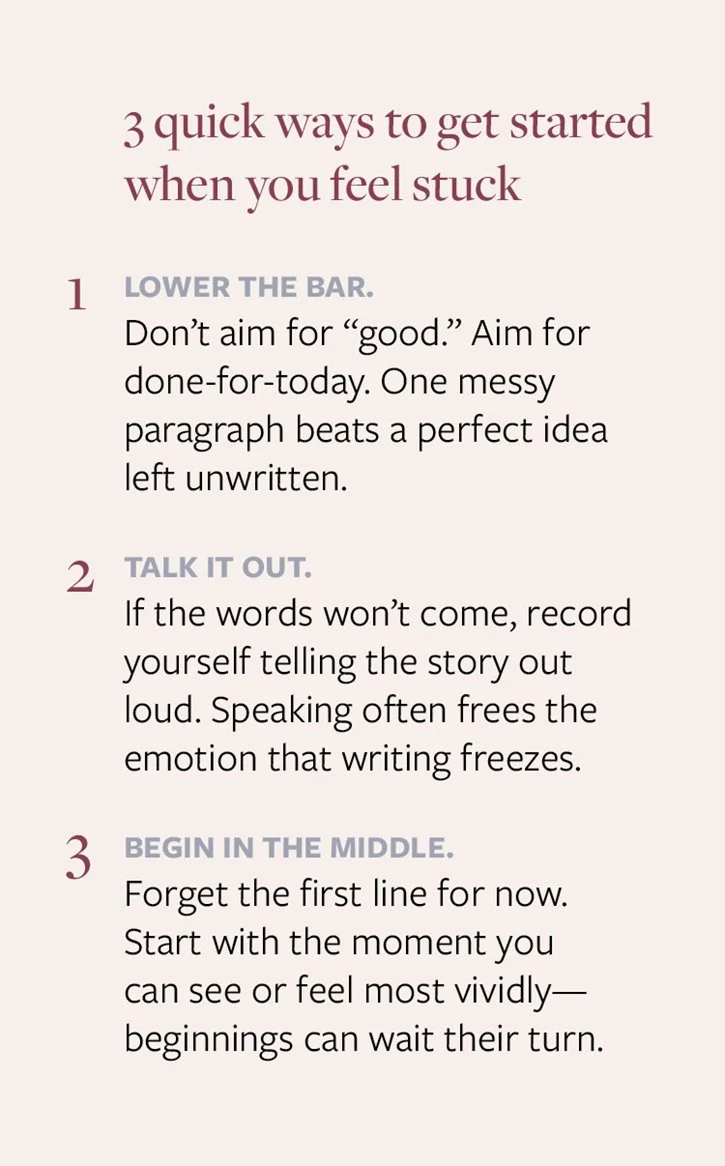
Momentum, a writer’s best friend
Once you start, the fear doesn’t disappear, it just becomes quieter. The act of writing itself generates courage.
Set a timer for fifteen minutes and free-write without editing.
Record yourself telling a story out loud instead of typing it.
Jot down phrases or scenes instead of full sentences.
Each small action moves you closer to your voice. Each imperfect word builds the bridge to the next.
There’s no shortcut—and that’s the gift
Bill Roorbach’s words ring true because there really is no other way forward. The masterpiece—whether it’s a memoir, a tribute, or a few pages for your children—is waiting through the work, not beyond it.
So, take the first step. Write one paragraph, one memory, one moment. Ignore the fear for now; it will catch up if it must. But chances are, once you’re moving, you won’t hear it nearly as loudly.
At Modern Heirloom Books, I see this moment of bravery again and again: the client who finally begins. Every beautifully designed legacy book, every story that endures, starts with someone choosing to write—imperfectly, vulnerably, courageously.
You don’t have to know how it will end. You just have to begin.
Learn how to record, transcribe, and store interviews with care. Tips on consent, ethics, and turning audio or video conversations into lasting family stories.
Discover how the Proust Questionnaire can unlock your memoir. Reflective questions to spark memory, deepen insight, and reveal your authentic story.
Discover inspiring writing prompts for memoir and family storytelling—from sensory to introspective, short to timed. Find the one that sparks you.
Learn how keeping a notebook can nurture memoir and legacy writing—each blank page a new possibility for memory and meaning.
Words from seasoned memoirists remind us that writing about our lives isn’t just an act of preservation—it’s an act of connection, reflection, and courage.
Stay inspired with 52 weekly writing prompts for journaling and family history. Capture memories, dreams, and stories big and small. Bonus: Downloadable guide!
Go beyond labels with this powerful memoir prompt: introduce yourself without name, job, or age. Includes writing tips and a free downloadable worksheet.
The three most common excuses I hear for not writing about your life “yet,” and how—and why—to overcome them. It’s not too soon for your memoir, I promise.
Discover how (and why) bending certain grammar rules in memoir and life story writing can enhance voice, rhythm, and authenticity in your storytelling.
Even the most seasoned writer sometimes feels hopeless when they sit down to write and nothing comes. Here, 7 helpful resources for budding memoirists.
Four steps to help you turn spoken stories into engaging written narratives—so once the family history interview is done, you can create a lasting legacy.
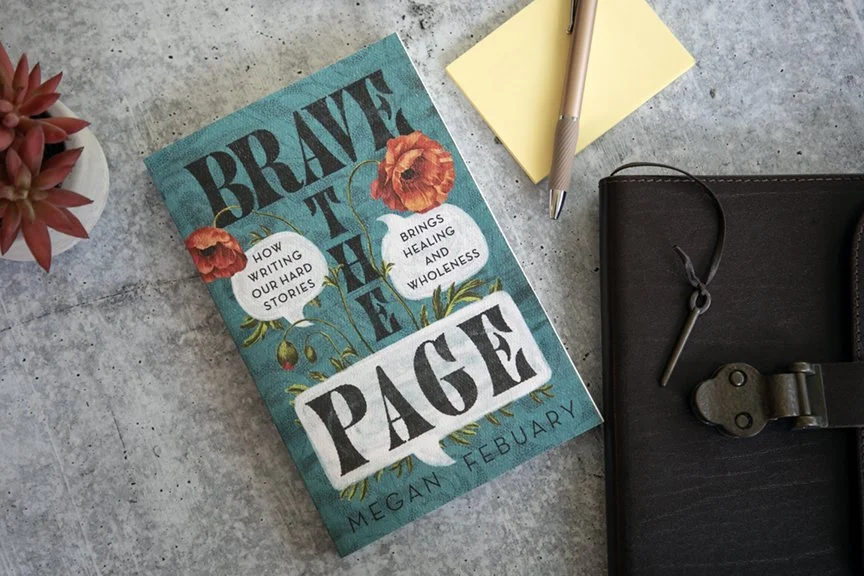
Brave the Page by trauma-informed writing coach Megan Febuary shares how to probe memories, write about your hard experiences, and find healing.
You start out with excitement and fervor—blank pages are feverishly filled with stories about your life. But what can you do when your memoir momentum wanes?
By holding as your goal the idea of ‘writing your memoir,’ you are focused too soon on the end goal. Instead, think about writing towards your memoir.
Are you nervous about undertaking a life story project? Working with a personal historian or memoir coach can help alleviate many of the most common fears.
Is there ever really a ‘right’ time to start writing your memoir? There’s not, in my opinion, but here are two questions to ask yourself to help you decide.
Writer’s block can happen to the best of us. This simple idea—keeping a notebook of self-generated writing prompts—will keep your memoir ideas flowing.
Looking for a meaningful gift for your parents? An annual subscription to our Write Your Life memory and writing prompts may be just the thing—or, maybe not.
Learn about our Write Your Life course, providing memory prompts, writing guidance and a dose of inspiration to anyone who wants to preserve their stories now.
Here’s one time I gave in to my client’s preferences that still haunts me: Why we did not identify people in any of the photos in their family history book.
While your memoir is telling your stories in your words, a family tree chart outlining your relationships has a real place in that book—here’s why.
The first draft of your life story is likely to include some stuff you decide to cut later—but should none of your challenges make it into your final book?
Good writing prompts will rid you of blank-page anxiety—and you can easily write your own! Here, 5 steps to drafting a library of personalized memoir prompts.
While a journal called “Memories from Mom” or “Grandma’s Life Story” may be brimming with good intentions, the fact is that most of them remain mostly blank.
While all five of these books add value to any memoirist or life writer’s library, I’ve identified which is best for you based on your goals and experience.
A love letter (or book!) overflowing with memories makes a thoughtful anniversary gift. Here, 14 writing prompts to help you honor—and surprise—your partner.
Wondering if 52 weeks of memory prompts will help YOU write about your life at last? Here, answers to the most commonly asked questions about Write Your Life.
Every week you’ll get themed prompts to stir your memories, tips to write your stories with ease, and more! A unique gift for your loved one (or yourself)!
Sometimes all it takes to get unstuck with your personal writing is paying attention. Here are some easy (fun) ways to come up with journal writing prompts.
Overcome writing fear and start your story. Learn why beginning—even imperfectly—is the key to unlocking the masterpiece you’re meant to create.