
Memories Matter
Featured blog Posts

READ THE LATEST POSTS

How to create a life timeline for your memoir writing project
Writing a life timeline is an integral task in any life story project. Here are three simple steps to creating yours, plus thoughts on why a timeline is useful.
A life timeline can be a handy tool for memoirists and memory-keepers of all kinds. It will help orient you in time when writing or sharing stories orally, and it will provide essential prompts for stirring your memories and allowing you to delve into your past.
Why are we creating this life timeline?
A life timeline can be a helpful tool when embarking on a memoir or life story project. Not only will the timeline help you orient yourself in time over the course of your life while you are writing, it will highlight key moments in your life that are likely worth exploring.
What is worth noting on a timeline? Well, transitions are key—moments when your life took a different turn, for better or for worse. Moments of revelation should be included. And moments of change—firsts, departures, milestones. What we’re looking for, really, are autobiographical occasions.
“An autobiographical occasion is any moment when we are encouraged or obliged to reimagine who we are,” Bruce Feiler writes in Life Is in the Transitions. “It’s a narrative event, when our existing life story is altered or redirected in some way, forcing us to revisit our preexisting identity and modify it for our life going forward.”
How to begin crafting a life timeline for your memoir or personal history book

1: Brainstorm a list of important moments and events in your life.
According to neuroscientist Lisa Genova, our brains are designed to recall what is surprising and new; what is emotional; and what is meaningful—so let’s begin with those! Here is an effective approach for determining the major life events that may lend themselves well to helping you find meaning and write about your journey:
Start with major life events.
Consider:
your birth
spiritual milestones such as bar/bat mitzvah, Confirmation, or religious conversion
graduating (high school, college, graduate school)
moving to a new city or country
marriage
divorce
becoming a parent
becoming a grandparent
becoming a citizen
losing a parent
becoming a caregiver for a family member or loved one
Make a list of important “firsts.”
Include “firsts” that had some impact on your life, whether they changed your world view, fulfilled a dream, or became the first of many (the first article you wrote may be relevant if you became a journalist, for example).
first job
first love
first home you owned
first time you traveled outside the country
first time you failed
first time you voted
first time you lost someone you loved
Make a list of times you felt most emotional in your life.
What made you feel alone—or less alone?
What made you feel confident, empowered?
What made you feel sad? Despondent?
Consider times that your emotions dominated your days—excitement over your engagement, perhaps, or persistent grief after a parent passed.
Know that some (even all) of these entries on your list may be duplicates. That’s okay—you are reiterating for yourself that these life events are in fact fodder for your personal history.
Include addresses for all your homes.
(Nothing to explain here—just having those addresses is both a memory marker for you and will one day supply important family history information for your descendants.)

2. highlight all the items on your list that seem worthy of inclusion on a timeline of your life.
Don’t do this step the same day you have been brainstorming your list—you need a little mental distance from it to assess what makes the most sense to keep. I suggest waiting a couple of days or more, then grabbing a highlighter and marking the things you’ve written that feel most germane. You’re looking for plot twists in your life, for decisions or moments of change (again, for “autobiographical occasions”).
Don’t discount seemingly minor things if they make you feel something upon reflection; maybe buying your first car seems trivial, for instance, but if it gave you a sense of freedom at a time when you were feeling caged in or alone, then, well…do you see how this isn’t “little” to you?
And remember: You’re going to hold onto this list, so you can always come back later to some of the things you aren’t highlighting now. Your purpose here is to set priorities: Those milestones you highlight now should be among the first you write about (or talk about, if you are capturing your stories via an audio recorder). And maybe they are the ones you include on a graphic timeline of your life, should you want to include such a helpful visual key in your book (yes, one day all of this may end up in a book!).

3. Add dates wherever possible.
Particularly for the highlighted items on your list, go back and add dates. This may take some research, so start with the low-hanging fruit—your birthday, your kids’ birthdays, a wedding date. Then start digging: Pull out an old resume for work-related milestones; find prayer cards from funerals for the dates you lost loved ones. Give a sibling or parent a call to see if they can help fill in any blanks.
If you have an actual date, use it, otherwise years—or even a span of years—will suffice to place the milestones of your life on a continuum.
I recommend creating a “final” list by putting all the highlighted items from your original list in chronological order. This will become a working cheat sheet for you for the remainder of your life story project!
Congratulations! You’ve got a timeline of the most meaningful moments in your life. I hope you will use it to guide you on your journey of remembering, and of capturing your life stories for yourself and for the generations to come.
Read more in this series for step-by-step help in starting your life story project

Jump around! Jump around!
You haven’t lived in a straight line, have you? Ditch your chronological storytelling and instead, jump around. Tips for developing impactful themes for your memoir.

Has the path of your life been one straight line? Yeah, didn’t think so—so why not jump around in time in your memoir for a more compelling read?
A straight line might be the shortest route between two points, but our lives meander and double-back. We haven’t lived in straight lines, so why should a story of our life make it appear so?
You might tell me about your life summarily—an outline quickly sketched. That’s “like the blueprint of a house waiting to be built, the most important details merely suggested by its basic lines,” writes Erica Bauermeister in one of my favorite novels.
What you might say in a single sentence—“we got married, had kids, and lived in that house until my wife died”—holds endless moments waiting to be explored: a lifetime in a string of 14 words.
But if you’re not going to tell your life chronologically—in a straight line—then where the heck do you begin?
Narrowing down themes for a life story book
Rarely do I think it’s a good idea to approach a life story book as a full chronological account of a life. That approach reminds me of history tomes about past presidents, for instance—books that go down like medicine, rather than enjoyable (and enlightening) reads.
Instead, approach your storytelling in smaller bites. One approach I often recommend is writing shorter vignettes and weaving them into a broader tapestry about your life. But even if you prefer a longer narrative in memoir form, it is important to focus on themes that both hold real meaning for you and that you feel will resonate with your family.
In order to narrow down those themes (one of the integral steps in plotting out your life story project), some initial brainstorming is in order.
Writing about one aspect of your life
If you know you want to hone in on a very specific chapter of your life for your book, here are two ways to approach that:
Broken up in chunks of time
A Slice of Life Portrait - remembering a day in the life or one pivotal year in your adolescence, for instance; while this time period is chosen for its thematic resonance, it fits neatly into a specific period of time.
A Discrete Time Period - the war years, your time spent in a certain home, your years in medical school, your months of being homeless, to name a few ideas
Broken up in themes
For example:
Strong Women in the Smythe Clan
Our Family’s Military History
The Annual Road Trips of Our Childhood
Irish Cooking in the O’Sullivan Homes
Four Generations of Stanford Grads
No idea where to start?
It’s more likely that there is not one chapter of your life that you know with certainty that you want to write about. If that describes you, you’re in for an exciting journey of discovery.
EXERCISE 1:
Brainstorm your memories.
Brew a cup of tea or pour some wine and get comfortable: It’s time to let your mind wander back in time to brainstorm—and by that I mean: write down your thoughts willy-nilly, with no concern for order or worth, no editing as you go.
Begin writing your memories via phrases—
that time Marcy broke her leg when we were hiking
the day I found out I didn’t get into Harvard
Nonna’s Sunday sauce
Johnny’s laugh
the Maple Street tree fort
I recommend setting a timer for 20 minutes for this exercise. It’s really about doing a brain dump and seeing what comes to mind first.
These memories may serve as writing or interview prompts later, but for now they are useful in looking for patterns. Did many of your memories fall within the context of lessons learned? Or take place at your childhood home? Did one influential person from your life come up again and again?
If you see repeated themes, those may be ones you want to explore for your book.
If you do not, then hold onto this page for use as memory prompts later, and move onto the next step.
EXERCISE 2:
Interview yourself about important chapters of your life.
Some questions to ask yourself:
What have been the major turning points in my life?
What are the most impactful decisions I have ever made?
Are there times of struggle that serve as examples of resilience, or that hold other lessons?
What are the most joyful times of my life?
What is my biggest personal success? Professional?
What has been my most memorable failure?
What have been the most challenging times of my life?
Is there anything about my career or vocation that is worth telling?
Who had the most impact on me growing up? As an adult? What did I learn from them?
What values do I most want to pass on to the next generation—and are there certain stories that exemplify those values?
What you want is to uncover moments of impact. Portions of your life that hold lessons. That shaped you. That are an integral part of your personal narrative.
You might be surprised by some of your answers. Be open and vulnerable when doing this exercise—allow yourself to remember painful times and regrets, not just happy times; even if these are not at the top of your conscious mind most days, the experiences shaped you and likely hold meaning.
This exercise is similar to one I conduct with my clients during pre-interviews. During this conversation we are exploring life themes and milestones, and determining what stories to explore more deeply, what memories to mine for lessons.
When working together, it would be my job—as someone distanced from your experiences and trained as an observant listener—to suggest possible approaches to your book. If that’s something you would like to explore, please drop me a line. I’d love to chat, and a quick (no pressure) 30-minute conversation usually does the trick.
If, on the other hand, you’d like to continue working on your life story book yourself, I recommend setting aside the pages from these two exercises for a couple of weeks. Then revisit them with a fresh perspective. That little bit of emotional distance can do wonders for helping you be more objective in narrowing down what topics to explore.
No matter what, I hope you give yourself the freedom to express yourself without filters during this exploratory period. It’s not the time to edit—or to judge. Be gentle with yourself, and be open-minded (and open-hearted). Your stories deserve to be told—you might as well be telling the right ones!
In a previous post I wrote about how to break down a life story book project into three broad steps.
Now that you’ve learned how to narrow down themes for your memoir project, find out about the remaining two steps:
Organize your family archive as a resource for sparking memories.


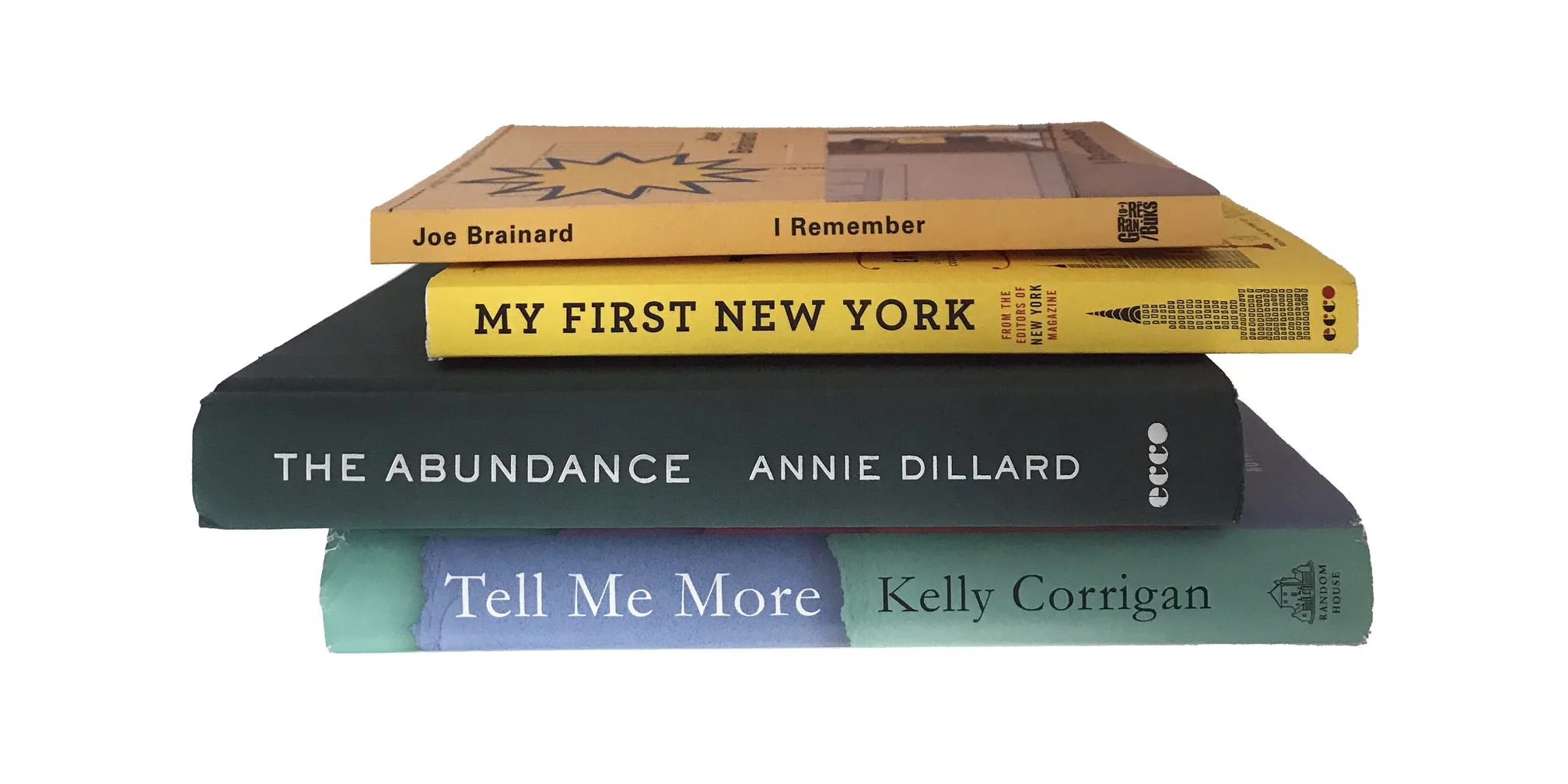






Dawn Roode’s curated roundup for the week of Sept. 23, 2026, is overflowing with recent reads on memoir, life story writing, and family history preservation.