
Memories Matter
Featured blog Posts


READ THE LATEST POSTS

Life Story Links: Blog Roundup, June 26, 2018
Icons of interviewing Studs Terkel and Brandon Stanton, unconventional memoirs, Stonewall memorabilia, plus tips on telling the whole truth in your own memoir.
“Here’s the deal. The human soul doesn’t want to be advised or fixed or saved. It simply wants to be witnessed—to be seen, heard, and companioned exactly as it is.” —Parker J. Palmer

A photo of the Christopher Street Liberation Day March from the Rudy Grillo Collection, as submitted to the Stonewall Forever Project. You can help preserve the untold stories of the Stonewall Riots by donating personal photos and letters, too.
Voices of Our Time
THE ART OF CONVERSATION
“I hope the voices in this wonderful archive will help us to better appreciate one another,” Lois Baum says of the Studs Terkel Archive, an audio treasure trove of the late broadcaster’s newly digitized 6,000+ tapes. In his 45 years on WFMT radio, Terkel talked to a wide array of the 20th century’s most interesting people—and now you can explore those interviews for free.
HOW TO LISTEN
Humans of New York’s Brandon Stanton opens up to Tim Ferriss about the power of biography, how being 100 percent present is more important than the questions in an interview, and hanging in there when things get tough.
NYC: SEEKING HISTORICAL MEMORABILIA
Stonewall Forever, a project launched last year after Google granted a Greenwich Village community center $1 million to preserve oral histories of those present during the Stonewall Riots, is collecting photographs, letters, diaries and protest material to be considered for an online collection.
Stories of Our Lives
BEYOND DESCENDANCY
“Birth dates, death dates, immigration records, legal proceedings—none of those capture the measure of a person’s soul,” writes Massachusetts-based Nancy West, who chronicles why genealogy is only the beginning of one’s personal history, and how memoir uncovers heartfelt nuance.
BEHIND THE BOOK
“They have the most incredible story and it has been weighing on my for years that we need to get it written down,” Olive Lowe’s aunt told her. And so it was that Lowe, of Life Stories by Liv in Mesa, Arizona, went on to capture how her aunt helped a family from South Korea immigrate to the United States after their son was born with a severe form of spina bifida.
THE GIFT OF BRAG
Karen Bender, a certified guided autobiography instructor in Virginia, has some advice for budding memoirists: “Tell the truth. Not a watered-down truth or a polite truth, but the full ‘hey Ma, look at me!’ truth.” Worried about seeming less than modest? Let your friends and family do the bragging via quotes from interviews.
DADDY’S DUTCH
“So, the morning passed with a daughter peeking into the academic world of a father who had spent a lifetime learning and now was sharing his special knowledge,” reflects Carol McLaren of Unique Life Stories in Pinon, Arizona. How poring over a rare book in seventeenth century Dutch made a cross-generational connection.
NOTHING IS LOST, INDEED
Clinton Haby of San Antonio–based StoryKeeping says he is enriched by his work through the bonds he forms with those he has the privilege of interviewing—and the resulting production ensures the storyteller’s spark is just a “press play” away.
...and a Few More Links
- Five unconventional memoirs recommended by writer Glen David Gold
- “We Survive by Telling Stories,” by Carolina Hinojosa-Cisneros
- Paul Sullivan died in Vietnam 50 years ago, and his family has kept his memory alive ever since
- Sarah White on handling the income insecurity of the personal historian lifestyle
Short Takes

Life Story Links: Blog Roundup, May 15, 2018
Mining letters, journals, and homes for life story material; the latest personal history-themed podcasts; plus family history help & a memoir writing contest.

“But in the end, stories are about one person saying to another: This is the way it feels to me. Can you understand what I’m saying? Does it also feel this way to you?” —Kazuo Ishiguro
On Process and Progress
JUST DO IT
Ignoring an instinct to preserve family stories can be an expensive trade-off. And most of us know this—so we do we wait? Last week on the blog I explored the perils of procrastination.
FROM JOURNAL TO MEMOIR
Patricia Charpentier of Florida-based Writing Your Life discusses the benefits of keeping a Five-Year Journal and how to mine your entries for your memoir.
FAMILY HISTORY RESEARCH
Ever wonder if you could benefit from a professional genealogy consultation? The New York Genealogical & Biographical Society tackles the issue in helpful detail.
THE BLUE BACKPACK
Object writing is a technique of constraining your writing to the concrete and specific, letting a “thing you could drop on your foot” be a firm central point around which the story unfolds, says Sarah White of First Person Productions in Madison, Wisconsin, who offers up this essay as inspiration.
TAKE NOTE
In honor of Mother’s Day, Lisa Lombardi O’Reilly, founder of Your Stories Written in California, dives into some family letters to get to know the women in her family a little better.
WHERE TO BEGIN?
Try creating a place-line, instead of a timeline, to aid with organizing your memoir, suggests Massachusetts–based editor Nancy West: a list of places you’ve called home throughout your life—each “a tangible repository of memories.”
New & Noteworthy
LEGACY MOMENTS
Legacy Republic is among the first developers to be a part of the Google Photos partner program, and will be one of the first to launch the integration with Google Photos to their customers.
THE WALLS BETWEEN US
“Every division—metaphorical or real—is a story,” observes award-winning writer Beth Kephart, who invites writers to submit true, previously unpublished memoiristic stories of between 300 and 3,000 words that speak to or illuminate the place of walls in our personal lives or world.
FUTURE OF HISTORY?
On May 5, The Phi Centre and the MIT Open Documentary Lab presented Update or Die: Future Proofing Emerging Digital Documentary Forms.
Listen Up!
Grab a pair of headphones or plug in during your morning commute for these recent podcast offerings from our colleagues:
- Kansas City–based Amy Woods Butler speaks to Denis Ledoux of the Memoir Network on how to grow business as a memoir professional in episode 15 of The Life Story Coach podcast.
- California–based Peta Roberts’s podcast Storyical, which offers encouragement from ordinary people about how they started recording their life histories, features memoirist Libby Atwater in the latest episode.
WHAT PODCASTS DO YOU LOVE???? I am looking for recommendations for storytelling, family history, documentary, and memoir themed podcasts for an upcoming post—please share in the comments below!
Short Takes
Life Story Links: Blog Roundup, May 1, 2018
You want help writing your memoir—who do you search for? Plus, history brought to life through oral testimony, and time travel through old photos & beloved stuff.
“When nothing else subsists from the past...the smell and taste of things remain poised, a long time, like souls...bearing resiliently, on tiny and almost impalpable drops of their essence, the immense edifice of memory.” —Marcel Proust
Buried Treasure
TIME TRAVEL
Plenty of historians have studied the booming time period when New York City’s population fast approached five million, but other than one or two super-centenarians, nobody actually remembers New York in 1911. This immaculately restored film lets us all take a virtual trip there.
REST IN PIECES
Giving up things we've grown attached to can be tough, writes designer Susan Hood of NY–based Remarkable Life Memoirs. How she continues to value those significant possessions after they’re past their prime.
SUMMER OF ’78
Six months ago, a New York parks official came across 2 cardboard boxes that had been sitting around for decades. Inside were 2,924 color slides, pictures made in parks across NYC in the summer of 1978. No one had looked at them for 40 years.

Photo by Paul Hosefros | More photos from the collection will be on view from May 3 through June 14 at the Arsenal Gallery in Central Park, 830 Fifth Avenue, near 64th Street in Manhattan.
Telling Tales
YOUR SINGULAR STORY?
Why write your life story when telling your life stories is likely to be more compelling? Thoughts on memoir, biography, and the power of first-person narrative.
HEALTH BENEFITS, TOO
“Engaging your brain to write your memoirs can leave a recorded history for your descendants as it helps improve your cognitive fitness,” reports Harvard Health Publishing.
THE WORDS WE USE
Personal history, life stories, memoirs—what words are people using when they search online for our services? Kansas City–based Amy Woods Butler thoughtfully explores this important topic.
ECHOES THROUGH GENERATIONS
Family traits, mannerisms, preferences—how often do we say, “You’re just like...”? We take for granted that these connections exist, writes Marjorie Turner Hollman, but keeping the stories going just may ensure those connections remain intact.
AFRICAN AMERICAN LEGACIES
The opening of a lynching memorial in Alabama inspires Clinton Haby of Storykeeping in San Antonio to reflect on the personal biography industry’s role in capturing African-American legacies.
WITNESS TO HISTORY
Patricia Pihl of Real Life Legacies in Mayville, NY, looks back at the 50th anniversary of the Martin Luther King assassination and the benefits of reminiscence through the lens of a very public event.
Short Takes
Life Story Links: Blog Roundup, April 16, 2018
Why we need memoirs of ordinary people and stories of redemption; why visiting our ancestors’ homes is rewarding; and thoughts on history versus genealogy.
“Time present and time past
Are both perhaps present in time future
And time future contained in time past.”
—T. S. Eliot
Close to Home
REDEMPTION STORY
Clinton Haby reflects on how the story of his company, San Antonio-based StoryKeeping, mirrors the stories of challenge and triumph he helps his clients to capture in video. A must-read for the entrepreneurs among us, and for those who just might be lugging up their own metaphorical hill at this moment.
ALL IN THE FAMILY
A wonderfully interesting slideshow of family homesteads around the country is supplemented with a piece about homes as family heirlooms—and what happens when those homes can no longer stay in the family.
FIELD TRIP
Getting out and visiting the sites of your ancestors’ homes and workplaces will reward you with a greater understanding of the imprint they left during their lives, writes Lisa O'Reilly of Your Stories Written in Carpenteria, California.
LEGACY OF LOVE
When someone you care about loses a loved one, it can be difficult to know what to say or how to help. Recently I found compassionate advice in a rather unlikely place.
NO DELAYS, NO DISTRACTIONS
When Nancy West first started her memoir-writing business, she expected her clients to be people who couldn’t write, or who or didn’t like to. “But actually, most of my clients are eminently capable of writing their own memoirs—they just acknowledge that they never will.”
SOMETHING BLUE
While my website doesn’t yet reflect this new signature product (it will soon!), my Dear Daughter, On Your Wedding Day heirloom gift book has proven to be among the most joyful personal history projects I have undertaken. My latest guest post for The Photo Organizers explains why imminent weddings are a great time to walk down memory lane.
The Big Picture
SURVIVING THE ORDINARY
“Give me jaw-dropping true stories, yes indeed, but also give me life stories that leave my jaw alone and move my mind and heart instead, toward a better understanding of myself, of friends and strangers, and of the world we live in every day. What a gift that understanding is when we share it with each other.” Yes!! Mary Laura Philpott on why we need memoirs of regular lives (plus 14 books for your how-to-be-a-person memoir shelf).
HISTORY VS. GENEALOGY
“This is the lesson of America: We are all family here.” Too often historians scorn the imaginative storytelling that often accompanies a genealogical find. History can make use of that transporting empathic power, though, writes John Sedgwick in this opinion piece.
FROM THE HEARTS OF SYRIANS
“I said to one of them, ‘I would like to write the story of what has happened to you.’ He said, ‘I want to forget this.’ ... I said, ‘It’s very painful to remember what happened, but it’s important for your daughter who is two years old. She needs to know the story of how her father crossed the border and reached safety.’”
Short Takes
Life Story Links: Blog Roundup, March 28, 2018
Writing about decisions that shaped your life, inspiration for personal historians who want to improve their craft, and why World Backup Day matters to you.
“I solemnly swear to back up my important documents and precious memories on March 31st.”
Did you know that March 31st is World Backup Day? That’s the pledge quoted above.
“We all know someone who has lost critical data, whether it was their videos, photos, music, book reports, or personal stuff,” says World Backup Day founder Ismail Jadun. In fact, it is estimated that people now create and generate over 1.8 zettabytes of data per year, with 30 percent of people never having backed it up at all.
For business owners, that means protecting the “data” that is our clients’ stories and our livelihood. And for everyone, that means doing something to ensure precious family photos and other digital family history information is not lost.
Take the pledge, and spread the word: I have no doubt that if you are reading this, then you are invested in saving our digital heritage for future generations, too.
Business Minded
HUNTING FOR BOOKS
Because life story books are intended for a small, private audience, they can be hard to find. But for a new personal historian, they can be a goldmine for learning the craft, writes The Life Story Coach Amy Woods Butler of Kansas City, Missouri.
ORIGIN STORY
Bethesda-based longtime personal historian Pat McNees chronicles the history of the Association of Personal Historians, from 20 years of winding success to its sad demise in 2017.
Memoir, Legacy, Memories
DECISIONS, DECISIONS
A historic tragedy in her hometown inspires Patricia Pihl of Real Life Legacies in Western New York to think about the determining forces which shape our lives—events that happen outside of our control as well as the paths we consciously decide to take.
VINTAGE, UNKOWN
While I love browsing nostalgic #foundphotos on Instagram, my scrolling is always accompanied by a twinge of sadness. It’s the storytellers who renew my hope.
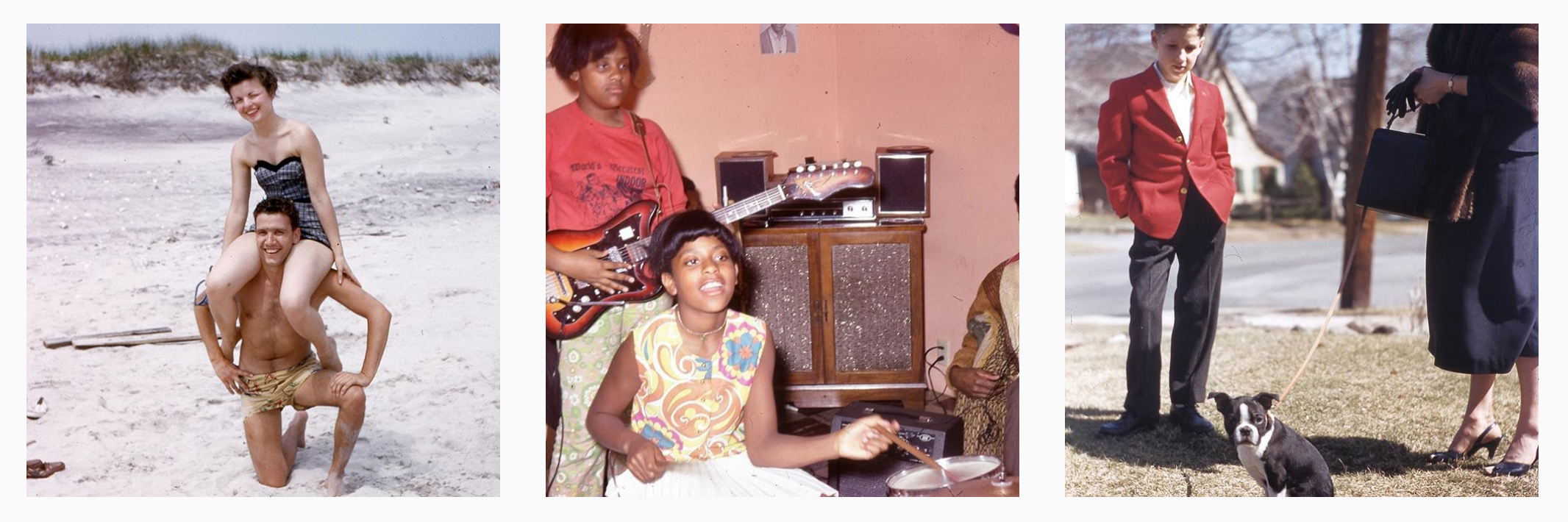
Vintage “found photos” from the Anonymous Project’s Instagram feed.
BEQUEATHING A LEGACY
“In spite of the importance of the family history, when clients are asked if they know their great-grandparents’ stories, the answer is too often silence,” writes Michael A. Cole, president of Ascent Private Capital Management. Yet “they don’t want their story to be lost. They want to leave a legacy that lasts for generations.”
SURVIVAL STORY
One man’s resilience in the wake of devastating fires and floods and mudslides encourages California-based personal historian Lisa O'Reilly to remind us of the value of forging meaning from our stories.
FOR YOUR HEALTH
Ruminations on the power of memoir from an unexpected source, Harvard Medical School: “You have a unique firsthand account of your culture and history that others don’t, and leaving a recorded history of your life can be an important gift to both you and your descendants.” Indeed.
Short Takes
#MemoriesMatter #Legacy #LifeStories #Memoir #OralHistory #FamilyHistory

Life Story Links: Blog Roundup, March 20, 2018
Personal historians weigh in on the urgency to tell your life stories, the intersection of downsizing and memoir writing, and how to write about family secrets.
“The past, like the future, is indefinite and exists only as a spectrum of possibilities.” —Stephen Hawking
Of Interviewers...
LOVE AND LOSS
Personal historian Lisa O'Reilly, of Carpinteria, California, writes “To Mom, With Love,” a most personal and urgent message that calls upon us all to capture our loved ones’ stories...before it is too late.
THE STORIES THAT WE WEAVE
Amanda Lacson of NYC’s Family Archive Business LLC distills some of the lessons she learned at Columbia University’s Oral History MA workshops, and discusses how we, as biographers and personal historians, can earn and tell better stories for our clients.
MEMOIR MOTIVATED
“There’s no quicker way to rip us off the rollercoaster and park us on the granny-bench than to adverb your verbs.” Just one of the colorfully on-point writing tips in Cyndy Etler’s “How to Write Memoir So They Don’t Read It, They Live It.”
SENIORS & THEIR STUFF
Discussions with professional organizers led MA-based Nancy West to discover interesting points of intersection between her work and theirs: How writing your memoir can help you declutter, destress, and maybe even downsize.
...and Interviewees
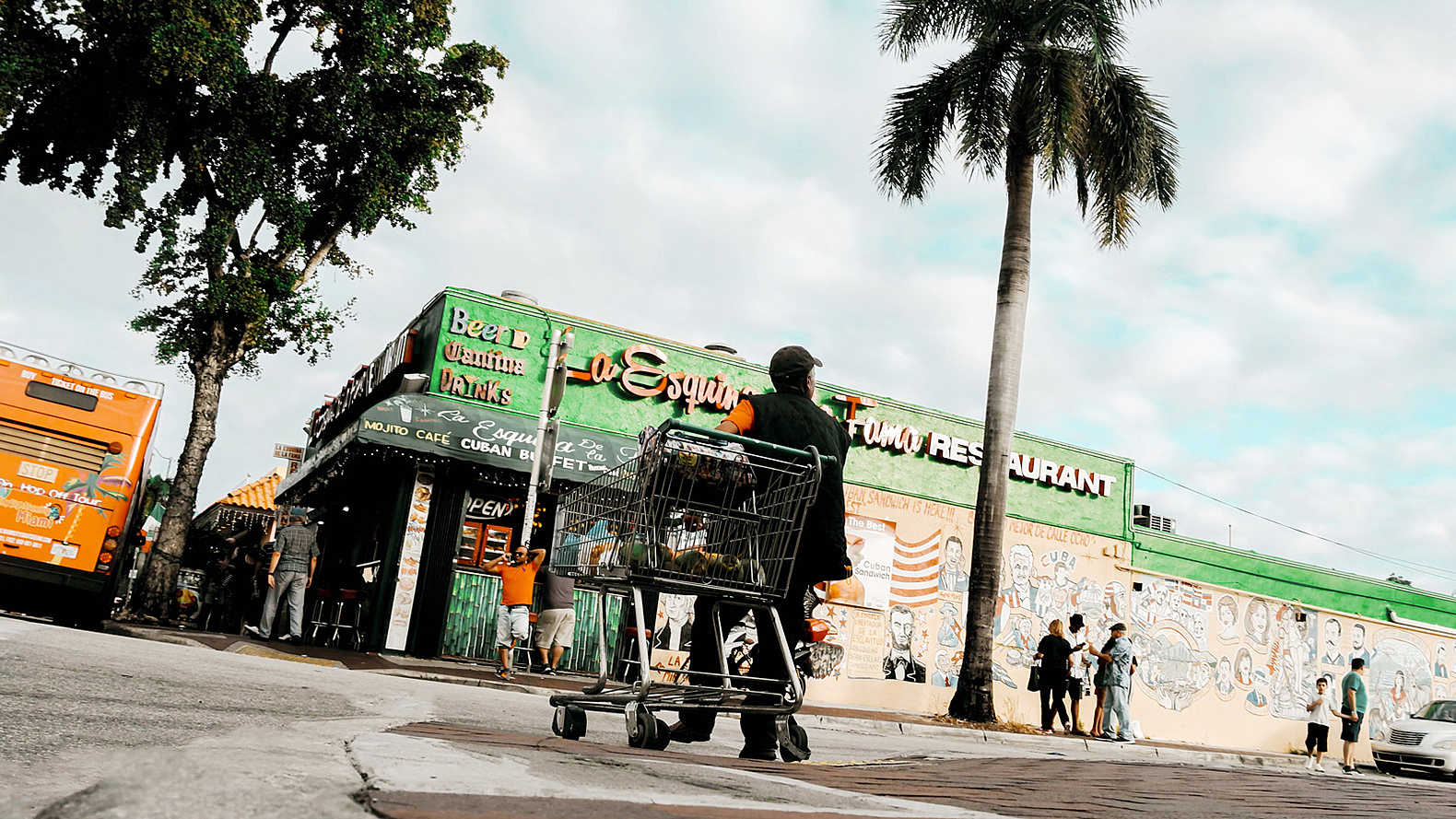
THE PLACE THEY CALL HOME
Miami’s iconic Little Havana neighborhood is home to an interactive museum exhibit that invites audiences to step into the daily lives of ten local residents whose passion, creativity, and penchant for history is ensuring that future generations will experience the Little Havana they know and love. Get a taste of their stories.
WHAT’S IN A NAME?
“We spend our life identifying ourselves by our name,” writes Karen Bender of Virginia-based Leaves of Your Life. “Your name will go on the cover of your book. Surely, your feelings about that name warrant a paragraph or two within its pages.”
FIRST PERSON
“I ate until I was stuffed full of memories.” Esmé Weijun Wang finds her way back to a beloved childhood dish.
...and a Few More Links!
- Lisa Pontoppidan of Boston-based Personal Story Films shares why she loves capturing stories—and personalities—on film, including “the spirit that shines from their eyes.”
- Freeze Frame: A panicky realization that some of my most cherished photos might be left out of my family archive led me to write this cautionary tale.
- The Audio Transcription Center rounds up seven digital recorders recommended for oral history interviews.
- Amisha Padnani, digital editor on the obituaries desk at the New York Times, has turned an idea for recognizing overlooked women into a movement.
- “My grandmother taught me that stories aren’t important because they’re written, they’re important because they’re living, embodied in the teller and the listener alike,” writes Kristin Chang.
- Digging into your family history you will find all kinds of people. Once a dark secret is uncovered, what should you do?
Short Takes
Life Story Links: Blog Roundup, March 6, 2018
The best of RootsTech 2018, why you don’t have to be old to write your memoir, immigrant experiences, & how animated film Coco encourages family storytelling.
“Facts get recorded. Stories get remembered.”
Roots Tech Highlights
This past weekend saw more than 70,000 family history aficionados pack the Salt Palace Convention Center in Salt Lake City for Roots Tech 2018. I was a #NotAtRootsTech follower, and can attest that the convention has generously given access to a number of strong resources for those of us who weren’t able to be there in person. This year’s theme: “Connect. Belong.” A few highlights:
- Watch the full keynote from Humans of New York’s Brandon Stanton, who talks about the power of listening, authentic storytelling, and his journey (and challenges) in following his dream.
- Laura Hedgecock of Treasure Chest of Memories shared her tips for converting family history research into compelling narratives in her presentation, “Choosing Details: The Secret to Compelling Stories.”
- Former Olympian Scott Hamilton admitted that, like most RootsTech attendees, he came to the conference in search of answers, and as an adoptee with a complicated medical history, “he came to the right place.”
- Genealogist and host of Genealogy Roadshow D. Joshua Taylor spoke about the need for diversity in family history technologies, and has made his slideshow available online.
- Did you watch the Academy Awards Sunday night? The song “Remember Me” from the Disney-Pixar film Coco (about a Mexican boy who travels to the Land of the Dead to discover an ancestor—see more below) took home the Oscar for best song. It was performed theatrically during the awards, but singer Natalie LaFourcade gave an enchanting acoustic performance at Roots Tech first.
History Made Personal
WAR STORIES, BURIED
“I don’t know why my father really never spoke of his exploits during the war—never mentioned that his commanding officer had nominated him for a Legion of Merit award, or that he led a team of men searching for stolen treasure,” writes Susan Fisher Sullam in the Washington Post. “But his files...gave me a glimpse of a father I had never known.”
THE YOUNG & THE WRITERLY
Why do we assume that writing memoirs is a task reserved for our elders? Samantha Shubert of NYC’s Remarkable Life Memoirs offers up a compelling argument for leaving age out of the memoir-writing equation. Oh, and there are a fair number of wonderful reading suggestions in this post, as well!
IMMIGRANT EXPERIENCES
Last week I had the pleasure of visiting the Tenement Museum on Manhattan's Lower East Side, and I wrote about my experience—and some book recommendations—in my latest post. Don’t worry: Even if you’re nowhere near NYC, there are ways to engage with the immigrant families and their stories that are beyond worthwhile.

A scene from Coco: main character Miguel with his oldest living relative, great-grandmother Mamá Coco. Disney-Pixar
“REMEMBER ME,” INDEED
“There is a mythic truth to the central idea” of the animated film Coco, writes Amanda Lacson of NY-based Family Archive Business: “When we remember our ancestors, they do live on.” How amazing that this family film encourages us to remember our family stories!
VALUE PROPOSITION
Nancy West, a Boston–area personal historian, says, “My goal is to facilitate the [memoir-writing] process, whether that means making it easy or just making it less difficult.” What differentiates the easy projects from the more demanding ones?
...and a Few More Links!
- The NYC restaurant where grandmas cook to share their cultures
- New feature film, Nostalgia, explores the sorting that families find themselves facing as relatives age or die
- The work of American photographers who experimented with photography on paper is the subject of a new exhibit at the Getty
- Memoirist Dani Shapiro says goodbye to her blog but finds new ways to explore the creative process with her readers
- Archivist Margot Note provides guidance on how to identify and date historical photographs
- Milwaukee-based personal historian Mary Patricia Voell of Legacies, LLC was featured in the March issue of Reunions magazine (see page 10)!
- And congrats to Carol McLaren for setting up a new website for her Arizona-based personal history business, Unique Life Stories.
Short Takes
Life Story Links: Blog Roundup, Feb. 20, 2018
Multiple personal historians weigh in on telling stories creatively using more than straight narrative, plus writing tips, family archive preservation & more.
“In the particular is contained the universal.”
—James Joyce
What a rich array of resources and articles we’ve got this month! Let’s dive right in, shall we?
Stories Come in Many Forms
FACES, PLACES
In an exhibition at the Art Institute of Chicago, Al Solh’s ongoing series of drawings—or as she prefers to call them, “time documents”—emerged from deeply personal encounters and conversations between the artist and Syrian refugees, as well as other forcibly displaced people. “After five years of continuing this work, I am more aware of how faces tell a story that is as powerful as each person’s story, their ideas about life, aspirations, and how we can go on, wherever we have ended up." I wish I were closer and could see the work in person, but this gallery of images is quite inspiring.

Mounira Al Solh. I strongly believe in our right to be frivolous, 2012–ongoing. Photo: Courtesy of the artist and Sfeir-Semler Gallery; Beirut / Hamburg
BIOGRAPHICAL COMICS
Ellie Kahn of Living Legacies Family Histories in Van Nuys, CA, is working with an illustrator to transform one client’s personal stories into comics! See some sample strips, by cartoonist Ben Evans, here.
A LIST OF LISTS?
Sometimes it’s not a long narrative that most interestingly tells your story, it’s a simple list. I explore how to use lists to add texture to a life story book, including a list of list-writing prompts geared at family historians, plus some sample spreads from my personal library.
MORE THAN WORDS
Memoirs consist primarily of narrative. But they can also serve as a medium for artwork, poems, songs, toasts, and other bits of memorabilia that represent your life. Massachusetts-based Nancy West shares ideas from the pages of books she has produced.
Tips, Tenements & Time Travel
WRITING LIFE STORY
Sarah White of First Person Productions in Madison,WI, shares a powerful writing exercise from the most thumbed-though, sticky-noted book in her memoir writing library, Your Life as Story by Tristine Rainer. Definitely check it out—I can say from experience Rainer’s tips are beyond useful, and often surprising in what they elicit in your writing, and White features a gem here.
TIME TRAVEL
The initial rationale for funding a personal history project may be to share the subject’s life with grandchildren or great-grandchildren—but, writes Jim Michael of the Personal History Center in Lilburn, GA, “We can never predict who may eventually see it and how it may influence those who view or read it.” Send your life story on a time voyage.
TWO-FER TUESDAY
Brianna Audrey Wright, who calls herself a “storyteller of bygone days” and specializes in Nebraska, Iowa & South Dakota family history, offers up two recent blogs of interest: “Names and records are wonderful and necessary, yes, but it’s that dash between birth and death that’s so fascinating,” she writes in “Genealogist or Family Historian?” In another post, she contemplates the question: What is a legacy in the digital age?
NEW YORK NARRATIVES
It took 10 years and hundreds of hours of interviews to create NYC’s Tenement Museum’s latest exhibit, which chronicles the lives of three post-World War II families who once lived in the building at 103 Orchard Street. “Under One Roof” isn’t a straight work of architectural preservation—rather, it is both a reversion and a reinvention, preserving a space in order to preserve the stories of the people who once occupied it, as a way of telling the story of America.
“WHAT CAN I SAY THAT HASN’T BEEN SAID?”
A conversation with her father prompted Olive Lowe to reflect on why we should tell our stories, even when we think they’re simply not original. “It’s true that most of the items we could list on our ‘life resume’ are on someone else’s too,” writes the Mesa, AZ–based personal historian. But it’s not the what that matters as much as everyone’s personal why.
...and a Few More Links!
- The New York Times addresses How to Preserve Your Family Memories, Letters and Trinkets in the Smarter Living Section.
- The obituary that Jean Lahm wrote about her father told his story and made people laugh a little, too—and made strangers miss a man they never knew.