
Memories Matter
Featured blog Posts

READ THE LATEST POSTS

Life Story Links: October 7, 2025
An incredibly rich roundup of stories for the week of October 7, 2025—with lots about AI, memoir, and memory; the craft of life story preservation; and more.
“I believe that at some level most families want to have a record left of their effort to be a family, however flawed that effort was, and they will give you their blessing and will thank you for taking on the job—if you do it honestly and not for the wrong reasons.”
—William Zinsser
Vintage postcard depicting an illustration entitled “Bringing Home the Harvest,” postmarked 1906, from the personal ephemera collection of Dawn Roode.
Listening for stories
HER NEXT CHAPTER
“I was in a moment emotionally—both as a storyteller and as a mother, and as a woman—where I was really in a season of deep listening in my own life, and to my own heart, and to what was going on.” Tembi Locke returns with “an audio-forward memoir”; listen to an excerpt here.
THE GREAT THANKSGIVING LISTEN
“For years, educators have been the heart and soul of [StoryCorps’] Great Listen tradition, helping students capture meaningful stories that connect generations.” Find out how to participate at home or in the classroom.
The craft of writing our lives
CLARITY FIRST, THEN VOICE
“Discover how (and why) bending certain grammar rules in memoir and life story writing can enhance voice, rhythm, and authenticity in your storytelling.”
SAME SUBJECT, DIFFERENT PERSPECTIVES
With his memoir of De La Soul, biographer Marcus J. Moore “wanted to show that you can have a middle-class existence and still be spectacular.” While this piece dives deep into the rap group’s catalogue and life, buried within are insights from two biographers on how they approached the same subject differently.
Lost and found in letters
EPISTOLARY HISTORY
“My mother was separated from her three-year-old brother at the age of nine. They lost contact for 40 years and finally reconnected through letters in 1988.” Letters exchanged across the Taiwan Strait shed light on family ties and memories, and capture history in a new book.
HER MOTHER’S SECRET PAST
After memoirist Halina St. James’s mother died, she found her letters—55 in all, written in Russian and Polish. She says they “provided enough of a frame work to allow me to construct a detailed timeline of her life, and some first-hand testimony about her experiences.”
Life story books, memoir & more
A NEW GOLDEN AGE OF BIOGRAPHY?
“Readers of a good literary biography are twice blessed. We profit from the subject’s wisdom and art as well as the biographer’s humane, shaping vision.”
“THE TELL”
“Amy Griffin wrote a book based on recovered memories of childhood sexual abuse. Oprah Winfrey and a slew of celebrities promoted it. Then questions arose.”
MEANINGFULLY CONFRONTING THE PAST
“Few American poets of the boomer generation have explored the interstices of public and personal history as deeply and urgently as has [Peter] Balakian.”
Remembrance, legacy
AS TIME GOES BY
“In this, my third stage of grief, the past, miraculously and mercifully, does not feel painful. The photograph of her that brought me to tears a few years ago now gives me a smile.”
HER GRANDMOTHER’S DEATH FOLDER
“Remembering can be a burden, just as final preparations for a loved one are a weight.... Laying someone to rest is the final act of care that leaves a lingering impression, not only on the dead, but on you.”
ON FORGETTING
“I collect these moments, these shining fragments of her.” Tamar Shapiro reflects on her mother’s memory loss and connecting through her mother’s native tongue.
AI, mortality, and memory
METABOLISM OF MEMORY
As the last Holocaust survivors approach the end of their lives, an AI scholar grapples with technology that promises to freeze them in time.
HIS OWN PRIVATE FRANKENSTEIN
When Jon Michael Varese interacts with a version of his deceased father generated by an AI chatbot, he tells ‘his father’ that it “felt like he was right here.” His ‘father’ replies: “That’s because I am. And maybe that’s all there is, Jonny—me waiting quietly, in the spaces you don’t notice, in the silence between your words.”
‘OUT OF THIN AIR’
“This AI slop is just harvesting the remnants of legacy journalism, insulting the legacies of the dead and intellectually impoverishing the rest of us.” When AI-generated biographies capitalize on death and grief.
...and a few more links
Podcast: How 2.1 trillion photos are affecting the planet—and us
Study explains why some emotional experiences last in the mind
Newsphotographer reunited with personal piece of 9/11 history
Capturing daily life in a sketchbook—thoughts from Nishant Jain and Samantha Dion Baker
Ancient life-size rock art in Saudi Arabia reveals earliest human presence
I find roundups like this so inspiring when it comes to coffee table book design!
Jamel Shabazz: “My eyes are open, my camera locked and loaded and I’m ready to observe.”
Short takes

Life Story Links: September 23, 2025
A curated roundup from biographer Dawn Roode with recent stories about memoir (writing and reading), memory-keeping, family history & life story preservation.
“The knowledge we keep in our minds is gone when we pass. There are no second chances, no help desk we can call to recover that data. Why wouldn’t we want to invest in memorializing these important assets to avoid such a catastrophic loss?”
—Clémence Scouten
Vintage postcard depicting a moody illustration of a sailboat on the ocean, postmarked 1906, from the personal ephemera collection of Dawn Roode.
Students & story preservation
LEARN FROM THEM
For photo manager Rachel Arbuckle, helping a school organize and save its physical archive “reminded us of something simple: Preserving history isn’t just about the past; it’s about giving the future a chance to see it.”
PROMISE: KEEPERS OF THEIR STORIES
A program creates direct connections between students in Arkansas and living Holocaust survivors: “When the opportunity arose, they embraced it, understanding they were making a life-long commitment” to share their stories.
CARRYING HIS GRANDFATHER’S STORY FORWARD
“My mission for this trip [to Poland]? To take a family pilgrimage for the first time without Poppi, traveling in his footsteps in full chronological order (versus the fragmented pieces we heard growing up).... I was living and breathing the weight I’ve carried since my childhood.”
On personal history & narrative nonfiction
WORTH IT?
I’m biased—I believe that working with a professional biographer can be one of the most meaningful investments you’ll ever make. Last week, I shared four compelling reasons why.
CHASING GHOSTS
“As historians have long recognized, what ‘actually happened’ in the past is no more significant than what different people at different times believe to have happened.”
GETTING THE STORY, EVEN WITHOUT THE KEY INTERVIEW
“Gay Talese and Edward Sorel, the writer and illustrator of ‘Frank Sinatra Has a Cold,’ on the origins, aftermath, and eventual sanctification of the greatest profile in magazine history.” Read the original piece here.
BEST BEGINNINGS
“How is a writer to craft the perfect beginning? Where and when does a beginning begin?” Beth Kephart with a handful of inspiring beginnings, with accompanying writing prompts to get you going.
A LIVING ARCHIVE
“Because story is not static. Families evolve. New voices emerge. Personal media piles up across phones, drives, and storage. What begins as a treasured project can too easily become a closed chapter—finished, archived, and rarely revisited.” Do you need a legacy media partner?
WE ARE NARRATIVE BEINGS
“Without a story scaffold, facts stay inert.” Documentarian Simon Sticker shares four approaches to help the modern storyteller “satisfy our appetite for meaning without sacrificing truth.”
New & noteworthy memoir
INDIAN NAMES
“Like the meaning of my name, my ancestral tongues are fast slipping from the Land of the Living to that of the dead.” Read a thoughtful (long) piece adapted from the hybrid memoir We Survived the Night by Julian Brave NoiseCa.
NEW MEMOIR FROM CAT STEVENS
“After nearly 35 years of contemplating an autobiography, even abandoning several chapters of a draft written in the early ’90s, [Yusuf] Islam has finished the voluminous, funny and candid Cat on the Road to Findout.”
‘LOOK HOW HUMAN I AM’
“When we think about the moments that change our lives, our minds often go to the big ones: surviving an accident, landing a dream job, or winning the lottery. But what if that’s wrong? What if the smallest, almost forgotten moments were the ones that shape us most?”
Where memories reside
‘EMOTIONAL ANTHROPOLOGY’
“If you’ve ever felt insane levels of attachment to a Bhursa’s take-away cup because it was from that day, or kept a literal pebble from a random road trip because it ‘felt like the moment,’ welcome. You too might be a core memory collector, and trust me, it’s more than just clutter.”
A PERMANENT TRIBUTE
“There is a badassery and resilience to tattoos. A permanence that defies but also commemorates my grief...and the push pull and ache of all of that is now part of my motherless daughter DNA.”
A MIXTAPE OF MEMORIES
“I’d discovered in recent years that songs, albums, and most certainly mixed tapes...were like Proustian madeleines (a sensory memory), transporting my mind like a time machine to a particular moment in my life.” I look forward to this new Substack from Kera Bolonik.
THE STORIED RECIPE
“For Judith, simple Sally Lunn bread—rich, soft, and baked in a Bundt pan—holds her mother’s legacy of hospitality, of showing up, and providing comfort.” Here's Judith, reflecting on her mother and the bread that tells her story (listen below, and find the recipe and photos here) :
Short takes
Life Story Links: September 9, 2025
Dawn Roode’s curated roundup for the week of September 8, 2025, has recent reads of interest to family historians, memoir writers, and life story enthusiasts.
“Interviews are a dance between preparation and improvisation.”
—Simran Sethi
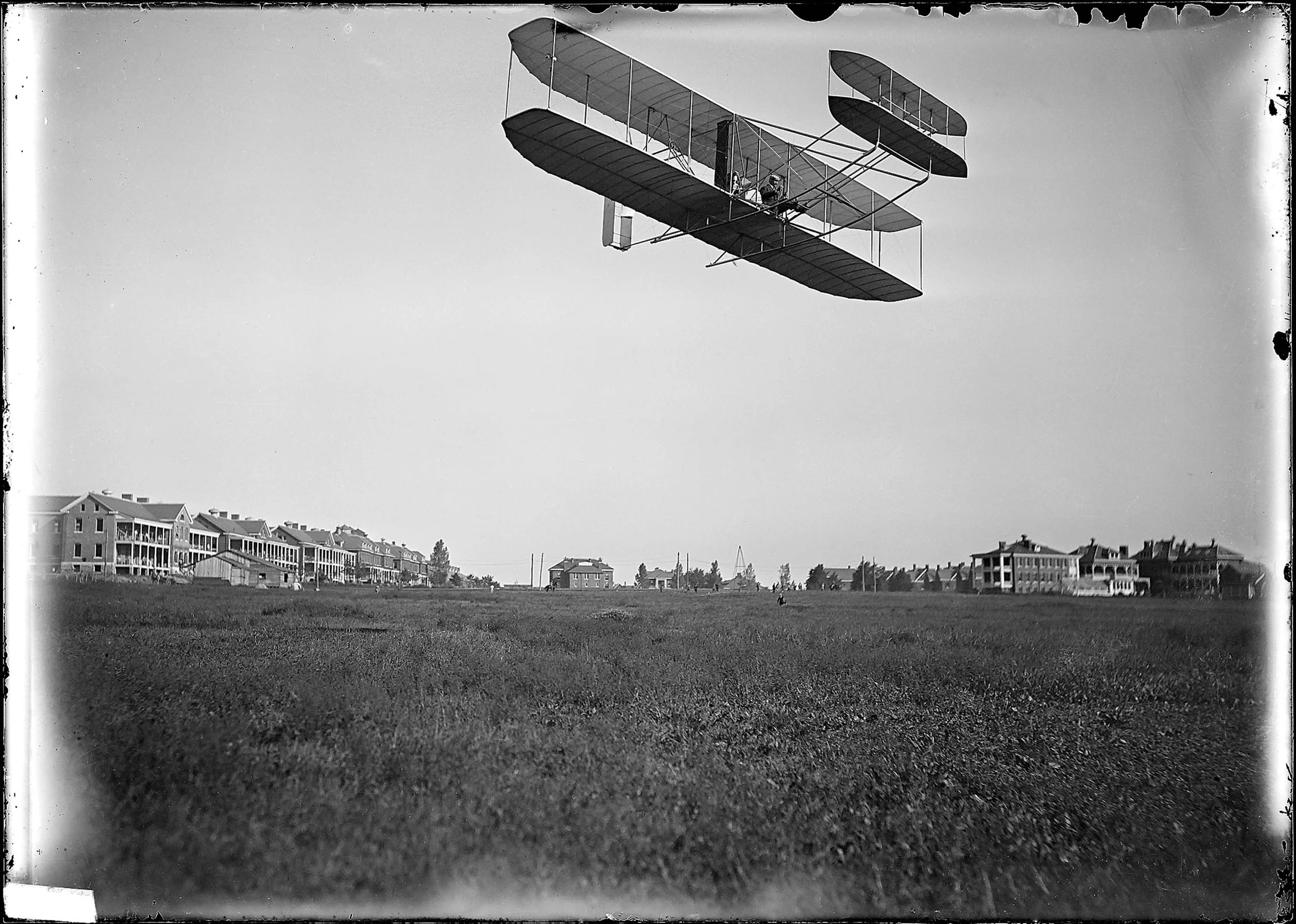
Vintage photograph by an unknown photographer, September 1908: “Wright Aeroplane, Ft. Myer, Virginia,” Orville Wright in plane. Records of the Office of the Chief Signal Officer. Courtesy Picturing the Century Exhibition, National Archives.
Real stories, real people
WAR VETERANS IN THEIR OWN WORDS
“You could ask Chat-GPT ‘tell me about a story on D-Day’ and it might give you something that feels compelling and realistic, but in that case it’s about as realistic as Saving Private Ryan, because it’s an average, a sort of synthesis of lots of different stories.”
ON HER RELATIONSHIP TO WRITING
“I have difficulty with the term memoir. I suppose I’ve been writing about myself forever. But, as I wrote this, and as the structure and tone of the book came together, nonfiction seemed to be the genre that fit it best.”
THE (MANDATED) HEALING STORY ARC
“I am a memoirist and nature writer, and I live with chronic incurable illness. I lived amongst nature when I became most ill, and I still became more ill.” Polly Atkin on Raynor Winn and the longstanding problem autobiographical nature writing has with the way it presents illness.
OUR HUMAN STORIES
“It matters, those years that have fluttered by like leaves from a tree. History matters, personal history, not only the big history that is outlined in books. The history of real people is in their stories. Their memoirs.”
Journaling for good
LENA DUNHAM PEEKS INTO THE PAST
“I have been in the editing phase of a memoir, and reopening the many books I’ve carried in my purse over the years is the best trick I know for connecting honestly to days past. Even the slant of my handwriting (which is terribly changeable) tells me something about who I was trying to be.”
OUR CHANGING STORIES
“The way we experience a moment in time will be different than the story we tell about it afterwards. As time passes, layers of reflection and meaning infiltrate our stories.”
‘PLAYING IN A BOOK’
“I love prying open the word journal until it makes space for all its unruly cousins: the sketchbook, the commonplace book, the half-legible spiralbound, the grocery list where a line about milk accidentally turns into a line about mortality. Because the point isn’t tidy pages or a faithful record of the day—it’s a place of one’s own sanctuary, where the raw material of life can rest, shift, and, when the time is right, come into focus and meaning.”
CREATING SPACE
Suleika Jaouad’s antidote to the loneliness epidemic: Journaling Club. “A gathering that’s equal parts tender and mischievous. A way to meet new people or go deeper with old friends. To write together. To share—or not. To surprise yourself.” Download her free guide here.
Miscellaneous memory-keeping
AS MEMORIES FADE…
Cookbook printed with fading ink aims to mimic dementia patients’ memory loss: “Boom Saloon’s ‘living cookbook’ is designed to ‘trick people into having the conversations they should be having’ about a disease which has become the leading cause of death in the UK.”
REVEALING RARE ACCESS
The thousands of books in Cormac McCarthy’s library, “many of which are annotated with margin comments, promise to reveal far more about this elusive literary giant than the few cagey interviews he gave when he was alive.”
A ‘FIERCE MEMOIR’
Mother Mary Comes to Me, the new memoir by Arundhati Roy, “is not just a turbulent family chronicle. It is full of eccentrics, impish humor, and the absurdities of small-town and big-city life.”
JOHN CHEEVER’S SECRETS
In a new memoir, Susan Cheever searches for the wellspring of her father’s genius. “Her first book about her father fused memoir and biography; this one fuses memoir and literary appreciation.”
...and a few more links
Another entry into the AI memory-keeping sphere: Memento Vitae
Read an excerpt from Miriam Toews’s new memoir, A Truce That Is Not Peace.
“Newspapers.com Case Study: Filling in the Details of My Ancestor’s Story”
At 70, remembering these 7 things means your mind is sharper than most, psychologists say.
Short takes

Life Story Links: August 26, 2025
Dawn Roode’s curated roundup for the week of August 26, 2025, is overflowing with great reads about personal history, memoir writing, memory preservation.
“Listening is an act of community.”
—Ursula K. LeGuin
Vintage photograph by an unknown photographer, 1919: “Some of the colored men of the 369th (15th N.Y.) who won the Croix de Guerre for gallantry in action.” Pictured, left to right, front row: Pvt. Ed Williams, Herbert Taylor, Pvt. Leon Fraitor, Pvt. Ralph Hawkins; back row: Sgt. H. D. Prinas, Sgt. Dan Strorms, Pvt. Joe Williams, Pvt. Alfred Hanley, and Cpl. T. W. Taylor. 1998 print. Records of the War Department General and Special Staffs. Courtesy Picturing the Century Exhibition, National Archives.
On writing memoir: process & principles
FOR BEGINNING (OR STUCK?) MEMOIRISTS
Even the most seasoned writer sometimes feels hopeless when they sit down to write and nothing comes. Last week I shared seven memoir resources for when you’re staring down a blank page.
ON NARRATIVE AND OMISSION
“This was a catch-22. [My husband] is an immensely private person. He doesn’t want personal details shared indiscriminately. So how do I both honor his wishes and not erase him? What are the ethics of turning life into art?”
WRITING, TRUTH, AND RISK
“Warning: Memoir writing carries risks of family reactions, anger, and exposure. It also can be freeing and healing. Writers need to have a way of managing these dangers and be free to express their truths.”
‘MEMOIR PLUS’
“The most moving memoirs are the ones in which you see someone transformed.” Nancy Reddy explains how to trace the plot of your own life.
EMBRACING ANALOG RESEARCH METHODS
“My goal in early, generative research is not in focusing on what I want to know, but on wonder and surprise—discovering the very things that I didn’t even know I wanted to know.”
BRAINSTORMING WITH A BOT
“At the frontiers of knowledge, researchers are discovering that A.I. doesn’t just take prompts—it gives them, too, sparking new forms of creativity and collaboration.” On using generative A.I. as an “accelerator for thought.”
Our lives, our words
NORA MCINERNY, LIFELONG JOURNALER
“Now I journal in the same notebook where I write my to-do lists and my schedule... Having all this life in one place feels good to me. It also means I am journaling more frequently, because it’s all right there.”
SHOW ME YOUR DIARY
“I have now lost both of my folks and even the tiniest scrap of their writing feels urgent and sacred as a keepsake. There is an aliveness to it that draws me to the handwritten word. I have the work diary my Mom kept. Her handwriting feels like connective tissue to me.”
A JOURNALING JOURNEY
“I found that every time I wrote, I was criticizing my own writing. Judging it for not being good enough.” Noor Tagouri on what helped her get past this perfectionism and find refuge in journaling.
UPON LOOKING AT A PHOTO OF HER MOTHER…
“Funny, what words can do. Funny, how I leaned into them. Funny, how they speak of me, far more than any photos could or do. Consonants. Vowels. That is where I find myself, the mirror I look in and through.” Beth Kephart on the words that become us.
Personal legacies
SPOTLIGHT ON…
The Wall Street Journal turned their attention to the idea of personal history in a piece titled, “The Rich Order $100,000 Memoirs for Family Only”: “Some just want their heirs to know they worked hard for their money, while others are more forthcoming; ‘My one and only acid trip.’”
LIVING TRIBUTE
“After a period of denial made possible by today’s amazing cancer drugs, I decided I wanted to let people know about this remarkable woman. So here’s a pre-death obit for [my wife], Tracy Joos Johnston,” Jon Carroll writes on Oldster.
ON FATHERS AND SONS
“My legacy is of broken men, each of whom, at one time, had to transform their own legacy and in doing so transform themselves and the inheritance of those to come.” Read a stunning excerpt from bestselling author Michael Thomas’s new memoir, The Broken King.
SACRED STORYTELLING
Video biographer Whitney Myers, who has a background in ministry, memory care, and family documentation, speaks with podcast host Lisa Joworski about the critical importance of knowing someone’s life story when providing care, especially in memory care settings:
Family artifacts & other physical remnants of history
GROWING ALBUM
An artist’s inventive and thought-provoking new work uses her photographs “to create a reimagining of the traditional family album by designing a publication that quite literally allows her to plant her Polish roots on whatever soil she finds herself on.”
A RARE GLIMPSE INTO NYT ARCHIVES
“It’s like showing someone your journal,” one photographer says of contact sheets, those analog editing tools that have fallen by the wayside with the advent of digital photography—but that still hold a nostalgic historic allure.
‘A SOCIAL MEMORY BOX’
“I want to keep these items with me, but I hesitate to pass them on to my children or grandchildren.” Hiroshima museum continues to receive artifacts 80 years after atomic bombing.
...and a few more links
Short takes

Life Story Links: August 12, 2025
Dawn Roode’s curated roundup for the week of August 12, 2025, includes recent stories of interest to personal historians, preservationists, and family history fans.
“We recognize ourselves in the specificity of others’ stories.”
—Tobias Wolff
Vintage photograph by M.A. Crosby: “The Sam McCall family of Wilcox County, Alabama,” 1910; 1998 print from the original glass plate negative. Records of the Bureau of Agricultural Economics. Courtesy Picturing the Century Exhibition, National Archives.
Family story preservation
FROM QUESTIONS TO STORIES
Once you’ve interviewed your family member(s), you’ve got the most important step under your belt. Why not take the next step and turn those spoken stories into something more permanent and engaging: an edited narrative that will hold meaning for generations?
THE ALLURE OF HER GREAT-UNCLE
“I started thinking that if Uncle Ronald were still here, we could go to lunch.... Would he offer advice, or just listen and wince? What would he order? What stories would he tell? I told my family that I wanted to write the story of his life. My real motivation was always the impossible lunch.”
THOSE PHONES IN DRAWERS?
Back-up challenges block tech donations in UK, according to a report: “These forgotten devices collectively store around 11 billion photos, 8.7 billion messages, and nearly 8 billion videos—moments too valuable to lose, yet too often left inaccessible.”
‘MY FATHER, GUITAR GURU TO ROCK GODS’
“When the greatest musicians of the 1970s needed an instrument—or a friend—my dad was there.” I think this is a beautiful example of bringing someone we love to life through our memories and recollections of others in their orbit.
SEARCHING FOR MOM
“[Mariska] Hargitay started by reading letters from her fans who brought up her mother. That led her to combing through storage boxes that hadn’t been touched since 1969.” She likens the process of making her new documentary, My Mom Jayne, to an archeological dig.
Our unfiltered selves
ON THE CHRONOLOGY OF SELFHOOD
“My [journal] entries are just a human being a human. If [after my death] someone close to me read and did something with any excerpts that felt edifying for the soul, I would consider that to be a positive offering for the world. We need to know that we’re not so different.”
TRANSFORMATIVE POWER OF JOURNALING
“‘Alchemy’ feels apt when it comes to keeping a journal. In taking a moment each day to write your thoughts, show up and write your way back to yourself, you take the grist of everyday life and transform it.”
Storytelling out in the wild
MOBILE RECORDING STUDIOS
With the country’s semi quincentennial less than a year away, “America250” is bringing the celebration cross-country with a fleet of Airstream RVs on a nationwide storytelling tour looking to highlight thousands of personal histories.
COMPASSIONATE CARE
Maureen Leier, a registered nurse and digital storyteller, joins host Lisa Joworsky to explore how integrating personal life stories into healthcare transforms the quality of care and creates meaningful connections between caregivers and patients. Listen in:
Through the lens of food
A DELECTABLE MEMOIR
“In the scrumptious Tart, the anonymous London haute-cuisine veteran Slutty Cheff tells all. Deliciously,” writes one reviewer.
EXPLORING FOOD HERITAGE
I wrote about this series earlier in the year, but I just discovered that NatGeo’s No Taste Like Home is available for viewing online. Find full episodes of season one here, and check out the trailer below:
Short takes

Life Story Links: July 29, 2025
Recent recommended reads about memory preservation, life story writing, and memoirs of note round out personal historian Dawn Roode’s curated roundup this week.
“Life is story in motion. Each day, you add to your story, revise it, and view it from a different angle. You erase things. Tear pages out. And sometimes, in hindsight, wish you could put them back. A day is a story. A year is a story. A life is a story. You are a story.”
—Ruta Sepetys
Vintage photograph by Danny Lyon: “Two Latin girls pose in front of a wall of graffiti in Lynch Park in Brooklyn, New York, June 1974”; 1999 print from the original 35mm slide. Records of the Environmental Protection Agency. Courtesy Picturing the Century Exhibition, National Archives.
For generations to come
‘LOVE, GRIEF, LONGING FOR HOME’
A local history buff donates his treasure trove of wartime letters—more than 11,000 in total, spanning the Civil War through Vietnam—to Chapman University’s Center for American War Letters:
THE NITTY-GRITTY OF DIGITAL PRESERVATION
“The reality is harsh: hard drives fail regularly. If you're relying on a single drive for storage, you're essentially gambling” with your family archive. While this piece is written for professional photographers, there is a wealth of information of value to anyone with digital assets worth safeguarding.
EYEWITNESS TO HISTORY
“The sea is a stranger to me,” Ella Sheldon confessed in the first pages of her journal, which goes on to chronicle her voyages on the high seas all over the world between 1892 and 1900. Here is a fascinating look at how one woman's personal handwritten diary can hold gems even 125 years later.
DATA PROTECTION OBLIGATIONS?
“The destroyed records had the potential to be an unknown memory, an identity, a sense of belonging, answers—all deeply personal pieces in the jigsaw of a person’s history—some now lost for eternity.”
Memories, memoir, and mementos
BUT WHERE ARE THE JUICY BITS?
“It’s sad to think that, if the current trend for cutting indexes continues, future memoirs might be accessible only electronically.” How will readers browse for gossip in celebrity memoirs, then?
PROOF OF LIFE; STORY
“There’s a strange intimacy to a stranger’s grocery list; a found scrap of paper is a rare analog window into someone else’s needs. It’s an accidental autobiography, a blank space to be filled with one’s imagination.”
DEBBIE MILLMAN’S JOURNALING PRACTICE
“Some years ago, I reread a journal I kept during my college years, in 1982.... I found myself holding my breath as I realized these weren’t just diary entries or memories. They were evidence of a life. They were my witnesses to living and persevering.”
INFO VS. STORIES
“Take a look at your family tree. Are you seeing people or just data points? If it’s feeling more like a spreadsheet than a collection of human stories, it might be time to dig a little deeper and bring those ancestors back to life.”
Happy and hard—it’s all worth writing about
TRAUMA-FOCUSED WRITING
Writing hard stories is…well, hard. But as Megan Febuary puts forth in her new book, Brave the Page, doing so may also bring healing and wholeness. Last week, I reviewed this worthwhile book.
INHERITANCE
“I was procrastinating while writing a piece that involved research on genealogical websites, and, on a whim, I began punching my grandparents’ names into search bars.” Jessica Winters’s piece is a tour de force of layering past and present and an incredible example of how skilled writing can infuse genealogical research with life.
ON NAVIGATING SUICIDE IN MEMOIR
“Our stories shape us. We can’t escape them. I was no longer the same person after Daniel. I couldn’t run away from him on the page. My book wouldn’t ring true to me without him.”
‘THE OG VIBE SHIFT’
Thematically, this one’s a stretch for our Life Story Links roundup, and yet I couldn’t resist including it for the grammar and word nerds among us: “The Em Dash Responds to the AI Allegations.”
EMBRACING GENRE FLUIDITY
“Like breakfast for dinner, hybrid writing challenges expectations—not for rebellion’s sake, but because it’s practical, and something deeper, stranger, or truer demands it from your material.” On finding the right container for your story.
HOW HISTORY IS (RE)WRITTEN
“The national parks were established to tell the American story, and we shouldn’t just tell all the things that make us look wonderful. We have things in our history that we are not proud of anymore.”
Where memories reside
“‘THAT ANCESTRAL TRAVELING LIFESTYLE…’
“I have noticed that my memory is strangely place-bound: I don’t often remember when something happened but rather where it occurred.” Madeline Potter on letting the Roma narrate their own story.
SEARCHING FOR HOME
Hala Alyan, author of new memoir I'll Tell You When I'm Home, “and her relatives have been displaced from their homes in Gaza, Kuwait, and Lebanon—and she says it's difficult to fully separate herself from these places.” Listen in:
LEGACY, VALUES, AND LOVE
A veteran in the personal history space, video biographer Iris Wagner, speaks about how she got started, what makes a good legacy video (it’s not prescriptive advice!), and why she’s so passionate about her work. Listen in below, or click here to see time stamps of the topics they cover.
...and a few more links
Larry Smith (the “six-word memoir” guy) shares 6 lessons from a return to live storytelling.
“Wishing to Be Remembered, I Remember,” a prose poem by Beth Kephart.
“America’s Cup finally has a coffee table book, and it’s a work of art.”
How Petite Keep “boxes of memories” are faring after Shark Tank investment
5 creative ways to add storytelling elements to your next travel book.
Read an excerpt from the memoir A Beginner’s Guide to Dying by Simon Boas.
Colorado’s Marshall Fire survivors find healing and meaning through oral history project.
Short takes
Life Story Links: September 22, 2026
Dawn Roode’s curated roundup for the week of Sept. 23, 2026, is overflowing with recent reads on memoir, life story writing, and family history preservation.
“…what a poorer and less beautiful thing life would be without the stories and values of the people who loved us and whom we loved most to carry with us when they are gone.”
—Steve Leder, For You When I Am Gone
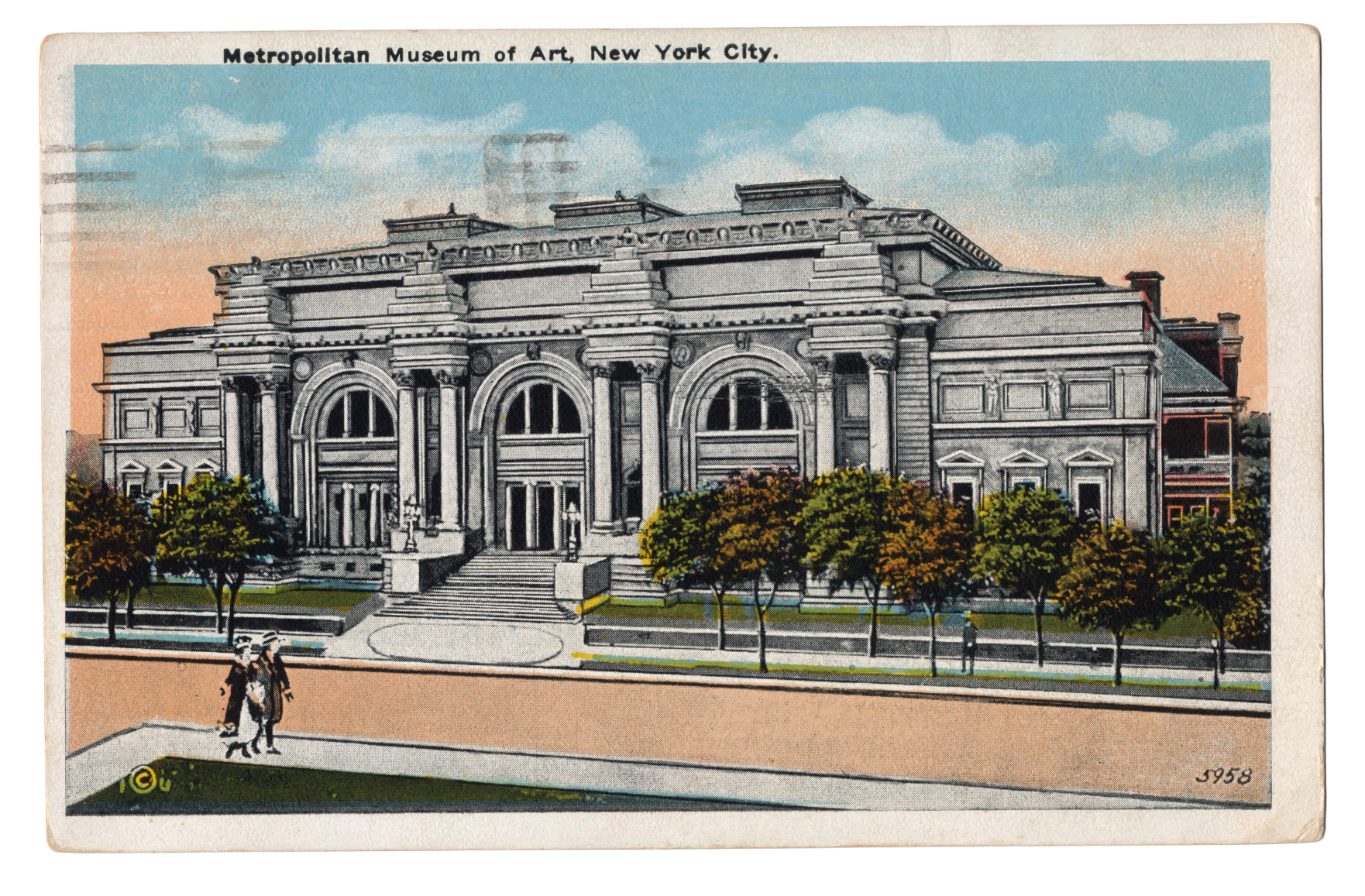
Vintage postcard with illustration of the Metropolitan Museum of Art in New York City, circa 1920, from the personal ephemera collection of Dawn Roode.
Preserving the past
THE SHIFTING LANDSCAPE OF TRUTH
“The truth is, memory doesn’t need to be perfect to be meaningful. Memoir isn’t about getting every detail right; it’s about revealing the truth of experience.” Last week I wrote about how forgetting and bias can deepen truth in your life story.
QUESTIONS INVITE STORIES
“Your grandparents might not think of themselves as eyewitnesses to history—or realize that anyone is interested in the ordinary details of their lives. Asking an unexpected question can make the past come alive while helping you discover who they were, and who they still are.”
THE PERMANENT QUESTIONS
In the first episode of his new podcast for The Atlantic, David Brooks starts with an idea that has shaped much of his work: Many of us have lost the habit of asking what makes life meaningful. Listen to a teaser here:
Misc. memoir
EMBROIDERING HIS STORIES
In this excerpt from her memoir, Story Telling: A Writing Life, Isabel Allende shares how her first novel, The House of the Spirits, began as a letter to her grandfather “to let him know that I remembered all the stories he’d told me.”
A DIVERSITY OF APPROACHES
“Why are seemingly half of all memoirs focused on parents or siblings and the complicated webs we weave?” An interesting roundup of viewpoints about writing about family on the Brevity blog.
FOR YOUR TBR MEMOIR LIST?
This roundup of the best new memoirs includes mini reviews of Plot Twist: Life, Craft, and the Messy First Draft: A Memoir on Writing by Harlan Coben (“a writing memoir for the ages”) and Receipts from the Bookshop: A Bookseller's Year in an English Seaside Town by Katie Clapham (“a must-read for everyone who’s ever felt most at home in a bookstore”).
ALL IN A DAY’S WORK
“This may be the world’s first mad-moir. Or … mad-ifesto,” Alexandra Jacobs writes of power broker Ari Emanuel’s Roll the Calls. The memoir “is over 400 [pages], but goes fast, to [ghostwriter J.R.] Moehringer’s credit, as if it were barked into a voice-memo app and transcribed by a quivering assistant.”
RIP ANNIE DILLARD
Perhaps the first memoir I feel in love with was An American Childhood by Annie Dillard, who passed away earlier this month. LitHub remembers her here, and you can read her obituary in the Washington Post here.
Family history in context
AT THE MUSEUM OF JEWISH HERITAGE
Will These Words Reach You? The Underground Archive of the Warsaw Ghettoexamines one of the most significant acts of Jewish resistance and historical preservation during the Holocaust: the creation of the Oyneg Shabes Archive in the Warsaw Ghetto.
A FAMILY HISTORY FROM LODZ
“Andreas Kossert traces his grandmother’s footsteps with the meticulousness of a historian and the empathy of a grandson. Elsa’s World is a plea for a life in between: between countries, languages and cultures. History, as taught to our children, should consist of such stories.”
RECKONING WITH THE PAST
Five boxes arrived from Wales containing photos, documents, and memorabilia: an “entire heritage,” the author calls it, and a window into the lives of his grandparents. In Ausländer, Michael Moritz examines his inheritance.
INHERITED MEMORIES
Andrew Huberman interviews Dr. Oded Rechavi, a professor at Tel Aviv University who studies genetics, epigenetics, and the inheritance of acquired traits. They discuss how DNA, RNA, and epigenetic mechanisms determine what information can pass between generations, and why acquired traits are generally not thought to be inherited.
...and a few more links
Short takes
Life Story Links: September 8, 2026
Dawn Roode’s curated roundup for the week of Sept. 8, 2026, is overflowing with recent reads on memoir, ghostwriting, visual storytelling, and family history.
“The average life of a Tweet, for example, is fifteen minutes. A Facebook post’s average life is five hours. After that, the chance of being read plummets. But leaving behind actual writing for the people who love you to find? That’s something rare and precious, and it’s worth even more if you’re perfectly truthful.”
—Rachael Herron, Fast-Draft Your Memoir
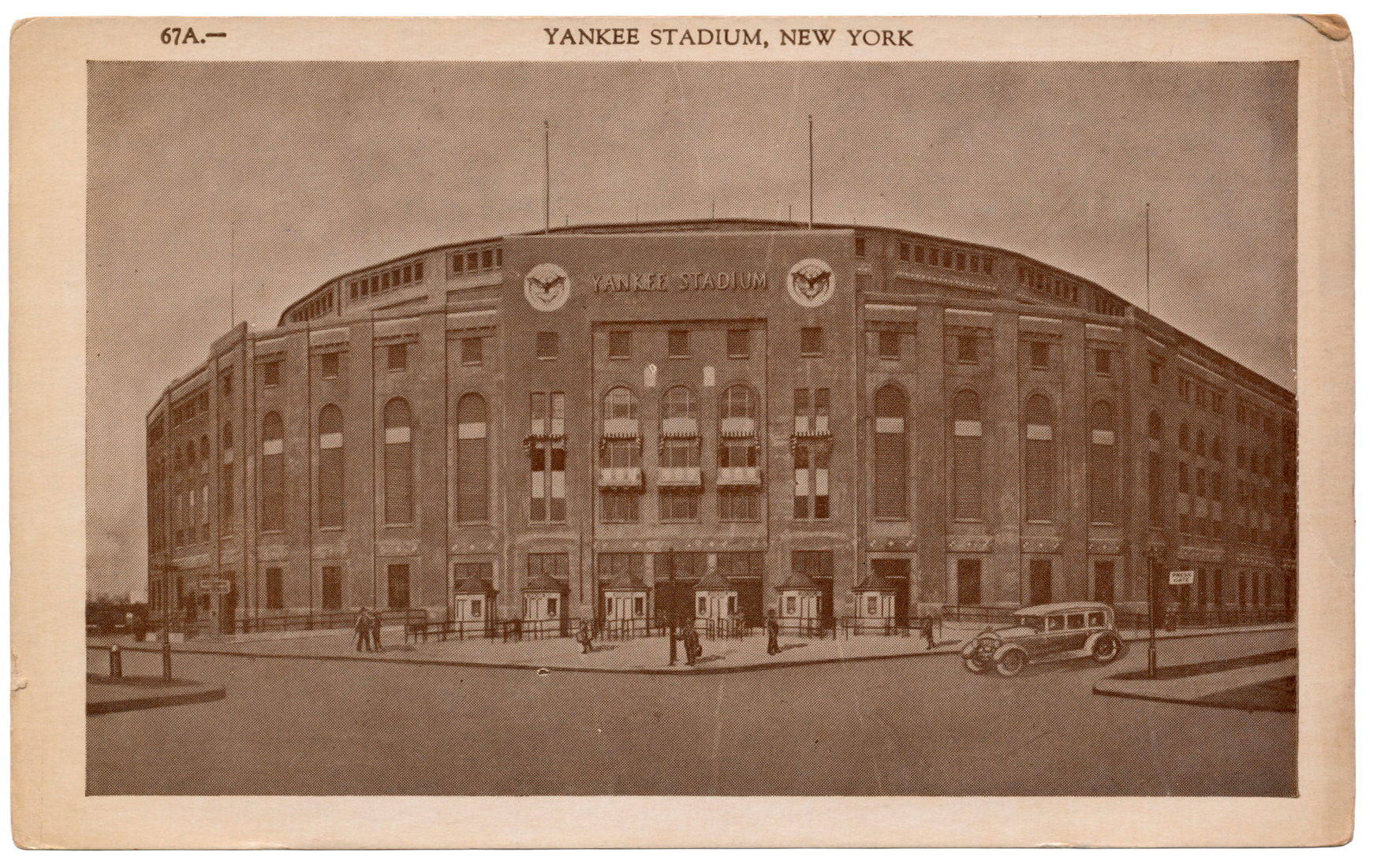
Vintage postcard depicting Yankee Stadium in New York City, circa 1924, from the personal ephemera collection of Dawn Roode.
The art & adventure of life writing
BIG STORIES, SMALL CONTAINERS
“The flash essay—flash nonfiction typically under 1,000 words—is not a lesser form of personal writing. It is the personal essay distilled.”
‘AN INTERVIEW IS A LIVING DOCUMENT’
Last week I shared three ways to transform oral history interviews into lasting keepsakes—from edited transcripts to personal podcasts and narrative family histories.
WELCOME THE TEARS
“As time passed, I was afraid that my memories and detailed accounts would get less vibrant as life and its challenges and complexities took its toll.” On the complex journey of storytelling and grief.
A TRANSFORMATIVE JOURNEY
“The craft of storytelling will carry you, protect you, as there are many ways to write about trauma, and you will need to learn them so you can skillfully choose how you present your story to readers and touch them with your story.”
DOLLY PARTON, WRITER
“The song wasn’t about me, wasn’t about my life, about my people. But good writing doesn’t have to imagine everyone. It only has to imagine the truest thing about all of us, that exists in each of us.”
Family history finds
BIOGRAPHICAL SKETCHES OF EARLY NYERS
Explore this compilation of completed biographical sketches for the NYG&B's New Netherland Settlers project, which developed detailed, peer-reviewed sketches of all the people residing in New Netherland prior to 1664.
STORIES FROM MEMORY
“The past is not so much foreign as free, free to anyone who is willing to do the work, to enter the past with a spirit of curiosity and a willingness to conjure a living world out of the detritus that history leaves behind.”
Ghostwriters, unite
ON VOICE, ETHICS, AND PUBLISHING
“We get to know each other on a very deep level…. I’m so selective with who I work with as a ghostwriter because essentially I am stepping into their shoes. I love working with people who have open hearts and they’re compassionate.” Here, ghostwriter Amy White in conversation about the craft of writing other people’s stories—and about her own memoir:
‘AS TOLD TO’ PODCAST
“We ain’t doin’ none of this Tuesdays with Morrie shit,” baseball great Dave Parker once told his collaborator Dave Jordan, as they worked together on the soon-to-be-Hall-of-Famer’s memoir. “We goin’ out poetic and wild.” Listen in as the ghostwriter talks about their collab:
More in memoir
SECRETS: A REPORTING MEMOIR
A book I’ve pre-ordered: From two-time Pulitzer Prize–winning investigative journalist Bob Woodword comes the definitive memoir of the man with more #1 bestsellers than any journalist of our time, offering an unprecedented inside look at some of the most newsworthy stories ever.
IN CONVERSATION WITH EARL SWIFT
"I’m happy that I turned to memoir only after writing nine books and a mountain of stories about other people. I’d recommend that approach as it trains you to recognize the elements of a good tale..."
Visual storytelling
OUR STORIES, OUR NEIGHBORS
“"The whole point of the project was to ignite cross-generational social connections." A British photographer invites untold stories from a single village.
DIGITAL AMNESIA
“Snapping a photo or a screenshot to remember something? According to recent cognitive research from Binghamton University’s Psychology Department, the practice may make you more likely to forget.”
BEFORE IT ALL CHANGES
“People forget certain things, like where the coffee pot was, how she touched something, the weird doorknob. That’s the stuff that’s unique to your life. I’m preserving all that.”
PORTRAITS YIELD STORIES
“Cormac asks what we think of the home so far, already knowing our answers.” Photographer Beowulf Sheehan remembers capturing Cormac McCarthy through a lens.
In letters
‘MOST REVEALING OF ALL DOCUMENTS’
The story behind Too LA: Letters Never Sent (But Some Were), the new book bringing together Eve Babitz’s most uncensored and never-read writing, as shared by the writer’s biographer.
LIFE ON THE PAGE
“A letter—especially a handwritten one—feels dangerously permanent. It asks us to choose what deserves to outlive us.”
‘LAUGH? I THOUGHT I’D DIE!!’
Novelist Richard Yates has a reputation for bleakness. But while the works for which he is best known do feature a cast of unhappy souls, they are also often funny. So are his letters, which have never before been published.
Jewish research & genealogy resources
THE JEWISH JOINT, NEW RECORDS
JDC Archives has expanded access to primary source material documenting JDC’s work during the Holocaust era and its aftermath. Known within the Archives as the “Hidden Collection,” these records were held in offsite storage for many years and only recently retrieved for processing, preservation, and digitization.
JEWISH HERITAGE NETWORK
JDC Archives has also launched a new names database with enhanced features for tracing family journeys. An ongoing project for nearly 20 years, the JDC Archives Names Database provides access to information about more than 700,000 individuals who received assistance from JDC, not only financially but also as recipients of material relief, rescue, and emigration assistance.
...and a few more links
Did you know Talas creates custom-sized archival storage boxes?
How Dolly Parton told her life story through six iconic songs
Caregiver helps woman with dementia write memoir before her 95th birthday
“More than just relics, mix tapes are portals to specific moments.”
Describing one privately published memoir to hopefully inspire others
This immigrant memoir intertwines personal and national history.
Read an excerpt from The First Ghetto: Venice and the Origins of Modern Antisemitism
Short takes
Dawn Roode’s curated roundup for the week of Sept. 23, 2026, is overflowing with recent reads on memoir, life story writing, and family history preservation.