
Memories Matter
Featured blog Posts

READ THE LATEST POSTS

“Mom’s Spaghetti and Meatballs”
Red sauce ran in her grandmother's blood, and every family member would one day memorize her beloved recipe. Peek into a family kitchen, and a mother's heart.
Red sauce may have run in her grandmother's blood, but every member of the family would come to know the recipe by heart (even if the size of a "pinch" of this and a "dash" of that differed depending on who was making it)...
Smells—in this case, of garlic and oregano—and tastes conjure memories in a most primal way, and can transport us right back to our childhood kitchens. As such, they are excellent jumping-off points for writing or talking about your memories and crafting them into a story for generations to come (not to mention, the kids will be thrilled to have those cherished recipes actually written down).
In this second contribution in our series, A Taste of the Past, a family passes down the secrets to their own version of spaghetti and meatballs, never writing down a recipe, but always cooking with love and remembrance. Join me in raising a glass (red wine, of course) in honor of Kaitlin Ahern's shared food memory. Cin cin!
A Taste of the Past

The family behind the red sauce: the writer’s mom, Darice, in her mid-twenties, with her parents, Martin and Veronica Smith. Circa 1975
Mom's Spaghetti & Meatballs
By Kaitlin Ahern
I have few memories from childhood more vivid than watching my mother cook dinner. The sight of her standing at the stove in our small kitchen, wooden spoon in one hand and glass of wine in the other, creating a meal for our family of four, is easier to conjure than what I had for breakfast yesterday. And although she passed away when I was barely 17, I’m lucky enough to know many of her recipes by heart.
Mom was the dinner-maker in our household, a task she loved or lamented, usually depending on how stressful the workday had been. She was happiest to cook on weekends, when the hustle of work, sports practice, and homework died down and she could take her time with a meal. That’s when she’d make spaghetti and meatballs—a staple she made so often that she could have made it in her sleep; now I can, too.
I think she loved that meal so much because the two key ingredients tied back to her roots. It all started, of course, with the sauce. Mom’s mom, my grandmother Veronica, was 100 percent Italian; red sauce ran in her blood. When I picture our kitchen from my childhood, I see a pot of sauce simmering on the stove, filling the downstairs with the delicious scents of garlic and Italian spices. The mixture of crushed tomatoes, onion, garlic, basil (fresh from the garden when we could get it), oregano, olive oil, and salt would cook slowly for several hours, covered except when one of us peeked open the lid to scoop up a taste with a piece of crusty bread. The recipe was never written down, to my knowledge, but each member of our family knew it by heart—although the size of the “pinch” or “dash” of this and that was different depending on who was making it.
The other ingredient was ground beef for the meatballs. Our family has always made all-beef meatballs, despite the Italian tradition to mix beef and pork. The preference was really born out of convenience—Mom’s dad was a beef farmer, and he passed that passion down to his oldest son, who still supplies our growing family with grass-fed steak, ground beef, and stew meat. Mom would combine the pound or so of Uncle Marty’s beef with one egg, a splash of milk, parsley, and just enough breadcrumbs to hold it all together, but she always let the flavor of the meat be the star—a small way of showing how proud she was of her big brother’s hard work. After browning the meatballs in olive oil, she’d cover them with the sauce and let them simmer away for an hour or so, or until we were ready to eat. Leftover sauce (if there was any) was tossed in the fridge and saved for Friday night, when Dad would make pizza.
Mom never went as far as making her own spaghetti, so that part of the meal came from a box. But she’d always make a big salad tossed in a homemade Italian dressing with olive oil, vinegar, garlic salt, and dried basil and oregano.
“I didn’t fully realize the gift my mother had given me by teaching me her recipes until I moved out of my childhood home.”
I didn’t fully realize the gift my mother had given me by teaching me her recipes until I moved out of my childhood home. Her spaghetti sauce comforted me when I was far from home studying in London, and I basically lived on salads with her homemade dressing when I was just starting out in New York City after college and could afford little else.
I miss her terribly. But when I’m in the kitchen, tunes cranked up, simmering a pot of red sauce on the stove and making meatballs with Uncle Marty’s grass-fed beef, a glass of wine in one hand and a wooden spoon in the other, I know she’s there with me, as present as the smell of garlic in the air and the recipe in my heart.
-----------------------
Kaitlin Ahern is a writer and editor who grew up riding horses and now rides the New York City subway. She enjoys running, traveling, cooking, and all things animals, because you know what they say about taking the girl out of the country. You can follow her on Instagram.
“Pop’s Pie”
Is a grandfather’s love the missing ingredient to the best key lime pie? A young mother delves into memories of the treats her beloved Pop made just for her.
Maybe it’s a grandfather’s love that is the missing ingredient to the best key lime pie...
Smells & tastes conjure memories in a most primal way, and can transport us right back to our childhood kitchens. As such, they are excellent jumping-off points for writing or talking about your memories and crafting them into a story for generations to come (not to mention, the kids will be thrilled to have those cherished recipes actually written down).
In this first contribution in our new series, A Taste of the Past, a young mom remembers her beloved grandfather, and the sugary treats he often made just for her. Oh, how sweet the memories...
A Taste of the Past

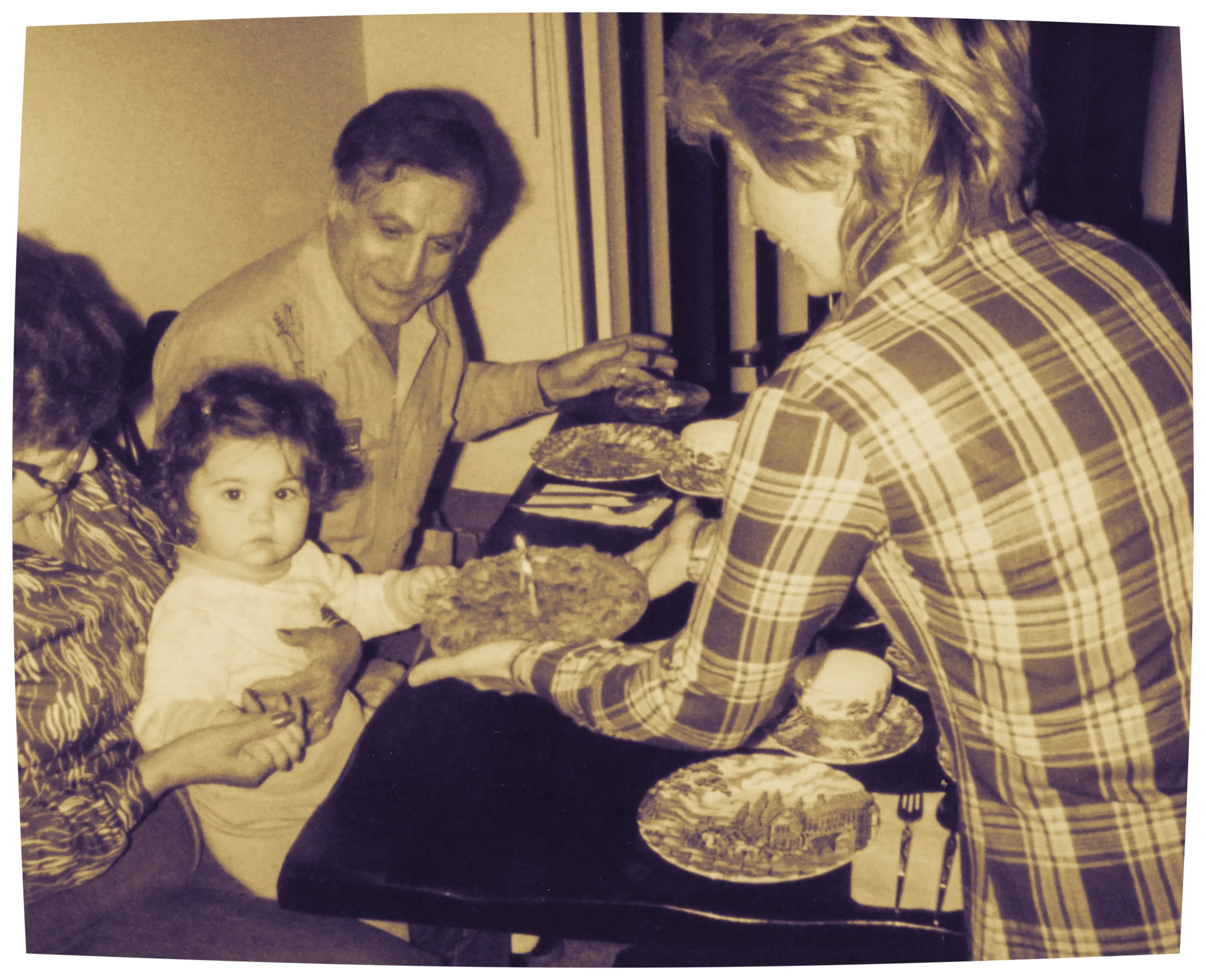
The writer's first birthday, Oct. 29, 1981: Three generations—grandparents Catherine & John, their daughter Joann, and her daughter Christine—celebrate with one of Pop’s pies (rest assured, there was a first birthday cake, too, as Mom is quick to point out!)
Pop’s Pie
By Christine Tarulli Mugnolo
I’ve always been a sweets person. That is to say, I’ll be happy with dessert for breakfast, lunch, and dinner. I believe I have my grandfather partly to thank (blame?) for that…and for my own sporadic hobby of making delectable treats.
My grandfather and grandmother eloped to Colorado in 1942. Soon after, as an officer in the army, he was stationed in Anzio, Italy, for the remainder of World War II. In between the fighting, Pop did what he did best—he cooked. He became the chef for his fellow officers and higher-ranked officials. And when he was finally home, he was head chef for his family.
There was nothing that Papa loved more than watching us devour what he made on any given day. And he never, ever forgot dessert.
I always felt Pop made dessert especially for me, his chubby, sweets-loving granddaughter. I would sometimes catch him beaming at me, all messy-faced and sticky-fingered. How his smile and hearty laugh would light up the entire room!
While I loved his cookies and his pretty lattice cherry pie, Pop’s key lime pie was my absolute favorite. It was always amazing: thick, buttery graham-cracker crust, sweet yet tart filling, and just a few twisty limes on top as garnishment.
As I got older, the pies seemed to get even more delicious, prettier, and, ultimately, simply perfect.
Pop passed away on December 16, 2001, when I was a senior in college. I was—I still am—devastated. I always will be. We lost our family’s heartbeat, our core, and I lost my Papa.
I think that’s when I started to bake. And I baked all the time then—for my family,
for my friends and boyfriends. I adored watching them taste all the goodness that
I (lovingly) shoved in their faces.
I don’t remember when my grandmother gave me my grandfather’s key lime pie
recipe. But when she did, it was as if she were handing me the damn Holy Grail. It’s been about 14 years, and I still cannot get it just right. I make the pie once or twice a year; it’s my special time with him. No TV, no one else in the room...just the two of us. How I curse that Pop didn’t write down what he really did to make his pie so great!
Eventually, I made my own tweaks. While my pie is good, it’s not as good as I remember his to be…and not nearly as beautiful. But that’s okay; it doesn’t have to be.

I have his—our—faded and butter-stained recipe, which, to me, is more beautiful than any pie. And I take it out every time I make it.
If I could have a few more hours with him, I’d introduce him to my daughter (oh, he would just eat her up!); I’d dance with him and not give him a hard time about it; and we’d bake together, so I could finally learn his secrets to the best key lime pie I have ever had.
Love and miss you always, Papa.
-----------------------
Christine Tarulli Mugnolo is a wife to a traveling husband, stay-at-home-mom to a very active toddler and two rescue pups, and in her spare time, a freelance editor. She thinks there’s no better smell than that of an old book from the library.
Pop’s Key Lime Pie Recipe
Crust
1 1/2 packs graham crackers, crushed
2 tablespoons margarine
Filling
8 eggs, separated (yolks only)
2 cans condensed milk
6 ounces lime juice (from about 6-7 limes) or Nellie & Joe’s Famous Key West Lime Juice
green food coloring (optional)
To make crust:
Combine graham crackers and melted margarine in bowl, then press into pie pan. Chill 30 minutes before pouring in pie filling.
To make filling:
Preheat oven to 350°
Combine egg yolks with condensed milk in medium bowl.
Mix well. Add lime juice a little at a time until smooth and creamy. Add a touch of food coloring until filling is desired color. Pour into pie shell. Slice a lime very thinly and add slices to top of pie before baking. Bake at 350° for 20 minutes.

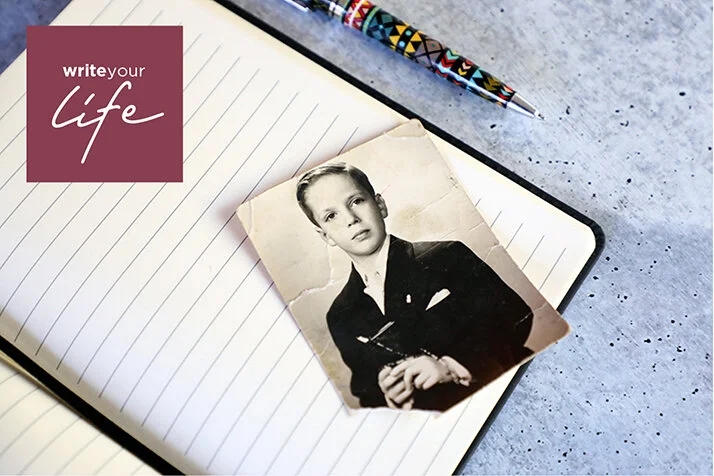
The writer’s grandfather, John Carl Esposito (April 25, 1922 - December 16, 2001), in uniform in Pueblo, Colorado, where he was stationed before going overseas; 1942


A taste of the past
Smells and tastes conjure memories in a most primal way, and can transport us right back to our childhood kitchens. Our recipe for preserving your food stories.

Smells and tastes conjure memories in a most primal way, and can transport us right back to our childhood kitchens. As such, they are excellent jumping-off points for writing or talking about your memories and crafting them into a story for generations to come (not to mention, the kids will be thrilled to have those cherished recipes actually written down).
Delve into your food-related memories if...
you have a living relative who can be equated with the family hearth: recording those recipes, techniques, & special foods while you can is an invaluable gift for future generations
family holidays center around the table
milestone celebrations come back to you in waves every time you smell a certain dish
you want to preserve your culture
Foods Stir the Memory
On Tuesday we will be launching a new series of posts, A Taste of the Past, in which food plays a starring role, leading us down a path of reminiscence and reflection.
In the first contribution, Christine Mugnolo recalls her grandfather's singular key lime pie: Why can't she recreate it just so?
“It’s been about 14 years, and I still cannot get it just right. I make the pie once or twice a year; it’s my special time with him. No TV, no one else in the room...just the two of us.”
In another post, Kaitlin Ahern pays tribute to her mom’s spaghetti and meatballs, and you'll raise a glass with her to toast the memory of a mother gone too soon (and I guarantee you'll be uncorking a bottle of red, picking some basil from the garden, and putting on a pot of red sauce yourself—and, if all goes well, you'll be conversing around the dinner table about your own favorite handed-down recipes).
In “Billie’s Famous Foods,” Melissa Finlay recalls how her Gramma kept a jar for bacon drippings on her stove, used it liberally, and kept it full. “She knew everyone’s favorite foods and provided them—often.”
I hope these and other upcoming stories will inspire you to want to record your own memories. When you've gathered enough, or decide you'd like our professional help in recording them for posterity, an heirloom book is the perfect place to preserve them.

Related Reading:
If the idea of bottling memories of your ancestors' foods appeals, you might also want to check out:
Grandma's Project ("Sharing the World's Most Delicious Heritage"), in which filmmakers from around the globe cook with their grandmothers—and elicit evocative stories of the past along the way
Dinner: A Love Story, a so-much-more-than-a-blog compendium of recipes, kids' lunch ideas, and more from book author Jenny Rosenstrach; she occasionally hones in on the power of food as love, too, such as in these three lovely posts: Sense Memories (her husband's recollections of the birth of their first child and chicken salad, not necessarily in that order); The Napkin Note (about her mom and lunchbox missives); and Absolute Value (about her dad, Oyster Bar, and chocolate marzipan bars)
The Dinner Party, a glorious, long-time-coming community of mostly 20- and 30-somethings who've each experienced significant loss, who get together over potluck dinners to talk about the ways in which it continues to affect their lives and how to thrive in #LifeAfterLoss—an inspiring, real-life example of the power of a shared meal to heal and create community, even (maybe especially) after the death of a loved one.
Dawn Roode’s curated roundup for the week of Sept. 23, 2026, is overflowing with recent reads on memoir, life story writing, and family history preservation.