
Memories Matter
Featured blog Posts


READ THE LATEST POSTS

What you can learn from Gloria Vanderbilt & Anderson Cooper
You might be surprised to learn what Anderson Cooper calls “the most valuable year of my life.” It's the period when he and his mother Gloria Vanderbilt maintained an email correspondence that delved deep—into the feelings they had previously not spoken about, and into their experiences both shared and wholly individual. The back-and-forth format of questions and stories is engaging, and most meaningful in its sense of discovery, of a grown man coming to know his mother in wonderful new ways. Why not be inspired to follow in their conversational footsteps?

I recently finished reading The Rainbow Comes and Goes: A Mother and Son on Life, Love, and Loss (HarperCollins 2016) by Anderson Cooper and Gloria Vanderbilt. Do I recommend this book? Sure I do—it's chock full of details about these celebrities' lives, and in particular accounts of young Gloria's early years read like high fiction. But it's not the drama and inside scoop that endear this book to me; it's the naturally unfolding "getting-to-know-you" that happens between mother and son.
Cooper and his mother undertook an extended email conversation, one in which they were able to—finally—explore deep emotions and speak of tragedies of which they had previously chosen to remain silent. Vanderbilt's words are poetic, ripe with passion, honesty, and resilience. Cooper's questions are probing, and raw in their search for an understanding not only of his mother, but of the impact their relationship and experiences have had on him as a person.
“[Even as adults] we don’t often explore new ways of talking and conversing, and we put off discussing complex issues or raising difficult questions,” Cooper writes. “We think we’ll do it one day, in the future, but life gets in the way, and then it’s too late.”
“I didn’t want there to be anything left unsaid between my mother and me, so on her ninety-first birthday I decided to start a new kind of conversation with her, a conversation about her life. Not the mundane details, but the things that really matter, her experiences that I didn’t know about or fully understand....”
And what a gift these two gave to one another! Check this book out from the library, or better yet, buy it for yourself. I hope you may be inspired to embark upon your own extended conversation (theirs was via email over the course of a year) with a parent or other loved one.
“If not now, when?”
Why not...start an extended email conversation with your parents to discover the experiences that shaped them?
Anderson Cooper did. And it resulted in the most meaningful year of his life.

Of course you can open a wonderful dialogue with a loved one by writing good old-fashioned letters (and who doesn't love getting a hand-written letter!), but email is by far a more expedient way to communicate—and one that may be easier to turn into your own keepsake book later, should that idea appeal.
“The most valuable year of my life”
Not sure your mother or father would find such an exchange worthwhile? Perhaps give them the book. Or just bite the bullet and express your desire to get to know them better: Simply ask.
Vanderbilt was new to email at the time she began this endeavor with her son, but despite some initial reservations, her written correspondence matured and deepened over the course of the year they wrote to one another. And I can almost guarantee that once the floodgates are open—and each of you is able to see how deeply affected you are by the other's insights and memories—the richer the experience will become.
As Cooper writes:
“It’s the kind of conversation I think many parents and their grown children would like to have, and it has made this past year the most valuable of my life. By breaking down the walls of silence that existed between us, I have come to understand my mom and myself in ways I never imagined.
I know now that it’s never too late to change the relationship you have with someone important in your life: a parent, a child, a lover, a friend. All it takes is a willingness to be honest and to shed your old skin, to let go of the longstanding assumptions and slights you still cling to.”
I hope this book, or even just the idea of it, will encourage you to think about your own relationships and perhaps help you start a new kind of conversation with someone you love.
After all, if not now, when?

“Billee’s ‘Famous’ Foods”
Gramma Billee kept a jar for bacon drippings on her stove; she used it liberally and kept it full. She knew everyone’s favorite foods and provided them—often.
Gramma Billee kept a jar for bacon drippings on her stove; she used it liberally and kept it full. But one of the most important ingredients she cooked with was intention: She knew everyone’s favorite foods and provided them. Often. Decades later, her granddaughter shares remembrance and recipes so that Billee’s descendants may nourish their own families with her “famous” foods.
As I have written about before, tastes conjure memories in a most primal way, and can transport us right back to our childhood kitchens. As such, they are excellent jumping-off points for writing or talking about your memories and crafting them into a story for generations to come (not to mention, the kids will be thrilled to have those cherished recipes actually written down).
In this latest contribution in our series, A Taste of the Past, we are treated to one family’s “famous” foods, as skillfully and lovingly prepared by Gramma Billee—and now, her descendants.
A Taste of the Past
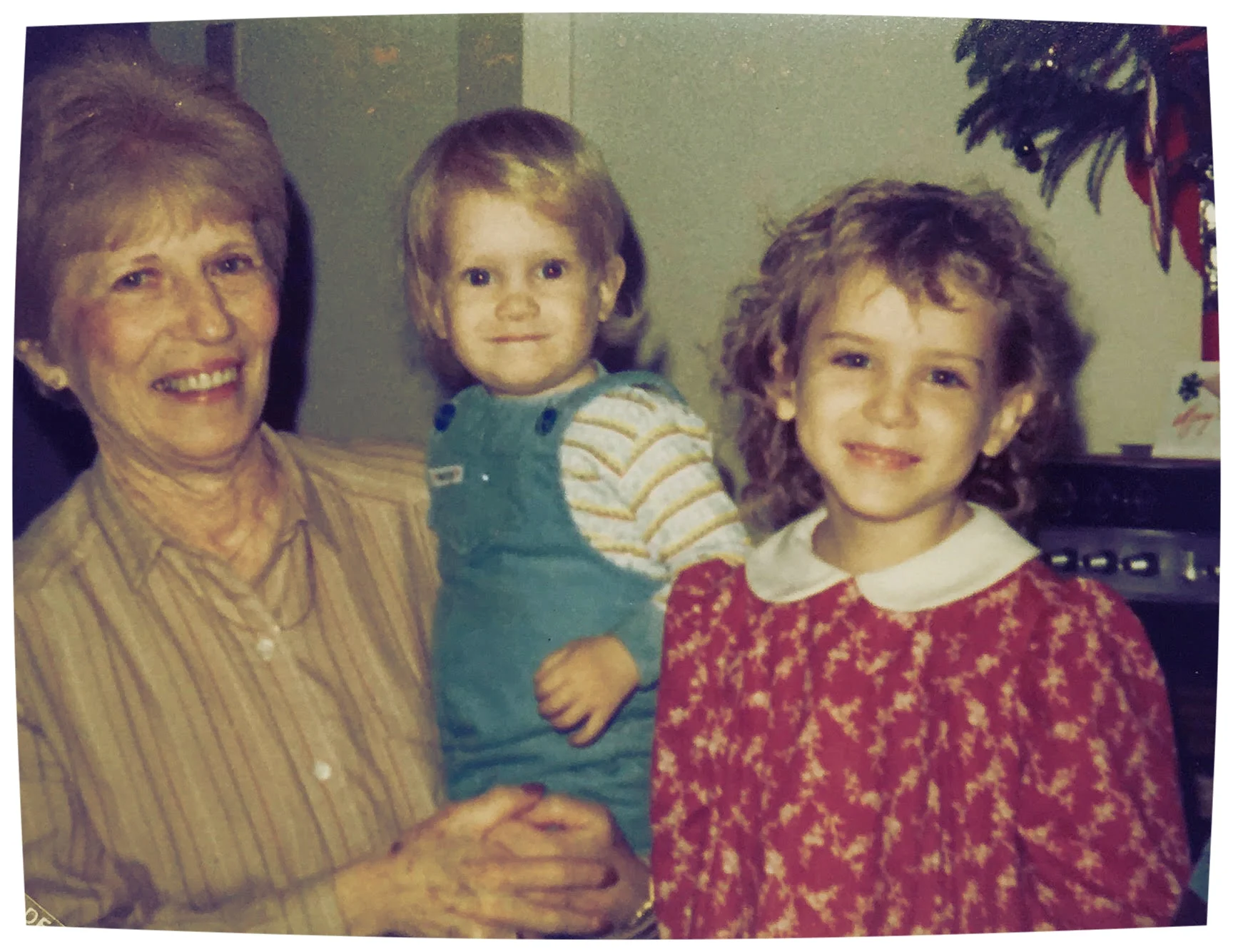
Gramma Billee, the writer's baby brother, and the writer as a little girl, 1982
Billee’s “Famous” Foods
By Melissa Finlay
I visited my grandmother Billee in person for the last time when she was 90 years old. I spent several days interviewing her, recording her memories and anything else she wanted to leave for posterity. She told me plenty of stories about her life and details about our ancestry, but she most wanted me to record her recipes, to pass her food legacy on to her grandchildren and great-grandchildren. Her recipes were close to her heart, full of memories of friends and family, and preciously held knowledge of who loved which food the most.
Stories of struggle, and hope
While I recorded her recipes, I was the fortunate recipient of my grandmother’s stories, as each dish sparked memories anew.
Billee’s dishes were famous among everyone who knew her. Her recipes came to be referred to as “Billee’s Famous Enchiladas,” “Billee’s Famous Cherry Pie,” “Billee’s Famous Hummingbird Cake,” even “Billee’s Famous Hot Cocoa.” Not that her dishes were necessarily original—she liked to collect recipes from newspapers, magazines, and friends—it’s just that she made them so well, and shared them so generously. She cooked for family get-togethers. She brought overflowing platters to church potlucks and work parties (I think they may have held extra work parties to score more of her foods!). Billee knew everyone’s food favorites, and provided them.
Her life wasn’t always full of ample food, though. During the Great Depression, Billee’s father struggled to find work and her mother suffered from serious health problems. Billee’s maternal grandparents stepped in to help the family get through these lean years.
Billee recalled walking with her younger sister to their grandparents’ corner grocery store each morning on the way to school. Her grandmother gave them each a “store lunch” to take with them. After school, Billee returned to the store to work for a few hours to repay her grandparents’ generosity.
Billee’s own young family moved from Oklahoma City, Oklahoma, to Lake Jackson, Texas, on the Gulf of Mexico, in the mid-1950s. Here she learned how to cook with seafood, not as a premium ingredient but as an affordable protein to feed her growing children. When Billee was widowed at 47, she struggled financially while training to enter the workforce. She did her best to nourish herself and her youngest son during this difficult time.
A granddaughter’s perspective
By the time I came on the scene, Gramma Billee had a steady career and an active social life. She was constantly in the kitchen. As I watched her cook, I asked her plenty of questions. She answered every one, but never invited me to pitch in; she did the gourmet cooking and baking herself. She was the master! Cinnamon rolls filled with pecans and raisins. Shrimp quiche. Stuffed mushrooms. Tender brisket. Squash casserole. Molasses cookies. Pie, pie, and more pie.
When I was a child, her dishes always seemed luxurious to me—indulgent even. She used copious amounts of seafood, avocados, cream, pecans, butter, and shortening, ingredients not commonly used at my home. Billee kept a jar for bacon drippings on her stove; she used it liberally and kept it full. Dessert was a standard course on her menus. Yet, for all her decadent cooking, she always watched her own portions and remained slender throughout her life.
Gramma Billee introduced me to many new southern foods. I knew if Gramma made it, it would be delicious, so I tried every strange new thing she offered me. I loved so many! Billee made the only liver and venison I would ever eat, the texture and flavor superb with bacon and onions. Shrimp Victoria became a favorite with tender, succulent shrimp swimming in a rich sour cream gravy. Gramma knew it was my favorite, and made it for me often. I enjoyed the crunchy, salty bites of her fried okra. I can still recall the smells of apricot fried pies bubbling in the cast iron skillet. Nothing, however, could tempt my sweet tooth more than Billee's sweet-tart cherry pie.
I have begun to record the recipes for many of grandmother Billee’s “famous” offerings, transcribing her hand-written (often butter-stained) notes for other members of the extended family. So that her grandchildren and great-grandchildren can choose a favorite dish. So they can make it often and think of her. So her nourishing legacy can live on.
Recipes from Billee’s repertoire
I will start by sharing my favorite dishes that she made “just for me” every time I visited. These dishes still bring me the comfort of being with my gramma every time I eat them.
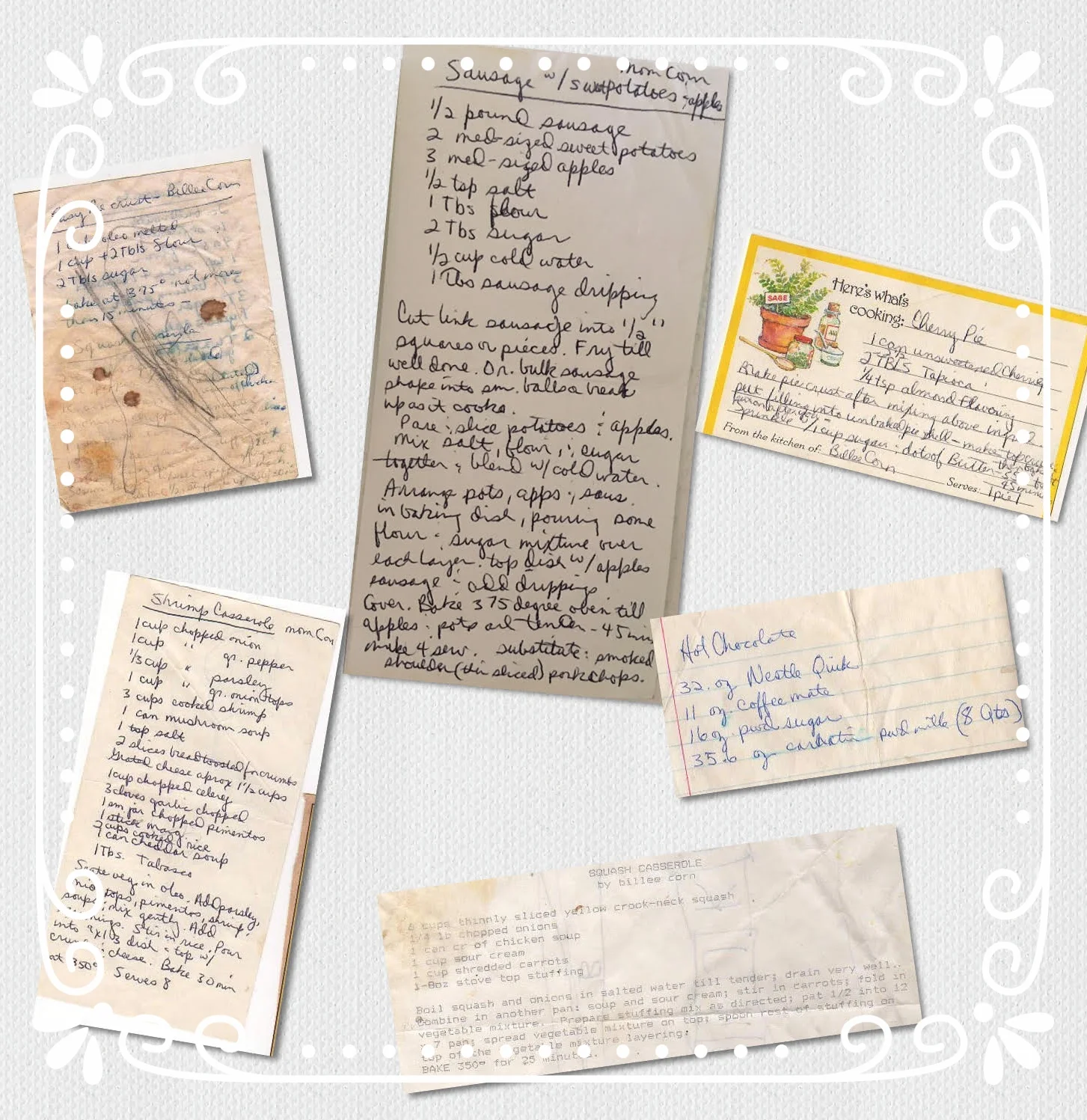
An array of Billee’s handwritten recipes—well-loved and well-used, all!
Shrimp Victoria
1 pound shrimp, peeled and de-veined
½ pound mushrooms, cleaned and sliced
1 onion, diced
2 cloves garlic, minced
½ cube of real butter
1 tub of sour cream
Salt, to taste
Red pepper, to taste
Sauté onion and garlic in butter until softened. Add mushrooms and spices and sauté until soft. Add shrimp and sauté until just pink. Take off the heat and stir in half the sour cream. When dished up over a hot bed of rice or egg noodles, top with a dollop of sour cream. Serve with a salad and a nice loaf of French bread.
Orange-Avocado Salad
1 medium head lettuce, torn, about 6 cups
1 small cucumber, thinly sliced
1 avocado, peeled and sliced
One 11-oz. can mandarin oranges
2 tablespoons sliced green onions
In large salad bowl, combine lettuce, cucumber, avocado, oranges, and onion. Just before serving, pour on dressing and toss.
For dressing:
½ teaspoon grated orange peel
¼ cup orange juice
½ cup salad oil
2 tablespoons sugar
2 tablespoons red wine vinegar
1 tablespoons lemon juice
¼ teaspoon salt
Combine all ingredients in screw-top jar. Cover tightly and shake well.
Cherry Pie
1 can unsweetened cherries
2 tablespoons tapioca
¼ teaspoon almond extract
Mix above ingredients and let rest while making pie crust.
For easy pie crust (makes two crusts, top and bottom):
1 cube oleo, melted (Gramma’s name for shortening)
1 cup + 2 tablespoons flour
2 tablespoons sugar
Mix ingredients until they form a soft ball. Roll, and form half in pie plate.
Pour cherry filling into unbaked pie shell. Sprinkle filling with 1 cup sugar, generous dots of butter. Place top crust over filling. Bake at 350 degrees for 45 minutes.
Melissa Finlay is an avid genealogist, a garden guru, a homeschooler, mama to 7, and wife to the love of her happily-ever-after. She and her husband recently created an app, Little Family Tree, to introduce children to their family history.

“Mom’s Spaghetti and Meatballs”
Red sauce ran in her grandmother's blood, and every family member would one day memorize her beloved recipe. Peek into a family kitchen, and a mother's heart.
Red sauce may have run in her grandmother's blood, but every member of the family would come to know the recipe by heart (even if the size of a "pinch" of this and a "dash" of that differed depending on who was making it)...
Smells—in this case, of garlic and oregano—and tastes conjure memories in a most primal way, and can transport us right back to our childhood kitchens. As such, they are excellent jumping-off points for writing or talking about your memories and crafting them into a story for generations to come (not to mention, the kids will be thrilled to have those cherished recipes actually written down).
In this second contribution in our series, A Taste of the Past, a family passes down the secrets to their own version of spaghetti and meatballs, never writing down a recipe, but always cooking with love and remembrance. Join me in raising a glass (red wine, of course) in honor of Kaitlin Ahern's shared food memory. Cin cin!
A Taste of the Past

The family behind the red sauce: the writer’s mom, Darice, in her mid-twenties, with her parents, Martin and Veronica Smith. Circa 1975
Mom's Spaghetti & Meatballs
By Kaitlin Ahern
I have few memories from childhood more vivid than watching my mother cook dinner. The sight of her standing at the stove in our small kitchen, wooden spoon in one hand and glass of wine in the other, creating a meal for our family of four, is easier to conjure than what I had for breakfast yesterday. And although she passed away when I was barely 17, I’m lucky enough to know many of her recipes by heart.
Mom was the dinner-maker in our household, a task she loved or lamented, usually depending on how stressful the workday had been. She was happiest to cook on weekends, when the hustle of work, sports practice, and homework died down and she could take her time with a meal. That’s when she’d make spaghetti and meatballs—a staple she made so often that she could have made it in her sleep; now I can, too.
I think she loved that meal so much because the two key ingredients tied back to her roots. It all started, of course, with the sauce. Mom’s mom, my grandmother Veronica, was 100 percent Italian; red sauce ran in her blood. When I picture our kitchen from my childhood, I see a pot of sauce simmering on the stove, filling the downstairs with the delicious scents of garlic and Italian spices. The mixture of crushed tomatoes, onion, garlic, basil (fresh from the garden when we could get it), oregano, olive oil, and salt would cook slowly for several hours, covered except when one of us peeked open the lid to scoop up a taste with a piece of crusty bread. The recipe was never written down, to my knowledge, but each member of our family knew it by heart—although the size of the “pinch” or “dash” of this and that was different depending on who was making it.
The other ingredient was ground beef for the meatballs. Our family has always made all-beef meatballs, despite the Italian tradition to mix beef and pork. The preference was really born out of convenience—Mom’s dad was a beef farmer, and he passed that passion down to his oldest son, who still supplies our growing family with grass-fed steak, ground beef, and stew meat. Mom would combine the pound or so of Uncle Marty’s beef with one egg, a splash of milk, parsley, and just enough breadcrumbs to hold it all together, but she always let the flavor of the meat be the star—a small way of showing how proud she was of her big brother’s hard work. After browning the meatballs in olive oil, she’d cover them with the sauce and let them simmer away for an hour or so, or until we were ready to eat. Leftover sauce (if there was any) was tossed in the fridge and saved for Friday night, when Dad would make pizza.
Mom never went as far as making her own spaghetti, so that part of the meal came from a box. But she’d always make a big salad tossed in a homemade Italian dressing with olive oil, vinegar, garlic salt, and dried basil and oregano.
“I didn’t fully realize the gift my mother had given me by teaching me her recipes until I moved out of my childhood home.”
I didn’t fully realize the gift my mother had given me by teaching me her recipes until I moved out of my childhood home. Her spaghetti sauce comforted me when I was far from home studying in London, and I basically lived on salads with her homemade dressing when I was just starting out in New York City after college and could afford little else.
I miss her terribly. But when I’m in the kitchen, tunes cranked up, simmering a pot of red sauce on the stove and making meatballs with Uncle Marty’s grass-fed beef, a glass of wine in one hand and a wooden spoon in the other, I know she’s there with me, as present as the smell of garlic in the air and the recipe in my heart.
-----------------------
Kaitlin Ahern is a writer and editor who grew up riding horses and now rides the New York City subway. She enjoys running, traveling, cooking, and all things animals, because you know what they say about taking the girl out of the country. You can follow her on Instagram.
“Pop’s Pie”
Is a grandfather’s love the missing ingredient to the best key lime pie? A young mother delves into memories of the treats her beloved Pop made just for her.
Maybe it’s a grandfather’s love that is the missing ingredient to the best key lime pie...
Smells & tastes conjure memories in a most primal way, and can transport us right back to our childhood kitchens. As such, they are excellent jumping-off points for writing or talking about your memories and crafting them into a story for generations to come (not to mention, the kids will be thrilled to have those cherished recipes actually written down).
In this first contribution in our new series, A Taste of the Past, a young mom remembers her beloved grandfather, and the sugary treats he often made just for her. Oh, how sweet the memories...
A Taste of the Past

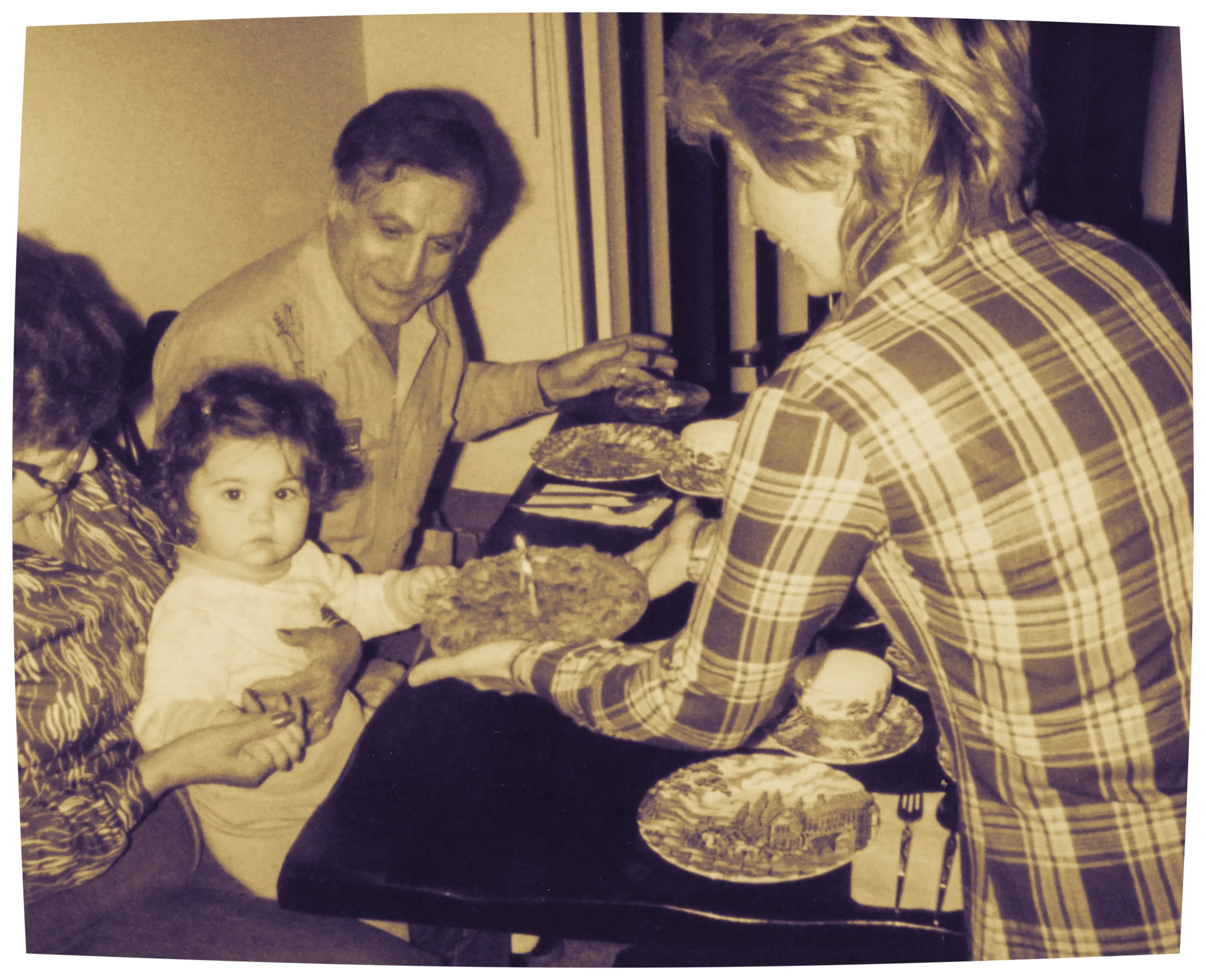
The writer's first birthday, Oct. 29, 1981: Three generations—grandparents Catherine & John, their daughter Joann, and her daughter Christine—celebrate with one of Pop’s pies (rest assured, there was a first birthday cake, too, as Mom is quick to point out!)
Pop’s Pie
By Christine Tarulli Mugnolo
I’ve always been a sweets person. That is to say, I’ll be happy with dessert for breakfast, lunch, and dinner. I believe I have my grandfather partly to thank (blame?) for that…and for my own sporadic hobby of making delectable treats.
My grandfather and grandmother eloped to Colorado in 1942. Soon after, as an officer in the army, he was stationed in Anzio, Italy, for the remainder of World War II. In between the fighting, Pop did what he did best—he cooked. He became the chef for his fellow officers and higher-ranked officials. And when he was finally home, he was head chef for his family.
There was nothing that Papa loved more than watching us devour what he made on any given day. And he never, ever forgot dessert.
I always felt Pop made dessert especially for me, his chubby, sweets-loving granddaughter. I would sometimes catch him beaming at me, all messy-faced and sticky-fingered. How his smile and hearty laugh would light up the entire room!
While I loved his cookies and his pretty lattice cherry pie, Pop’s key lime pie was my absolute favorite. It was always amazing: thick, buttery graham-cracker crust, sweet yet tart filling, and just a few twisty limes on top as garnishment.
As I got older, the pies seemed to get even more delicious, prettier, and, ultimately, simply perfect.
Pop passed away on December 16, 2001, when I was a senior in college. I was—I still am—devastated. I always will be. We lost our family’s heartbeat, our core, and I lost my Papa.
I think that’s when I started to bake. And I baked all the time then—for my family,
for my friends and boyfriends. I adored watching them taste all the goodness that
I (lovingly) shoved in their faces.
I don’t remember when my grandmother gave me my grandfather’s key lime pie
recipe. But when she did, it was as if she were handing me the damn Holy Grail. It’s been about 14 years, and I still cannot get it just right. I make the pie once or twice a year; it’s my special time with him. No TV, no one else in the room...just the two of us. How I curse that Pop didn’t write down what he really did to make his pie so great!
Eventually, I made my own tweaks. While my pie is good, it’s not as good as I remember his to be…and not nearly as beautiful. But that’s okay; it doesn’t have to be.

I have his—our—faded and butter-stained recipe, which, to me, is more beautiful than any pie. And I take it out every time I make it.
If I could have a few more hours with him, I’d introduce him to my daughter (oh, he would just eat her up!); I’d dance with him and not give him a hard time about it; and we’d bake together, so I could finally learn his secrets to the best key lime pie I have ever had.
Love and miss you always, Papa.
-----------------------
Christine Tarulli Mugnolo is a wife to a traveling husband, stay-at-home-mom to a very active toddler and two rescue pups, and in her spare time, a freelance editor. She thinks there’s no better smell than that of an old book from the library.
Pop’s Key Lime Pie Recipe
Crust
1 1/2 packs graham crackers, crushed
2 tablespoons margarine
Filling
8 eggs, separated (yolks only)
2 cans condensed milk
6 ounces lime juice (from about 6-7 limes) or Nellie & Joe’s Famous Key West Lime Juice
green food coloring (optional)
To make crust:
Combine graham crackers and melted margarine in bowl, then press into pie pan. Chill 30 minutes before pouring in pie filling.
To make filling:
Preheat oven to 350°
Combine egg yolks with condensed milk in medium bowl.
Mix well. Add lime juice a little at a time until smooth and creamy. Add a touch of food coloring until filling is desired color. Pour into pie shell. Slice a lime very thinly and add slices to top of pie before baking. Bake at 350° for 20 minutes.

The writer’s grandfather, John Carl Esposito (April 25, 1922 - December 16, 2001), in uniform in Pueblo, Colorado, where he was stationed before going overseas; 1942


A taste of the past
Smells and tastes conjure memories in a most primal way, and can transport us right back to our childhood kitchens. Our recipe for preserving your food stories.

Smells and tastes conjure memories in a most primal way, and can transport us right back to our childhood kitchens. As such, they are excellent jumping-off points for writing or talking about your memories and crafting them into a story for generations to come (not to mention, the kids will be thrilled to have those cherished recipes actually written down).
Delve into your food-related memories if...
you have a living relative who can be equated with the family hearth: recording those recipes, techniques, & special foods while you can is an invaluable gift for future generations
family holidays center around the table
milestone celebrations come back to you in waves every time you smell a certain dish
you want to preserve your culture
Foods Stir the Memory
On Tuesday we will be launching a new series of posts, A Taste of the Past, in which food plays a starring role, leading us down a path of reminiscence and reflection.
In the first contribution, Christine Mugnolo recalls her grandfather's singular key lime pie: Why can't she recreate it just so?
“It’s been about 14 years, and I still cannot get it just right. I make the pie once or twice a year; it’s my special time with him. No TV, no one else in the room...just the two of us.”
In another post, Kaitlin Ahern pays tribute to her mom’s spaghetti and meatballs, and you'll raise a glass with her to toast the memory of a mother gone too soon (and I guarantee you'll be uncorking a bottle of red, picking some basil from the garden, and putting on a pot of red sauce yourself—and, if all goes well, you'll be conversing around the dinner table about your own favorite handed-down recipes).
In “Billie’s Famous Foods,” Melissa Finlay recalls how her Gramma kept a jar for bacon drippings on her stove, used it liberally, and kept it full. “She knew everyone’s favorite foods and provided them—often.”
I hope these and other upcoming stories will inspire you to want to record your own memories. When you've gathered enough, or decide you'd like our professional help in recording them for posterity, an heirloom book is the perfect place to preserve them.

Related Reading:
If the idea of bottling memories of your ancestors' foods appeals, you might also want to check out:
Grandma's Project ("Sharing the World's Most Delicious Heritage"), in which filmmakers from around the globe cook with their grandmothers—and elicit evocative stories of the past along the way
Dinner: A Love Story, a so-much-more-than-a-blog compendium of recipes, kids' lunch ideas, and more from book author Jenny Rosenstrach; she occasionally hones in on the power of food as love, too, such as in these three lovely posts: Sense Memories (her husband's recollections of the birth of their first child and chicken salad, not necessarily in that order); The Napkin Note (about her mom and lunchbox missives); and Absolute Value (about her dad, Oyster Bar, and chocolate marzipan bars)
The Dinner Party, a glorious, long-time-coming community of mostly 20- and 30-somethings who've each experienced significant loss, who get together over potluck dinners to talk about the ways in which it continues to affect their lives and how to thrive in #LifeAfterLoss—an inspiring, real-life example of the power of a shared meal to heal and create community, even (maybe especially) after the death of a loved one.

Choose your own adventure—then tell it.
When you read memoirs—or even binge-watch reality TV—the stories you are witness to often seem larger than life. How can my little life compare?, you might think. I have nothing remarkable to say. Oh, but you do. Every choice you make, each person you encounter, adds to the texture and direction of your life. You are creating your own narrative. You’ve got reasons why you AREN’T telling your story. I’ve got reasons why you SHOULD.

(7 Reasons You CAN’T Tell Your Story, & 7 Better Reasons You CAN)
When I was a kid I read the choose-your-own-adventure series of books, liking, as most preteens did, the ability to hold some sway over how the storyline unfolded. I would read one book multiple times, attempting to make every choice combination possible. It was easy to become part of the story.
As I grew up and immersed myself in literary worlds well beyond Sweet Valley High, I would lose myself in stories of characters both like and unlike me.
Only as an adult did it fully dawn on me that I was, in fact, living my own story.
When you read memoirs—or even binge-watch reality TV—the stories you are witness to often seem larger than life. How can my little life compare?, you might think. I have nothing remarkable to say.
Oh, but you do.
Every choice you make, each person you encounter, adds to the texture and direction of your life. You are creating your own narrative.
You’ve got reasons why you AREN’T telling your story. I’ve got reasons why you SHOULD.
What’s your reason for not telling your story?
1 - I don’t keep a diary, so I won’t be able to remember details.
Time passes. Our memory is faulty. Even with a journal or diary, you would never be able to reliably relate all details of a time or scene from your past. While having a journal to reference could be a tremendous help, it is by no means a prerequisite for remembering, and telling, your own stories.
All memoir writers—and anyone who just reminisces over a cup of tea—challenges the limits of memory. Your sister might remember details differently from a shared memory—That dress was blue! It was winter!—and who can say which of you is right? While you might get a detail wrong, you are striving, in good faith, to recreate the essence of your memories, to transport those who are receiving your stories to your emotional state of mind, to feel your experiences.
“The present is all that’s genuinely available to anyone, and the present is fleeting, always turning instantly to the past. Even facts distort: What’s remembered, recorded, is never the event itself, no matter how precise the measurement—a baseball score is not the game…. At best, what we can do is listen to memory and watch memory…and translate [it] for those we want to reach.” —Bill Roorbach, Writing Life Stories
I’m not advocating getting details wrong—but by no means does one need a day-by-day accounting of their youth to begin to tell their early stories!

2 - My story is nothing special.
Oh, contraire. Stop comparing yourself to those aforementioned reality-TV show subjects. Have you loved? Made difficult choices? Gone on adventures that made you smile, laugh, feel invincible? Accomplished things that would make your parents (or your children) proud? Are there stories you used to retell around the dinner table, or the campfire? Are there questions your grandchildren have asked that you’ve only skimmed the surface of answering?
Even if the answer to every one of these questions is, “No!”—even then, I am confident there are questions to which you will answer with a resounding, “Yes!” You are living your story, and YOUR story matters.
Want a little (fun to read) proof? Check out what happened when a fellow personal historian spoke to a group of 10-year-olds about some pretty ordinary people. Then check out this video, and bear witness to some amazingly average people telling small stories that feel remarkable. Get ready to be moved.
3 - I don’t have very many photographs.
You’ve got a few, don’t you? And I would venture to guess that if you’ve saved those few, there’s a reason. Tell the stories of those pictures. Sit down with a friend, hit RECORD on your smartphone’s audio feature, and have a conversation about what you recall. Describe the sensory details—the coarse fabric of the formal jacket you wore, the fishy smell blowing in from the shore, the metallic taste of spearmint from the gum tucked behind your tongue. You may not know the exact date the photograph was taken, but I’m willing to bet you know more substantive stuff about the “when”: after you had graduated; before your father died.

So you've got just one treasured photo—start there! What memories does it spark?
Maybe you have absolutely no photographs. There are other options worth exploring: illustrating your book in a style that complements your narrative; using archival photographs to illustrate what the time was like; staging professional photo shoots to include family heirlooms, yourself and your current family members, or even the places that have mattered in your life.
4 - I’m too old to start now—how could I possibly cover 70 years?
It’s only too late if you never begin.
“You don’t have to cover all 70 years at once,” says Linda Coffin, founder of History Crafters. “Start small. Don't box yourself into ‘I was born... And then... And then…’ Tell just your favorite stories, or tell the stories that no one is left to tell but you. ANY stories that you tell will be important to those you leave behind, even if they aren't ALL your stories.”
Your stories are a testament to who you are, and “something is better than nothing,” says Lyn Jackson, founder of Every Story Media. “Your loved ones will cherish what you choose to relate.”
5 - I’m too young to start now—my story is just beginning!
Ah, how fortunate you are. Consider how fresh and visceral your favorite coming-of-age tales are: Stephen King’s Stand By Me (short story and movie), Judy Blume’s Are You There God, It’s Me, Margaret? (adolescent fiction), Lena Dunham’s Not That Kind of Girl (modern essays written by a feminist actress who has tapped into the zeitgeist like no other recently).
You are in the midst of your story, and dare I say it may be one of the most exciting parts! Life milestones are opportune times to craft a book, as they are often emblematic of turning the page on a new chapter in your life. Consider telling your first chapter.
Are you embarking on your college education? Engaged to be married? In the midst of changing careers? Bat/bar mitzvahs are also popular times to memorialize in words and pictures. Remember, your story can be primarily photo-driven, too—quotes and short first-person reflections add color and context in a lovely way and help bind a picture story together, helping you capture a formative time in your life, both for yourself and your ancestors.
6 - I don’t have any children of my own, so who cares?
If you are fortunate, you have friends and other loved ones to whom your story matters. You may not be leaving a genealogical legacy to your children, but there are many other types of stories that hold meaning, and that are begging to be told.
Your story may be part of a broader narrative that history has a responsibility to capture: veteran accounts, the early LGBT experience, the Civil Rights movement (or ongoing race relations in our nation), even seemingly “small” historic moments in your local community. What has mattered to you, and how have you participated in the world at large?
“Every life—every, single life—matters equally, and infinitely.” —Dave Isay
Even if you have no interest in publishing a book to hold your memories, there is value in the writing itself—and equally in the sharing of stories for strangers to hear (StoryCorps comes immediately to mind!).
All of this to say: We care. People care.
7 - I am not a writer.
That’s what we are here for.
Often the most intimate and revealing stories result from one-on-one conversation. You talk, and we listen. What we do from that point is, well, just a little bit of magic.
Let's talk, and see what we can do together.
Related reading:
20 Reasons Why You Should Write Your Family History
Association of Personal Historians Experts Weigh In: More Reasons to Tell Your Family History

“His are the sepia eyes that passed through me.”
“His is the broad nose, the high cheekbones, the determined mouth, the face not like an oval or a heart, but like a square. He died long before I'd ever meet him, but I carried him in my blood.” In Beth Kephart's contribution to our “Pictures Into Words” series, you’ll find inspiration for writing about a photograph that holds more mystery than memory. Sometimes it's the wondering, the imagining, that brings life to an old photo—that carries your ancestors from the past into the present and finds the narrative thread in our connected lives.
When it comes to writing your own life stories, sometimes what's called for is inspiration, plain and simple. Sure, you can get plenty of tips on how to approach the process; there are some notable books that can guide you on the journey, and our blog regularly offers advice on the topic. But beautiful words, strung together like pearls and simply telling a story, may be a far richer bounty.
With that in mind, here is another installment in our “Pictures Into Words” series, contributions from other memory-keepers who know the joy and process of using a photograph as a prompt for writing. Each provides not only a wonderful short read, but a fine and unique example of how you too may approach telling the stories behind your family photographs.
This short piece by author Beth Kephart has been previously published; it was the opening to her 2002 memoir Still Love in Strange Places. In her poetic contribution, you'll find inspiration for writing about a photograph that holds more mystery than memory; sometimes it's the wondering, the imagining, that brings life to an old photo—that carries your ancestors from the past into the present and finds the narrative thread in our connected lives.
Pictures Into Words:

Photo courtesy Beth Kephart; pictured on right is Carlos Alberto Bondanza, the grandfather of Kephart's husband, and the man whose stories captivated her imagination
“Torn Photograph, Sepia Stained”
By Beth Kephart
The tear runs like a river through a map, hurtling down toward his right shoulder, veering threateningly at his neck, then diverting south only to again pivot east at the fifth brass button of his captain's uniform. Below the tear, two more brass buttons and the clasp of his hands, and below all that, the military saber; the loosening creases on his pants; the shoes with their reflections of the snap of camera light. He is one of three in a sepia-colored portrait, and someone had to think to save his face. Someone had to put the photo back together—re-adhere the northeast quadrant of this map with three trapezoids of tape so that his left hand would fall again from his left elbow and he would still belong to us. We suppose he is the best man at a wedding. We suppose that it was eighty years ago, before the matanza, before he was jailed and then set free, before he saved the money to buy the land that became St. Anthony's Farm.
“Did I ever tell you what my grandfather did the year the farm first turned a profit?”
“No.”
“He threw the money into the air, the bills, and they got caught up with a wind.”
“And so?”
“And so he ran after those colones through the park. Chased his own money through the leafy streets of Santa Tecla. Imagine that.”
I do. I am often imagining that. Imagining that I know him—this man whose likeness is my husband's face, whose features are now borne out by my son. His are the sepia eyes that passed through me. His is the broad nose, the high cheekbones, the determined mouth, the face not like an oval or a heart, but like a square. He died long before I'd ever meet him, but I carried him in my blood. Just as the land carries him still, remembers. Just as St. Anthony's Farm will someday, in part, belong to my son, requiring him to remember what he never really knew, to put a story with the past. Words are the weights that hold our histories in place. They are the stones that a family passes on, hand to hand, if the hands are open, if the hearts are.
“You look like your great-grandfather.”
“I do?”
“Yes. Come here. See? That’s him, in the photograph.”
“Him? My great-grandfather?”
“Yes.”
“But he looks so young.”
“Well, he was young once. But that was a long time ago, in El Salvador.”
We remember. We imagine. We pass it down. We step across and through a marriage, retrieve the legacies for a son.
-----------------------
Beth Kephart is an award-winning author of 21 books of fiction and nonfiction, including Handling the Truth: On the Writing of Memoir, which we recommend in a previous post. Her current book is This Is the Story of You (Chronicle). The above was excerpted with permission of the author from Still Love in Strange Places: A Memoir (W. W. Norton, 2002).
Kephart has recently launched Juncture, writing workshops where the locale plays an integral role in inspiring and enabling the writing process. Sites have included
an experience-enriching Pennsylvania farm and, in the fall, a sunny gathering place along the coast in historic Cape May. “Participants will learn what memoir genuinely is—and what it is not. They’ll study the words of the greatest memoirs ever written, respond to daily prompts, and work toward a fully developed memoir prologue that summons both the themes and tone of work yet to come,” details her site.
And they will enjoy the unique surroundings of their chosen environs, gathering formally and informally for readings, conversation, and inspiration.

“Honoring Mamita”
Yuliana Gomez Delgado reflects on a favorite photograph with her grandmother, a shot that has taken on new meaning now that Yuliana herself knows what it is to be called Mother. As she poignantly writes, “Burying her was saying goodbye to my childhood—it was the first time I realized time went forever forward, and so many happy memories were destined to stay behind.” And yet, she finds a lasting way to honor her Mamita, and create a loving legacy for her family.
You don’t have to call yourself a writer to write meaningful vignettes about your life. There are some notable books that can guide you on the journey of writing your life stories, and our blog regularly offers advice on the topic. Sometimes, though, all you need is a little inspiration.
With that in mind, here is the second contribution in our “Pictures Into Words” series, vignettes from other memory-keepers who know the joy and process of using a photograph as a prompt for writing. Each provides not only a wonderful short read, but a fine and unique example of how you too may approach telling the stories behind your family photographs.
Since it's still May, we’re proud to feature recollections of another strong matriarch in honor of Mother’s Day. In her piece, Yuliana Gomez Delgado reflects on a favorite photograph with her grandmother, a shot that has taken on new meaning now that Yuliana herself knows what it is to be called Mother.
Pictures Into Words:
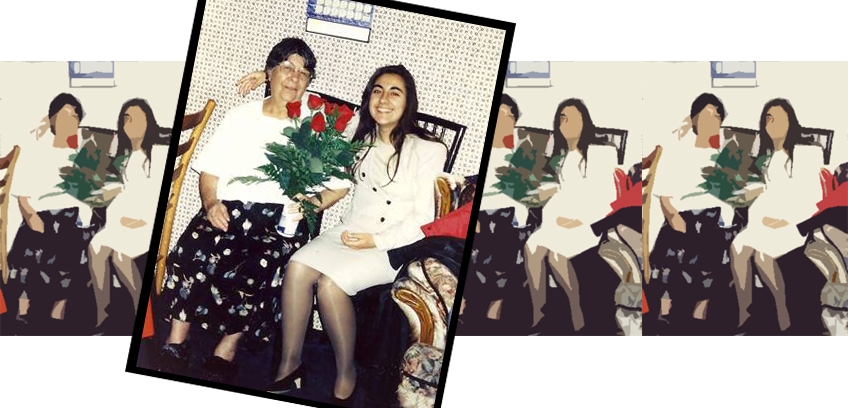
The writer, Yuliana Delgado, with her maternal grandmother, Mother's Day, 1996
Honoring Mamita
By Yuliana Delgado
I keep this picture in a safe place because of all that it represents to me. It was Mother's Day 1996 and we were visiting my Mamita (what I called my mom’s mom, my abuela or grandma) after church that Sunday. I was hamming it up for the camera, but I can still feel the scratchy icky-ness of those seldom-worn pantyhose on my legs and how silly I felt in my beige suit. What can I say, I tried to dress up a little since I lived in sweats and tees pretty much all the time (I was in college after all!). Beyond how I felt about my church garb on that day, what I remember clear as day is the incredible love and gratitude I felt for Mamita, whose health had been declining rapidly over the previous months.
Holy crap, that was 20 years ago! I was in my teens and a sophomore in college. And yet, despite my relative youth, I think I knew how little time I had left with my incredible, wonderful, always happy, always positive Mamita, María Noemí. In the days that followed that weekend, we visited her Queens apartment as much as we possibly could, to spend time or just to help around the house after her grueling radiation sessions or after those exam days, when the poking and prodding she had to endure at the hospital left her exhausted.
Almost two years to the day that this picture was taken, Mamita left us, finally succumbing to the cancer that had ravaged her body. Despite the fact that I knew it was coming—and as I think is always the case—her death was beyond painful, surprising, crushing. It didn’t matter that I knew the day would come, it had to come; knowing she was gone forever still destroyed me. Burying her was saying goodbye to my childhood—it was the first time I realized time went forever forward, and so many happy memories were destined to stay behind.
I found this photograph about two years ago, when I was pregnant with my daughter. While we had decided upon Sofía as our girl’s first name, we were struggling with a middle name. The picture brought inspiration. I would honor Mamita in a most special way, one that would keep her ever-present in my life: We would give our baby Mamita's middle name. It was the best way I could honor her, so many years after she left us. And Sofía Noemí is in, so many ways, a little bit like Mamita.
I hope Mamita’s great-granddaughter can carry on her spirit and legacy. Her name is a way to have her again in our lives. And whenever I look at my Sofi, I know we chose the name well.
-----------------------
Yuliana Gomez Delgado is the managing editor at MamasLatinas.com. She lives in New Jersey with her hubby, 4-year-old son, 20-month-old daughter, and two cranky Chihuahuas, Pablo and Arnie.