
Memories Matter
Featured blog Posts

READ THE LATEST POSTS

Freeze frame
Family photos we deemed special enough to show off in frames around our house likely are not preserved at all. Inventory & digitize them before it’s too late.
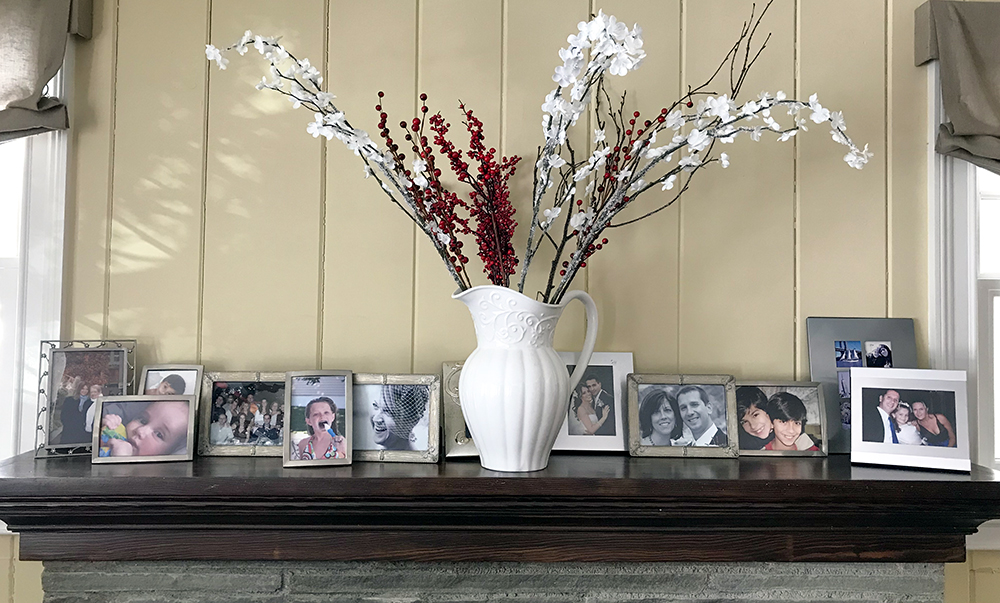
I have written often enough about the tragedy of digital photo hoarding and the importance of preserving our family archives for future generations. And I try to be on point about keeping up with the deluge of family photos from all our devices (deleting duds and dupes, backing up images to my hard drive for the annual family book). But I had a panicky realization recently:
Many of the photos most important to me are not, in fact, digitized at all, never mind backed up for safe keeping.
Yours too, I bet.
I am talking about the family photos that are right under our noses: the framed photos that adorn our walls and sit on our bookshelves. The ones we deemed special enough to display behind glass.
Take an inventory of framed photos
Once this occurred to me, I began to think of all the pictures around my house. Some of them, of course, derived from digital photos already—so those were likely backed up already, right? Well, depends…
A few things to consider to determine which photos you might want to digitize:
Professional photos shoots
(as from a wedding, family portrait session, or milestone event)
When were the photos taken?
If it was before 1990, the photos were almost definitely taken with a film camera.
If it was between the 1990s through the early 2000s, it’s a toss-up; both film and digital cameras were in common use.
If it was in the mid- to late-2000s, chances are your photographer shot digitally.
Anything taken after 2010 is almost certainly digital, unless you purposefully opted for a film photographer for the aesthetic (there is still a wonderful #filmisnotdead movement among photographers!).
Did you receive the high resolution images from the photographer, or just prints?
Many professional photographers charge a premium for handing over high-resolution digital files, so check your archives to make sure you have the shoot on your computer or external hard drive.
How did you receive the pictures? If it was via Dropbox or another software download site, note that most photographers do not leave files there indefinitely. The fine print in your contract would have stated when the link would expire, but that’s likely of little use to you now. Check, and ensure they are downloaded locally to your own system.
Original prints from a film camera
Old snapshots and Polaroids will fade over time, and may stick to the glass of everyday frames due to humidity. It’s important to find the best way to digitize those images without damaging originals.
Next up: digitizing project
Once you have a sense of how many framed photos are not backed up anywhere (sigh), it’s time to start digitizing. I recommend doing whatever you can to make the project more manageable, including, perhaps:
asking family members to help out
taking on the photos in one room per week
renting a scanner, ordering a pizza, and having a family reminiscing and preservation get-together (let the stories flow!)
at a minimum, using easy smart phone technology to immediately digitize those images you want to share and preserve (note, Google Photo Scan is an amazing option for this purpose, but it is not the answer for high-resolution files to use in a family history book, for instance)
hiring a professional such as myself to get the job done
Most important: Do something to ensure your precious family photos live on!
You considered them special enough to frame; now pay them the respect they deserve by backing them up.
Related Reading
Photographing Our Everyday: Our photos tell the stories of our lives—and our lives, frankly, are not merely birthdays & weddings. Our lives are lived in the in-between. Capture the moments.
Do Something Special with One Story: No one will tell your life stories but you. Five ideas for preserving one chapter of your life story.
The Photo Legacy You Leave Your Kids: Prepare your family photos so they provide comfort—not a burden—to your children when you're gone. It’s one of the most meaningful legacies you can leave your kids.
How to Use Photographs as Prompts for Writing Life Stories: A picture may be worth a thousand words, but when you actually attach words to a picture it gains even greater value.

A tendency toward nostalgia
Rediscovering an old family photo album in her closet prompts Modern Heirloom Books’ founder to reflect on the lasting appeal & transformative power of nostalgia.
When I was in sixth grade, my new English teacher gave us an assignment to create an acrostic from our first name; each letter was meant to be an adjective describing ourselves for the class. I don’t recall what I chose for three of the letters, but I remember being especially challenged by the “N.” When I mentioned to my teacher that I was thinking of using “nostalgic,” she chided me that someone my age most certainly could not be nostalgic. I felt belittled and foolish, and despite my reservations, I wrote, simply—boringly—“neat.”
It’s funny what stays with us over time. I never forgot this episode from middle school, and I occasionally wonder, why? Mostly I think it was a lesson to go with my gut. Even then I knew that I was right, and that I should have written “nostalgic” on that paper; I have long prided myself in the years since as someone who trusts my instincts almost to a fault.
When I consider this memory alongside another one that stuck with me—a minor event that made a big impression—I am sure, too, that it reflects a real dread of having missed opportunities. A time when I didn’t act, or didn’t follow my gut, is a bad thing in my mind. I never want to miss out on something because I was scared or lazy or simply didn’t act quickly enough.
Today, though, I remembered this incident for a different reason. In cleaning out a cabinet to make room for some of my son’s Christmas loot, I came across an old-fashioned photo album that I had put together when I was about 14. It is a small, linen-covered album. Each page is separated by a thin sheet of textured tissue paper, making turning the pages feel like you are unveiling something precious. And indeed, even as a teenager, I knew how precious the photos within were.

I had bought the book with my babysitting money, and collected the photos from my mom’s and grandmother’s messy boxes. It seemed important to me to curate the images carefully, to select those that were visually appealing and that captured moments in our lives that we would one day want to recollect.
All these years later, it is a serendipitous pleasure to rediscover the images I chose. They are not displayed chronologically or thematically, but all together they do convey a loose story of sorts, a story of the everyday joys of our close-knit family.

These days I spend my time helping people not only to curate their family photos, but to discover and capture the stories behind them. To preserve the memories in a way that is both visually compelling and that strikes an emotional chord.

It is heartening to know that the nostalgia I have long felt serves a purpose—and that, in my unexpected role as entrepreneur, I am following a path that is not only central to who I am, but is wonderfully, enchantingly restorative.

It is a privilege that I get to hear your stories, and to capture them for posterity. If you are interested in beginning such a journey with me, please reach out to see how we can work together to create a family heirloom that will encourage story sharing for years to come!

Related Reading:
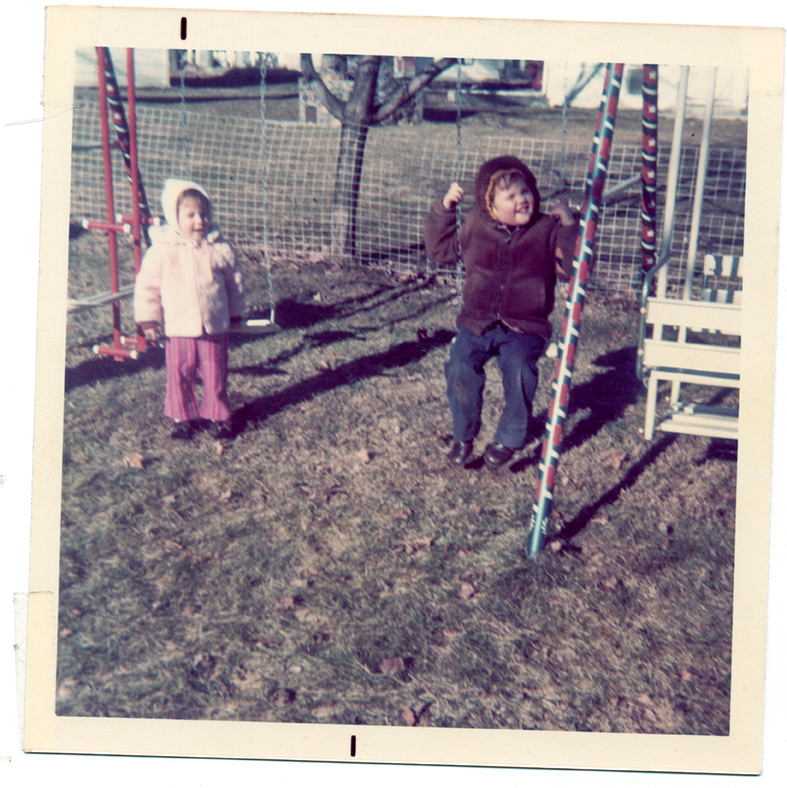
Photographing our everyday
Our photos tell the stories of our lives—and our lives, frankly, are not merely birthdays & weddings. Our lives are lived in the in-between. Capture the moments.

We all take pictures of the milestones, big and little: the first days of school, the first lost tooth, high school graduation, and of course, birthdays. But what of the everyday moments? The in-between that, really, is the essence of our lives?
Ordinary days filled with extraordinary moments
I’m willing to bet you can conjure images in your mind of many of these—they are what make up the fabric of our memories, after all.
dad pulling into the driveway after a full day at work
grandma knitting on the front porch
little brother building Legos
mom doing the crossword with a cup of tea
kids brushing their teeth before bed
spring cleaning the garage
Have you ever taken pictures of these moments?
The extremes of documenting the everyday
There is a genre of photography known as documentary family photography, which takes this idea to great heights, elevating the everyday into beautiful art.
At the other end of the spectrum, some people find the urge (popular among many younger Instagram fans) to document every last morsel of their existence, well, a bit much. As Meredith Fireman wrote in a Fast Company article entitled “How Instagram Almost Ruined my Life”:
“Sometimes I want to talk to my friends and celebrate someone’s birthday without needing to see them blow out the candles in a photo uploaded by five people in attendance.”
I’m not advocating either of these approaches (though for anyone interested in hiring a family photographer, I do think choosing a pro with a strong photo-journalistic sensibility often yields a wonderfully unexpected result!).
I am, however, suggesting that you use the camera that’s with you (most often, your phone) to snap photos that represent your real life. That will remind you down the road of what it was like to live in that house, to go to school in that town, to be you at that age.
Details of time and place
Why do we all love looking at old photos so much? The nostalgia, of course, is infectious and charming. The scalloped edges and white frames of those old black-and-white photos feel cemented in time, like artifacts of another reality.

And they are. It’s not just the fading photographs themselves that lend to this feeling, though; it’s the details within the images that resonate: the curly phone cord tethered to the wall, the wood paneling so indicative of the Seventies, the beehive hairdos of the Sixties, the shape (and size!) of our eyeglasses.
When I look back at pictures of my own son from just a few years ago, I am most drawn to those that reorient me in time. The ones that transport me back to the feelings of new motherhood in a Brooklyn apartment, and the memories of juggling work and home life.
When I shuffle through the boxes of my mom’s old photos, it’s the ones that reveal what her everyday life was like that I cherish. Sure, her high school graduation picture is stunning, and framed in my room. But the shot of her walking down a city street in her Inwood neighborhood as a teenager is compelling—I want to sit down with that young woman and be her friend; I want to hear her stories.

My mom interacting in everyday ways with my cousin Kim (left) in the Seventies, and my brother in the Eighties.
Our stories, in pictures
Our photos tell the stories of our lives. And our lives, frankly, are not merely birthdays and weddings. Our lives are lived in the in-between.
So tell those stories. Write about them, and photograph them.
Your memories matter. Why not make preserving them a priority?
Getting inspired

Photograph Copyright Kristen Lewis Photo
Browse the photo gallery of documentary family photographer Kirsten Lewis for ideas for creative ways to capture your own everyday moments artfully.
On Instagram, search #thefamilynarrative and #lifewellcaptured to see what other families are photographing (and sharing).
Got a box of disorganized photos from your childhood—or even your parents’? Go through it and find the photos showcasing everyday moments: Do you gravitate toward them? Why? Find one or two you might want to recreate from your present-day life.
Tell the stories of your photos. And no, not every story needs to have high drama or represent a major turning point to be interesting.
Track down a copy of Joe Brainard’s classic book I Remember to see how everyday memories can transform from mundane to magical.
Share your own photos on Instagram and tag @modernheirloom #photographtheeveryday —we’ll share a gallery of reader submissions in a future post!

The photo legacy you leave your kids
Prepare your family photos so they provide comfort—not a burden—to your children when you're gone. It’s one of the most meaningful legacies you can leave your kids.
Don’t leave behind three obsolete devices filled with thousands of digital photos for your children to find when you’re gone. Prepare your pictures so they provide comfort—not a burden—to your children: It’s one of the most meaningful things you can do for your kids.
Prepare for the inevitable.
We are all going to die one day. Hopefully you’re not thinking about this inevitability too often, but it’s wise to prepare: Have a will drafted by an estate attorney, prepare your finances and insurance, and organize your records. Even this common wisdom is too often ignored by many.
So is it only the organizationally obsessed who will think about something as mundane as preparing your photos? I hope not.
The legacy of family photos, stories, and the artifacts of memory—scrapbooks, letters, heirlooms—may be of greater value to your heirs than your monetary legacy. Don’t underestimate how much a connection to the past will mean to your loved ones someday!
All that stuff can be a burden to your kids.
It’s convenient as heck to have a basement in which to toss those extra boxes of stuff. But Americans have taken consumerism to new levels in recent years, with shows about hoarding captivating television viewers and paid storage facilities dotting suburban landscapes. We love our stuff, for sure. And while I doubt you are a hoarder, chances are your closets and garage are housing plenty of stuff.
Julie Hall, author of The Boomer Burden: Dealing with Your Parents' Lifetime Accumulation of Stuff, speaks from decades of experience when she says that the next generation will undoubtedly be burdened by all that you will leave behind. “I can virtually guarantee they will not care for these items the way you do, and often are upset and resentful when having to sell or discard them,” she says. “When this happens, hasty decisions are made to ‘just get rid of it.’”
Her advice? “Choose only your favorite things and let the rest go. Future generations will be most appreciative.”
Organize your family photos so they provide comfort, not nuisance.
Don’t assume that your library of family photos is exempt from that “just get rid of it” mentality. If what you leave behind is messy or overwhelming, well, then it’s more of a burden than a gift.
Here’s how to approach your photo organization project, in seven simple steps:

1 - Organize.
Tossing family photos can be one of the hardest things we do. There is a guilt associated with it—those pictures meant something to someone, after all. But do they mean anything to you? Will they matter to your children? Before you can determine which pictures to keep and which to trash, you must first organize them.
Choose a method that suits you, and dive in: Chronological, thematic, or by individual.
If you think creating a straight visual timeline of your life is best, keep in mind that it’s unlikely you will know exact dates for everything; sorting photographs into decades might be most efficient.
Sorting pictures by theme—birthdays, vacations, Christmas, childhood milestones, etc.—is a popular option for those who may want to create books or slideshows down the road. It can be fun to see the similarities in your traditions or amongst your children, too.
It’s possible that you are undertaking this organization project with the idea of divvying up the treasures for your kids. The most challenging part here, particularly with physical photographs, is that multiple children are likely to appear in one photo. I suggest creating one pile for those shots, and prioritizing having those images digitized first.
2 - Toss.
Delete pictures from your phone. Throw away old photos. Easier said than done? Yes, but once complete, this process can feel liberating. And it will be tremendously less burdensome for your heirs. Find advice for how to start trashing digital photos in this helpful article. And don’t forget to place the digital images you choose to keep into albums or folders sorted by date or theme—a hard drive filled with thousands of pictures in no particular order will be more overwhelming than inviting!
Do the same thing with the piles of physical photos you sorted in step one—begin to throw away any that do not hold meaning. Get rid of duplicates and indecipherable pictures.
On the most basic level, ask yourself: Does the picture tell a story that you want to remember? Is it a spectacular photo? If the answer to either of those is YES, it’s a keeper. If not, consider if someone else may value it, or put it in the garbage.
3 - Caption.
Now that you’ve sorted and narrowed down your collection, it’s time to preserve the most basic details of your important pictures. Use a photo-safe pen to write names, dates, and places on the back of your physical photos. Write legibly, and include full names whenever possible. Don’t assume your children will remember their toddler friends’ names or even their grandparents’, for that matter.
If you are technologically savvy, consider inputting all the caption information into the metadata of your digital photos. If that’s too ambitious, print out the most important ones, even on regular office paper, so you can write the information on them.
Seem like a crazy amount of work? Perhaps it is a lot, but consider this: What value will these photos hold if your family members do not even know what they represent? (None.) Alternatively, what value will they hold if you share not only the vital details, but the stories behind them? (Priceless.)
4 - Designate.
Don’t leave it for your kids and your grandkids and your siblings to hash out who gets what. Determine who might want your photos, and divvy them up accordingly.
Many people find that gifting old photos, especially, to their loved ones, is a worthwhile endeavor to do now. Sit with those you love, use your photographs as prompts to share the stories of your life, and see how much they are cherished! Your time and story sharing are the best gifts you can give. If you can’t part with your pictures just yet, share your intentions for bequesting them when you are gone.
5 - Create.
There are strong reasons why we hold our family photos dear. They connect us to the past, testify to our triumphs and experiences, and make us remember. And smile.
Share the smiles with those you love by creating something special from your favorite photo moments:
enlarge and frame a single print
send a digital image via email with more than a #tt hashtag: write its story, share the memories it conjures up
By creating something—and sharing it—you are giving life to the stories behind your photos.
6 - Permit.
Give permission to your children to toss your things. You may have an attachment to your stuff, but your children will find their own connection to what you leave behind—and it may be to something completely unexpected.
Let them know that you do not expect them to keep everything, and if you have a preferred charity, tell them you’d be happy to have your things be donated. Likewise, tell them which photographs and heirlooms you would most like to pass on, and why. When your loved ones are armed with this knowledge, their decision-making becomes much less emotionally charged, and they are more likely to hold onto and cherish those things that hold true meaning.
7 - Hire.
If all of the above seems too daunting, or if your time is simply taken up by other priorities right now, consider hiring a professional photo organizer. They can jump in at any stage of the process or help out with just one step.

Google’s new app: Great way to preserve your old photos before they fade away
The new Google PhotoScan app allows users to digitally capture their old family photos with ease—and without glare. While the app isn't ideal for scanning high-resolution images for use in print, it has enormous value in quickly and effectively scanning those precious boxes of old family photos you—and your extended family members—have lying around your homes. See why it's a recommended download.

The new Google PhotoScan app allows users to digitally capture their old family photos with ease—and without glare.
Maybe you’ve got boxes or drawers full of old photographs you inherited from your parents. Or perhaps you have just a handful of cherished, dog-eared black-and-white pictures representing your entire family history. No matter how many of those old physical family photos you have, their quality is being eroded by the mere passage of time. With PhotoScan, Google has made preserving those pictures easier—and better—than ever.
The standalone app (available on iOS and Android), rolled out by Google on Tuesday along with added functionality to Google Photos, allows you to scan your printed photos in seconds, glare-free.
It’s as simple as placing your image on a flat surface and aiming your phone’s camera at the picture—you then capture four dots on your screen, kind of like a game. “Each time you capture one of those dots, the app is capturing an image of the print underneath,” said Julia Winn, a product manager for PhotoScan. “Then we take all those images, stack them on top of one another so that they are perfectly aligned, and throw out any pixels that are bright white and are not in common between the four images—those are glare.”
Machine learning technology also crops out the background, straightens uneven corners and photo edges, and does minor color enhancement to restore faded color—leaving you with a scan of the original that is significantly better quality than if you had taken a picture of it with your phone.
This is not a solution for family memory-keepers who want to eventually print family photos in a book or make enlargements to hang on the wall. Quality depends on the device used to perform the scan as well as the quality of the original, but it will never be sufficient for that kind of use. At a Google press event in Manhattan on Tuesday, I was impressed with the quality of printouts from scanned images, but note that they were all printed approximately the same size as the original photo.
PhotoScan, though, is the best option I have found for preserving a lot of old photographs quickly and sharing them easily. And that is something I urge everyone to do!
Since scanning photos with traditional scanners takes time, and since many people are reluctant to part with their photos temporarily to utilize a third-party digitizing service, risking loss and damage, too many people are doing nothing with their precious family photos. But those photos are indeed fading physically, not to mention fading from our memories as they sit neglected in that box.
Download the free Google PhotoScan app if you want to:
scan photos (even framed ones) at a relative’s home this Thanksgiving
easily get a stash of #ThrowbackThursday posts onto your phone
share childhood photos among siblings and extended family members easily
Google Photos has made sharing albums with anyone easier than ever.
One of the main draws of Google Photos as a primary photo management tool, in my opinion, is the functionality of its shared albums. Once you create an album, Google Photos allows you to invite friends via email, text message, or through Google Photos directly to add photos and caption information to the shared album. Your contacts are accessible through the app, and recipients receive notification and a link to the album via whatever contact method you choose.

Your contacts automatically load from your device into the Google Photos interface, making sharing across platforms simple.
So if you went to a graduation party or on vacation and five different individuals took photos, gather them all together in a shared album. Anyone who is invited can add photos, even if they are not a Google Photos user.
Why not create an album for different sides of your family, and begin creating a photo library of past generations? By inviting cousins and extended family members to contribute, you just might be surprised what photographic gems you’ll discover when they add pictures from their own collections!
Yes, PhotoScan is worthwhile even if you plan on having an heirloom book made.
While the scans from Google PhotoScan are not of a high enough quality for high-end print production, going through the exercise of gathering your family photos, identifying your favorites, and particularly inviting others to share their own snapshots with you, is a great first step in conceiving your book.
Some pictures might spark memories and elicit a favorite, once forgotten, family story.
Your great aunt Marilyn might scan in a photo of your mother in all her hippie splendor…or your father in his Catholic school uniform you’d never seen…or you at the age of one with that bowl haircut you forgot all about…
Beginning to catalog your family photos digitally will help an editor begin to see themes and understand what types of images she will have access to when creating your book (though you will need to gather originals for high-resolution scanning to occur for print purposes down the road).

There were various vintage cameras around the demo areas at Google's recent press event. Remember those cube-shaped flash bulbs for the Kodak Instamatic?
Conclusion?
Google PhotoScan is a must-download, free app that you will be glad to have on your phone the next time you come across an old family photo.
Whether or not you use Google Photos to organize your photo library, the PhotoScan app is a useful tool in your family history, genealogy, or memory-keeping arsenal.
Just don't forget: The resulting scans will not be suitable for enlarging prints or using in a high-end print book.

Don’t rely on social media to save your photo memories
Your memories matter too much to lose them to some virtual void. Here's why Facebook and Instagram are NOT the places to save your precious photos.

Enjoy photos on social media now—just don't rely on those platforms to preserve your pictures for posterity!
To reiterate the headline: Don’t rely on social media to save your photo memories! That’s a big N-O in my book: Relying on Facebook or Instagram to safeguard your precious images and memories is shortsighted.
I am active on various social media platforms, including those I mention; they are great for connecting, venting, passing the time on a commute. They are wonderful platforms for sharing pictures of your family’s favorite moments (I do love such everyday history!) and capturing tidbits we might otherwise forget (from that thing you couldn’t believe your 3yo just uttered to the quote posted near the Starbucks register).
But think about this:
Facebook was never intended as a place to store your photos. A photo shared on your timeline is a vehicle for social interaction; it is not a receptacle for keeping those photos.
Images uploaded to Facebook are converted to a lower resolution (read: lower quality) immediately. So if you want to retrieve that image from the platform later, it will be optimized for web viewing—definitely not for printing.
Any social media platform may change its terms of service at any moment, and none of them can guarantee the longevity of your data. It’s your responsibility to back up your original digital images, whether on an external hard drive or in the cloud.
Do you enjoy endless scrolling to find the picture you want? Despite hashtags on Instagram and the ability to make albums on Facebook, the actual search and sort functionality of these platforms is slim to none. The longer you have been posting pictures, the more challenging it becomes to find them on these sites.
And then there’s this:
Does what you post to Facebook accurately reflect your life the way you want to recall it?
There is a handful of companies that will generate an annual memory book straight from your Facebook feed. A nice idea in theory, but I am willing to bet some of the things you post are a bit more throwaway than legacy material. If I were to have a book such as this made, amidst the photo shares from my son’s first day of school and holidays would appear such non sequiturs as a photo of the kale smoothie I ate for breakfast on January 23; a picture of the sign that made me smile at a professional conference (“Toilet out of order; please use the floor below”); political articles galore (brave shares during these politically divisive times!) and myriad lip-synch battles and carpool karaoke videos. If Facebook were to tell my life story, I’d be just a tad embarrassed.
If your Instagram feed is awesome, preserve it.
The best camera is the one that’s within reach. And so it is that so many everyday, often compelling, moments are captured and shared on Instagram. For some, the phone has become the family camera.
If that’s you, consider an annual Instagram book, an offbeat way to memorialize the shots you love. We can create a modern square heirloom book with glossy lay-flat pages that give life to your photographs in fun and engaging ways. Hashtags become bold graphic elements, user comments (especially from friends and family) may add humor or context. The final result is a whimsical, contemporary book that documents your life in a fun yet precious way.
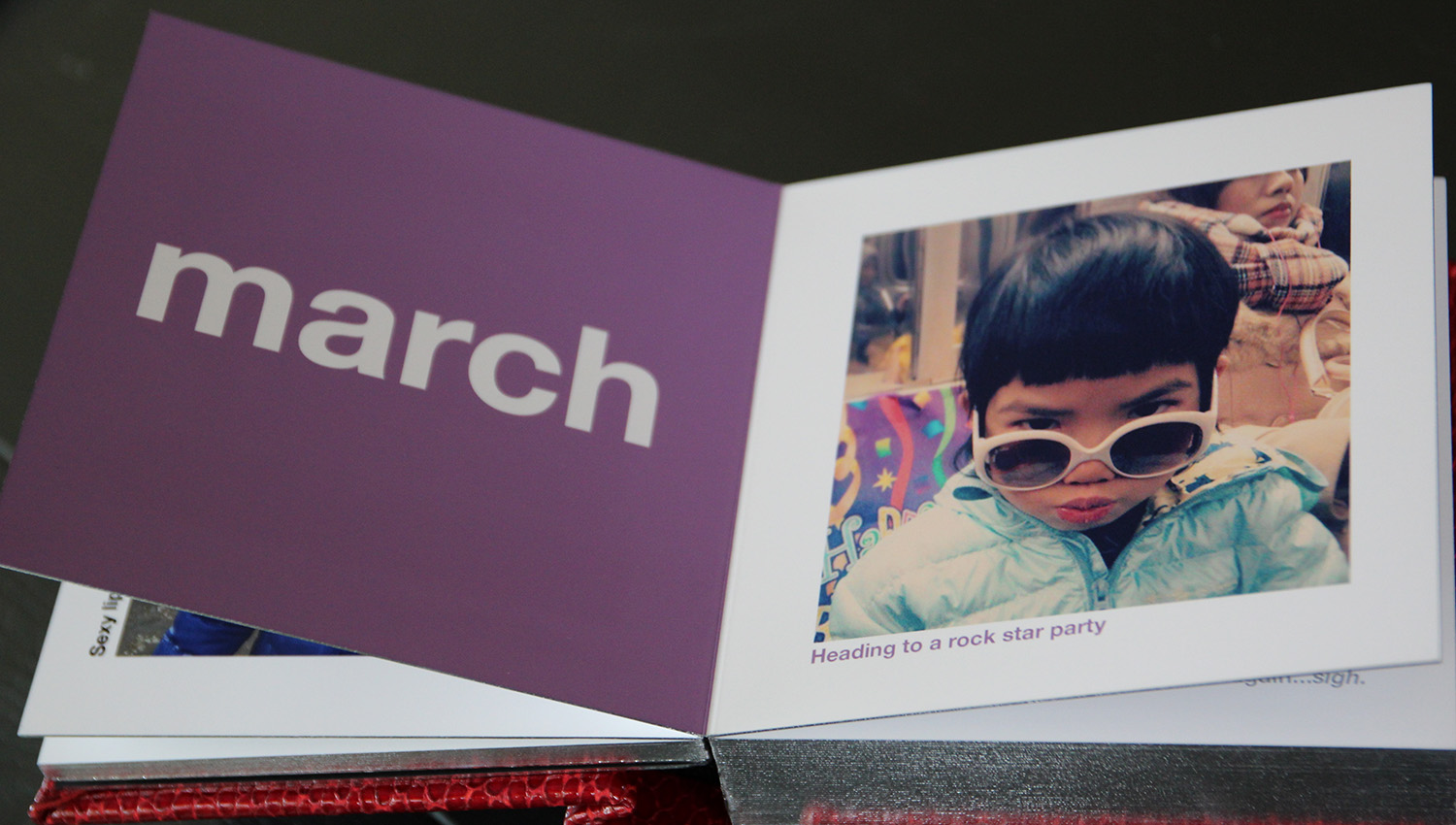
A square-shaped, textured-leather covered book with silver page gilding is an unconventional and oh-so-fun choice for a family Instagram annual.

Hashtags and captions (above and below) add context and a modern graphic feel to an Instagram book. #FamilyAnnual #YearInPictures


A book based on social media posts may seem light-hearted, but that doesn't mean it shouldn't be substantive—this heirloom's got weight and whimsy!
Whatever you do, don’t let any of your social media platforms become your primary storage place, whether by accident or default. Your memories matter too much to lose them to some virtual void.
#MemoriesMatter #InstagramBook #Facebook #SocialMedia #FamilyMemories #Legacy
*This post was updated for timeliness on March 25, 2021.

When a bad photograph is the perfect picture
Throwing away photos that hold no meaning (or are duplicates, or are just plain bad) is a requisite for organizing your visual memories. Think before you toss, though. Sometimes that blurry shot—or an old, ripped black-and-white, or the one where you are so small you're like an ant!—are worth keeping. Here's why.
Throwing away photos that hold no meaning (or are duplicates, or are just plain bad) is a requisite for organizing your visual memories; you’ll never find anything if it’s unlabeled and sitting at the bottom of an overwhelming pile, after all. (Photo hoarders, you are not alone: Get help here!)
Think before you toss, though. There are, in fact, some instances when you should keep that seemingly bad photo.

Oldies are goodies.
If it’s wearing its old age like a badge (frayed edges, torn corners, faded color, and other rips and blemishes) but is otherwise a keeper, keep it. Consider having the image restored by a professional retoucher. With high-resolution photo scanners and digital retouching, professionals can recreate missing parts of an image, remove stains and discoloration, and generally work magic on your old treasures. After all, those vintage shots of your grandparents are the only ones you’ve got. Even if you opt not to restore your old photos now, scan them at a high resolution (600 dpi is sufficient for most people’s use) to preserve them digitally, and take pleasure in the characteristics of age (we often include those charming scalloped photo edges or a small corner tear when we reproduce images in our legacy books).
Blurred but essential?
My baby shower was a whirlwind of hors d’oeuvres, cellophane-wrapped gifts, hugs, and laughter. I was in a constant state of motion, a little pink in the cheeks from the attention (um, the pregnancy, too), and oblivious to the idea of capturing the occasion in pictures. My camera was passed around, though, and I posed for a shot here and there.

When I downloaded the images later, all but a few of the pictures were blurred beyond recognition. Honestly, though, I don’t mind not having an album’s worth of pictures commemorating this occasion; it lives in my memory. And, this one shot of me and my mother—streaked with blur—captures the energy and the emotion of the day: certainly not “perfectly” from a technical standpoint, but undoubtedly beautifully from an emotional one. She, near giddy with excitement at the prospect of her “baby having a baby,” and I, whisked around like a socialite, appear as we should in this shot, a surprising keeper: happy, in motion, dazzled.
If you’ve got blurry shots from a special occasion or milestone, it’s likely at least one of them is worth holding on to. The inadvertent blur might help convey sadness or the passing of time, perhaps. Or maybe the blur does nothing artistically except distract—yet the photograph is the only one that reveals the setting of a day for which you want to remember every detail; photos, especially physical ones we can hold in our hands and touch, help us remember to remember.
Photos help us remember to remember.
Distance makes the heart grow fonder.
We’ve gotten used to tightly cropped images. Favorite game-day shots are those that zoom in on an athlete’s great play. Our Instagram feeds are flooded with close-ups of herb-garnished lunch plates and quirky, oh-so-close selfies. But what of those old snapshots where the background dominates? Where your childhood self is a speck on the landscape?
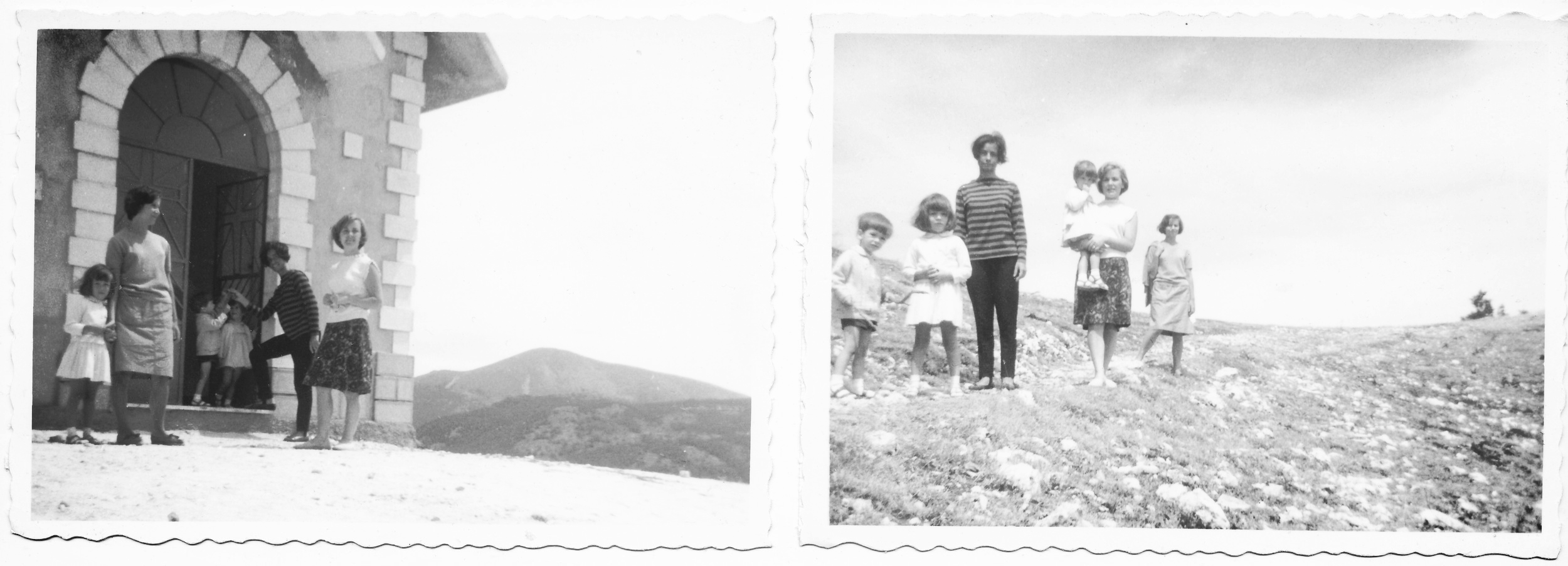
These family photos from a stay in Italy aren't great technically, but the places they evoke and the memories they call forth are priceless. Isn't it wonderful to see siblings' relative sizes to one another, to sense the kids' moods from their posture, to feel transported to the Italian countryside?
Newer drone photography, as adopted by some trendy wedding photographers, shows the appeal of pulling back to a wide-angle shot in the extreme, taking advantage of a grand perspective to show off beautiful scenery. You might not recognize the couple in that stunning scenic setting, but you know it’s you or your loved ones—and oh how that makes all the difference!

I admit, this one is a spectacular photograph—it would never be in contention for getting tossed! It's a wonderful example, though, of how a dramatic perspective can be a true gift, even when the subjects in the picture are not recognizable from that distance. Photo by Lilly Red Photography
So don’t fret that the characters in a photo are too small to clearly identify, especially when you know who they are. Relish the fact that you get a glimpse into the environment (especially when it’s representative of a time gone by or a place no longer visited). Label these photos, whether on the back with a photo-safe pen, in the metadata of a digital file, or alongside the image in a book—you want to ensure that your children and theirs will be able to appreciate not just the gift of the photo, but the knowledge of who is in it.
What pictures have you saved that don’t necessarily qualify as “the best photograph”?
Share with us on Instagram, Facebook, Twitter, or in the comments below!

#Legacy Links: June 10 - Photographs, Memory, and Life Lessons
This week's top 4 legacy links all focus in some way on the enduring power of photography—the power to connect us with the past, to inspire, and my favorite, to reveal stories and truths.
Our top 4 #legacy links for the week ending Friday, June 10, 2016
1 - Families photographed with images of their descendants make a powerful connection to past.
A photography exhibit, on view until tomorrow at El Tejar del Mellizo community center in Seville, Spain, presents photographs of the living descendants of those who lost their lives during the Spanish Civil War. Organized by the Our Memory Association, “DNA of Memory—Graves from the Franco Regime” features photographs by more than 30 Spanish artists. The images capture descendants carrying photographs of relatives killed at the beginning of the Civil War, and they are more provocative and moving than I could have imagined. If you don't happen to be in Seville tomorrow (!!), I urge you to click on the photo below to view the various photographs on HuffPo.
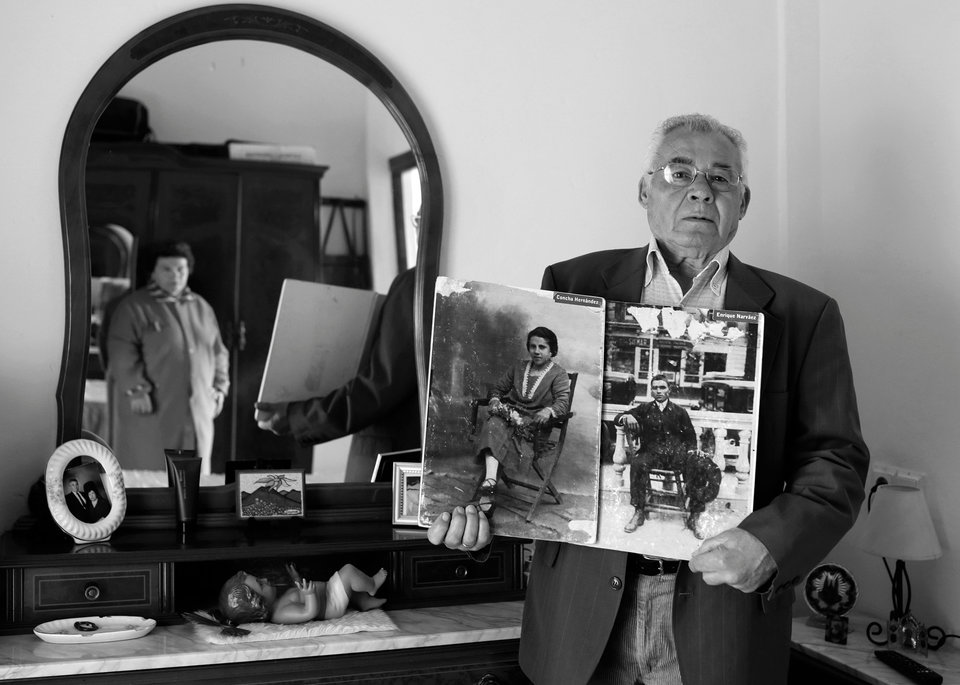
In a photo from the "DNA of Memory" exhibit, Narvaez Hernandez holds up photos of his parents, Enrique Narvaez Borrego and Concepcion Hernandez Garcia, who both died in Marchena, Seville, when Hernandez was 3 years old. Photo by Javier Diaz, courtesy Our Memory Association
2 - How a personal quest to find family resemblances turned into something more.
This one's not new, but somehow I missed it when it made the viral rounds last year. See what fellow personal historian Rachael Rifkin discovers when she undertakes a unique experiment to recreate eight photos of her relatives. Her musings on the nature of descendancy are as enticing as her photo recreations.
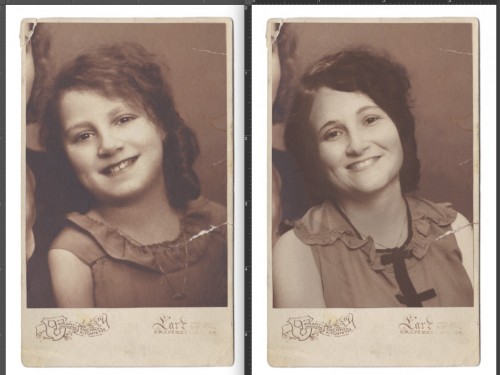
According to a family tree, Rifkin's cousin Ibolia, left, died at Auschwitz in 1944. Rifkin estimates this picture is from sometime in the 1930s. Image courtesy Life Stories Today
3 - One decade, one family, one photographer: This is a photo book I am looking forward to.
Thanks, Family Search, for bringing this one to our attention. Photographer Thomas Holton's book The Lams of Ludlow Street \, which chronicles one family through 13 years' worth of photographs, will be published next month.
"As Mr. Holton got to know the family, the project became more personal. He would pick up the children from school. He visited the Lams’ relatives in Hong Kong and China. When he married, Cindy was his flower girl,"
writes Annie Correal in the New York Times article. Make sure to click through the accompanying slideshow!
4 - What happens when a suitcase of photos sends her on the storytelling adventure of a lifetime.
In the vein of "Finding Vivian Maier," a North Carolina woman hit the found photos jackpot when she discovered a suitcase full of one man's life effects, including photos, letters, and other ephemera—and then began a journey of discovery as she sought to uncover the stories his things revealed. Her site is wonder to behold.

Read an introduction to her photographic treasure hunt on the ever-interesting Save Family Photos:
"Handling these seemingly random artifacts serves as a constant reminder that the sometimes cryptic, occasionally awkward, and often amusing snippets of the past were once as alive and vital to their creators as my own emails, journals and vacation photos are to me."
Dawn Roode’s curated roundup for the week of Sept. 23, 2026, is overflowing with recent reads on memoir, life story writing, and family history preservation.