
Memories Matter
Featured blog Posts

READ THE LATEST POSTS

4 ideas for family interviews
Conducting family interviews is a great way to gather the stories of family elders and preserve family history for the next generation. Here are a few tips.

The next time your parents are around (Thanksgiving, perhaps?) why not have your children interview them about their lives?
I come back to this quote from William Zinsser again and again for its poignancy and power:
“One of the saddest sentences I know is ‘I wish I had asked my mother about that.’ ”
How does that make you feel? If you have lost your parent(s) or other elders in your family, it can be like a punch to the gut. If, on the other hand, older family members are still around, I hope it creates a sense of urgency in you—to wonder about their personal history, to ask questions and, most importantly, to engage in meaningful conversation about the past.
I suggest recording these conversations—perhaps to transcribe later for use in a book, or perhaps to be edited down so your children’s children can hear snippets of their ancestors’ stories in their own words. There are plenty of digital recording apps out there; just don’t forget to use two different recording methods to ensure those memories are, in fact, captured (trust me, technical errors happen…and the feeling of losing those stories, well, it’s not good).
Which interview approach is right for you?
1 - group interviews
For families with multiple generations or family members who see each other only infrequently, group interview sessions during holiday get-togethers can be a fun and fruitful process. How to fit them in amidst all the holiday preparations, though? Some ideas:
After Thanksgiving dessert, keep the coffee flowing and the cookies on hand, but make a voice recorder the new table centerpiece. Share your purpose with your family (“I love hearing our family stories, and want to make sure we capture them for the future”), then ask for volunteers to begin the storytelling.
Do you have family members spending the night after a holiday celebration? Send someone out for bagels the next morning, and turn brunch into a reminiscence session. Keep it casual but focused to get the best stories out of your guests.
At a family reunion or other big gathering, set aside a room specifically for story gathering. Either designate one person as the ringleader (if you have a de facto family historian in your family, this will be right up their alley) or pair people together who you think will have meaningful conversations. Make a list of topics on a white board (or put them on slips of paper for guests to pick, à la charades) and give out time slots for the interview sessions. There is a fair amount of upfront organization involved here, but once the ball is rolling it’s fairly easy to maintain momentum.
2 - kids interviewing grandparents
Setting up “official” interviews with grandparents is a wonderful home-schooling or scouting project for tweens and teens. Have them ask grandparents to gather a few favorite photos in advance to use to help get the conversation flowing. You just might be surprised how many stories are revealed that even you had never heard before (there’s just something about sharing with the grandkids!!).
3 - regular conversation dates
Consider visiting with a close relative regularly to gather stories—perhaps bi-weekly coffee chats or monthly pot-luck dinners, each with a theme (think childhood adventures, momentous decisions, the war years, becoming a parent, etc.). I wish my mother were still alive for me to have such dates with her!
If you have a relative in assisted living, for example, such “interview” sessions may help with their self-esteem and general attitude, as well as giving you both something to focus on rather than day-to-day drudgery.
Keep the pressure off by maintaining a conversational tone throughout your get-togethers. While you are indeed trying to elicit memorable stories, the time together should itself be enjoyable.
4 - telling your own stories
Maybe YOU are the one who wants your stories captured? If you are not a writer, see if there is someone in your circle who might sit with you to converse. It might seem like a good idea to turn on a tape recorder and just start talking, though my experience indicates that having an interested listener—someone nodding or smiling, asking follow-up questions—is a compelling motivator!
If your child or a close friend is unable to fulfill this role, you can always set up a session with a personal historian such as myself (I consider it a privilege to listen to your stories!).
Sharing stories is an endeavor with immediate value, bringing joy to the participants and connecting family members more closely.
I would implore you to go a step further, too, and do something with your stories to ensure they are around for the next generation.
Imagine if your own grandparents had left you such a treasure?
related reading:
A good conversation begins with good questions.
Best practices for recording family history interviews at home
3 easy ways to get your parents’ stories
Meet the man who said he had no stories—until he had an absorbed listener, that is!

Life Story Links: October 2, 2018
A roundup chock-full of life story stuff, from sharing painful memories to honoring a mother's legacy, plus pro tips on talking about money & managing workflows.
“Music does a lot of things for a lot of people. It’s transporting, for sure. It can take you right back, years back, to the very moment certain things happened in your life. It’s uplifting, it’s encouraging, it’s strengthening.”
—Aretha Franklin
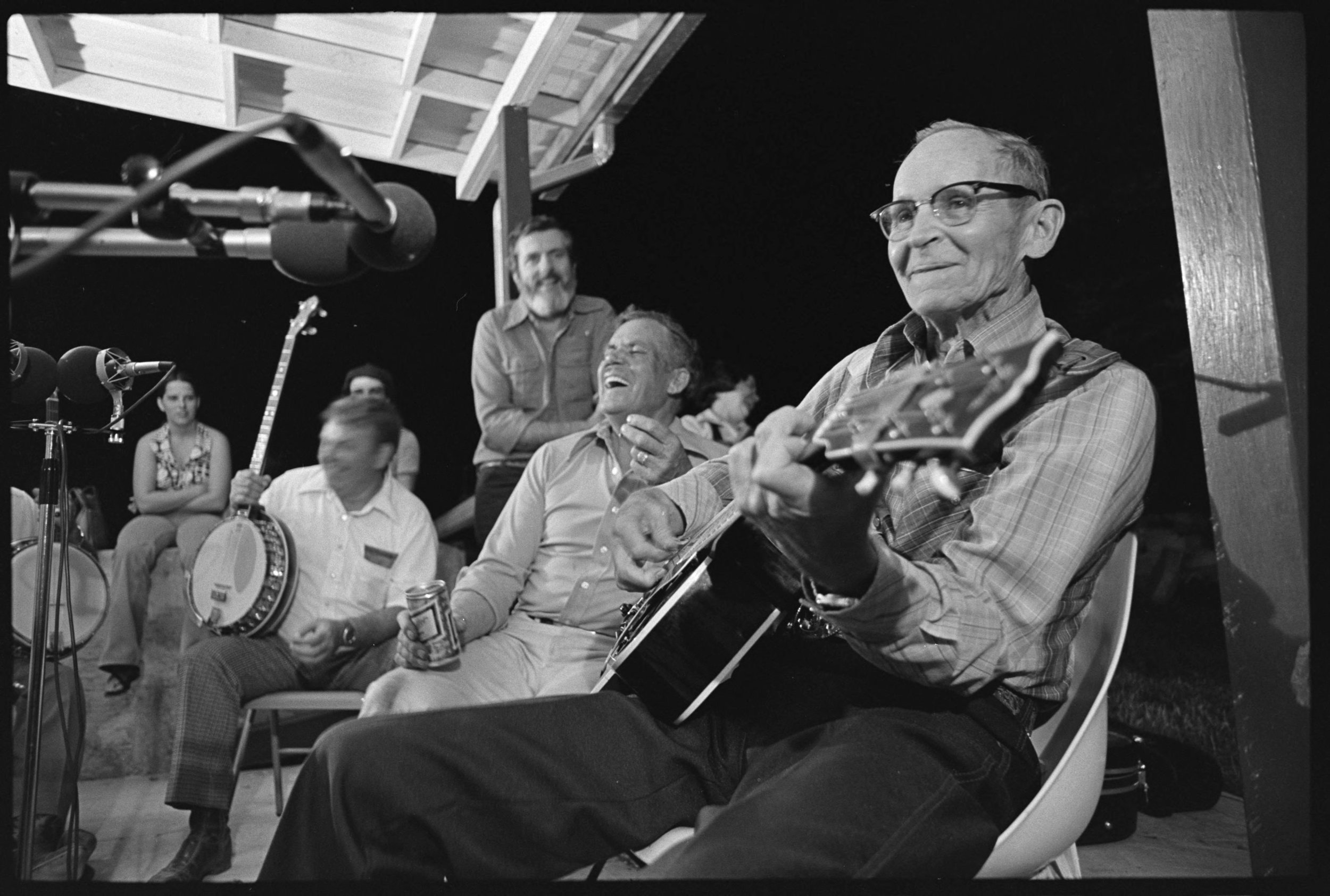
PHOTOGRAPH: Old time fiddling at Bernie Rasmussen's in Polson, Montana, July 22, 1979, from the Montana Folklife Survey collection at the Library of Congress.
Battle Scars
BRUISES AND ALL
“I understand that sharing difficult experiences is decidedly not for everyone,” writes Chicago–based personal historian Betsy Storm. “But nobody can underestimate the power of such stories to lift others up from their own tender and painful places.”
THE RELUCTANT INTERVIEWEE
This week I review the 1996 documentary Nobody’s Business, in which Alan Berliner interviews his (rather pugnacious!) father about family history. You’ll laugh and you’ll cringe at their father-son interplay.
On the Front Lines of History
OBJECT LESSONS
Check out Your Story Our Story, a national project exploring American immigration and migration through a crowd-sourced collection of stories about everyday objects of personal significance.
MOON MAN
Neil Armstrong’s personal papers land at Purdue, his alma mater, including approximately 70,000 pages of fan mail, which Armstrong continued to receive from around the world for years after he landed on the moon. (Archivists: Imagine the time it took to catalog this “finding guide” to the collection!)
Memories that Matter
IN REMEMBRANCE OF 朱苏勤
“She knew only two people who speak English fluently—myself and my father. Not able to tell her story herself, I want to use my voice to tell it for her,” writes Li Jin in “Saying Goodbye to My Grandmother.”
AN APP FOR THAT?
In the hope that preserving “one memory at a time” is less daunting for some than writing a “life story,” I explored digital story sharing services in my latest guest post for The Photo Organizers.
STORIES OF OUR STUFF
In What We Keep, 150 people share touching stories behind their most prized possessions. Read three excerpts here, and listen to co-author Bill Shapiro talk about how things become imbued with memories and meaning.
Pro Tips
UNFORESEEN CONSEQUENCES
Massachusetts–based personal historian Nancy West offers suggestions for looking at your life through a thematic lens. As she writes, “You might be surprised to find out that your life story has governing themes that go well beyond a simple linear list of dates and places.”
THAT (DREADED?) MONEY CONVERSATION
“Life story work is ‘heart-driven’ work, and like other service-oriented professions, it attracts people who may not feel comfortable with the money-making side of their business,” says Amy Woods Butler, founder of the Story Scribe in Kansas City. In the latest episode of her podcast she talks with educator and memoirist Sarah White about money matters.
...and a Few More Links
Is the ‘real you’ a myth? A medical take on the nature of memory
Museum educator discovers unexpected family ties to the place he works.
You don’t have to travel to D.C. or peruse 838 miles of shelves to visit the Library of Congress.
For life story professionals interested in creating efficient systems, download this free guide for creative entrepreneurs on Systems, Automation & Workflow (full disclosure: I authored one of the articles!).
A helpful and thorough comparison of print on-demand services
Short Takes


The reluctant interviewee: “I’m just an ordinary guy”
In his 1996 documentary Nobody’s Business, Alan Berliner interviews his father about family history. The result is a poignant study of the nature of memory.
“Who the hell would care about Oscar Berliner?” barks…Oscar Berliner.
In Nobody’s Business, Oscar Berliner, the reclusive father, has the spotlight turned on him by his filmmaker son Alan Berliner, and the results are a poignant study in the nature of memory.
Nobody’s Business is not new; it is an Emmy-winning independent (raw and experimental) documentary from 1996. I discovered it only recently, though, and felt compelled to share. I hope the review that follows may inspire you, too, to explore screening Alan Berliner’s most personal film.

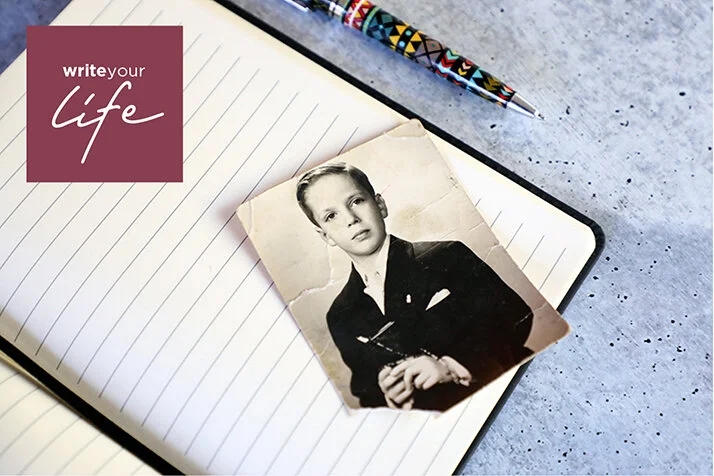
Filmmaker Alan Berliner filming his father Oscar on a Florida beach, circa 1993
End of Story
“I’m American.” That answer which my grandmother repeated each time I asked her about her—hence our—background—is echoed by Berliner’s father. He has no idea where his family is from, he says, and he does not care. Who cares?
HIs son the filmmaker cares, and persists in trying to get his father to come around to his way of thinking. After a trip to the Family History Library in Salt Lake City, Berliner shows Oscar photographs of his ancestors, including a picture of the street where they lived.
Oscar: “What does it matter?”
Alan: “Your ancestors walked on that block.”
Oscar: “Really, what does it matter?”
Oscar: “I have no emotional response. They could be taken out of a story book. I don’t know them!”
But the son is as stubborn as his father, and he challenges, probes, pushes.
Didn’t his father ever ask his own parents about where they came from? Well, no: “I never asked. They never said.”
His father remains recalcitrant. “I’m American. Period, that’s it.”
Strange Relatives
Delving into his family history a little further, Berliner interviews cousins and other relatives about their heritage—and the result is no more informative than his conversations with his father.
“No one ever talked about it,” says one cousin.
“We’re strangers who share a common history,” says another.
When a distant cousin is enumerating how he and Alan Berliner are related, he ultimately concludes they are “sort of relatives and sort of strangers…strange relatives.”
Indeed, Oscar sums it up best: “The one thing we share is the one thing we all know nothing about.” Their family history.
And yet the faithfully seeking Alan Berliner travels to the small towns in Poland where his ancestors walked, and to Utah to uncover records of the past. He describes himself in his journal as “questing after people I didn't know, people I will never know. Hoping to breathe in…even one tiny molecule of air once upon a time exhaled by my ancestors that might still be floating around the Polish countryside. Looking to incorporate it into my body, my breath, my being.”
Alan Berliner is the poet, the compassionate descendant, urgently probing the past for connections and meaning.
“Next question.”
Berliner’s journals elucidate his process and travels and struggles to “see how I might tell the story of my father's life, amidst his stoical reluctance to talk about it.”
His father is indeed reluctant, even combative at times (something Berliner visually brings home through footage of boxing matches cut throughout his dialogue with his father), never fully giving himself over to the conversation.
Despite the combativeness of the conversation, though, he tells his son that “yes,” he is enjoying himself during the interview. He is lonely in his old age. He thinks such personal questions—about divorce and marriage and war—are best left for private conversations. Each time the son inches closer to eliciting a truth or a story, though, his father balks: “Next question.”
Oscar Berliner died in August 1996, just months after Nobody’s Business debuted. He had gotten to sit next to his (very nervous) son at the premiere at the New York Film Festival at Alice Tully Hall, and told a friend that it was the happiest night of his life.
“'‘Oscar Berliner & Son’ is now closed for business,” Alan wrote in his journal after his father’s funeral. “We’ve retired. He's moved out, I'm moving on. Like everything else about him, it's a sad melange of ironies and contradictions. But I loved him out loud and people heard, understood, respected, and seemingly—in turn, found a way to love him too.”
A Legacy of Love & Longing
As he gets closer to finishing the film’s editing, Berliner records in his journal:
“The film is beginning to touch a nerve. To reach a kind of truth about ‘identity.’ About some of the hidden places inside of ‘family.’ My father is so honest, so raw, so real. He's incredibly alive as a character. I just need to let him be himself.”
And kudos to Berliner for letting his father be just that.
I felt privileged to witness the interchanges between father and son. To recognize some of their push and pull from my own family experiences (I, like Alan Berliner, have always ascribed a larger meaning to the past, and strive to derive meaning from—and pay respect to—my ancestors’ lives). To be part of this intimate dance.
Watching Nobody’s Business, I felt like I was witnessing a meaningful journey for Alan Berliner, son and filmmaker.
“Somehow in the cauldron of my life’s process, this feels important—both as personal gesture, and as public example,” Berliner wrote of making the film. I hope you will watch it and perhaps discover some meaning for yourself along the way.
Affiliate disclosure: As an Amazon Associate, we may earn commissions from qualifying purchases from Amazon.com.








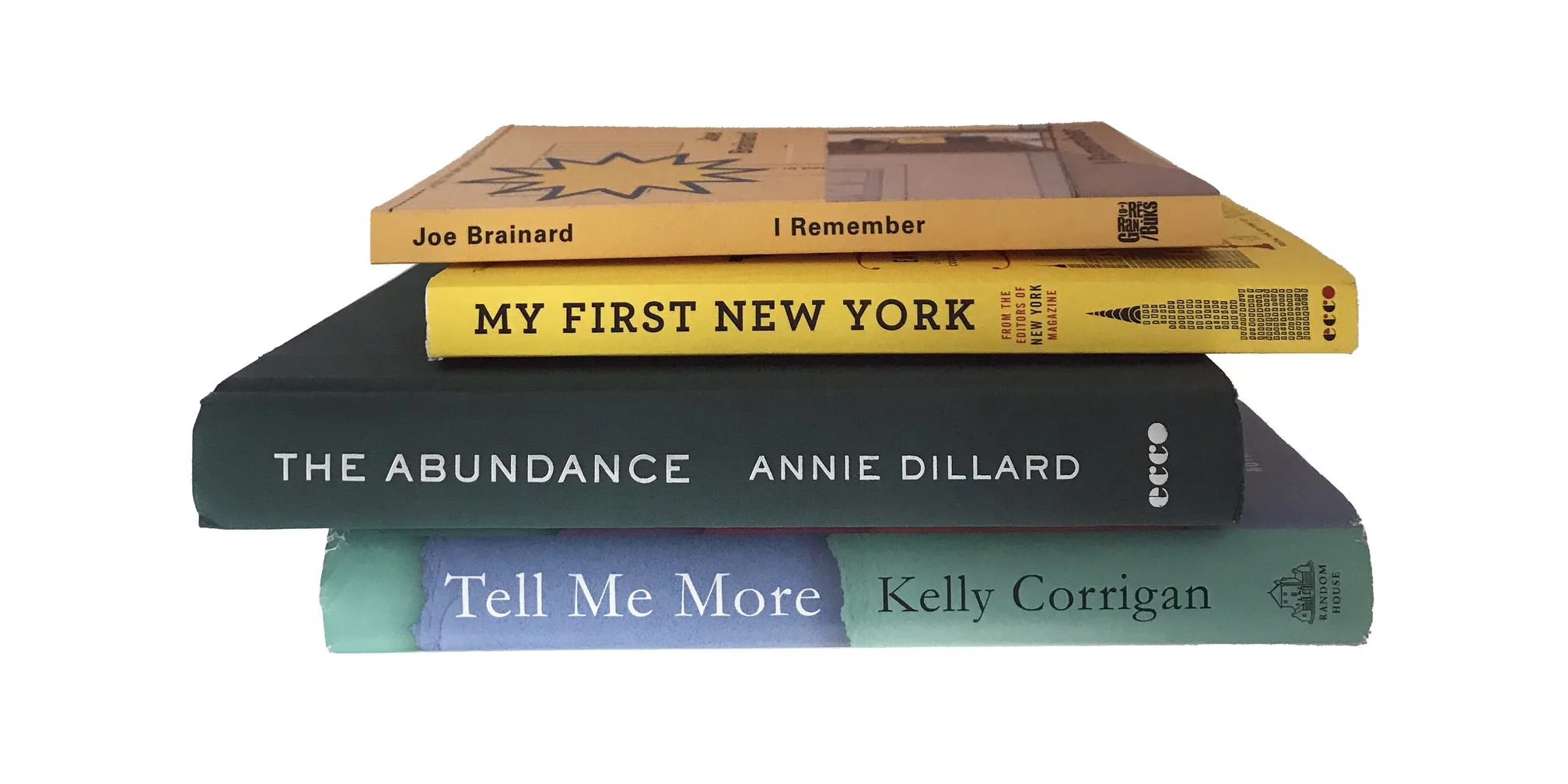



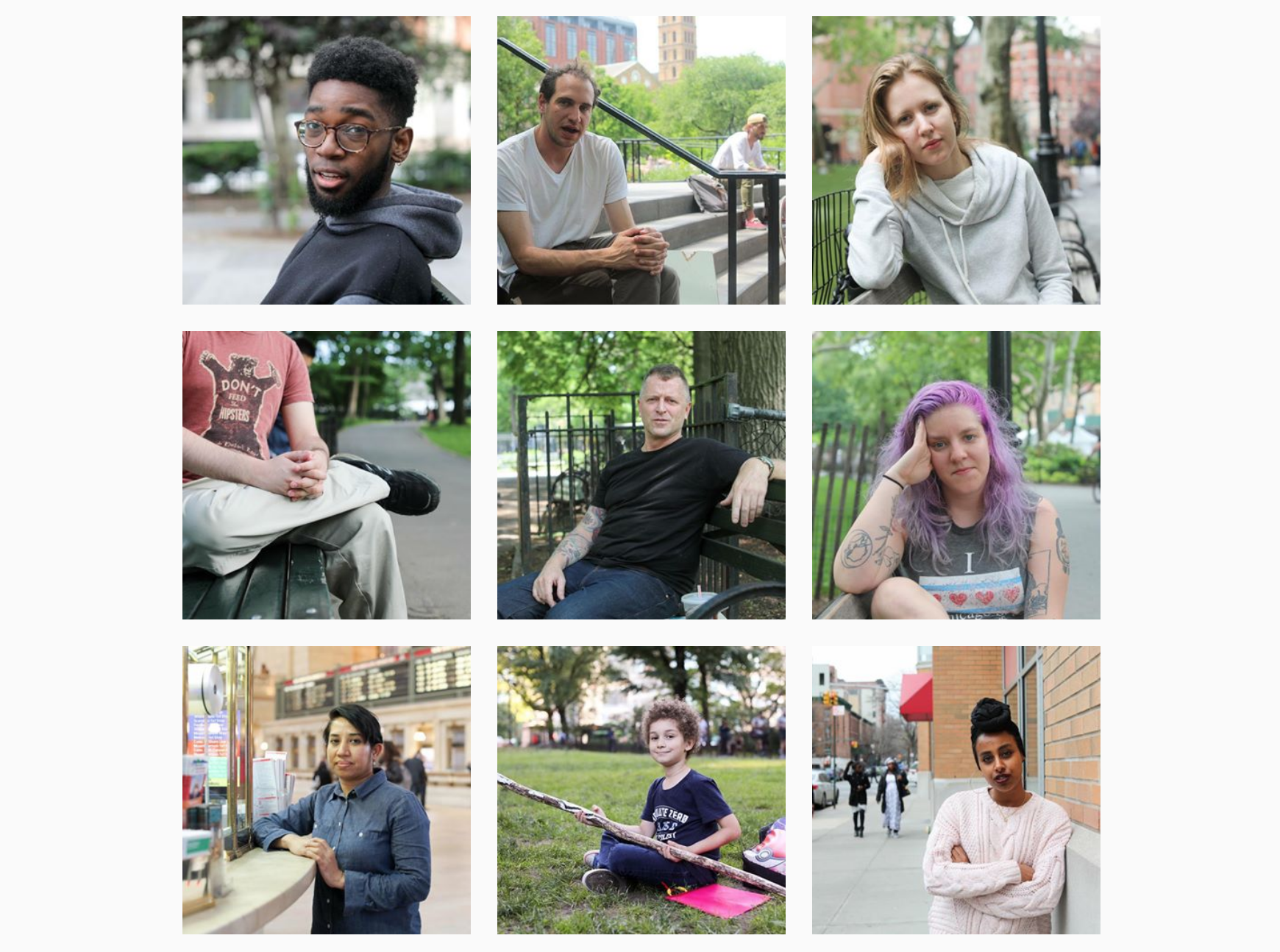


Life Story Links: September 18, 2018
Tangible memories, truth's elusivity in memoir, an autobiographical essay collection, a free chapter of "Your Meaning Legacy,” & a chance at a free writing book.
“All she ever wanted was to be remembered. And she understood that memories happened in the mind but also in the heart.”
—Michelle Gable, I’ll See You in Paris
“Kim Sisters” photographed by Robert W. Kelley for Life magazine. ©Time Inc. Many of the millions of photographs from the LIFE Photo Archive, from the 1750s to today, are available for non-commercial use.
Tangible Memories
TRANSPORTED BY MEMORABILIA
Massachusetts–based personal historian Nancy West writes about how something as prosaic as a paper placemat can bring back evocative and powerful memories of time spent at her grandparents’ Colorado cabin.
BLESSING OR BURDEN?
“Keeping everything honors nothing!” Don’t let your most precious photos and memorabilia become a burden to the next generation. The team at the Family Narrative Project has valuable advice to help you sort your memory-laden stuff.
SUITCASE OF TALISMANS JOURNEYS TO ISRAEL
Stacy Derby of Bind These Words in Chicago went above and beyond to help a client gift an invaluable piece of her family's history to the National Library of Israel. (Use Google Translate in your browser to read in English.)
Writing, Remembering, Reading
MEMOIR: THE ART OF THE SUPPOSE
“The truth is elusive, but don’t let that defeat you. Let truth’s elusivity galvanize you toward the deep dive for the facts, the shimmery details, the startle of a color red or a wind storm or a mother’s muffins,” said writer Beth Kephart in her opening address at HippoCamp 2018.
BOOK REVIEW
“We all have different versions of ourselves, depending on the story,” Mimi Schwartz writes in her autobiographical essay collection, When History Is Personal. Read a review here.
IT COMES DOWN TO STORY
Last week I attended Narrative Medicine Rounds in NYC to hear physician and writer Haider Warraich, MD, talk about “The Search for Beauty at the End of Life.”
YOUR MEANING LEGACY
Legacy planning expert Laura A. Roser offers a step-by-step guide to cultivating, capturing, and passing on non-financial assets such as values, wisdom, and beliefs in her new book. Download the first chapter here.
NYACK RECORD SHOP PROJECT
Listen to history: “Two chairs, a microphone, a few questions and a 30-minute hourglass-style timer. When the sands ran out, the interview was over. Some interviews began with the line: ‘Tell us your story.‘ And that was enough to get the ball rolling and the personal history flowing.”
...and a Few More Links
Lifetime of family memories commemorated through art
Five tips for historical research, from uncovering local history to plotting your family tree
Storytelling connects children with history, families and each other.
Actress Sally Field’s new memoir reveals a personal history that she has never shared before.
Enter by October 1st for a chance to win a free, signed copy of Helen Sword's The Writer's Diet.
Short Takes

Come & See Me This Friday!
Come out to Chatham this Friday to see our heirloom books—AND enter to win a wine gift basket! Meet 40 small business owners, SHOP LOCAL & get unique gift ideas.

I will be showcasing my books and life story packages in Chatham this Friday!
It’s a great opportunity for many local folks who have asked about what I do here at Modern Heirloom Books to touch and feel some sample books (yay!) and to hear about how the interviewing process works.
Honestly, it’s a rare soul who doesn’t cherish their memories—and seeing how those memories can be brought to life, showcased, and preserved in an heirloom coffee table book is often all it takes to get someone to take the first step!
Bonus: I’m giving away a wine gift basket!
I invite you to come on out to see my books AND to meet lots of other business owners from the area. SHOP LOCAL!!
While you’re there, you can enter to win a gift basket from Modern Heirloom Books that includes
a bottle of wine
heart-shaped wine stopper
gourmet goodies
a memory-keeping journal!
MUST BE PRESENT AT THE EVENT TO ENTER. I will draw one winner after the event.
Come on out & meet your neighbors!
Date & time
Fri, September 21, 2018
10:00 AM – 1:00 PM
location
Chatham United Methodist Church
460 Main Street
Chatham Township, NJ 07928
details
First Chatham Small Business Festival sponsored by B.I.G. (Believe Inspire Grow).
Forty women-owned small businesses, including Modern Heirloom Books, will showcase their products and services, including
unique gifts (think holiday shopping!!)
skincare & beauty
healthy meals & health coaching
education & writing services
and LOTS MORE!!
Ample parking behind the Church’s building. Food and refreshments will be provided.

Narrative medicine: Stories nourish empathy
An introduction to narrative medicine through a recent NYC talk from physician and writer Haider Warraich, MD: “The Search for Beauty at the End of Life.”

I am devoted to the power of story. It compels me personally; it fuels my brand. I am also invested in helping caregivers, and promoting candid conversation about how we die. So it is no wonder that I found my way to exploring the field of narrative medicine.
“Narrative medicine is clinical practice fortified by the knowledge of what to do with stories,” said Rita Charon at TEDxAtlanta. Dr. Charon is a general internist and literary scholar at Columbia University who originated the field of narrative medicine,.
“Stories can offer the kind of contextual richness that promotes and nourishes empathy, prompting a provider to switch from asking ‘How can I treat this disease?‘ to ‘How can I help my patient?‘” —Kim Krisberg, AAMC News
Narrative medicine gives voice to the suffering, and takes into account a patient’s whole story—as Dr. Charon says, including “even the unsaid hints and guesses about what might be left unsaid.” There is story to be received in a person's words as well as their silences.
The more open we are—not just doctors, but all of us—to receiving those stories, the closer we become to making meaningful connections.
Every Word Counts
“Awakening and nourishing my own sense of story has transformed my teaching and my practice,” Dr. Charon said. “I was able to learn how to listen closely, where every word counts.”
When she first meets a patient, she says, she no longer goes down a medical history questionnaire recording answers, but rather asks for a patient’s story—“what do you think I need to know?”—and she listens. No writing, no typing, no computing; just listening…absorbing.
“Persons were deeply thirsty to give profound, detailed, eloquent accounts of themselves. They didn’t always know how, or how to start,” Dr. Charon notes.
She tells the story of a patient who, once prompted for his story, began to talk of his father who died, his sibling who died, and of his teenage son with whom he was having difficulty. He began to cry. Dr. Charon asked, “Why do you weep?” His response: “No one ever let me do this before.”
The Search for Beauty at the End of Life
I attended this month’s “Narrative Medicine Rounds” hosted by the Division of Narrative Medicine in the Department of Medical Humanities and Ethics at Columbia University Medical Center. The September guest speaker, Haider Warraich, M.D., author of Modern Death: How Medicine Changed the End of Life, talked about the search for beauty at the end of life.
“You’re down to the floor of who you are in the presence of illness,” Dr. Charon said in her TEDxAtlanta talk. And indeed, Dr. Warraich’s stories attest that, in dying, we are most fully human.
His most important lessons as a doctor did not come from senior physicians, he says, but from elsewhere: namely, from the interactions with patients nearing death and their families, and from the questions that arose within him as a result.
The stories he recounts are powerful and poignant and, while part of many physicians' daily experience, simply not spoken of much in today's death-averse society.
“We’re always searching for meaning....both within our personal lives and within our professions,” Dr. Warraich said. “Even as we search for meaning in the world around us, the search for meaning is an inward search. I don't think that meaning is a quality that exists in the world around us, but is a narrative that we find within ourselves and then paint the world with it.”
Doctors surrounded by suffering are pursuing "the search for beauty in the arms of death." And the search for beauty, Dr. Warraich says, is essential.
“What is perhaps the most magical thing about beauty is that it can't be defined, and especially in our modern world where it seems like the only things that count are the ones that can be counted, I feel like beauty is such a compelling concept because it eludes any degree of quantification,” he said.
“The search for beauty is not just a trivial pursuit, it is essential for our very survival.”
Guided by Stories
“For once in the hospital there were tears with no pain.” These words punctuated Dr. Warraich's story of a patient who witnesses her daughter's wedding in the I.C.U. after a a medical team helps orchestrate the last-minute nuptials before the patient died.
“It was the most full-of-life room I had been to in a long time.” Here, Dr. Warraich describes his response to a family's beautiful acceptance of their loved one's death.
While "any story that goes long enough will end with death,” as Dr. Warraich said on Wednesday, paying attention to the stories of individuals promotes empathy. And the many, many stories of the people Dr. Warraich encounters on his medical journey will continue to inform us all about the universality of life and death.
Further Reading
A case for taking care of the elderly
“As with raising a baby, the answer might come from the heart. What is really needed is for us to love the old as we do the new and celebrate the end as we do the beginning.” —from “Seeing the Cycle of Life in My Baby Daughter’s Eyes,” by Dr. Warraich, NYT
saying goodbye, celebrating life
“It was the most full-of-life room I had been to in a long time.” —from “The Rituals of Modern Death,” by Dr. Warraich, NYT
the gift of remembrance
"Our loved ones’ stories are often buried treasures." —from Notes from a Funeral
remembering my parents
“Bringing his candor, wit and intelligence to his most intimate and mysterious of landscapes—our parents' lives—memoirist Richard Ford delivers an exploration of memory, intimacy, and love.” —listen to Ford's Narrative Medicine Rounds lecture from April 2018
Life Story Links: September 3, 2018
Opportunities for life story tellers including a memoir class, writing contest, & volunteering with seniors; plus, gratitude journals & digital photo archives.
“The past is never dead. It's not even past.”
—William Faulkner

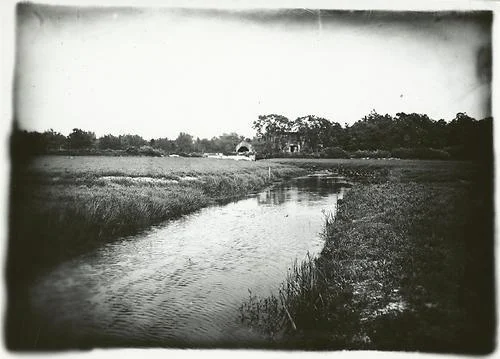
Hal B. Fullerton. 1899. Cranberry bog and drain in Calverton, Suffolk County, NY. Gelatin silver print, part of the Empire State Digital Network accessed via the Digital Public Library of America. All of the materials found through DPLA—photographs, books, maps, news footage, oral histories, personal letters, museum objects, artwork, government documents, and so much more—are free and immediately available in digital format.
Some Storytelling Inspiration
PUBLIC ARCHIVE
Graduate students in the Public and Digital History Seminar at UT Austin experimented with ways to make interesting archival materials available and useful to anyone with a computer. Check out the fruits of their labor, including photographs of the frontier and the paperwork of slavery.
ON GROWING OLD
“I just said goodbye to one of my clients,” Virginia–based personal historian Karen Bender writes. “Flo, 97 and on hospice, is going to live with her daughter in a different state for whatever time she has left.” Bender shares what “old age” means to Flo, from the book they worked on together.
AUTOBIOGRAPHICAL GRATITUDE JOURNAL
Not all the life story projects Massachusetts–based Nancy West produces are traditional narrative memoirs: Here she shines a light on how to use photos to create a gratitude journal.
Opportunity Knocks
THE MAKING OF A FAMILY HISTORIAN
Wisconsin–based personal historian and educator Mary Patricia Voell offers a new online course designed to give participants of all ages the framework and tools to tackle their family history projects.
ARCHIVAL STORYTELLING
The New York Times is hiring a team “to exhume the photographs and stories that had been relegated to the dustbins of history and to explore anew the stories left untold.” Interested?
WRITING CONTEST
The Family Narrative Project is seeking entries for its 2018 writing contest: Submit essays that reflect the full range of family life by October 31 for a chance to win $500 plus a feature on their website.
VOLUNTEER WITH SENIORS
Check out the important work being done by Brittany Bare and her team at nonprofit My Life, My Stories, where marginalized seniors are paired with volunteers to help write their own memoirs. While in-person volunteering is currently only available in the San Francisco Bay area, there are other ways to help, too.
...and a Few More Links
Have you discovered the Digital Public Library of America yet?
My guest blog for Save Your Photos Month is about how to find what matters amidst all your digital clutter.
Foundation strives to put “a face” on history for younger generations
Podcast recommendations for life storytellers, creative entrepreneurs, oral historians, and anyone who loves a captivating first person story.
Short Takes
Listen up!
Podcast recommendations for life storytellers, creative entrepreneurs, oral historians, and anyone who loves a captivating first person story.
In the past few weeks I have taken two road trips with my family, and while we are huge music lovers and relish this opportunity for uninterrupted song play (not to mention great car acoustics!), there were times when we wanted something else.
Here’s a sampling from our non-music playlist that I hope you, as fellow life story tellers and memory keepers, may enjoy!

The Life Story Coach Podcast Interview
Since I had a captive audience, I previewed my recent interview with Amy Woods Butler, host of The Life Story Coach podcast; I figured my husband and son were as safe an audience as any. I am someone who typically likes to be behind the scenes—taking the pictures, asking the questions—but in this case I was delighted to have the tables turned on me.
Amy’s podcast is geared specifically to life story professionals like myself (so it's a bit of “insider baseball” for those of you who aren't in the business), but I do recommend a listen to this episode for any creative entrepreneur. A few of the topics we discussed:
the pros and cons of publishing your prices
making a highly customizable product easier to buy
trusting your gut over your mentor on occasion
stories deepening over the course of personal history interviews
using lifestyle magazine techniques to tell engaging stories
It was a true pleasure conversing with Amy on topics so close to my heart, and I hope the resulting podcast provides value and food for thought for some of you.
Listen to my interview with Amy and get helpful show notes & links here.
Discover more episodes of The Life Story Coach on iTunes.
Oral History Jukebox
The Oral History Association holds something they call Oral History Jukebox at their annual meeting. I won't be able to attend this year's conference in October, but found many of the clips from last year’s session (which turns an open ear to the granularity of oral history recordings, including insights into interview technique, archiving, and more) interesting.
It is always gratifying when an interview subject hits upon one small story that represents something larger, whether universal in nature or fateful for them. Here are two snippets I found particularly worthwhile:
woman ranger
In the following clip, Major Lisa Jaster recalls the 180 days she spent away from her family in Ranger School. During a long pause at the end (powerful even now for me as a listener), Jaster “is overcome by her intense memories of [a particularly] challenging and emotional moment,” writes oral historian Lieutenant Commander (Retired) Scott Granger. “Those of us in the studio struggled as well, and the interviewer, unable to ask a follow-on question, had to pause the interview to allow everyone to gather themselves before continuing.”
those that didn't make the team
“I think almost every black male friend that I had that wasn’t athletic is now dead due to that war.” Interviewers enter into conversation with Ike Blessit, a former outfielder for the Detroit Tigers, about Vietnam, sports, and friendship, and this two-minute clip speaks not only to the power—and importance—of silences during an interview, but also to ways of suggesting discourse without asking leading questions.
And One More, Just Because
If I'm sharing first-person stories derived through interviews, it's rare that I don't include one from StoryCorps. Not only have I long admired that they are trailblazers in making personal history interviews mainstream, but I am a fan of the ways they make those stories available and oh-so-tempting. Their animations, for example, provide a unique and inviting portal to listen, so here’s a recent one that moved me:
What are you listening to, fellow life storytellers?
Dawn Roode’s curated roundup for the week of Sept. 23, 2026, is overflowing with recent reads on memoir, life story writing, and family history preservation.