
Memories Matter
Featured blog Posts

READ THE LATEST POSTS

Life Story Links: November 12, 2018
Mid-story memoir sag, storyboarding as a writing tool, questions to spark Thanksgiving story sharing, and more of interest to family historians & memory-keepers
“Curiosity is a muscle. Questions are exercise.”
—M. Diane McCormick

1956. Photograph by Grey Villet for LIFE magazine. ©Time Inc.
Thoughts on Memoir…
THE LIBERATION OF MEMOIR
Beth Kephart celebrates Abigail Thomas, whose work, she says, laid the foundation for memoirists everywhere to set aside “perfect” in pursuit of authentic.
MID-STORY SAG
“Nearly all memoir writers hit a point where they ask: What is this thing about? Where did I think I was going with this story?” writes Lisa Dale Norton in her prescriptive piece about how to avoid mid-story memoir sag.
YOUR STORY, YOUR WAY
“Let people find out how interesting you are through your own words, not when your children tell stories about you because you’re gone,” urges Massachusetts–based personal historian Nancy West.
…and Sharing Stories Out Loud
FAMILY HISTORY MATTERS
In this podcast, Heidi Druckemiller suggests that the story of your past can help you to discover your family’s unique values, shape its moral purpose, and direct its strategic decision-making.
HOLIDAY HISTORIES
This week I wrote about four ways to encourage guests at your family gathering to share memories in addition to gratitude, plus offered up 55 Questions to spark Thanksgiving story sharing.
NEXT GEN
Cider Spoon Stories offers a workbook for kids that guides them through the oral storytelling process, helping them to capture in their own words the stories of family members and friends
...and a Few More Links
Humanity has direct memories of events that occurred 10 millennia ago.
Check out the slides from M. Diane McCormick’s Hippocamp 2018 presentation, “The Art of Interviewing: The Deep Dive for the Telling Detail.”
Using storyboarding to help know what to emphasize and what to cut from your biographical writing
Google and YouTube team up with StoryCorps to tell veterans’ stories.
Short Takes

4 Ways to give thanks through story sharing
Encourage guests at your Thanksgiving gathering to share memories in addition to gratitude with these four ideas for holiday family history story sharing.
Sandwiched between the uber-commercial Halloween season and the begins-too-soon “December” holiday rush lies a quieter American holiday, Thanksgiving. It’s always been one of my favorites, and not merely because I love leftover stuffing.
Thanksgiving appeals to me on a visceral level: home-cooked food, family gathered around a table, tradition, laughter, and love. My family never got “dressed up” for Thanksgiving—it was a comfortable holiday, one where we reveled in being together and lingering…over the food, over football, and especially, over stories. Even for families who may not share stories regularly around the dinner table, Thanksgiving lends itself to some good old-fashioned reminiscence.

Giving Thanks—and Telling Tales
Do you have a tradition of going around the table and naming something you are each thankful for? This focus on gratitude is a hallmark of Thanksgiving—and one which we can build upon to crate new traditions that not only help us enjoy the day together, but cement a family legacy that will endure well into the future.
Here are a few ideas to turn your tradition of “giving thanks” into something even more lasting:
1 - Go around the table twice.
On the first go-round, each person shares something for which they are grateful. On the second go-round, each person shares a favorite memory from a holiday past. Designate one person to record the storytelling session, whether using the microphone feature on your smart phone or setting up a video camera on a tripod at the head of the table. Be sure to encourage questions and follow-up stories—often that is where the magic lies. I guarantee there will be few lulls in your dinner conversation!
2 - Formulate a family health portrait.
Personalize your healthcare by sharing your family health history and tracking illness from one generation to the next. Participate in Family Health History Day (the same day as Thanksgiving) and use the Surgeon General’s health portrait tool to talk about, and write down, your family's health history to help ensure a longer, healthier future together.
3 - Play show-and-tell over dessert.
In lieu of asking guests to bring a pot-luck dish, invite them instead to pack a meaningful item that reminds them of their childhood. Like that vintage Hess toy truck Grandpa keeps on the mantle, or the grease-stained, handwritten recipe Aunt Ginny pulls out every Christmas. Set up an area to photograph their heirlooms, and record the stories behind them over pumpkin pie.
4 - Make a paper trail.
Books, documents such as old Passports and birth certificates, scrapbooks, boxes of old photos—there are lots of papers that hold bits and pieces of family history, but usually they are scattered among homes of various family members near and far. Take the first step in cataloging your family archive by polling all the guests at your Thanksgiving gathering to see what they may have; we’ve even created this handy inventory worksheet for you to keep track of it all. Then, when you’ve got more time, you can begin digging into your family history in earnest—with a plan.
Thanksgiving Family History Resources & Links
Consider participating in StoryCorps’ Great Thanksgiving Listen.
Download our free guide: 55 Questions to Spark Thanksgiving Story Sharing.
Use a family tree form to keep genealogical information organized.
Download this pedigree chart to record information you get from family members.
A genealogy correspondence log helps keep track of which people you've talked to and which people you still need to contact.
Let the kids plan their interviews with family members using a simple oral history worksheet like this one.
Life Story Links: October 29, 2018
Plenty of first person and personal history reading, from stories of survival told through artifacts of memory to veteran experiences that honor and connect.
“Love is so short, forgetting so long.”
—Pablo Neruda

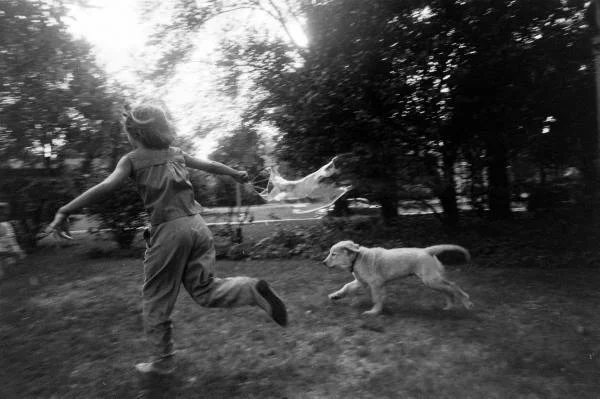
Kid's Bubble-Blowing Toy, 1959. Photograph by Stan Wayman for LIFE magazine. ©Time Inc.
Seeing Is Believing
OBJECT. IMAGE. MEMORY.
“A photo album, a china set, a teddy bear—even the most quotidian of artifacts—all resonate with special poignancy when associated with stories of persecution and loss,” Julia M. Klein writes of a Skokie, IL, museum exhibition called “Stories of Survival.”
BLURRY IS BEAUTIFUL
Blurry photos are often the first to get deleted from your film scroll—but photographer Yan Palmer offers up another perspective.
FILM REVIEW
I finally found time to screen the 2012 documentary Stories We Tell, and I recommend it as much for the dramatic exploration of one family's narrative as for the questions it raises about the malleability of truth.
Life Stories, Listening & Telling
#THEGREATLISTEN
In its 15th year StoryCorps continues to “create a culture of listening that echoes across the nation.” Resources compiled for its annual Great Thanksgiving Listen include a Great Questions List and Interview Planning Worksheet.
“THE ROLLING NOW”
Sarah White of Madison–based First Person Productions shares a short essay she calls an experiment in “The Rolling Now,” a structural technique described as "like rocking back and forth between past and present."
A LIVING TRIBUTE
The new National Veterans Memorial and Museum in Columbus, Ohio, which opened October 27, highlights personal stories of veterans from all branches of the military to inspire, honor, and connect.
CONFESSIONAL STORYTELLING
“I used to reassure prospective clients that they could simply leave out any personal stories that were too difficult to tell, says Massachusetts–based personal historian Nancy West. “But the more people share with me, the more I begin to think that nothing is too difficult for clients to share, once they become comfortable with the process.”
...and a Few More Links
The earliest memory in the first person testimonies of The HistoryMakers dates to the 1700s.
Kickstart your family history project with this November 14 webinar from archivist Margot Note.
In The Library of Congress’s new National Screening Room you can watch hundreds of hours of cinematic history for free, with films from 1890-1999.
Town & Country: “From Gates to Rockefeller, Wealthy Families Hire Personal Historians to Preserve Their Legacy”
Short Takes

“Stories We Tell” isn’t new, but it’s worth a watch
Watch the 2012 film Stories We Tell as much for the dramatic exploration of one family's narrative as for the questions it raises about the malleability of truth.

Stories We Tell is a 2012 genre-bending documentary from director Sarah Polley. I recall being intrigued by the film trailers, but never made my way to the theaters to see it at the time of its release. A fortuitous sighting of the DVD in my local library led me to check it out this week, and I am so glad that I did.
In the film Polley brings together her siblings, father, and friends of her family, to explore the past in ways that are both seamless and contradictory, each individual weaving their own narrative threads to form a story much more complex than perhaps even Polley envisioned at the outset.
The subject? Well, one the one hand it is Polley’s deceased mother, Diane, whom the director lovingly brings to life through family stories and lots of colorful family video footage (and how glorious much of that is!). On the other hand, however, the subject is truth itself, and how elusive and malleable it inevitably is.
A Search for the Vagaries of Truth
Ultimately, Polley seeks to explore the past primarily through personal history interviews of those involved in her mother’s life, and to come as close as she can to some kind of truth.
“Can you tell the whole story from beginning to end, in your own words?” Sarah asks each of her subjects as prelude to her interviews.
Those interviews begin almost innocuously, with some discomfort at the prospect of delving into family secrets amidst bits of embarrassed laughter. But Polley deftly draws out the stories in a most compelling way, and we are privileged to be witnesses to a gradual unfolding of truths that feels especially intimate.
We are drawn into her mother’s story—into the dramas of infidelity and the banality of everyday life. And while that drama is captivating, it is the rather meta exploration of getting to the story—of watching it reveal and fold back in on itself—that makes this film a true gem, in my opinion.
“I am interested in the way we tell stories about our lives,” Polley says in one scene. “About the fact that the truth about our past is often ephemeral and difficult to pin down. And many of our stories, when we don’t take proper time to do research about our pasts, which is almost always the case, end up with shifts and fictions in them, mostly unintended.”

Watch the trailer for Stories We Tell.
Concentric Circles of Experience
Polley began conducting interviews and filming of her family members before she had a clear sense of what the project might become. Would it even be released, or remain a private undertaking? Through five years of production she let the stories speak for themselves.
In a letter to one of the players, Harry, she wrote: “I wouldn’t even pretend at this point to know how to tell [this story] beyond beginning to explore it through interviews with everyone involved, so that everyone’s point of view, no matter how contradictory, is included.”

“Why is that we talk and talk, or at least I certainly do, without somehow conveying what we’re really like?”
—Michael Polley
But is giving everyone’s perspective equal weight truly the best way to get to the truth, Harry wonders? Those who were “direct witnesses to the events” are more reliable narrators, after all, are they not? Or are the peripheral reactions and relationships that contribute to a family’s entire narrative all worthy?
These questions are explored and alluded to throughout, giving weight to the film and making Sarah Polley’s late appearance in the film all the more powerful. Particularly near the end, when Sarah herself begins to ruminate on why she feels compelled to tell this story and expose it to the world, the telling is eloquent and moving and raw in a most beautiful—and recognizable—sense.
Who owns these stories? Is there one version of personal history?
Polley’s brother Michael wonders aloud that while doing an interview might bring you as close to truth as you can get, does Sarah’s editing of it turn it into something different?
The questions amidst the stories are at the heart of Stories We Tell. What questions will they raise for you?
Related Reading
View a discussion guide from Influence Film Forum with thought-provoking questions and a few suggestions for exploring your own family stories.
Discover another documentary, Nobody’s Business, that explores the nature of memory through the lens of family history.
See where to stream or rent Stories We Tell, or buy the DVD.
“The truth was becoming more and more ephemeral as opposed to closer,” said Sarah Polley in a brief interview about her film.
Affiliate disclosure: As an Amazon Associate, we may earn commissions from qualifying purchases from Amazon.com.













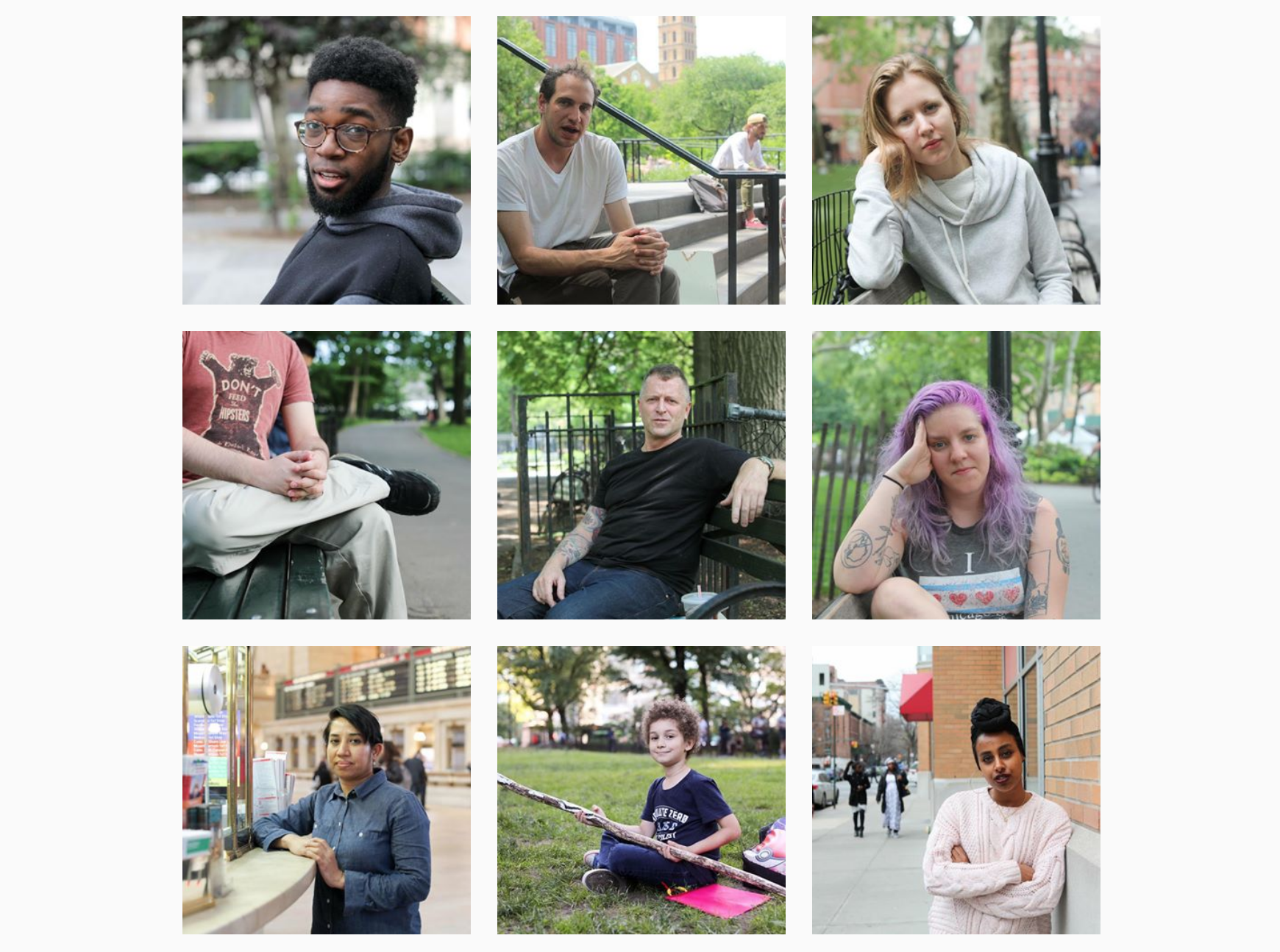


Life Story Links: October 17, 2018
Stories on staying curious including a conversation starter card deck & ideas for family interviews, plus digging into family history via photos and stories.

PHOTO: Wallenda Family Album Picture, 1962. Photographed by Robert W. Kelley for LIFE magazine. ©Time Inc.
“Here’s the deal. The human soul doesn’t want to be advised or fixed or saved. It simply wants to be witnessed—to be seen, heard, and companioned exactly as it is.”
—Parker J. Palmer
Stay Curious
AGING IN NYC
A longtime social worker and photographer turns his lens on seniors out and about in the Big Apple, and his interest invites stories from all walks of life.
STORY CATCHER CONVERSATION STARTERS
A holiday gift idea, perhaps? Tree of Life Legacies’ April Bell has introduced the Life Legacy Card Deck with 52 prompts for values-based storytelling.
LET’S TALK
Conducting family interviews is a great way to gather the stories of family elders and preserve family history for the next generation—here, four ideas to get you going.
Digging in to Family History
THE ONLY TRUE STORY
“Humans love stories, and genealogy is essentially a gradual reading of the grandest, most compelling story of all time,” Roman Kraft writes in his ode to discovering family history.
ONE BOX AT A TIME
Denise Levenick, aka The Family Curator, describes how to use “the parking lot system” to organize old photos in your family collection.
BBC’S “FAMILY FOOTSTEPS”
An Ulster-Scots family goes on a journey back in time to discover what life was like for their ancestors at the turn of the 19th century.
YOUR HISTORY…OR YOU’RE HISTORY?
“With both of my parents gone it is getting much harder to collect the stories from their lives,” writes Jay Lenkersdorfer in a local newspaper column. “Each memory is perishable and should be treated as though it will soon expire...”
...and a Few More Links
A new website aims to build a database of music that's effective at triggering memories for dementia patients.
Storytelling as a form of healing
An in-depth review of Kiese Laymon’s “startlingly open” and “raw” new memoir, Heavy
Short Takes

4 ideas for family interviews
Conducting family interviews is a great way to gather the stories of family elders and preserve family history for the next generation. Here are a few tips.

The next time your parents are around (Thanksgiving, perhaps?) why not have your children interview them about their lives?
I come back to this quote from William Zinsser again and again for its poignancy and power:
“One of the saddest sentences I know is ‘I wish I had asked my mother about that.’ ”
How does that make you feel? If you have lost your parent(s) or other elders in your family, it can be like a punch to the gut. If, on the other hand, older family members are still around, I hope it creates a sense of urgency in you—to wonder about their personal history, to ask questions and, most importantly, to engage in meaningful conversation about the past.
I suggest recording these conversations—perhaps to transcribe later for use in a book, or perhaps to be edited down so your children’s children can hear snippets of their ancestors’ stories in their own words. There are plenty of digital recording apps out there; just don’t forget to use two different recording methods to ensure those memories are, in fact, captured (trust me, technical errors happen…and the feeling of losing those stories, well, it’s not good).
Which interview approach is right for you?
1 - group interviews
For families with multiple generations or family members who see each other only infrequently, group interview sessions during holiday get-togethers can be a fun and fruitful process. How to fit them in amidst all the holiday preparations, though? Some ideas:
After Thanksgiving dessert, keep the coffee flowing and the cookies on hand, but make a voice recorder the new table centerpiece. Share your purpose with your family (“I love hearing our family stories, and want to make sure we capture them for the future”), then ask for volunteers to begin the storytelling.
Do you have family members spending the night after a holiday celebration? Send someone out for bagels the next morning, and turn brunch into a reminiscence session. Keep it casual but focused to get the best stories out of your guests.
At a family reunion or other big gathering, set aside a room specifically for story gathering. Either designate one person as the ringleader (if you have a de facto family historian in your family, this will be right up their alley) or pair people together who you think will have meaningful conversations. Make a list of topics on a white board (or put them on slips of paper for guests to pick, à la charades) and give out time slots for the interview sessions. There is a fair amount of upfront organization involved here, but once the ball is rolling it’s fairly easy to maintain momentum.
2 - kids interviewing grandparents
Setting up “official” interviews with grandparents is a wonderful home-schooling or scouting project for tweens and teens. Have them ask grandparents to gather a few favorite photos in advance to use to help get the conversation flowing. You just might be surprised how many stories are revealed that even you had never heard before (there’s just something about sharing with the grandkids!!).
3 - regular conversation dates
Consider visiting with a close relative regularly to gather stories—perhaps bi-weekly coffee chats or monthly pot-luck dinners, each with a theme (think childhood adventures, momentous decisions, the war years, becoming a parent, etc.). I wish my mother were still alive for me to have such dates with her!
If you have a relative in assisted living, for example, such “interview” sessions may help with their self-esteem and general attitude, as well as giving you both something to focus on rather than day-to-day drudgery.
Keep the pressure off by maintaining a conversational tone throughout your get-togethers. While you are indeed trying to elicit memorable stories, the time together should itself be enjoyable.
4 - telling your own stories
Maybe YOU are the one who wants your stories captured? If you are not a writer, see if there is someone in your circle who might sit with you to converse. It might seem like a good idea to turn on a tape recorder and just start talking, though my experience indicates that having an interested listener—someone nodding or smiling, asking follow-up questions—is a compelling motivator!
If your child or a close friend is unable to fulfill this role, you can always set up a session with a personal historian such as myself (I consider it a privilege to listen to your stories!).
Sharing stories is an endeavor with immediate value, bringing joy to the participants and connecting family members more closely.
I would implore you to go a step further, too, and do something with your stories to ensure they are around for the next generation.
Imagine if your own grandparents had left you such a treasure?
related reading:
A good conversation begins with good questions.
Best practices for recording family history interviews at home
3 easy ways to get your parents’ stories
Meet the man who said he had no stories—until he had an absorbed listener, that is!

Life Story Links: October 2, 2018
A roundup chock-full of life story stuff, from sharing painful memories to honoring a mother's legacy, plus pro tips on talking about money & managing workflows.
“Music does a lot of things for a lot of people. It’s transporting, for sure. It can take you right back, years back, to the very moment certain things happened in your life. It’s uplifting, it’s encouraging, it’s strengthening.”
—Aretha Franklin
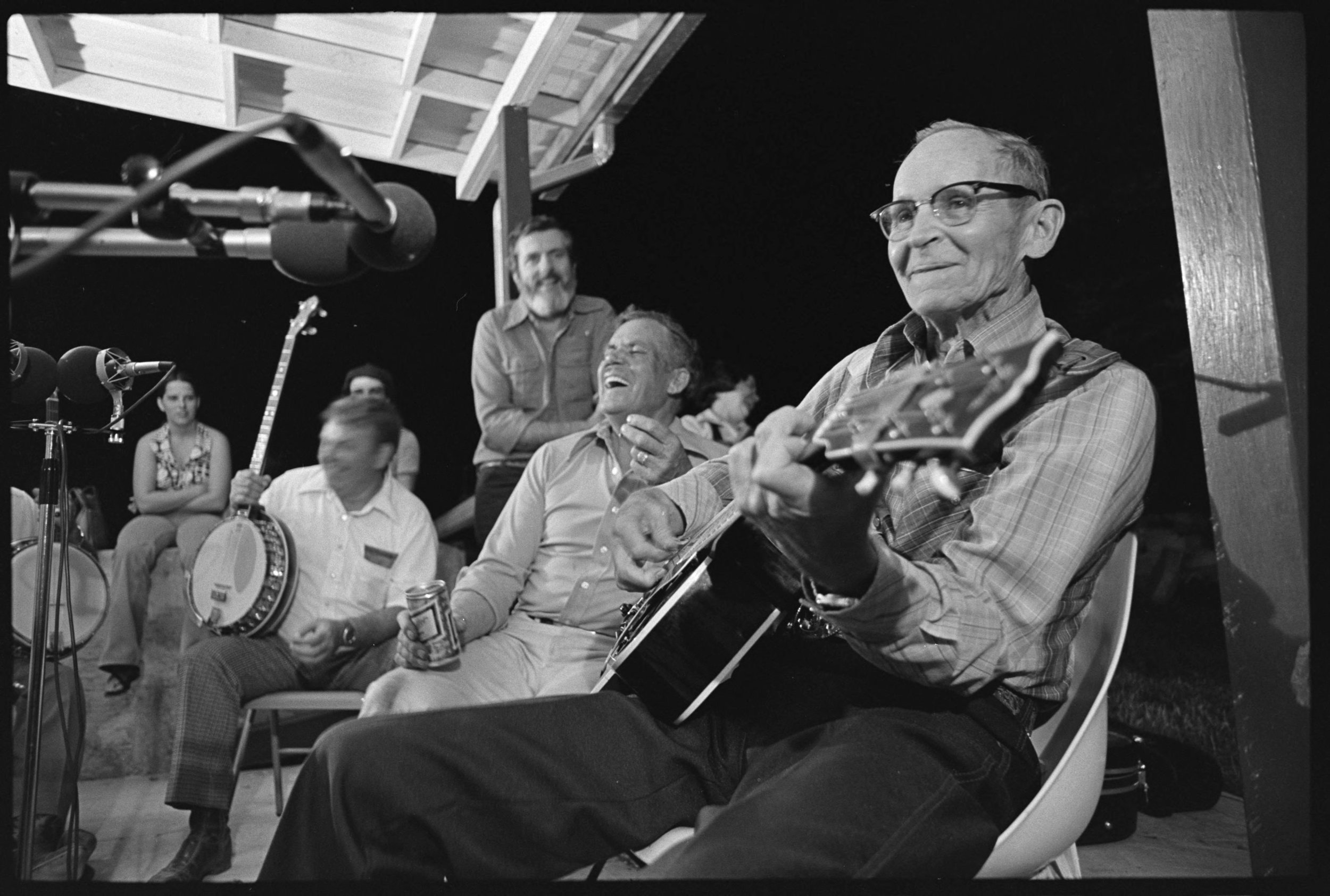
PHOTOGRAPH: Old time fiddling at Bernie Rasmussen's in Polson, Montana, July 22, 1979, from the Montana Folklife Survey collection at the Library of Congress.
Battle Scars
BRUISES AND ALL
“I understand that sharing difficult experiences is decidedly not for everyone,” writes Chicago–based personal historian Betsy Storm. “But nobody can underestimate the power of such stories to lift others up from their own tender and painful places.”
THE RELUCTANT INTERVIEWEE
This week I review the 1996 documentary Nobody’s Business, in which Alan Berliner interviews his (rather pugnacious!) father about family history. You’ll laugh and you’ll cringe at their father-son interplay.
On the Front Lines of History
OBJECT LESSONS
Check out Your Story Our Story, a national project exploring American immigration and migration through a crowd-sourced collection of stories about everyday objects of personal significance.
MOON MAN
Neil Armstrong’s personal papers land at Purdue, his alma mater, including approximately 70,000 pages of fan mail, which Armstrong continued to receive from around the world for years after he landed on the moon. (Archivists: Imagine the time it took to catalog this “finding guide” to the collection!)
Memories that Matter
IN REMEMBRANCE OF 朱苏勤
“She knew only two people who speak English fluently—myself and my father. Not able to tell her story herself, I want to use my voice to tell it for her,” writes Li Jin in “Saying Goodbye to My Grandmother.”
AN APP FOR THAT?
In the hope that preserving “one memory at a time” is less daunting for some than writing a “life story,” I explored digital story sharing services in my latest guest post for The Photo Organizers.
STORIES OF OUR STUFF
In What We Keep, 150 people share touching stories behind their most prized possessions. Read three excerpts here, and listen to co-author Bill Shapiro talk about how things become imbued with memories and meaning.
Pro Tips
UNFORESEEN CONSEQUENCES
Massachusetts–based personal historian Nancy West offers suggestions for looking at your life through a thematic lens. As she writes, “You might be surprised to find out that your life story has governing themes that go well beyond a simple linear list of dates and places.”
THAT (DREADED?) MONEY CONVERSATION
“Life story work is ‘heart-driven’ work, and like other service-oriented professions, it attracts people who may not feel comfortable with the money-making side of their business,” says Amy Woods Butler, founder of the Story Scribe in Kansas City. In the latest episode of her podcast she talks with educator and memoirist Sarah White about money matters.
...and a Few More Links
Is the ‘real you’ a myth? A medical take on the nature of memory
Museum educator discovers unexpected family ties to the place he works.
You don’t have to travel to D.C. or peruse 838 miles of shelves to visit the Library of Congress.
For life story professionals interested in creating efficient systems, download this free guide for creative entrepreneurs on Systems, Automation & Workflow (full disclosure: I authored one of the articles!).
A helpful and thorough comparison of print on-demand services
Short Takes
The reluctant interviewee: “I’m just an ordinary guy”
In his 1996 documentary Nobody’s Business, Alan Berliner interviews his father about family history. The result is a poignant study of the nature of memory.
“Who the hell would care about Oscar Berliner?” barks…Oscar Berliner.
In Nobody’s Business, Oscar Berliner, the reclusive father, has the spotlight turned on him by his filmmaker son Alan Berliner, and the results are a poignant study in the nature of memory.
Nobody’s Business is not new; it is an Emmy-winning independent (raw and experimental) documentary from 1996. I discovered it only recently, though, and felt compelled to share. I hope the review that follows may inspire you, too, to explore screening Alan Berliner’s most personal film.

Filmmaker Alan Berliner filming his father Oscar on a Florida beach, circa 1993
End of Story
“I’m American.” That answer which my grandmother repeated each time I asked her about her—hence our—background—is echoed by Berliner’s father. He has no idea where his family is from, he says, and he does not care. Who cares?
HIs son the filmmaker cares, and persists in trying to get his father to come around to his way of thinking. After a trip to the Family History Library in Salt Lake City, Berliner shows Oscar photographs of his ancestors, including a picture of the street where they lived.
Oscar: “What does it matter?”
Alan: “Your ancestors walked on that block.”
Oscar: “Really, what does it matter?”
Oscar: “I have no emotional response. They could be taken out of a story book. I don’t know them!”
But the son is as stubborn as his father, and he challenges, probes, pushes.
Didn’t his father ever ask his own parents about where they came from? Well, no: “I never asked. They never said.”
His father remains recalcitrant. “I’m American. Period, that’s it.”
Strange Relatives
Delving into his family history a little further, Berliner interviews cousins and other relatives about their heritage—and the result is no more informative than his conversations with his father.
“No one ever talked about it,” says one cousin.
“We’re strangers who share a common history,” says another.
When a distant cousin is enumerating how he and Alan Berliner are related, he ultimately concludes they are “sort of relatives and sort of strangers…strange relatives.”
Indeed, Oscar sums it up best: “The one thing we share is the one thing we all know nothing about.” Their family history.
And yet the faithfully seeking Alan Berliner travels to the small towns in Poland where his ancestors walked, and to Utah to uncover records of the past. He describes himself in his journal as “questing after people I didn't know, people I will never know. Hoping to breathe in…even one tiny molecule of air once upon a time exhaled by my ancestors that might still be floating around the Polish countryside. Looking to incorporate it into my body, my breath, my being.”
Alan Berliner is the poet, the compassionate descendant, urgently probing the past for connections and meaning.
“Next question.”
Berliner’s journals elucidate his process and travels and struggles to “see how I might tell the story of my father's life, amidst his stoical reluctance to talk about it.”
His father is indeed reluctant, even combative at times (something Berliner visually brings home through footage of boxing matches cut throughout his dialogue with his father), never fully giving himself over to the conversation.
Despite the combativeness of the conversation, though, he tells his son that “yes,” he is enjoying himself during the interview. He is lonely in his old age. He thinks such personal questions—about divorce and marriage and war—are best left for private conversations. Each time the son inches closer to eliciting a truth or a story, though, his father balks: “Next question.”
Oscar Berliner died in August 1996, just months after Nobody’s Business debuted. He had gotten to sit next to his (very nervous) son at the premiere at the New York Film Festival at Alice Tully Hall, and told a friend that it was the happiest night of his life.
“'‘Oscar Berliner & Son’ is now closed for business,” Alan wrote in his journal after his father’s funeral. “We’ve retired. He's moved out, I'm moving on. Like everything else about him, it's a sad melange of ironies and contradictions. But I loved him out loud and people heard, understood, respected, and seemingly—in turn, found a way to love him too.”
A Legacy of Love & Longing
As he gets closer to finishing the film’s editing, Berliner records in his journal:
“The film is beginning to touch a nerve. To reach a kind of truth about ‘identity.’ About some of the hidden places inside of ‘family.’ My father is so honest, so raw, so real. He's incredibly alive as a character. I just need to let him be himself.”
And kudos to Berliner for letting his father be just that.
I felt privileged to witness the interchanges between father and son. To recognize some of their push and pull from my own family experiences (I, like Alan Berliner, have always ascribed a larger meaning to the past, and strive to derive meaning from—and pay respect to—my ancestors’ lives). To be part of this intimate dance.
Watching Nobody’s Business, I felt like I was witnessing a meaningful journey for Alan Berliner, son and filmmaker.
“Somehow in the cauldron of my life’s process, this feels important—both as personal gesture, and as public example,” Berliner wrote of making the film. I hope you will watch it and perhaps discover some meaning for yourself along the way.
Affiliate disclosure: As an Amazon Associate, we may earn commissions from qualifying purchases from Amazon.com.
Dawn Roode’s curated roundup for the week of Sept. 23, 2026, is overflowing with recent reads on memoir, life story writing, and family history preservation.