
Memories Matter
Featured blog Posts

READ THE LATEST POSTS

Life Story Links: July 15, 2019
Memoir suggestions to inspire your own autobiographical writing, business-building courses, and lots of first-person pieces that reveal the powers of story.
“We tend to be preoccupied by the present, with one eye cocked on the future. But history, after all, isn’t really about the past. Our history is about who we are right now and where, as a society, we’re headed (just as an obituary isn’t about death but about a life).”
—Sam Roberts

Noah Garland with his sons and some of their families. Southern Appalachian Project near Barbourville, Knox County, Kentucky, November 1940. Photographed by Marion Post Wolcott, courtesy U.S. Farm Security Administration.
Turn the Page
READING LIST
Memoir reading suggestions to inspire your own vignette-style life story writing, from Annie Dillard and Kelly Corrigan to Robert Fulghum and Sandra Cisneros.
BOOKS FOR THE AGES
“Books are a portal to our personal histories. Pick up a worn copy of a childhood favorite and you might be transported to the warmth of a parent’s arms or a beanbag chair in a first-grade classroom or a library in your hometown. Avid readers could build autobiographies around their favorite books...” With that, the team at the Washington Post has developed a fabulous list of what to read at every age, from one to 100.
MUST-READ MEMOIRS
The New York Times’s book critics select the 50 best memoirs of the past 50 years. Cool feature: Click the asterisks throughout the article to create your own list of must-read books. Do your favorites make the list?
Continuing Education
THE ART OF EDITING
Patricia Charpentier’s Orlando–based Writing Your Life hosted its first live webinar, The Art of Editing, on June 8. Catch a replay of the educational 90-minute webinar here.
RESCUING HISTORY
Personal historian Mary Voell's 16-week online course The Making of a Family Historian provides a framework and tools to organize and research family history before beginning your autobiographical writing.
True Stories Uniquely Told
TWO SISTERS, ONE MEMOIR
“Recently two sisters in their seventies asked if I could help them write a joint memoir,” Massachusetts–based personal historian Nancy West says. Though they lived in the same household, the sisters had substantively different childhood experiences, making the exploration of their shared past that much more fascinating.
PERSONALIZING IMPERSONAL RECORDS
Thor Ringler has run the My Life, My Story program at the the William S. Middleton Memorial Veterans Hospital in Madison, Wisconsin, since 2013. In that time the program has recorded life stories of more than 2,000 veterans—and placed the short biographies in each vet's' electronic medical record.
IMMIGRANT FORGER
“At almost the exact moment my family left Warsaw for the long trip across Europe to Antwerp and a ship to America, a second group started the trip as well, this one carrying forged visas and passports with the names of my family members,” Kenneth D. Ackerman writes in this investigation into the “the immigrant forger” Joseph Rubinsky.
THE ACHES AND PAINS OF MEMOIR
“The risk of nonfiction is that people are like ‘I know everything about you,’ and I’m like no, you just know this fun house mirrored projection of the people in my life through one lens, which is mine.” T Kira Madden, Roxanne Gay, and other memoirists on the dialogue around their writing.
THIS IS MY BRAVE
After chronicling her challenges of living with mental illness while raising two young children, and striking a chord with many people, Jennifer Marshall morphed her blog into a powerful nonprofit that uses storytelling as a tool for healing.
Time for Headphones
PODCAST, PERSPECTIVE
Believable is a podcast from Narratively “about how our stories define who we are.” Each episode “dives into a personal, eye-opening story where narratives conflict, and different perspectives about the truth collide.” In this episode, a woman’s struggle to corroborate her own life:
EXTENDING YOUR REACH
Listen to Lettice Stuart discuss incorporating public speaking into your personal history business marketing plan on the latest episode of Amy Woods Butlers’ The Life Story Coach podcast.
...and a Few More Links
Preserving your legacy of love before it’s too late
Focus on historical photography: the Daguerreotype
The blogger quietly preserving Maryland’s culinary history
A practicing psychologist on why we need memoirs
Short Takes
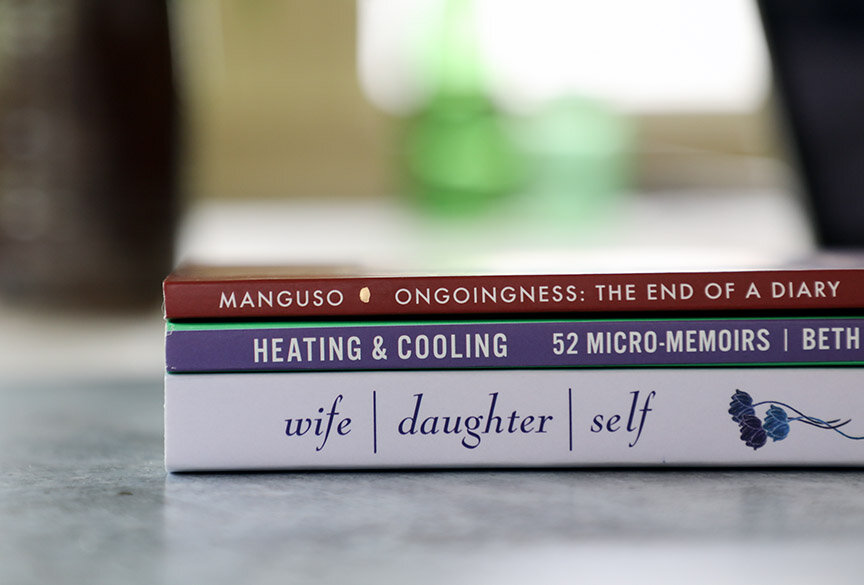
The vignette: What to read to be inspired
Memoir reading suggestions to inspire your own vignette-style life story writing, from Annie Dillard and Kelly Corrigan to Robert Fulghum and Sandra Cisneros.

Reading memoir in the format in which you would like to write is an effective way to internalize style and discover what may and may not work for you.
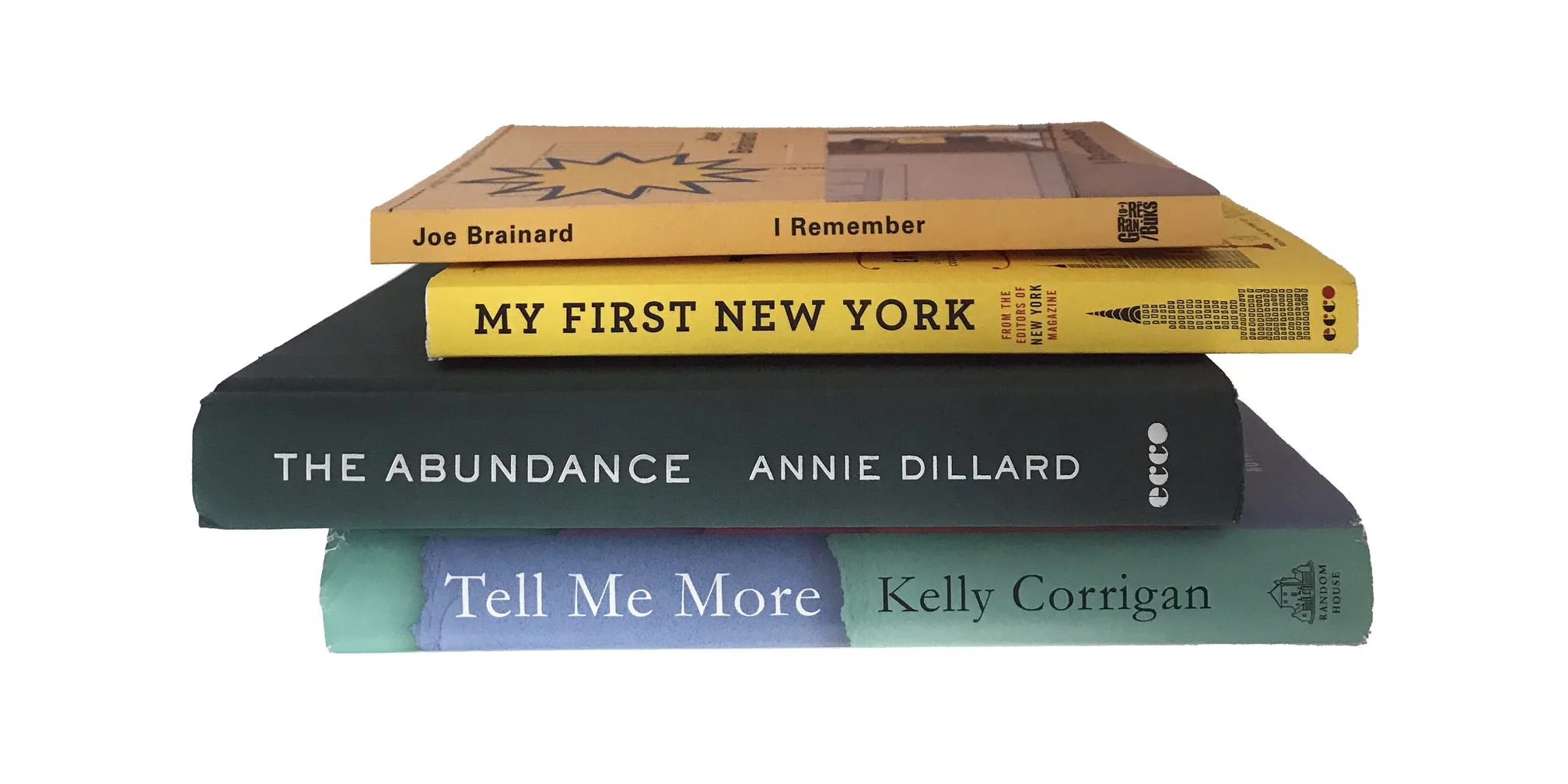
Here are a few titles that, in my opinion, utilize vignette-style writing to its fullest potential.
Vignette-Style Autobiographical Writing
The Abundance: Narrative Essays Old and New
(2016) by Annie Dillard
The entry titled “Jokes” is a fine example of writing from family experience that feels particular and universal at the same time; even without a true narrative arc, Dillard develops her parents into real characters and paints a picture of her home that makes the reader feel a welcome guest.
Tell Me More
(2018) by Kelly Corrigan
Read this joy-filled, sensitive memoir not because it is vignette-driven (it is not) but because it very likely started out that way. Corrigan—who has been called “the voice of her generation” by O: The Oprah Magazine and “the poet laureate of the ordinary” by HuffPost—beautifully weaves 12 stories together to create a book that says plenty about her life, and ours. Consider Corrigan’s book a goal to strive for in terms of using life experience to convey something beyond yourself, and of editing stories so they transform into a whole that is greater than its parts.
My First New York: Early Adventures in the Big City
(2010) from the editors of New York magazine
This compendium of candid accounts from various luminaries puts New York City on the map in an entirely new and wholly personal way. Each vignette (called “small, glittering essays” by the LA Times) is an exquisite example of capturing a slice of life via an interview (translated for the book into as-told-to pieces), an approach anyone can try simply by speaking into your phone’s voice recorder and transcribing—and editing—later.
I Remember
(1975) by Joe Brainard
Dani Shapiro introduced me to this tiny gem during a memoir writing workshop a few years back, and I have recommended it countless times since. Brainard’s memories, recounted in a stream-of-consciousness fashion, are short and pointed, often mere phrases or single sentences, occasionally a brief paragraph, each beginning “I remember...”. Read this book to discover the power of short reminiscence, and emulate it to create your own list of prompts for future development.
Finding Inspiration in Fiction
The House on Mango Street
(1984) by Sandra Cisneros
This a great fictional model for vignette-style of writing. The book is a series of sketches and vignettes written in rich, poetic prose that together form a loose narrative about the author’s Chicano childhood. The vignettes add up, as Cisneros has written, “to tell one big story, each story contributing to the whole—like beads in a necklace.” Told in first person, the book reads like a true autobiographical exploration. Her language is lush and figurative, offering us a glimpse into her world without much editorial exposition.
Discovering Voice
All I Really Need to Know I Learned in Kindergarten
(1986) by Robert Fulghum
Robert Fulghum, whose eight nonfiction books all rose to the top of the New York Times Bestseller List, refers to his writing as “stories, observations, and affirmations.” His books are filled with anecdotes, wit, and wisdom around everyday experiences and life-changing transitions.
He says his “writing usually begins as journal entries—notes to myself—lines of verbal perspectives drawn from walking around and stopping at intersections as I move camp each year.” Fulghum says he molds his raw ideas into stories by sharing them aloud with a walking companion, thereby “editing” his stories as he goes. “In time, the stories and reflections migrate into book form,” he writes. “Even so, please keep in mind that I think of what I’m doing as writing letters and postcards to friends, always ending with the unspoken tag line: ‘Wish you were here.’”
Two more of Fulghum's titles to check out for inspiration for using a casual voice to capture vignettes that resonate:
What on Earth Have I Done? (2007)
It Was on Fire When I Lay Down on It (1989)
Related Reading on Vignettes
In “How to Write a Good Story in 800 Words or Less” you’ll find writing tips and, more importantly, one of the best examples of how powerful brief character writing can be, a 145-word piece by Meyer Berger.
Check out our Vignettes Writing Prompts series:
Learn how to use family photographs as writing prompts, and how to choose the best photos to use.
If you’d like memory and writing prompts delivered to your phone weekly, sign up for our short—affordable!)—Write Your Life courses.
Affiliate disclosure: As an Amazon Associate, we may earn commissions from qualifying purchases from Amazon.com.
FREE Writing Prompts Guide
Get all our life story vignette writing prompts in one easy-to-read printable guide!

Life Story Links: June 25, 2019
The value of attaching stories to our stuff, ways to organize your memories around the artifacts of your life, and a moving eulogy honoring Gloria Vanderbilt.
“In writing, the big things in life are best illustrated by their small details. A recent widow struggling with the clasp of her charm bracelet for the first time since the death of her husband illustrates, illuminates and focuses in on grief. Go small and explode life’s large themes.”
—Marion Roach Smith

Boys just returned from hunting, Knox County, Kentucky, circa 1940. Photographed by Marion Post Wolcott, courtesy U.S. Farm Security Administration.
Lost & Found
MORE THAN STUFF
“If we want our family heirlooms and objects to have stories, then we must attach the story to them,” Kim Winslow writes. See how she does just that with a simple bench passed down from her husband’s mother.
FOUND PHOTOGRAPHS, MEMORIES GONE FERAL
Every photograph is “a marker, the living trace of a human who may otherwise survive only as a census entry, or not even that. We cannot discern their accompanying stories, and we can’t do anything for them.” The (missing) stories behind other people’s photos.
140,000 VHS TAPES
“This was not just a story about an archive, but a chance to use the archive to tell a story of the complicated person Marion [Roach] was,” filmmaker Matt Wolf says of his documentary Recorder: The Marion Stokes Project. I missed the screenings in NYC and Montclair, New Jersey, but hope to catch one soon.
After a Death
GRIEF VALLEY
“As much as I miss my dad (and I do miss him terribly) I miss the me that he knew, too. I grieve the loss of our shared story,” John Pavolovitz writes. When someone you love dies, you lose a part of yourself, too: “You lose the part of you that only they knew. You lose some of your story.”
GOODBYE TO AN ICON
Almost immediately after the news broke that Gloria Vanderbilt had passed away on June 17, tributes began pouring in on social media. Her son Anderson Cooper, with whom she wrote a revealing memoir, took to the air for this moving eulogy:
Ways In
TIMED WRITING EXERCISE
By limiting oneself in word count and time allotted for writing, undertaking any life story project becomes both more urgent and more relaxed. How to write a 300-word autobiographical vignette in 30 minutes.
CALL FOR SUBMISSIONS
Do you have a story about a time you were literally lost—maybe on a winding back road, in a sprawling city, or inside a cavernous building? Or maybe you were metaphorically lost, unsure of your life's direction, until that one moment or one person changed everything. Submit your writing to Hippocampus by Sept. 15, 2019, to be considered for their “Lost” themed issue.
OBJECT LESSONS
“Imagine telling your own story, your autobiography, around the artifacts of your life—your first trike, wagon and bicycle followed by the automobiles you owned…or other objects that are unique to your life”: Ideas for storytelling using objects as markers of time.
...and a Few More Links
He couldn’t talk about what he saw in WWII, so he painted it.
Memoir review: My Father Left Me Ireland
Check out the new website for Personal Historians Northeast Network.
Short Takes

Writing prompts for life story vignettes: 300 words in 30 minutes
By limiting oneself in word count and time allotted for writing, undertaking any life story project becomes both more urgent and more relaxed. Ready, set, write!
Our first two parts of this series, Writing Prompts for Life Story Vignettes, offered up ideas for writing from the senses and a how-to for conducting a thoughtful self-interview. Here in Part Three, we provide a simple step-by-step plan for a timed writing exercise, along with three specific idea prompts to get you started.

300 Words in 30 Minutes, Step by Step
1 - set a timer for 30 minutes
2 - Begin writing on one of these topics:
Create a literary snapshot of someone close to you: a parent, friend, teacher, someone you love…
Think of a turning point in your life and imagine you had made a different choice (not going to college, telling your secret, becoming a parent)…
Write a vignette about an old family photograph in which you are pictured. What is the story of the moment in time captured in the photo—and what is just beyond the frame? What happened just after it was taken?
Whatever writing prompt you choose, try to include striking images that give readers a strong sense of what you see, hear, and feel about your subject.
3 - wait
Let your vignette sit for at least four days to give you some distance. Reread it.
4 - do a word count and edit
Too short? If your vignette is shorter than 300 words, add to your story (by fleshing out details or drawing emotional conclusions) until it reaches this goal.
Too long? If your vignette is longer than 300 words, edit the story down, aiming for a brevity that is crisply focused and conveys some essential truth.
The Value of a Timed Writing Exercise
“The hours we spend talking about writing is time we don’t spend actually doing it,” Stephen King asserts in On Writing: A Memoir of the Craft.
By giving ourselves a time limit, we feel both the urgency to begin (before time runs out!) and a sense of relief that an end is indeed in sight (what’s a half hour, after all, in the scheme of things?).
That urgency in turn inspires us to write from the heart, in our own voice (forget about sounding polished or overthinking things)…to just write.
Find more of our life story vignette writing advice:

Download Free Writing Prompts Guide
Get all our life story vignette writing prompts in one easy-to-read printable guide!

Memory & writing prompts sent weekly to your phone
Short courses for anyone who wants to write about their life—just $15 for 8 weeks of guidance & inspiration!

Life Story Links: June 11, 2019
Storytelling in unexpected places, piecing together personal WWII histories, plus writing prompts, Scrivener notes, and curating our own legacies.
“I thought everything you wrote had to be about England; nobody ever told me you could write about growing up in Ireland.”
—Frank McCourt
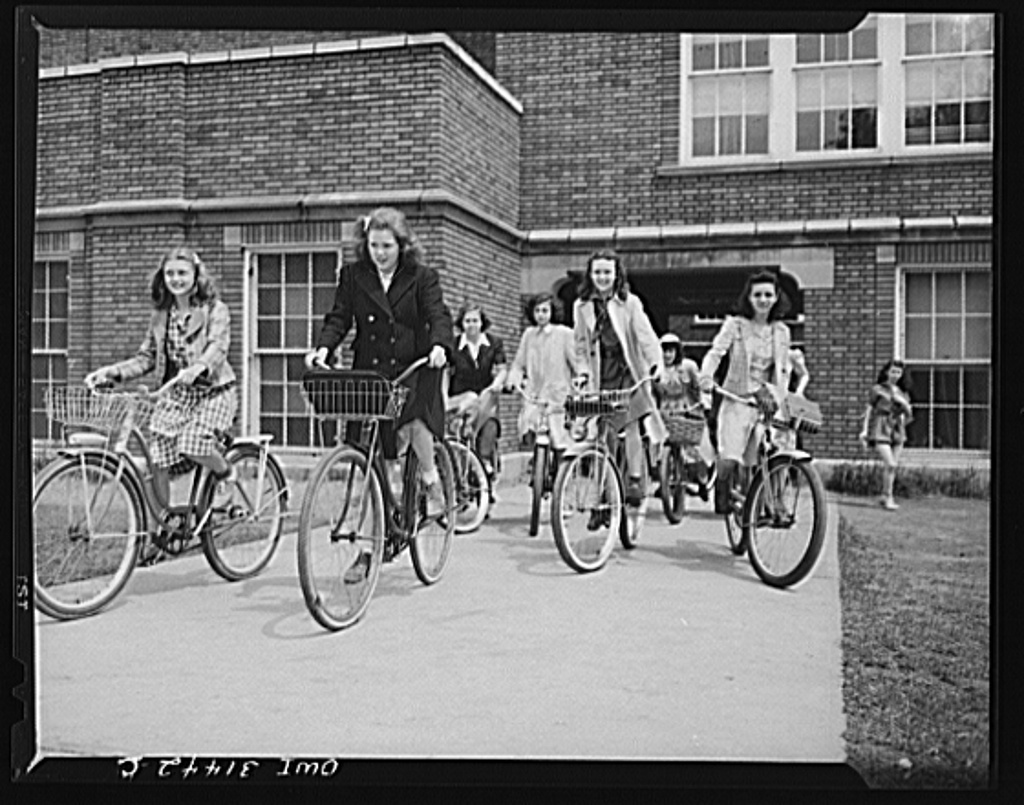
Schenectady, New York, June 1943. Photograph by Philip Bonn, courtesy Library of Congress Prints & Photographs Division.
What We Leave Behind
A MEANINGFUL LEGACY
“It’s easy to leave the house, the car, the money, the boxes of pictures,” Sarasota–based personal historian Curt Werner says. “But it’s much harder to leave pieces of yourself.”
MATTERS OF THE HEART
“I was looking for pictures that had the power to turn bitter memories into sweet. Images that said, ‘I love you more than anything.’ Images that whispered, ‘I can’t express how sorry I am to leave you.’” Mary Bergstrom curates her legacy while decorating a new home.
THE (DIGITAL) PIECES OF A LIFE
“If the only way to preserve her memories was to put together the pieces of her digital life, then we had to hack into her online accounts.” Historian Leslie Berlin recounts her desperation to break into her mother’s phone after she died.
Process of Discovery
A SCRIVENER WORKFLOW
Sarah White, whose First Person Productions is based in Madison, Wisconsin, describes her conversion from an occasional Scrivener user to a devotee who finds it “highly useful in finding the best structure for long-form writing projects.”
THE SELF-INTERVIEW
How interviewing yourself (follow-up questions and all!) can be a useful writing exercise for generating life story vignettes.
FILLING IN THE GAPS OF WWII VETERANS
“Those lauded as the Greatest Generation might just as easily be called the Quietest”—leaving family members to wish they had asked more, and to attempt to recreate their loved ones’ stories through a vast archive of war papers.
ONE FAMILY’S NUCLEAR HISTORY
“Never one to talk directly about his role as a pilot in the Second World War, my grandfather instead told my siblings and I scraps of his story that I would eventually stitch together into an incomplete whole,” Tyler Mills writes.
Storytelling in Unexpected Places
OFF THE CHARTS
“There is research that suggests when caregivers know their patients better, those patients have improved health outcomes.” See how personal storytelling is filling the gaps between patients and staff at VA hospitals.
DEPT. OF STORYTELLING
The city of Detroit has hired a Chief Storyteller. You heard that right—and with a team of storytellers on board, The Neighborhoods has become a platform that shares locals' stories and aims to change the traditional narrative surrounding the place they call home.
...and a Few More Links
Do you have (or need?) a writer’s will?
Some research suggests that events in our lives can affect the development of our children and perhaps even grandchildren.
Unique documentary series follows group of schoolchildren over six decades.
Have you listened to episodes from the new season of the StoryCorps podcast?
D-Day vet bonds with 9-year-old through the magic of music.
If you are interested in learning more about a family member who served in WWII, explore this Research a Veteran Guide.
New York State substitutes for the lost 1890 census
Short Takes
Writing prompts for life story vignettes: self interview
In Part Two of our Life Story Vignettes Writing Prompts series, guidance on conducting a probing self interview as an entry point to your stories and memories.
In Part One of our Life Story Vignettes Writing Prompts series, we offered five specific exercises for writing about your memories by using all of your senses. Today in Part Two we give you guidance on conducting a self interview as an entry point to your stories.

Getting to Know You
An oft-recommended exercise for first-time novelists is to “interview” their main characters: Imagine these fictional beings sitting before you, answering a list of questions of your making. By getting to know them, the thinking goes, the writer will be able to flesh out multi-dimensional characters with back-story, quirks and all.
Well, you are the main character of any memoir writing you take on. You know yourself, of course, but it’s a rare soul who sees himself objectively, or who looks upon herself with clear eyes.
So imagine you have been invited to sit across from Barbara Walters. You’re in a cushiony chair, glass of water within reach, ready to take on the tough questions. Ms. Walters, as you presumably know, is well known for making her guests cry, laugh, and gush as they open up about things they rarely if ever have discussed.
Preparing Your Questions
This is one occasion where I will not be offering up suggestions for questions! You must play the role of interviewer and interviewee here.
Be sure to ask the tough questions.
Ask follow-ups!
Probe beyond one-word answers.
Be thorough, asking questions about your past, present, and future.
Think about what you wish people knew about you—and consider answering those questions you wish people perhaps didn’t know, too. Open yourself up to the possibilities.
Generating your list of questions is as challenging a part of this writing assignment as answering those questions will be. Consider this: If you were a journalist about to conduct an interview with somebody famous, you would do your research first, and craft questions to shed light on some of the things you discovered.
Do the same for yourself. Record a list of milestones, big decisions from your life, and key relationships that might be worthwhile to explore. At least some of your questions should develop from here.
You might even consider including some questions that you truly don’t know the answer to yet—questions that will spur you to real introspection, and result in interesting answers that will no doubt prove fruitful for more in-depth exploration in writing.
Proceeding with Your “Interview”
Unless you are a Robin Williams wannabe, chances are you are not going to role-play both characters in this pseudo interview (if you do, please videotape and share—I’d love to see it!). Rather, you have two obvious choices:
Read your questions aloud to yourself, then answer aloud, recording your self-interview with a recording app on your smart phone or with a traditional mini-cassette recorder.
Benefit of this approach: It is often easier to talk at length than to write, and this method is more apt to retain your colloquialisms and the flavor of your voice.
Drawback: If you are going to use this as part of further writing, you will need to transcribe the recording to have it in print.Type, or write, your answers following each question.
Benefit of this approach: Writing something longhand is itself a contemplative act, and doing so here allows for periodic pauses for thinking and crafting your response. That thoughtfulness may result in answers that go deeper than if you were conversationally speaking them aloud.
Drawback: This approach can take longer, or may feel slightly intimidating to someone who does not consider him or herself a writer.
I don’t particularly recommend having a friend or loved one interview you for this exercise (though it is an approach I generally do suggest for family history preservation). Part of the value of this writing prompt is its privacy and striving for depth, and its aim to get you to share things you might not feel comfortable sharing under normal circumstances.
What Comes Next?
As with many generative writing exercises, I recommend setting aside your self-interview answers for a week or so before doing anything else with them. Once that emotional distance is achieved, then you might:
use your interview to write a longer vignette exploring one answer that was surprising to you (or revealing, or maddening, or…)
use the themes within to create a template for how to approach a larger life story project
discover questions that yielded only the beginning of an answer; if, upon rereading your answer, you feel the need to expound, then this may be a topic rife for your attention
determine which questions prompted you to share more than you expected, then (a) consider asking similar questions of a family member to capture their stories; or (b) think about going even further—what would chapter two of your answer be?
Find more tips for writing life story vignettes:
Download FREE Writing Prompts
Get all our valuable memoir-themed vignette writing prompts in one handy, printable guide!
Memory & writing prompts sent weekly to your phone
Short courses for anyone who wants to write about their life—just $15 for 8 weeks of guidance & inspiration!

Life Story Links: May 29, 2019
Hospice biographers, illustrated journals, personal letters, and more reveal stories & cement legacies for the next generation. Plus, things that hold memories.
“The wondrous thing about being human—the beauty and banality of it—is that we all tend to dwell in the same handful of elemental struggles, joys and sorrows, which is why a book one person writes may help another process her own life a century later...”
—Maria Popova

A mother reading to her son in Marshall, Texas, 1939. Photograph by Russell Lee, courtesy Library of Congress Prints & Photographs Division.
A Legacy of Stories
ALL IN A LETTER
“There it was. My grandmother’s story, crystalizing out of the ether after 66 years.” An adopted man discovers more than he expected when searching for his birth mother’s country of origin.
HOSPICE BIOGRAPHERS
A charity in England that records people’s life stories in hospices is now set to expand its work to homeless people and prisoners.
CATCH-22
Their grandfather, Papa Julie, “could barely talk about the war at all”—so when his family discovered a journal that charts each mission’s bomb targets and casualties, “the war journal is so jarring to read.” Moreover, said grandfather just may have been the inspiration for one of literature’s most famous characters.
AN IMPRESSIONISTIC RETROSPECTIVE
What a treasure this grandfather left for his family! His hundreds of journals were “filled to the brim with thousands of illustrations, anecdotes, inventions, thoughts, dreams, adventures, misadventures, and historical events filtered through the lens of one family.” Take a peek:
RECKONING
Eve Ensler shares the story of her father’s abuse in a most original—and courageous, intimate—way in The Apology, in which she imagines an apology from her long dead father. Read an excerpt here.
Things We Hold Dear
THE ART OF CURATION
Whether you call it “culling,” as photographers do, or “curating,” as photo organizers do, it is an integral step in preparing your family photos for preservation in a book or video, or for preserving your family archive. Learn how to cull your photos for optimal storytelling and engagement.
PROTECTING FAMILY ARCHIVES
Jim Michael of the Personal History Center in Georgia shares an excerpt from his book Tell Your Story and Save the World. Find tips on preserving family archives including photographs, papers, digital media, and analog audio and video tape.
HOUSE OF MEMORIES
The Minnesota Historical Society launched a statewide dementia-awareness program that uses museum resources to teach professionals and family caregivers how to use everyday objects to draw stories out of people with memory loss.
...and a Few More Links
New biography of Susan Sontag based on hundreds of interviews with people who knew her well
Ten individuals win colorized photographs from their own family history collection.
A look back at a decade of The New York Times Lens column
Illinois man preserves the story of his family’s migration through art exhibit
Memories from a World War II scrapbook
“Lessons on Living from my 106-Year-Old Aunt Doris”
The Bob Dylan Archive finds a permanent, public home in Tulsa.
Short Takes

Photographers call it culling
Culling your collection of family photos—whether a year's worth of images or just the shots from your latest vacation—helps retain their value—and stories.

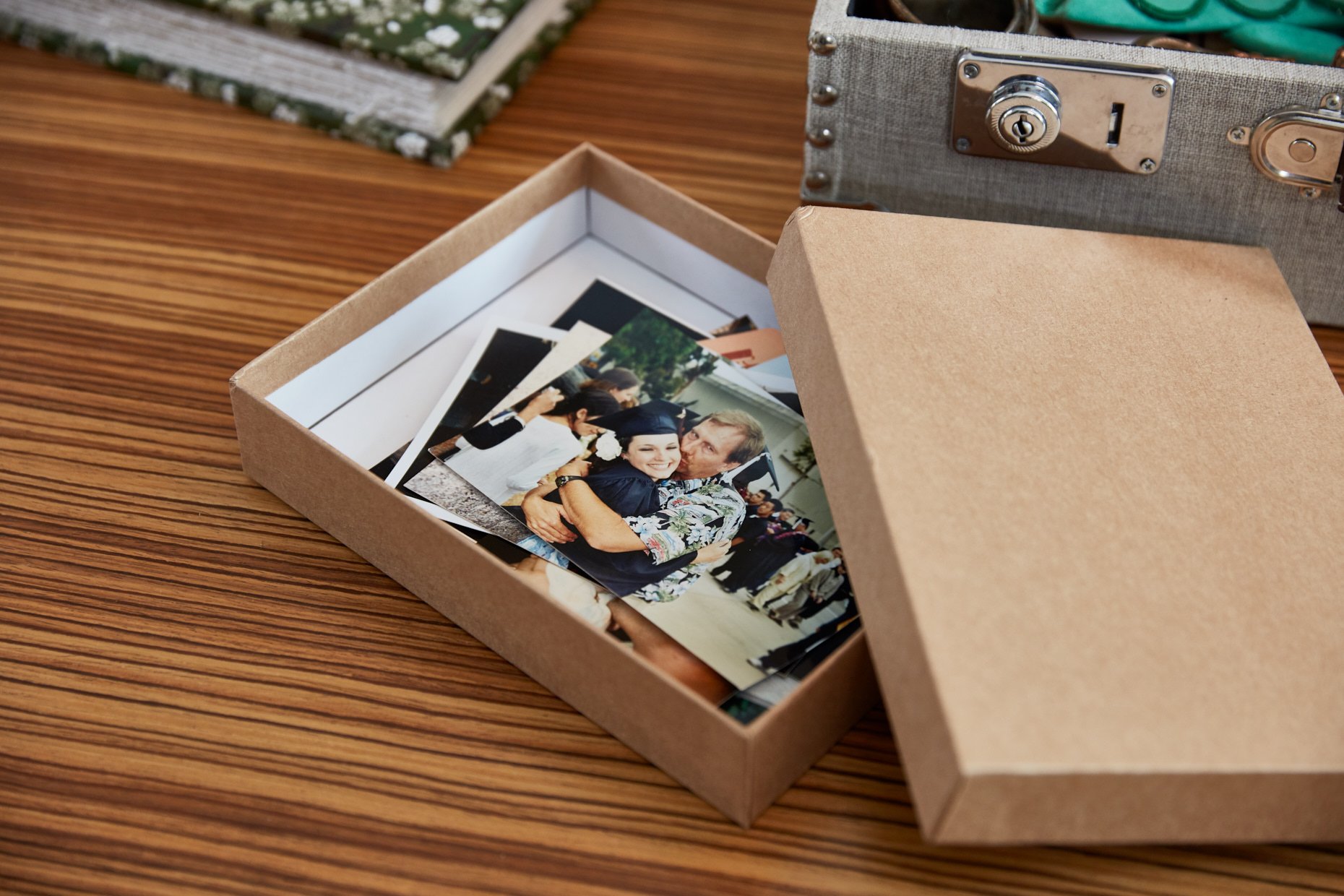
Culling is the process of going through a large collection of images to select those that are the best, whether for delivering to a client (for a professional photographer) or for using in a family album of some kind (for a family photographer).
Culling is not always the most fun part of preserving our memories (it can be tedious, for one thing, and it is almost always time-consuming). It is, however, a critical step in preserving our memories beautifully.
Consider your friend who posts every photo from his recent weekend getaway to Facebook—including images so dark you can barely tell who is present, 10 shots of the same group pose (ugh!), and a few mystery shots that seem to make no sense (think: a corner of a menu or a pile of rocks).
There’s a reason you cringe, at worst, or pass right by that friend’s albums, at best: because the meaning of the group of photos has been diminished by not first culling them.
Why culling matters
Nobody wants to page—or scroll—through endless photos that seem like they were dumped right from your camera’s memory card. As I see it, if you, the photographer, do not respect the photos, why should I?
Culling matters because:
Weeding out poor images is respectful of the recipient’s time.
Including only the best photos helps tell a story and bestow meaning on your experiences.
Presenting a purposefully curated selection of photographs ensures that those you would like to see them—your family, your friends, your descendants—will indeed feel compelled to revisit them, hopefully often.
Culling regularly helps keep your photo collection organized and manageable, making it easier to access a particular photo when you want it, and enabling family genealogists to also find what they may need.
How to approach culling
What NOT to Include
Do not include overly dark images (if, of course, there is one meaningful shot that is too dark but can be salvaged by photo retouching, then by all means, edit it and include!).
Did you snap a series of the same shot in hopes of capturing the best light, or of having everyone smiling, eyes open? Then choose the best ONE. You don’t have to delete the rest, but at least put them in a separate folder called “Outtakes” that you archive in case needed later.
What about shots that mean something only to you (previously mentioned pile of rocks, for example)? Consider your audience, and either caption the photo to reveal its story (“the rocks that would soon become our new backyard fire pit”) or do not include it in your project.
Determining Your Best Images
How you define “best” is contingent upon what you are doing with your photos. If you are creating a vacation memory book, for instance, you will want a mix of pictures that show the places you visited (close-ups, panoramas, textures) and the joys you felt (facial expressions, action shots). If you are editing a wedding shoot, you will want to make sure everyone important is represented, and that key moments are all covered.
It helps to be deliberate: When I am feeling overwhelmed, I often review shots of a similar scene or person side by side, eliminating one at a time as if I were in an eye exam: THIS ONE or THIS ONE? THAT ONE or THIS ONE?
There are many methods for culling—using stars or other labels in Lightroom, say, or creating digital albums in Google Photos. Whatever your approach, be consistent. Not only will that make for an efficiently organized photo collection, but it will also enable you to perfect the craft of culling; you’ll get faster each time you give it a go, and know that types of shots that resonate for you.
The best bit of guidance I can give is to select images that, together, tell a story. Back to that family vacation album: You needn’t include a photo of every.single.place you went, but do select the places that meant something to you, that sparked joy, that you would like to return to some day—and include details that bring said place to life (zooming in on hands in action is always a favorite of mine—hands eating a favorite meal, hands waving a sparkler or steering a boat or resting on a child’s lap…you get the idea?).
Taking the next steps
CULL again?
Your first pass at culling a collection of images might have resulted, still, in a large group. That’s totally fine, but depending upon what you would like to do with your photo collection, you may want to do a second or third pass (selecting images for a family annual book, perhaps, and a smaller collection for a social media share).
CULL, THEN EDIT
Always do any image editing after your have finished culling, There is no sense spending time adjusting anything if you may toss the image later!
INPUT METADATA
Family historians in particular may want to consider adding detailed metadata to photos so names, places, and dates are embedded in the digital files for later reference.
SELECT IMAGES FOR WRITING PROMPTS
Family photos can be especially powerful tools for jogging our memories and recalling stories from our childhood. Select a few photos (read how to choose the best ones here) and, after digitizing and archiving them, schedule some time to reminisce and capture stories. Even if you don’t anticipate writing a full-fledged family history, preserving detailed captions that go beyond who, what, when, and where is a worthwhile endeavor, one that will be cherished long into the future.





Dawn Roode’s curated roundup for the week of Sept. 23, 2026, is overflowing with recent reads on memoir, life story writing, and family history preservation.