
Memories Matter
Featured blog Posts

READ THE LATEST POSTS

Life Story Links: February 16, 2021
When memories are left unrecorded, legacies fade; but when stories are preserved, the rewards are myriad. The value of personal history, memoir, and more.
“Memory nourishes the heart, and grief abates.”
—Marcel Proust

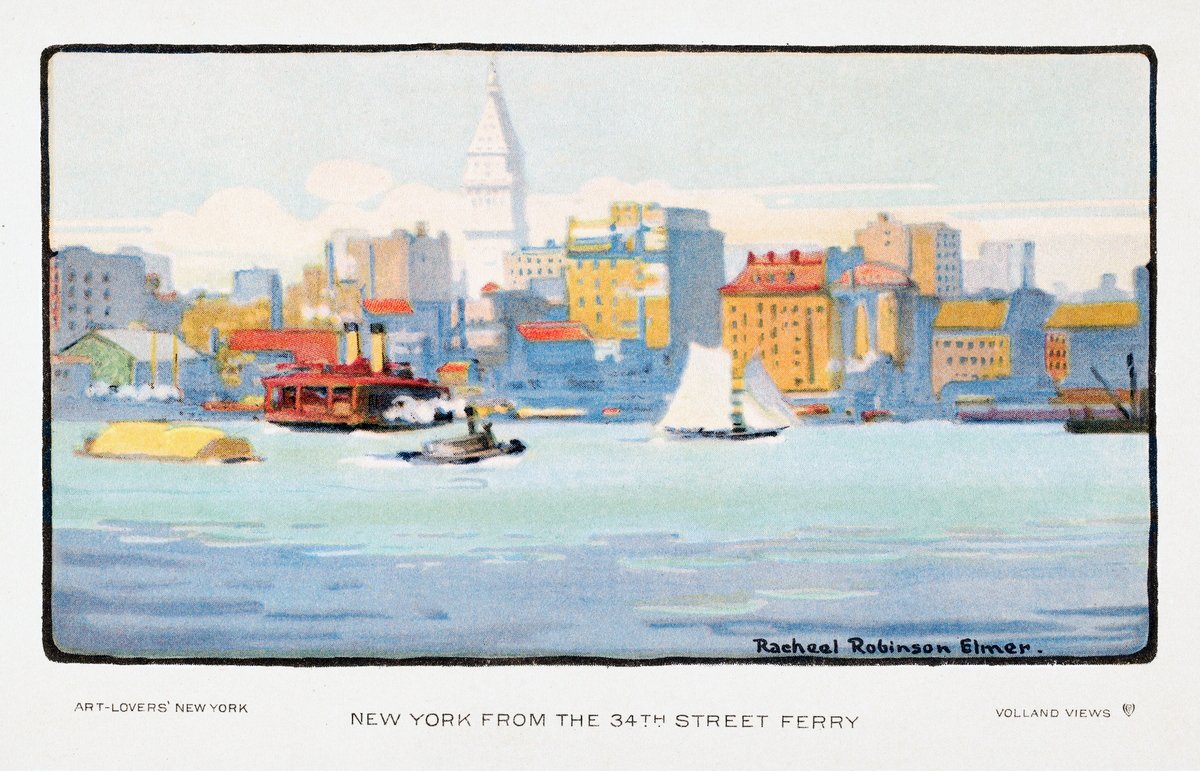
Vintage Valentine’s Day postcard with early 20th-century illustration
In Pictures
SCENES FROM A MARRIAGE
The experience of abundant togetherness during this pandemic for Mandy Patinkin and his wife, Kathryn Grody, “is a matter of public record, because scenes from their marriage—in all its talky, squabbly, emotional, affectionate glory—are all over social media, courtesy of their son Gideon, 34, who started recording them for fun.” What a delight!
SCENES FROM A BYGONE ERA
When boxes of photos of everyday life in the Shetland Islands were salvaged from the recycling heap and shared online, residents’ memories went into high gear. “Overnight, dozens of people were leaving messages and helping to identify the people featured, chiming in with notes on family homes and sharing memories of places they spent time as children.”
Lives Recorded, Lives Unrecorded
AND NOW, BLANK PAGES
“I often wish I could ask my father who he was at 23. I wish I could ask what his bad habits were, or how he treated his mother, or what he did on Saturdays. But his ability to recall his past has disappeared…” A daughter unearths her father’s journals from a time before Alzheimer’s stole his memories.
A GIFT FOR ALL
“At the time I thought I was doing this for my kids, and my grandkids… It would be ancient history on a personal, family level,” Randy McDaniel says of recording his father’s stories while he was in a nursing home. When his dad died years later, Randy realized, “Nope. I recorded it for myself.”
BROOKLYN SERVICEPEOPLE
World War II veterans buried at Green-Wood Cemetery in Brooklyn, NY, will soon be honored by a team of dedicated archivists to offer “a better story than what’s on the gravestone about who these people were and what they did.”
“MY FAMILY AND THE MOB”
“As the hurts are revealed, they offer unexpected insights that traverse generations. The life of the grandfather explains the life of the father, which explains the life of the son.” He knew his grandfather was a mob boss., but was that the whole story? A review of Russell Shorto’s Smalltime.
Pen to Paper
A CONUNDRUM, INDEED
“Not the first modern trans memoir, but perhaps the first with literary ambitions, Conundrum helped establish one way of thinking about what it means to be trans.” A thought-provoking piece about how one person’s story can become less relatable, even “obsolescent,” over time.
A FOOLPROOF WRITING PROMPT
Last week I wrote about the two-word writing prompt guaranteed to keep even the most blocked writer’s memories—and pen—flowing, which was introduced to me by one of my favorite memoirists.
Kinship and Connection
FIRESIDE CHAT
This conversation between Dave Isay, founder and president of StoryCorps, and Dr. Ira Byock, founder of Providence’s Institute for Human Caring, is now seven months old, but its message—how stories build human connections—is as relevant as ever.
UNLOCKING MEMORIES & EMOTIONS
“While we could have looked at photos together before the pandemic, we rarely did. Now, using ‘share screen,’ we gaze at the snapshots Dad took while he was working as a fishing guide on Yellowstone Lake, and as a relief doctor for the Havasupai people who live near the Grand Canyon. The photos release memories.” How Zoom has enabled one family to become closer during the pandemic.
LONG-DISTANCE EXCHANGE
“I get to have a 45-minute to an hour conversation with one of my oldest, closest friends every single week. Not just, ‘How’s life?’ or, ‘How’s your job?’ but real, actual subjects that mean something. Not many people can say that.” Behind the scenes at “The Bittersweet Life” podcast.
AN ARTFUL MEMORIAL
A quilt stands as a monument to a mother who looms large in the memory of her family: “It’s a way to preserve history and...to keep our mom’s memory alive and remember her after all these years.”
...and a Few More Links
“Secrets & Memory: A Workshop for Writers with Dani Shapiro & Albert Flynn DeSilver” on March 6
Smithsonian presents the Mother Tongue Film Festival, “The Healing Power of Storytelling”
Mike Nichols, intuitive storyteller
Read an excerpt from Gabriel Byrne’s new memoir, Walking with Ghosts.
Considering creating a commonplace book?
For one woman, prayer cards provide treasured connections.
Memory and technology: on how we retrieve images from the past
Short Takes

The little book that every aspiring memoirist should read
Introducing the two-word writing prompt guaranteed to keep your memories and your pen flowing, plus the book by Joe Brainard that inspired it: “I remember...”.

The little book that could: I Remember by Joe Brainard is a cult classic and a favorite of aspiring memoirists and memory keepers.
Buy this book now: I Remember by Joe Brainard.
(I don’t suggest borrowing it from the library, because you will want to pull it out next week, in five years, when you’re staring at a blank computer screen or journal page; it’s a tiny book, so it won’t take up too much space on your bookshelf, after all.)
This book is a delight to read. And this book holds the key to writer’s block.
Brainard’s memories, recounted in a stream-of-consciousness fashion, are short and pointed, often mere phrases or single sentences, occasionally a brief paragraph, each beginning “I remember...”:
“I remember the only time I ever saw my mother cry. I was eating apricot pie.
“I remember how much I cried seeing South Pacific (the movie) three times.
“I remember how good a glass of water can taste after a dish of ice cream.
“I remember when I got a five-year pin for not missing a single morning of Sunday School for five years. (Methodist.)”
As Ron Padgett writes in the book’s afterword, “Few people can read this book and not feel like grabbing a pencil to start writing their own parallel versions.” Indeed. “It is one of the few literary forms that even non-literary people can use.”
The two-word prompt that never fails
Like many before me, I was first introduced to Joe Brainard’s book in a weekend writing workshop with memoirist Dani Shapiro. She read some snippets out loud and I was immediately enlivened. Our assignment: to write nonstop for 10 minutes, finishing the sentence “I remember…” over and over with no concern for chronology or connectedness.
As she describes, “When I give that exercise at retreats, I look out from where I’m sitting at a sea of people, and not one of them hesitates. Those are extremely evocative words.”
“I remember.”
Those are the words Shapiro calls evocative.
And they are the words that form her (and my) favorite writing prompt: “I remember…” is a steadfast prompt, an old friend that can be pulled out and used often, always to new effect.
As Padgett writes, “Even the smallest [memory] can exert a mysterious tug, and when it is clearly recalled it can release a flood of other memories.”
Your turn: Start writing using the prompt “I remember…”
“Memory is just this storage locker of incredibly rich material and we often can’t get at it when we’re trying to remember something or thinking in some chronological way or straining and reaching,” Shapiro said on an episode of her now defunct Facebook Series, “Office Hours.”
“Where we can really get to it is on the page, following the line of words, and allowing associations to pile one on top of the other.”
So, grab a pen and start writing.
don’t discriminate against memories that seem meaningless or small
don’t worry about making connections between one memory and another
don’t stop until your 10 minutes are up.
Some remembrances will be short and specific. Here are two of mine:
“I remember patent leather black shoes with one scuff on the toe.”
“I remember drinking Diet Coke nonstop when I worked at Vogue. My production assistants swore I needed an IV drip of caffeine. One of them berated me for buying cups of ice from the bodega for a dollar.”
Other remembrances will be more profound, perhaps longer, such as this one from Brainard:
“I remember having a friend overnight, and lots of giggling after the lights are out. And seemingly long silences followed by ’Are you asleep yet?’ and, sometimes, some pretty serious discussions about God and Life.”
Let your mind wander—no restrictions—and your pen will follow. You’ll be surprised by what bubbles up.
“People almost invariably find memories that they didn’t know that they had,” Shapiro said in an interview with Marie Forleo about this exercise.
“We don’t tell ourselves stories in our heads. We have these disparate memories that don’t connect. And when we allow them to be associative and to bounce one off the next, it creates all sorts of interesting material.”
Who should give this writing prompt a try?
Personally, I think the simple phrase “I remember…” as a springboard for writing has universal appeal. It’s fun, it’s alluring, and it’s easy.
It may be especially beneficial for certain people, though.
This writing exercise is good for:
helping you open the floodgates of memory when you feel stuck
warming up at the beginning of a writing session—putting pen to paper and having a relatively easy task (simply finishing the sentence “I remember…”)
brainstorming memories: Without the pressure of remembering something specific, your list will inevitably be diverse and surprising—providing fodder for a future memoir or personal essay.
So if you’d like to discover the power of short reminiscence, and emulate it to create your own list of prompts for future development, well, I Remember is the book for you..
Note: This is an unsolicited review of a book I purchased at full price. I did not receive any compensation or free products in exchange, and any endorsements within this post are my own.
Affiliate disclosure: As an Amazon Associate, we may earn commissions from qualifying purchases from Amazon.com.
P.S. I’d love to hear some of your reflections. What are a few of your favorite things you wrote using the writing prompt “I remember…”? Share in the comments or shoot me an email!

Life Story Links: February 2, 2021
Lots of memoir excerpts to inspire your own life story writing, plus more recent articles with tips and ideas for memory-keeping of all kinds.
“Life has been your art. You have set yourself to music. Your days are your sonnets.”
—Oscar Wilde

Children on sleds in Central Park in New York City, circa 1915, photograph by Bain News Service, courtesy Library of Congress Digital Collection.
The Craft of Ghostwriting (or Whatever You’d Like to Call It)
CHANNELING THEIR VOICES
“Readers just want the truth, particularly in a memoir. And they can really sense when they’re getting it. So I’m mostly hanging out, waiting for the truth to come out and reveal itself.” Michelle Burford on why she prefers to be called a “story architect” rather than a ghostwriter.
THEN AND NOW
Even before co-founding NYC–based Remarkable Life Memoirs, Samantha Shubert was in the business of helping tell empowering life stories. Here she shares a story about how a plum copyediting job inspired her, plus details on her company’s new hybrid memoir/cookbook offering.
Family History, Personal History
FINDING THE JOY
There are plenty of lists of generic family history interview questions around, but this one offers up an array of topics both silly and fun to add some levity to any probing personal history conversation.
STORIES OF BLACK EXPERIENCE
A Connecticut author describes her profound feelings upon reading an ancestor’s obituary—“I cried when I found out what his life was like, being enslaved, wanting to escape, wondering who he left behind”—and encourages Black families to study their genealogy to find personal stories of tragedy and triumph.
THE SHAPE OF US
“What is it that makes us, us?” Kat Nicholls asks in this piece that explores the role our memories play on our identity, and what happens when they’re taken from us.
END-OF-LIFE THOUGHTS
Most of the academic studies social psychologist Michael Ent was able to find were focused on practical aspects of support for the dying rather than on trying to harvest their wisdom—so he undertook a study to see what was on their minds.
PANDEMIC PIX
In an effort to preserve imagery from the Covid-19 pandemic, the Library of Congress’s ‘rapid response’ collecting has already secured special projects from nationally recognized artists and photographers. Now they have extended an offer to citizens across the country to submit their own pictures of pandemic experiences.
Lots of Great Memoir Reads
THE PRICE OF INNOCENCE
“I am a first-generation immigrant…but my real identity, the one that follows me around like a migraine, is that I am the daughter of immigrants,” Karla Cornejo Villavicencio writes in this evocative piece about waking up from the American dream.
A FITTING LEGACY
Deborah Orr never got to see her memoir, Motherwell, become a bestseller, as she died before its publication. In a recent podcast Damian Barr reads an excerpt from this “book about how a deeper understanding of the place and people you have come from can bring you toward redemption.”
IN THE WAKE OF DEVASTATING LOSS
“I feel it in me, that uncomplicated, devastating happiness; it is as true and tactile as anything I’ve ever felt. But behind that feeling lurks the panic that the world can drop out from beneath your feet at any time, because that’s true, too.” Read an excerpt from Emily Rapp Black’s memoir Sanctuary.
LEAVING HOME
“The way my father tells it, my mother was wrong and the police were wrong and my memories were wrong.” Memoirist Danielle Geller tells the story of a life by what was left behind in this excerpt from her new book, Dog Flowers.
BEYOND THE GREAT SILENCE
“Over many years I came to understand that I had been infused part of my father’s traumatic history. Why this happened I do not know. All I do know is that it became the dark ghost inside me, the lining of my heart, the stones of my kidneys.” Jonathan Lichtenstein on writing through the silences of a lost family history.
IMPORTED FROM DENMARK
“I bring news of Tove Ditlevsen’s suite of memoirs with the kind of thrill and reluctance that tells me this must be a masterpiece,” Parul Sehgal writes of The Copenhagen Trilogy: Childhood; Youth; Dependency, translated from the Danish.
Personal History Through Obits
AN ALL-STAR HUMAN
"It was supposed to be the greatest triumph of my life, but I was never allowed to enjoy it,” Hank Aaron said of his storied baseball career. "The only reason that some people didn't want me to succeed was because I was a Black man." Sports Illustrated and The New York Times laud a legend and a gentleman.
AKA LAWRENCE ZEIGER
An intent listener during his CNN interviews, Larry King was fond of saying, "I've never learned anything while I was talking." King, who conducted 50,000 interviews according to the BBC, is quoted by the LA Times as saying, “For this to all happen to a Jewish kid from Brooklyn is a damn impressive thing.”
...and a Few More Links
New “memory safe” product safeguards your digital and physical memories.
John Waters learns that his ancestor owned slaves.
A counselor speaks to the importance of memories and offers tips on how to preserve them.
Presidential biographies, and presidential mythologies
Preserving memories one flower at a time
Early Snapchat employee debuts Yoni Circle, a social storytelling app for womxn.
Project Memory Co. creates photo books with journaling elements.
Short Takes

“When was your first kiss?” & other fun questions to ask Mom and Dad
There are plenty of lists of generic family history questions around—but what about fun ones? Settle in for an entertaining interview with the parents!

The days are passed when you might cringe with embarrassment imagining your parents’ first kiss (at least, I hope they have!). But have you ever asked them about it?
How about their most embarrassing moments? The time they were really and truly naughty? The lie they told you when you were a kid?
One of the consistent reactions I get when life story books are presented to families is this: “I never knew this side of my mom” or “I always thought of Dad simply as Dad—how wonderful to discover him as a person!”
So many questions I ask my personal history clients revolve around transitional times in their lives: decisions that impacted the course of their life, and lessons learned on the path to becoming who they are now. But life isn’t just about the milestones; it’s about the everyday moments and experiences that add up to a life.
And you know what? A lot of those moments are funny—and fun. Why not explore them in conversation with your parents? You’ll enjoy yourselves even while you get to know them on a whole new level! (Bonus points: Hit “record” on your smart phone or a digital recorder to ensure their stories are captured for posterity.)
38 questions to explore your parents’ fun sides
Don’t just ask this questions that appeal to you: Invite stories. Ask follow-up questions. Listen with interest, and no doubt questions even better than the ones below will come to mind as your parents are sharing. Most of all—have fun!
Questions to Get You—and Your Parents—Smiling
What is the funniest fashion fad you gave into during your teen years? In your twenties?
Tell me about a time you laughed inappropriately.
What is the funniest thing you recall Grandma/Grandpa ever doing?
What are some funny things your kids said or did when they were little?
When was your first kiss? Tell me the story.
What’s the most embarrassing thing that has ever happened to you?
What are you hoping I don’t ask? Come on…
Tell me about a time you were unabashedly naughty.
What’s the most satisfying thing you ever got away with?
Did you ever tell us kids white lies when we were young?
What is the funniest practical joke you ever played on someone?
Do you remember a favorite lullaby or bedtime story from your childhood?
Tell me about any pets you have had—and maybe a time or two they made you truly happy.
Do you have any goofy tendencies or unique habits?
If someone gifted you $5 as a kid, what would you immediately want to buy?
Seemingly Benign Questions that May Yield Surprisingly Deep Answers
What is the worst date you were ever on?
How would you describe your sense of humor?
What has been your grandest adventure?
What always makes you laugh?
What is the most incredible dream you have ever had?
Who from your childhood would you characterize as reliably funny?
What is the nicest thing you have ever done for someone?
What is the nicest thing anyone has ever done for you?
What is the biggest surprise you have ever gotten?
Questions their Spouse May Prefer to Answer on their Behalf
Tell me a funny story about a time Mom/Dad got a little tipsy.
Have you ever had to rescue Mom/Dad from an embarrassing guffaw?
What did you do for fun on your dates together (allow both to reply—often the interplay of their reminiscing together will be as fun as their answers!)
What scenes would be on your spouse’s blooper reel?
Quickfire Round: Questions that Reveal Fun Details
Did you have nickname(s) as a child?
Can you remember any knock-knock jokes or funny riddles?
What was your favorite cartoon character as a child?
What is your favorite… card game?
… ice cream flavor?
… musical group?
… movie?
… place to visit?
… candy bar?
Make a goofy face, won’t you? (Get your camera ready!)

Get your free guide of Essential Family History questions
All the questions (not just the funny ones!) to ask your parents to capture their stories, presented in a beautiful printable guide
I'’d be honored to hear your stories.
Do you prefer to have a professional personal historian conduct interviews with you or your loved ones? That’s what I’m here for! Schedule a free 30-minute consultation to see how we can work together—I can’t wait to hear all about you!

Life Story Links: January 19, 2021
Timely reads on new memoirs and biographies, tips for fine-tuning your life story writing & curating your family photo archive, plus more links to bookmark now.
“I could tell this story with myself as the villain or the hero, innocent bystander or agent provocateur, and each time I’d be telling a form of the ‘truth.’ What is the value of a truth that has an infinite number of forms?”
—Marc Hammer

On this day in history: Snow fell for the first time in Miami on January 19, 1977 (though for the most part the flakes melted when they hit the ground).
Recent Memoir & Biography
“SUFFERING WITHOUT SENTIMENTALITY”
“I wanted to abandon all this personal history, its darkness and secrecy, its private grievances, its well-licked sorrows and prides—to thrust it from me like a manhole cover,” Bette Howland wrote in her 1974 memoir W-3, which has been recently reissued.
ON WRITING AND LIFE
Gabriel Byrne’s new memoir, Walking with Ghosts, has been hailed as a “masterpiece” by Colum McCann and as “dreamy, lyrical, and utterly unvarnished” by Colm Toibin. Listen in as Byrne talks about memory, loneliness, and more.
ANOTHER SIDE OF SYLVIA
“There’s this sense in other biographies that she was only writing to please other people—to get love from her mother, her professors, her teachers—and I thought that short-changed her own sense of ambition and determination and the pleasure that she got out of writing.” Heather Clark on not falling into the Sylvia Plath trap.
Timely Tips
TREASURE, NOT TRASH
Last week I wrote about what everyone can do to ensure their own family photo collections are inviting to the next generation—for, whether we want to believe it or not, many kids simply throw away those once cherished pictures.
LISTEN UP
“What might happen if you read your memoir aloud as if talking to a therapist…?” David Perez ponders in this piece on the power of speaking your writing to life (spoiler alert: there is substantial power in the exercise).
FREE SELF-PUBLISHING WEBINAR JAN. 25
During “Everything You Want to Know About Self-Publishing but Are Afraid to Ask” you’ll “leave with a roadmap to the self-publishing journey so you can start taking action now.” Register for the free January 25 Zoom class here.
...and a Few More Links
The Statue of Liberty—Ellis Island Foundation has opened a new online shop.
“You can’t tell a life story or family history with 60,000 photos.”
Learn all about the Army Navy “E” Award, a.k.a. the Excellence in War Production Award (WWII).
Study sheds light on how the timing of memory is encoded in the hippocampus.
Singer Billie Eilish set to release photo book filled with personal memories.
Read the current issue of Brevity.
California–based personal historian Perry Hamilton reflects on a wedding.
Preserving memories one image at a time
Short Takes
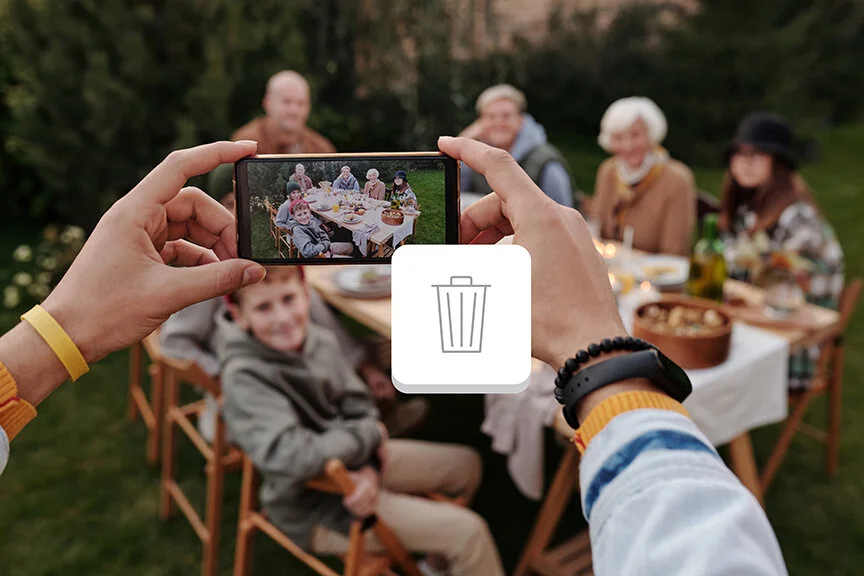
Think YOUR KIDS would never throw away your cherished photos? I wouldn’t be so sure...
Imagine: Your treasured family photos, one day thrown in the trash—by your own kids?! Here, the secret to ensuring your photo memories live on.

I know you didn’t snap all those family pictures just for them to end up in the trash…did you?
What would you grab first if your house were on fire?
Your family photos, if you’re anything like most Americans, would be somewhere atop your theoretical list.
We value those old albums passed down from our parents. We cherish the letters Gram tied with a ribbon from when Pops was at war.
But you know what? Those family mementos of old were typically part of small collections, often curated into albums or stored neatly in a single box. In other words, easy to move—and inviting to go through on occasion.
What of your own photos? Are they curated? (Doubtful.) Is the collection in one place? (Yeah, right.) Is it accessible—emotionally accessible, not easy to reach on a shelf? (Oh, you don’t even understand this question?)
Allow me to explain: If your photos number in the thousands, exist across multiple social media platforms and devices, and finding one image that holds meaning poses a challenge—well, that’s not an emotionally accessible family archive.
What does make for an inviting family photo collection?
Your descendants will be more likely to hold on to your photos if:
they can find ones that matter to them
they know who is in the pictures
the stories behind the photos are evident
they are not overwhelmed by the sheer volume and disarray of the photo collection.
I write often about finding the stories behind our family photos, and I believe those stories are what make those photos valuable in the first place.
There are plenty of approaches to whittling down our photo collections, from Marie Kondo minimalism to genealogy purists’ detailed preservation. And I’m more than happy to connect you with a professional photo organizer who can take on the grunt work for you according to your own values.
But I urge you to go beyond mere organization. Paring down and labeling your collection will certainly go far in making your collection valuable to your kids. Adding stories and curating your collection to convey meaning, however, will make your family photo collection invaluable to them.

Would you like to learn more about how we can work together to preserve the stories behind your photos? Please schedule a time for a free 30-minute consultation.
Would you rather begin such a project on your own? I’ve got some resources for that, too:
free download
Grab your free copy of this helpful guide chock-full of tips and ideas for writing the stories behind your favorite family photos.
recommended read
Your memories live in your head and heart, but family photos, heirlooms, and mementos sure do call those memories forth—here’s how to use them to help you begin to create a life story book.
advanced techniques
Interested in paring down your family photos? Photographers call this process culling, and I’ve put together some best practices for culling your family photo collection with intention.

Life Story Links: January 5, 2020
Ways of remembering, first-person essays worth your time, and efforts to tell stories of real peoples from all walks of life: new reads for the new year.
“The years on someone’s gravestone are when they lived. The dash represents how they lived.”
—David Allen Lambert
![On this day in 1920, the Boston Red Sox sold Babe Ruth to the New York Yankees for $125,000 in what would come to be known as the Curse of the Bambino. Pictured above: Lou Gehrig, George Herman [Babe] Ruth and Tony Lazzeri in a 1927 photograph by Un…](https://images.squarespace-cdn.com/content/v1/55d35604e4b08af97dadd334/1608672183720-I6KA9WATTCEDFFYYW7K5/lou-gehrig-babe-ruth-tony-lazzaeri-yankees.jpg)
On this day in 1920, the Boston Red Sox sold Babe Ruth to the New York Yankees for $125,000 in what would come to be known as the Curse of the Bambino. Pictured above: Lou Gehrig, George Herman [Babe] Ruth and Tony Lazzeri in a 1927 photograph by Underwood & Underwood, courtesy The Miriam and Ira D. Wallach Division of Art, Prints and Photographs: Photography Collection, The New York Public Library.
All Peoples
SHOULD OLD ACQUAINTANCE BE FORGOT?
“From the pews of a church where white deacons once refused to seat African Americans, a group of Black singers in Alabama reminds us why preserving our memories of this historic year is vital—even if we'd rather just leave 2020 behind.” Take three minutes and forty-five seconds to relish the sounds and watch here:
MAKING HISTORY RELATABLE
The Canadian War Museum made a conscious effort to include a diversity of voices in its latest exhibit, “Forever Changed: Stories from the Second World War,” which turns to individual stories to make an impact. “You learn something about the person—maybe it’s hopeful, maybe it’s sad, maybe it’s scary—but each one stands on its own as something that you can feel a connection to.”
SHARE YOUR PERSONAL HISTORY
Are you an immigrant of color in America? NPR invites you to share a short audio clip telling about your family’s history involving “themes of identity and assimilation in America” for a new project looking at our country’s melting pot.
Flickers from the Past
AH, MEMORIES!
Dan Rodrick writes that memories “are like old toys that need to be taken from storage and wound up to make sure they still work. If you don’t do that, they stop speaking to you, and one day you’ve forgotten the sound of your father’s voice.”
“THE GHOST ON THE ZOOM CALL”
Judy Bolton-Fasman reflects on the weekly group video calls she has with her mom, who is in a nursing home, and “the times she sees her mother, my abuela, inhabiting a Zoom cubicle…. Abuela has been dead for over forty years.”
IN LETTERS
“There will be no (or vanishingly few) books of collected emails, and who would want them?” Dwight Garner wonders in this piece mourning the letters that will no longer be written, and remembering the great ones that were.
First Person Reads Worth Your Time
SELF-DISCOVERY THROUGH READING
For Jenny Offill, “Mrs. Dalloway is…[a book] to which I have mapped the twists and turns of my own autobiography over the years. Each time [I reread it], I have found shocks of recognition on the page, but they are always new ones, never the ones I was remembering.”
A VIRTUAL BEST-OF
The editors at Narratively (“human stories, boldy told”) have picked their favorite stories from the past year, and I recommend perusing their list. A few of my favorites:
“I Quit My Job at 50 to Reinvent Myself. Pro Tip: Don’t Do This.” by Ivy Eisenberg, laced with a wonderfully acerbic self-deprecating wit and canny cultural touchstones
“Snowed in with a Ghost” by Krista Diamond: “‘Building’s haunted,’ the landlord said, with more boredom in his voice than the statement merited. ‘Ramona. That’s the ghost’s name. She was here when this was a brothel.“”
“My Secret Life as a Coronavirus Nomad” by JB Nicholas: “As a freelance journalist, I’ve struggled financially for years. Then the pandemic hit and I got thrown on the street. But I will go on — I always do.”
...and a Few More Links
A beloved WWII photo comes to life in a virtual reunion.
A year-by-year glance over the first ten years of The Public Domain Review
Tips for anyone considering creating a family website
A look back at “the lives they lived”: remembering some of the artists, innovators and thinkers we lost in the past year
Short Takes

“What’s the best way to share my family photos & stories online?”
You want a digital record of your photos and other family history stuff but realize social media is not a good permanent solution. Consider a family website.
Sure, my primary focus is on creating books to preserve your stories—but at the end of the day, it’s my mission to help you ALL undertake some type of personal preservation project to ensure your legacy is passed on. And there’s no denying that we live much of our lives online these days.
While I love Facebook for keeping me updated as to what’s going on in my local community, and I can sure as heck get lost on some of my favorite Instagram feeds, I don’t recommend relying on ANY social media platform for permanent storage of your family archive. So, what if you want to share your family photos and stories online—for more than just a few fleeting likes?
I invited a memory-keeping colleague to share her thoughts on the matter—welcome NYC–based certified professional photo organizer Marci Brennan on why you should consider creating a family website:

Consider letting the whole family, from kids to grandparents, contribute to making your new family website.
Consider Making a Family Website
Staying in touch with family is paramount these days. Social media, for example, has been instrumental in helping us maintain relationships. But when it comes to tech, not everyone is comfortable with every social media site or app. This is even more important when considering family members of various ages. And social media sites often change their privacy policies. There’s also an increasing number of targeted, distracting ads on them.
Families are realizing that creating a dedicated family website is the best option. It provides a safe and secure place to share and preserve family history while avoiding the pitfalls of social media sites.
Many of these family websites are multi-functional. They offer a variety of services such as message boards, blogs, calendars, and other options. And they have aesthetically pleasing, user-friendly interfaces.
Here are a few of the benefits and features of a dedicated family website:
Access and sharing for all
Family sites level the accessibility field. Age and comfort with tech matter less, as the best sites make navigating their contents easy. All ages can access the site by typing a customized URL / domain name into their browser. Sites are device-agnostic. No special passwords or registration required.
easy connection to your family
Staying in contact with our families allows us to grow closer together. By using a family website, members can share their photos and videos as well as create events. It can become a family communication and library hub. Weddings, anniversaries, birthdays, and graduations can be shared, as well as other important events. Personal projects, movies, family recipes, and other tips can even have their own pages.
Preserving your history
Adding a family tree is a great way to manage, organize, and preserve your family heritage. Photos of people, special places, and memorabilia can inspire memories and spark conversations. Posting digitized versions of old media (such as 8mm, Super 8 and VHS tapes) add another layer of interest and history. Older family members can share and document their stories, preserving their memories. The current family as well as future generations will benefit.
Getting started
There are a few options to choose from when creating your family website. I recommend
…which are all dedicated to photography and family memories. Take a look at each site and see which one is best for you.
The Rewards
Many of us will accumulate a massive amount of photos in our lifetimes—tens of thousands, if not more. Perhaps your photos have been professionally scanned, organized and backed up on an external hard drive (or two) already. Or maybe, as the family historian, you have even done this yourself. While that is an essential step and an added layer of security, passing along your photo legacy on a family website to future generations is the ideal solution. This makes inheriting family photos much easier and more enjoyable for everyone. Sharing a curated family library with present and future generations is a timeless and uniquely precious gift.
about the author
Marci Brennan is a TPM certified professional photo organizer. She lives in Queens, New York, and works with her husband, videographer/photographer Chris George. Together they offer photo and video organizing services throughout New York City and beyond. At Past Present Pix their goal is to help busy families manage, organize, and preserve their photo and video collections so their valuable media is always at their fingertips and safely backed up.





Dawn Roode’s curated roundup for the week of Sept. 23, 2026, is overflowing with recent reads on memoir, life story writing, and family history preservation.