
Memories Matter
Featured blog Posts


READ THE LATEST POSTS

Sharing is good
Print and share your family photos with loved ones. Besides generating conversation, you will spark joy, find genealogy clues, and discover even more treasures.
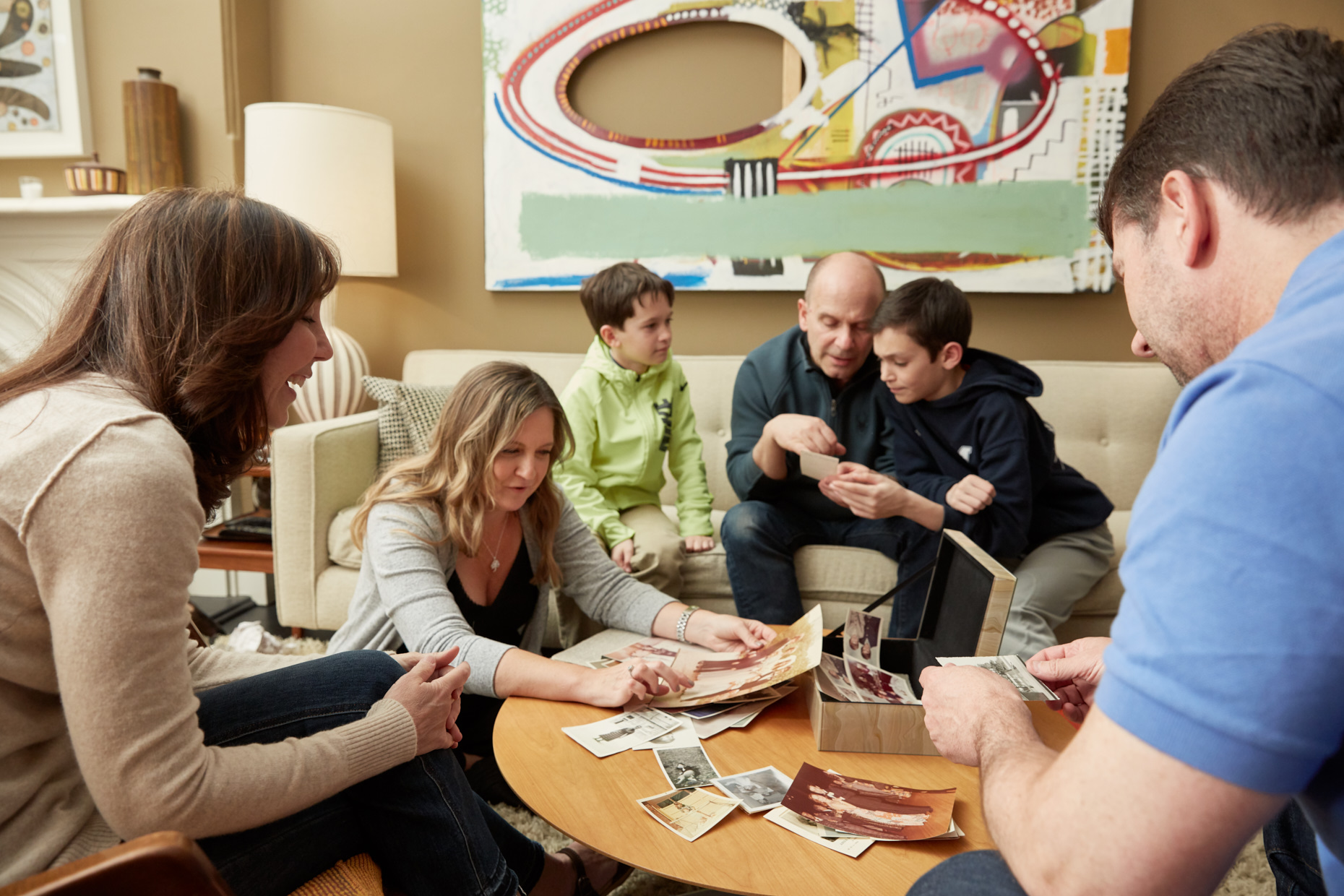
“Sharing is good.“ This childhood lesson is applicable in all areas of life, of course, but today I want to encourage sharing of your family photos.
It’s been written about ad nauseum in recent years: Our digital photo scrolls are out of control…we need to stop taking so many pictures and live in the moment…we never print our pictures anymore.
While I agree wholeheartedly with each of these lamentable statements, it’s the lack of printed photos that troubles me most—specifically, the sense of connection and excitement that gets lost when we neglect to print our photos, and share them in person.
In person, I say.
It’s temporarily gratifying to get lots of likes on an Instagram share, to see heart emojis galore on your Facebook post. But the joy that results from sharing a memory in person—well, that simply can’t compare.
Why You Should Share Your Photos
A family photo holds a story. It is a font of memories, frozen in one still frame.
Amazingly enough, the story shifts with each participant: Your mom, maybe, who took the photo, remembers things just a bit differently than you do; and your sister, a few years older, recalls things from an entirely different perspective. What about your baby brother, who only saw this photo—and heard its associated stories—years later?
Like all stories derived from memories, truth is subjective. And while a photo seems to capture a scene exactly as it happened, well, that’s subjective, too. Can you say “conversation starter”?!
So besides sparking conversation, why should you share your photos—and your photo memories—with loved ones? Here are three compelling reasons:
1 - You share, they share.
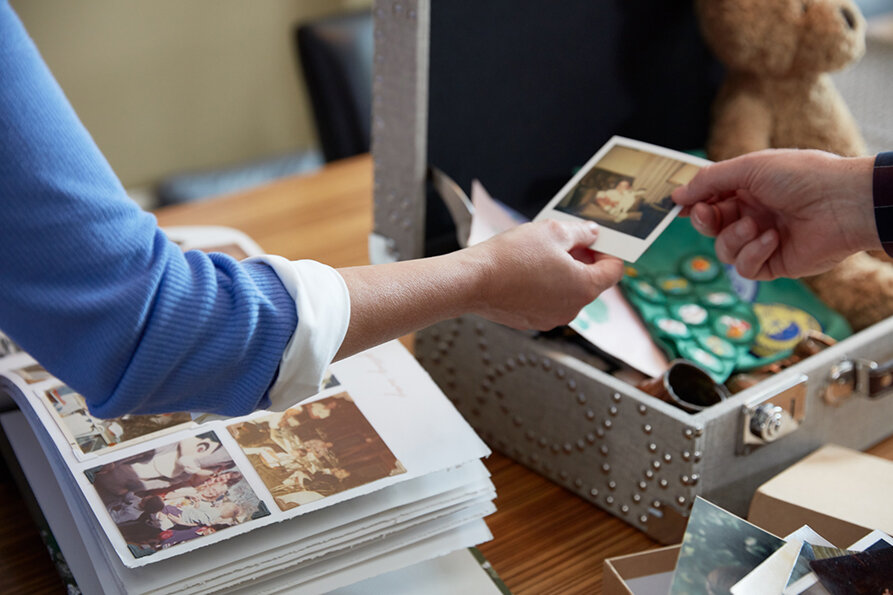
It’s contagious. You show someone an old photo from your childhood, and they reciprocate with a shot they had in a drawer somewhere. You pull out your dad’s old scrapbook filled with family photos from his youth to spark conversation with your parents, and they reveal they have two more stored in the basement.
Sharing what you have encourages family members to share some of their own family treasures, too—and what could be better than that?
2 - You might learn something.
From a name scribbled on the back of an old photographic print or a comment made in passing by a family member to whom you are showing your photos, you just may discover something new: details or backstory that enrich your own experience of the picture; or perhaps a surname or location that helps with a genealogical search.
Just because your family elders have not shared such info before doesn’t mean they don’t know it—too often I hear, “Well, no one ever asked me.” So show…and ask!
3 - You’ll feel darn good.
Sharing the joy and love associated with your favorite family photos makes that joy grow. You get that altruistic benefit that comes from sharing of yourself—witnessing another’s enjoyment, and feeling your own heart swell.









Vintage, unknown
While I love browsing nostalgic #foundphotos on Instagram, my scrolling is always accompanied by a twinge of sadness. It’s the storytellers who renew my hope.
As an avid Instagrammer, I have followed with interest—and plenty of enjoyment—many vintage photo collectors. It is fun to scroll through a feed of old black-and-white images that bring to life times past: to see families gathering in their linoleum-floored ’60s kitchens, kids adorned in their ’70s patterned outfits playing outside in their yards, multiple generations sitting around on ’50s-era lawn chairs while someone barbecues. And all those car shots—what could feel more nostalgically American?!

Vintage “found photos” from the Anonymous Project’s Instagram feed.
These photos are weighted with a sense of time that is palpable. The curvy edges of print snapshots are often included in the digital representations of these images—they are clearly of another time. And yet, they are recognizable; they capture moments and milestones and emotions that often mirror our own. In their anonymity they become universal...in a most personal way.
I find the whole “found photo” movement intriguing. I am attracted to it for the aforementioned reasons. And yet, while I am “liking” image after image that makes me smile and remember, I feel a twinge of sadness. For while these photos are recognizable to me in their universality, their individual stories have been lost.
A recent New York Times article explores the phenomenon in “Moments Big and Small in Vintage Photos.” It’s what got me thinking about found photos again, and what renewed that ache I often feel when looking at them.
Sarah Moroz writes:
And while fashion and fads may have changed, these faintly remembered slices of life still resonate with contemporary viewers. “I realized that what a guy was doing in the 1940s, I did in the ’70s and ’80s,” Mr. Schulman said of the range of both playful and emotional vignettes. “The themes of today are also the themes of earlier times — we’re not different.”
So true, and so clearly why I, like thousands of others, gravitate to these images.
And yet…
I wish the stories attached to these photos were real.
I wish the memories associated with them belonged to the subjects and their kin, not anonymously to the world at large.
I wish we all valued our personal family archives enough to preserve and document them.
And yet…
I will continue to follow accounts such as The Rescued Photo and China Lost and Found, and to double-tap the pictures that resonate with me.
But I will cherish even more the vintage family photos shared by storytellers: the people who attach slice-of-life vignettes to their images, who share personal recollections and memories, places and dates and names to their pictures. The family archivists, personal historians, and memory keepers who use photographs as a means to remember to remember.
I am talking about:
Rachel Labour Niesen, the steward of the #savefamilyphotos movement and one of the best at promoting this message.
Kay Evans Little, who is “remembering my ancestors and family, one photo and story at a time,” and others like her using social media to share and celebrate the stories behind their family photos (two of my favorites: Rosa Rucco and Vivian Love).
And the many folks who have taken up the #genealogyphotoaday challenge.

On the Save Family Photos Instagram feed, it is not only about the photos: what’s not pictured here are the captions that accompany the photos, which are submitted by the more than 34 thousand followers and tell the stories behind the photos!
I’d love to hear your thoughts below! Please comment and share—
Who are your favorite #familyphoto storytellers on Instagram?
What is your take on the attraction to #foundphotos (also often referred to as vernacular photography)?
Are YOU doing anything to capture the stories behind your photos???