
Memories Matter
Featured blog Posts

READ THE LATEST POSTS
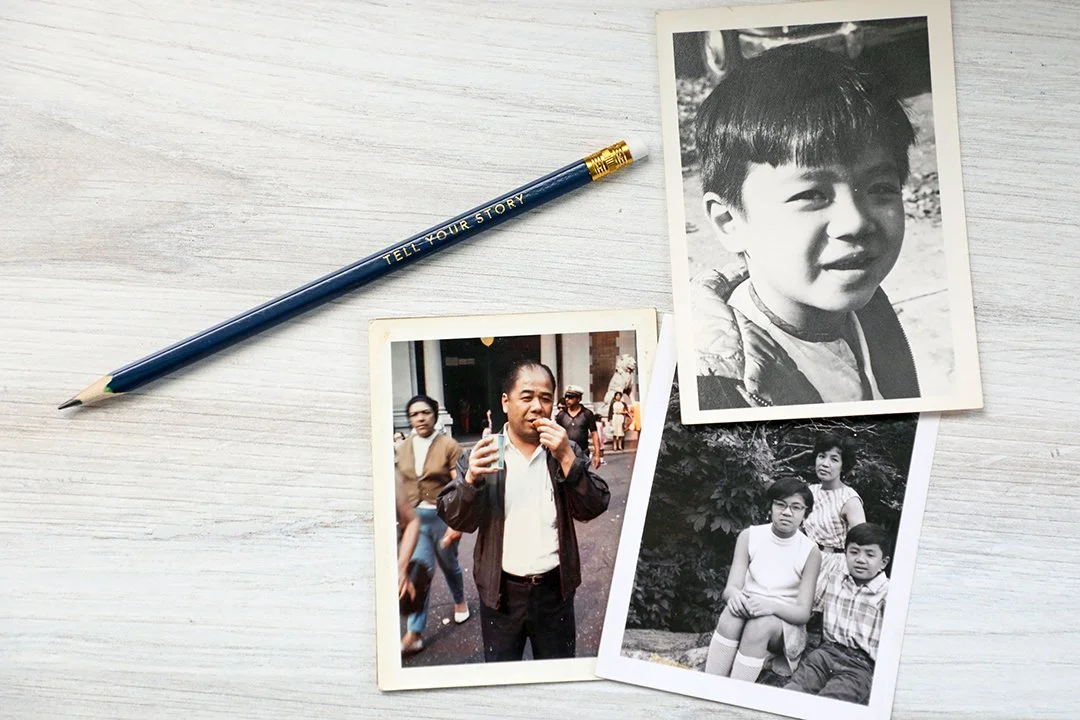
A year’s worth of journal writing prompts
Stay inspired with 52 weekly writing prompts for journaling and family history. Capture memories, dreams, and stories big and small. Bonus: Downloadable guide!
Never face down a blank page again—download our free guide with a life writing prompt for every week of the year, then tuck it in your journal or pin it near your computer for inspiration at your fingertips!
Keeping a journaling or family history practice alive through the entire year can feel daunting—until you realize you don’t have to come up with ideas on the spot. Having a set of weekly prompts at your fingertips gives you structure and inspiration, while still leaving room for your stories to flow in their own unique direction.
To make it easy, I’ve gathered 52 prompts—one for every week of the year—that weave together themes of reflection, memory, family history, traditions, and everyday moments. Each month offers four prompts tied to the seasons and natural rhythms of life.
Whether you use these life writing prompts to spark daily journaling, guide family conversations, or record stories for future generations, these questions will help you capture the richness of your life and legacy.
TIP: Our free download includes one page of writing prompts per month, so you can print them out and paste into your daily planner or tuck into your journal for easy reference! Get yours here.
Click below to jump to any month’s writing prompts:
January
February
March
April
May
June
July
August
September
October
November
December
January – New Beginnings
week 1 Reflection:
What were your greatest accomplishments, biggest challenges, surprises, joys, and losses last year? Keep things simple with a list if that’s all you can handle as the new year begins, or dive deep and probe for meaning!
week 2 Setting intentions:
How do you want to shape the coming year? What do you hope will happen? What habits, relationships, or parts of yourself would you like to nurture? Dream big or be practical—whatever approach suits you right now!
week 3 Memory:
What childhood home do you remember best? Describe its sights, smells, sounds, people. Can you draw a map of its layout? Why do you think you remember what you do (or don’t)?
week 4 Life list—fun:
What was your favorite toy, game, or pastime as a child?

February — Love & Connection
week 1 Love Letter:
Write a letter to someone who influenced your life deeply (friend, partner, ancestor). What have they taught you?
week 2 Lasting bonds:
Think about a meaningful friendship. What made it special? What lessons or memories does it carry?
week 3 Memory:
What meals remind you most of your childhood? Describe the smells, flavors, and people around you. Could you cook up these dishes if you tried?
week 4 Life list—food:
Was there a dish you hated as a kid but now love (or vice versa)? What changed?
March — Women’s History Month
week 1 Female influences:
In honor of Women’s History Month, write about a woman who shaped your life. What qualities of hers live in you? Does (or did) she know her impact on you?
week 2 Unsung stories:
What story of a mother, grandmother, or other woman in your family deserves to be remembered? It needn’t be a drama-filled story—it just might be a small moment that held major impact.
week 3 Identity:
Tell about a time when someone asked you, “Who are you?” How did you respond? How has your answer changed?
week 4 Silenced stories:
Do you have any stories you once hesitated to tell but now feel are important? Why did you hold back? Remember—no one needs to see what you write in the privacy of your journal, even now.
April – Renewal & Growth
week 1 Spring awakening:
Describe a time you started over, intentionally or by chance. What changed inside you?
week 2 Nature as metaphor:
Choose a flower, tree, or garden from your past. What did it symbolize in that season of life?
week 3 Lost recipe:
Recall a family recipe that has been lost or half-forgotten. What do you remember and what do you wish you knew?
week 4 A letter you never sent:
Write the letter—to someone living or gone—that you wish you’d sent.
week 5 Turning point:
What was the moment when you felt you were no longer a child?
May – Heritage & Traditions
week 1 Family gatherings:
Describe a family celebration or tradition that left a strong impression.
week 2 Keepsakes:
Write about an object you’ve inherited (jewelry, recipe, letter). What story does it carry? If nothing comes to mind, consider writing about an object that holds meaning to you now that you hope a child or other family member will one day cherish.
week 3 Memory:
Who in your family was the storyteller? Capture a tale you remember hearing from them.
week 4 Life list—values:
What values do you see passed through your family (kindness, humor, hard work)? Where did they come from?
June – Journeys
week 1 Travel:
Recall a trip (near or far) that shaped you. What moments do you still see vividly?
week 2 Going forth:
Write about a time when you “set out”—to college, a job, a new city, an adventure.
week 3 First job:
What was your first job, or a formative work experience? How did it shape you?
week 4 Failure and growth:
Write about a time you failed at something important. What did you learn from it? How did you handle it?
week 5 Mid-year check-in:
Look back on the first half of the year. What have you done, and what are you proud of? What do you still want to finish?
July – Independence
week 1 Independence:
Write about the first time you made a big decision on your own.
week 2 Reflection:
What does freedom mean to you personally? Reflect on a moment when you felt free.
week 3 Memory:
When was the last time you felt awe? What brought it on?
week 4 Life list—home:
What place(s) feel most like home to you? What makes it feel that way?
August – Everyday Moments
week 1 Summer snapshot:
Capture a vivid childhood summer memory—sights, smells, sounds.
week 2 Daily life:
Write about an ordinary routine that reveals something bigger about who you are.
week 3 Life list—soundtrack:
What song takes you back instantly to a time in your life? What story is tied to it?
week 4 Memory:
Tell a story from your teen years—a friendship, conflict, turning point, or just a funny, sad, beautiful, or poignant memory.
September – Growth
week 1 Back to school:
Recall a memorable teacher, mentor, or lesson.
week 2 Lifelong learning:
What skill or habit did you learn later in life that changed you?
week 3 History made personal:
What historical event shaped your family (war, migration, economic change)? How?
week 4 Life list—school supplies:
Do you remember back-to-school shopping when you were a kid? What items did you love…or wish for?
week 5 Memory:
Describe a small, ordinary moment that brought you unexpected joy. What made it stand out?
October – Family History Month
week 1 Roots:
In honor of Family History Month, write about the earliest ancestor you know by name.
week 2 Family lore:
Capture a funny or legendary family tale. What truths lie beneath it? Has the telling of the tale changed over time?
week 3 Life list—ancestors:
If you could ask a grandparent three questions, what would they be? Write what you know and what you wish you knew.
week 4 Heirlooms:
Pick a family heirloom. What is its story and how did it come to you?
week 5 Memory:
Write about one of the following (and save the others for another day!): your earliest memory, your most elusive memory, your favorite memory.
November – Gratitude
week 1 Life list—gratitude:
Write about five things you’re grateful for this year. Choose one and go deeper.
week 2 Reflection:
Reflect on a hardship that later became something you were thankful for.
week 3 Memory:
What kindnesses have you witnessed or experienced this year? Elaborate on one that moved you (or that you hope moved someone else), or take the prompt in an entirely different direction that resonates for you right now.
week 4 Absence:
Think of someone you miss. Write about what you learned from them and what you carry forward, what you would tell them if they were here, or how you honor their memory.
December – Holidays & Reflection
week 1 Traditions:
Describe your favorite holiday ritual and why it matters.
week 2 Reflection:
As the year winds down, reflect on how you’ve changed since January. What do you want to carry forward?
week 3 Surprises:
What was the biggest surprise of the year? How did it make you feel? Change you?
week 4 Dream on:
Write about one wish or dream you have for the coming year, small or large. What will you do to make it come true?
Stories live best when they’re shared. My hope is that these prompts not only inspire your own journaling, but also spark conversations with the people you love. Imagine what your children or grandchildren might discover if even a few of these questions were answered and preserved.
If you’d like to keep this list handy, I’ve created a printable version with all 52 prompts—perfect for tucking into your journal!
P.S. This list is formatted for the year 2026, with five prompts for the months of April, June, September, and October—but it can be used any year (52 weeks is 52 prompts, no matter when the weeks fall 😉).
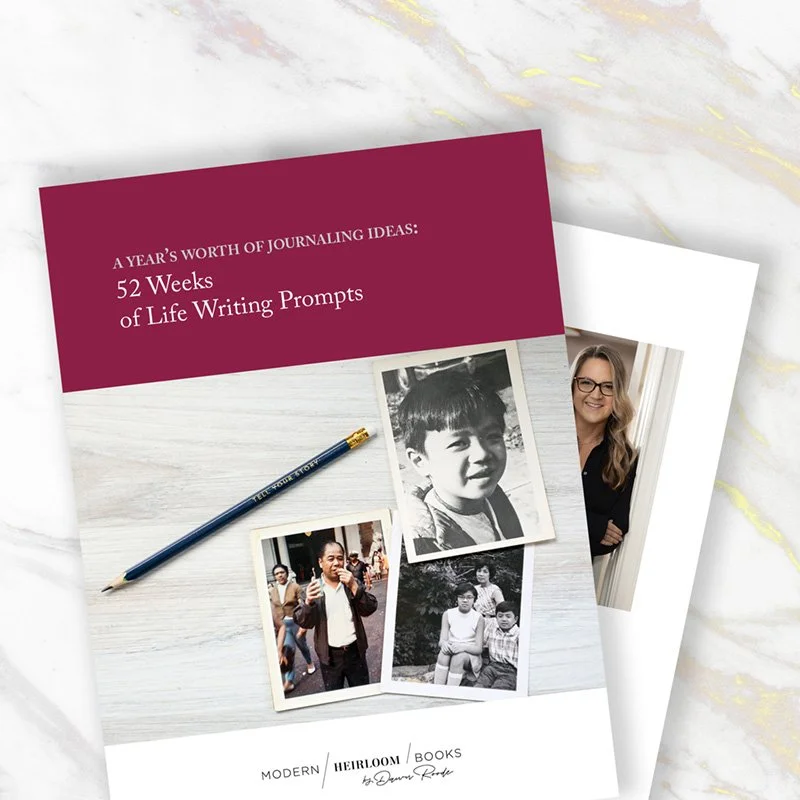
Free Printable Guide!
Download all 52 life writing prompts in a beautifully designed guide that you can tuck into your journal or pin up near your computer—inspiration always at your fingertips!
Want even more prompts—and writing guidance along the way?
Our email subscription, Write Your Life, offers 52 weeks of life writing prompts geared specifically for building towards a memoir or personal history. How are they different?, you must be wondering! Well:
With Write Your Life, each week you’ll receive a thoughtful prompt with follow-up questions, examples of directions you might take, guidance for accessing memories and developing them into stories, and inspirational quotes and resources—PLUS subscribers get a companion e-book overflowing with even more pro tips.
While this free journaling guide is tied to the seasons, the Write Your Life subscription is intentionally crafted to start with easy-to-access memories that lead to deeper life reflection as you go. It’s designed to lead you towards a finished memoir, and prompts from one week build upon others you have written about previously.
The Write Your Life prompts are delivered to your email inbox each week to help keep you accountable and spur you to write—really write!! (If you’ve got a loved one who’s been thinking about writing about their life, this makes a wonderfully original and thoughtful gift, too 😉).













Discover life writing journal prompts all around you!
Sometimes all it takes to get unstuck with your personal writing is paying attention. Here are some easy (fun) ways to come up with journal writing prompts.

I recently felt called to indulge in a journal a little more special than what I usually write in, and bought this handmade beauty from BINDbyBIND, a partnership between memoirist (and now bookmaker) Beth Kephart and her artist husband, William Sulit.
Sometimes the stark whiteness of a blank journal page can be paralyzing. Our desire may be there to journal regularly, but the inspiration isn’t always as close to hand.
I have toyed with the idea of creating a prompt-a-day guide with a life writing prompt for every day of the year, and who knows, that may one day still come to fruition. For now, though, I rely heavily on serendipity to guide my own journal writing. I try to stay conscious of discovering ideas throughout my day. A few recent prompts have come from situations as unexpected as:
a sloppy note I had handwritten on a scrap of paper while still barely awake after an especially vivid dream
an experience of a fictional character in a novel I was reading; I had never had the same experience, but the emotions that arose for the character evoked a strong response from me…later resulting in a fruitful journaling exploration.
a feeling of déjà vu—this sensation of having been somewhere or done something before has intrigued me since I was a young girl, and whenever I feel it acutely, I like to dig in (when I remember to) on the page.
Can you imagine yourself, also, coming up with some interesting writing prompts simply by paying attention to what’s going on around you?
A front view of the hand-bound journal pictured above; I was drawn to the colors (yellow, my mom’s favorite, and blue, mine) and am using this journal just for thoughts on that relationship. Do you have journals set aside for certain types of writing?
Other reliable places to find writing inspiration are:
from looking at old family photos (even if a distinct memory does not surface, some catalyzing feeling almost inevitably will)
relying on a book such as Beth Kephart’s Tell the Truth. Make It Matter.
As I wrote previously: “The prompts and exercises within are wonderfully original, expertly crafted, and simultaneously pointed and open-ended enough to have you furiously filling in those blank pages with purpose.”using your own life timeline to prompt recollections worth writing about.
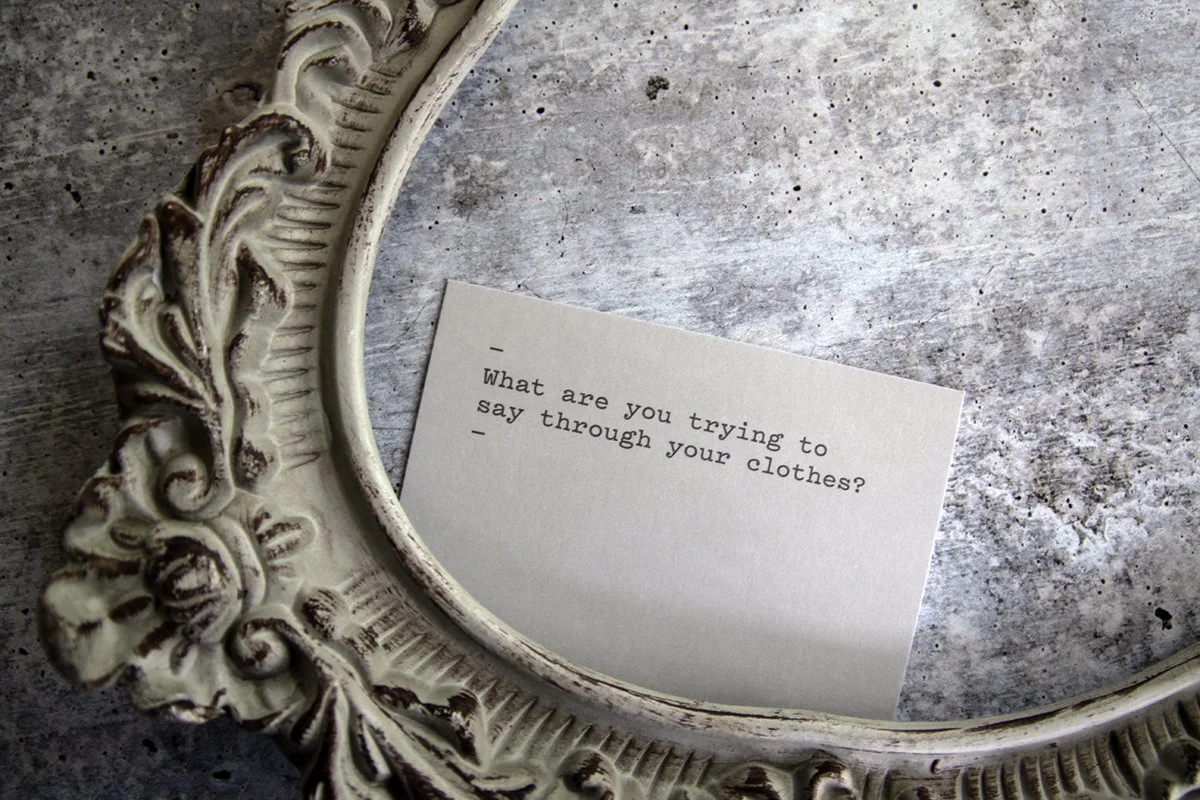
while not necessarily their intended purpose, decks of conversation cards can often provide out-of-the-box journaling ideas, from lighthearted and fun to profound and thought-provoking; I’ve been sharing some of my favorites on occasion on Instagram, such as this one:


The low-pressure, high-yield memory-keeping project I’ve recently started
I might not have time for the full-fledged memoir I want to write, but I can make time every day for this easy and significant journal exercise—and so can you.
Not every memory-keeping project we undertake needs to be ambitious—even getting one short memory down on paper each night can be both enjoyable and fruitful.
I help people preserve their family stories and personal legacies for a living, and yet I am way behind in documenting my own (the cobbler’s shoes and all that).
Don’t get me wrong, it’s not like I haven’t begun—I started my business after creating an heirloom book in my mom’s memory, after all. And I do create family annual books that are predominantly photo books with some text. But these don’t tell my stories—or my family stories—in the in-depth way I know I’d like to.
For the moment, I don’t have time to delve into a big project of my own, not when I am juggling so many for my clients. But that doesn’t mean I can’t do some things along the way to work towards those goals.
For example, down the road I hope to undertake (and finish!) a family heritage cookbook. This has been on my mind for a few years now. So I do little things when I can: I have scanned all my mom’s and grandmother’s handwritten recipes that mean something to me; I have handwritten the recipes for some of my son’s favorite foods, and digitized those, as well. And about twice a year when I am making something I know I’d like to include in the cookbook, I get out my good camera and take some beautifully lit shots of the ingredients, prep, and finished dish. When it comes time to make this “a project,” I’ll be well on my way.
Similarly, I have begun early steps towards a more in-depth storytelling book about my own experiences. I have made a life timeline, and brainstormed topics and themes I would like to write about. But I am still mulling over how I’d like that book to take shape, and I don’t presently have the time to devote to it.
Yet, NOT doing these things now gives me pause. I won’t say it keeps me up at night, but it did preoccupy me on a recent night when I couldn’t sleep. I am more conscious than most of how often people miss the opportunity to capture their loved ones’ stories. All too often I am helping people preserve stories through second-hand accounts—what someone remembers their father having told them before he died; or scouring a grandmother’s meager journals for snippets of her own stories.
It’s not for nothing that the single most resonant quote I share with people is this one from William Zinsser (the quote appears on the home page of my website for this reason):
“One of the saddest sentences I know is ‘I wish I had asked my mother about that.’ ”
I don’t want that to ever be a sentence my own son utters.
And so, while I am moving at a snail’s pace with the bigger memory-keeping projects I aspire to, I recently vowed to devote some time every night to a more simple memory-keeping endeavor: I have designated a journal as my “I Remember” book. In it, I try every night to write at least one sentence, maybe more, that begin with the words “I remember.”
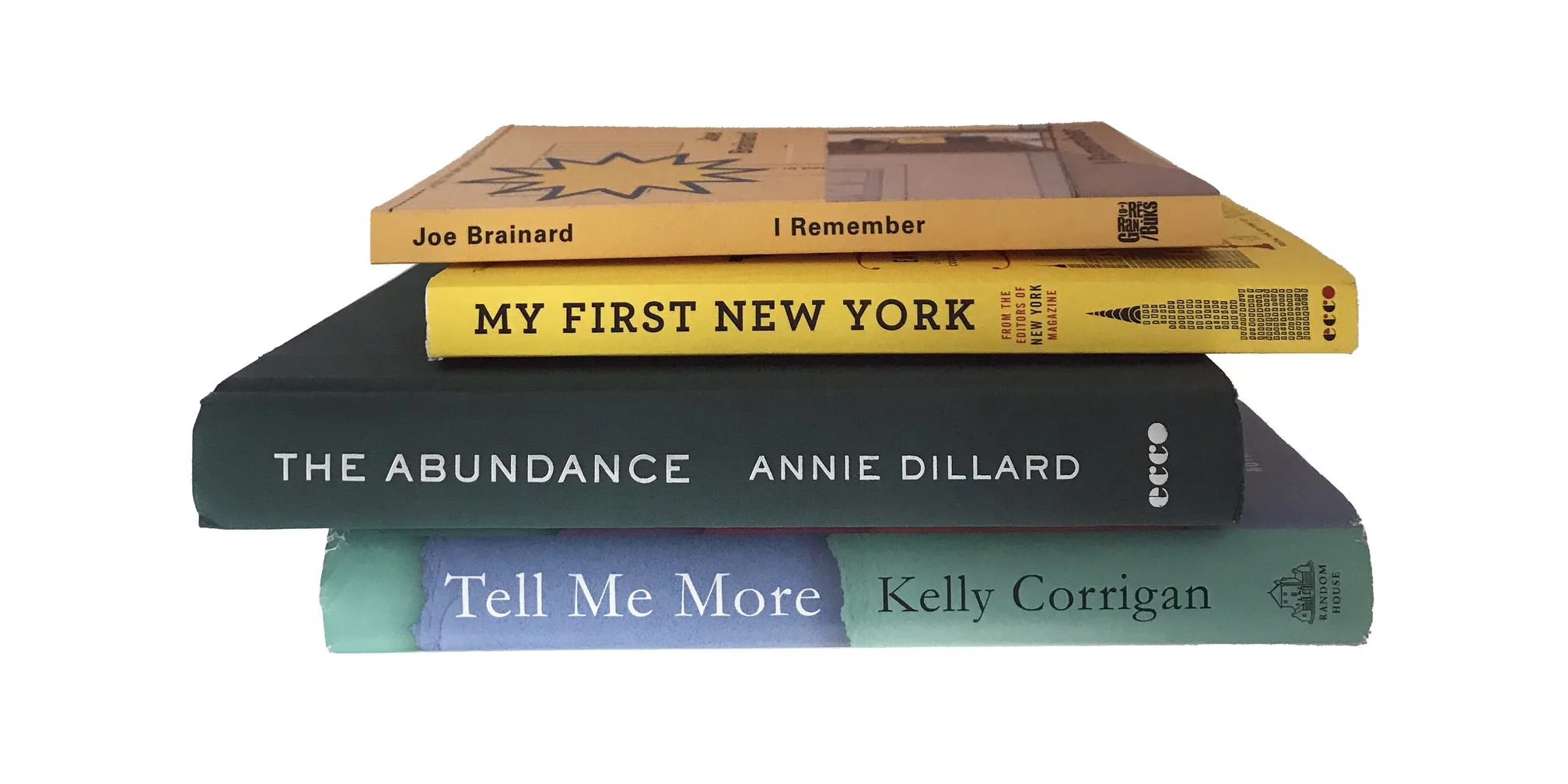
I was inspired first by the prevalence of easy-to-maintain journals such as this line-a-day memory journal or this five-minute gratitude journal. I see these posted across my social media feeds by friends and influencers alike, and am drawn to their low-pressure approach to diary keeping. But because I want to focus right now on recording memories from my past, not my current day-to-day, I took inspiration as well from a book I was first introduced to by Dani Shapiro: I Remember, by Joe Brainard.
I have written about the value of this book before, and even shared some wonderful remembrances written by colleagues and friends here (it’s great inspiration!). So why did I never think of making this a nightly practice? Probably, I imagine, because I always tend to “think big.”
But I’ve thought of it now, and I’ve begun. And I am loving it.
How you can start your own low-pressure memory-keeping practice
Would you like to start your own low-pressure, high-yield memory keeping project?
Simply:
Buy a journal or create a new document on your computer.
Open this journal or document every day to write down one (or a few!) short remembrances. Just a sentence or two each, even a phrase if you feels it’s evocative.
Optional:
Date your entries if you like, or simply keep a continual list without regard for when you wrote them.
Set a regular time for writing in your “I Remember” journal, or carry it with you for whenever a few moments present themselves.
Consider that one day you may use this journal as a jumping-off point for a bigger personal history project—but know that by no means do you have to! This book will be chock-full of memories that I assure you will run the gamut from fun and lighthearted to deep and reflective—and it may one day be cherished by your own next of kin.
See what I mean about low pressure? Won’t you join me in this intentional remembering? Honestly, it’s one of my favorite things to do every evening, and I feel so wonderfully accomplished as the pages continue to be filled. One memory at a time…

Dawn Roode’s curated roundup for the week of Sept. 23, 2026, is overflowing with recent reads on memoir, life story writing, and family history preservation.