
Memories Matter
Featured blog Posts

READ THE LATEST POSTS

Family potluck: reminiscing and recipes
If you're not sure who is the keeper of your family's favorite recipes, take advantage of your next holiday gathering to start preserving your food heritage.
Thanksgiving—or Passover, Christmas, or other holidays where extended family gathers in one place—is an optimal time to collect stories and memories via oral history interviews. There needn’t be a lot of pressure: Simply turn on your smart phone’s voice recorder or set up a video camera on a tripod, then forget it’s there...and let the reminiscing begin.

Ask family members about their favorite food memories and record these tasty bits of family history in a heritage cookbook—or simply stash them in a recipe box.
Collecting family recipes is one of those things that’s on many of our “I want to do someday” lists but that can easily slip through the cracks. It always seems like there will be time. But instead of saying “next time,” make it a priority—as well as an enjoyable endeavor!
Invite family members over for brunch one Sunday with the dual intention of visiting and connecting AND sharing recipes. Consider making it a pot-luck get-together and asking each person to bring at least one of their favorite recipes—maybe from childhood, or maybe one that’s part of their current immediate family’s repertoire (we’re always making new traditions, right?!).
This doesn’t have to be an anxiety-inducing project. Follow the few tips below and remember: You’re collecting your family’s food heritage, so you can do so whatever way makes sense for YOU! (Just, well, do it.)
A few tips for getting your family involved in preserving your food heritage:
Make one person (you?) the point person, organizing the day and ensuring that recordings get transcribed and backed up digitally.
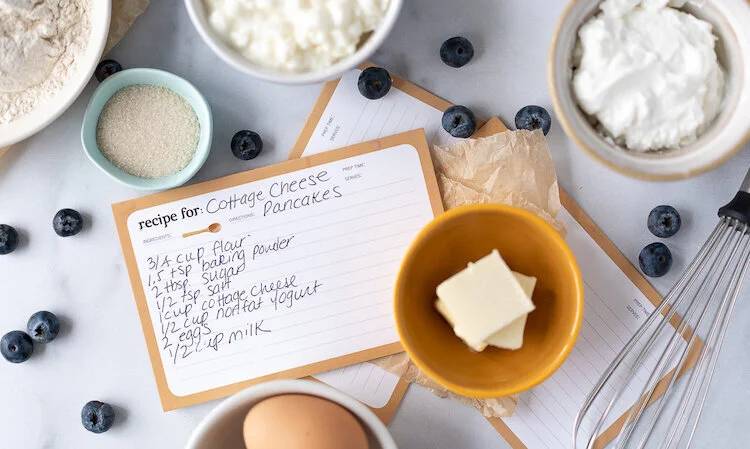
Distribute recipe cards to everyone and ask that they handwrite one of their favorite recipes on the front with accompanying memories on the back.
Use the recipe cards as a jumping-off point for telling longer stories that, when joined together, bring your family history to life.
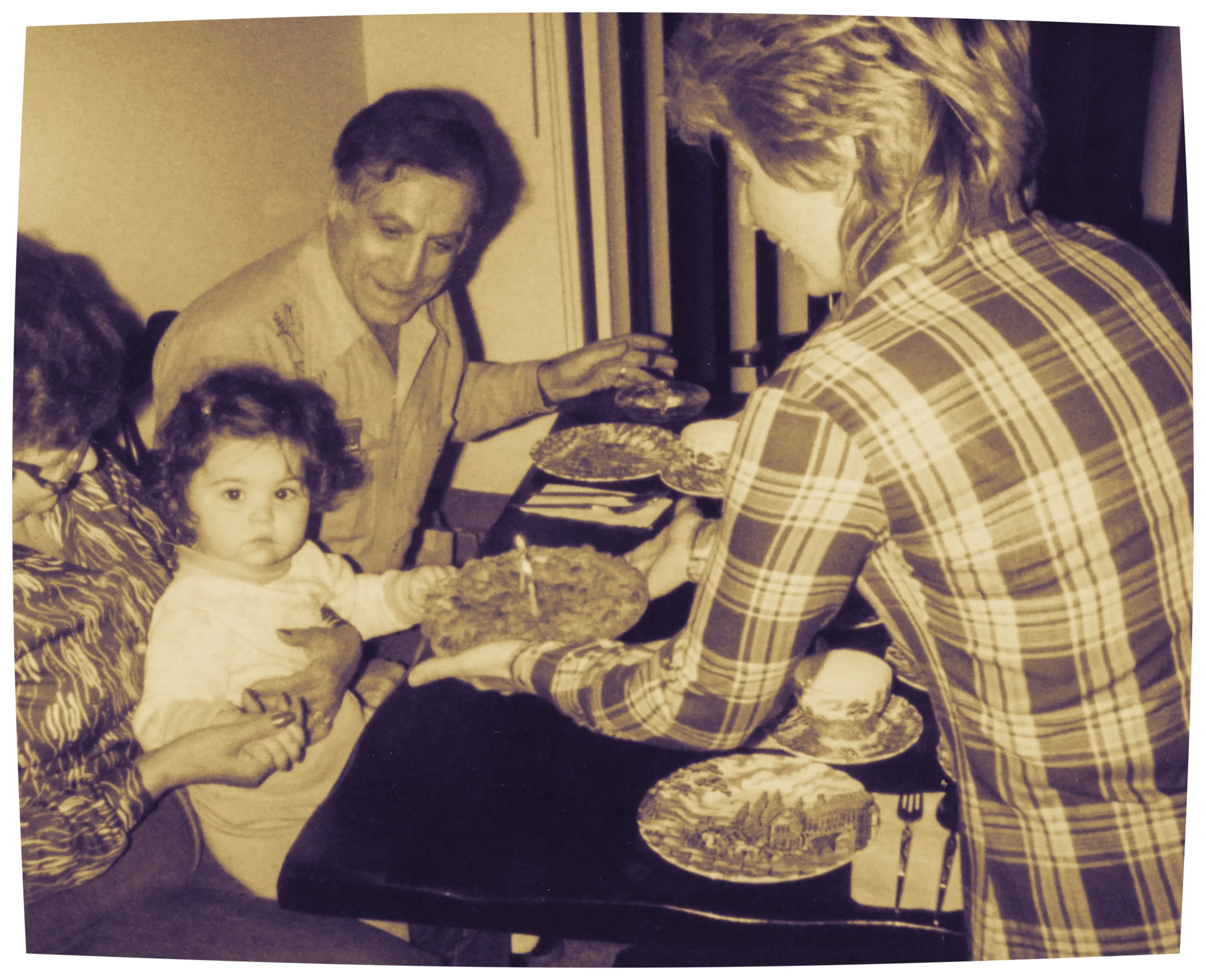
Designate one or two people as photographers. You may want to collect photographs of the dishes once they’re cooked to accompany the recipes (those can be brought the day of your get-together or collected later), but don’t forget to take pictures of the family interacting around the table or in your home. Food brings people together, after all.
Consider collecting all the recipes and food memories along with a special collection of photos old and new into a heritage cookbook that you can gift to loved ones next year. (Go the DIY route or reach out to us for professional assistance.)
I wonder: What dish will you bring to this family reminiscence potluck?
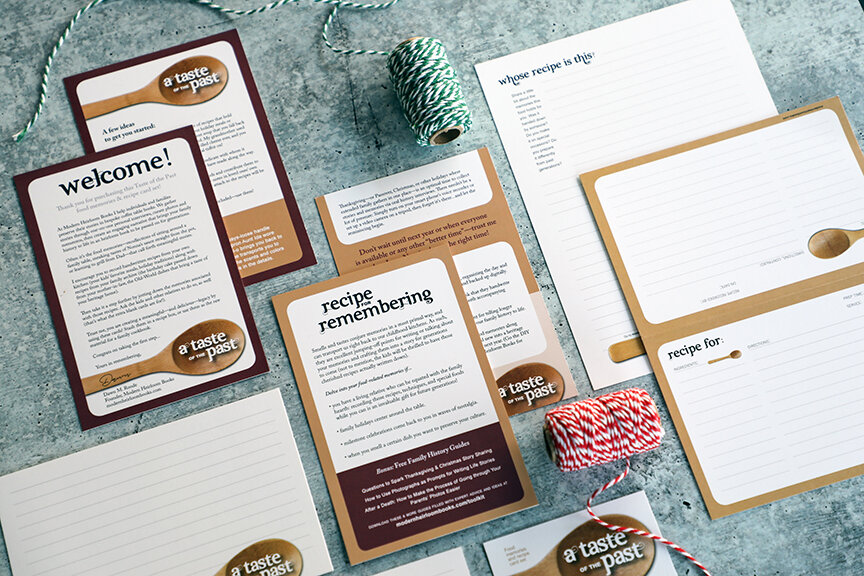
Limited-time SALE on food heritage gift set!
Through the end of November 2021, input code GRATITUDE at checkout for 25% off our Taste of the Past recipe & memory card set (they make a great holiday host gift, too!).
Read more Food Memories blog posts:






Explore more blog posts in these categories:
Recipe for remembering
Our food memories—sneaking tastes of Nonna’s sauce from the pot, learning to grill ribs from Dad—are worth preserving. Ideas to easily capture stories & recipes.

Ever have a friend drop by your house unannounced and drool over the smell of your simple chicken soup? Have you ever craved a gooey peanut butter sandwich after a bike ride with your kids? When foods remind us of the past—especially fond memories from childhood—we find comfort and more than a little inspiration for revisiting those times.
When I am interviewing a client for a life story book, often it’s their food memories—recollections of sitting around a family table, sneaking tastes of Nonna’s sauce straight from the pot, or learning to grill from Dad—that call forth meaningful stories.
How about you?
Preserving your food memories
I encourage you to record handwritten recipes from your own kitchen (your kids’ favorite meals, holiday traditions) along with recipes from your family archive (the birthday cake passed down from your mother-in-law, the Old-World dishes that bring a taste of your heritage home).
Then take it a step further by jotting down the memories associated with those recipes. Ask the kids and other relatives to do so, as well (everyone has their favorites, no doubt, and it’s fun when memories overlap!).
Trust me, you are creating a meaningful—and delicious—legacy! Stash the cards in a recipe box, or use them as the raw material for a family cookbook.
A few ideas to get you started:
Grab a piece of note paper and jot down a list of recipes that hold meaning for your family. Don’t think just about holiday meals or complicated dishes—even that three-ingredient dish that you fall back on during busy weeknights should be included. My grandmother used mayo instead of butter to cook up the best grilled cheese ever, and you can be sure I’m passing that simple but critical tidbit on!
If the recipe was handed down by a relative, indicate with whom it originated, and any tweaks subsequent cooks have made along the way.
Consider asking family members to fill in cards and contribute them to your collection. It’s always wonderful to have notes in loved ones’ own handwriting, and reading the memories they attach to the recipes will be a tasty bonus.
Be specific.
Mention the cast-iron pan with the always-loose handle that Bubbe cooked his eggs in. The apron Aunt Ida wore only on Thanksgiving. How cherry Jell-o brings you back to your childhood, and the aroma of anise transports you to Brooklyn at Easter.
Details, details—the scents and colors and textures...the truth of the story lies in the details.

Want memory & writing prompts sent weekly?
Our 8-week Food Memories course provides expert writing guidance & thoughtful prompts to spark your memories, delivered straight to your phone—for just $15.



A taste of the past
Smells and tastes conjure memories in a most primal way, and can transport us right back to our childhood kitchens. Our recipe for preserving your food stories.

Smells and tastes conjure memories in a most primal way, and can transport us right back to our childhood kitchens. As such, they are excellent jumping-off points for writing or talking about your memories and crafting them into a story for generations to come (not to mention, the kids will be thrilled to have those cherished recipes actually written down).
Delve into your food-related memories if...
you have a living relative who can be equated with the family hearth: recording those recipes, techniques, & special foods while you can is an invaluable gift for future generations
family holidays center around the table
milestone celebrations come back to you in waves every time you smell a certain dish
you want to preserve your culture
Foods Stir the Memory
On Tuesday we will be launching a new series of posts, A Taste of the Past, in which food plays a starring role, leading us down a path of reminiscence and reflection.
In the first contribution, Christine Mugnolo recalls her grandfather's singular key lime pie: Why can't she recreate it just so?
“It’s been about 14 years, and I still cannot get it just right. I make the pie once or twice a year; it’s my special time with him. No TV, no one else in the room...just the two of us.”
In another post, Kaitlin Ahern pays tribute to her mom’s spaghetti and meatballs, and you'll raise a glass with her to toast the memory of a mother gone too soon (and I guarantee you'll be uncorking a bottle of red, picking some basil from the garden, and putting on a pot of red sauce yourself—and, if all goes well, you'll be conversing around the dinner table about your own favorite handed-down recipes).
In “Billie’s Famous Foods,” Melissa Finlay recalls how her Gramma kept a jar for bacon drippings on her stove, used it liberally, and kept it full. “She knew everyone’s favorite foods and provided them—often.”
I hope these and other upcoming stories will inspire you to want to record your own memories. When you've gathered enough, or decide you'd like our professional help in recording them for posterity, an heirloom book is the perfect place to preserve them.

Related Reading:
If the idea of bottling memories of your ancestors' foods appeals, you might also want to check out:
Grandma's Project ("Sharing the World's Most Delicious Heritage"), in which filmmakers from around the globe cook with their grandmothers—and elicit evocative stories of the past along the way
Dinner: A Love Story, a so-much-more-than-a-blog compendium of recipes, kids' lunch ideas, and more from book author Jenny Rosenstrach; she occasionally hones in on the power of food as love, too, such as in these three lovely posts: Sense Memories (her husband's recollections of the birth of their first child and chicken salad, not necessarily in that order); The Napkin Note (about her mom and lunchbox missives); and Absolute Value (about her dad, Oyster Bar, and chocolate marzipan bars)
The Dinner Party, a glorious, long-time-coming community of mostly 20- and 30-somethings who've each experienced significant loss, who get together over potluck dinners to talk about the ways in which it continues to affect their lives and how to thrive in #LifeAfterLoss—an inspiring, real-life example of the power of a shared meal to heal and create community, even (maybe especially) after the death of a loved one.
Dawn Roode’s curated roundup for the week of Sept. 23, 2026, is overflowing with recent reads on memoir, life story writing, and family history preservation.