
Memories Matter
Featured blog Posts


READ THE LATEST POSTS

3 Must-listen podcast recommendations for life story lovers
Each of these powerful podcasts comes in at under an hour: Listening recommendations on memoir, narrative structure, family secrets, writing prompts, and more.
If only there were more time in a week to listen to all the podcasts I would like to! As a former journalist who often bemoans the state of media these days, I find respite and refuge and inspiration in the podcast arena, where interviews are often in-depth and surprising, and where there is plenty of content aimed at lovers of memoir, life story, and family history.
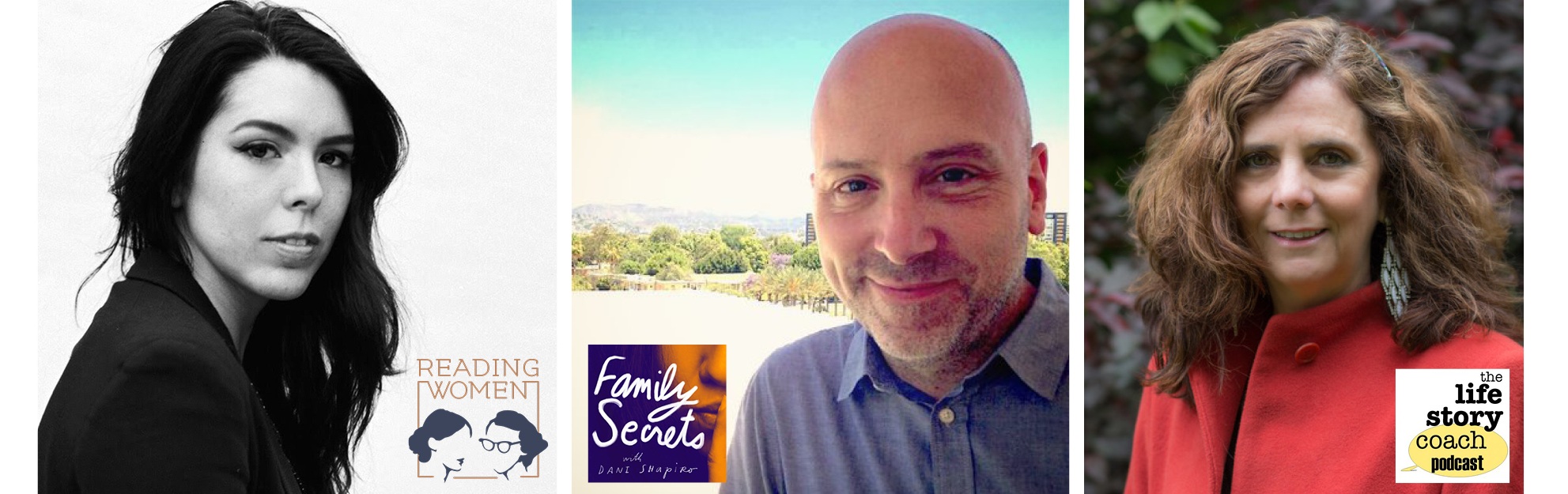
Here are a handful of my favorites in recent weeks—I hope you give them a listen, and please let me know your own favorites in the comments so I can add them to my playlist!
Click on the numbered links below to go straight to that review:
Steve Lickteig on Dani Shapiro’s Family Secrets podcast (41 minutes)
T Kira Madden on the Reading Women podcast (40 minutes)
Beth Kephart on The Life Story Coach podcast (46 minutes)
An Open Secret Revealed
On Dani Shapiro’s Family Secrets podcast, Steve Lickteig talks CANDIDLY about the secret of his own identity that not only his family, but an entire small Kansas town, kept from him. As a child, he was told that he was adopted. But that didn't turn out to be entirely true, or even half of the story.
“There is a real power in crafting a truthful narrative—or at least as truthful as you can make it, your emotional truth,” Steve Lickteig tells Dani Shapiro in this episode of her new Family Secrets podcast. As a longtime fan of Shapiro (Hourglass will always be among my favorite memoirs), I’ve listened to all of the Family Secrets episodes. And while I absolutely suggest subscribing, I will say that her talk with Lickteig is the one that lingered longest with me—and which would make a wonderful introduction to the series for a first-time listener.
Lickteig is a journalist himself, and perhaps it is his deep rootedness in storytelling that makes his conversation with Shapiro so resonant; he is articulate and thoughtful, conscious of creating a narrative out of his family history that enlightens something greater than his own perspective.
Listen to the full episode at left, or head over to the Family Secrets page to hear more from the likes of guests Debbie Millman, Jane Mintz, and Jim Graham.
During Shapiro’s interview with Lickteig he recalls his occasional unease (and simultaneous journalistic pride) at the way he comes across in his 2011 documentary Open Secret, which explores in depth the stories he shares on the podcast. He says the film portrays him in ways that are at times unflattering, but yet true to his experience.
Open Secret is described as Lickteig’s “20-year search for who his real birth parents were; why a whole town kept the truth from him; and how his family's tumultuous history revolves around the hidden lives of two unconventional women.” I haven’t watched the film yet, but indeed, it’s on my watch list.
An Unconventional and Evocative Memoir
T Kira Madden, author of Long Live the Tribe of Fatherless Girls, talks about owning her story with Kendra Winchester and Autumn Privett on the Reading Women podcast.
Topics of conversation include:
getting permission—or not—from her family members to write about them
discovering the form that would best suit her narrative, from weaving a linear thread through disparate stories and ways of storytelling to creating the skeleton that would support her memoir structurally
how reading The Chronology of Water by Lidia Yuknavitch gave her permission to allow “form and content to play with each other,” and to tell her stories in a nonlinear way
how to separate herself from her memoir
the ways in which we inherit parts of our parents’ identities (“understanding myself meant understanding more about my mother and understanding more about my father”)
how the “memory loop [she] was caught in for years” transformed into memoir
I was immediately drawn to Madden’s book when she described it alternatively as a “funky memoir” and “scattered essays that make up my life so far.” It is so much more than a coming of age tale, and trust me, those “scattered” pieces are woven together meaningfully.
“The honesty and vividness with which Madden writes and the tightly controlled structure she utilizes only emphasize the fact that Long Live the Tribe of Fatherless Girls is a deeply compassionate book, though not an apologetic one,” Ilana Masad writes in a review for NPR. “In baring the bad and ugly alongside the good, Madden has succeeded in creating a mirror of larger concerns, even as her own story is achingly specific and personal.”
Give the full 40-minute interview a listen here, or visit the Reading Women podcast page for show notes.
This was my introduction to Reading Women, and I will undoubtedly be listening to more. A couple that are in my listening queue are a discussion of Kindred by Octavie E. Butler and Homegoing by Yaa Gyasi (I recently read Kindred and highly recommend it for history lovers especially) and, of course, their exploration of memoir from last September.
The Questions We Ask
Award-winning memoirist and memoir writing teacher Beth Kephart introduces Amy Woods Butler’s Life Story Coach listeners to ways we can help others write memoirs that matter.
When I sat down to listen to this conversation between memoirist Beth Kephart and life storyteller Amy Woods Butler, I had no idea that I had indirectly introduced them…but how happy I am that I did!
Kephart has fed my writing soul for years; I have personally relished her fiction, endorsed—and continue to use—her writing workbook, and forward her newsletter to friends often. I imagine this less-than-an-hour interview with Kephart will entice you to want to hear more.
In this The Life Story Coach session recorded in 2019, Kephart and Butler hit upon topics including:
the wide variety of her experience teaching memoir and writing memoir
“getting to our stories in sideways fashion”
the power of contextualized and unexpected writing prompts
why she is drawn to memoirs with “that scenic, atmospheric detail-rich quality”
the gap between one’s spoken word and written word
and the Juncture newsletter, where Kephart explores topics such as what makes a memoirist approachable, interviews current memoir writers, and includes reader book recommendations, as well.
If you’d like to hear more of Beth Kephart’s writing wisdom over the years, here are three older podcast interviews with her you may enjoy:
“I’ve written memoir in the quest to answer very specific questions,” Kephart tells Dan Gottlieb in a wide-ranging conversation about the therapeutic value of memoir (also with a social psychologist) and how she helps others learn to tell their own stories. She talks about what memoir is not, and how to get to what it is and should be for each of us.
You can also listen to Kephart speak about Handling the Truth here, and hear her in conversation with Dani Shapiro about her latest memoir Inheritance (which inspired the Family Secrets podcast referenced above!) here.
What podcasts are you listening to—specifically those having to do with memoir, storytelling, and oral history, or any that have just captivated you?

Conjuring epiphanies
A wistful look at how my affinity for epiphanies led me to become the founder of Modern Heirloom Books—and how “moments of being” transform our heirloom books.

Every Modern Heirloom Book tells a story. Biographical, but not a biography; memoir-like, but not a memoir. Rather, a poetic narrative and photo arc that hones in on experiences and emotions, beauty, and memory. A story that makes you feel, and that invites your loved ones to remember with you.
Before deciding to call this company by the descriptive name Modern Heirloom, I strongly considered Epiphany Books. While I clearly left that name in the dust, the background behind it is telling, and encapsulates my approach to creating personalized treasures especially for you. So for our blog today, a little #ThrowbackThursday look at how my affinity for epiphanies led me to become the founder of Modern Heirloom Books.
noun epiph·a·ny \i-ˈpi-fə-nē\
a (1) : a usually sudden manifestation or perception of the essential nature or meaning of something (2) : an intuitive grasp of reality through something (as an event) usually simple and striking (3) : an illuminating discovery, realization, or disclosure
b : a revealing scene or moment [Merriam Webster]
c : “moments of being” [Virginia Woolf]
How “Moments of Being” Transform our Books
I have had little epiphanies my whole life—moments when something profound has seemed crystalline. A glimpse of the meaning of life while rounding the corner in downtown Manhattan. A whisper of some long-forgotten truth while showering.
But by their very nature epiphanies are fleeting. I could never fully grasp what I had known in those moments, no less articulate it for another. Yet I was better for having experienced them.
Memories can come to us in similar ways—conjured by a smell, the glance of a stranger on the street. And they can disappear as quickly.
The books we create from your own life material, like poetry, give physical form to memory. In the hopes that you—and those who come after you—may continue to have “moments of being.”
My Own Personal Epiphany
I relished working in the magazine industry for more than 20 years. My experience at some of the world’s top fashion and lifestyle titles helped me cultivate a keen eye for beautiful detail, an ear for an exquisite phrase. I honed my ability to edit and curate. I told stories to the masses.
As the publishing landscape evolved, so did our way of consuming our own personal media.
More than 200,000 photos are uploaded to Facebook every minute. We shoot everything from what we eat to makeup-free selfies daily. Our pictures are everywhere; and they are nowhere. Never have we needed editors more than now.
And, somewhere along the line, I had a personal epiphany: I wanted to help tell stories, but no longer on a mass scale—I wanted to help you tell your story. Beautifully, professionally, meaningfully. Uniquely.
Related Reading
The Next Chapter in Our Story
I recount my journey from national magazines to bespoke life story books, and introduce a new signature product line of books.
a tendency towards nostalgia
Rediscovering an old family photo album in my closet prompted me to reflect on the lasting appeal & transformative power of nostalgia.







Your life story—or life stories?
Why write your life story when telling your life stories is likely to be more compelling? Thoughts on memoir, biography & the power of first-person narrative.
It can be a daunting endeavor to undertake writing one’s “life story.” It sounds so big—and so definitive. Maybe there’s another way.

The Allure of First-Person Storytelling
When I think of traditional life story books I think of lengthy tomes, told chronologically. The first autobiography I ever read was The Autobiography of Benjamin Franklin, which was assigned by my ninth-grade English teacher; it is undoubtedly a remarkable work, and one I feel compelled to revisit someday soon—but my 14-year-old self was less than thrilled with our focus on remembering the history Franklin presented. I never got lost in his narrative, never felt like I recognized something of myself in the man.
That unimpressive first encounter with the autobiographical form was formative. I was never drawn to biographies, despite my deep love of reading and tendency to have a nose buried in a book at all times.
Then I discovered memoir. I came across first-person accounts that read like literature: Frank McCourt’s Angela’s Ashes, Susanna Kaysen’s Girl, Interrupted. I barely realized I was reading nonfiction. And most staggeringly, How I Became Hettie Jones—a work so moving and resonant to me at the time I read it that I sought out more: more first-person accounts, more poignant and self-reflective takes on life.
Then, in the late nineties I worked at a series of lifestyle magazines where personal profiles were a mainstay. Our highest paid writers were often those who could conduct the best interviews—for while the writing itself was important, it was the substance that the subjects revealed during their interviews that was compelling.
I devoured The New Yorker’s weekly profiles, those journalistic biographical sketches that David Remnick describes as “a concise rendering of a life through anecdote, incident, interview, and description (or some ineffable combination thereof.” I gained a new appreciation for character development through storytelling—and for voice.
And I valued the interview process itself, becoming a fan of Esquire’s Cal Fussman (who “has transformed oral history into an art form,” as Tim Ferriss describes) and Emily Nussbaum, whose byline appeared across myriad titles.
First person writing, when done well, I realized, could be as powerful as any literary fiction. It had become my new addiction.
Memoir vs. Biography
It’s pretty clear, I suppose, that chronological, all-encompassing biographies are not my thing. But is there really a difference between memoir and biography?
One definition of “memoir,” after all, is “biography.” Another is “autobiography.” Merriam-Webster does not consider the words to be direct synonyms, however.
Memoir
: a narrative composed from personal experience
: autobiography
: biography
Biography
: a usually written history of a person's life
Autobiography
: the biography of a person narrated by himself or herself
Most editors consider memoir to be a first-person telling of one aspect or time period of an individual’s life—not the typically chronological account of birth through old age that constitutes biography.
“It’s this greater truth that a memoir is after, the understanding that leads to wisdom and the resounding bell of connection—that’s what drives us to read memoirs,” says Ron Seybold.
One of my favorite memoirists, Dani Shapiro (check out her most recent book, Hourglass), has a keen awareness of the differences between these two forms of writing. “What is the job of the memoirist? Is it to tell all? Or is it to carve a story out of memory?” she asks.
“Autobiography presumes that the person writing the book is important, and the reader is drawn to the book out of a desire to know more about that person…. Memoirs are stories, hewing as closely to the truth of the writer’s memory as possible—but not letting it all hang out. Part of the art of memoir is seeing, and recognizing the story itself.” —Dani Shapiro
There is a legitimate reason that the notion of writing your “life story” (a.k.a. your “autobiography”) feels intimidating. It is a formidable task. Is it the right choice?
Your Stories—Plural
Continued story sharing—THAT is a main goal of every Modern Heirloom Book we create. I want family and friends to not only read your book, but to want to revisit it, again and again. To be able to pick up your book and flip to any page and dive into an alluring story. To “visit” with and feel close to you any time they want via the stories in your book.
Your stories will feel and read like memoir, and yet they are are not fully memoir. We transform your words (captured via personal interviews) into smaller narratives, vignettes that can be read on their own yet when taken all together create a broad picture of your life; a mosaic of mini profiles, if you will (yes, my magazine days have influenced my approach enormously here!).
Another bonus of telling your life stories, plural: It is that much easier to get started.
Tell one story.
Go on, do it. I bet you can’t stop at just one.
Related Reading:
From the New York Times Archives, How to Write a Profile Feature Article
Book Review: In Tell the Truth, Beth Kephart offers up a wonderfully original series of memoir-writing prompts that encourage self-reflection & striving toward the universal.
You’ve got reasons why you aren’t telling your story. I’ve got reasons why you should.

Tenement Museum tidbits
Under One Roof at NYC’s Tenement Museum is a must-see exhibit: First person testimony (and authentic furnishings) bring 3 families’ immigrant experiences to life.
Last week I had to be in Manhattan for a few business meetings, so I scheduled in a midday “appointment” to see an exhibit I had written about that piqued my interest: Under One Roof at New York City’s Tenement Museum.
While the museum’s original exhibits in the building at 97 Orchard Street highlight immigrant families who lived there between 1863 and 1935, the new installation down the block at 103 Orchard Street turns its attention to life in this Lower East Side neighborhood during the 1950s, 1960s, and 1970s.
Under One Roof
Over its 127 years as a residence, 103 Orchard Street housed more than 10,000 people. Under One Roof introduces us to three of them: Bella Epstein, Ramonita Saez, and Mrs. Wong.
The stories of these women and their families are told through the room interiors themselves, which are recreated in glorious authentic detail, from the crocheted doilies in Ramonita’s living room to the mezuzah affixed to the doorframes in the Esptein household. But it’s the first-person accounts of family members themselves that bring these immigrant experiences to life.
During the 90-minute tour we meet the families through their own testimony (short recorded audio clips and passed handouts with immigration records, photos, and other details), but these are mere glimpses. My amazing tour guide recounted the families’ experiences, always placing them in the broader historical context and framing a dialogue about the immigrant experience that continues to be of vital importance in our country.
As we were invited to take a seat on Ramonita’s plastic covered sofa and listen to some of the history of the neighborhood, it was inevitable that many of us would find moments of connection, and even consider how our own family stories contribute to our country’s ever-evolving identity.

The families of “Under One Roof” who lived at 103 Orchard Street, from left: Bella Epstein, pictured with her sister, Bluma, moved to the building in 1955; Ramonita Saez, who worked in a garment industry sweatshop and was a single mom of two sons, came in 1962; and Mrs. Wong, who moved to the Lower EastSide in 1968, still lives on the same block today.
Delving Deeper Into the Stories
Upon my return home, I discovered the rich website that does these families’ stories even greater justice. If you can make it to the Tenement Museum, I highly recommend Under One Roof or any of the amazing tours; if you can’t make it, though, do visit the site—and get lost in the textures and sounds and experiences of this not-so-distant time in our country’s history. You’ll discover oral history video clips, lots of photographs of the families and the downtown in which they resided, and plenty of food for thought.
Our individual stories are the stories of our country. We are history. Learning about the past through first-person experiences is the kind of “history” I wish I was taught in school alongside the dates and the textbooks. Bring your older kids to the museum to spark conversation and show them that history doesn’t have to be boring. Or consider sharing your own stories, and doing so with your kids—you just may be surprised how interested they are once the dialogue has begun!
Gift Shop Treasures
I’m one of those parents who tells my kid “no” to every gift shop tchotchke request, but I almost never say no to buying a book. This time around, I nabbed some books for my own memoir-obsessed self, along with a nice pen for him (he’s eight, and recently obsessed with writing in his journal—that’d be his Diary of a Wimpy Kid Journal, thank you very much ; )
Among my book recommendations:
A Tenement Story: The History of 97 Orchard and the Lower East Side Tenement Museum
Bintel Brief: Sixty Years of Letters from the Lower East Side to the “Jewish Daily Forward”
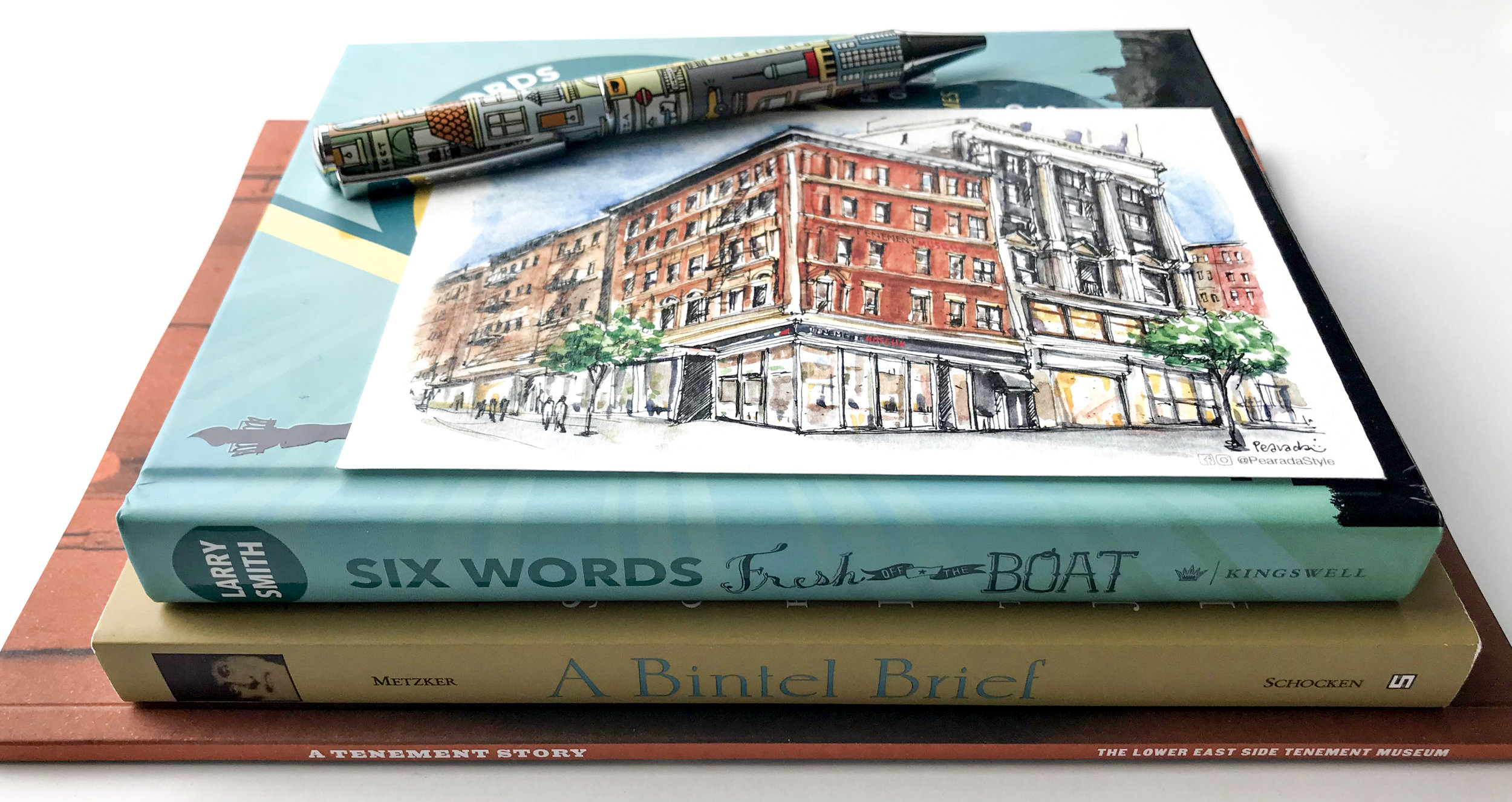
I will be finished with the Six Words book soon, simply because I can’t seem to put it down. It is uplifting and surprising, and when all of these (extremely) mini memoirs are stitched together, they create a diverse patchwork representative of “the American experience.”
For anyone who doubts that a six-word memoir can be powerful, check these out:
Daughter’s sweat equity paid son’s tuition. —Lisa Carlson
I no longer needed to whisper. —Hanni Gorenz Finaro
My mother: maid to mechanical engineer. —Jennifer Na
What would your six-word memoir be?
*Please note: I am in no way affiliated with the Tenement Museum, and this is an unsolicited review; I purchased tickets to the exhibit myself.

Revealing your life stories, one list at a time
Sometimes it’s not a long narrative that most interestingly tells your story, it’s a simple list. How to use lists to add texture to your life story heirloom book.
My Ideal Bookshelf (Thessaly La Force, Little, Brown and Company, 2013) is a gem that I discovered displayed at the front of my local library—an impulse check-out, if you will. The authors approached a wide array of luminaries (writers, artists, chefs, and more) and asked them to list their ideal bookshelf: “Select a small shelf of books that represent you—made you who you are today, your favorite favorites,” they write.
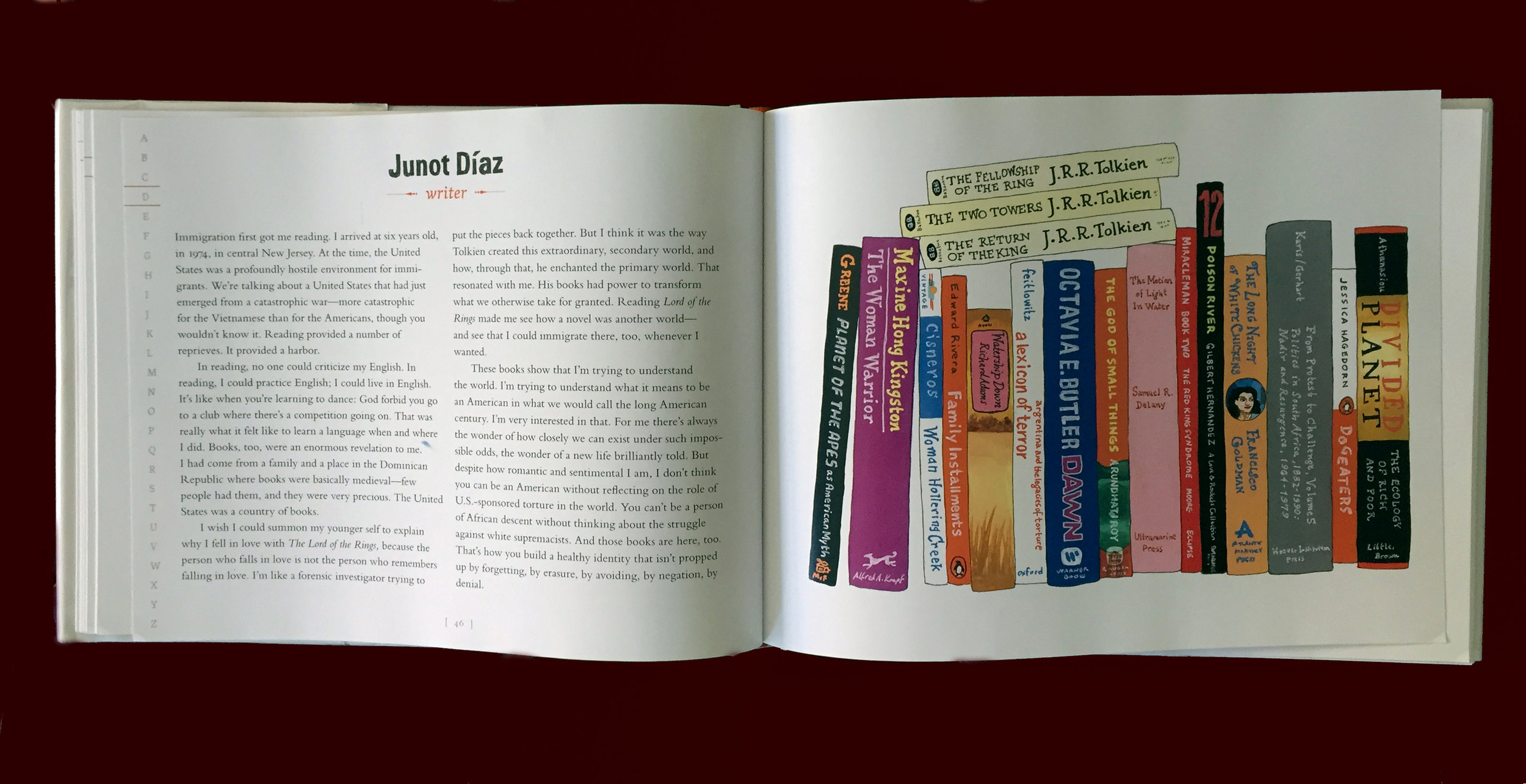
They are quick to note that this is not your one-and-only, ideal bookshelf—“there is no ur-bookshelf.” Rather, it is a snapshot of you in a moment in time. “You could build an ideal bookshelf every year of your life, and it would be completely different. And just as satisfying.” And, of course, just as revealing.
The Lure of Lists
We often use lists as a narrative device in our heirloom books. When mixed in with longer stories of an individual’s life, they can be especially alluring for readers, and a fun way to offer a glimpse into a person’s opinions and life. Breaking up long blocks of text with shorter pieces helps with a book’s pacing—and, most importantly, usually ensures that a book will be picked up often, not abandoned on a bookshelf to collect dust.
And when someone visits with an heirloom book, they are visiting with its subjects, too—communing with the family, staying connected, continuing to weave the family narrative for the next generation. Why not give them some insights into you they’ll really want to read?
Your Own Bookshelf
Are you an avid reader? Then designing your own “shelf of books” that represent you might be a rewarding—and telling—endeavor. Check out My Ideal Bookshelf from your own library for some inspiration.
“We’re all still hunting, still hoping to discover one more book that we’ll love and treasure for the rest of our lives,” La Force writes.
Imagine that your future grandchildren are all grown up, now hungry readers themselves. Imagine they pick up your list: Maybe they find a book they simply must try. Maybe they find one they are curious about—and they begin a conversation with you about why these books mattered to you. Maybe your conversation becomes an ongoing one, each of you sharing your ideas about what you’ve read lately… Maybe a list such as this has a life of its own.
“Some people like to snoop through medicine cabinets, but that only gives you insight into a person's physical well-being. The books tell a tale about the person's mind.” —David G. Allan, CNN, “Why Shelfies, Not Selfies, Are a Better Snapshot of Who You Are”
Lists that Matter
What else might you explore in list form that is revealing of much more than the list might seem to indicate at first glance? (It’s worth noting that I am generally not referring to lists that include mere titles, but that include some elucidation and broader storytelling about the list—why choices were made, how the process felt.)
Here are a few ideas for meaningful lists from previous heirloom books we have done, and some we’d love to do for you down the road:
On Reading
My Ideal Bookshelf, 2018
The Children’s Books Worth Saving & Passing Down
Where I Get My News, 2017
What I Read to Feel Hope
Books I Wish I Had Written (and Why)
“You may not have a biography written about your life, but you have a personal bibliography.” —David G. Allan, CNN
On Travel
Best Childhood Vacations
The Places Our Family Returns to Again and Again
My Bucket List: Where I Want to Travel
Memories of Our Family Staycations (When Travel Cost Too Much but We Made Our Own Fun!)
Top 5 Places I’ve Ever Visited
On Music
My Ideal Playlist
Soundtrack, 1988-1992: The Songs that Shaped My College Years
Summer Sounds, 1972
My Happy Playlist: Songs Guaranteed to Put Me in a Good Mood
On Food
Top 10 Comfort Foods
Foods that Remind Me of Home
Foods that Transport Me to My Childhood
What Was in My Lunchbox, 1977
Recipes Passed Down through Generations (and How I Made them My Own)
Random:
All the Jobs I’ve Ever Held (Yes, Including that One-Day Paper Boy Stint)
The Scrapes and Bruises of My Childhood (On My Path of Adventure)
Fears I Have Overcome, and How
Habits I Just Can’t Break (Do You Have Them, Too?)
Other Themes to Explore:
On Cars
On Movies
On Sports
On Fashion
On Friends
On Hobbies
On Love
On Embarrassing Moments
On Life’s Challenges
A Little List Inspiration
Want to see how lists might take shape?
The co-founders of Modern Loss, a website providing candid conversations about loss, each honored their fathers through lists last year. I think both of their lists are wonderful examples of how a form so seemingly simple can truly offer special—and engaging—insights:
20 Things You Probably Don’t Know About My Dead Dad by Gabrielle Birkner
“No, you can’t meet him. But yes, you can know him, through photos, scrapbooks and stories of those who knew and loved him best. Through me. And that goes not just for my children, but also for my husband and my many close friends who never had a chance to meet my dad. He isn’t just dead; he was so much more.” —Birkner
21 Things You Probably Don’t Know About My Dead Dad by Rebecca Soffer
How might we treat such substantive lists in an heirloom book? Well, here’s one example of a spread from a book of my own, also about my father.
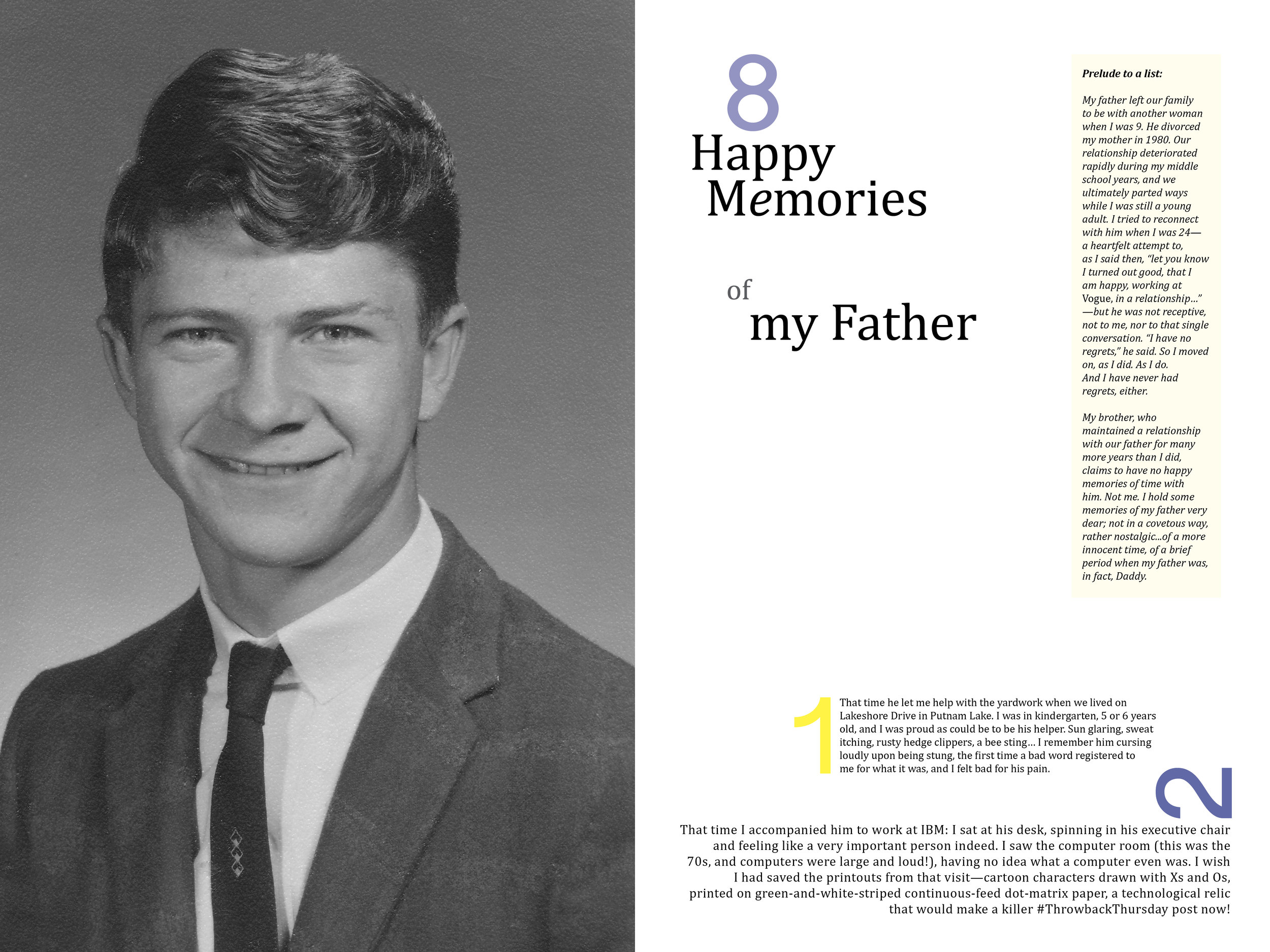
The opening spread of a section of an heirloom book that uses a list format to tell family stories; view all eight pages below.
Unlike the Modern Loss writers, my father is still alive, though I have not had contact with him in many, many years; this list, then, provides an example of how one might approach incorporating difficult or painful memories into your life story (not every story has a happy ending, after all).
Mostly, though, I wanted to share this to illustrate that lists can be designed in modern, captivating ways that truly draw readers into a life story:
Better Than a To-Do List
I admit to being an obsessive list maker of things I need to get done—and what satisfaction I feel when I cross things OFF those lists! But the next time you pick up a pad to jot down a list of tasks, consider using the paper to create a more meaningful list that preserves memories! What will your first list be?
I'd love to hear your ideas for fun lists, and even better—what’s on your ideal bookshelf? (I'm working on mine as we speak ; )

Don’t wait for “someday”
Meet Josh: He plans to write his biography someday. Yet he has told his adult kids none of his life stories. How about you—are you waiting for “someday,” too?
“I am going to write my biography,” Joshua told me exuberantly. I met Josh in Central Park last week, and was interviewing him for an upcoming feature story for a professional association. For the past 15 minutes he had been discussing with me the reasons that, no, he does not tell his children stories from his childhood. “Why would they care?” he said with a laugh, before proudly telling me how close he is to them, and bragging of all their accomplishments.

Joshua in NYC's Central Park on November 9, the day we spoke. Photograph by Katie Bellini
Joshua’s children are adults, working professionally in cities far from their dad, but in regular contact with him. They are indeed close, as Joshua was to his own father—who, by the way, led an extraordinary life of which Joshua only knows some of the details firsthand.
Joshua, a 60-something man of Japanese descent who has lived in New York City for more than 40 years, is far from typical in his experiences. He enthused about his life, sharing stories in rapid-fire succession about everything from his father’s “double Holocaust” (he lost his family in a concentration camp, then, Joshua told me, in later years his wife took everything their young family owned and left Josh’s father to raise three children alone) to his aversion to books (“I’d rather watch people in the park”) to his enduring positive attitude (“no one can take that away from me”).
Empowered by a Listener
After a reluctant two minutes where he told me there was no way to do his story justice in a brief conversation—“that would take years!” he said on another laugh—Joshua launched into his storytelling. No prodding necessary.
This was no interview, really—once Joshua began to share, he couldn’t stop. I asked an occasional question in response to his stories, but he, so positively impacted by an eager listener, I think, was on a roll.
I was enthralled by Joshua’s stories, and by his enthusiasm. He radiated positivity, roaming Central Park with his adopted dog (whose collar, as Josh pointed out, read “Don’t shop - Adopt”) and punctuating his sentences with glorious belly laughs and expansive hand gestures.
And while I view Joshua’s experiences as singular, his attitude of guardedness with his own family is anything but.
The Myth of Disinterest
Josh’s stories were so clearly intriguing—to me, a stranger. Why wouldn’t they be of interest to his own children?
Joshua valued his life experiences enough to dream of writing his autobiography one day, but not of sharing his stories in person with his family. This is the case with so many people I speak with. And it saddens me.
They think that “the time will come” for them to share their stories.
They figure one day, when their kids get older and aren’t so busy, maybe the kid will ask questions.
Or they assume that no one cares; that their story matters to them, but not really to others.
I have heard a litany of excuses as to why people are waiting for “some other day” to tell their stories.
My opinion? Stop making excuses.
Today’s Lesson (There Will Be a Quiz)
Your stories matter. Share them. Don’t wait for “someday.” Someday is today.
Why?
Why should you share your stories?
Perhaps you want to leave a legacy.
Enrich the family history for the next generation.
Help others learn from your experiences.
Provide a few laughs.
There are so, so many reasons to share your life stories.
The one that I regard as of utmost value, however, is probably the least talked about: It will enrich your life.
Sharing stories with those you love is enriching, plain and simple. Whether you are telling tales of struggle and triumph, love and loss, hardship and pain, rollicking good fun and misadventures…whatever directions your stories veer, they will be welcomed.
There is joy in the telling, and gratitude in the receiving. Storytelling can be cathartic, healing, challenging, difficult. Always, though, storytelling will be rewarding.
Quiz (I Said There’d Be a Quiz, Didn’t I?)
When should you tell your stories?
Joshua would have failed this quiz. He is waiting for “someday.”
How about you?
Next Steps
If your “someday” is today, congratulations!
You’ll find plenty of tips & resources on our blog, including:
And we’re always here to partner with you on creating a professional heirloom coffee table book, with stories gathered through one-on-one interviews (the heart of our process!). If you would like help capturing your life stories, see how we can work together.

Do something special with one story
No one will tell your life stories but you. Start with one, & go beyond sharing it: Do something with it! 5 ideas for preserving one chapter of your life story.
No one will tell your life stories but you. Start with one—and go beyond sharing it: Do something with it! We've come up with 5 unique—and easy!—ideas for preserving one chapter of your life story.
Who knows, one chapter might turn into two...

If you don't tell your life stories, who will?
Taking the first step on the road to preserving your memories
I previously posed the question, “Who will tell your life story?” How would you answer that question? If your answer wasn’t a resounding “me!” then, well, you answered wrong.
No one will tell your stories but you. And you must: Tell them, and preserve them.
In that post I recommend an easy 3-step plan for how to take the first steps on the road to preserving your stories. Step No. 2 involves sharing one story—whether around the dinner table with your family or over the phone with your grandkids, whether in writing or out loud, just tell one story. It might be one so often recounted it’s like an old friend, or it might be a distant memory you haven’t pulled out in decades.
Here’s the rub, though: Once you fulfill step No. 2, I implore you to move on to step No. 3: Do something with it.
5 ideas for what to do with your little life story
Remember, this isn’t your whole life story. There’s no need to publish it to Amazon or strive to write a bestselling memoir. You focused on telling one engaging story and telling it well. Now let’s do something to ensure your story lives on.
For what good is a story if you don’t breathe life into it, if it isn’t shared?
Here are a few ideas for things to do with your little life story. These are just the tip of the iceberg, and we’d love to hear other creative ways you have found for keeping your memories alive; please share in the comments below!
1. Eat, drink, and be merry.
What is it about finger foods and wine and an informal gathering of loved ones that spark storytelling? It’s as good as being around a proverbial campfire! Invite an interesting mix of people to a dinner party (think a mix of ages, a mix of relatives and close friends, and a mix of those who may be familiar with your story and those who are not).
Get creative with the place settings—scan some old family photos related to your story for name cards, for example—or get really down and dirty and place cushions on the floor for a good old-fashioned buffet of food and stories.
The important thing is this: Don’t be shy about revealing your goal of story sharing. If being the center of attention makes you nervous, ask a loved one to help set the stage, or ask a few guests to come prepared to share their own stories, too.
2. Embrace technology.
Maybe it’s as simple as sending an email to your family: Type your story into the body of an email, and hit “send.”
Or: Begin a story circle with one post on Facebook. If you’ve got a vibrant community of friends on the social media site, share your whole story there (trust us, if it’s personal and from the heart, they WILL read the whole post!) and—most importantly—ask your friends to share related stories in the comments. When people begin sharing (about a loved one who passed away, for instance, or about an old #ThrowbackThursday photo) and then commenting on one another’s comments, that’s social media at its absolute best, in my opinion.
3. Start a new tradition.
Don’t stop at one story. Weave story sharing into the fabric of your life. Make it a habit. If you invite others to participate (whether as a regular audience to your stories or as memory keepers themselves), then that habit becomes a meaningful new tradition.
The more you can truly integrate your specific means of story preservation into your life, the deeper connections among family you will make, the more value you will derive from the process, and the more you will cement your legacy for the next generation.
4. Grab a pen.
When’s the last time you wrote more than your signature in longhand? If your story is short enough, pick up a pen and a beautiful piece of paper and transcribe your words in your own handwriting.
If it is one page, consider framing and hanging it. If it revolves around a food memory, why not have it memorialized on a lovely food-safe platter? If you’ve really got the writing bug, write it out in letter form, once for each of your children or grandchildren, and mail it to them.
5. Go pro.
If you would like to preserve your words and images together in an heirloom book or video, consider hiring a professional personal historian. We will
guide the storytelling process
elicit details & emotion
add context
to present your memories in a most engaging way.
Here at Modern Heirloom Books, we specialize in bespoke coffee table books that tell your stories. Find out more.
If you prefer to preserve your story in a medium other than a book, I may be able to recommend videographers or audio specialists near you. Give us a call—we’re here to help you tell your stories beautifully!
One chapter at a time
You are living your story. Don’t let your memories fade, and don’t wait until it’s too late to begin recording them. Start with one story that you love to tell—you won’t regret it, and your family will thank you a million times over!
Related reading:
#familyhistorymonth #memoriesmatter #legacy #storytelling #loveandloss #familyhistory

The quest for truth
In Tell the Truth, Beth Kephart offers up a wonderfully original series of memoir-writing prompts that encourage self-reflection & striving toward the universal.
In a previous post I recommended 5 books for autobiographical writing—books helpful to you even if you are not a writer, but you want to explore and record your life stories anyway.
As memoirist Beth Kephart writes, “Journal keeping, diary making, blogging—it’s all a curious thing, and it isn’t…memoir. But it’s a start, an inroad, a gesture.” And, in my opinion, an undertaking worthwhile in its own right.
Tell the Truth. Make It Matter.
Memory is an ever-changing, elusive thing. Jogging our memory to call forth stories may not be easy, but there are ways to make your memories more accessible—to probe and to explore and to revisit them in ways that tease out not just recollections, but strands of truth that connect us to the universal. Personal writing is never more powerful than when a reader sees himself in new—hopefully deeper—ways through the writer’s experiences.
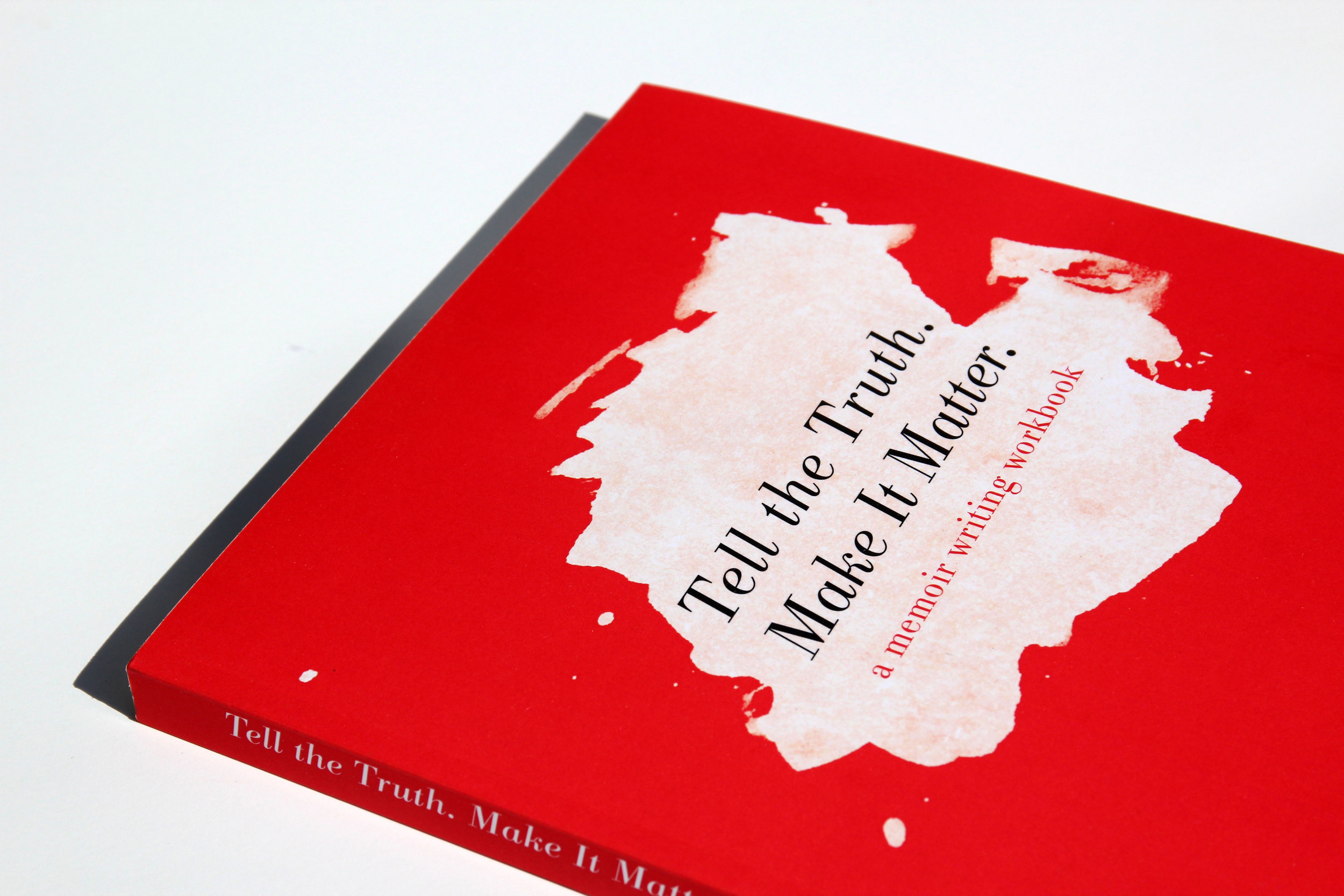
The greatest value in this workbook, in my opinion, is that it makes room for the truth. For your truth. For universal truths. It clears away the cobwebs of memory, sets your intention squarely in the direction of meaningful self-reflection, and encourages you to choose words that matter, too.
In Tell the Truth. Make It Matter (CreateSpace 2017, $18.95), National Book Award Finalist Beth Kephart encourages us to “move away from anecdote toward meaning,” to discover what matters most to you through the actual process of writing. Writing becomes an act of creating the self as much as creating memoir.
“Search for the truth, and write that truth, and you’re not just putting words on a page. You’re shaping your own sense of who you are and what you’re capable of.” —Beth Kephart
Tell the Truth is billed as “an illustrated memoir workbook created for those who write and teach memoir, those who recognize the power of truth in our everyday lives, and those who simply (though it is never simple) wish to remember.”
The prompts and exercises within are wonderfully original, expertly crafted (Kephart is, in fact, a seasoned memoirist and compassionate teacher), and simultaneously pointed and open-ended enough to have you furiously filling in those blank pages with purpose.
You are prompted to “tiptoe toward the writing of truth by writing a little bit of fiction,” to glimpse the truth through writing about objects and photographs and secrets, to write freely then build upon your thoughts, to experiment with language. Do you tend toward fine writing or plain prose? Either way, this workbook stretches you to try new approaches, and to understand which words have that “magnificent power to penetrate,” as Annie Dillard wrote.

Beth Kephart’s writing speaks to me on a visceral level; I luxuriate in her language, feel her words. Even in this workbook, where blank pages abound and words are spare, every word matters—hers (which will inspire) and yours (which I hope you will begin to put down on paper).
A small section of the book titled “On the Hunt for Memory” asks us to ponder how we remember—where do we go to find the past? In my work I often hear, “I don’t remember enough to share my stories.” Through guided reminiscence and conversational interviews, though, the stories and specificity of memories that emerge are often astounding. In this section of the workbook, Kephart offers a series of highly effective exercises for tapping into your memories, for rediscovering them as the raw materials for writing your life stories.
Life story writing of any kind is a journey, and Kephart recognizes that one workbook will not be your sole guiding force. “Your true story is a question waiting to be answered,” she writes.
Answer the questions in this workbook. Answer the questions in these unexpected resources. Most of all, answer the questions you write for yourself. What preoccupies you? What do you dream about? What probing conversations do you return to again and again around the dinner table over a bottle of wine?
Truth, Kephart says, “is a raw and quivering thing.” Are you ready to begin a journey to find—and write—your truth?
Tell us about your life story writing.
I would love to hear about your own journey towards writing your life. What are your biggest struggles? How do you access memory? Please comment below so we can keep the conversation going.

Related Reading
Read sample pages from Tell the Truth. Make It Matter. by Beth Kephart.
In need of inspiration? Read an excerpt from Beth Kephart’s book Still Love in Strange Places, and learn more about her memoir writing workshops.
“If not now, when?” What you can learn from Gloria Vanderbilt and Anderson Cooper.
Lots of food memories & family recipes passed down through generations? Consider making an heirloom book documenting those—but first, read from our Taste of the Past series for inspiration.
Note: This is an unsolicited review of a book I purchased at full price. I did not receive any compensation or free products in exchange, and the endorsements within this post are my own.