
Memories Matter
Featured blog Posts


READ THE LATEST POSTS

Life Story Links: Blog Roundup, March 28, 2018
Writing about decisions that shaped your life, inspiration for personal historians who want to improve their craft, and why World Backup Day matters to you.

“I solemnly swear to back up my important documents and precious memories on March 31st.”
Did you know that March 31st is World Backup Day? That’s the pledge quoted above.
“We all know someone who has lost critical data, whether it was their videos, photos, music, book reports, or personal stuff,” says World Backup Day founder Ismail Jadun. In fact, it is estimated that people now create and generate over 1.8 zettabytes of data per year, with 30 percent of people never having backed it up at all.
For business owners, that means protecting the “data” that is our clients’ stories and our livelihood. And for everyone, that means doing something to ensure precious family photos and other digital family history information is not lost.
Take the pledge, and spread the word: I have no doubt that if you are reading this, then you are invested in saving our digital heritage for future generations, too.
Business Minded
HUNTING FOR BOOKS
Because life story books are intended for a small, private audience, they can be hard to find. But for a new personal historian, they can be a goldmine for learning the craft, writes The Life Story Coach Amy Woods Butler of Kansas City, Missouri.
ORIGIN STORY
Bethesda-based longtime personal historian Pat McNees chronicles the history of the Association of Personal Historians, from 20 years of winding success to its sad demise in 2017.
Memoir, Legacy, Memories
DECISIONS, DECISIONS
A historic tragedy in her hometown inspires Patricia Pihl of Real Life Legacies in Western New York to think about the determining forces which shape our lives—events that happen outside of our control as well as the paths we consciously decide to take.
VINTAGE, UNKOWN
While I love browsing nostalgic #foundphotos on Instagram, my scrolling is always accompanied by a twinge of sadness. It’s the storytellers who renew my hope.
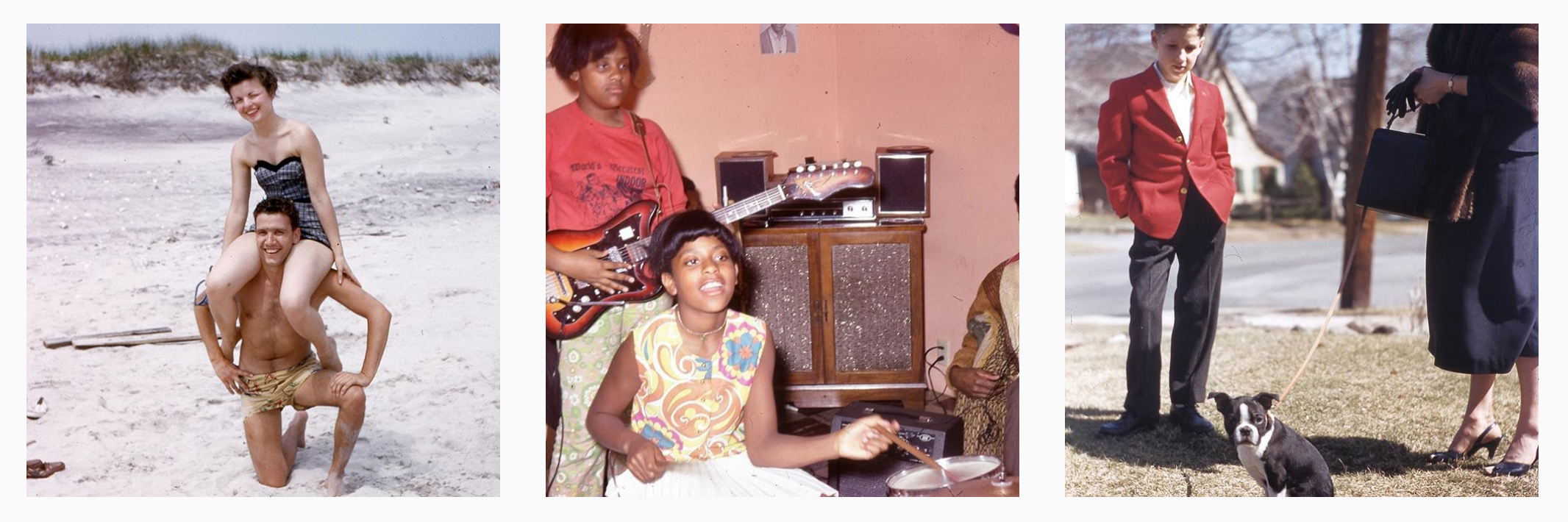
Vintage “found photos” from the Anonymous Project’s Instagram feed.
BEQUEATHING A LEGACY
“In spite of the importance of the family history, when clients are asked if they know their great-grandparents’ stories, the answer is too often silence,” writes Michael A. Cole, president of Ascent Private Capital Management. Yet “they don’t want their story to be lost. They want to leave a legacy that lasts for generations.”
SURVIVAL STORY
One man’s resilience in the wake of devastating fires and floods and mudslides encourages California-based personal historian Lisa O'Reilly to remind us of the value of forging meaning from our stories.
FOR YOUR HEALTH
Ruminations on the power of memoir from an unexpected source, Harvard Medical School: “You have a unique firsthand account of your culture and history that others don’t, and leaving a recorded history of your life can be an important gift to both you and your descendants.” Indeed.
Short Takes
#MemoriesMatter #Legacy #LifeStories #Memoir #OralHistory #FamilyHistory

Vintage, unknown
While I love browsing nostalgic #foundphotos on Instagram, my scrolling is always accompanied by a twinge of sadness. It’s the storytellers who renew my hope.
As an avid Instagrammer, I have followed with interest—and plenty of enjoyment—many vintage photo collectors. It is fun to scroll through a feed of old black-and-white images that bring to life times past: to see families gathering in their linoleum-floored ’60s kitchens, kids adorned in their ’70s patterned outfits playing outside in their yards, multiple generations sitting around on ’50s-era lawn chairs while someone barbecues. And all those car shots—what could feel more nostalgically American?!

Vintage “found photos” from the Anonymous Project’s Instagram feed.
These photos are weighted with a sense of time that is palpable. The curvy edges of print snapshots are often included in the digital representations of these images—they are clearly of another time. And yet, they are recognizable; they capture moments and milestones and emotions that often mirror our own. In their anonymity they become universal...in a most personal way.
I find the whole “found photo” movement intriguing. I am attracted to it for the aforementioned reasons. And yet, while I am “liking” image after image that makes me smile and remember, I feel a twinge of sadness. For while these photos are recognizable to me in their universality, their individual stories have been lost.
A recent New York Times article explores the phenomenon in “Moments Big and Small in Vintage Photos.” It’s what got me thinking about found photos again, and what renewed that ache I often feel when looking at them.
Sarah Moroz writes:
And while fashion and fads may have changed, these faintly remembered slices of life still resonate with contemporary viewers. “I realized that what a guy was doing in the 1940s, I did in the ’70s and ’80s,” Mr. Schulman said of the range of both playful and emotional vignettes. “The themes of today are also the themes of earlier times — we’re not different.”
So true, and so clearly why I, like thousands of others, gravitate to these images.
And yet…
I wish the stories attached to these photos were real.
I wish the memories associated with them belonged to the subjects and their kin, not anonymously to the world at large.
I wish we all valued our personal family archives enough to preserve and document them.
And yet…
I will continue to follow accounts such as The Rescued Photo and China Lost and Found, and to double-tap the pictures that resonate with me.
But I will cherish even more the vintage family photos shared by storytellers: the people who attach slice-of-life vignettes to their images, who share personal recollections and memories, places and dates and names to their pictures. The family archivists, personal historians, and memory keepers who use photographs as a means to remember to remember.
I am talking about:
Rachel Labour Niesen, the steward of the #savefamilyphotos movement and one of the best at promoting this message.
Kay Evans Little, who is “remembering my ancestors and family, one photo and story at a time,” and others like her using social media to share and celebrate the stories behind their family photos (two of my favorites: Rosa Rucco and Vivian Love).
And the many folks who have taken up the #genealogyphotoaday challenge.

On the Save Family Photos Instagram feed, it is not only about the photos: what’s not pictured here are the captions that accompany the photos, which are submitted by the more than 34 thousand followers and tell the stories behind the photos!
I’d love to hear your thoughts below! Please comment and share—
Who are your favorite #familyphoto storytellers on Instagram?
What is your take on the attraction to #foundphotos (also often referred to as vernacular photography)?
Are YOU doing anything to capture the stories behind your photos???

Life Story Links: Blog Roundup, March 20, 2018
Personal historians weigh in on the urgency to tell your life stories, the intersection of downsizing and memoir writing, and how to write about family secrets.
“The past, like the future, is indefinite and exists only as a spectrum of possibilities.” —Stephen Hawking
Of Interviewers...
LOVE AND LOSS
Personal historian Lisa O'Reilly, of Carpinteria, California, writes “To Mom, With Love,” a most personal and urgent message that calls upon us all to capture our loved ones’ stories...before it is too late.
THE STORIES THAT WE WEAVE
Amanda Lacson of NYC’s Family Archive Business LLC distills some of the lessons she learned at Columbia University’s Oral History MA workshops, and discusses how we, as biographers and personal historians, can earn and tell better stories for our clients.
MEMOIR MOTIVATED
“There’s no quicker way to rip us off the rollercoaster and park us on the granny-bench than to adverb your verbs.” Just one of the colorfully on-point writing tips in Cyndy Etler’s “How to Write Memoir So They Don’t Read It, They Live It.”
SENIORS & THEIR STUFF
Discussions with professional organizers led MA-based Nancy West to discover interesting points of intersection between her work and theirs: How writing your memoir can help you declutter, destress, and maybe even downsize.
...and Interviewees
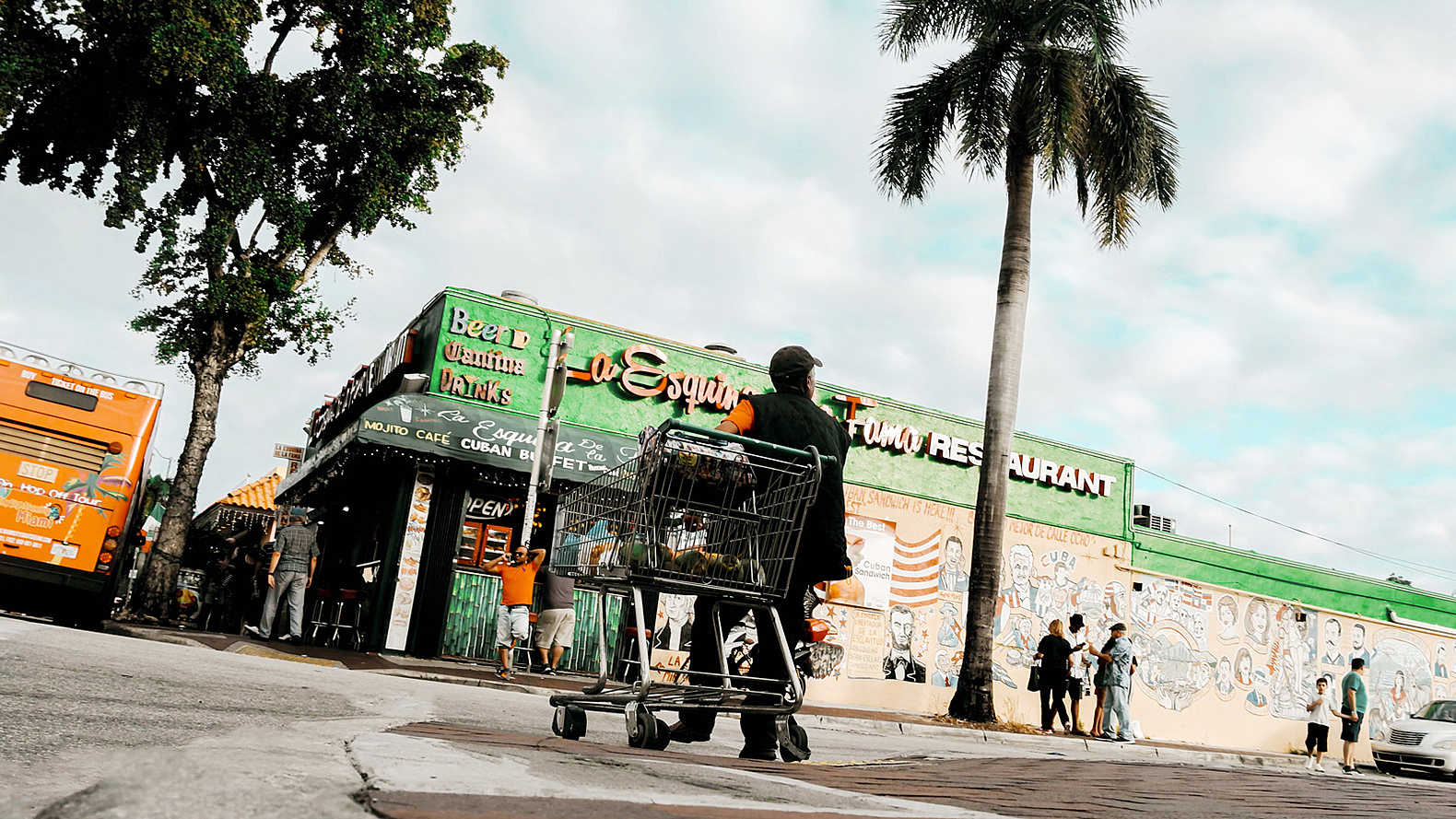
THE PLACE THEY CALL HOME
Miami’s iconic Little Havana neighborhood is home to an interactive museum exhibit that invites audiences to step into the daily lives of ten local residents whose passion, creativity, and penchant for history is ensuring that future generations will experience the Little Havana they know and love. Get a taste of their stories.
WHAT’S IN A NAME?
“We spend our life identifying ourselves by our name,” writes Karen Bender of Virginia-based Leaves of Your Life. “Your name will go on the cover of your book. Surely, your feelings about that name warrant a paragraph or two within its pages.”
FIRST PERSON
“I ate until I was stuffed full of memories.” Esmé Weijun Wang finds her way back to a beloved childhood dish.
...and a Few More Links!
- Lisa Pontoppidan of Boston-based Personal Story Films shares why she loves capturing stories—and personalities—on film, including “the spirit that shines from their eyes.”
- Freeze Frame: A panicky realization that some of my most cherished photos might be left out of my family archive led me to write this cautionary tale.
- The Audio Transcription Center rounds up seven digital recorders recommended for oral history interviews.
- Amisha Padnani, digital editor on the obituaries desk at the New York Times, has turned an idea for recognizing overlooked women into a movement.
- “My grandmother taught me that stories aren’t important because they’re written, they’re important because they’re living, embodied in the teller and the listener alike,” writes Kristin Chang.
- Digging into your family history you will find all kinds of people. Once a dark secret is uncovered, what should you do?
Short Takes

Freeze frame
Family photos we deemed special enough to show off in frames around our house likely are not preserved at all. Inventory & digitize them before it’s too late.
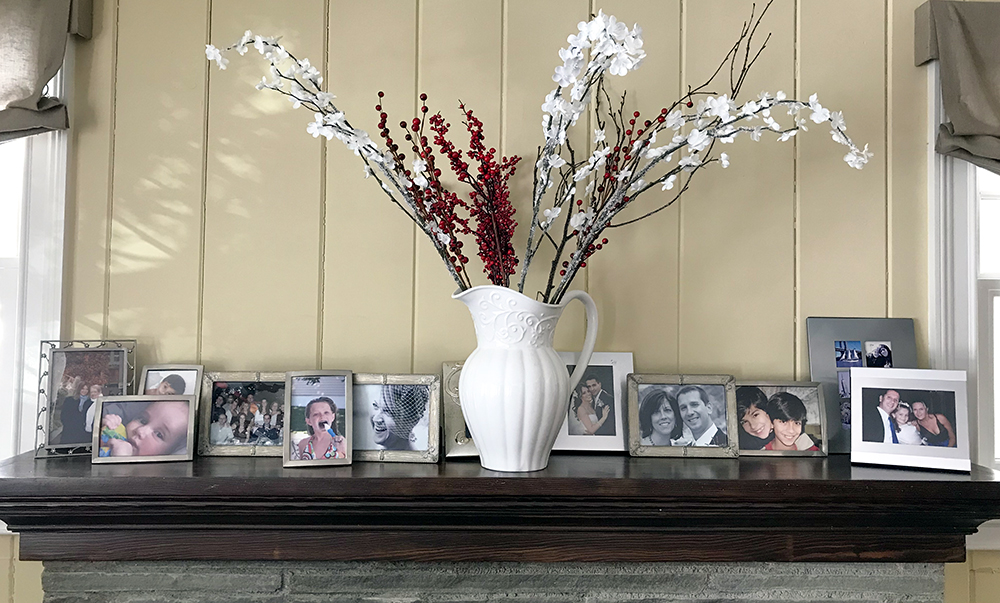
I have written often enough about the tragedy of digital photo hoarding and the importance of preserving our family archives for future generations. And I try to be on point about keeping up with the deluge of family photos from all our devices (deleting duds and dupes, backing up images to my hard drive for the annual family book). But I had a panicky realization recently:
Many of the photos most important to me are not, in fact, digitized at all, never mind backed up for safe keeping.
Yours too, I bet.
I am talking about the family photos that are right under our noses: the framed photos that adorn our walls and sit on our bookshelves. The ones we deemed special enough to display behind glass.
Take an inventory of framed photos
Once this occurred to me, I began to think of all the pictures around my house. Some of them, of course, derived from digital photos already—so those were likely backed up already, right? Well, depends…
A few things to consider to determine which photos you might want to digitize:
Professional photos shoots
(as from a wedding, family portrait session, or milestone event)
When were the photos taken?
If it was before 1990, the photos were almost definitely taken with a film camera.
If it was between the 1990s through the early 2000s, it’s a toss-up; both film and digital cameras were in common use.
If it was in the mid- to late-2000s, chances are your photographer shot digitally.
Anything taken after 2010 is almost certainly digital, unless you purposefully opted for a film photographer for the aesthetic (there is still a wonderful #filmisnotdead movement among photographers!).
Did you receive the high resolution images from the photographer, or just prints?
Many professional photographers charge a premium for handing over high-resolution digital files, so check your archives to make sure you have the shoot on your computer or external hard drive.
How did you receive the pictures? If it was via Dropbox or another software download site, note that most photographers do not leave files there indefinitely. The fine print in your contract would have stated when the link would expire, but that’s likely of little use to you now. Check, and ensure they are downloaded locally to your own system.
Original prints from a film camera
Old snapshots and Polaroids will fade over time, and may stick to the glass of everyday frames due to humidity. It’s important to find the best way to digitize those images without damaging originals.
Next up: digitizing project
Once you have a sense of how many framed photos are not backed up anywhere (sigh), it’s time to start digitizing. I recommend doing whatever you can to make the project more manageable, including, perhaps:
asking family members to help out
taking on the photos in one room per week
renting a scanner, ordering a pizza, and having a family reminiscing and preservation get-together (let the stories flow!)
at a minimum, using easy smart phone technology to immediately digitize those images you want to share and preserve (note, Google Photo Scan is an amazing option for this purpose, but it is not the answer for high-resolution files to use in a family history book, for instance)
hiring a professional such as myself to get the job done
Most important: Do something to ensure your precious family photos live on!
You considered them special enough to frame; now pay them the respect they deserve by backing them up.
Related Reading
Photographing Our Everyday: Our photos tell the stories of our lives—and our lives, frankly, are not merely birthdays & weddings. Our lives are lived in the in-between. Capture the moments.
Do Something Special with One Story: No one will tell your life stories but you. Five ideas for preserving one chapter of your life story.
The Photo Legacy You Leave Your Kids: Prepare your family photos so they provide comfort—not a burden—to your children when you're gone. It’s one of the most meaningful legacies you can leave your kids.
How to Use Photographs as Prompts for Writing Life Stories: A picture may be worth a thousand words, but when you actually attach words to a picture it gains even greater value.
Life Story Links: Blog Roundup, March 6, 2018
The best of RootsTech 2018, why you don’t have to be old to write your memoir, immigrant experiences, & how animated film Coco encourages family storytelling.
“Facts get recorded. Stories get remembered.”
Roots Tech Highlights
This past weekend saw more than 70,000 family history aficionados pack the Salt Palace Convention Center in Salt Lake City for Roots Tech 2018. I was a #NotAtRootsTech follower, and can attest that the convention has generously given access to a number of strong resources for those of us who weren’t able to be there in person. This year’s theme: “Connect. Belong.” A few highlights:
- Watch the full keynote from Humans of New York’s Brandon Stanton, who talks about the power of listening, authentic storytelling, and his journey (and challenges) in following his dream.
- Laura Hedgecock of Treasure Chest of Memories shared her tips for converting family history research into compelling narratives in her presentation, “Choosing Details: The Secret to Compelling Stories.”
- Former Olympian Scott Hamilton admitted that, like most RootsTech attendees, he came to the conference in search of answers, and as an adoptee with a complicated medical history, “he came to the right place.”
- Genealogist and host of Genealogy Roadshow D. Joshua Taylor spoke about the need for diversity in family history technologies, and has made his slideshow available online.
- Did you watch the Academy Awards Sunday night? The song “Remember Me” from the Disney-Pixar film Coco (about a Mexican boy who travels to the Land of the Dead to discover an ancestor—see more below) took home the Oscar for best song. It was performed theatrically during the awards, but singer Natalie LaFourcade gave an enchanting acoustic performance at Roots Tech first.
History Made Personal
WAR STORIES, BURIED
“I don’t know why my father really never spoke of his exploits during the war—never mentioned that his commanding officer had nominated him for a Legion of Merit award, or that he led a team of men searching for stolen treasure,” writes Susan Fisher Sullam in the Washington Post. “But his files...gave me a glimpse of a father I had never known.”
THE YOUNG & THE WRITERLY
Why do we assume that writing memoirs is a task reserved for our elders? Samantha Shubert of NYC’s Remarkable Life Memoirs offers up a compelling argument for leaving age out of the memoir-writing equation. Oh, and there are a fair number of wonderful reading suggestions in this post, as well!
IMMIGRANT EXPERIENCES
Last week I had the pleasure of visiting the Tenement Museum on Manhattan's Lower East Side, and I wrote about my experience—and some book recommendations—in my latest post. Don’t worry: Even if you’re nowhere near NYC, there are ways to engage with the immigrant families and their stories that are beyond worthwhile.

A scene from Coco: main character Miguel with his oldest living relative, great-grandmother Mamá Coco. Disney-Pixar
“REMEMBER ME,” INDEED
“There is a mythic truth to the central idea” of the animated film Coco, writes Amanda Lacson of NY-based Family Archive Business: “When we remember our ancestors, they do live on.” How amazing that this family film encourages us to remember our family stories!
VALUE PROPOSITION
Nancy West, a Boston–area personal historian, says, “My goal is to facilitate the [memoir-writing] process, whether that means making it easy or just making it less difficult.” What differentiates the easy projects from the more demanding ones?
...and a Few More Links!
- The NYC restaurant where grandmas cook to share their cultures
- New feature film, Nostalgia, explores the sorting that families find themselves facing as relatives age or die
- The work of American photographers who experimented with photography on paper is the subject of a new exhibit at the Getty
- Memoirist Dani Shapiro says goodbye to her blog but finds new ways to explore the creative process with her readers
- Archivist Margot Note provides guidance on how to identify and date historical photographs
- Milwaukee-based personal historian Mary Patricia Voell of Legacies, LLC was featured in the March issue of Reunions magazine (see page 10)!
- And congrats to Carol McLaren for setting up a new website for her Arizona-based personal history business, Unique Life Stories.
Short Takes

Tenement Museum tidbits
Under One Roof at NYC’s Tenement Museum is a must-see exhibit: First person testimony (and authentic furnishings) bring 3 families’ immigrant experiences to life.
Last week I had to be in Manhattan for a few business meetings, so I scheduled in a midday “appointment” to see an exhibit I had written about that piqued my interest: Under One Roof at New York City’s Tenement Museum.
While the museum’s original exhibits in the building at 97 Orchard Street highlight immigrant families who lived there between 1863 and 1935, the new installation down the block at 103 Orchard Street turns its attention to life in this Lower East Side neighborhood during the 1950s, 1960s, and 1970s.
Under One Roof
Over its 127 years as a residence, 103 Orchard Street housed more than 10,000 people. Under One Roof introduces us to three of them: Bella Epstein, Ramonita Saez, and Mrs. Wong.
The stories of these women and their families are told through the room interiors themselves, which are recreated in glorious authentic detail, from the crocheted doilies in Ramonita’s living room to the mezuzah affixed to the doorframes in the Esptein household. But it’s the first-person accounts of family members themselves that bring these immigrant experiences to life.
During the 90-minute tour we meet the families through their own testimony (short recorded audio clips and passed handouts with immigration records, photos, and other details), but these are mere glimpses. My amazing tour guide recounted the families’ experiences, always placing them in the broader historical context and framing a dialogue about the immigrant experience that continues to be of vital importance in our country.
As we were invited to take a seat on Ramonita’s plastic covered sofa and listen to some of the history of the neighborhood, it was inevitable that many of us would find moments of connection, and even consider how our own family stories contribute to our country’s ever-evolving identity.

The families of “Under One Roof” who lived at 103 Orchard Street, from left: Bella Epstein, pictured with her sister, Bluma, moved to the building in 1955; Ramonita Saez, who worked in a garment industry sweatshop and was a single mom of two sons, came in 1962; and Mrs. Wong, who moved to the Lower EastSide in 1968, still lives on the same block today.
Delving Deeper Into the Stories
Upon my return home, I discovered the rich website that does these families’ stories even greater justice. If you can make it to the Tenement Museum, I highly recommend Under One Roof or any of the amazing tours; if you can’t make it, though, do visit the site—and get lost in the textures and sounds and experiences of this not-so-distant time in our country’s history. You’ll discover oral history video clips, lots of photographs of the families and the downtown in which they resided, and plenty of food for thought.
Our individual stories are the stories of our country. We are history. Learning about the past through first-person experiences is the kind of “history” I wish I was taught in school alongside the dates and the textbooks. Bring your older kids to the museum to spark conversation and show them that history doesn’t have to be boring. Or consider sharing your own stories, and doing so with your kids—you just may be surprised how interested they are once the dialogue has begun!
Gift Shop Treasures
I’m one of those parents who tells my kid “no” to every gift shop tchotchke request, but I almost never say no to buying a book. This time around, I nabbed some books for my own memoir-obsessed self, along with a nice pen for him (he’s eight, and recently obsessed with writing in his journal—that’d be his Diary of a Wimpy Kid Journal, thank you very much ; )
Among my book recommendations:
A Tenement Story: The History of 97 Orchard and the Lower East Side Tenement Museum
Bintel Brief: Sixty Years of Letters from the Lower East Side to the “Jewish Daily Forward”
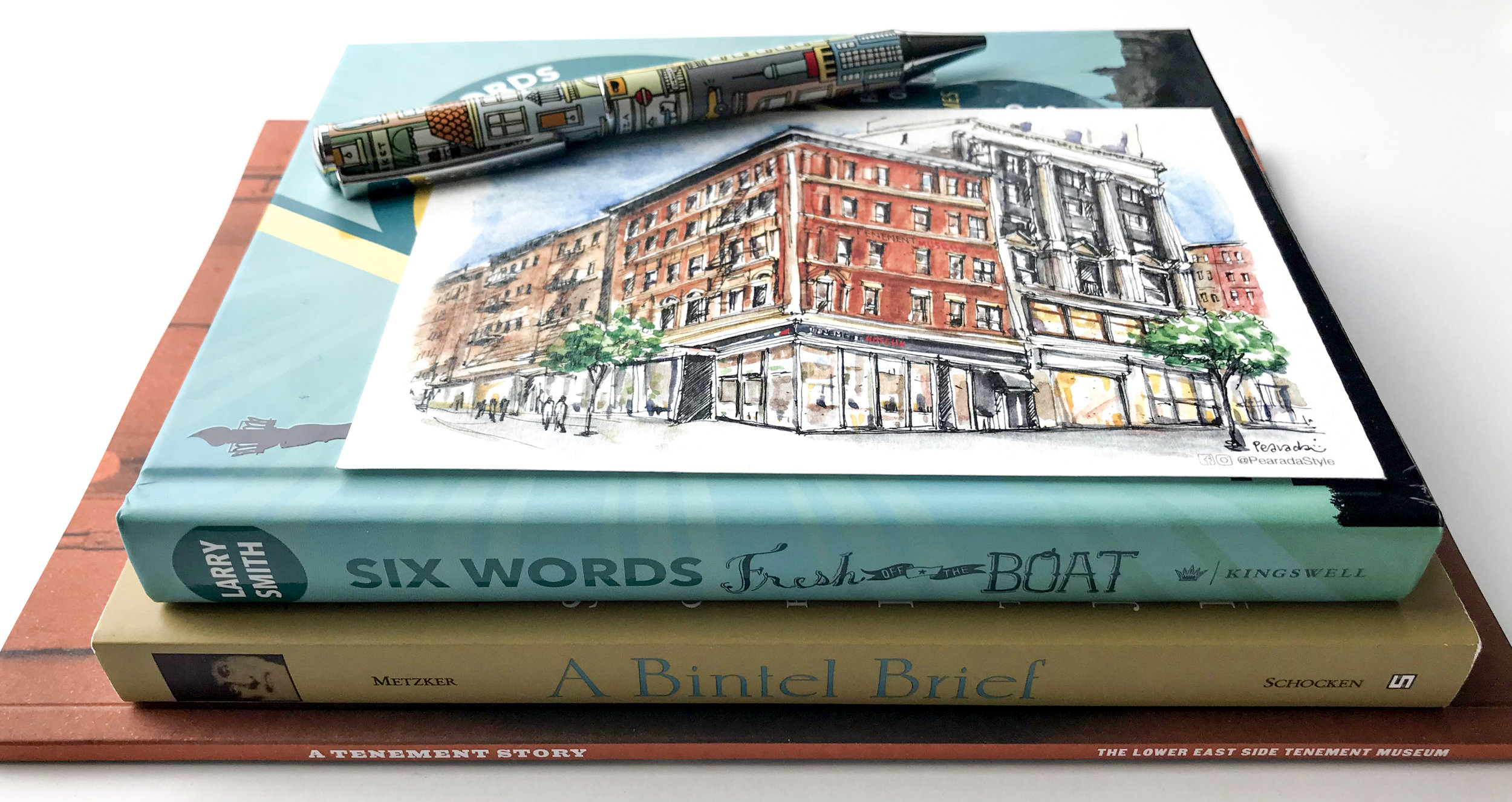
I will be finished with the Six Words book soon, simply because I can’t seem to put it down. It is uplifting and surprising, and when all of these (extremely) mini memoirs are stitched together, they create a diverse patchwork representative of “the American experience.”
For anyone who doubts that a six-word memoir can be powerful, check these out:
Daughter’s sweat equity paid son’s tuition. —Lisa Carlson
I no longer needed to whisper. —Hanni Gorenz Finaro
My mother: maid to mechanical engineer. —Jennifer Na
What would your six-word memoir be?
*Please note: I am in no way affiliated with the Tenement Museum, and this is an unsolicited review; I purchased tickets to the exhibit myself.
Life Story Links: Blog Roundup, Feb. 20, 2018
Multiple personal historians weigh in on telling stories creatively using more than straight narrative, plus writing tips, family archive preservation & more.
“In the particular is contained the universal.”
—James Joyce
What a rich array of resources and articles we’ve got this month! Let’s dive right in, shall we?
Stories Come in Many Forms
FACES, PLACES
In an exhibition at the Art Institute of Chicago, Al Solh’s ongoing series of drawings—or as she prefers to call them, “time documents”—emerged from deeply personal encounters and conversations between the artist and Syrian refugees, as well as other forcibly displaced people. “After five years of continuing this work, I am more aware of how faces tell a story that is as powerful as each person’s story, their ideas about life, aspirations, and how we can go on, wherever we have ended up." I wish I were closer and could see the work in person, but this gallery of images is quite inspiring.

Mounira Al Solh. I strongly believe in our right to be frivolous, 2012–ongoing. Photo: Courtesy of the artist and Sfeir-Semler Gallery; Beirut / Hamburg
BIOGRAPHICAL COMICS
Ellie Kahn of Living Legacies Family Histories in Van Nuys, CA, is working with an illustrator to transform one client’s personal stories into comics! See some sample strips, by cartoonist Ben Evans, here.
A LIST OF LISTS?
Sometimes it’s not a long narrative that most interestingly tells your story, it’s a simple list. I explore how to use lists to add texture to a life story book, including a list of list-writing prompts geared at family historians, plus some sample spreads from my personal library.
MORE THAN WORDS
Memoirs consist primarily of narrative. But they can also serve as a medium for artwork, poems, songs, toasts, and other bits of memorabilia that represent your life. Massachusetts-based Nancy West shares ideas from the pages of books she has produced.
Tips, Tenements & Time Travel
WRITING LIFE STORY
Sarah White of First Person Productions in Madison,WI, shares a powerful writing exercise from the most thumbed-though, sticky-noted book in her memoir writing library, Your Life as Story by Tristine Rainer. Definitely check it out—I can say from experience Rainer’s tips are beyond useful, and often surprising in what they elicit in your writing, and White features a gem here.
TIME TRAVEL
The initial rationale for funding a personal history project may be to share the subject’s life with grandchildren or great-grandchildren—but, writes Jim Michael of the Personal History Center in Lilburn, GA, “We can never predict who may eventually see it and how it may influence those who view or read it.” Send your life story on a time voyage.
TWO-FER TUESDAY
Brianna Audrey Wright, who calls herself a “storyteller of bygone days” and specializes in Nebraska, Iowa & South Dakota family history, offers up two recent blogs of interest: “Names and records are wonderful and necessary, yes, but it’s that dash between birth and death that’s so fascinating,” she writes in “Genealogist or Family Historian?” In another post, she contemplates the question: What is a legacy in the digital age?
NEW YORK NARRATIVES
It took 10 years and hundreds of hours of interviews to create NYC’s Tenement Museum’s latest exhibit, which chronicles the lives of three post-World War II families who once lived in the building at 103 Orchard Street. “Under One Roof” isn’t a straight work of architectural preservation—rather, it is both a reversion and a reinvention, preserving a space in order to preserve the stories of the people who once occupied it, as a way of telling the story of America.
“WHAT CAN I SAY THAT HASN’T BEEN SAID?”
A conversation with her father prompted Olive Lowe to reflect on why we should tell our stories, even when we think they’re simply not original. “It’s true that most of the items we could list on our ‘life resume’ are on someone else’s too,” writes the Mesa, AZ–based personal historian. But it’s not the what that matters as much as everyone’s personal why.
...and a Few More Links!
- The New York Times addresses How to Preserve Your Family Memories, Letters and Trinkets in the Smarter Living Section.
- The obituary that Jean Lahm wrote about her father told his story and made people laugh a little, too—and made strangers miss a man they never knew.
Short Takes

Revealing your life stories, one list at a time
Sometimes it’s not a long narrative that most interestingly tells your story, it’s a simple list. How to use lists to add texture to your life story heirloom book.
My Ideal Bookshelf (Thessaly La Force, Little, Brown and Company, 2013) is a gem that I discovered displayed at the front of my local library—an impulse check-out, if you will. The authors approached a wide array of luminaries (writers, artists, chefs, and more) and asked them to list their ideal bookshelf: “Select a small shelf of books that represent you—made you who you are today, your favorite favorites,” they write.
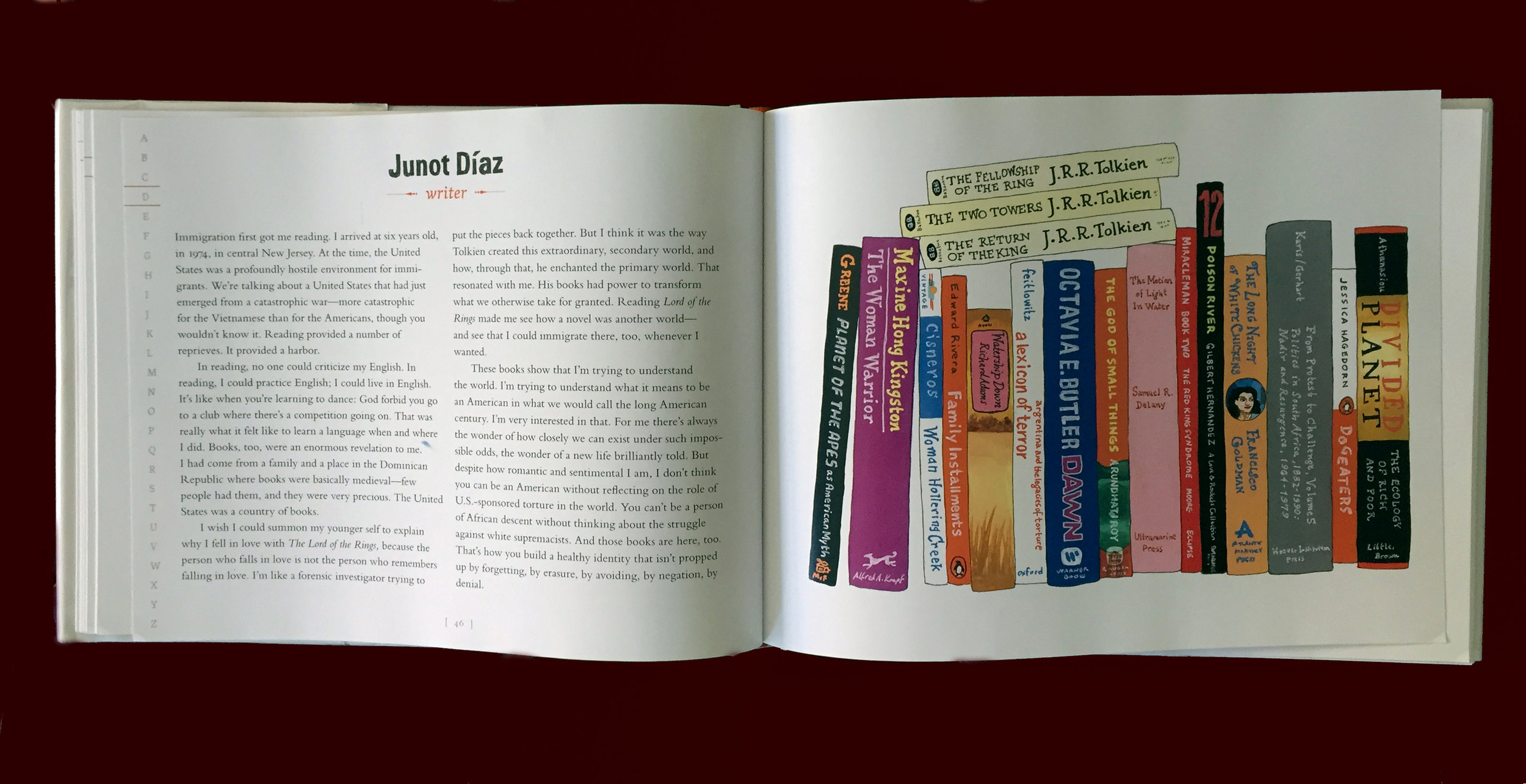
They are quick to note that this is not your one-and-only, ideal bookshelf—“there is no ur-bookshelf.” Rather, it is a snapshot of you in a moment in time. “You could build an ideal bookshelf every year of your life, and it would be completely different. And just as satisfying.” And, of course, just as revealing.
The Lure of Lists
We often use lists as a narrative device in our heirloom books. When mixed in with longer stories of an individual’s life, they can be especially alluring for readers, and a fun way to offer a glimpse into a person’s opinions and life. Breaking up long blocks of text with shorter pieces helps with a book’s pacing—and, most importantly, usually ensures that a book will be picked up often, not abandoned on a bookshelf to collect dust.
And when someone visits with an heirloom book, they are visiting with its subjects, too—communing with the family, staying connected, continuing to weave the family narrative for the next generation. Why not give them some insights into you they’ll really want to read?
Your Own Bookshelf
Are you an avid reader? Then designing your own “shelf of books” that represent you might be a rewarding—and telling—endeavor. Check out My Ideal Bookshelf from your own library for some inspiration.
“We’re all still hunting, still hoping to discover one more book that we’ll love and treasure for the rest of our lives,” La Force writes.
Imagine that your future grandchildren are all grown up, now hungry readers themselves. Imagine they pick up your list: Maybe they find a book they simply must try. Maybe they find one they are curious about—and they begin a conversation with you about why these books mattered to you. Maybe your conversation becomes an ongoing one, each of you sharing your ideas about what you’ve read lately… Maybe a list such as this has a life of its own.
“Some people like to snoop through medicine cabinets, but that only gives you insight into a person's physical well-being. The books tell a tale about the person's mind.” —David G. Allan, CNN, “Why Shelfies, Not Selfies, Are a Better Snapshot of Who You Are”
Lists that Matter
What else might you explore in list form that is revealing of much more than the list might seem to indicate at first glance? (It’s worth noting that I am generally not referring to lists that include mere titles, but that include some elucidation and broader storytelling about the list—why choices were made, how the process felt.)
Here are a few ideas for meaningful lists from previous heirloom books we have done, and some we’d love to do for you down the road:
On Reading
My Ideal Bookshelf, 2018
The Children’s Books Worth Saving & Passing Down
Where I Get My News, 2017
What I Read to Feel Hope
Books I Wish I Had Written (and Why)
“You may not have a biography written about your life, but you have a personal bibliography.” —David G. Allan, CNN
On Travel
Best Childhood Vacations
The Places Our Family Returns to Again and Again
My Bucket List: Where I Want to Travel
Memories of Our Family Staycations (When Travel Cost Too Much but We Made Our Own Fun!)
Top 5 Places I’ve Ever Visited
On Music
My Ideal Playlist
Soundtrack, 1988-1992: The Songs that Shaped My College Years
Summer Sounds, 1972
My Happy Playlist: Songs Guaranteed to Put Me in a Good Mood
On Food
Top 10 Comfort Foods
Foods that Remind Me of Home
Foods that Transport Me to My Childhood
What Was in My Lunchbox, 1977
Recipes Passed Down through Generations (and How I Made them My Own)
Random:
All the Jobs I’ve Ever Held (Yes, Including that One-Day Paper Boy Stint)
The Scrapes and Bruises of My Childhood (On My Path of Adventure)
Fears I Have Overcome, and How
Habits I Just Can’t Break (Do You Have Them, Too?)
Other Themes to Explore:
On Cars
On Movies
On Sports
On Fashion
On Friends
On Hobbies
On Love
On Embarrassing Moments
On Life’s Challenges
A Little List Inspiration
Want to see how lists might take shape?
The co-founders of Modern Loss, a website providing candid conversations about loss, each honored their fathers through lists last year. I think both of their lists are wonderful examples of how a form so seemingly simple can truly offer special—and engaging—insights:
20 Things You Probably Don’t Know About My Dead Dad by Gabrielle Birkner
“No, you can’t meet him. But yes, you can know him, through photos, scrapbooks and stories of those who knew and loved him best. Through me. And that goes not just for my children, but also for my husband and my many close friends who never had a chance to meet my dad. He isn’t just dead; he was so much more.” —Birkner
21 Things You Probably Don’t Know About My Dead Dad by Rebecca Soffer
How might we treat such substantive lists in an heirloom book? Well, here’s one example of a spread from a book of my own, also about my father.
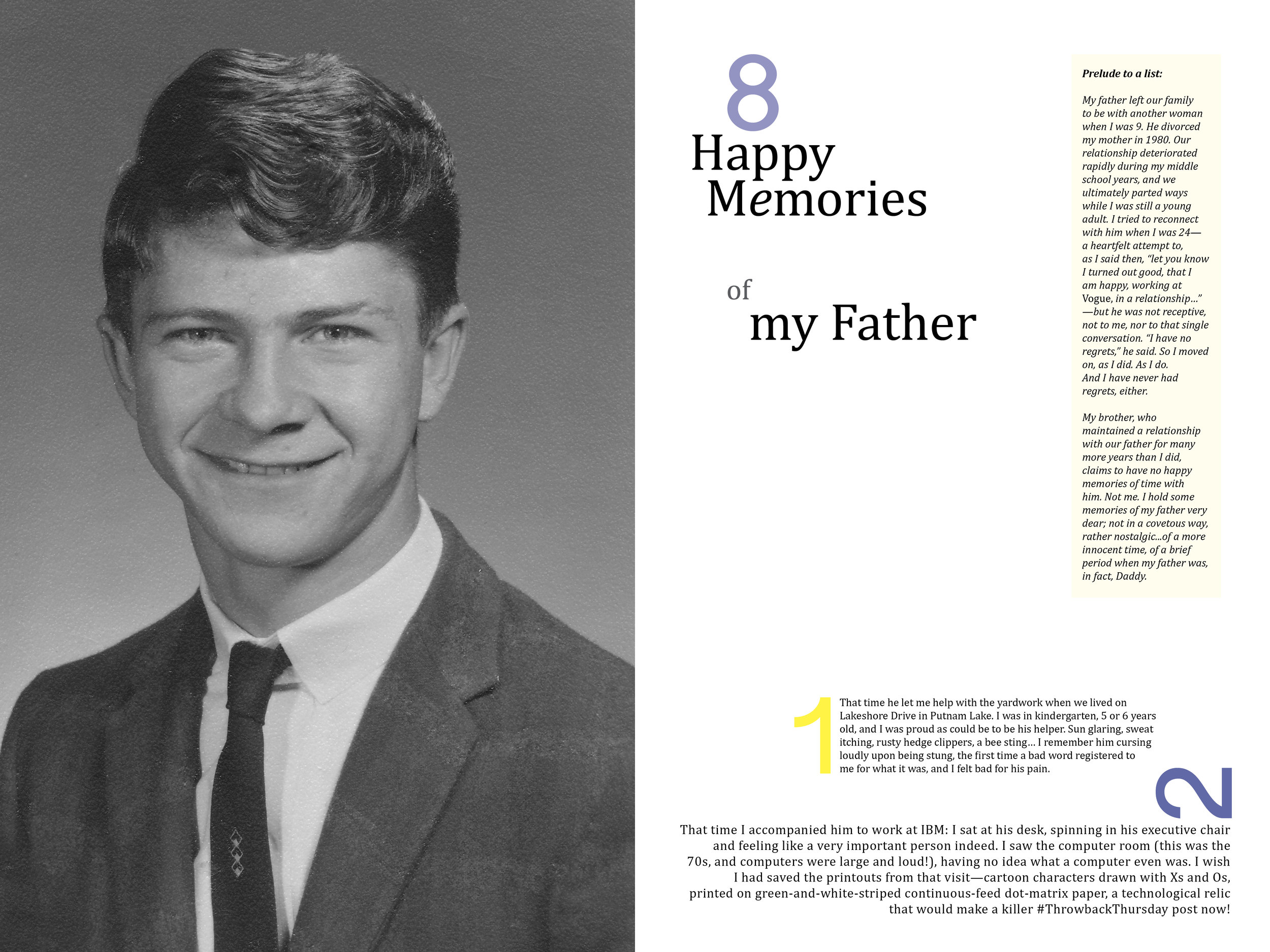
The opening spread of a section of an heirloom book that uses a list format to tell family stories; view all eight pages below.
Unlike the Modern Loss writers, my father is still alive, though I have not had contact with him in many, many years; this list, then, provides an example of how one might approach incorporating difficult or painful memories into your life story (not every story has a happy ending, after all).
Mostly, though, I wanted to share this to illustrate that lists can be designed in modern, captivating ways that truly draw readers into a life story:
Better Than a To-Do List
I admit to being an obsessive list maker of things I need to get done—and what satisfaction I feel when I cross things OFF those lists! But the next time you pick up a pad to jot down a list of tasks, consider using the paper to create a more meaningful list that preserves memories! What will your first list be?
I'd love to hear your ideas for fun lists, and even better—what’s on your ideal bookshelf? (I'm working on mine as we speak ; )