
Memories Matter
Featured blog Posts

READ THE LATEST POSTS
Dear Tim Ferriss: A letter of thanks & entreaty
Dear Tim Ferriss: Have you interviewed your parents yet? It is with a healthy dose of humility & a shot-in-the-dark effort that I say to you: Do it now—please.
“I’ve had many friends of mine ask me if I would have my mom or dad on my podcast. And they’ve also suggested that I record episodes with them, even if I never release them. And I think there’s something to be said for that. I haven’t yet done it.”
“One of the saddest sentences I know is ‘I wish I had asked my mother about that.’”
Dear Tim Ferriss,
I am a huge fan—of your podcast, your books, your support of pioneering research into the use of psychedelics in mental health. For your inquisitive mind and your willingness to let us listen in on provocative conversations with your ever-expanding circle of friends and mentors, I say: THANK YOU.
As someone who interviews people for a living, I am also a fan of your interviewing style, and have watched as you have honed that approach over the years (always anchored in curiosity and a genuine open-mindedness, which I respect).
I recognize in you a fellow seeker, and I am grateful to you for challenging my thought processes on a regular basis (and for never letting my to-be-read pile of books diminish!!).
It is with a healthy dose of humility and a shot-in-the-dark effort (will you ever read this, I wonder?) that I say to you:
Have you interviewed your parents yet?
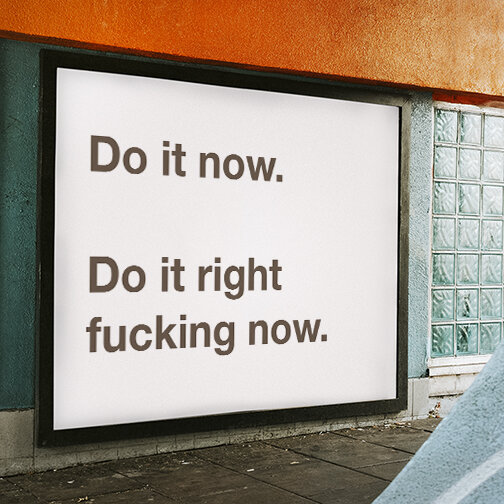
If I could get a message to Tim Ferriss I would say: “Interview your parents. Do it now. Do it right fucking now.”
Why you should interview your parents—right now
On the November 19, 2020, episode of your podcast, during your interview with Dax Shepard, you mentioned that friends had encouraged you to invite your parents as guests on the podcast—or to interview them and record it, even if it never aired. At the time, you said maybe one day you would consider it.
I shouldn’t care, but I do. I want you to take that step if you haven’t already. I want you to interview your mom, your dad, and if any of your grandparents are living, them as well.
Because if you don’t, you will have major regrets one day.
And if you do, you will be giving a gift not only to yourself and any future children you may one day have (and it sounds like that’s on the horizon!!), but to your parents, as well.
Seriously, giving your parents space and time to intentionally reflect on their lives and to share their stories with you is a monumental gift; one they could never anticipate and one they would always treasure.
Why do I care if you do this? Why am I sending this entreaty out into cyberspace?
Because I hear regrets from everyday folks all the time that they didn’t learn more about their parents’ lives before it was too late.
Because I know this is something you’ve considered—and so if you never get to it, your regret will one day haunt you even more than if the idea had never crossed your mind.
And because you have given me so much over the years—truly, I consider your podcast interviews to be gifts—and I would like to return the favor and give you one important thing: peace of mind in this one aspect of your life.
I have been thinking about a way to reach you for months; the notion of writing this blog resurfaces for me as I finish walking my neighborhood with your voice in my ear buds at least once a week.
Then, yesterday, I heard Chip Wilson share his billboard-worthy message with you: “Do it now. Do it right fucking now.”
So I am doing it right now—imploring you to finally do that interview with your parents.
And I hope you will do the same: Do it now. Do it right fucking now
“What would this look like if it were easy?”
I ask you: “What would this look like if it were easy?” It would look like picking up the phone, setting a time to talk to your parents, and hitting RECORD once the conversation begins. It’s nothing more complicated than that. And yet, it’s everything in its payoff.
You know how one day you just said to yourself, “Fuck it, why haven’t we gone to see the Northern Lights?” thereby fulfilling a lifelong dream for your mom? And you went, and it was magical? Well, why haven’t you done this? I promise, it won’t bathe you in phantasmagorical lights, but it will be magical. And it will become the new thing you are most proud of with regard to your family.
Cal Fussman told you that the idea behind his “What I’ve Learned” interviews “is for me to interview [people] and, using their own words, show them in a light that you never really knew. So you think you know these people, and then you listen to their experiences and you say: Whoa, I never knew that about Robert De Niro or Mikhail Gorbachev.” You know what? There’s a lot you don’t know about your mom, about your dad. There are stories waiting to be shared that will help you know your parents in a more profound, meaningful way than you could ever have imagined.
All you have to do is ask for them.
Won’t you give yourself, your parents, and your one-day kids that gift?

Life Story Links: May 25, 2021
A curated reading list for memory-keepers, memoirists, family historians & storytellers for the week of May 24, 2021, including inspiring first-person writing.
“The only thing that counts in your journal is your passion and the freedom to write what is in your heart. This is your life, your portrait, and the person you are choosing to become all rolled up into one. Be juicy.”
—Terry Tempest Williams

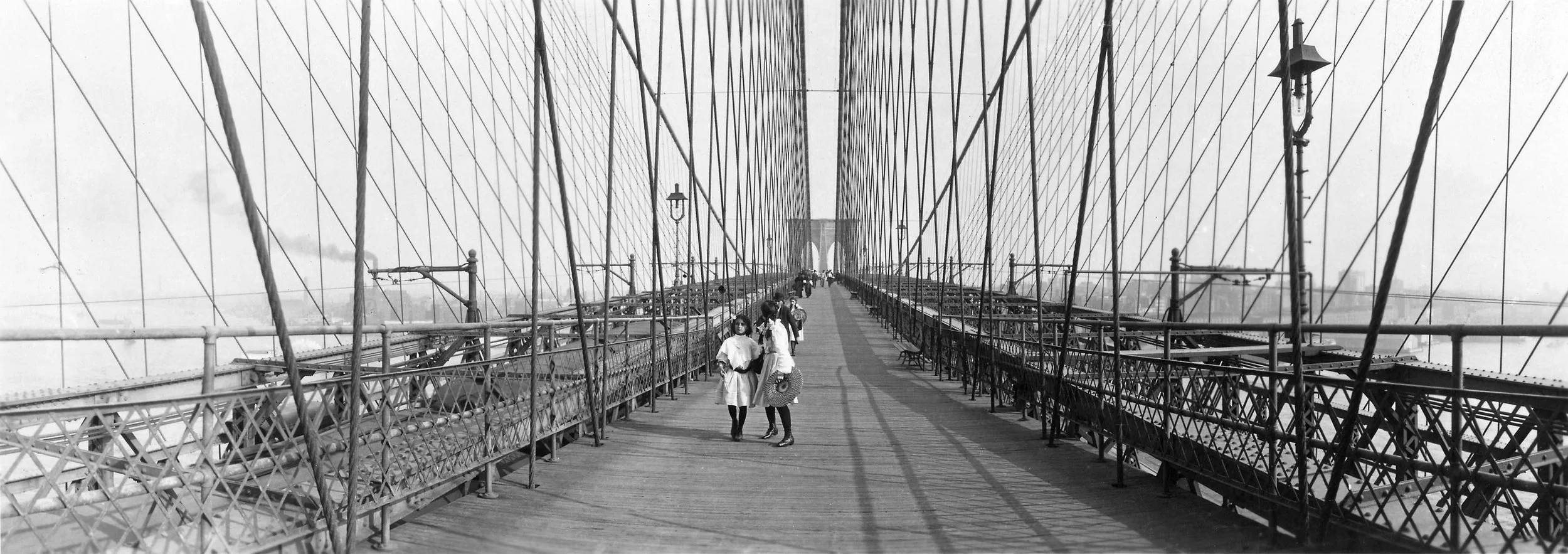
Vintage postcard, circa 1915, depicting the Brooklyn Bridge and New York skyline, courtesy of the Miriam and Ira D. Wallach Division of Art, Prints and Photographs: Picture Collection, The New York Public Library Digital Collections.
Preserving Our History
RECORDING RESOURCES
“Our elders have rich stories to share. There’s no better time than now to sit down and hit Record.” Wired magazine turns its attention to using technology to capture family history.
THROUGH A NEW LENS
Having conducted 250 interviews over a decade, Luke Holland’s documentary Final Account aims to preserve the memories of Germans who lived through the Holocaust. “The USC Shoah Foundation will incorporate these ‘perpetrator testimonies’ into its program for high-school students, preserving the recollections of this last surviving generation for posterity.”
Pictures & Stories
DIGITAL PHOTO MEMORIES
When Google Photos’ free storage ends on June 1, should you upgrade to a paid plan? The Wall Street Journal reports on cloud photo-backup options for ensuring that your family photo archive is preserved.
DON’T DO THIS
There’s one big mistake people make when resizing their digital photos for print, and I am on a mission to help you all avoid it.
BATTLE OF THE SUBWAY MAPS
When is a single conversation worthy of being recounted in a book? In this case, when the resulting decisions impacted both how NYC residents got around for decades and how designers approached real-world challenges.
The Stuff of Life
“THE THINGY-NESS OF THINGS”
“The odd object essay cannot hinge on ‘this tchotchke reminds me of my mother,’” Kren Babine writes. “Memory is faulty, subject to a thousand factors, and evidence—an object which shows that something exists or is true—holds no inherent value, because it is always subject to interpretation.”
HOUSE AS HOME
“As memoir writers we must ultimately wrestle with our beliefs about home.” Beth Kephart suggests a handful of starting places for writing the places that raised us.
FAVORITE THINGS
“Our thumbprints are all over the items we have collected and saved over the years.” Kate Manahan, an oral historian in Maine, finds that “for some people, talking about the things they love is just way easier than telling a ‘story.’”
MITIGATING OUR LOSSES
When disaster strikes, the loss of family treasures can be an unfortunate and devastating consequence. Archivist Rachael Woody offers help for channeling your emotional response into action, and preparing those treasures for the worst (checklist included).
Recent First-Person Reads Worth Your Time
VISITING (DEAD) ANCESTORS IN PRAGUE
“While couples embrace, while college students drink pivo, Czech beer, while parents push strollers, their kids licking zmrzlina, ice cream dribbling down chins from August heat, I curve inward with the weight of inherited memory.” Claire Sicherman connects her 13-year-old son with his roots.
LEARNING TO FIGHT
“Did I need to train like a superhero just to be a person in America? Maybe,” Alexander Chee, author of the essay collection How to Write an Autobiographical Novel, writes. “But if I thought of superheroes, it was because my father was like one to me, training me to be like him.”
DEPOSITS IN THE BANK OF MEMORY
“Something came into my head, and it was this: I must remember this moment for the rest of my life. It was a random resolution that arrived with the force of an epiphany.” Stephen Harrigan writes about his lifelong need for dropping memory anchors.
OUTSIDE, INSIDE
“The first time I dressed in men’s clothes, I looked in the mirror and cried. I pressed myself against the reflection. I wanted to press myself to the other side.” SJ Sindu writes “A Measure of Men.”
GOD AND GHOSTS
“My brother granted it was probably for the best that I didn’t attend the funeral. I was still in middle-school at the time and didn’t exactly have the neural wherewithal to process that sort of thing.” Barrett Swanson on the ones we leave behind.
...and a Few More Links
Registration is open for HippoCamp: A Conference for Creative Nonfiction Writers.
Book review: The Best of Brevity, an anthology celebrating the online journal’s 20 years of publishing flash creative nonfiction
New celebrity memoirs of interest: Rememberings by Sinead O’Connor and Brat by Andrew McCarthy
Short Takes

Printing a family photo book? Don’t do THIS to your digital photos, please.
Want your photo memory book to print beautifully? Here's the one thing NOT to do when it comes to your digital photos.

I wrote recently about the main reason so many images end up printing small in life story books: It’s because, quite simply, the digital files are too small. There are three main reasons this happens, and they are avoidable. Unfortunately, the only way to avoid them is to take some action BEFORE a photo is taken.
What if, however, you’ve got a bunch of photos that you simply must include in your printed book and the resolution is lower than needed? Well, they can often print at a small size and look quite good; and there are some tweaks that can be made to optimize print quality of smaller images, too—but these will increase print quality incrementally, not allow you to double the size of your pictures.
What about simply changing the resolution, you ask? Nooooooo—please don’t do that.
The biggest mistake you can make when printing digital photos
Do NOT manually change your image’s resolution.
Repeat: Do NOT increase your image’s resolution in a program such as Photoshop or Lightroom.
Why?
You can’t go in reverse, from a low-resolution image to a high-resolution image. Sure, you can type a higher resolution into your image editing software, technically adding pixels per inch—but those pixels are made up, imagined by the computer to fill in detail where none exists. It’s called resampling, and it’s decidedly bad for print. Simply put: Don’t increase your image’s resolution by resampling.
If you’d like to read a more thorough explanation of DPI, PPI, and resolution, I recommend checking out this thorough and clear post from a Boston-based design studio.
Generally speaking, if you are sending your files to a professional to design your book, always send the file with the highest DPI or PPI (which is most often also the biggest file in the bunch—i.e. 10MB as opposed to 30KB!).
You don’t want them to appear grainy or, even worse, pixelated.

This is an example of a fairly SMALL image that will NOT print well. You can see that at 72 pixels per inch (which is the optimal resolution for displaying on a computer screen, but not for printing) the image would be approximately 12x7 inches. In this Photoshop dialogue box, the option to resample is checked; if you were to increase resolution to 300 ppi here, the resampling would “fill in” pixels to theoretically increase the image’s resolution, but it will do so poorly—see a comparison below of how the image would look.

SMALL TO LARGE FILE SIZE: This is what the image looks like when we attempt to increase its resolution through resampling, as in the dialogue box above. As you can see, detail is poor, and there is a halo effect throughout.

LARGE FILE SIZE TO START: This is what the image looks like when it is scanned at a resolution of 300 ppi instead of the 72 shown above. As you can see, a higher-quality scan yields a higher-quality digital original that WILL print beautifully.
Most of the advice here and above is sufficient for most people to produce gorgeous, high-quality photo books and prints.
Professionals (like me!) who optimize your images for books and other high-quality output will go even further to not only ensure optimal printing results, but to enhance images for visual appeal. We do things such as:
calibrate our monitors so the screen images match the printer specs as closely as possible
consider paper texture and tone when optimizing images for print
extend photos so they have enough bleed to print as full-page images without cropping anything out
retouch imperfections or distracting background noise
sharpen images adequately (but not too much) for print; photographer Christian Hoiberg offers a course called “Ultimate Sharpening Workflow for Fine Art Printing” if you are interested in learning more yourself.
scan print images at high resolution so they can be significantly enlarged with no quality degradation
digitally “repair” rips, stains, and yellowing on old photos
Much can be done to ensure that your precious photos print beautifully in memory books and elsewhere, and I am always thrilled to be the expert on your journey. Just remember, if you go the DIY route: DO NOT manually increase your digital photo’s resolution if you want it to print well…please.
Life Story Links: May 11, 2021
Your biweekly dose of all things personal history—including fresh first person reads, photo printing help, and lots about the memories held in our possessions.
“One of the most significant facts about us may finally be that we all begin with the natural equipment to live a thousand kinds of life but end in the end having lived only one.”
—Clifford Geertz

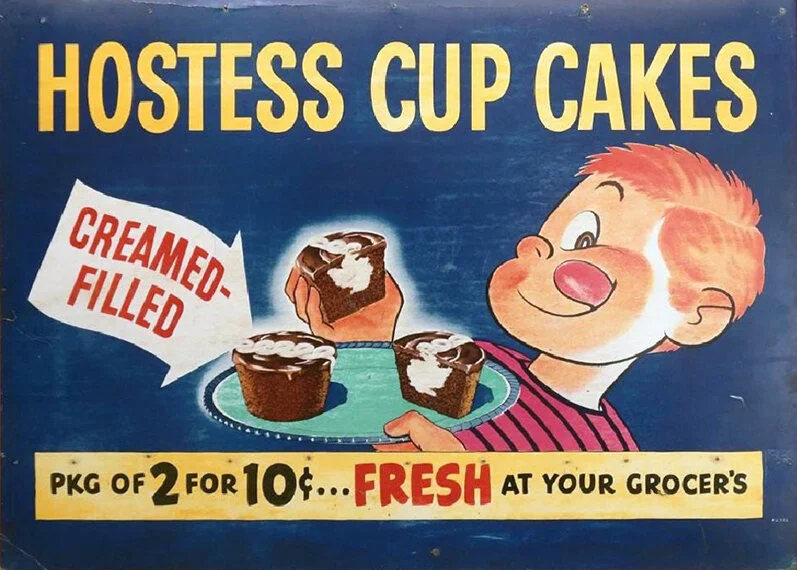
Yes, today is Hostess Cupcake Day here in the United States! Rather than indulging in the sugary treat, let’s celebrate with a vintage advertisement, shall we?
Discover: Recent First Person Reads I’ve Loved
“MY MOTHER IN THERE”
A few weeks after her mother dies, writes Marie Mutsuki Mockett, “I am forgetting that my mother was sick. Her essence has clarified…and my mind is furiously picking through memories, panning for gold, holding on to the nuggets that were her.”
LIFE IN MINIATURE
“More recently, I’ve felt that the worthier challenge may lie not in resisting the occasional backwards glance, but in trying to see that child [I was] and her fictions with compassionate eyes.” Kate Guadagnino on the solace of her childhood dollhouse.
FIGHTING THE INEVITABLE
“The ‘law’ was passed down in my family like a hideous heirloom.” Anna Dorn on doing everything possible not to follow in her father’s footsteps.
“WHAT ARE YOU WAITING FOR?”
“I never tired of talking to [my nieces and nephews] or playing with them; I’d happily volunteer for their parents’ less-favorite tasks, from diaper changes to dips in the pool. Pregnancy, though, still felt future state. But it would happen when the time was right. Right? Right.” Shelia Monaghan on the legacy of children.
Mementos, Memories, and Overwhelm
DISASSEMBLING A LIFE
Literary left-wing legend Frances Goldin had hoped that after she died, friends and loved ones could hold a “potluck shiva” in her home, “where people could take memorabilia and items they wanted or needed or that she had designated for them, while celebrating her life.” Covid had other ideas.
GRIEF, HIDDEN IN A STORAGE LOCKER
“My mother was kind and overly loving, yet she’d never told me about her life before me.” More than a decade after her mother’s death, Blake Turck finally has the emotional resolve to go through the stuff of her mom’s life—and learns that memories live inside us, not in things.
TCHOTCHKE CHALLENGES
“Especially with items of high sentimental and low financial value, documenting and sharing the stories and feelings associated with possessions can be a big step toward letting go.” Philadelphia–based personal historian Clémence R. Scouten offers advice for dealing with passed-down items to which we may hold an emotional attachment.
An Instinct to Preserve
FIGURING IT OUT AS SHE GOES
“Part of why I write about my own life, it’s my attempt to freeze all this ceaseless, endless, constant change,” says Alison Bechdel about her new memoir. “I just want to put down something that doesn’t move. Life is change.”
RECORDING LIFE
This senior “began making books for [each of her four children] on the day they were born, and presented each with a personal life history on their 60th birthday.” Now she is typing her memoir on a laptop her kids gave her.
VIDEO: UNINTENDED MEMOIR
Amy Tan: Unintended Memoir is an “intimate portrait [featuring] archival home movies, personal photographs,…as well as new interviews with Tan,” who speaks about traumas in her life and how writing helped her heal.
JEWISH STORY PARTNERS
“There is nothing like storytelling to foster connections and help us understand life’s deepest truths.” A new foundation aims to expand the range of stories told about Jewish lives.
Nitty Gritty Help
UM, WHY SO SMALL?
When many members of a family are contributing images to a memory book, chances are some of those pictures (maybe even your own) will not print well. Here are three common digital photo mistakes and how to avoid them.
...and a Few More Links
three new books about memory—and keeping it sharp
interesting infographic on the power of storytelling
Author Rachel Kushner’s new essay collection includes “eloquently written features about her personal history that are equal parts gripping and revealing.”
“The pandemic shaped my family for generations. Not COVID—the 1918 flu”
A new biography of Marjorie Kinnan Rawlings, author of The Yearling
Short Takes

“Why the $#%&* are my pictures so small?!”
Ever printed photos from your phone or digital camera and they look grainy, blurry, or small? Here’s why, and how you can fix it for optimal print results.
In recent months I have heard from more and more people wanting to celebrate their loved ones in tribute books. Whether for a milestone birthday or anniversary, or even to say “congrats” for an achievement (virtual graduation, anyone?), these books are an opportunity to show your love through words and pictures.
But it breaks my heart when the pictures in the books look like postage stamps.
So, today a public service announcement: If you are taking digital photos of your life—whether it be for an eventual family album, yearbook, scrapbook, or even just to live on your devices indefinitely (shudder to think!!)—you MUST use high-resolution images.
Despite sending detailed instructions on how to upload high-resolution images for a book, many people still send me low-resolution digital files and then wonder: “Why the $#%&* are my pictures so small?!”
Every answer I give is some version of: “Well, they’re too damn small!”
Why your digital photos are printing so small: 3 mistakes to avoid
1 - Your photos are too small because you are relying on social media to save and gather them.
Often clients will tell me it’s just easier to pull the photos from an album on Facebook—they’re easy to find, so readily accessible. But what many people don’t realize is that once you upload a picture to Facebook, the platform immediately converts your image to a lower resolution—translation: the file is now smaller, and you can’t get those pixels back.
Even Google Photos degrades photo quality when uploading images to your collection unless (a) you change your setting to request differently or (b) you have the paid version that allows for more storage.
Solution: Keep an archive of all your important photos on your computer, an external hard drive, or in the Cloud. The better organized they are, the easier it will be to find the original (high-resolution) image when you need it!

While it may seem convenient, pulling an image from a social media platform such as Facebook is NOT ideal for printing. These sites immediately strip away pixels from images upon upload, so you’ll need to find your original digital file if you want it to print with a high quality.
2 - Your photos are too small because you have your digital camera settings wrong.
Maybe you wanted to ensure you could hold as many pictures as possible on your memory card, or maybe you simply never went in to check the settings on your new high-end digital camera. Whatever the reason, many people (are you one of them?) are shooting all their family photos on a low-resolution setting.
If you are taking photos that you plan to eventually print for an album or in a book, you must ensure that the images are taken with enough pixels per inch. And just because your camera comes with a high megapixel count, you’re not necessarily set up to capture high-resolution images (there’s image compression to consider, for example, and how much digital zoom you may be using when taking a shot).
“Choosing the right settings on your camera is only the starting point to getting the best resolution possible out of your images,” Elizabeth Mott writes in this helpful piece about how to ensure you’re taking high-resolution photos with your digital camera.
My advice? The cost of both smart phone storage and memory cards for digital cameras has come down sufficiently that I think buying one with LOTS of storage is worth the investment; once you know you’ve got plenty of space to save your photos, snap away at the highest resolution possible—I promise you won’t regret it when you feel compelled to print one of those precious gems (or, even better, many of them in a book).

Every camera manufacturer displays resolution settings differently. Here is an example of choices on a Canon DSLR. If you’re photographing for print, use either the large setting (L, which translates to a 5184 x 3456 JPEG image of 18MP) or the RAW one (which has the same pixel dimensions and file size, but is not compressed like the JPEG).
3 - Your photos are too small because you are being, ahem, lazy.
Not sure where to find the original image? Take a screenshot, many people figure. Or use the shot your daughter emailed to you (without realizing she did not attach the original but a lower-resolution version to increase send speed). If you, like most people, do not have a meticulously organized folder system for backing up your digital photos to a computer or external hard drive, then finding images when you need them will undoubtedly be a challenge. But if you want photos to appear in your book, then you need to do the legwork to discover where those high-res versions are.
A professional personal historian or photo manager can help you do this detective work, if you’re not so inclined. (Give me a call ; )
But no matter who does the legwork, I implore you: Go to the effort of finding the original—larger, higher-quality—photo if you plan to print it. Why pay for a book, an enlargement to frame, or any other printed memory if it’s not going to look good?
When you email a photo from your phone to another person, you have the option of choosing if you want to “reduce message size by scaling the image.” Doing so is one way images get degraded and end up needing to print at small sizes. For optimal print results, choose “actual size” when sending an image.
Your memories matter enough to treat them with care—and your photos are, if nothing else, repositories of your memories!











Life Story Links: April 27, 2021
For memory-keepers: A curated collection of recent stories about memoir (reviews & first person excerpts) and family history (as preserved through narrative).
“In guided autobiography, we encourage the use of metaphors; in the case of major branching points in life, we ask, ‘If your life is like a river, what caused it to flow in the directions it did?’”
—James Birren

Today, April 27, is National Tell a Story Day. This vintage photograph by Russell Lee shows the wife of a Farm Security Administration client reading to her son, April 1939. Image courtesy Library of Congress Digital Archive.
Exploring Family History Through Narrative
“THE WHOLE STORY“
“Listen to the songs your ancestors sing to you. Be mindful of the songs you sing to others.” The 2021 UCSF Last Lecture, delivered by Peter Chin-Hong, MD, encouraged exploring one’s personal history in order to find one’s true voice.
HERITAGE, QUESTIONS, STORIES
“We can’t tell the full story without each other.” Two women researched slavery in their family, but what they discovered held different meaning for each.
FORGING MEANING FROM TOUGH TIMES
“Survival becomes a pivotal point in our story that needs to be preserved. It is the part of our story that reminds us what we are capable of, what we can endure, and what we overcame.” Lisa Lombardi O’Reilly on “the times that remind.”
“DEAR FAMILY…”
Collected letters from Australian and New Zealand soldiers “held a sense of mana in the families, keeping the memory alive of someone that, in some cases, had died over a 100 years ago.”
MY GRANDMOTHER, THE SPY
“I was going through her things and found myself staring at a letter that I had seen in childhood and I didn't really understand. It had to do with some sort of covert work she had done for the British.” In a new podcast Enid Zentelis shares the story of her grandmother, who she learned was a WWII spy:

Click the image for a 3-minute video about Enid Zentelis’s mission to learn the truth about her late grandmother, a Hungarian-Jewish Holocaust survivor—and a spy. “I wondered how I could serve my grandmother’s story, and simultaneously communicate the effects of generational trauma; the way some family members succumb to it, and the way others turned it into a source of strength and determination,” Zentelis says.
Recommended First Person Reads
LOW COUNTRY LEGENDS
“Were those really the voices of loved ones long gone who called out my name in subway cars and expensive restaurants and while I brushed my teeth?” J. Nicole Jones on familiar ghosts and family legacies.
CROSSING BORDERS
“‘Berlin? Seriously?’ my Jewish friends marveled. If you want to bring conversation to a halt at your local Purim carnival, try mentioning that you’re relocating to the city where the Gestapo was headquartered.” Laura Moser on moving to the neighborhood where her grandfather lived before fleeing the Nazis.
LIFE IN THE DARK CITY
“When you are forty-three in New York City, raising children, you have already lost the New York that mattered to you at age twenty-three. The loss I am talking about is something else entirely.” Emily Raboteau on pandemic NYC.
THEIR STORIES ARE OUR STORIES
“Our stories are even richer and more complicated than we sometimes realize, especially stories that are the most familiar to us, the stories that have been passed down.” Menachem Kaiser in conversation about the ever-evolving nature of Holocaust memory and storytelling.
WRITING THROUGH GRIEF
“I wanted to write that person, share her writings, immortalize her in a small way—she who had not been able to author her legacy.” Maryanne O'Hara on turning to personal writing in the wake of her daughter’s death.
Hodgepodge
STORIES UNTOLD
“My life is not interesting enough” and “it’s too self-centered to write my memoir” top the list of reasons I hear for not writing about one’s life. Click to read about why I think these reasons are bunk.
FOUR MEMOIRS WITH REMARKABLY DIFFERENT APPROACHES
The University of Pennsylvania’s alumni magazine turns its attention to the writing lives of four of its cohorts including stories about “middle school memories, meditations on motherhood, a prismatic accounting of the self, and a long life well and furiously lived.”
AN ARCHIVAL PROJECT IN THE AGE OF COVID-19
In “Portraits of an Epicenter: NYC in Lockdown,” a group of creative college students share photo essays and written reflections of living through the pandemic. “Although the city was unified in this experience, no two experiences of the lockdown were the same.”
HONOR HER STORY
Mali Bain, a personal historian in British Columbia, Canada, says she has been inspired by her clients’ unique ideas for Mother’s Day gifts. Here, she shares a few of them.
Virtual Events that May Interest You
April 30: First conference of International Institute for Reminiscence and Life Review at its new home, UCONN School of Nursing
May 1: Virtual (paid) workshop: “The Power of a Legacy Letter and How to Write One”
May 19: Storykeep presents a free live webinar to acquaint you with private podcasting, a new tool for documenting and sharing family narratives and connecting family across generations.
...and a Few More Links
Short Takes

Why, exactly, are you not telling your stories?
Is your life too boring to tell people about? Do you think it's self-centered to write a memoir? Or that your kids don't care about your stories? Think again.

I hear lots of reasons for not writing about oneself. Do any of these sound familiar?
I hear a lot of reasons from people as to why they’re not sharing their life stories, not writing their memoirs. And while you undoubtedly believe in your reasons, I’m here to say that most of them are, well…bunk.
The top five reasons I hear for not preserving family stories follow—which one applies to you? Click on the one that most resonates to jump to MY reasons why your outlook is, ahem, flawed. (I value story sharing too much to worry about offending here, but if I seem overconfident, I admit: I believe I am right—that your stories matter, enough to be shared and preserved. Will I convince you?)
Let’s nix these 5 excuses for not telling your family stories about your life:

“My life is not interesting.” “Boring.” “Like everyone else’s.”
Whether this is your genteel humble nature or a bit of insecurity speaking, I am calling your bluff. Everyone’s life is interesting, yours included.
After decades of interviewing people for a living, I can say with confidence that even the most shy, low-key folks will start sharing wonderful stories if approached with curiosity and an open heart. They may start out glancing away, shifting in their seats, confident in their boringness…but after a few probing questions—and sometimes a little humor—the stories don’t just begin to eek out, they flow liberally.
I have seen it too many times to count: An initially reluctant storyteller midway through telling me a lengthy tale from their life makes eye contact with me and realizes, “Wow, this is me talking, huh?!” Usually a surprised laugh escapes before they continue regaling me with their stories, and we have settled in for a most productive interview.
The best part, in my opinion? The interview subject is almost always eager to come back for more! Digging into our memories is like reaching into a bag of potato chips—no one can stop at just one…story.

“I don’t want to seem like I’ve got a big head.”
Alas, preserving your own life story is not narcissistic. At least, not most of the time.
Do you plan on simply creating a list of your estimable accomplishments alongside photos of all your awards? If it’s not for a professional bio or a book specifically about your work, then maybe that’s a little self-centered. More importantly, it doesn’t really say anything about you—about who you are inside, about what propelled you towards your accomplishments (and even what you learned from those occasional failures).
On the other hand, if you plan on telling stories that reveal who you have become—lessons learned, adventures taken, and relationships nourished—then that, alas, is a memoir that creates meaning from your experience. Your life has mattered, and how you have chosen to live it has impacted everyone in your circle. By writing that kind of life story, you are giving your readers the gift of YOU.
As my colleague and friend Samantha Shubert has said, “It’s anything but vanity to know yourself and to want to share your story with the generations still to come.” Indeed. In my opinion, it’s a most generous act.

“I don’t have time.”
If your only excuse for not preserving your memories in one way or another is “I don’t have time,” then maybe memory-keeping isn’t really a priority for you. We’re all busy, but I would argue this: We make time for what matters most to us.
Try this: Either choose a method for recording your stories that takes minimal time, or find one that is so irresistibly fun and rewarding that you’ll be carving out time from your calendar tomorrow.
The low-commitment route:
Devote 30 minutes every Saturday and Sunday to writing in a journal dedicated to capturing your memories. That’s a mere one hour per week! I recommend
using this one supercharged writing prompt—“I remember…”
or brainstorming a list of memories then using that list as writing prompts each time you sit down to write.
If you do this every weekend for a year, you’ll not only have developed a journaling practice, you’ll also have written a fairly thorough personal history!
The “I can’t resist” route:
Here are three ideas to make your story sharing process so enjoyable that you won’t consider crossing it off your schedule:
Pick one of your favorite people to talk to—a sibling, parent, friend—and connect intentionally every two weeks or so. You can talk on the phone, chat over Zoom, or get together in person, but the goal is this: To pick a topic and reminisce together about it. Use an app on your phone or a digital voice recorder to capture the conversation. This gives you the joy of connecting in a meaningful way AND an accountability partner to help you stay on track.
Hire a personal historian to interview you during one or a few scheduled sessions. You get the benefit of someone skilled in coaxing memories from storytellers, plus the sacred space to share without distraction or judgment. You don’t even have to commit to making a book or a video—many professionals, including myself, will conduct audio-only interviews so you can have the peace of mind that those are done, a significant part of your family legacy saved.
Join a writing group. Google “memoir writing groups” or “guided memoir groups” to explore options near you. Some of the biggest advantages to being part of such a group are feeling part of a community; feeding off others’ enthusiasm and ideas; getting feedback on your writing; and, in some groups, receiving writing instruction or prompts. Writing can be a lonely andeavor, but interacting regularly with a group of likeminded people can be invigorating!

“I don’t have money.”
There are plenty of low-cost ways to document your life! Writing in a journal? Don’t buy a fancy leather-bound one, simply write in one of your kid’s leftover school notebooks. Joining a writing group and intimidated by the price tag? Start your own with a Meetup listing—for free.
And if you’re considering hiring a professional biographer to help you capture your stories but feel like the fees are more than you can handle, here are a few things for you to consider (if money talk feels taboo to you, please accept my apology and skip this section):
Think of it as investing in your legacy. You make sure your financial assets are passed on to your loved ones in your will. What about everything else you’d like to bequeath them that’s, dare I say, worth even more? Your values, your wisdom? Lessons learned through hard-earned experience? Even that recipe for great-grandma’s key lime pie?
Consider the alternative. What will happen if you don’t preserve your stories for the next generation? Your kids will have regrets that they didn’t ask you…about this, about that, about so many things. They’ll inherent family photos with no stories attached, so—if not by their hand, then likely by their children’s—those precious pictures and mementos will likely end up in the trash bin. Trust me, too many folks tell me they WISH they had hired me to capture their parents’ stories before it was too late.
Tell me: What do you value? If you say “family,” then hiring a personal historian is worth it—passing on a tangible record of your life and stories is a precious gift for generations of family members to come (how would you feel if your parents had done such a thing for you?!). If you say “experiences,” then hiring a personal historian is worth it—for, as so many clients have told me, they value the time spent reflecting thoughtfully on their life even more than the finished book (give me a call and let’s chat about what that experience could be like).
Where are you spending your money? My husband’s gym membership fees were automatically deducted from his bank account every month; he hadn’t gone in more than a year, but kept paying “in case” he finally recommitted. My neighbor pays for a landscaper to mow her lawn in the summer, even though her college-age son is bored and offers to do it regularly. Hopefully you’re more responsible with your money than this (!), but I wonder if there aren’t things that you’re spending money on that mean a lot less to you than your legacy?

“My kids don’t care.”
Hmm, you may be right about that—for the moment.
There’s been a lot written in recent years about how kids don’t want their parents’ stuff. But an antique armoire is a lot different than a precious family photo. A set of pricey china is a lot different than a heritage of stories.
And a carefully told and curated personal history—as opposed to boxes of stuff that your kids know somehow meant something to you—will one day be welcomed by your kids.
Let me ask you this: Are there things you wish you knew about your own parents? That you wish you had been able to ask them before they passed away?
Now: Did you care about those things when you were in your twenties?
And how about this: Aren’t there things you’d like to say to your kid(s)—that you want to know, deep down in your heart, that you have communicated to them?
Your stories are the gift your children don’t yet know they want.
So, do your reasons hold up? Want to chat about capturing your stories—and how we might be able to overcome any resistance, together? Why not schedule a free half-hour consultation to see what approach might be best for you?

Life Story Links: April 13, 2021
A curated reading list for memory keepers with recent pieces about the stories of heirlooms and family photos, preserving food memories & connecting generations.
“Don’t be afraid of writing into the heart of what you’re most afraid of. The story of a life lives in what you would rather not admit or say.”
—Kate Christensen

Vintage postcard. Happy spring!
Memory Palace
THE ART OF FORGETTING
“The fragments of experience that do get encoded into long-term memory are then subject to ‘creative editing.’ To remember an event is to reimagine it.” A look at Lisa Genova’s new book, Remember.
LOOKING BACK…
“As we look back on ‘the good old days,’ we need to ask ourselves: Was the past actually as great as we remember it? And what can we learn from all these walks down memory lane?” Is romanticizing the past okay?
STORY TIME
“Grandchildren who come to their grandparents with genuine curiosity will inevitably tap a rich well of stories from their elders.” Last week I wrote about why grandparents are excited to share stories with their grandkids (and how to go about getting them).
Food Memories, Preserved
AN OMNIVOROUS WRITER
In her hybrid memoir-cookbook, The Book of Difficult Fruit: Arguments for the Tart, Tender, and Unruly (with recipes), Kate Lebo explores fruit “as a way to understand her memories of broken hearts and health issues, by giving attention to its messier bits—all with accompanying ways to make jams, smoothies, shrubs, and more.”
SCHMALTZY SALON
Limited spots are available for a short live event on April 20th in which Israeli author Shifra Cornfeld tells a story about her complicated relationship with her father and a quest to discover his past through his love of pecan pie.
The Stories Behind Our Stuff
“WHAT LOSS LOOKS LIKE”
“We couldn’t hold her hand as she left us. But now we had something that represented her at the very end,” Elinor Halligan says of her mother's pendants. Browsing this collection of artifacts—remnants from loved one’s lives, stories collected in the fabric, wood, and stone of things—is an emotional endeavor.
LIFELONG POSSESSIONS NO MORE?
“Isn’t that how this is supposed to work? We pass on possessions that tie the generations together as they move through the family.” Every year or so a major publication tackles the idea that family heirlooms are frequently getting thrown out instead of passed on. This month a Wall Street Journal writers tackles the notion that our kids don’t want our stuff.
The Big Picture
REDISCOVERED CHILDHOOD PORTRAIT
Alice Neel painted two neighborhood boys in her studio in the 1960s, but the finished painting was never seen by them. Decades later, the sole surviving brother saw his likeness hanging in the Met.
PHOTO INHERITANCE
Feeling burdened by all your old family photos? Many people think giving them to the kids now is a great idea—but then stress about how to split them up. Mollie Bartelt, a photo estate planner, has some tips in the video below.
And for families where the parents didn’t divvy up those photos among the kids already, going through boxes and meaningful mementos after the death of a parent can be challenging. Download this free guide for expert—and compassionate—guidance.
The Business of Personal History
MONEY MATTERS
Rhonda Lauritzen of Evalogue Life gets real with an in-depth conversation about what life story professionals do (and should) charge for their services, and why sometimes we do a project “just for love”:
...and a Few More Links
“Everybody's stories matter”: New Haven Museum collects accounts of pandemic life
Filmmaker weaves decades’ worth of home movie footage into film to create “an indelible portrait of a family separated by incarceration.”
Tips for keeping a memorable travel journal
In the Oscar-nominated documentary short A Concerto Is a Conversation, composer Kris Bowers' family lineage is traced through discussions with his 91-year-old grandfather, Horace.
Inspired by a similar project at Columbia University, Bowdoin Moments seeks to create “a living autobiography.”
A review of Wife|Daughter|Self: A Memoir in Essays by Beth Kephart
Short Takes
Dawn Roode’s curated roundup for the week of Sept. 23, 2026, is overflowing with recent reads on memoir, life story writing, and family history preservation.