
Memories Matter
Featured blog Posts

READ THE LATEST POSTS

Life Story Links: June 22, 2021
This week's curated list for family historians, memory-keepers, and memoirists includes new book reviews, great first-person reads & thoughts on story sharing.
“For many who reminisce, the story—the end product—is the most important outcome; but for others it is the therapeutic process of revisiting and reconsidering memories which is more important.”
—Barbara Haight
Vintage photo for LIFE magazine; uncredited. © Time.
Objects of Affection
BETWEEN THE PAGES
A visit to novelist Philip Roth’s personal collection at the Newark Public Library in New Jersey (just opened on June 8) promises to delight with books crammed with Roth’s handwritten marginalia, personal letters tucked between pages, and one of seven scrapbooks his mother kept about his life.
“MY FATHER’S SHOES”
“His dress shoes, wingtips and oxfords told a straightforward story.... But the beat-up shoes he wore at home and in the yard were mysteries, and their images lingered with me,” Clorisa Phillips writes in this short personal essay.
Memoirs & Personal Essays of Note
TRAVEL GUIDE TO THE HEART
“Even though [Bad Tourist] is full of exciting, accidental, ill-advised experiences while on the road, [Suzanne] Roberts just as deftly moves into writing about those moments when “the world itself shifted” and finds the deeper revelations in her discomfort.”
CHILDHOOD, CATHOLICISM, AND CONFESSION
“We were a baptized bunch, but regular church attendance was never on the menu…. If Sunday was the Lord’s day, we were only taught to pray to the gods of the split-finger fastball and John Wayne.” A delightful excerpt from Danielle Henderson’s new memoir The Ugly Cry.
“THE MIGRANT RAIN”
“All this lives on in me, in the tense and aching body I’ve inherited. They are the things that make these words possible. This is how the story, with its many gaps, continues.” Vinh Nguyen is haunted by the ghosts of migration.
PROOF OF LIFE
A theorem has a teleological cast; one idea follows another, in a steady march toward a concise conclusion. A life isn’t necessarily like that. My dad still marvels at a career and a life that he never could have anticipated.
A YEAR IN THE LIFE OF A 16-YEAR-OLD ACTIVIST
From the diaries of teenage naturalist Dara McAnulty: “Mum thinks I invented this memory from a photograph, because I wasn’t even two years old. But I’m convinced it’s real. Maybe I processed more of it when I was older, attached new memories, but that moment left such a deep, warm feeling.”
Stories Told, Stories Received
IT TAKES TWO
Did you ever notice how magical it can be when two people swap personal stories? Last week I wrote about the top three benefits of having an engaged listener to your stories.
WE BELONG TO EACH OTHER
StoryCorps has released a new season of animated shorts that bring poignant moments from participants’ interviews to life. I was moved by this one in which a grandson recounts his relationship with his grandmother, his “first roommate”:
CHAIN OF REMEMBRANCE
“What might I pass along that will be experienced—by those I will someday leave behind, and those to come—as something of value?” Andy Schmookler embarks of what he calls “the heirloom project.”
A SURVIVOR’S LEGACY
Chicagoan Fritzie Fritzshall, a survivor of the Auschwitz concentration camp, recently died at the age of 91; she dedicated her life to fighting against hatred. In the clip below, she remembers a family member who saved her life:
...and a Few More Links
Ever read a graphic memoir? Check out a brief excerpt by Rebecca Hall (I recommend viewing on a full screen).
Lisa Kagan of Family Heirloom Arts has released a new book, Coming Home to Myself.
Short Takes

The alchemy of story sharing: It takes two
Did you ever notice how joyful and empowering it can be to listen to someone else's stories? Magic happens when two people connect over story sharing.
“There is power in telling stories, of course. There is power in hearing them. But there is greater power in the interaction between the two.”
Plenty of people who want to preserve their stories for the next generation do so by writing a memoir or keeping a scrapbook. There are others, though, who take the approach of capturing their stories by recording conversations—one-on-one interviews either with another family member or with a professional personal historian like me.
One of the most common things I hear after an interview is some iteration of, “Wow, I had no idea how fun that would be!”
When we tell stories to an interested listener an exchange happens. As Murray Nossel, author of Powered by Storytelling, has said, “Listening is the air that stories breath.”
Magic happens when a story is received
The title of this post is “The Alchemy of Storytelling” for a reason: “alchemy” is defined by Merriam-Webster as “a process that changes or transforms something in a mysterious or impressive way.” There’s a magic to story sharing that can’t be fully defined.
A story isn’t really a story until it is received, is it?
Hearing a story is powerful. Because there’s a connection that forms between the storyteller and listener. There’s a sense of community and camaraderie that ensues, an actual exchange of ideas and feelings.
Bruce Feiler interviewed hundreds of people as part of his Life Story Project. He describes the exchanges this way: “We created something together that neither one of us could have created on our own. And when it was over, both of us wanted the same thing: To do it again. To hear another story. To share the process with almost anyone we knew.”
They each wanted a little bit more of that magic.
So, why is having a listener to our stories so impactful?
Top 3 benefits of having an active listener to your stories
1 - Your listener helps move the story along.
Research has shown that a listener to a story is not a passive recipient, but a co-narrator of the story being told, especially when they show empathy to the storyteller. And their reactions, both verbal and physical, prompt the storyteller to add more details, slow down, or clarify when necessary.
2 - If you’re paying attention, you’ll know when you’re veering off-course.
You can read your audience’s body language to know when things might be getting a little…boring (are they gazing into the distance or fidgeting?); confusing (are they furrowing their brow?); or even really good (are they leaning forward in their seat?). A storyteller who is attuned to his or her listeners will adjust the pace or level of detail to create an even better all-around story sharing experience.
3 - You’ll (both) feel validated.
No matter how specific and individual your story is, there’s a good chance sharing it with someone else will reveal it’s universality, too. That promotes a feeling of connection that can be elusive in today’s tech-driven world. It’s a joyful feeling to share stories like this—as Bruce Feiler said above, it’s contagious: One story shared leads to another…and another…
So, won’t you share a story from your life with someone you love today? Or ask them to share their story with you! Make some magic happen.

Life Story Links: June 8, 2021
This week's curated reading list includes a handful of stories about the nature of memory and a wealth of good stuff related to memoir and life storytelling.
“People are story”
—Faith Gibson
1917 photograph of lifeguards on the beach in Long Beach, New Jersey, by M. Highsmith, part of her America Project; courtesy of the Carol M. Highsmith Archive, Library of Congress, Prints and Photographs Division.
Treasures from the Past
A CHRONICLE OF HISTORY
Until Anneliese M. Bruner was given a small book bound in red cloth that had been written by her grandmother in 1921, she never knew anyone in her family had been witness to the Tulsa race massacre. “There was no indication that this event had ever happened within my very own family,” she says.
FOUND: FAMILY PHOTO LEGACY
“Hopefully, by reclaiming my mom’s visual heritage, I’ve led the way to healing a bit of her past trauma,” writes Zoe Morrison, a digital archivist based in Florida who tracked down her mother’s family photos decades after they were lost.
The Nature of Memory
“GISTIFICATION”
“New research suggests that much like analog-era photos get washed out and lose perceptual details over time, vivid memories lose their feature-specific clarity through a process of ‘semantization’ or repeated remembering that only focuses on a memory's core elements.”
ON RETRIEVING MEMORIES
“Memory has sights and sounds and smells and emotions associated with it. Can we find those elements and say this is what the totality of one particular memory physically looks like?” Experiments over the years that have shed light on how our brains recover past experiences.
THE SCIENCE OF MEMORY
Neuroscientist Lisa Genova, author of the new book Remember, joins Kate and Oliver Hudson on their podcast to discuss what you need to create memories and why we remember only certain things.
Memoir & More
WRITING HER MOTHER
In Pure Flame: A Legacy, “Michelle Orange skirts the traps of the mother-daughter memoir by going beyond personal history. She interleaves memories of her mother and maternal grandmother with discussions of writing” by famous women, revealing differing views on feminism and motherhood.
WASHED ASHORE
“Each of us has a story, a need for connection, and a sense of whimsy. It’s a deeply human thing to share our thoughts, roll them up, and tuck them neatly inside a bottle…”
‘A RESPONSIBILITY TO REMEMBER’
Unsinkable tells the story of two brothers whose paths crossed on a ship, the USS Plunkett, in WWII. It builds upon a story that one brother told his family repeatedly over the years; and is fleshed out by a nephew who went digging into archives and interviewed shipmates to satisfy his curiosity—and tell a bigger story.
AN ARRAY OF VOICES
“I thought it was such a beautiful thing to have this literal chorus of voices speaking the truth of the African American experience.” The epic audiobook Four Hundred Souls gives voice to a community history of African Americans.
THE INEXHAUSTIBLE STORY OF YOU
“You are writing to bridge yourself to yourself, you’re writing to bridge yourself to family, and you are writing so that who you are in the moment that you are writing will always be there with you.” Beth Kephart in conversation with Alisha Crossley on the art of memoir:
TRUTH BE TOLD
“Some of these books were written by journalists, and a number were penned by writers who wedded research or oral histories to memoir.” Daisy Hernández investigates the intersection between journalism and memoir.
“THE ME YOU CAN’T SEE”
“Just sitting down and listening to somebody, there’s joy in that.” This new docuseries (preview above)—with storytelling at its core—aims to explore varied individuals’ experiences and shine a light on, simply, why we feel the way we do. As all personal historians know and preach, understanding comes from shared experience.
...and a Few More Links
An exploration: What’s worth recording, worth remembering?
The Creative Family Historian offers up ideas for using stock photos in family history books.
The pandemic is “a test case for the making of global memory in the new media ecology.”
Dear Tim Ferriss: A letter of thanks & entreaty
Dear Tim Ferriss: Have you interviewed your parents yet? It is with a healthy dose of humility & a shot-in-the-dark effort that I say to you: Do it now—please.
“I’ve had many friends of mine ask me if I would have my mom or dad on my podcast. And they’ve also suggested that I record episodes with them, even if I never release them. And I think there’s something to be said for that. I haven’t yet done it.”
“One of the saddest sentences I know is ‘I wish I had asked my mother about that.’”
Dear Tim Ferriss,
I am a huge fan—of your podcast, your books, your support of pioneering research into the use of psychedelics in mental health. For your inquisitive mind and your willingness to let us listen in on provocative conversations with your ever-expanding circle of friends and mentors, I say: THANK YOU.
As someone who interviews people for a living, I am also a fan of your interviewing style, and have watched as you have honed that approach over the years (always anchored in curiosity and a genuine open-mindedness, which I respect).
I recognize in you a fellow seeker, and I am grateful to you for challenging my thought processes on a regular basis (and for never letting my to-be-read pile of books diminish!!).
It is with a healthy dose of humility and a shot-in-the-dark effort (will you ever read this, I wonder?) that I say to you:
Have you interviewed your parents yet?
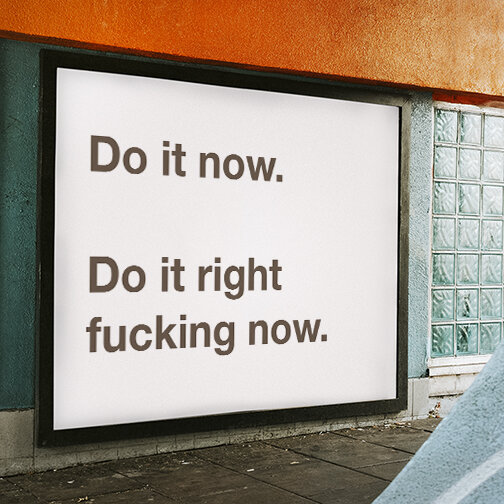
If I could get a message to Tim Ferriss I would say: “Interview your parents. Do it now. Do it right fucking now.”
Why you should interview your parents—right now
On the November 19, 2020, episode of your podcast, during your interview with Dax Shepard, you mentioned that friends had encouraged you to invite your parents as guests on the podcast—or to interview them and record it, even if it never aired. At the time, you said maybe one day you would consider it.
I shouldn’t care, but I do. I want you to take that step if you haven’t already. I want you to interview your mom, your dad, and if any of your grandparents are living, them as well.
Because if you don’t, you will have major regrets one day.
And if you do, you will be giving a gift not only to yourself and any future children you may one day have (and it sounds like that’s on the horizon!!), but to your parents, as well.
Seriously, giving your parents space and time to intentionally reflect on their lives and to share their stories with you is a monumental gift; one they could never anticipate and one they would always treasure.
Why do I care if you do this? Why am I sending this entreaty out into cyberspace?
Because I hear regrets from everyday folks all the time that they didn’t learn more about their parents’ lives before it was too late.
Because I know this is something you’ve considered—and so if you never get to it, your regret will one day haunt you even more than if the idea had never crossed your mind.
And because you have given me so much over the years—truly, I consider your podcast interviews to be gifts—and I would like to return the favor and give you one important thing: peace of mind in this one aspect of your life.
I have been thinking about a way to reach you for months; the notion of writing this blog resurfaces for me as I finish walking my neighborhood with your voice in my ear buds at least once a week.
Then, yesterday, I heard Chip Wilson share his billboard-worthy message with you: “Do it now. Do it right fucking now.”
So I am doing it right now—imploring you to finally do that interview with your parents.
And I hope you will do the same: Do it now. Do it right fucking now
“What would this look like if it were easy?”
I ask you: “What would this look like if it were easy?” It would look like picking up the phone, setting a time to talk to your parents, and hitting RECORD once the conversation begins. It’s nothing more complicated than that. And yet, it’s everything in its payoff.
You know how one day you just said to yourself, “Fuck it, why haven’t we gone to see the Northern Lights?” thereby fulfilling a lifelong dream for your mom? And you went, and it was magical? Well, why haven’t you done this? I promise, it won’t bathe you in phantasmagorical lights, but it will be magical. And it will become the new thing you are most proud of with regard to your family.
Cal Fussman told you that the idea behind his “What I’ve Learned” interviews “is for me to interview [people] and, using their own words, show them in a light that you never really knew. So you think you know these people, and then you listen to their experiences and you say: Whoa, I never knew that about Robert De Niro or Mikhail Gorbachev.” You know what? There’s a lot you don’t know about your mom, about your dad. There are stories waiting to be shared that will help you know your parents in a more profound, meaningful way than you could ever have imagined.
All you have to do is ask for them.
Won’t you give yourself, your parents, and your one-day kids that gift?

Life Story Links: May 25, 2021
A curated reading list for memory-keepers, memoirists, family historians & storytellers for the week of May 24, 2021, including inspiring first-person writing.
“The only thing that counts in your journal is your passion and the freedom to write what is in your heart. This is your life, your portrait, and the person you are choosing to become all rolled up into one. Be juicy.”
—Terry Tempest Williams

Vintage postcard, circa 1915, depicting the Brooklyn Bridge and New York skyline, courtesy of the Miriam and Ira D. Wallach Division of Art, Prints and Photographs: Picture Collection, The New York Public Library Digital Collections.
Preserving Our History
RECORDING RESOURCES
“Our elders have rich stories to share. There’s no better time than now to sit down and hit Record.” Wired magazine turns its attention to using technology to capture family history.
THROUGH A NEW LENS
Having conducted 250 interviews over a decade, Luke Holland’s documentary Final Account aims to preserve the memories of Germans who lived through the Holocaust. “The USC Shoah Foundation will incorporate these ‘perpetrator testimonies’ into its program for high-school students, preserving the recollections of this last surviving generation for posterity.”
Pictures & Stories
DIGITAL PHOTO MEMORIES
When Google Photos’ free storage ends on June 1, should you upgrade to a paid plan? The Wall Street Journal reports on cloud photo-backup options for ensuring that your family photo archive is preserved.
DON’T DO THIS
There’s one big mistake people make when resizing their digital photos for print, and I am on a mission to help you all avoid it.
BATTLE OF THE SUBWAY MAPS
When is a single conversation worthy of being recounted in a book? In this case, when the resulting decisions impacted both how NYC residents got around for decades and how designers approached real-world challenges.
The Stuff of Life
“THE THINGY-NESS OF THINGS”
“The odd object essay cannot hinge on ‘this tchotchke reminds me of my mother,’” Kren Babine writes. “Memory is faulty, subject to a thousand factors, and evidence—an object which shows that something exists or is true—holds no inherent value, because it is always subject to interpretation.”
HOUSE AS HOME
“As memoir writers we must ultimately wrestle with our beliefs about home.” Beth Kephart suggests a handful of starting places for writing the places that raised us.
FAVORITE THINGS
“Our thumbprints are all over the items we have collected and saved over the years.” Kate Manahan, an oral historian in Maine, finds that “for some people, talking about the things they love is just way easier than telling a ‘story.’”
MITIGATING OUR LOSSES
When disaster strikes, the loss of family treasures can be an unfortunate and devastating consequence. Archivist Rachael Woody offers help for channeling your emotional response into action, and preparing those treasures for the worst (checklist included).
Recent First-Person Reads Worth Your Time
VISITING (DEAD) ANCESTORS IN PRAGUE
“While couples embrace, while college students drink pivo, Czech beer, while parents push strollers, their kids licking zmrzlina, ice cream dribbling down chins from August heat, I curve inward with the weight of inherited memory.” Claire Sicherman connects her 13-year-old son with his roots.
LEARNING TO FIGHT
“Did I need to train like a superhero just to be a person in America? Maybe,” Alexander Chee, author of the essay collection How to Write an Autobiographical Novel, writes. “But if I thought of superheroes, it was because my father was like one to me, training me to be like him.”
DEPOSITS IN THE BANK OF MEMORY
“Something came into my head, and it was this: I must remember this moment for the rest of my life. It was a random resolution that arrived with the force of an epiphany.” Stephen Harrigan writes about his lifelong need for dropping memory anchors.
OUTSIDE, INSIDE
“The first time I dressed in men’s clothes, I looked in the mirror and cried. I pressed myself against the reflection. I wanted to press myself to the other side.” SJ Sindu writes “A Measure of Men.”
GOD AND GHOSTS
“My brother granted it was probably for the best that I didn’t attend the funeral. I was still in middle-school at the time and didn’t exactly have the neural wherewithal to process that sort of thing.” Barrett Swanson on the ones we leave behind.
...and a Few More Links
Registration is open for HippoCamp: A Conference for Creative Nonfiction Writers.
Book review: The Best of Brevity, an anthology celebrating the online journal’s 20 years of publishing flash creative nonfiction
New celebrity memoirs of interest: Rememberings by Sinead O’Connor and Brat by Andrew McCarthy
Short Takes

Printing a family photo book? Don’t do THIS to your digital photos, please.
Want your photo memory book to print beautifully? Here's the one thing NOT to do when it comes to your digital photos.

I wrote recently about the main reason so many images end up printing small in life story books: It’s because, quite simply, the digital files are too small. There are three main reasons this happens, and they are avoidable. Unfortunately, the only way to avoid them is to take some action BEFORE a photo is taken.
What if, however, you’ve got a bunch of photos that you simply must include in your printed book and the resolution is lower than needed? Well, they can often print at a small size and look quite good; and there are some tweaks that can be made to optimize print quality of smaller images, too—but these will increase print quality incrementally, not allow you to double the size of your pictures.
What about simply changing the resolution, you ask? Nooooooo—please don’t do that.
The biggest mistake you can make when printing digital photos
Do NOT manually change your image’s resolution.
Repeat: Do NOT increase your image’s resolution in a program such as Photoshop or Lightroom.
Why?
You can’t go in reverse, from a low-resolution image to a high-resolution image. Sure, you can type a higher resolution into your image editing software, technically adding pixels per inch—but those pixels are made up, imagined by the computer to fill in detail where none exists. It’s called resampling, and it’s decidedly bad for print. Simply put: Don’t increase your image’s resolution by resampling.
If you’d like to read a more thorough explanation of DPI, PPI, and resolution, I recommend checking out this thorough and clear post from a Boston-based design studio.
Generally speaking, if you are sending your files to a professional to design your book, always send the file with the highest DPI or PPI (which is most often also the biggest file in the bunch—i.e. 10MB as opposed to 30KB!).
You don’t want them to appear grainy or, even worse, pixelated.

This is an example of a fairly SMALL image that will NOT print well. You can see that at 72 pixels per inch (which is the optimal resolution for displaying on a computer screen, but not for printing) the image would be approximately 12x7 inches. In this Photoshop dialogue box, the option to resample is checked; if you were to increase resolution to 300 ppi here, the resampling would “fill in” pixels to theoretically increase the image’s resolution, but it will do so poorly—see a comparison below of how the image would look.

SMALL TO LARGE FILE SIZE: This is what the image looks like when we attempt to increase its resolution through resampling, as in the dialogue box above. As you can see, detail is poor, and there is a halo effect throughout.

LARGE FILE SIZE TO START: This is what the image looks like when it is scanned at a resolution of 300 ppi instead of the 72 shown above. As you can see, a higher-quality scan yields a higher-quality digital original that WILL print beautifully.
Most of the advice here and above is sufficient for most people to produce gorgeous, high-quality photo books and prints.
Professionals (like me!) who optimize your images for books and other high-quality output will go even further to not only ensure optimal printing results, but to enhance images for visual appeal. We do things such as:
calibrate our monitors so the screen images match the printer specs as closely as possible
consider paper texture and tone when optimizing images for print
extend photos so they have enough bleed to print as full-page images without cropping anything out
retouch imperfections or distracting background noise
sharpen images adequately (but not too much) for print; photographer Christian Hoiberg offers a course called “Ultimate Sharpening Workflow for Fine Art Printing” if you are interested in learning more yourself.
scan print images at high resolution so they can be significantly enlarged with no quality degradation
digitally “repair” rips, stains, and yellowing on old photos
Much can be done to ensure that your precious photos print beautifully in memory books and elsewhere, and I am always thrilled to be the expert on your journey. Just remember, if you go the DIY route: DO NOT manually increase your digital photo’s resolution if you want it to print well…please.
Life Story Links: May 11, 2021
Your biweekly dose of all things personal history—including fresh first person reads, photo printing help, and lots about the memories held in our possessions.
“One of the most significant facts about us may finally be that we all begin with the natural equipment to live a thousand kinds of life but end in the end having lived only one.”
—Clifford Geertz

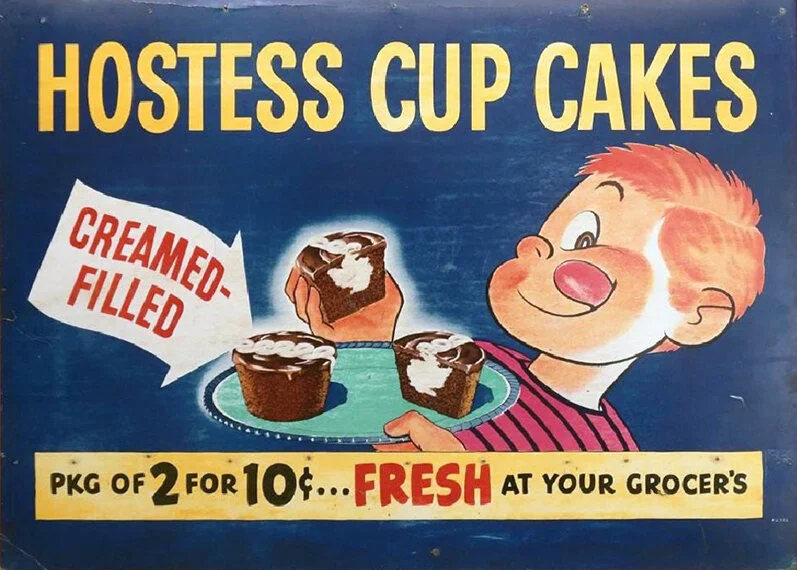
Yes, today is Hostess Cupcake Day here in the United States! Rather than indulging in the sugary treat, let’s celebrate with a vintage advertisement, shall we?
Discover: Recent First Person Reads I’ve Loved
“MY MOTHER IN THERE”
A few weeks after her mother dies, writes Marie Mutsuki Mockett, “I am forgetting that my mother was sick. Her essence has clarified…and my mind is furiously picking through memories, panning for gold, holding on to the nuggets that were her.”
LIFE IN MINIATURE
“More recently, I’ve felt that the worthier challenge may lie not in resisting the occasional backwards glance, but in trying to see that child [I was] and her fictions with compassionate eyes.” Kate Guadagnino on the solace of her childhood dollhouse.
FIGHTING THE INEVITABLE
“The ‘law’ was passed down in my family like a hideous heirloom.” Anna Dorn on doing everything possible not to follow in her father’s footsteps.
“WHAT ARE YOU WAITING FOR?”
“I never tired of talking to [my nieces and nephews] or playing with them; I’d happily volunteer for their parents’ less-favorite tasks, from diaper changes to dips in the pool. Pregnancy, though, still felt future state. But it would happen when the time was right. Right? Right.” Shelia Monaghan on the legacy of children.
Mementos, Memories, and Overwhelm
DISASSEMBLING A LIFE
Literary left-wing legend Frances Goldin had hoped that after she died, friends and loved ones could hold a “potluck shiva” in her home, “where people could take memorabilia and items they wanted or needed or that she had designated for them, while celebrating her life.” Covid had other ideas.
GRIEF, HIDDEN IN A STORAGE LOCKER
“My mother was kind and overly loving, yet she’d never told me about her life before me.” More than a decade after her mother’s death, Blake Turck finally has the emotional resolve to go through the stuff of her mom’s life—and learns that memories live inside us, not in things.
TCHOTCHKE CHALLENGES
“Especially with items of high sentimental and low financial value, documenting and sharing the stories and feelings associated with possessions can be a big step toward letting go.” Philadelphia–based personal historian Clémence R. Scouten offers advice for dealing with passed-down items to which we may hold an emotional attachment.
An Instinct to Preserve
FIGURING IT OUT AS SHE GOES
“Part of why I write about my own life, it’s my attempt to freeze all this ceaseless, endless, constant change,” says Alison Bechdel about her new memoir. “I just want to put down something that doesn’t move. Life is change.”
RECORDING LIFE
This senior “began making books for [each of her four children] on the day they were born, and presented each with a personal life history on their 60th birthday.” Now she is typing her memoir on a laptop her kids gave her.
VIDEO: UNINTENDED MEMOIR
Amy Tan: Unintended Memoir is an “intimate portrait [featuring] archival home movies, personal photographs,…as well as new interviews with Tan,” who speaks about traumas in her life and how writing helped her heal.
JEWISH STORY PARTNERS
“There is nothing like storytelling to foster connections and help us understand life’s deepest truths.” A new foundation aims to expand the range of stories told about Jewish lives.
Nitty Gritty Help
UM, WHY SO SMALL?
When many members of a family are contributing images to a memory book, chances are some of those pictures (maybe even your own) will not print well. Here are three common digital photo mistakes and how to avoid them.
...and a Few More Links
three new books about memory—and keeping it sharp
interesting infographic on the power of storytelling
Author Rachel Kushner’s new essay collection includes “eloquently written features about her personal history that are equal parts gripping and revealing.”
“The pandemic shaped my family for generations. Not COVID—the 1918 flu”
A new biography of Marjorie Kinnan Rawlings, author of The Yearling
Short Takes

“Why the $#%&* are my pictures so small?!”
Ever printed photos from your phone or digital camera and they look grainy, blurry, or small? Here’s why, and how you can fix it for optimal print results.
In recent months I have heard from more and more people wanting to celebrate their loved ones in tribute books. Whether for a milestone birthday or anniversary, or even to say “congrats” for an achievement (virtual graduation, anyone?), these books are an opportunity to show your love through words and pictures.
But it breaks my heart when the pictures in the books look like postage stamps.
So, today a public service announcement: If you are taking digital photos of your life—whether it be for an eventual family album, yearbook, scrapbook, or even just to live on your devices indefinitely (shudder to think!!)—you MUST use high-resolution images.
Despite sending detailed instructions on how to upload high-resolution images for a book, many people still send me low-resolution digital files and then wonder: “Why the $#%&* are my pictures so small?!”
Every answer I give is some version of: “Well, they’re too damn small!”
Why your digital photos are printing so small: 3 mistakes to avoid
1 - Your photos are too small because you are relying on social media to save and gather them.
Often clients will tell me it’s just easier to pull the photos from an album on Facebook—they’re easy to find, so readily accessible. But what many people don’t realize is that once you upload a picture to Facebook, the platform immediately converts your image to a lower resolution—translation: the file is now smaller, and you can’t get those pixels back.
Even Google Photos degrades photo quality when uploading images to your collection unless (a) you change your setting to request differently or (b) you have the paid version that allows for more storage.
Solution: Keep an archive of all your important photos on your computer, an external hard drive, or in the Cloud. The better organized they are, the easier it will be to find the original (high-resolution) image when you need it!

While it may seem convenient, pulling an image from a social media platform such as Facebook is NOT ideal for printing. These sites immediately strip away pixels from images upon upload, so you’ll need to find your original digital file if you want it to print with a high quality.
2 - Your photos are too small because you have your digital camera settings wrong.
Maybe you wanted to ensure you could hold as many pictures as possible on your memory card, or maybe you simply never went in to check the settings on your new high-end digital camera. Whatever the reason, many people (are you one of them?) are shooting all their family photos on a low-resolution setting.
If you are taking photos that you plan to eventually print for an album or in a book, you must ensure that the images are taken with enough pixels per inch. And just because your camera comes with a high megapixel count, you’re not necessarily set up to capture high-resolution images (there’s image compression to consider, for example, and how much digital zoom you may be using when taking a shot).
“Choosing the right settings on your camera is only the starting point to getting the best resolution possible out of your images,” Elizabeth Mott writes in this helpful piece about how to ensure you’re taking high-resolution photos with your digital camera.
My advice? The cost of both smart phone storage and memory cards for digital cameras has come down sufficiently that I think buying one with LOTS of storage is worth the investment; once you know you’ve got plenty of space to save your photos, snap away at the highest resolution possible—I promise you won’t regret it when you feel compelled to print one of those precious gems (or, even better, many of them in a book).

Every camera manufacturer displays resolution settings differently. Here is an example of choices on a Canon DSLR. If you’re photographing for print, use either the large setting (L, which translates to a 5184 x 3456 JPEG image of 18MP) or the RAW one (which has the same pixel dimensions and file size, but is not compressed like the JPEG).
3 - Your photos are too small because you are being, ahem, lazy.
Not sure where to find the original image? Take a screenshot, many people figure. Or use the shot your daughter emailed to you (without realizing she did not attach the original but a lower-resolution version to increase send speed). If you, like most people, do not have a meticulously organized folder system for backing up your digital photos to a computer or external hard drive, then finding images when you need them will undoubtedly be a challenge. But if you want photos to appear in your book, then you need to do the legwork to discover where those high-res versions are.
A professional personal historian or photo manager can help you do this detective work, if you’re not so inclined. (Give me a call ; )
But no matter who does the legwork, I implore you: Go to the effort of finding the original—larger, higher-quality—photo if you plan to print it. Why pay for a book, an enlargement to frame, or any other printed memory if it’s not going to look good?
When you email a photo from your phone to another person, you have the option of choosing if you want to “reduce message size by scaling the image.” Doing so is one way images get degraded and end up needing to print at small sizes. For optimal print results, choose “actual size” when sending an image.
Your memories matter enough to treat them with care—and your photos are, if nothing else, repositories of your memories!










Dawn Roode’s curated roundup for the week of Sept. 23, 2026, is overflowing with recent reads on memoir, life story writing, and family history preservation.