
Memories Matter
Featured blog Posts
READ THE LATEST POSTS
Preserving audio and video interviews: from recording to storytelling
Learn how to record, transcribe, and store interviews with care. Tips on consent, ethics, and turning audio or video conversations into lasting family stories.
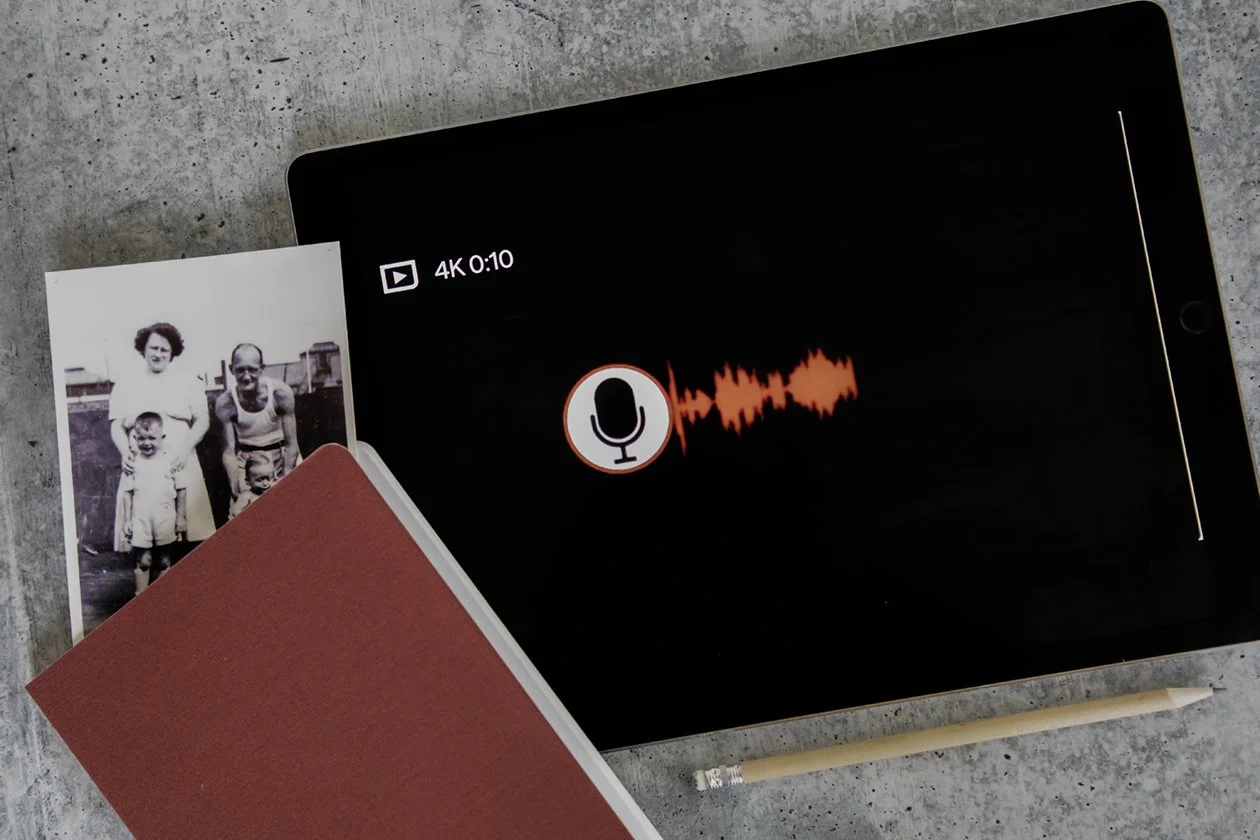
Recording a family history interview is as simple as using a voice recorder on a device such as a tablet or smart phone.
When someone trusts you with their memories—when they sit down in front of a microphone or camera and share their story—you’re holding something precious. But recording a great interview is only the first step. How you handle that recording afterward—from transcription to storage to storytelling—determines whether those memories will endure for years or disappear with a crashed hard drive.
At Modern Heirloom Books, I’ve learned that preserving interviews is as much about care as it is about craft. It’s about listening well, recording responsibly, and treating people’s stories with the respect they deserve.
Best practices for recording family history interviews
1. Recording with intention
The technical setup doesn’t have to be fancy, but it does have to be thoughtful.
Choose a quiet space. Avoid kitchens (appliances hum) and large echoey rooms. Soft furnishings, like curtains or carpets, help absorb sound.
Test before you begin. Record 20 seconds of conversation, then play it back. Adjust mic distance, reduce background noise, and double-check your battery or storage levels.
Back up immediately. Save the file to at least two locations—ideally an external drive and a cloud-based service. Name the file clearly (for example: Interview_MiriamRosen_2025-02-10).
Get permission in writing. Always explain how the recording will be used, and have participants consent—especially important for projects you plan to publish or share.
2. Working with older participants
Many of the most meaningful stories come from older generations—but that also means being sensitive to energy, comfort, and pacing.
Keep sessions short. One hour is usually enough. Fatigue affects memory recall.
Be patient with pauses. Silence often signals deep thought; don’t rush to fill it.
Bring visual prompts. A photo, newspaper clipping, or memento can help unlock memories.
Check the environment. Good lighting, a comfortable chair, and room temperature matter more than you think.
3. Ethical considerations and consent
When you record someone’s story, you become its steward. Handle that role with transparency.
Explain purpose and scope. Let them know whether the recording is for personal use, publication, or archival storage.
Clarify ownership. If possible, have a signed release stating who retains rights to the recording. (At Modern Heirloom Books, the storyteller always does.)
Honor boundaries. If someone asks for a section to be edited or omitted later, do it—no questions asked.
Protect privacy. Store sensitive recordings securely, and think carefully before sharing publicly.
4. Transcribing the conversation
Transcription is where the raw story begins to take shape. While automated tools like Otter.ai, Descript, Zoom, or ChatGPT can help, always review manually to correct errors—especially names, dates, and emotional nuance.
A few tips:
Timestamp key moments. It’s helpful when you later want to pull quotes.
Note tone and pauses. A soft laugh or a long silence can carry emotional weight.
Respect voice. Don’t over-edit for grammar; people’s natural rhythms make transcripts human.
Read aloud. If you’re planning to turn the interview into a narrative piece, read the transcript out loud. You’ll hear the music of their speech—and know which parts to keep verbatim.
5. Storing for the long term
Digital storage is fragile. Protecting your files now ensures they’ll still exist when future generations go looking.
Triple backup. Keep at least one local copy (external hard drive) and two cloud-based backups (like Google Drive and Dropbox, or an archival service such as Backblaze).
Name files consistently. Use clear labels: Lastname_Firstname_Interview_Date.
Store metadata. Keep a simple spreadsheet noting who was interviewed, when, by whom, and where. If you want to go a step further, include key phrases (many transcription software programs now use AI to help with this).
Create a preservation plan. Every few years, check your file formats and transfer them to updated storage—don’t leave them on aging technology. I recommend adding an annual reminder in your calendar for this task, as it’s otherwise likely to fall by the wayside.
6. Turning transcripts into stories
Once transcribed, interviews become rich material for narrative. But they shouldn’t be copied wholesale. Instead:
Look for patterns. Repeated phrases, values, or memories often form a natural thread.
Preserve voice. Keep their expressions and rhythms, even if you edit for flow.
Add historical context. Ground their experiences in time and place—what was happening around them.
Share drafts when possible. Let the storyteller (or their family) review before publishing; it builds trust and ensures accuracy.
Resources for further guidance
If you’d like to explore best practices in oral history and ethical recording, these organizations are invaluable:
StoryCorps
Promotes everyday storytelling and provides interview guides and consent templates.
The Oral History Association
Offers ethical standards, equipment advice, and transcription guidelines.
Library of Congress Veterans History Project
Excellent resource for interviewing veterans and preserving recordings for posterity.
Smithsonian Folklife & Oral History Guide
Comprehensive handbook on oral history methods and cultural respect.
Preserving a recorded story is both a privilege and a responsibility. Technology gives us incredible tools—but it’s the human care behind them that matters most.
When you record a voice, you’re capturing not just sound but presence: the laughter between sentences, the breath before a memory, the emotion carried in a pause. Those moments are what future generations will remember—not just what was said, but who was speaking.
Up next…
Once your interview is recorded and safely stored, the next step is bringing it to life. In Part Two, I share three creative ways to transform a raw conversation into a lasting family story.












Double the fun: Interviewing Grandma & Grandpa together
Sitting both of your grandparents down together for a family storytelling session can be fun—but it’ll yield the best results if you follow these simple tips.
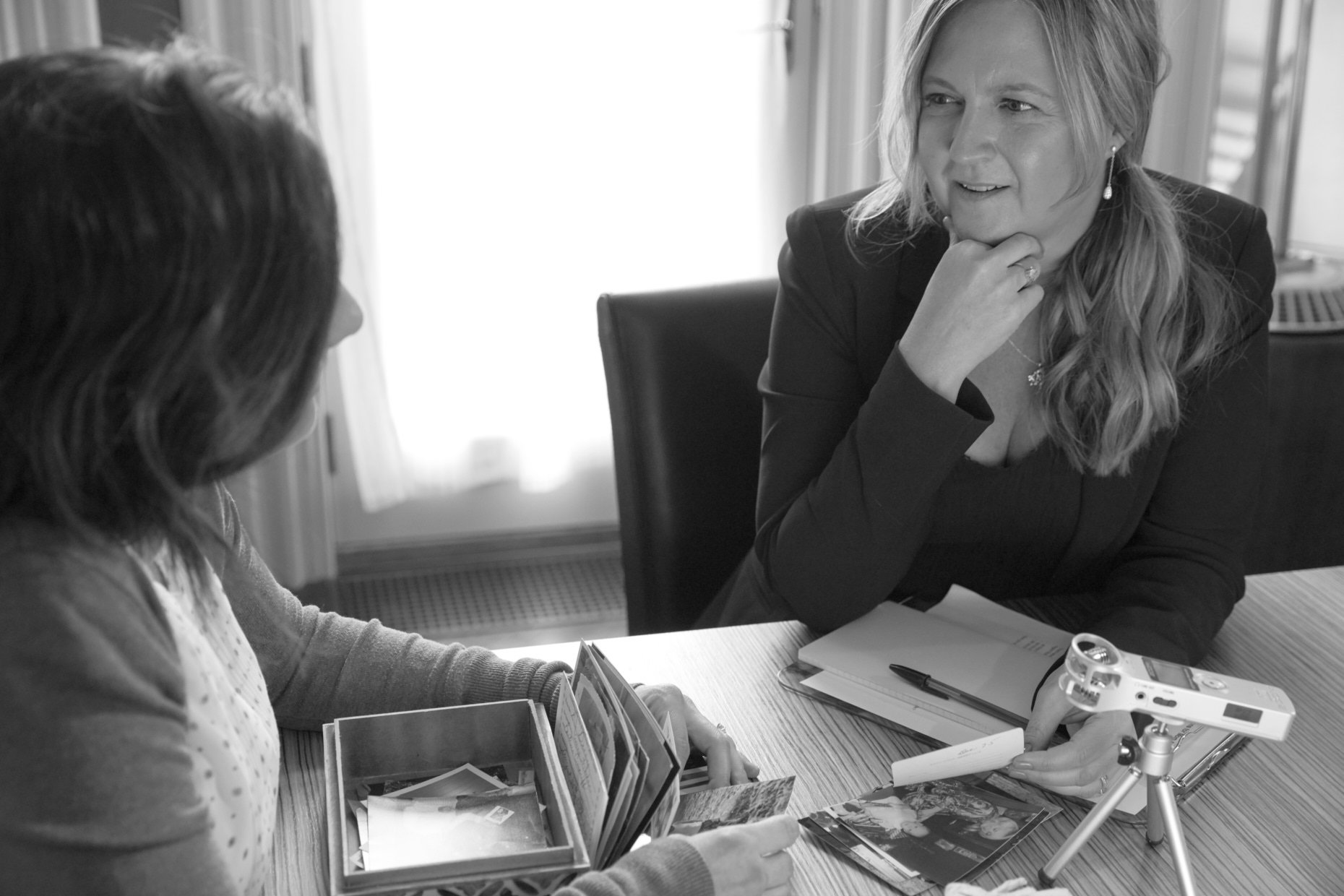
Conducting family history interviews with a couple such as your grandparents or parents can be a fun endeavor if you ask the right questions.
I am always thrilled when I hear you have a plan not just to interview one family elder, but to gather stories from multiple relatives. One of the most common goals is to interview a couple—perhaps it’s your parents, or one set or the other of your grandparents. If that’s on the agenda, you may be wondering: Can I interview them together?
Short answer: Yes, you can interview two people together.
Here, though, is a longer answer with tips for when this dual interview approach works best, and when it’s better to stick to conversing with one person at a time.
When dual interviews are okay
It’s absolutely okay—fun, even—to conduct joint interview sessions, especially with couples who have been together for a long time. If you plan to interview your grandparents on both sides of your family, for instance, invite your maternal grandmother and grandfather to sit down together for the first interview session. This will take advantage of their storytelling dynamic to get them excited about sharing.
If you are concerned that your family members may talk over one another, let them—at least for a bit. Their banter is likely the product of years together, and capturing it on film (if you are recording video) or in audio (if are using a voice recorder) is an accurate representation of how they interact. Imagine years from now listening in and thinking, “Oh, that’s so him!!” If you can’t follow the progress of their storytelling because they are interrupting or speaking at the same time, gently prod one or the other to take the lead, then ask a follow-up of their partner after.
A couple’s shared history can be explored in a joint interview: Ask questions that apply to their time together (their marriage, children, and holidays, for example), but save questions about their individual histories for their solo interviews.
Once that first interview session is transcribed, highlight sections that resonate but that you’d like to hear more about, and develop your questions for the next individual interviews from this transcript—it will help guide you on what to ask.
When joint interviews aren’t the best option
I would not recommend conducting all of your interviews in this fashion, with more than one subject at once, as it often prohibits one person from diving deep into their stories.
Maybe dad gets quieter when mom is around; it could be deference, or simply habit. He may think she is a better storyteller than he is, so he lets her take the lead. I guarantee you he has something substantive—or funny, or clarifying—to add, though, and he may just be more likely to do so in a one-on-one setting.
Other times dual interviews are not ideal:
If the couple’s relationship is strained or difficult.
If one person is hearing impaired.
If you are wanting to explore more about their personal histories rather than their shared family history.
When interviews must be conducted remotely.
If you’re only planning on conducting one interview (you’ll get better—deeper, thoughtful—answers during a one-on-one interview).
Preparing for your family history interviews
Whether you choose to begin with a joint interview session or not, you’ll want to be prepared with the right questions and optimal equipment. Here are a few resources that should help:
interview questions
Use this set of family history interview questions as a basis for forming your own list.
Pick an opening question that will set the right tone for your interview.
Interview setup




THE KID KIT: Everything you need to interview your grandparents
This 20-page FREE e-book is designed for kids 8 and over (and we mean way over!). Get ready to start connecting…
Best practices for recording family history interviews at home
Steal these best practices from professional oral historians to make your next family history interview a success, plus how to set the stage for great stories.
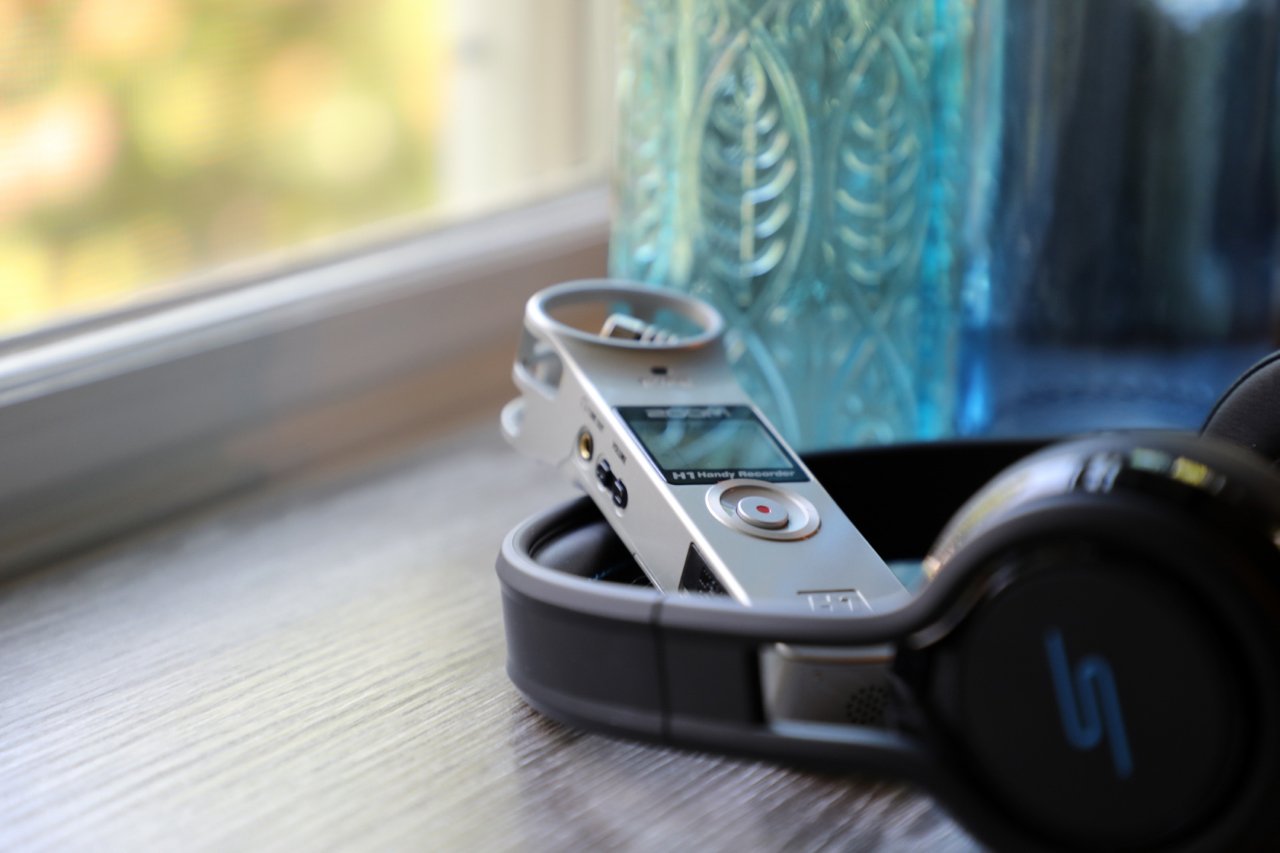
You need minimal equipment to interview a family member at home, like this Zoom recorder on a mini tripod.
I applaud you for wanting to capture your family history through in-person interviews with your loved ones! Preserving their stories—and their voices—is a gift for the next generation, but also a gift for those you plan to interview (trust me when I say it is a rare thing to be given 100-percent attention and the freedom to share…and be witnessed).
In order to ensure that you capture stories in the best and most secure way possible, please follow these simple practices that are used by professional oral historians around the world.
Do your best to create a recording-friendly environment.
No matter what kind of recording device you are using, any background noise and interference will have a deleterious effect on your final product. Choose a quiet location in the home or office where you are conducting the interview—away from heating or air-conditioning vents, a humming refrigerator, or windows overlooking noisy streets. Ask others who may be in the vicinity to either leave or be mindful of staying quiet. Additionally, ensure that your interview subject is comfortable—consider temperature, seating, and have a glass of water on hand, and try to situate yourself so you have direct eye contact with your family member.
Use multiple recording devices.
Always, always hit “record” on at least two devices. That may mean a professional mini digital recorder plus an app on your smart phone, or perhaps a DSLR capturing video plus a basic audio recorder. I do recommend sticking with digital recordings rather than old-fashioned analog cassette tapes, which are more cumbersome to convert and transfer to your computer.
Begin recording with an identifying statement.
Say out loud who is present (spell names), the date, and where you are. For instance: “This is Dawn Roode interviewing my grandmother, Virginia Miller—V-I-R-G-I-N-I-A, M-I-L-L-E-R, on this March 22, 2022, at my home in Brooklyn, New York.” Alternatively, you can introduce yourself, and then ask each individual you are interviewing to say and spell their own names. This may feel unnecessarily formal, but it’s critical.
Once the interview is complete, secure your recordings.
Immediately download the digital recordings, name them, and save in more than one place. The sooner you do these things, the better. I can’t tell you how many times I have thought I would remember what such-and-such recording on my phone is, only to press ‘play’ and have no recollection of the interview details.
Beyond these standard procedural points, here are three tips for setting the stage for a truly substantive and fruitful interview:

Consider your list of questions a framework, not a bible.
Preparation can be incredibly valuable—knowing, for instance, that your grandfather is a WWII veteran and asking informed questions about his service is both respectful and smart. So do come into the interview with a list of interview questions you’d like to ask. That said, be willing to stray from the set list should the need arise. Maybe, in the above example, your grandfather is unwilling to speak about his time at war—you may want to gently ask him why, or see if there is any aspect of his military life that he is willing to talk about; if not, be prepared to go in another direction. Alternatively, maybe one of your questions elicits such rich storytelling that you stick to follow-ups and veer in an entirely unexpected direction, allowing your interview subject to steer the conversation. If your storyteller gets animated—sitting at the edge of her seat or raising her voice and laughing as she recounts her memories—that’s a good sign that the stories she is sharing are good ones, and there are likely more in this vein!
Embrace silences.
Human nature is to keep a conversation going—so when there is a silence, we tend to jump in either with our reaction or with another question. But do your best to refrain from this; allow a pause to grow. In that interim your subject is thinking, and some of their best stories are likely to come from this. And don’t worry when the pause does not yield something great—simply ask a follow-up if you think there’s more to the story, or move on to the next question. The more comfortable you become with sitting in the silence, the more comfortable your storyteller will feel to keep going.
Bring some memory prompts.
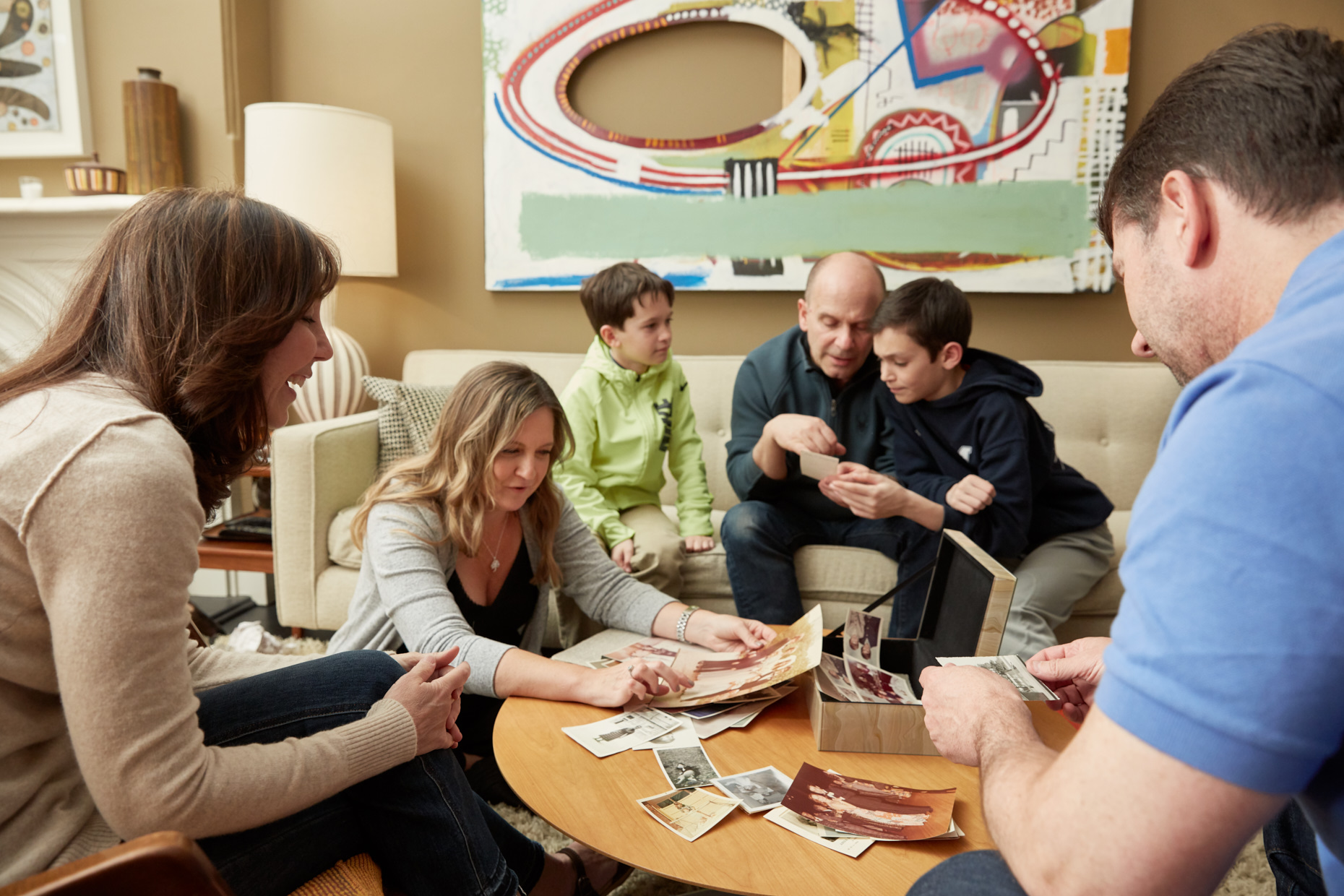
Old family photos, scrapbooks, or journals are excellent vehicles for storing up memories and getting your interview subject to open up. While I find such totems to be helpful with everyone, they come in especially handy when your interview subject is reluctant or less than enthusiastic about participating.
A few more resources you may find helpful to prepare for your family history interview

Download this free Kid Kit e-book; while it is specifically geared to youngsters interviewing their grandparents, the historical timeline is a nice cheat sheet for any age.
How to be a good storyteller if you are the subject of a family history interview
Get 56 essential family history questions to ask your elders.
Special circumstances: Oral history interview questions for particular subject groups

If you are interviewing people who are trauma survivors or part of a distinct population, these resources may help:
MILITARY VETERANS
Oral history instructions and sample interview questions for vets from the Veterans Project of the National Archives
TRAUMA SURVIVORS
Navigating life review interviews with survivors of trauma
HOLOCAUST SURVIVORS
Oral history interview guidelines from United States Holocaust Memorial Museum
HOSPICE PATIENTS
4 ideas for family interviews
Conducting family interviews is a great way to gather the stories of family elders and preserve family history for the next generation. Here are a few tips.

The next time your parents are around (Thanksgiving, perhaps?) why not have your children interview them about their lives?
I come back to this quote from William Zinsser again and again for its poignancy and power:
“One of the saddest sentences I know is ‘I wish I had asked my mother about that.’ ”
How does that make you feel? If you have lost your parent(s) or other elders in your family, it can be like a punch to the gut. If, on the other hand, older family members are still around, I hope it creates a sense of urgency in you—to wonder about their personal history, to ask questions and, most importantly, to engage in meaningful conversation about the past.
I suggest recording these conversations—perhaps to transcribe later for use in a book, or perhaps to be edited down so your children’s children can hear snippets of their ancestors’ stories in their own words. There are plenty of digital recording apps out there; just don’t forget to use two different recording methods to ensure those memories are, in fact, captured (trust me, technical errors happen…and the feeling of losing those stories, well, it’s not good).
Which interview approach is right for you?
1 - group interviews
For families with multiple generations or family members who see each other only infrequently, group interview sessions during holiday get-togethers can be a fun and fruitful process. How to fit them in amidst all the holiday preparations, though? Some ideas:
After Thanksgiving dessert, keep the coffee flowing and the cookies on hand, but make a voice recorder the new table centerpiece. Share your purpose with your family (“I love hearing our family stories, and want to make sure we capture them for the future”), then ask for volunteers to begin the storytelling.
Do you have family members spending the night after a holiday celebration? Send someone out for bagels the next morning, and turn brunch into a reminiscence session. Keep it casual but focused to get the best stories out of your guests.
At a family reunion or other big gathering, set aside a room specifically for story gathering. Either designate one person as the ringleader (if you have a de facto family historian in your family, this will be right up their alley) or pair people together who you think will have meaningful conversations. Make a list of topics on a white board (or put them on slips of paper for guests to pick, à la charades) and give out time slots for the interview sessions. There is a fair amount of upfront organization involved here, but once the ball is rolling it’s fairly easy to maintain momentum.
2 - kids interviewing grandparents
Setting up “official” interviews with grandparents is a wonderful home-schooling or scouting project for tweens and teens. Have them ask grandparents to gather a few favorite photos in advance to use to help get the conversation flowing. You just might be surprised how many stories are revealed that even you had never heard before (there’s just something about sharing with the grandkids!!).
3 - regular conversation dates
Consider visiting with a close relative regularly to gather stories—perhaps bi-weekly coffee chats or monthly pot-luck dinners, each with a theme (think childhood adventures, momentous decisions, the war years, becoming a parent, etc.). I wish my mother were still alive for me to have such dates with her!
If you have a relative in assisted living, for example, such “interview” sessions may help with their self-esteem and general attitude, as well as giving you both something to focus on rather than day-to-day drudgery.
Keep the pressure off by maintaining a conversational tone throughout your get-togethers. While you are indeed trying to elicit memorable stories, the time together should itself be enjoyable.
4 - telling your own stories
Maybe YOU are the one who wants your stories captured? If you are not a writer, see if there is someone in your circle who might sit with you to converse. It might seem like a good idea to turn on a tape recorder and just start talking, though my experience indicates that having an interested listener—someone nodding or smiling, asking follow-up questions—is a compelling motivator!
If your child or a close friend is unable to fulfill this role, you can always set up a session with a personal historian such as myself (I consider it a privilege to listen to your stories!).
Sharing stories is an endeavor with immediate value, bringing joy to the participants and connecting family members more closely.
I would implore you to go a step further, too, and do something with your stories to ensure they are around for the next generation.
Imagine if your own grandparents had left you such a treasure?
related reading:
A good conversation begins with good questions.
Best practices for recording family history interviews at home
3 easy ways to get your parents’ stories
Meet the man who said he had no stories—until he had an absorbed listener, that is!
Dawn Roode’s curated roundup for the week of Sept. 23, 2026, is overflowing with recent reads on memoir, life story writing, and family history preservation.