
Memories Matter
Featured blog Posts

READ THE LATEST POSTS

Life Story Links: May 31, 2022
This week's roundup by personal historian Dawn Roode includes inspiring first person reads, memoir news, and pieces on the intersection of life and story.
“We listen with different ears when we can feel and believe that a story is true.”
—Editors at The Moth
Vintage postcard depicting sea bathers in Avalon, Santa Catalina, California, circa 1903. Courtesy of the Miriam and Ira D. Wallach Division of Art, Prints and Photographs: Photography Collection, The New York Public Library Digital Collection.
Our Lives, Our Stories
THIS IS YOUR LIFE
“Suddenly, ordinary lives are of note,” The Guardian reports in this look at the growing personal history industry; moreover, “the way we tell stories of our lives can shape our memories.”
A STORY, DISTILLED
“Memoir writers tell what happened, what we feel about it, and what we learned. We hope our lessons are universal. We must always look beyond events to the layers below.” Lessons from revising a 100-word mini-memoir for The New York Times.
WHERE’S MOM?
Too often these days moms aren’t represented in family photos, leaving a regrettable gap. Mali Bain, a personal historian in Canada, shares a recent life story book that put one grandmother “center stage, as many mothers and grandmothers are in our own childhood memories.”
TWO STORYTELLERS, IN CONVERSATION
“Our memories are anything but fixed—and when stories are passed down to a new generation, their malleability, their meaning, and their impact change, too”: One of my favorite interviews I’ve conducted to date, with memoirist and podcast host Rachael Cerrotti.
Asking the Questions
AN AUDITORY SNIPPET OF LIFE
“As a journalist, I have spent many hours in front of other people’s grandparents recording their stories for work. Usually the offspring are there with me and express a fascination at all the previously untold and hidden stories that come tumbling out of their elders when the right questions are asked. This was the first time I had recorded my own.”
INTERVIEWER EXTRAORDINAIRE
Terry Gross, host of NPR’s Fresh Air, “has perfected a singular kind of interview; she is part conversationalist, part therapist, and part oral historian…. Above all, she is a great listener—attentive, probing, without ever feeling intrusive”:
Memoir Morsels
TASTY READS
Cookbooks are becoming more memoir-like. These hybrid books bring readers “on an emotional journey. Then they get to leave with a recipe and actually eat the food; that’s a really intense, intimate connection between reader and writer.”
NEW MICHAEL CIMINO BIOGRAPHY
“Every biography could be two books rather than one—the work itself and the nonfiction making-of detailing the journalistic adventures that yield the biographical record.” A look at a new biography of the director of The Deer Hunter and Heaven’s Gate.
First Person Reads to Inspire
A FLASH ESSAY FOR MEMORIAL DAY
“The world was sleeping, we were deploying, ocean-crossing.” With staccato pacing and gut-punching language, Laura Joyce-Hubbard writes about serving her country: “We were always leaving.”
FINDING LOVE (BY ACCIDENT)
“My very first date with Produce Man landed on the second anniversary of my father’s death. I took this as a sign that my father had sent him from the heavens and it was bashert, the Jewish term for ‘destiny.’”
Stuff, Stories, History
“ACCUMULATION OF LIFE”
“If it was just junk, it would not be so hard. But possessions have meaning; they tell stories and reinforce our memories.” A look at the “emotional challenge to dealing with the treasure and trash that your parents leave behind.”
A HOUSE’S HISTORY, REDISCOVERED
Leslie Stahl turns the 60 Minutes lens on the story of how an Air Force veteran discovered his new house was the seat of a plantation where his ancestors were enslaved. Plus, the original article that inspired her piece: “An old Virginia plantation, a new owner and a family legacy unveiled.”
SAYING SORRY WITH DUMPLINGS
Salt Lake City–based personal historian Rhonda Lauritzen was close to her brother growing up. “Then we weren’t,“ she writes. “I made mistakes, caused some deep hurts, and I never really said the words I’m sorry. So I said the words.” And cooked Grandma’s dumplings.
...and a few more links
He co-founded Covid Stories Archive to combat what he saw as biases and limitations of Congress’s proposed COVID-19 American History Project Act.
Preserve your memories with these easy scrapbooking ideas.
In his latest email newsletter Tucson–based video biographer Steve Pender looks at using Zoom for legacy audio recordings.
Legacy: In Memory of Roger Angell, 1920-2022
Short Takes
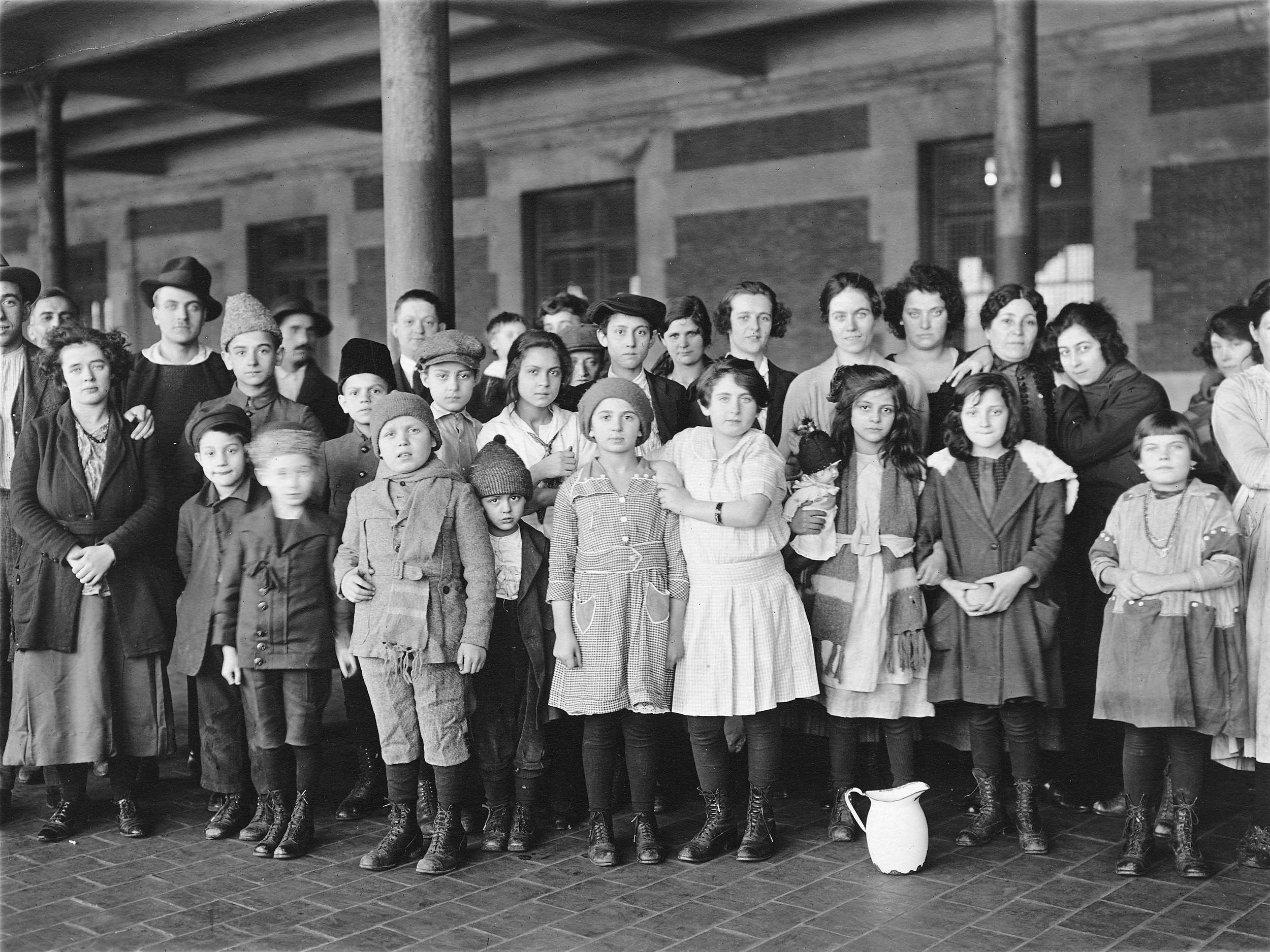

Life Story Links: March 15, 2022
This week's curated reading list for memory-keepers and family historians includes plenty of craft advice as well as first-person stories to inspire your own.
“Here’s the thing: The book that will most change your life is the one you write.”
—Seth Godin
In honor of St. Patrick’s Day this week, a vintage shamrock postcard with “Scenes from dear old Ireland”
When Things Hold History
WHAT’S LEFT BEHIND
Following a brief meditation on legacy from The Isolation Journals founder Suleika Jaouad, Joy Juliet Bullen writes about how a childhood photo with her father prompted more than memories.; plus, a writing prompt.
HER HOME IS LIKE A MUSEUM
“Each piece needs a chance to sing its own song,” says the Staten Island schoolteacher who has collected more than 20,000 artifacts, now up for auction, that “tells the whole saga of African American history.”
LOVE LETTERS
“As I age, I have a newfound appreciation for recognizing that my grandparents and the elders in my family have led complete and full lives that I will never fully understand or really know about.” How a newfound stash of love letters from his parents gave him a glimpse of who they were before him.
TASTY RELICS OF ANOTHER TIME
“Slowly, I’ve accepted that my recipe book is not a work in progress but an artifact, which contains hints and scraps of my former self.” Charlotte Mendelson on her “beautiful, delusional recipe book.”
A DELIBERATE PROCESS
“Professional home organizers are reporting a spike in calls from older customers asking for help sorting through their belongings, seeking to dole out the heirlooms and sentimental items and toss the excess.” (As always on such pieces, many of the 800+ comments are worth a read, too.)
“CURATING TANGIBLE PHOTOS”
“I hope to build an album like my grandmother’s, one that shares my history. That proves I was here, and I lived.”
First Person Stories You’ll Want to Read
UNCOVERING FAMILY STORIES, AT LAST
“Poppy could make muscles that I could not crush; Grandma only ever cooked and cleaned and kvetched.” But Noah Lederman’s grandmother held many Holocaust stories herself—why had he never realized?
WELCOME HOME, HARRIET
“I have often remarked that I didn’t go into medicine to simply bear witness, but the work has a way of forcing you to do just that.” How her grandmother’s loss made this geriatrician think differently about preparing people for death.
AUTHORITY FIGURES
“My dad and I aren’t sure how I knew so much when I was that young,” Elizabeth Cooper writes about the intersection of her mother’s extramarital affairs and her own shameful feelings around sex in this moving piece.
Personal History in Action
REMINISCENCE THERAPY AND DEMENTIA
How to create a memory kit for a loved one with dementia: “The point of the exercise is not only to help a loved one remember and improve cognitive function but also to help the senior engage in conversation and feel like a valued participant in the discussion.”
WAR, POLITICS, SACRIFICE
In light of recent events in Ukraine, Rhonda Lauritzen turns to thoughts of conflict—specifically, how to write about our own experiences of hardship and war, and why we should consider the impact world events had on our ancestors.
Elements of Style
STYLE AND SUBSTANCE
Last week I wrote about why the presentation of your life story book does indeed matter, for the Biographers Guild of Greater New York; and, on my own site, how adding photo captions can elevate your family photo book to family heirloom.
MYSELF, ANONYMOUSLY
“Good ghostwriters are invisible, giving away our best lines without leaving a trace of ourselves.” Caroline Cala Donofrio shares lessons learned from interviewing celebrities for their ghostwritten books.
Author, Author
DICKENS, 1851
“A captivating entertainer, Dickens sought to make life as enchanting as a show,” reads this New Yorker piece that takes a look at a new “slow biography” of the author from Robert Douglas-Fairhurst
GETTIN HER DUE
“I found such a deep, personal connection with Zora’s life and journey. I felt compelled to help people everywhere learn about her.” Meet the scholar who shares the life and legacy of Zora Neale Hurston through storytelling.
A WIDOW’S LEGACY
Read this enticing excerpt from a new biography of Mary Welsh Hemingway, the journalist who became Ernest Hemingway's fourth wife.
...and a Few More Links
A new book and traveling exhibition highlight the work of Mississippi photographer O.N. Pruitt, which expose harsh reality of the Jim Crow South.
Study shows that viewing nostalgic images from childhood reduces pain perception.
A “magical place” inspires a memory book worthy of gift-giving
A look at new family history technology and keynote messages shared at RootsTech 2022
Are young people hoarding photos so they don’t lose memories?
10 best off-the-shelf memory books for grandparents to tell their family stories
Short Takes

Life Story Links: March 1, 2022
This week's curated roundup is again overflowing with quality pieces on telling family stories, finding family history, and preserving a meaningful legacy.
“We all read memoirs—all books, in fact—to discover pieces of ourselves on the page, to feel less alone. To comfort a stranger, rather than to flaunt oneself: this is the memoirist’s highest hope.”
—Sara Mansfield Taber
Vintage photograph of women playing cards and drinking Coca Cola in 1941 by Arthur Siegel. Courtesy of the Library of Congress Prints and Photographs Division Digital Collection (transferred from the United States Office of War Information, Overseas Picture Division, Washington).
Finding Family History Stories
TRACING HER FAMILY’S TRUTH
To tackle the narrative gaps in her family history, Daniella Weiss Ashkenazy, author of Playing Detective with Family Lore, “had to switch hats—from a daughter and granddaughter taking a nostalgic and often amusing trip down memory lane, to a journalist seeking a more complex truth.”
WHY IT’S WORTH SAVING
“This book made me feel, for the first time, a real connection to her side of our family,” Barry Rueger writes. “Because I was able to understand my grandmother as a living, breathing person, I was able to understand where I came from, and why I am the person I am today.”
ARTIFACTS REVEAL A PERSONAL HISTORY
While preparing a house in Arkansas for restoration, a husband and wife team discovered a scrapbook brimming with stories, including an unexpected WWII romance—and what they shared about it went viral on TikTok.
WALKING IN HIS FOOTSTEPS
After developing an interest in genealogy, attorney Todd Wachtel learned that his great-grandfather practiced the same type of law he has been practicing for more than two decades. Coincidence?
WHAT’S IN THE BOX?
A discovery of Holocaust-era photos—picked up for five dollars by a student in 1989 and rediscovered during a burst of pandemic cleaning—helps a Jewish family connect with its past:
Connecting Through Narrative
MAP AND CONNECT
“Disabled forbears often remain in the shadows, viewed with shame, not pride. Without ancestry, family history or lineage. Inconceivable.” Jennifer Natalya Fink on giving context—and lineage—to our disabled ancestors.
MORE STORIES WE TELL
“This idea of a dialogue between the past and the present was hugely important. I think that only happens with the difficult stories.” Sarah Polley on her first book, a collection of essays not intended as a memoir, but one that will likely be received as one.
THE ANALOG ANSWER TO DIGITAL DESPAIR
“How can our kids, the next generation of our families, make meaning in their lives? We can show them the way, but do we even know how in our modern, digital world?” Jill Sarkozi, founder of Safekeeping Stories in Westchester, New York, on the benefits of journaling and letter-writing.
MEMOIR AS MIRROR
“I became the detective of my own life,” Sherry Turkle writes in this piece about how writing a memoir helped her see her mother in a new light. If after reading this you are intrigued and wish to hear more of Turkle’s story, listen to this episode of the Family Secrets podcast:
Making History Personal
PERSONAL PAGES
Diving into a rare diary: “Mary Virginia Montgomery’s written words may not be as legible as they were when she first wrote them in 1872, but they are giving William & Mary students insight into what her life was like in the days after her emancipation.”
NEW WAYS OF EVALUATING OLD TRUTHS
“I’ve often wondered how we might all actively seek out information about the people and stories that have already been scrubbed from official records,” Hannah Giorgis writes in this piece designating eight recent books that reevaluate American history.
BURIED TREASURE
“These were the things that were most important to them, their money and these images”—photographs that were long buried under the sea and are now being published.
First Person Writing You’ll Love
COMING HOME
“To walk the streets was to see some version of my younger self at every corner. It was to be haunted by this younger self’s discordant admixture of naïveté, sadness, and hope.” Meghan Daum on returning to Los Angeles after a temporary-feeling yet longish stint in New York City.
DRAFTS OF A PREVIOUS SELF
“[While] occasionally, when moving house or city, I’ve thrown away some of these letters, lest they are found and embarrass me, I continue to write them, basking in their private glories, born of the need to express myself but not always be heard.” Anandi Mishra on the pleasures of handwriting letters you’ll never send.
...and a Few More Links
Short Takes

Life Story Links: July 27, 2021
An array of reads for memory-keepers of all kinds including great autobiographical writing, thoughts on what we remember, and the stories within our heirlooms.
“If any one faculty of our nature may be called more wonderful than the rest, I do think it is memory. There seems something more sneakingly incomprehensible in the powers, the failures, the inequalities of memory, than in any other of our intelligences. The memory is sometimes so retentive, so serviceable, so obedient; at others, so bewildered and so weak; and at others again, so tyrannic, so beyond control! We are to be sure a miracle every way—but our powers of recollecting and of forgetting, do seem peculiarly past finding out.”
—Jane Austen’s Fanny Price, Mansfield Park
Vintage postcard, “Two of a Kind” (1898 - 1931), courtesy The Miriam and Ira D. Wallach Division of Art, Prints and Photographs: Photography Collection, The New York Public Library Digital Collection.
Recent Autobiographical Writing Worth Your Time
“A VERY GOOD LIAR”
“My mother is home from the hospital after being sick, and I want to stay close to her. It is a beautiful day outside, but I would rather be here, inside with her, than outside playing. I am seven, in the second grade.”
RECOLLECTIONS OF HER MOTHER
“Years later, while staring out my Brooklyn apartment window, [my mother] said with genuine bafflement, ‘I assumed you kids would be exactly like me. It horrified me that you weren’t. You were a separate narrative.’” Bex O’Brian on her wildly permissive mother.
A BRIEF HISTORY OF AN APOLLO MISSION WALK
“Pulling a two-wheeled, rickshaw-like contraption for their tools and rock samples, they set out confident that they knew just where the crater was—‘right over that way,’ as Mitchell put it.” A captivating third-person look at what it was like to walk on the moon in the summer of 1971.
On Film
A RECORD OF PIONEER LIFE
Lora Webb Nichols created an intimate record of Wyoming in the early twentieth century including what “might be the largest photographic record of this era and region in existence.” Browse not only her photographs but also transcripts of her diaries (1897-1907) and an unfinished manuscript for her memoir, I Remember, via the American Heritage Center.
ONE MAN’S QUEST FOR HAPPINESS
Filmmaker Morgan Neville, who “specializes in unknotting the real story from the public narrative,” says it was helpful that he never met the subject of his most recent documentary, Anthony Bourdain.
What Gets Remembered
LET THE MEMORIES BEGIN
After months in lockdown, we all seem keen to “make memories”—memories that “will become, we hope, stories we will tell and retell, cherished flashbacks that will become part of our personal history.” But can we really ‘make’ them?
TELL YOUR STORIES, IN SPITE OF IT ALL
Two things no one tells you about writing your own story: that it can be really hard (but it’s still worth the effort), and that your family members might not care (but they will, one day)
Heartfelt Possessions Hold Memories
A PRICELESS MEMORY BANK
“While a picture may be worth a thousand words, a captioned photograph is worth at least double that.” Ally Bunbury on the comfort to be found in memories and remembering.
THE BOOK OF OUIDA
“I felt a bit of her soul attached to those objects, talismans that would make me feel like I was closer to her,” HGTV star Erin Napier says of her grandmother’s things. But it was finding her Mammaw’s handwritten recipes that was the real family treasure.
ARTIFACT, RESTORED
“An amateur genealogist, he cared less about preserving the Book of Psalms…than the family history—the first of it penned by his great-great-great-great-grandmother.” A man’s 250-year-old family Bible is brought back to life—and good for another century.
USED WITH LOVE
“Not only do heirlooms matter more when they have a story, but they are treasured when we associate them with love,” writes Elizabeth Thomas, a personal historian based in Salt Lake City. How to continue infusing those objects with love? Use them, of course!
...and a Few More Links
Prince Harry to publish memoir next year that he calls “wholly truthful.”
Family History Library reopens after long pandemic closure.
Library's vintage postcard collection is a timeline of Phoenix history.
Archivists at the University of Michigan-Flint campus hope to write history books from the perspective of “real” people.
Memoir review: Crossing the River: Seven Stories that Saved My Life by Carol Smith
Personal history gift ideas for celebrating the trailblazing women in your life
Short Takes

Life Story Links: May 25, 2021
A curated reading list for memory-keepers, memoirists, family historians & storytellers for the week of May 24, 2021, including inspiring first-person writing.
“The only thing that counts in your journal is your passion and the freedom to write what is in your heart. This is your life, your portrait, and the person you are choosing to become all rolled up into one. Be juicy.”
—Terry Tempest Williams

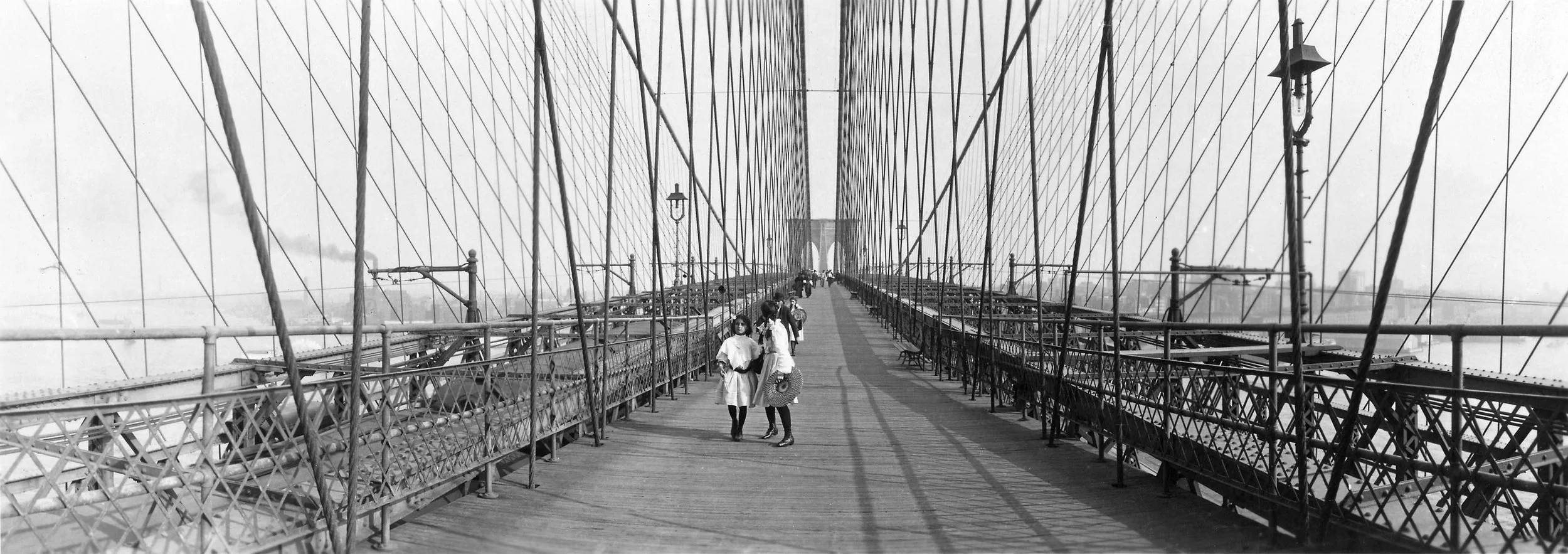
Vintage postcard, circa 1915, depicting the Brooklyn Bridge and New York skyline, courtesy of the Miriam and Ira D. Wallach Division of Art, Prints and Photographs: Picture Collection, The New York Public Library Digital Collections.
Preserving Our History
RECORDING RESOURCES
“Our elders have rich stories to share. There’s no better time than now to sit down and hit Record.” Wired magazine turns its attention to using technology to capture family history.
THROUGH A NEW LENS
Having conducted 250 interviews over a decade, Luke Holland’s documentary Final Account aims to preserve the memories of Germans who lived through the Holocaust. “The USC Shoah Foundation will incorporate these ‘perpetrator testimonies’ into its program for high-school students, preserving the recollections of this last surviving generation for posterity.”
Pictures & Stories
DIGITAL PHOTO MEMORIES
When Google Photos’ free storage ends on June 1, should you upgrade to a paid plan? The Wall Street Journal reports on cloud photo-backup options for ensuring that your family photo archive is preserved.
DON’T DO THIS
There’s one big mistake people make when resizing their digital photos for print, and I am on a mission to help you all avoid it.
BATTLE OF THE SUBWAY MAPS
When is a single conversation worthy of being recounted in a book? In this case, when the resulting decisions impacted both how NYC residents got around for decades and how designers approached real-world challenges.
The Stuff of Life
“THE THINGY-NESS OF THINGS”
“The odd object essay cannot hinge on ‘this tchotchke reminds me of my mother,’” Kren Babine writes. “Memory is faulty, subject to a thousand factors, and evidence—an object which shows that something exists or is true—holds no inherent value, because it is always subject to interpretation.”
HOUSE AS HOME
“As memoir writers we must ultimately wrestle with our beliefs about home.” Beth Kephart suggests a handful of starting places for writing the places that raised us.
FAVORITE THINGS
“Our thumbprints are all over the items we have collected and saved over the years.” Kate Manahan, an oral historian in Maine, finds that “for some people, talking about the things they love is just way easier than telling a ‘story.’”
MITIGATING OUR LOSSES
When disaster strikes, the loss of family treasures can be an unfortunate and devastating consequence. Archivist Rachael Woody offers help for channeling your emotional response into action, and preparing those treasures for the worst (checklist included).
Recent First-Person Reads Worth Your Time
VISITING (DEAD) ANCESTORS IN PRAGUE
“While couples embrace, while college students drink pivo, Czech beer, while parents push strollers, their kids licking zmrzlina, ice cream dribbling down chins from August heat, I curve inward with the weight of inherited memory.” Claire Sicherman connects her 13-year-old son with his roots.
LEARNING TO FIGHT
“Did I need to train like a superhero just to be a person in America? Maybe,” Alexander Chee, author of the essay collection How to Write an Autobiographical Novel, writes. “But if I thought of superheroes, it was because my father was like one to me, training me to be like him.”
DEPOSITS IN THE BANK OF MEMORY
“Something came into my head, and it was this: I must remember this moment for the rest of my life. It was a random resolution that arrived with the force of an epiphany.” Stephen Harrigan writes about his lifelong need for dropping memory anchors.
OUTSIDE, INSIDE
“The first time I dressed in men’s clothes, I looked in the mirror and cried. I pressed myself against the reflection. I wanted to press myself to the other side.” SJ Sindu writes “A Measure of Men.”
GOD AND GHOSTS
“My brother granted it was probably for the best that I didn’t attend the funeral. I was still in middle-school at the time and didn’t exactly have the neural wherewithal to process that sort of thing.” Barrett Swanson on the ones we leave behind.
...and a Few More Links
Registration is open for HippoCamp: A Conference for Creative Nonfiction Writers.
Book review: The Best of Brevity, an anthology celebrating the online journal’s 20 years of publishing flash creative nonfiction
New celebrity memoirs of interest: Rememberings by Sinead O’Connor and Brat by Andrew McCarthy
Short Takes

Life Story Links: April 27, 2021
For memory-keepers: A curated collection of recent stories about memoir (reviews & first person excerpts) and family history (as preserved through narrative).
“In guided autobiography, we encourage the use of metaphors; in the case of major branching points in life, we ask, ‘If your life is like a river, what caused it to flow in the directions it did?’”
—James Birren

Today, April 27, is National Tell a Story Day. This vintage photograph by Russell Lee shows the wife of a Farm Security Administration client reading to her son, April 1939. Image courtesy Library of Congress Digital Archive.
Exploring Family History Through Narrative
“THE WHOLE STORY“
“Listen to the songs your ancestors sing to you. Be mindful of the songs you sing to others.” The 2021 UCSF Last Lecture, delivered by Peter Chin-Hong, MD, encouraged exploring one’s personal history in order to find one’s true voice.
HERITAGE, QUESTIONS, STORIES
“We can’t tell the full story without each other.” Two women researched slavery in their family, but what they discovered held different meaning for each.
FORGING MEANING FROM TOUGH TIMES
“Survival becomes a pivotal point in our story that needs to be preserved. It is the part of our story that reminds us what we are capable of, what we can endure, and what we overcame.” Lisa Lombardi O’Reilly on “the times that remind.”
“DEAR FAMILY…”
Collected letters from Australian and New Zealand soldiers “held a sense of mana in the families, keeping the memory alive of someone that, in some cases, had died over a 100 years ago.”
MY GRANDMOTHER, THE SPY
“I was going through her things and found myself staring at a letter that I had seen in childhood and I didn't really understand. It had to do with some sort of covert work she had done for the British.” In a new podcast Enid Zentelis shares the story of her grandmother, who she learned was a WWII spy:

Click the image for a 3-minute video about Enid Zentelis’s mission to learn the truth about her late grandmother, a Hungarian-Jewish Holocaust survivor—and a spy. “I wondered how I could serve my grandmother’s story, and simultaneously communicate the effects of generational trauma; the way some family members succumb to it, and the way others turned it into a source of strength and determination,” Zentelis says.
Recommended First Person Reads
LOW COUNTRY LEGENDS
“Were those really the voices of loved ones long gone who called out my name in subway cars and expensive restaurants and while I brushed my teeth?” J. Nicole Jones on familiar ghosts and family legacies.
CROSSING BORDERS
“‘Berlin? Seriously?’ my Jewish friends marveled. If you want to bring conversation to a halt at your local Purim carnival, try mentioning that you’re relocating to the city where the Gestapo was headquartered.” Laura Moser on moving to the neighborhood where her grandfather lived before fleeing the Nazis.
LIFE IN THE DARK CITY
“When you are forty-three in New York City, raising children, you have already lost the New York that mattered to you at age twenty-three. The loss I am talking about is something else entirely.” Emily Raboteau on pandemic NYC.
THEIR STORIES ARE OUR STORIES
“Our stories are even richer and more complicated than we sometimes realize, especially stories that are the most familiar to us, the stories that have been passed down.” Menachem Kaiser in conversation about the ever-evolving nature of Holocaust memory and storytelling.
WRITING THROUGH GRIEF
“I wanted to write that person, share her writings, immortalize her in a small way—she who had not been able to author her legacy.” Maryanne O'Hara on turning to personal writing in the wake of her daughter’s death.
Hodgepodge
STORIES UNTOLD
“My life is not interesting enough” and “it’s too self-centered to write my memoir” top the list of reasons I hear for not writing about one’s life. Click to read about why I think these reasons are bunk.
FOUR MEMOIRS WITH REMARKABLY DIFFERENT APPROACHES
The University of Pennsylvania’s alumni magazine turns its attention to the writing lives of four of its cohorts including stories about “middle school memories, meditations on motherhood, a prismatic accounting of the self, and a long life well and furiously lived.”
AN ARCHIVAL PROJECT IN THE AGE OF COVID-19
In “Portraits of an Epicenter: NYC in Lockdown,” a group of creative college students share photo essays and written reflections of living through the pandemic. “Although the city was unified in this experience, no two experiences of the lockdown were the same.”
HONOR HER STORY
Mali Bain, a personal historian in British Columbia, Canada, says she has been inspired by her clients’ unique ideas for Mother’s Day gifts. Here, she shares a few of them.
Virtual Events that May Interest You
April 30: First conference of International Institute for Reminiscence and Life Review at its new home, UCONN School of Nursing
May 1: Virtual (paid) workshop: “The Power of a Legacy Letter and How to Write One”
May 19: Storykeep presents a free live webinar to acquaint you with private podcasting, a new tool for documenting and sharing family narratives and connecting family across generations.
...and a Few More Links
Short Takes

Life Story Links: January 5, 2020
Ways of remembering, first-person essays worth your time, and efforts to tell stories of real peoples from all walks of life: new reads for the new year.
“The years on someone’s gravestone are when they lived. The dash represents how they lived.”
—David Allen Lambert
![On this day in 1920, the Boston Red Sox sold Babe Ruth to the New York Yankees for $125,000 in what would come to be known as the Curse of the Bambino. Pictured above: Lou Gehrig, George Herman [Babe] Ruth and Tony Lazzeri in a 1927 photograph by Un…](https://images.squarespace-cdn.com/content/v1/55d35604e4b08af97dadd334/1608672183720-I6KA9WATTCEDFFYYW7K5/lou-gehrig-babe-ruth-tony-lazzaeri-yankees.jpg)
On this day in 1920, the Boston Red Sox sold Babe Ruth to the New York Yankees for $125,000 in what would come to be known as the Curse of the Bambino. Pictured above: Lou Gehrig, George Herman [Babe] Ruth and Tony Lazzeri in a 1927 photograph by Underwood & Underwood, courtesy The Miriam and Ira D. Wallach Division of Art, Prints and Photographs: Photography Collection, The New York Public Library.
All Peoples
SHOULD OLD ACQUAINTANCE BE FORGOT?
“From the pews of a church where white deacons once refused to seat African Americans, a group of Black singers in Alabama reminds us why preserving our memories of this historic year is vital—even if we'd rather just leave 2020 behind.” Take three minutes and forty-five seconds to relish the sounds and watch here:
MAKING HISTORY RELATABLE
The Canadian War Museum made a conscious effort to include a diversity of voices in its latest exhibit, “Forever Changed: Stories from the Second World War,” which turns to individual stories to make an impact. “You learn something about the person—maybe it’s hopeful, maybe it’s sad, maybe it’s scary—but each one stands on its own as something that you can feel a connection to.”
SHARE YOUR PERSONAL HISTORY
Are you an immigrant of color in America? NPR invites you to share a short audio clip telling about your family’s history involving “themes of identity and assimilation in America” for a new project looking at our country’s melting pot.
Flickers from the Past
AH, MEMORIES!
Dan Rodrick writes that memories “are like old toys that need to be taken from storage and wound up to make sure they still work. If you don’t do that, they stop speaking to you, and one day you’ve forgotten the sound of your father’s voice.”
“THE GHOST ON THE ZOOM CALL”
Judy Bolton-Fasman reflects on the weekly group video calls she has with her mom, who is in a nursing home, and “the times she sees her mother, my abuela, inhabiting a Zoom cubicle…. Abuela has been dead for over forty years.”
IN LETTERS
“There will be no (or vanishingly few) books of collected emails, and who would want them?” Dwight Garner wonders in this piece mourning the letters that will no longer be written, and remembering the great ones that were.
First Person Reads Worth Your Time
SELF-DISCOVERY THROUGH READING
For Jenny Offill, “Mrs. Dalloway is…[a book] to which I have mapped the twists and turns of my own autobiography over the years. Each time [I reread it], I have found shocks of recognition on the page, but they are always new ones, never the ones I was remembering.”
A VIRTUAL BEST-OF
The editors at Narratively (“human stories, boldy told”) have picked their favorite stories from the past year, and I recommend perusing their list. A few of my favorites:
“I Quit My Job at 50 to Reinvent Myself. Pro Tip: Don’t Do This.” by Ivy Eisenberg, laced with a wonderfully acerbic self-deprecating wit and canny cultural touchstones
“Snowed in with a Ghost” by Krista Diamond: “‘Building’s haunted,’ the landlord said, with more boredom in his voice than the statement merited. ‘Ramona. That’s the ghost’s name. She was here when this was a brothel.“”
“My Secret Life as a Coronavirus Nomad” by JB Nicholas: “As a freelance journalist, I’ve struggled financially for years. Then the pandemic hit and I got thrown on the street. But I will go on — I always do.”
...and a Few More Links
A beloved WWII photo comes to life in a virtual reunion.
A year-by-year glance over the first ten years of The Public Domain Review
Tips for anyone considering creating a family website
A look back at “the lives they lived”: remembering some of the artists, innovators and thinkers we lost in the past year
Short Takes

Life Story Links: December 22, 2020
Last-minute reads while we await Santa's arrival: first-person tales to inspire & foment, diaries expected and not, plus some family history for good measure.
“Memoir begins not with event but with the intuition of meaning—with the mysterious fact that life can sometimes step free from the chaos and become story.”
—Sven Birkerts

A whimsical vintage Christmas card, created between 1950–1963, by Oscar Fabres, a Chilean illustrator who studied art in Paris and settled in New York in 1940, courtesy of the New-York Historical Society.
Accounting for Life
HONORING THE YEAR GONE BY
Austin–based video biographer Whitney Myers shares some thoughts on the sacred work of reflection including helpful pages you can print to guide you in New Year’s reflections and a bunch of fun conversation starters.
NOW IS THE TIME TO START (OR RESTART)
“About 10 years ago, I started adding a diary calendar feature to record at least one thing that happened every day—the profound and the mundane—so that I captured both the forest and the trees that make up the map of my life.” David G. Allan, who has kept a diary consistently since 1986, makes a compelling case for journaling about your life, now.
ACCIDENTAL DIARIES
A writer peruses his recent history through 14 years’ (and $12,017 worth) of Amazon purchases: “Looking through it all was unexpectedly cathartic; almost like a shorthand, accidental diary that I never got around to keeping.”
What’s Missing
AURAS OF POSSIBILITY
“Even as we regret who we haven’t become, we value who we are. We seem to find meaning in what’s never happened. Our self-portraits use a lot of negative space.” This exploration of our unlived lives—and what it’s like to explore them—is an intriguing and worthwhile read from Joshua Rothman.
THAT EMPTY FEELING
Last week I shared what I hope will amount to a dose of comfort for anyone grieving a loved one during this holiday season—a post that is all the more relevant as, right now, it seems as if we’re all grieving something.
First Person Tales
“SITTING ON MY MOTHER”
An encounter with his high school sweetheart (and her White Shoulders perfume) lead this writer on a path of rediscovery, reorientation, and re-disorientation that ends at his mother’s grave—and “an urge to reckon with the stories that make up [his] life.”
ARCHIVE OF AMERICAN VOICES
The latest season of the StoryCorps podcast explores how people deal with one of the only constants in life: that things change. Listen in to stories of how people cope while their lives are in flux, highlighting the lessons they’ve learned along the way. On the following episode, hear how Alice Mitchell and her younger brother Ibukun Owolabi found a way to move forward—from baby steps to teenagehood—after losing their mom:
CHILDHOOD MEMORIES
“According to my parents, the only real Santa was in Kirven’s Department Store. The other Santas around town, including the one at the new Kirven’s in Columbus Square, were ‘Santas helpers,’” Perry Hamilton, a personal historian in Laguna Hills, California, writes. Read about his childhood Santa realization here.
AN UNEXPECTED RESET
“I was tremblingly weak, and yet my COVID lifestyle was strangely enjoyable. My spirit floated somewhere above my suffering body, experiencing the days like shards of light piercing the dark.” Memoir coach Sarah White, a self-described “freelancer who rarely takes vacations,” on the surprising gifts of a relatively mild bout of COVID-19.
A Little Family History
HOLIDAY TRADITIONS OF YORE
After spending most of the last year writing about (and getting to better know!) her great-grandparents, Lisa O'Reilly wondered what Christmas traditions they brought with them when they came to America. Here the California–based personal historian dives into “Christmas Traditions from the Old Countries.”
HERITAGE DISCOVERY VIDEOS
The folks at RootsTech invite you to submit a personal video from 90 seconds to five minutes showcasing your heritage. Topics include food, culture, travel, and, as exemplified in the video below, traditions. They’re also seeking videos that highlight genealogy tips and tricks. Learn more here.
...and a Few More Links
New personal history business launches in the UK.
The Best of Brevity: Twenty Groundbreaking Years of Flash Nonfiction now available in paperback
One mom learns that “my props were my memorabilia and my kids were my memories.”
The joy of reliving her childhood bookshelf
On the occasion of the 25th anniversary of “This American Life,” Ira Glass, a pioneer of the genre of audio narrative journalism, picks a few of his favorite episodes.
Examining the archives of writer Julian Barnes
Short Takes
Dawn Roode’s curated roundup for the week of Sept. 23, 2026, is overflowing with recent reads on memoir, life story writing, and family history preservation.