
Memories Matter
Featured blog Posts

READ THE LATEST POSTS
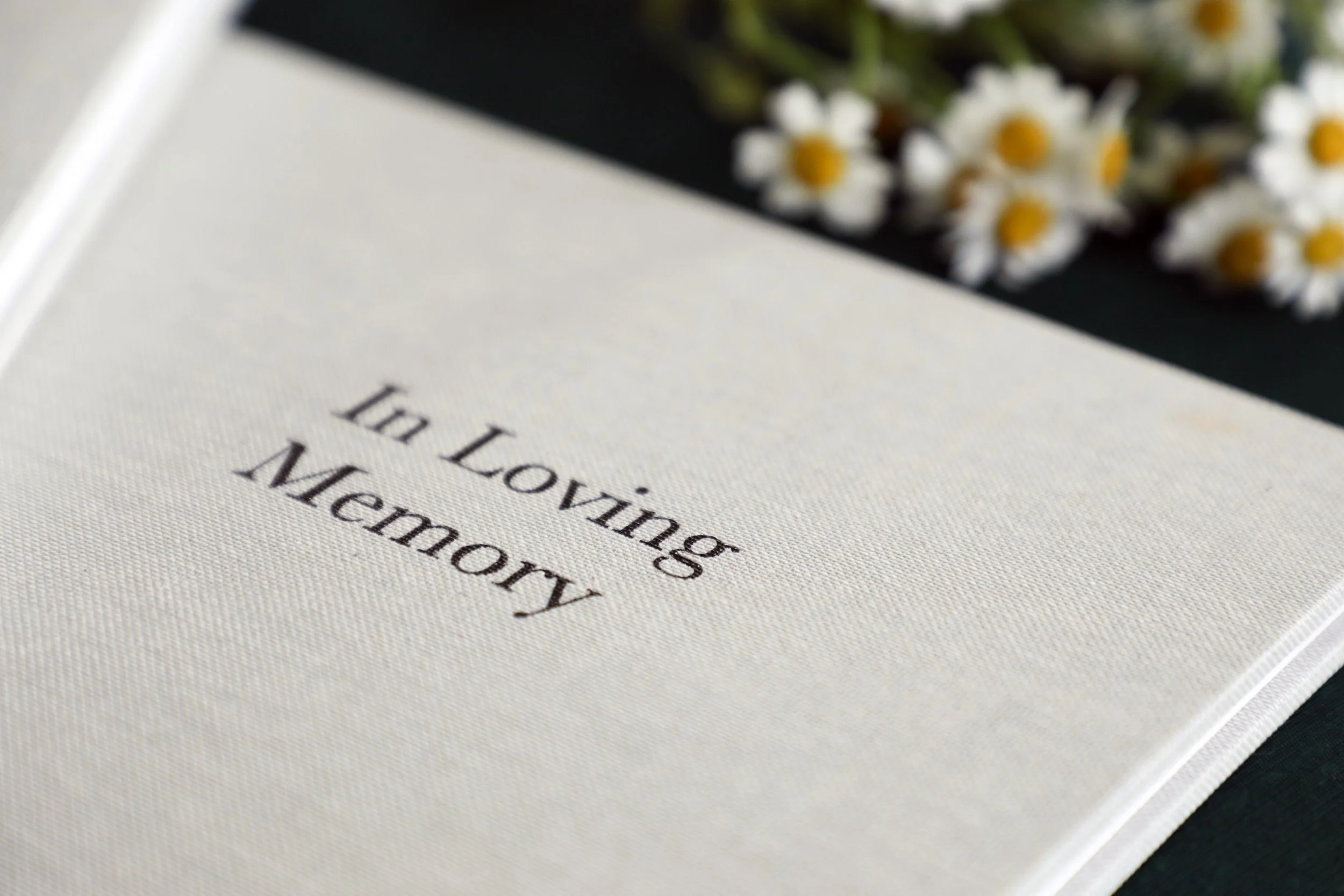
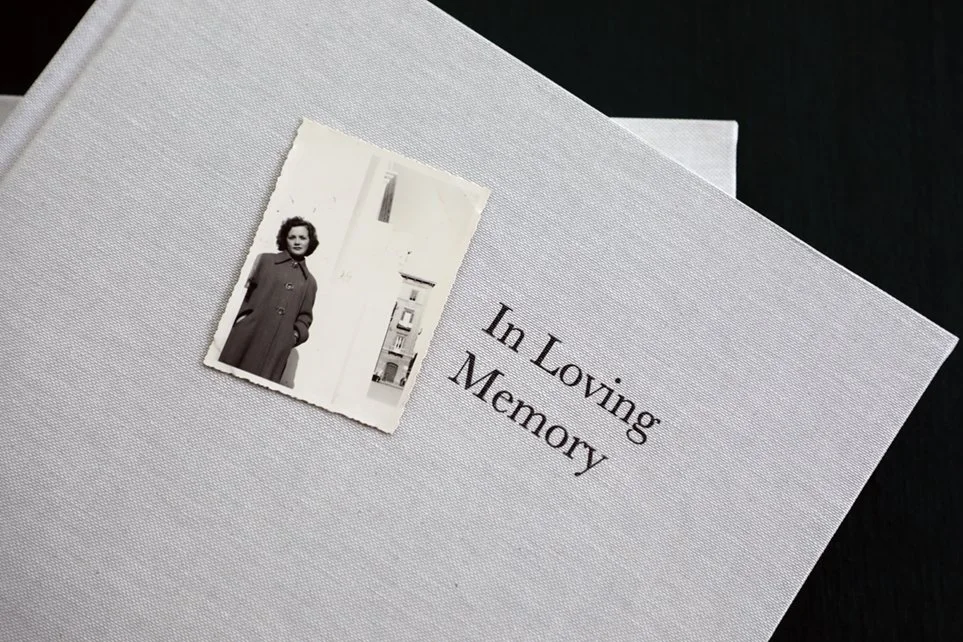
35 questions to prompt memories of your lost loved one
After losing someone you love, it can be hard to know where to begin. These 35 gentle, thoughtful questions help spark memories, stories, and meaningful conversations with family.
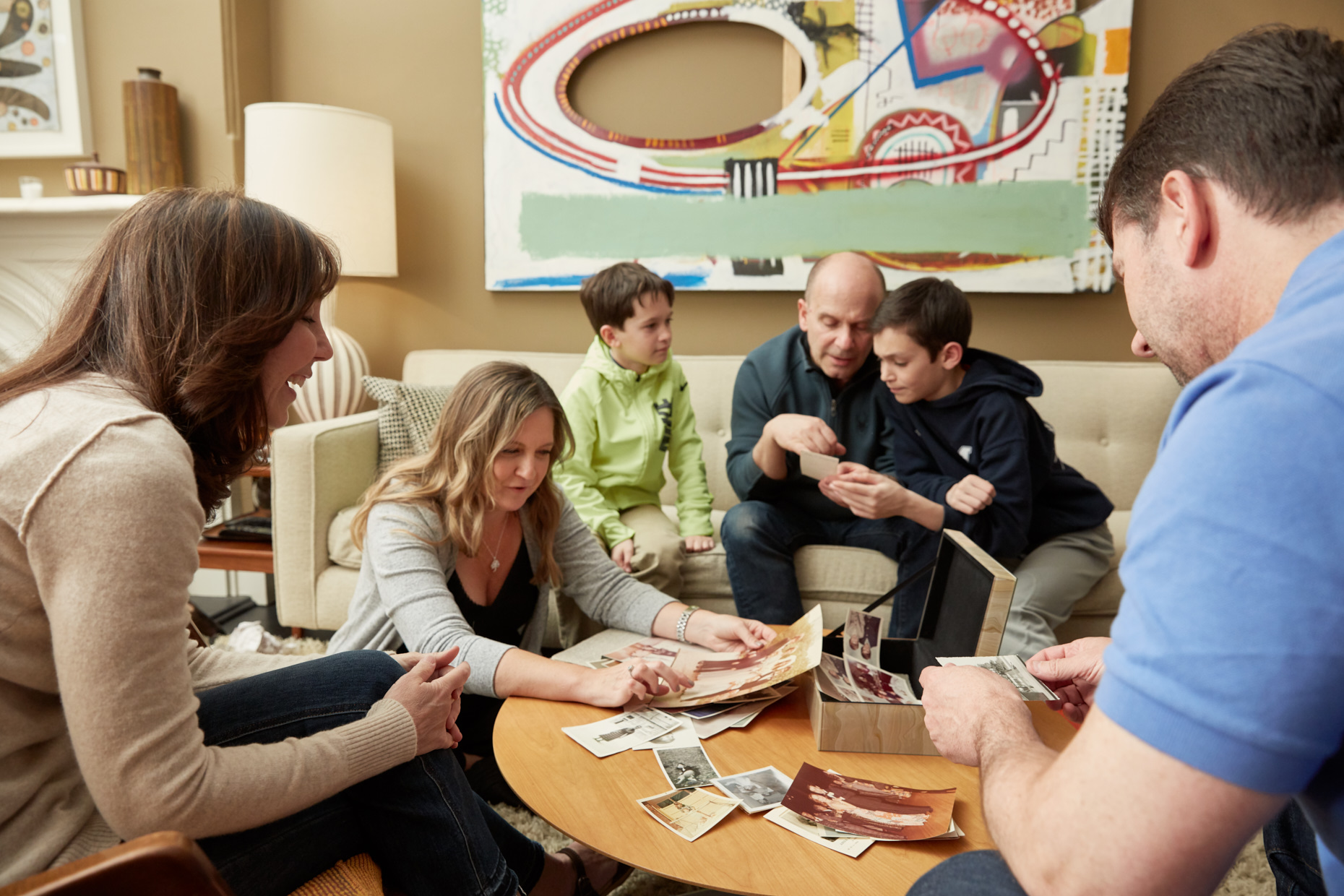
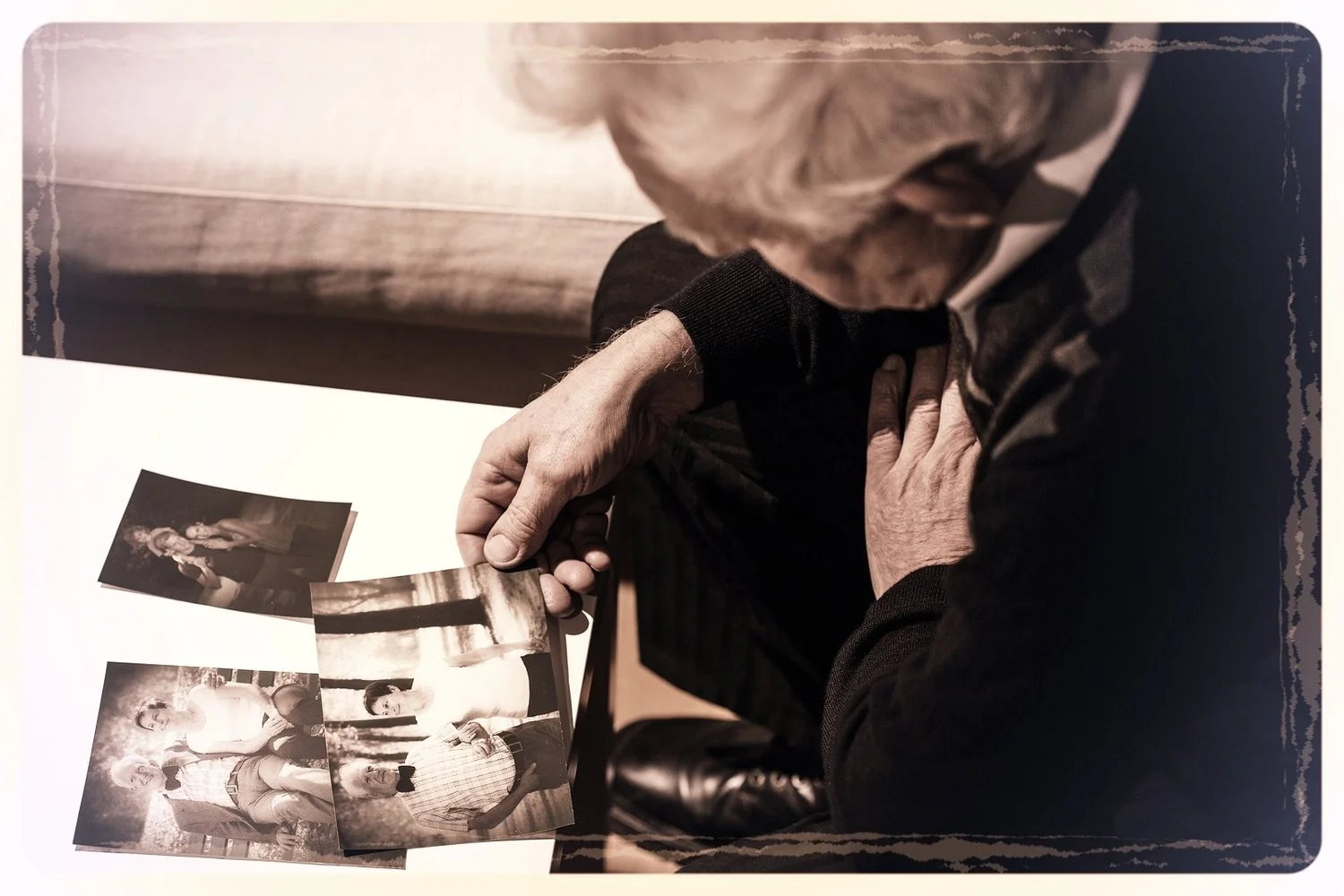
Gather your family around the living room with a box of old pictures and a laptop full of digital photos of the person who has died, arm yourself with this list of questions, and let the reminiscing process begin.
When gathering memories for stories to include in a legacy or tribute memory book, it can be helpful to have some prompts. The 35 questions that follow should provide fodder for writing, conversing, and sharing memories about your lost loved one.
Gather your family around the living room with a box of old pictures and a laptop full of digital photos of the person who has died, arm yourself with this list of questions, and let the reminiscing process begin.
Oh, and don’t feel self-conscious about using this list as a tool— at the most emotional times in our lives, such as losing someone we care about, any little thing that can help us along the path of grieving is a good thing.
Conversation starters that will provide stories for a tribute book
INTRODUCTORY QUESTIONS ABOUT THE DECEASED:
How would you describe the deceased?
What is your favorite memory of the deceased?
What did you call them—any nicknames or terms of endearment?
Did he or she have a pet name for you?
Is there a particular lesson learned from the deceased?
How long did you know the deceased?
QUESTIONS ABOUT THE DECEASED'S CHARACTER:
What do you think the deceased valued most in life?
What words would you use to describe his or her character?
How would you describe the deceased’s personality?
QUESTIONS THAT ELICIT MEMORIES ABOUT YOUR LOST LOVED ONE:
How did you meet?
What is a particular time you recall the deceased was especially joyful?
A time he or she was embarrassed?
What is your earliest memory of this person?
What was the deceased’s laugh like?
Was he or she chronically late or early?
Do you have any funny stories about times you spent together?
OPEN-ENDED QUESTIONS THAT ALLOW FOR STORYTELLING:
Do you remember any favorite stories about childhood that the deceased loved to tell?
Do your remember stories he or she would tell about:
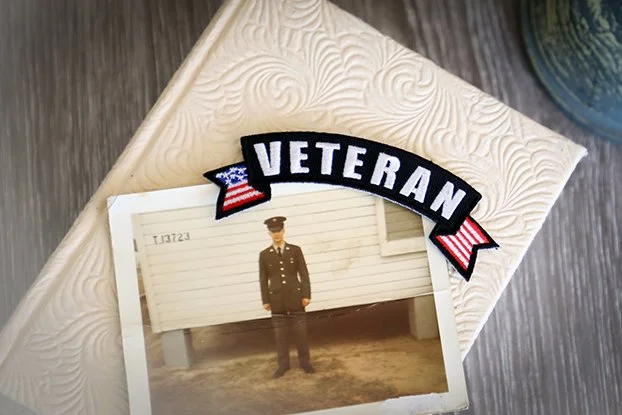
military
college
getting married
becoming a parent
going to prom
learning how to drive
Did the deceased ever discuss big decisions they made that impacted his or her life?
Were there any major changes to the deceased’s life that affected them in big ways?
If you knew they could drop by and visit tomorrow, what would your ideal day spent together look like?
SEEMINGLY INSIGNIFICANT OR SILLY QUESTIONS THAT MAY SURPRISE WITH WHERE THEY LEAD CONVERSATIONALLY:
What was the deceased’s favorite color?
Favorite flower?
What type of music did the deceased listen to?
Was there a piece of clothing or something else the deceased wore that you found characteristic of them?
Did he or she have a signature saying?
QUESTIONS ABOUT HOW THE DECEASED IMPACTED YOUR LIFE:
How did the deceased impact your life?
How will you honor the deceased’s memory?
What do you wish you had said to them before they died?
How to get family started reminiscing about your lost loved one
Here are a few initial steps to using question prompts to help you record memories of a lost loved one:
Record your memories.
Use a mini audio recorder or the voice recorder app on your phone to capture the conversations about your loved one. Make sure everyone is seated close enough to be captured by the microphone.
Place a copy of the question sheet nearby so anyone can glance at it when they want.
Let conversation flow naturally.
Use the questions to prompt storytelling, but don’t rely on them like a school assignment. Rather, go with the natural course of conversation, allowing the group’s memories of your loved one to flow and meander as they will—it’s the memories themselves, not the answers to any questions, that you want to capture.
Keep in mind: This is just the beginning.
Realize that you will never get through all of these questions at once, and you are not meant to. Some of them may have no relevance to your experiences with the deceased, and one question may prompt an entire evening of reminiscence— that’s good.
BONUS TIP
It’s okay to be funny.
If your loved one was a vibrant and funny person in life, it stands to reason that tributes about them after their death should be infused with humor. It’s okay to step outside your grief and remember them with a smile, even a laugh. Happy memories provide comfort and help us heal, and will be a balm to the soul when you pull out this tribute book to visit with your lost loved one someday in the future.
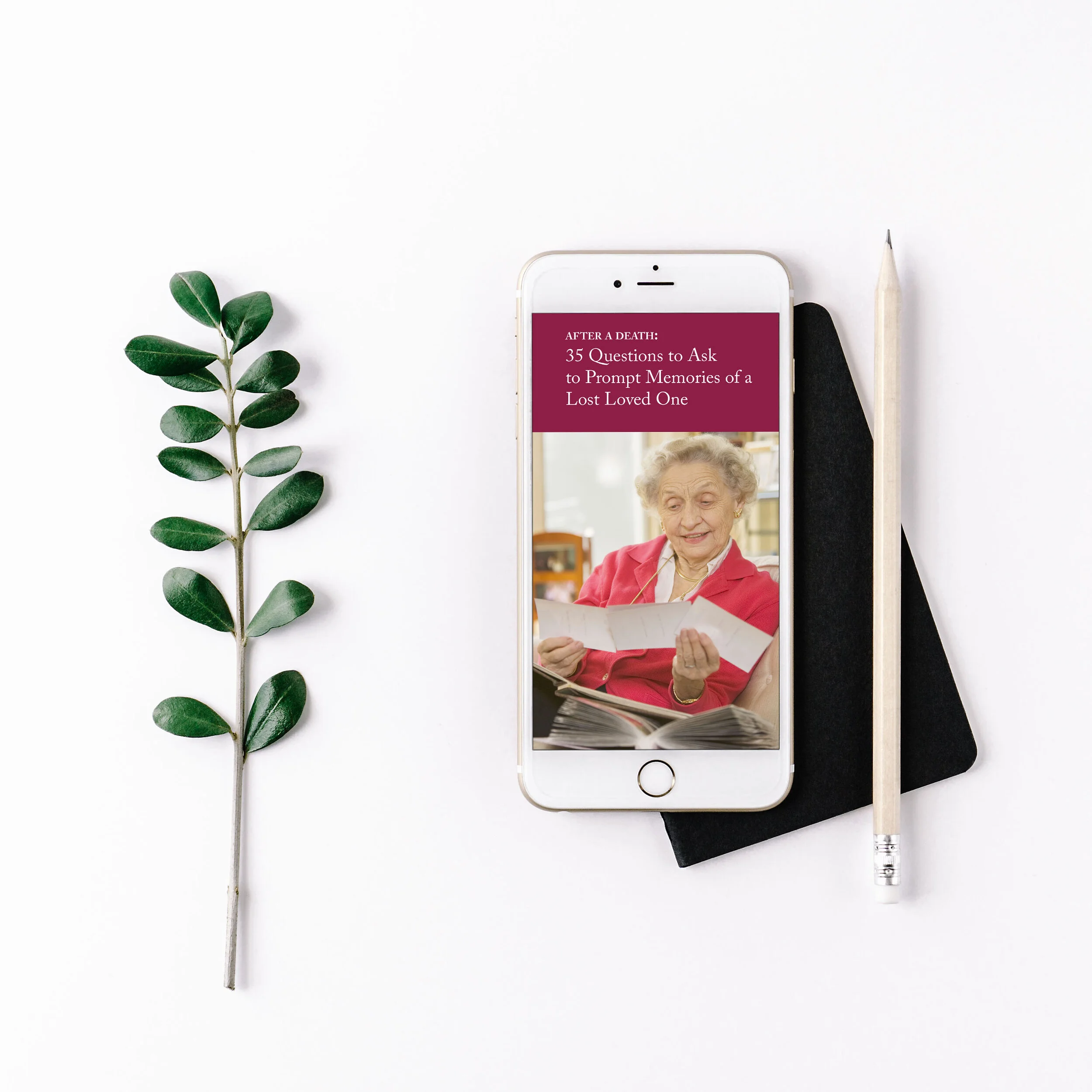
Free download
Get a free, printable version of this guide, “After a Death: 35 Questions to Ask to Prompt Memories of a Lost Loved One.”
More free resources
Visit my Resources Toolkit to for more free downloads, including lists of questions to spark Thanksgiving and Christmas story sharing; a guide on how to use family photos as prompts for writing life stories; plus more tips for writing about your life in short vignettes.
Interested in turning your memories into an heirloom tribute book? That's what we do.

Modern Heirloom Books founder Dawn Roode looks through the tribute book she made in honor of her mother after her passing in 2009.
If you have recently lost a loved one, first: our condolences. Our founder, Dawn Roode, was inspired to start Modern Heirloom Books when creating a tribute book for her own mother was healing, and rewarding...we understand the feelings of loss. We truly believe that stories have the power to heal, and that remembering those we have lost helps keep their spirits alive in our hearts.
If you are considering memorializing your loved one's legacy in a book, give us a call. Dawn would love to discuss ways to honor their memory and preserve the stories of their life—for you, and for the next generation.
Contact us now at 917.922.7415 to see how we can work together to create a most meaningful heirloom.
This is a recreation of a popular post that was originally written and shared in 2018. That post was somehow lost during a transition to a new web server, so has been recreated and updated on March 26, 2026.









38 questions to prompt food memories
Use these food-themed family history questions as conversation starters or writing prompts to capture your cherished food memories for the next generation.

In a previous post we outlined the four basic steps to begin preserving your food memories. After you have gathered recipes and photographs, the real fun begins: the remembering. The story sharing. And the cooking.
If you’re ready to begin capturing the stories that make up your food heritage, hurray! I recommend you start by hosting a family get-together (in person or virtually during these socially distanced times). Set a simple menu—one that includes some of your family’s favorite comfort foods and, most definitely, dessert—and an agenda: to talk about the foods and the holiday feasts and the kitchen antics that make you laugh, smile, and drool.
Memories flow when you’re all reminiscing together (“Remember that time…?”), and the communal feeling around a family dinner table adds to the story sharing appeal.
Print out the questions below (you can download a printable guide here) and pass it around the table. Or select your 10 favorite questions and write them on index cards before the get-together; then people can pick from your deck of cards to get the conversation going.
If your family is not as into the project as you are, or if you prefer to work alone, consider the questions writing prompts instead of conversation starters—it doesn’t matter how you gather your food stories, simply that you do.
Food-themed family history questions
THE KITCHEN OF YOUR CHILDHOOD
How was cooking in your home (either growing up or when you were raising your family) similar to or different from other families in your neighborhood?
What do you remember about holidays and special events?
Describe the kitchen of your childhood: what color were the walls? was it small or big? was there a window, and what was the view? what were the smells? the sounds? were the pots and pans hung on hooks or hidden in a cabinet? was there a pantry filled with…? did you do anything other than cook there—gather with friends, do your homework, talk on the telephone?
What are some of your earliest food memories?
What are some of your favorite food memories?
What are some of your funniest food memories?
Were there any foods you hated but were forced to eat as a kid? (Did you eat them or sneak scraps to the dog?)
What did you talk about around the dinner table when you were growing up? What about now?
What did your mother (or the primary cook in your family) wear when cooking? An apron? A house coat over her work clothes? A sauce-stained sweatshirt?
Were there any comfort foods from your childhood that hold a special place in your heart—in other words, what was your family’s “chicken soup” for the soul?
Did you have a regular day of the week for take-out food (such as pizza Fridays or, a more recent example, taco Tuesdays)? If so, what was your to-go restaurant of choice?
What did you snack on when you were little?
Were you ever a picky eater? Describe when, and if/how you got over it.

Free Guide: Preserving Your Food Memories
Download this free printable guide that include all the family history questions in this post as well as bonus tips for preserving your family food heritage.
ALL GROWN UP
How did you learn to cook?
Who taught you some of your most important kitchen lessons? Tell me about them.
What were your experiences making some of your first dishes?
What cooking triumphs (or disasters) stand out in your memory?
How has cooking changed for you over the years?
What foods always cheer you up?
What meal do you most often cook for those you love?
What junk food is your guilty pleasure?
The way we cook at different stages of our life can be revealing. Do you remember the dishes you relied on when you first went out on your own? Did you cook at all during college? If not, do any celebratory meals or meals cooked by a visiting parent stand out in your memory? How did cooking change after you had children? When they got to be teenagers? When you went back to work?
If you moved away from your home, are there any foods that you would miss that are indigenous to the area or especially well-made in the region?
Do you eat for comfort, for health, for enjoyment? Talk a little bit about your relationship with food over the years.
Do you remember the first time you tasted the cuisine of a seemingly exotic culture? What was it, and did you like it? What were the circumstances?
Do you have one or more cookbooks you return to again and again? Have the chefs you admire changed over the years?
HERITAGE RECIPES
What are your oldest recipes and where did they come from?
What are some of your family’s unique food traditions?
Are there recipes that particularly represent your family’s culture, religion, or regional background? Do you know how to cook them?
Are there any recipes in your family that seem unusual or unique?
Is there a recipe you wish you had gotten from an ancestor but that was never written down? What memories does it hold for you? Have you tried (successfully or not) to recreate it?
Do you have handwritten recipes from your parents and grandparents, and if so, where do you keep them?
FAMILY & FOOD
Who are/were the best cooks in the family? Tell me about them.
What family dishes would you miss the most if you never tasted them again?
Who sat/sits at the head of your table, and is it a position of honor?
Do you say grace before eating, and if so, is there a particular prayer or approach to what is said (e.g., something you’re each grateful for, something nice you did that day, etc.)?
How were birthdays celebrated in your family? Did you have the same cake every year, or something new? Was it homemade or store bought? Did you put an extra candle on the cake for good luck?
What other food traditions do you uphold (or have you abandoned from your childhood)?
Do you enjoy entertaining large groups of people around food? What types of celebrations? What kind of host are you?

Read more about preserving your food memories
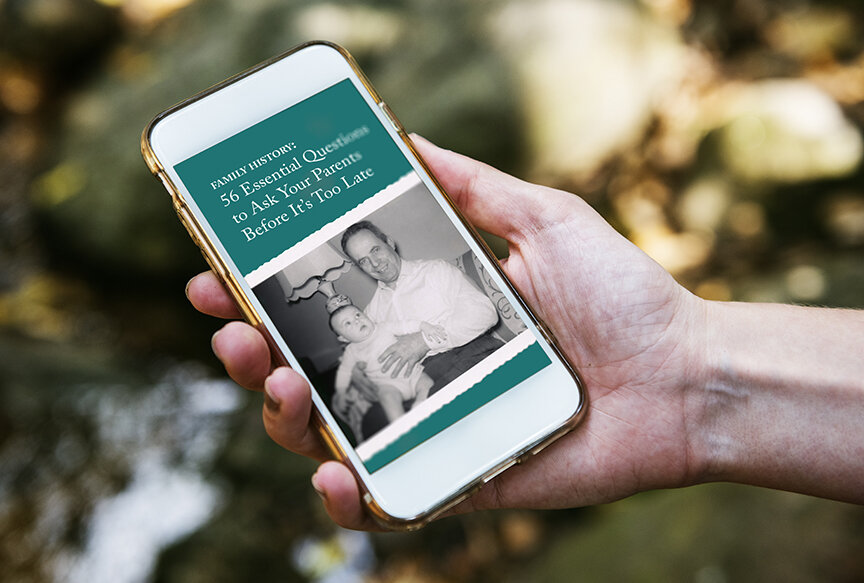
56 essential questions to ask your parents to capture their personal history
Don’t wait until it’s too late—have meaningful conversations with your parents about their past with questions designed to spark memories and make story sharing easy.
If you’re reading this, congratulations—you’re on your way to a most enjoyable and important journey! Who are you interviewing? A parent? Grandparent? Beloved aunt or uncle? Whomever it is, clearly their stories matter to you, and I am thrilled to be able to help you capture them through an oral history interview.
Print out this guide or use it as inspiration to develop your own list of topics and questions for your loved ones. I’ve got three key tips at the bottom of this post to help ensure that you capture these important family stories successfully, and I am always here as a resource to help guide you on your journey. Whether I can one day help you turn your stories into an heirloom book or help you get the ball rolling on a DIY project, my message to you is this:
Start now. Don’t wait. I can recount too many tales of people telling me “I wish I had asked my father…” that it saddens me deeply. It is my mission to convey a sense of urgency to everyone. Perhaps you have a little extra time on your hands right now… Please, ask your parents and grandparents the questions that matter now, before it’s too late.
Family history interview questions
Childhood & Family Life
Describe the home you grew up in.
What were you like as a child?
Do you have memories of what your parents said you were like as a baby?
What was a typical day like in your family when you were little?
How does your family tend to show their love for one another—through physical affection including hugs and kisses, gift giving, reaffirming through saying “I love you” or some other phrase, etc.?
What would you say makes your family unique from other families?
What did you do when you were bored as a child?
If you had to create a family motto, what would it be?
How did you feel about school, and what type of student were you?
Did you have a best friend, and if so, how did that relationship play out over the course of your life?
When you were little, what did you answer to the question: “What do you want to be when you grow up?”
What were you like as a teenager?
Food Memories
What meals would be in your family’s cookbook—the foods that make you feel nostalgic for your childhood or for home?
What are your oldest recipes and where did they come from?
What smells transport you to this day right back to your childhood?
Who are/were the best cooks in the family? Tell me about them.
What family dishes would you miss the most if you never tasted them again?
If cooking and food were an integral part of your subject’s life, explore 20 more food-themed questions here.
Life Transitions & Milestones
Tell me about your experience…
…deciding where to go to college
…pursuing your career
…getting married
…getting drafted into the war
…serving in the military
…becoming a mother/father/grandparent
…falling in love for the first time
Tell me about your first job.
Did anyone ever throw you a surprise party?
How did you feel on your wedding day? What memories of that day stand out for you?
What can you tell me about the first time you experienced loss? Who died? Did you go to the funeral? How old were you? How did it effect your outlook on life?
Decisions & Lessons
What is the best decision you ever made?
What is a memorable time you have failed, and how did you recover from that experience?
What lessons(s) do you most recall learning from your parents? Grandparents?
Did you have a favorite teacher in grade school, or another role model who had a major impact on your life?
Can you share about any hardships (in history, such as the Depression or a war, or in their personal life, such as a divorce or unemployment) that you experienced in your life, and how you survived/thrived/coped?
Tell me about a significant time you said “no.”
Do you have any regrets? (Encourage elaboration here; sometimes a prolonged silence is the best invitation to speak.)
Traditions
What holiday did you most look forward to while you were growing up?
What were some of the traditions your family observed related to that holiday?
Do you have any family traditions that have been passed down for generations in your family?
Does religion hold a strong place in your family? (If “yes,” there are a variety of follow-up questions to ask to pursue this thread!)
What is the most memorable gift you have ever received? Given?
Are there any specific family heirlooms you inherited? Why do they hold meaning for you?
How are/were birthdays celebrated throughout your life?
In what ways have you/your family kept your culture alive (through language. foods, cultural traditions, for example)?
Fun & Games
What songs have held special meaning to you over the years?
Who was the trickster in your family?
Do you have any funny stories from your past?
What’s your favorite family story to recount around the dinner table?
Did you play sports growing up, and if so, what were those experiences like?
What was the main form of entertainment in your family when you were a kid (board games, listening to the radio, playing music/singing, reading books, putting on shows, etc.)?
Describe what family vacations were like, and if there were any destinations that you traveled to often?
Tell me about a time you were incredibly embarrassed.
Big-Picture Questions
What values would you like to pass down to the younger generations of your family?
How did you learn resilience?
What would you tell your 20-year-old self?
What would you like your legacy to be?
Are there any questions you wish you had asked your own parents?
3 keys to capturing the best stories
Ask open-ended questions.
Sometimes simply planting the seed of a memory yields the most thoughtful and meaningful stories. “Yes” or “no” questions do not promote conversation, so avoid them in favor of questions that help set the scene (“remember when…”) or probe your subject’s personal history in unique ways (“imagine if ________ hadn’t happened…” or “what about _______ do you wish you remembered better?”).
Consider this a conversation more than an interview.
Listen generously, ask follow-up questions, and let your interview subject go off on tangents that yield interesting stories and prompt unexpected memories. Your goal should be to get the most meaningful stories from your loved one, and if that means waiting another day to discuss what you thought today’s topic was, then so be it!
Ensure successful preservation.
Use more than one way of recording your interview. If you are using a voice recorder, use two. Ensure your subject feels comfortable, that the environment is quiet, and that the recording device is close enough to capture their voice. Find more specific tips (including equipment recommendations and even more family history–themed questions) in this guide from the Smithsonian Center for Folklife and Cultural Heritage.
More free resources
Visit my Resources Toolkit to for more free downloads, including lists of questions to spark Thanksgiving and Christmas story sharing; a guide on how to use family photos as prompts for writing life stories; plus more tips for writing about your life in short vignettes.
Get inspired to preserve your family stories







Announcing new resources toolkit
Discover family history, life story writing, and photo management guides in our Toolkit, where you can download free resources to help you preserve your legacy.
We have offered a variety of free resources over the years, but they have never before been presented in one convenient place.
Now all of our free guides can be browsed on our Toolkit page, easily found in the footer of the Modern Heirloom Books website in case you forget to bookmark it 😉

Our guides offer up some of our best advice on the topics of memory-keeping, engaging in family history, preserving (and finding the stories within) family photos, and writing about your life, among others.
We will undoubtedly add to these resources in the coming months. So:
What topics would you like to see covered?
What challenges are you facing in your efforts to preserve family stories?
Would you prefer more writing prompts or oral history questions?
I look forward to hearing from you, and as always, feel free to ask anything in the comments section of the blog!
Writing prompts for life story vignettes: self interview
In Part Two of our Life Story Vignettes Writing Prompts series, guidance on conducting a probing self interview as an entry point to your stories and memories.
In Part One of our Life Story Vignettes Writing Prompts series, we offered five specific exercises for writing about your memories by using all of your senses. Today in Part Two we give you guidance on conducting a self interview as an entry point to your stories.

Getting to Know You
An oft-recommended exercise for first-time novelists is to “interview” their main characters: Imagine these fictional beings sitting before you, answering a list of questions of your making. By getting to know them, the thinking goes, the writer will be able to flesh out multi-dimensional characters with back-story, quirks and all.
Well, you are the main character of any memoir writing you take on. You know yourself, of course, but it’s a rare soul who sees himself objectively, or who looks upon herself with clear eyes.
So imagine you have been invited to sit across from Barbara Walters. You’re in a cushiony chair, glass of water within reach, ready to take on the tough questions. Ms. Walters, as you presumably know, is well known for making her guests cry, laugh, and gush as they open up about things they rarely if ever have discussed.
Preparing Your Questions
This is one occasion where I will not be offering up suggestions for questions! You must play the role of interviewer and interviewee here.
Be sure to ask the tough questions.
Ask follow-ups!
Probe beyond one-word answers.
Be thorough, asking questions about your past, present, and future.
Think about what you wish people knew about you—and consider answering those questions you wish people perhaps didn’t know, too. Open yourself up to the possibilities.
Generating your list of questions is as challenging a part of this writing assignment as answering those questions will be. Consider this: If you were a journalist about to conduct an interview with somebody famous, you would do your research first, and craft questions to shed light on some of the things you discovered.
Do the same for yourself. Record a list of milestones, big decisions from your life, and key relationships that might be worthwhile to explore. At least some of your questions should develop from here.
You might even consider including some questions that you truly don’t know the answer to yet—questions that will spur you to real introspection, and result in interesting answers that will no doubt prove fruitful for more in-depth exploration in writing.
Proceeding with Your “Interview”
Unless you are a Robin Williams wannabe, chances are you are not going to role-play both characters in this pseudo interview (if you do, please videotape and share—I’d love to see it!). Rather, you have two obvious choices:
Read your questions aloud to yourself, then answer aloud, recording your self-interview with a recording app on your smart phone or with a traditional mini-cassette recorder.
Benefit of this approach: It is often easier to talk at length than to write, and this method is more apt to retain your colloquialisms and the flavor of your voice.
Drawback: If you are going to use this as part of further writing, you will need to transcribe the recording to have it in print.Type, or write, your answers following each question.
Benefit of this approach: Writing something longhand is itself a contemplative act, and doing so here allows for periodic pauses for thinking and crafting your response. That thoughtfulness may result in answers that go deeper than if you were conversationally speaking them aloud.
Drawback: This approach can take longer, or may feel slightly intimidating to someone who does not consider him or herself a writer.
I don’t particularly recommend having a friend or loved one interview you for this exercise (though it is an approach I generally do suggest for family history preservation). Part of the value of this writing prompt is its privacy and striving for depth, and its aim to get you to share things you might not feel comfortable sharing under normal circumstances.
What Comes Next?
As with many generative writing exercises, I recommend setting aside your self-interview answers for a week or so before doing anything else with them. Once that emotional distance is achieved, then you might:
use your interview to write a longer vignette exploring one answer that was surprising to you (or revealing, or maddening, or…)
use the themes within to create a template for how to approach a larger life story project
discover questions that yielded only the beginning of an answer; if, upon rereading your answer, you feel the need to expound, then this may be a topic rife for your attention
determine which questions prompted you to share more than you expected, then (a) consider asking similar questions of a family member to capture their stories; or (b) think about going even further—what would chapter two of your answer be?
Find more tips for writing life story vignettes:




Download FREE Writing Prompts
Get all our valuable memoir-themed vignette writing prompts in one handy, printable guide!

Memory & writing prompts sent weekly to your phone
Short courses for anyone who wants to write about their life—just $15 for 8 weeks of guidance & inspiration!
How to use photographs as prompts for writing life stories
Use these tips to tell the stories behind your family photos and leave a visual AND narrative history to your children—a gift from the past to the future.
“Your photography is a record of your living, for anyone who really wants to see.” —Paul Strand
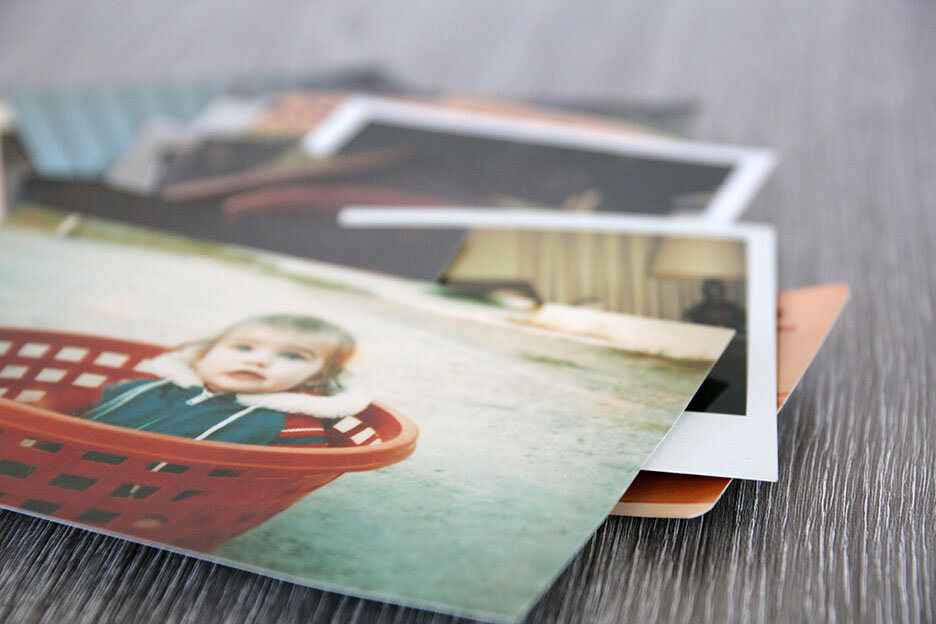
If writing a life story book seems overwhelming, write shorter stories from your life using some favorite family photos to jog your memory.
My generation knows the pleasure, both tactile and emotional, of exploring a box of dusty old photographs: the sense of discovery, of time travel, the good fortune of glimpsing our parents as carefree teenagers, of seeing ourselves as Garanimals-clad kids.
But this is becoming a thing of the past. Do you even have a box of photos in your home?
It saddens me to think of our children inheriting a box of old devices (your iphone will be extinct one day, you know!) and wondering how they can access the digital trove of photos they know must be stored within. And they likely won’t be able to retrieve those images, as the technology will have changed by then.
Just as I wish my mother and grandmother had jotted names and dates on the back of their old photos, our kids will one day be wishing we left some clues about our own pictures (metadata, anyone?).
I urge you to go a few steps further, to not only record the details of important photographs, but to elucidate the stories associated with them. To leave a visual AND narrative history to your children, a gift from the past for the future.
How to Shape Your (Small) Life Stories
I’ve written about this before, but it’s worth reiterating: Shorter is often better, especially when it comes to autobiographical writing. That’s why using photos as jumping-off points for your stories can be such an effective method.
Don’t worry about length when you sit down to write. Just choose a photo, and begin sharing. A few initial ideas:
1 - Talk, don’t write.
Pick up a digital recorder (or use the function on your smart phone) and talk into it. Often spoken language is more direct. You won’t get hung up on sentence structure or finding the perfect words. Rather, your language will flow and have a natural rhythm. Your words will be honest and forthright. You can transcribe your recording later.
2 - Find a partner.
Having someone to listen to your story can be a powerful aid. Even if that person doesn’t engage you or ask questions, the very act of listening—an occasional nod, an understanding expression—let’s the speaker know that what they are saying matters. The more you converse with someone about your life stories, the easier it becomes to share them, shape them, and delve even deeper.
3 - Be specific.
Small details. Moments. A focus on life as it is truly lived. Did your mother enjoy a cup of room-temperature tea every night before bed? What did the hand-me-down pajamas you’re wearing in the Christmas-morning picture feel like? It wasn’t just a red car, it was a 1955 crimson Cadillac convertible that your dad referred to as “My Dorado.” This is not to say get lost in the details: Do not go overboard describing every object and movement in your story with multiple modifiers. This is to say that the specificity of the right details brings an era or a person to life in a most vibrant and revealing way. Choose wisely.
4 - Interview you.
If you hadn’t taken the picture, what would you want to know? Make believe you’re interviewing yourself. This is a helpful exercise in making sure the most essential (often obvious to you but not others) elements do not get left out of your story. And then, like HONY’s Stanton, edit, edit, edit: whittle your interview down to the bone, keeping in those details that surprise, delight, enlighten. I suggest waiting at least a day, longer if you have the luxury of time, to do the editing; it’s amazing how such distance enables us to better self-edit.
Let’s get started: Choose a picture, and use it as a prompt to write a life story vignette
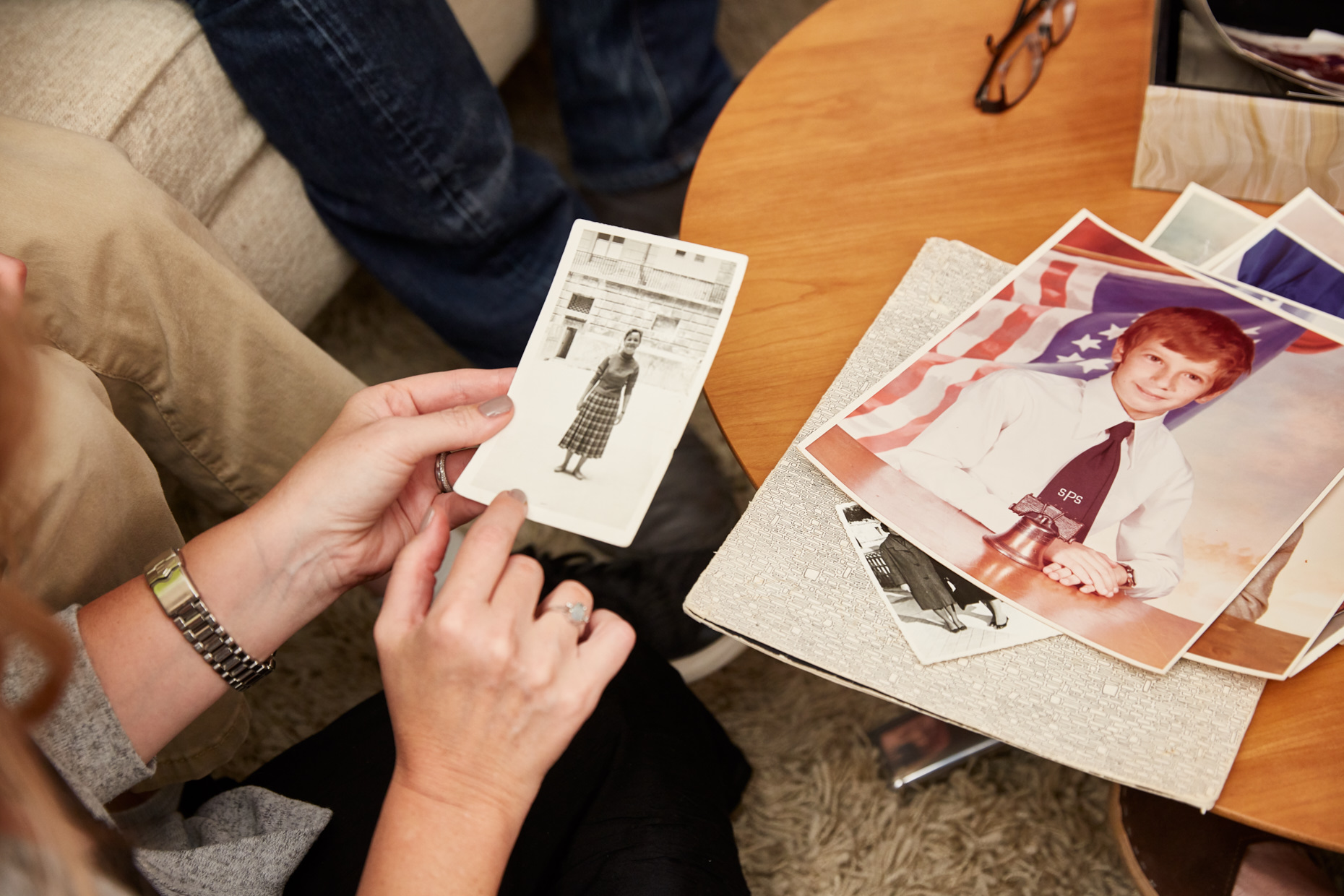
Step 1: Look at your chosen photo.
Study it; ignore it. Eat some lunch and let the memories the picture elicits percolate. Now sit down at your computer to free write: Don’t worry about story structure or creating something for an audience, just write from your heart. If you are more comfortable with pen and paper, you might forego sentences altogether and jot down phrases, recollections, adjectives. The key to both approaches, whether stream-of-consciousness writing or brainstorming, is to go fast and to not worry about anything. Just do it.
thumbs up?
You may find that this one photo has stirred a wealth of memories for you to mine. Perhaps it recalls one vibrant scene from your childhood. Consider yourself lucky if either of these is the case! You’ve got the makings of a life story vignette at your fingertips.
thumbs down?
If the photo you’ve chosen reveals nothing more than a string of boring observations, don’t fret. First, go through this list to see if you get anywhere:
What is your personal connection to the photo?
What would you caption the photo (include as much basic factual information as possible, answering Who, What, Why, When?)
Write a question the photo brings to mind.
Write a detailed observation about the photo.
Still boring…? Don’t worry, just move on to the helpful exercise below to get the story behind your photo!
Step 2: Go beyond the frame.
Next, try this exercise from author Beth Kephart, an early assignment she would give to her creative nonfiction students at the University of Pennsylvania, as detailed in her book Handling the Truth:
Study the background of any chosen photograph. Not the foreground, the background. What’s in the picture that you didn’t see when you were snapping? What lies beyond the chosen subject—just to the right or the left? … What does the startle of the once-unnoticed detail suggest to you? What would happen if this small thing—and not the obvious thing, the central thing, the thing easily seized and snatched—was the start of your story?
Still nothing of interest?
Step 3: Enlist Help.
If you are convinced there is a worthy story attached to the photo, show it to a sibling or other relative to see what memories they may have. If you have other pictures from the same period, gaze at those for clues. Maybe it means something to you not for the story it tells, but for the one it does not tell: Who is the subject gazing at? What happened right before the camera was snapped? Who was left out of the moment—was it you? Or was the picture in a frame at your grandparents’ home, and your memory of that is what’s important?
If nothing more reveals itself and yet you are still compelled to include the photograph in your life story, ask yourself, why? Draft a caption that at least puts the image in context, reveals a mystery, or taps an emotion. Then leave it at that, and turn to your next photo. It is likely that after taking this approach with more of your family snapshots, this one will eventually find its way into your narrative or, rightfully, be edited out in favor of others that weave a more textured and colorful tapestry.
FREE Printable Guide
Download our FREE GUIDE, “How to Use Photographs as Prompts for Writing Life Stories” and get started asap on your journey of preserving your memories!
Next steps, and advice for non-writers
If all of this appeals to you but you’re not a DIYer, that’s what we are here for.
You may want to begin the journey of remembering and selecting photos on your own, using much of the advice provided on the blog—and then hand it over for refining and shaping; our expert editors and designers will transform your memories into a beautiful heirloom that reveals even more than you had imagined.
If you only get as far as piling up those boxes, no worries: We’ll walk you through the whole process! Set up a free consultation to learn how we can work together.
Dawn Roode’s curated roundup for the week of Sept. 23, 2026, is overflowing with recent reads on memoir, life story writing, and family history preservation.