
Memories Matter
Featured blog Posts

READ THE LATEST POSTS

A gift to myself on my 50th birthday
As I turn 50, I have one wish: For those who knew my mother to share with me stories of her life, and for those who didn't, to share a remembrance with loved ones.

A look back at birthdays past…
I am turning 50 tomorrow. I don’t feel any of the pangs of “ugh” or “oh no!” that some of my friends have told me about upon hitting the half-century mark. On the contrary, I feel at peace and quite content to have reached this milestone, and excited about what’s to come in the decades ahead.
I don’t want much in the way of physical gifts (a box of chocolates would be nice ; ). One day recently, though, when I was on the massage table (where some of my most productive thinking happens!) I did hit upon something I truly want: to feel a connection to my mom.
Of course, I do feel incredibly connected to my mother, who has now been deceased for more than 10 years and who I think about with love every day. But I am missing her more viscerally than usual; I feel the hollow within so deeply, and crave…her glance, her hug, her presence.
My birthday wish: stories of mom
So I decided to ask for this on my birthday:
For anyone who knew my mother, could you please take a few minutes to share a remembrance of her with me? It could be a tiny moment or a big one, a faint glimmer of a memory or one you hold dear… Honestly, hearing stories of her through your eyes is a gift unlike any other, and one for which I would be most grateful.
For those who did not know my mom, please take the time to share memories of a lost friend or family member with another loved one! I have goosebumps thinking of the unanticipated joy you may bring to another, and the generous act of sharing your story will be rewarding for you, as well—I promise.
Whether the person you are remembering passed away a day ago or 50 years hence, the remembrance will be welcomed as a gift. It is my sincere belief that stories heal, that memories shared feed our souls, and that the legacies of those we have loved and lost are written upon our hearts.
With love and gratitude,
xo, Dawn

…and more recent ; ) I am grateful for my blessings on the eve of turning 50, and reflective on the past.
“It is my sincere belief that stories heal, that memories shared feed our souls, and that the legacies of those we have loved and lost are written upon our hearts.”

Life Story Links: January 6, 2020
The healing value of storytelling, how memories may be magnified during holidays, plus more delicious food memories and time travel, family history–style.
“This packrat has learned that what the next generation will value most is not what we owned but the evidence of who we were and the tales of how we loved. In the end, it's the family stories that are worth the storage.”
—Ellen Goodman

“My mother Hilary, aunts Kay and Peggie, and my grandmother Hilda. In those days people dressed up for outings!” wrote Richard Bridgland of this photograph taken at Stonehenge in 1932. Photo courtesy of Richard Bridgland/English Heritage. Read about an exhibition of family photos taken at the Stonehenge, below.
On the Menu: Memories
THE STORY OF A FAMILY, THROUGH FOOD
“My heritage lives in my stomach,” Catherine Lanser writes in “Instructions to the Past,” an ode to two slim, spiral-bound recipe books she inherited from her mother.
“AND THEN, I BAKE.”
Although she can find instructions for any holiday cookie online, Chicago writer Donna Vickroy prefers to pull out her mother’s handwritten—threadbare, dough-stained—recipes each Christmas. “Often, as I’m mixing, I tear up knowing that she was thinking of me when she grabbed pen and paper to write down these very words—butter, flour, enjoy.”
FOOD RITUAL & RECONNECTING
Sharing a family meal can help those with dementia connect. “A good meal made with love can draw out a person with dementia and bring them real joy…even if they've completely gotten to the point where they may not have that connection to the family story."
AN OVER-THE-TOP FOODIE HOLIDAY
Personal historian Sarah White remembers being a newcomer to her husband-to-be’s annual Christmas Eve feast—where family, friends, antipasti, and desserts proliferated amidst the Venetian splendor of his relative’s “Jungle Room.” Bonus: Auntie Mary’s grustali recipe.
It’s in the Telling
THE NAKED TRUTH
“Truth in life doesn’t automatically morph into truth on the page. And living people don’t necessarily come to life in print. It takes creativity—hence the term “creative non-fiction.”” Blake Morrison on how to write a memoir.
YOURS TO TELL
“A story can only be a story if it is told.” College sophomore Trinity Bland shares compelling reasons why her fellow students at San Diego State University should in fact share their personal stories.
CALLED TO SERVICE
“There are fascinating stories all around us, if only we ask,” prompts Maryland–based personal historian Pat McNess, and here she asks a lifelong friend about his time in the Navy.
HEALING EXCHANGES
“We play an integral role in saving history and recognizing the healing power of having one’s story recorded,” Wisconsin–based personal historian Mary Voell writes in this piece about the healing benefits of storytelling.
THE HOSPICE HEART
“Being present for and receiving a life story is one of the great gifts of [hospice] work,” writes Gabrielle Elise Jimenez. “When we are witnesses with presence and clarity...these snapshots and stories become gifts to us and create opportunities for healing...”
Time Travel,Family History–Style
STONEHENGE SNAPSHOTS
The oldest known family photo of Stonehenge dates to 1875, and can be seen on display with other pictures of the ancient stone circle in England, like the one above, at the visitor center through August 2020. If you have one to add to the collection, or would just like to browse the fun photos, click here.
‘THE SURVIVORS’
“Going back through my family’s history has deepened my awe for my grandparents and has given me a broader, more complex understanding of their experience...and the obligation that falls on each of us to uphold that heritage going forward.” On inherited trauma, and writing memoir.
Ringing in 2020
A JOY-FILLED COMMUNION
On the Eve of the December holidays I wrote about how the season can be difficult for those of us missing a loved one—but truly, this message is an ever-green one: Remembering our lost loved ones—out loud, with others who knew them—is a balm to the soul.
THE GIFT OF LEGACY
Tell someone, unequivocally, that they matter to you: By gifting them a chance to tell their stories, to preserve their past, to be heard and validated, you are letting them know that they matter—that they will be remembered.
NEW YEAR, NEW MEMORIES
Two resolutions guaranteed to bring joy to you and others—no low-carb diets or Fitbit tracking in sight!
RETROMANIA
“Every corner of social media seems to be using nostalgia to emotionally manipulate us, beaming us something warm and fuzzy on a cold, shiny screen.” Do we have a nostalgia fixation?
...and a Few More Links
Auschwitz survivor wonders: Was she the reason he was alive today?
Personal historian Gloria Nussbaum interviewed for Northwest50Plus magazine.
Google Photos launches private photo messenger.
Using Snapchat and Instagram as self-curated memory books
Scanner recommendations for digitizing old family photos
Short Takes


Life Story Links: November 19, 2019
A wealth of personal history news, from immigrant memoirs to Thanksgiving story sharing, from archives of the past to the value of writing and remembering.
How
Do I
Listen to others?
As if everyone were my Master
Speaking to me
His
Cherished
Last
Words.
—Hafiz, “How Do I Listen”
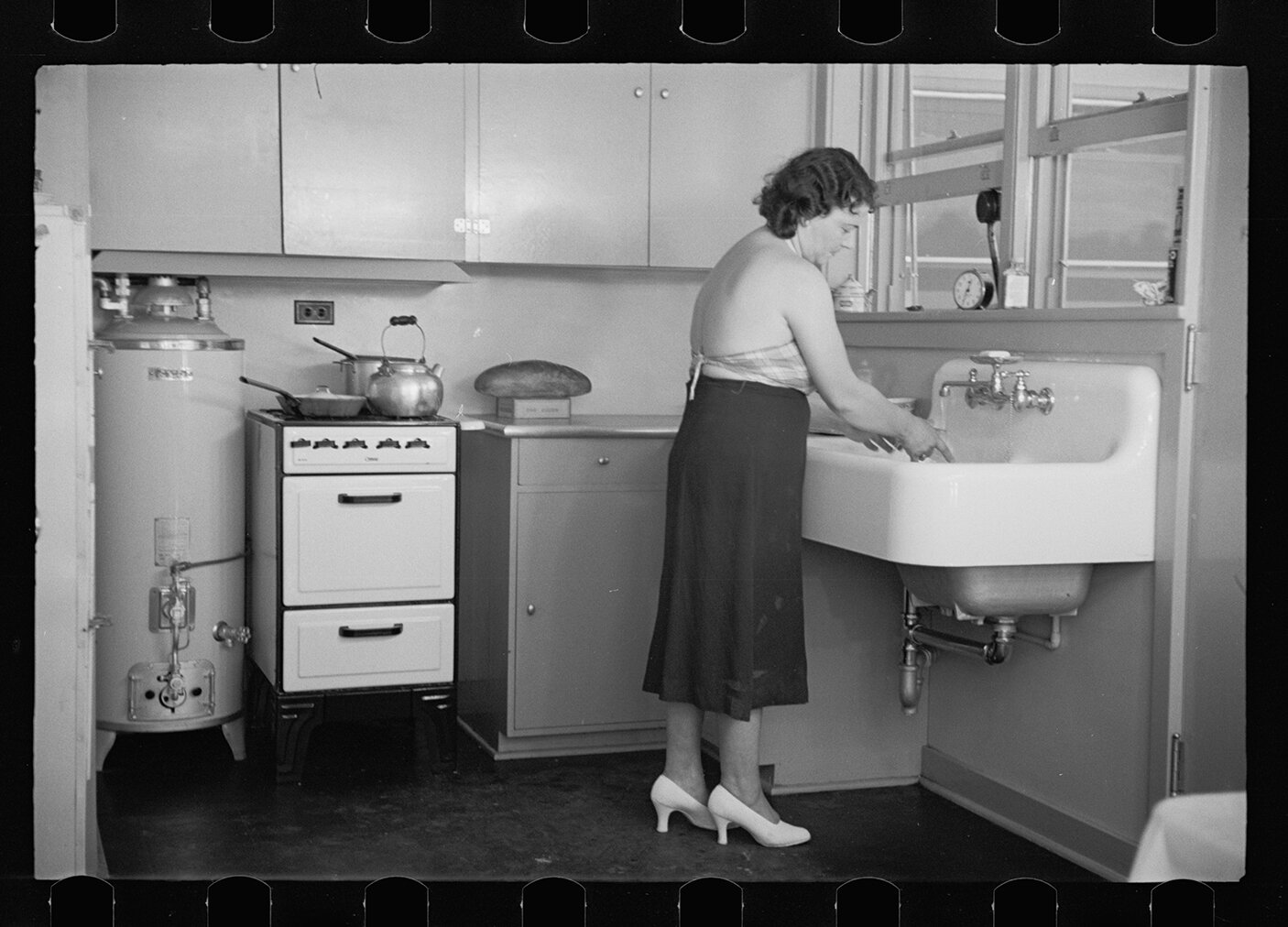
In the kitchen, Hightstown, New Jersey, 1938. Photographed by Dorothea Lange, Russell Lee, Carl Mydans, Arthur Rothstein for the Farm Security Administration. Photo courtesy Library of Congress.
Pass the Gravy, Tell a Tale
#THEGREATLISTEN 2019
Since 2015 when The Great Thanksgiving Listen was launched, thousands of Americans have recorded 100,000+ interviews, providing families with a priceless record of a loved one’s story for future generations to listen to and learn from. StoryCorps offers resources to help individuals and educators transform the holidays into a time of intergenerational sharing.
FOOD MEMORIES, PRESERVED
Launched in time for Thanksgiving host(ess) gift giving, these recipe card sets encourage families to record not only the ingredients and prep instructions for their favorite foods, but the stories behind them, as well.
A Case for Storytelling
GETTING RELATIVES TALKING
In “We’re Losing Generations of Family History Because We Don’t Share Our Stories,” California–based ghostwriter Rachael Rifkin shares her expertise for how to get kids, siblings, and parents talking.
FAMILY LORE
“Telling family stories about crazy Uncle Joe or other eccentric relatives is a favorite pastime when families gather for the holidays. But will squirming children or Instagram-obsessed teens bother to listen?” Yes, says research—and the impact is undeniably positive.
WRITING TO COPE
In The Lost Kitchen, an Alzheimer’s caregiver, Miriam Green, preserves memories of her mother through recipes and reflections. Green turned to writing, including recording family recipes, as a coping mechanism, and learned to enjoy “the present moments spent together.”
Preserving the Past, Uniquely
AN ARCHIVE OF CURIOSITIES & WONDERS
The Public Domain Review is “rocketing the oddities of the past into the present,” including galleries of historical artifacts and images as well as essays putting the various bits of ephemera it spotlights into context. A new book of collected essays is available for pre-order, too.
SAFEGUARDING FRAGILE MEMORY
In anticipation of seeing a screening of Who Will Write Our History at the 92nd Street Y tonight, I began reading up on the film and discovered a most unique historical treasure trove: UNESCO’s “Memory of the World,” which aims to preserve the documentary heritage of the world as a symbol of the collective memory of humanity (the 60,000 pages of eyewitness documentation of the Holocaust known as the Oyneg Shabes, on which the aforementioned film was based, is part of UNESCO’s archive).
HEIRLOOM ARTS
Portland–based personal historian Lisa Kagan announces a winter art workshop for women to “explore what resilience and renewal mean to you in the context of your personal journey.”
Recommended First Person Reads
MINE EYES HAVE SEEN…
“I started to wonder if I could ever give language to my grandmother’s memories across the generations between us. I began to doubt whether I could make my words bring to life all that she has seen, when I have never seen these things with my own eyes,” Julie Moon writes in this legacy-seeking piece.
FIRST IMPRESSIONS
Deirdre Bair, Samuel Beckett's biographer of record, recalls her first (long-delayed) meeting with the notoriously private author in this essay that makes me want to know more about their professional relationship over the next seven years; guess I’ll be checking out her latest book, Parisian Lives, which promises to “reveal secrets of the biographical art.” Listen to a brief excerpt from the audio book here:
ARTISAN OF WORDS
“We weave narratives as we weave cloth, and our words for them are bound together: text and textile share the same Latin root, textus, ‘that which is woven’,” Esther Rutter writes in “Making.”
...and a Few More Links
Eight inspiring immigrant memoirs from Celadon Books
California Camp Fire remembrance book shares “unified experience” of community.
Story Terrace relives their favorite revelations from TV’s Who Do You Think You Are?.
A family, a house, a city: The Yellow House, Sarah Broom’s memoir of New Orleans
Lest We Forget: Keep Their Stories Alive preserves WWI treasures and memories for a British digital archive.
Holocaust survivor and Oscar-winning producer of Schindler’s List dies at 87
Short Takes

Holiday grief: Find comfort & connection in memories
We may yearn for a lost loved one even more during the holidays, but know that shared memories are a balm to the soul, and that grief is another form of love.

There is no timetable for grief, and sometimes our journeys of missing a lost loved one will be lifelong. The intensity of the grief we feel, though, is often magnified around the holidays—that sense of yearning for someone, of remembering them in a most visceral manner (through the tastes of the holiday food, the smells of an evergreen tree, say, or the feel of the hugs and stockings and warmth of the fire)...
Even amidst the joy, we may still feel sadness—and that’s not only okay, it is normal.
Here, I wanted to share two simple ideas—principles that have helped me on my healing path, and ones that I do believe can have a worthwhile impact on others.
Shared memories are a gift.
“Nothing makes me happier than someone asking me about my dad and what he was like,” writes Jahanvi Sardana, who lost her father to brain cancer in early 2017.
My own mother died thirteen years ago this month (three days after Christmas, to be precise), and I still feel exactly as Sardana does: The best gift—for Christmas or at any time of year—is simply, definitively, a shared memory of my mother.
I cherish when people share specific memories: That time my mother made everyone in the car laugh so hard that they had to pull away from the McDonald’s drive-thru because no one could talk through their guffaws. The time my mother hugged a coworker when he was having a bad day. The time she made spinach quiche for the elderly couple she saw at chemo every week. Or how, after wearing one blue sock and one black sock to the office, she combated her color blindness by having a friend help her label her laundry by color.
These are not monumental memories. They are moments.
But in their specificity, my mother comes alive for me.
I, too, feel connected to the person sharing the memory—they knew my mother, they experienced her. As I have so few people with whom to reminisce, these moments of sharing are even more precious to me when they happen.
“Keep your loved ones alive in your conversations, your memories, the way you live because end of life in no way translates to end of relationship,” Sardana says.
Remember that your recollections are a balm to the soul. Don’t ever refrain from sharing, or thinking that your memories may prove too painful; on the contrary, I can almost guarantee that your stories—no matter how inconsequential they may seem—are welcome to someone who has experienced a loss, whether that loss occurred yesterday or a decade ago.

Grief is another form of love.
At the memorial service for my grandmother, there were lots of sympathetic hugs. I remember those and the many words of support vaguely, through the fog of loss that shrouded me on that day.
One memory, though, is vivid: My friend Marc told me, “Your sadness is big because your love was big.” Those weren’t his exact words, but they capture his meaning, an idea that seemed new and comforting and obvious all at the same time. In his Marc way, he told me how lucky I was to have experienced such a loving relationship with my grandmother, and how my grief was proof of that love. What a revelation.
It was also evocative of my mother’s enduring philosophy, that we should be ever grateful. In that moment of loss, thanks to a friend’s words, I felt connected to my mom, and blessed to have had my grandmother in my life.
“The greater the love the greater the grief,” wrote C.S. Lewis, echoing my friend’s wisdom.
Jahanvi Sardana, who wrote about her father’s recent death, would agree, it seems: “Grief numbs your body, breaks your heart, and drains your veins, but grief also is just another form of love.”
Be patient with yourself, and gentle in your grief.
“Grief is tremendous, but love is bigger,” Cheryl Strayed says. “You are grieving because you loved truly. The beauty in that is greater than the bitterness of death. Allowing this into your consciousness will not keep you from suffering, but it will help you survive the next day.”
Yes. Yes.
Resources & more for those who are grieving
When I first wrote this article in 2017, Sheryl Sandberg’s book Option B—which she wrote in the wake of her husband’s death, when she feared she would never feel true joy again—was a bestseller, and I noted with gratitude that she had created a community around the idea of resilience in the face of adversity. The Option B website continues to offer ways to
connect with people who understand
immerse oneself in inspiring stories—or share your own
get practical advice for talking about loss and other challenges.
More recently, I have been listening to Anderson Cooper’s thoughtful, inspiring podcast called “All There Is” in which he vulnerably explores grief as he goes through his mother’s things after her death. I highly recommend listening, whether your loss is fresh or years behind you. I related to so very much he and his guests had to say; I think you will, too.
Related Reading:
The Healing Power of Remembrance: “The prescription for joy and healing after loss is to remember.”
Mommy & Me: How a struggle to tell my mother’s whole story turned into a more intimate portrait of love.
Notes from a Funeral: Sharing memories about lost loved ones to heal—and why we don't honor our families through story sharing now.
Keeping memories alive: How tribute books can create a lasting legacy of your deceased family member
This post, originally published on December 19, 2017, has been updated on November 30, 2022.
The healing power of remembrance
Allison Gilbert, Soledad O'Brien, and Henry Louis Gates, Jr., talk about the power of remembrance in the face of grief, & why family story sharing is healing.
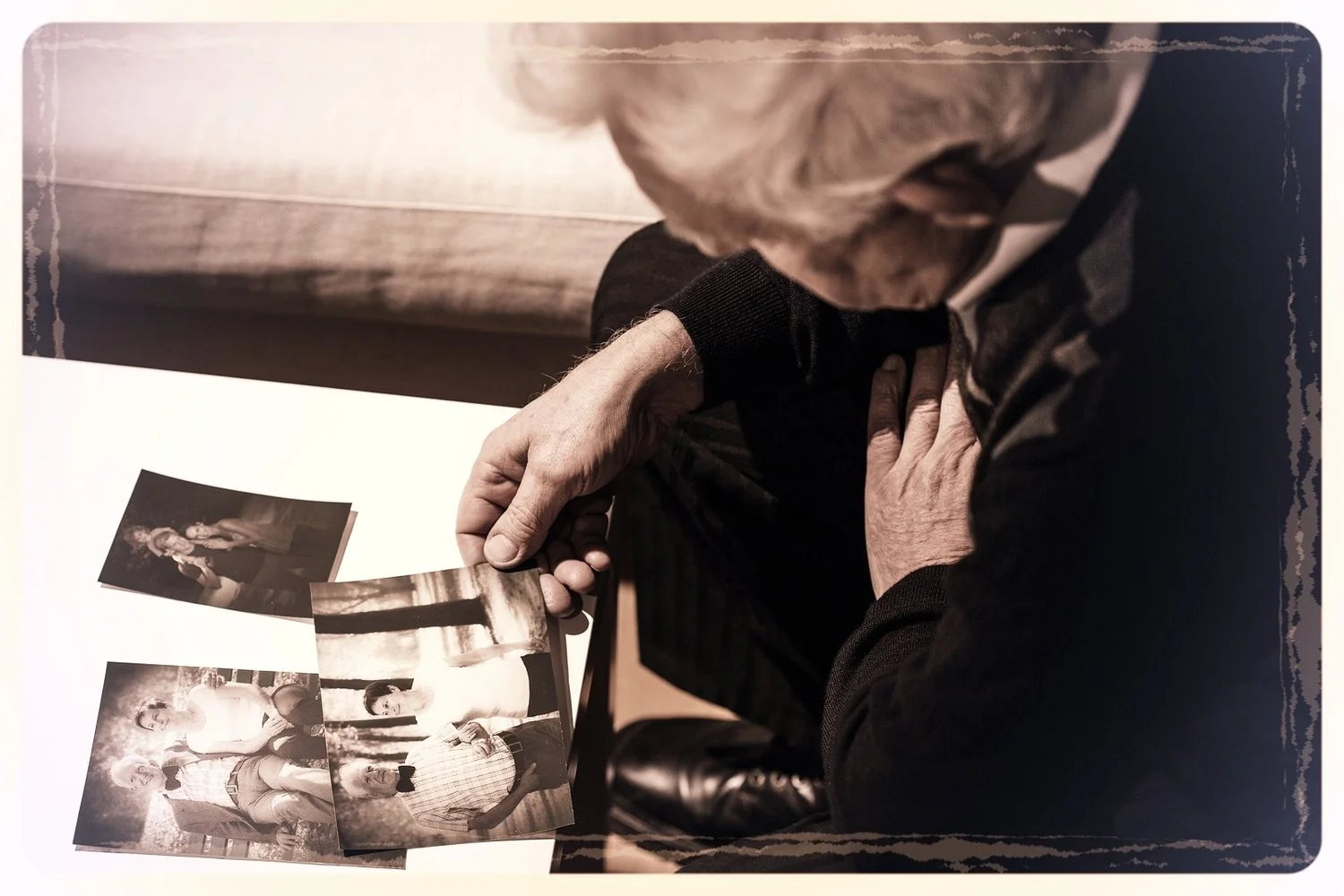
I talk often about the power of story. Rarely, though, have I been so confronted with just how powerful story and remembrance can be specifically in the face of grief as I was this Monday at a talk at the New York Open Center.
In a discussion billed as “Keeping Alive the Memories of Lost Loved Ones for Healing and Resilience,” three luminaries—Henry Louis Gates, Jr., Soledad O’Brien, and Allison Gilbert—spoke openly about their own experiences and shed light on why the more you honor your family and friends who have passed, the more likely you are to reach your fullest potential in the present.
The ambivalence around memories for those who are grieving
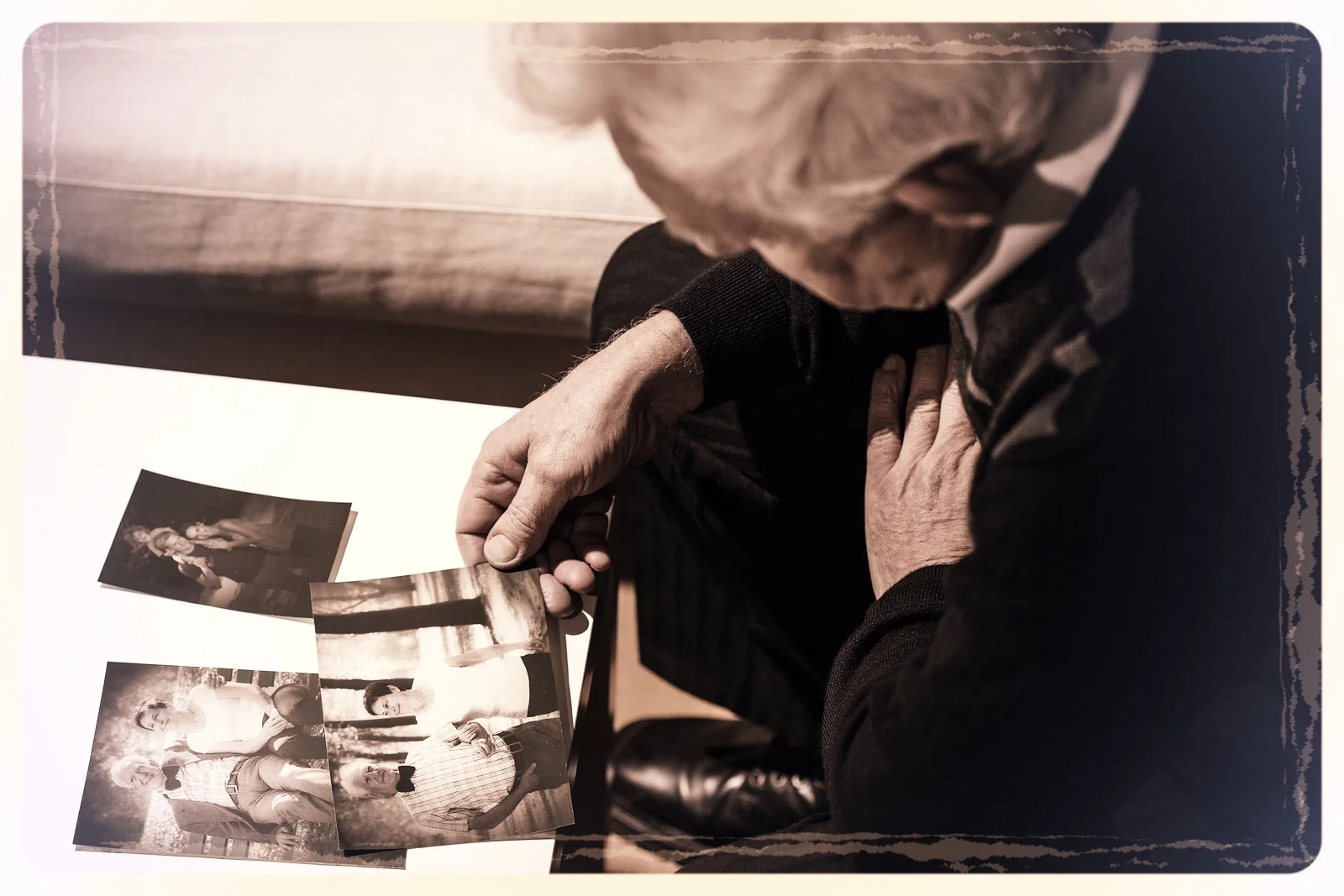
“When loss is fresh, there is a school of thought that resurrecting memories is too painful. But the opposite is actually true,” said Allison Gilbert, author most recently of Passed and Present: Keeping Memories of Loved Ones Alive.
Anyone who has experienced loss will nod their heads in recognition at Gilbert’s words. It is in this time of need that other people so often remain quiet because they simply don’t know what to say.
Sheryl Sandberg, who has been making the talk-show rounds in support of her new book Option B: Facing Adversity, Building Resilience, and Finding Joy, echoes that experience, recently saying that after her husband Dave died, “People were so afraid of saying the wrong thing that they hardly said anything at all.”
When Sandberg lost her husband in 2015, she lost her bearings; and her book is as much a helpful guide for those who have suffered a recent loss as it is for those who aren’t sure how to talk about loss or approach their friends who are grieving.
“I think a lot of people wanted to reach out to her, but they didn’t know how,” says Facebook CEO Mark Zuckerberg. “You know, there’s this whole question of, Are you reopening a wound or something? And of course, what she would say is ‘You’re not reopening the wound. I mean, it’s, like, open and gaping.’” [Time]
Nostalgia: research says it’s good
“There’s no time limit for grieving,” Gates said at the New York Open Center.
“And there is no roadmap to remembering,” added Gilbert. “Mourning allows you to be passive when you need to be passive. But at some point you’ve got to pivot from passive mourning to active remembrance.”
Her book Passed and Present hones in on highly specific ways to keep memories of lost loved ones alive, from memorializing a family recipe on a platter to creating a tribute book in your loved one’s memory. (I highly recommend Gilbert’s book for anyone hungry for ways to keep the spirit of your lost loved ones near.)
Taking intentional steps to remember those of our loved ones who are no longer with us is essential to healing our grief, building our resilience, and empowering our positive action in the world. Indeed, there is a huge body of current research that shows nostalgia—a sentimental longing for the past—is good for us, Gilbert said.
“Momentous life events, the primary fodder of nostalgia, entail cherished time spent with family, friends, and relationship partners…. which, when reflected upon, serve to impart meaning,” reads one hallmark study.
As Gilbert describes, “When we feel an intense bond with loved ones from our past, we're more likely to feel similar bonds with those around us in the present,” and this deep sense of connection in turn may assuage our grief.
The value in active remembering
Gilbert’s children were born years after her mother’s death, and she said she “had this profound need to keep their memories alive for my children.” One powerful way to do that is through story sharing. “I don’t tell my kids stories about my mom and my dad. I tell them stories about their grandmother and their grandfather.”
“How we really communicate is through narrative,” O’Brien said. We are connecting people through the narrative: “You tell the story about your lost loved ones—it’s what you pass on. The narrative is what makes people live even if they’re dead.”
Memories are the connective tissue that binds one generation to the next, and the active nature of remembering is healing.
“The prescription for joy and healing after loss is to remember,” Gilbert said.
Legacy books as memory prompts
Photographs of our lost loved ones serve as effective prompts for jogging our memories and actively engaging in storytelling about them, Gilbert said.
Capturing and preserving the deceased’s stories—their values and personality and experiences—in a tribute memory book, is an even more compelling way to cement their legacy. More importantly, a legacy book such as this is a living testimony in that it will continue to prompt story sharing and reminiscence about your lost loved one.
I personally experienced this last week when my son (who is seven going on 40) entered my room in his pajamas, hiding something behind his back. “Mom, I was wondering. I know it’s not our typical bedtime routine,” he began (see, 7 going on 40!), “but do you think we could look at this book about Nanny tonight for our bedtime story?”
He produced the small memory book I had made for him after his great-grandmother’s passing; she had lived with us and the two had been exceptionally close. The fact that my son proactively sought this time to remember her—and that he proudly retold many of their stories while we snuggled—warmed my heart in a most special way.
Gilbert described nostalgia, like empathy, as a social emotion: “It brings you closer to people not just in your past, but also in your present.” I can attest to that.
May you, too, find peace—and joy—in remembrance.
Related Reading:
Notes from a Funeral: Sharing memories about lost loved ones to heal—and why we don't honor our families through story sharing now.
Mommy & Me: How a struggle to tell my mother’s whole story turned into a more intimate portrait of love
Legacy Book FAQ: Answers to some common questions about what goes in a legacy book, and how they are created
Dawn Roode’s curated roundup for the week of Sept. 23, 2026, is overflowing with recent reads on memoir, life story writing, and family history preservation.