
Memories Matter
Featured blog Posts

READ THE LATEST POSTS
Life Story Links: May 11, 2021
Your biweekly dose of all things personal history—including fresh first person reads, photo printing help, and lots about the memories held in our possessions.
“One of the most significant facts about us may finally be that we all begin with the natural equipment to live a thousand kinds of life but end in the end having lived only one.”
—Clifford Geertz

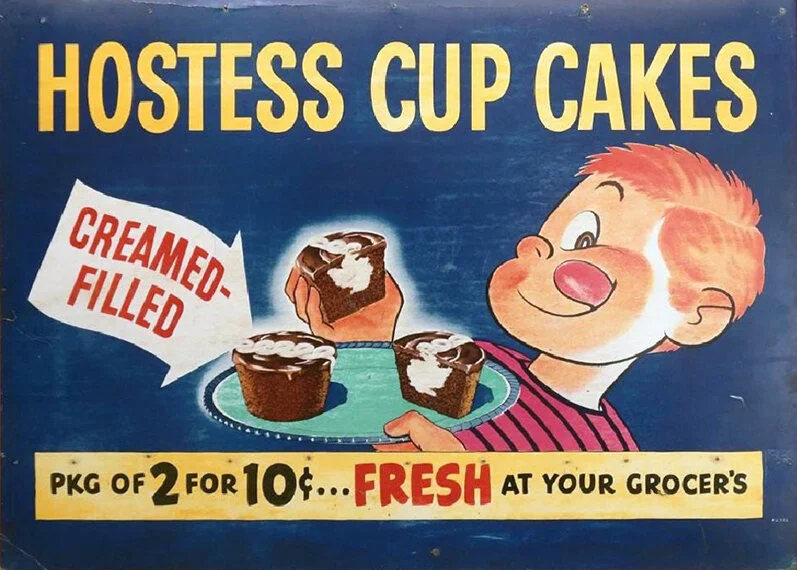
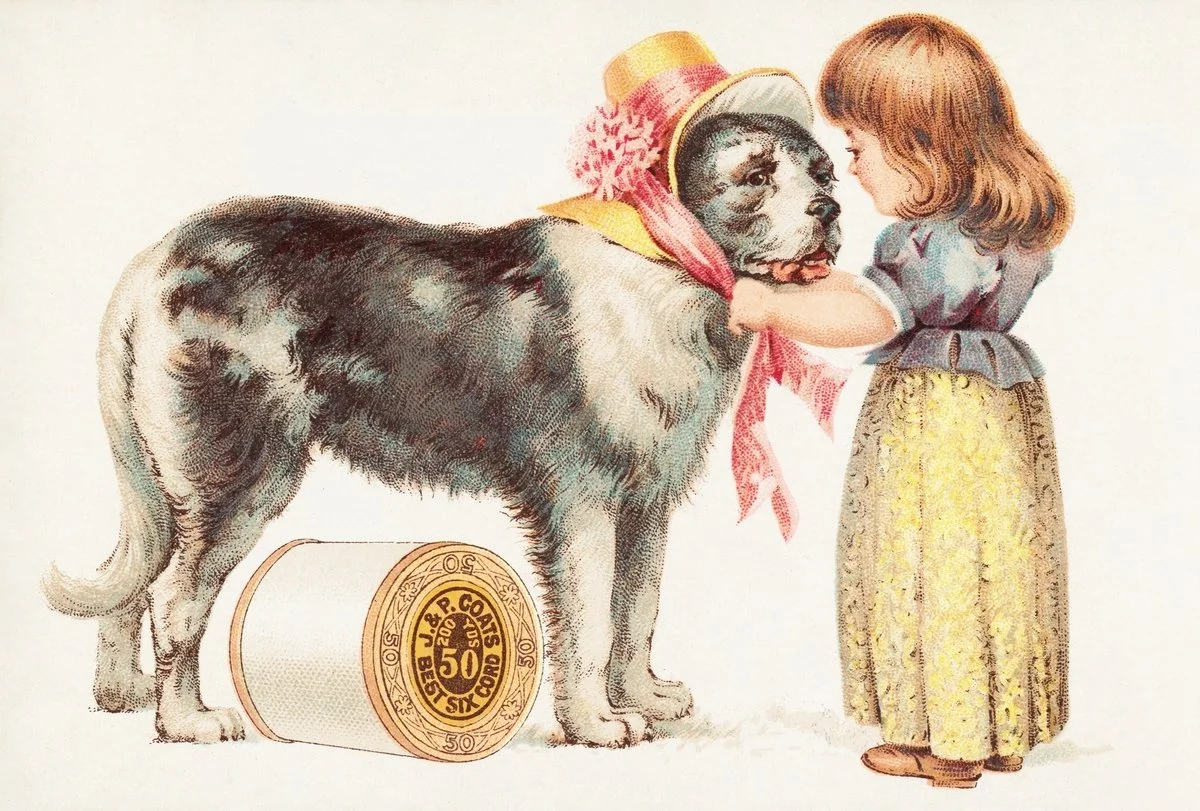
Yes, today is Hostess Cupcake Day here in the United States! Rather than indulging in the sugary treat, let’s celebrate with a vintage advertisement, shall we?
Discover: Recent First Person Reads I’ve Loved
“MY MOTHER IN THERE”
A few weeks after her mother dies, writes Marie Mutsuki Mockett, “I am forgetting that my mother was sick. Her essence has clarified…and my mind is furiously picking through memories, panning for gold, holding on to the nuggets that were her.”
LIFE IN MINIATURE
“More recently, I’ve felt that the worthier challenge may lie not in resisting the occasional backwards glance, but in trying to see that child [I was] and her fictions with compassionate eyes.” Kate Guadagnino on the solace of her childhood dollhouse.
FIGHTING THE INEVITABLE
“The ‘law’ was passed down in my family like a hideous heirloom.” Anna Dorn on doing everything possible not to follow in her father’s footsteps.
“WHAT ARE YOU WAITING FOR?”
“I never tired of talking to [my nieces and nephews] or playing with them; I’d happily volunteer for their parents’ less-favorite tasks, from diaper changes to dips in the pool. Pregnancy, though, still felt future state. But it would happen when the time was right. Right? Right.” Shelia Monaghan on the legacy of children.
Mementos, Memories, and Overwhelm
DISASSEMBLING A LIFE
Literary left-wing legend Frances Goldin had hoped that after she died, friends and loved ones could hold a “potluck shiva” in her home, “where people could take memorabilia and items they wanted or needed or that she had designated for them, while celebrating her life.” Covid had other ideas.
GRIEF, HIDDEN IN A STORAGE LOCKER
“My mother was kind and overly loving, yet she’d never told me about her life before me.” More than a decade after her mother’s death, Blake Turck finally has the emotional resolve to go through the stuff of her mom’s life—and learns that memories live inside us, not in things.
TCHOTCHKE CHALLENGES
“Especially with items of high sentimental and low financial value, documenting and sharing the stories and feelings associated with possessions can be a big step toward letting go.” Philadelphia–based personal historian Clémence R. Scouten offers advice for dealing with passed-down items to which we may hold an emotional attachment.
An Instinct to Preserve
FIGURING IT OUT AS SHE GOES
“Part of why I write about my own life, it’s my attempt to freeze all this ceaseless, endless, constant change,” says Alison Bechdel about her new memoir. “I just want to put down something that doesn’t move. Life is change.”
RECORDING LIFE
This senior “began making books for [each of her four children] on the day they were born, and presented each with a personal life history on their 60th birthday.” Now she is typing her memoir on a laptop her kids gave her.
VIDEO: UNINTENDED MEMOIR
Amy Tan: Unintended Memoir is an “intimate portrait [featuring] archival home movies, personal photographs,…as well as new interviews with Tan,” who speaks about traumas in her life and how writing helped her heal.
JEWISH STORY PARTNERS
“There is nothing like storytelling to foster connections and help us understand life’s deepest truths.” A new foundation aims to expand the range of stories told about Jewish lives.
Nitty Gritty Help
UM, WHY SO SMALL?
When many members of a family are contributing images to a memory book, chances are some of those pictures (maybe even your own) will not print well. Here are three common digital photo mistakes and how to avoid them.
...and a Few More Links
three new books about memory—and keeping it sharp
interesting infographic on the power of storytelling
Author Rachel Kushner’s new essay collection includes “eloquently written features about her personal history that are equal parts gripping and revealing.”
“The pandemic shaped my family for generations. Not COVID—the 1918 flu”
A new biography of Marjorie Kinnan Rawlings, author of The Yearling
Short Takes

Life Story Links: March 2, 2021
From notable memoir excerpts to thoughtful pieces on language, family history, and self-identity, this curated list is full of great new reads for memory-keepers.
“In the silence of listening, you can know yourself in everyone, the unseen singing softly to itself and to you.”
—Rachel Naomi Remen

Vintage photograph of nurse feeding a baby, taken between 1935-1945, courtesy of the Manuscripts and Archives Division, The New York Public Library Digital Collections.
Family Stories Matter—a Lot
FAMILY, HERITAGE, KNOWLEDGE
The Deseret News recently spoke with three of the keynote speakers at this year’s RootsTech Connect about their respective family histories and why knowing about one’s heritage matters.
STRESS-FREE WRITING
“I didn’t once notice an ungrammatical sentence or a misplaced comma in that collection of memories. That’s not what matters. What matters is authenticity, voice, and perspective. What matters is that our stories get told, in all of their imperfect glory.” Some really great tips from author Angie Lucas about preserving your stories.
Engaging History
HISTORY AS WE LIVE IT
The Pandemic Journaling Project now has more than 6,500 entries from more than 750 people, containing “perhaps one of the most complete records of North Americans’ internal adjustments over months of pandemic, protest, and political division.”
OUT OF THE BOXES…
Robert Blomfield was a medical student in the sixties when his passion for photography led him to document—in evocative pictures—post-war Edinburgh. Recently his family began to catalogue and digitize thousands of images in the archive and is sharing the legacy with a wider audience.
First Person Reads
WHAT IT MEANS TO BE A BLACK MOTHER IN WHITE AMERICA
“It has been critically important to me that Chris, as a white man, understands how dearly I hold onto my own Blackness, but equally important that he understand how necessary it is that our son be encouraged to hold onto his Blackness, too.” Rebecca Carroll’s memoir powerfully weaves the writer’s commentary with her life experience.
HER WRITING, THEN
“Technically, I’d written a memoir, but what kind of memoir was it? I wrote a book about disability in which the word ‘disability’ appears only once. And that, I’ve since realized, was a mistake.” Sandra Beasley on claiming her identity as a disabled writer.
INHERITED LANGUAGE & FAMILY HISTORIES
“My mother tongue is a linguistic shipwreck; and it is from there that I write the story of my grandparents,” Claudio Lomnitz writes in this excerpt from his memoir, Nuestra América: My Family in the Vertigo of Translation.
Food for Thought
“THE AUTHOR OF NOW”
Are memoirs “a choir made up of soloists only, voices competing for attention, all traveling similar routes, drowning one another out,” as Olga Tokarczuk has put forth? An exploration of the writer’s views on interconnectedness and fiction as a kind of truth.
IN OUR GENES
Using excerpts from the recent documentary The Gene: An Intimate History and season 7 of the series Finding Your Roots, two virtual discussions in March will seek to demystify the science behind genetics and ancestry.
To Health!
THE MEDICINAL POWER OF STORIES
Last week I wrote about how and why storytelling is good not only for the soul, but for our health, too—along with three ways to reap the health benefits of stories in our own lives.
THERAPEUTIC BENEFITS OF LIFE WRITING
And Michael Befus aggregated a LOT of research into one commanding post demonstrating how writing your life story can improve mental health in old age, including lessening symptoms of depression and improving cognitive function.
BEYOND THANK YOU
“It takes a little bravery, but writing sincerely and from the heart turns a polite note into a meaningful memento.” Writing a gratitude letter has proven mental health benefits—not to mention, it simply makes you feel darn good.
...and a Few More Links
a compendium of the most helpful and comprehensive memory-keeping posts on the site
four tips for capturing the spirit of those who have passed in a book
Canon’s new photo culling app
Spring course from Elon University: “Family Storytelling as a Superpower: Helping You Leave a Meaningful Legacy”
Short Takes

Life Story Links: August 11, 2020
On the craft of life story writing, commemorating lives lost, enticing memoir excerpts, digital preservation tips & more recommended reads for memory keepers.
“We have become a generation of unstorytellers…. We need to return to the campfire. And we can. It’s as simple as saying to someone, Tell me the story of your life. And when they’re finished, say, I’d like to tell you mine.”
—Bruce Feiler, Life Is in the Transitions

Postman, 1896. Photograph courtesy The Miriam and Ira D. Wallach Division of Art, Prints and Photographs: Photography Collection, The New York Public Library Digital Collections.
Saving Family Stories
A LITTLE MYSTERY
If you are unsure about an ancestor’s real life, don’t flesh out their story with conjecture and imagination, suggests Patricia Pihl, a personal historian based in Western New York. “Transparency will bring clarity to the picture of our lives, a true gift for future generations.”
(NON)TRADITIONS
Nashville–based family historian Taneya Y. Koonce wonders “I don’t have family traditions. Or do I?” Her take: “Recording facts and snippets about relationships and values for future generations can add as much to your family story as passing down the ways your family celebrates the holidays or other more conventionally considered traditions.”
Gone but Not Forgotten
LIFE CELEBRATIONS
As part of StoryCorps’ efforts to help people commemorate lives lost during the Covid-19 pandemic they have put together a two-page guide with genuinely helpful advice for setting up and recording a memorial conversation.
STORIES FROM POST-LOSS LIFE
“Before [my mom and grandmom] died I hadn’t even thought to attempt making a brisket or kugel or kasha and bowties, but afterward I felt this deep urgency to learn how to carry the tradition forward.” Rebecca Soffer talks to Allison Gilbert about keeping lost loved ones’ memories alive.
Inside the Issues: Recent Magazines & Books of Note
LIBRARY LOVE
The new issue of Broadside, the magazine of the Library of Virginia, includes an array of summery images from their digital collections, the intriguing ancestry of former football player Torrey Smith, a behind-the-scenes look at their Conservation Lab (with tips for preserving family papers), and a spotlight on a new book that finds the untold stories—“real-life human dramas”—within historical records.
IN A TIME OF WAR
Coby Blom-de Groot was 15 years old when her parents brought home a baby to shelter during the German occupation of Holland in 1943. She kept a diary about the child, including photographs and anecdotes, for her parents to read when they could be reunited. “That precious diary confirmed for me that Ria…was deeply loved,” her sister Sonja said. Read the whole issue of Yad Vashem Jerulsalem magazine, in which this story appears.
MEANING-MAKING THROUGH STORY
We’re in the midst of a collective “lifequake,” and author Bruce Feiler has help for how to navigate the uncertainties that come with all this change (hint: there might be some storytelling involved). Why you should read Life Is in the Transitions.
Recommended First-Person Reads
MARRIAGE STORY
“He was in New York, and I was in Seattle, but we had credit cards. We’d deal with the consequences later. The first time we kissed was in the kitchen of my apartment, against the closed door of the dishwasher in mid-cycle. Everything whirred.” Read an excerpt from The Fixed Stars: A Memoir by Molly Wizenberg
POETIC LICENSE
“Dad hadn’t been surprised when I’d told him I was interested in reading through his letters; he assumed everyone would be.” Read a brief yet enticing excerpt from Gretchen Cherington’s memoir of growing up with poet laureate Richard Eberhart as her father.
In Pictures
“WHO IS THAT?”
Bill Shapiro has shelf upon shelf of found photos sorted into archival boxes. “I love these pictures,” he writes. “I also hate them. They remind me of time going by. They remind me of what I had and what’s gone.” Read more about the strange lure of other people’s photos.
DIGITAL PRESERVATION
As an early supporter of Permanent.org I have uploaded photographs to their archive and am following their journey as a nonprofit dedicated to creating “a new paradigm for secure cloud storage.” I believe their mission is worthwhile—low-cost, long-term digital storage for anyone “leveraging the same funding models used by museums, libraries, and universities for centuries.” Read about how they reached their phase 1 fundraising goal; get started with a free gigbyte of storage; or add space as you need it ($10 per gig).
...and a Few More Links
In the latest issue of Creative Nonfiction: Lee Gutkind on memoir now
Why we reach for nostalgia in times of crisis.
A family historian’s process for making ancestor books
Milwaukee–based personal historian Mary Voell announces virtual guided autobiography classes beginning in September.
Milan Kundera will donate his archive to his hometown library, in Brno, Czech Republic.
Short Takes
Dawn Roode’s curated roundup for the week of Sept. 23, 2026, is overflowing with recent reads on memoir, life story writing, and family history preservation.