
Memories Matter
Featured blog Posts

READ THE LATEST POSTS
Three writers use vignettes to craft moving memoirs
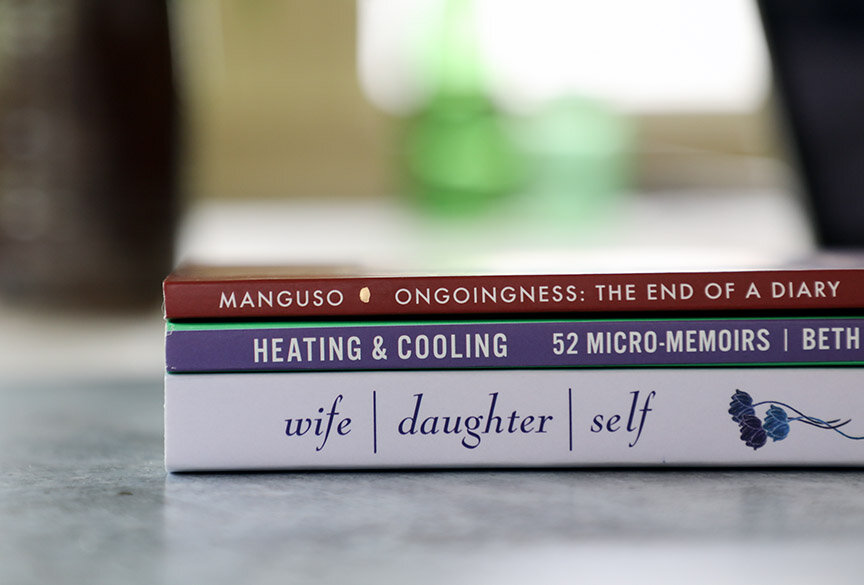
Memoirs by Sarah Manguso, Beth Ann Fennelly, and Beth Kephart each weave together short narratives to create evocative, textured self-portraits of the writers.
I have written often about using vignettes to tell the stories of your life, and I feel strongly that reading works by others to inspire your own writing is a humbling and essential practice. The three books that follow have one big thing in common: The writers weave together fragments—called alternatively essays, micro-memoirs, and meditations—to create a multi-faceted self-portrait. I recommend reading each of these to get a sense of just how powerful and evocative it can be to craft your memoir…vignette by vignette.
memoir in vignettes no. 1
Ongoingness: The End of a Diary
Ongoingness: The End of a Diary by Sarah Manguso (Graywolf Press, 2015) is a series of meditations on the author’s compulsion to keep a continuous diary. She writes early in the book, “From the beginning, I knew the diary wasn’t working, but I couldn’t stop writing. I couldn’t think of any other way to avoid getting lost in time.”
Manguso recalls a time in childhood when she didn’t yet need a diary because “I wasn’t yet aware of how much I was forgetting.” That’s at the heart of it here—the fear of losing memories, of losing pieces of oneself. So she records, she memorializes, and she fights the forgetting…until she has a child of her own, that is. And in Ongoingness, she explores the “welcome amnesia,” as the book jacket calls it, of the next chapter of her life.
Some of Manguso’s insights and observations are elliptical in nature: She circles back to them once and again, each time drawing more or new or different meaning from the same experience. Her prose is crystalline. Her insights are resonant.

Ongoingness: The End of a Diary by Sarah Manguso is a fine example of:
how everyday moments deserve primacy in our writing
how paying attention to details—select, apropos details—can elevate the personal to the universal
how memory is malleable and often elusive—and how, even then, we can mine truth from it in our writing
how “brief” does not mean “lacking”
memoir in vignettes no. 2
Heating & Cooling: 52 Micro-Memoirs
Heating & Cooling: 52 Micro-Memoirs by Beth Ann Fennelly (W.W. Norton & Co., 2017) is another sleek volume that brings the writer to life through what she calls “micro-memoirs” and what I would refer to as “vignettes.”
Don't be fooled: The autobiographical vignettes in Heating & Cooling were not randomly gathered from the author's journals; rather, they were thoughtfully woven together. There is a fine balance between entries that delve into deep waters and ones that skim lightly along the surface. There is a rhythm not only to the words, but to the pieces themselves (which range in length from a single sentence to six pages). There is a layering of themes and a range of moods, a sense of both evocative poetry and direct truth-telling.
Consider reading this book twice: Once, read a vignette or two every night (Ann Patchett calls each entry a “perfect pearl of memory,” and indeed they are worthy of relishing morsel by morsel); then, binge-read the book in one sitting (it's just over a hundred pages, after all, and I promise you the layered themes I mentioned will be all the more apparent to you this way).

Heating & Cooling: 52 Micro-Memoirs by Beth Ann Fennelly is a great example of:
making every word count (Daniel Wallace said, “Every sentence in this book could be sent to the Smithsonian Institution in case future readers want to know what a great sentence looks like.)
how to use humor effectively in your memoir writing
how to curate and compile telling moments from a life to reveal broader themes—and delight the reader
how to be wonderfully vulnerable and alive in your writing
how to construct a book of vignettes that build upon one another and all together draw a richly textured portrait of the writer
memoir in vignettes no. 3
Wife | Daughter | Self: A Memoir in Essays
Ah, perhaps my favorite of the bunch here, Beth Kephart's latest memoir, Wife | Daughter | Self (Forest Avenue Press, 2021) is a book to be savored. And for those of us who open to the first page with the intent of inspiring our own writing, how lucky we are that Kephart has included notes on how she created it in a thoughtful postscript. To wit:
"I write parts whose purpose is to find their way into an implicating whole, the choreography of the thing being the thing, the adjacencies and half sums. The rain that won't come answered, pages later, by the rain that will. The dead communicating with the living.”
Or:
"…the aggregation of parts that constitute this memoir reflect my belief that truth is not continuous, that stories live in the seams, that we remember in bursts and find wisdom in the juxtaposed…”
Kephart is a perpetual seeker of truth—of her truth, of the universal truth; she is on a quest for meaning, and it is through writing that she is most often able to find it. Does she find herself, though—the "self" in the title of this memoir? Do we as readers find her?
We glimpse her, we feel her, we intuit and recognize and yearn for her in the push and pull of her words. We find her in the seams (oh, how I love this notion: that “stories live in the seams,” as Kephart writes and teaches and ultimately manifests in this memoir). We are left to find traces of her and to piece together a fragmented whole ourselves—a whole I envision as a mobile made of shimmering stained-glass mosaics, blowing in the wind, simultaneously reflecting and catching the sun. We know her, even if perhaps we can't summarize who she is in words.
"If you asked about my process, I'd say music,” Kephart writes in the addendum. And there it is: While we are caught up in the music of her life, of her writing, then her craftsmanship—her cognizance of form and her attention to weaving fragments together so they convey more than the sum of their parts—all of that is invisible to us as readers. Beautifully, conspicuously invisible.

Wife | Daughter | Self: A Memoir in Essays by Beth Kephart is a stellar example of:
how to orchestrate a symphony from otherwise disjointed notes
how to carefully choose and weave details so that they become "telling details"
how to write towards truth, allowing the journey of writing to become part of the story; as Kephart says, “the truth is in the trying”
how “writing the same story twice is to puzzle out dimensions”
how considering yourself in relation to others—"Father's daughter. Husband's wife. Son's mother."—can be a gateway to finding oneself, period.

Download Free Writing Prompts Guide
Get all our life story vignette writing prompts in one easy-to-read printable guide!
Discover more posts to help with writing vignettes about your life



Affiliate disclosure: As an Amazon Associate, we may earn commissions from qualifying purchases from Amazon.com.
The vignette: What to read to be inspired
Memoir reading suggestions to inspire your own vignette-style life story writing, from Annie Dillard and Kelly Corrigan to Robert Fulghum and Sandra Cisneros.

Reading memoir in the format in which you would like to write is an effective way to internalize style and discover what may and may not work for you.
Here are a few titles that, in my opinion, utilize vignette-style writing to its fullest potential.
Vignette-Style Autobiographical Writing
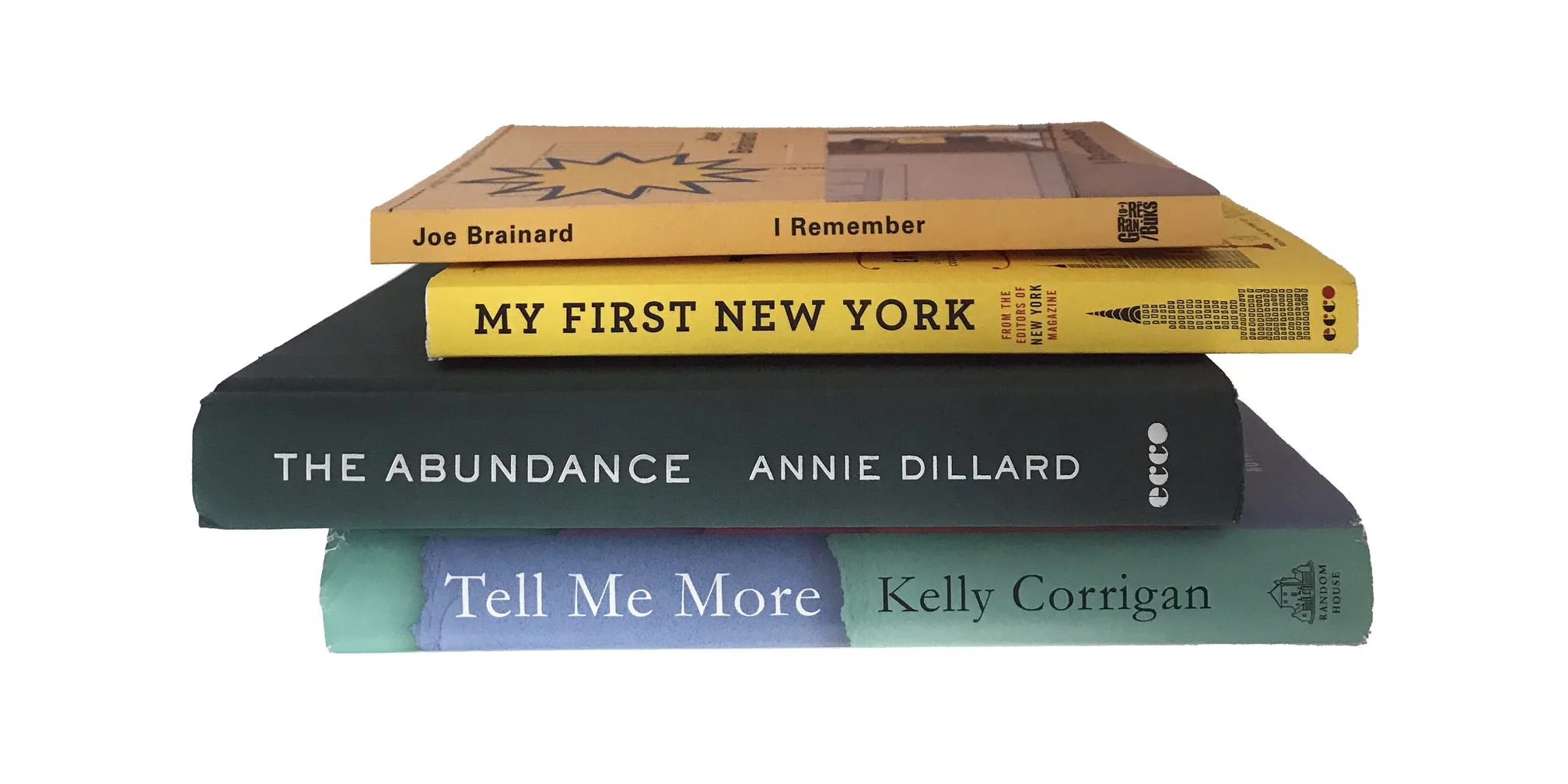
The Abundance: Narrative Essays Old and New
(2016) by Annie Dillard
The entry titled “Jokes” is a fine example of writing from family experience that feels particular and universal at the same time; even without a true narrative arc, Dillard develops her parents into real characters and paints a picture of her home that makes the reader feel a welcome guest.
Tell Me More
(2018) by Kelly Corrigan
Read this joy-filled, sensitive memoir not because it is vignette-driven (it is not) but because it very likely started out that way. Corrigan—who has been called “the voice of her generation” by O: The Oprah Magazine and “the poet laureate of the ordinary” by HuffPost—beautifully weaves 12 stories together to create a book that says plenty about her life, and ours. Consider Corrigan’s book a goal to strive for in terms of using life experience to convey something beyond yourself, and of editing stories so they transform into a whole that is greater than its parts.
My First New York: Early Adventures in the Big City
(2010) from the editors of New York magazine
This compendium of candid accounts from various luminaries puts New York City on the map in an entirely new and wholly personal way. Each vignette (called “small, glittering essays” by the LA Times) is an exquisite example of capturing a slice of life via an interview (translated for the book into as-told-to pieces), an approach anyone can try simply by speaking into your phone’s voice recorder and transcribing—and editing—later.
I Remember
(1975) by Joe Brainard
Dani Shapiro introduced me to this tiny gem during a memoir writing workshop a few years back, and I have recommended it countless times since. Brainard’s memories, recounted in a stream-of-consciousness fashion, are short and pointed, often mere phrases or single sentences, occasionally a brief paragraph, each beginning “I remember...”. Read this book to discover the power of short reminiscence, and emulate it to create your own list of prompts for future development.
Finding Inspiration in Fiction
The House on Mango Street
(1984) by Sandra Cisneros
This a great fictional model for vignette-style of writing. The book is a series of sketches and vignettes written in rich, poetic prose that together form a loose narrative about the author’s Chicano childhood. The vignettes add up, as Cisneros has written, “to tell one big story, each story contributing to the whole—like beads in a necklace.” Told in first person, the book reads like a true autobiographical exploration. Her language is lush and figurative, offering us a glimpse into her world without much editorial exposition.
Discovering Voice
All I Really Need to Know I Learned in Kindergarten
(1986) by Robert Fulghum
Robert Fulghum, whose eight nonfiction books all rose to the top of the New York Times Bestseller List, refers to his writing as “stories, observations, and affirmations.” His books are filled with anecdotes, wit, and wisdom around everyday experiences and life-changing transitions.
He says his “writing usually begins as journal entries—notes to myself—lines of verbal perspectives drawn from walking around and stopping at intersections as I move camp each year.” Fulghum says he molds his raw ideas into stories by sharing them aloud with a walking companion, thereby “editing” his stories as he goes. “In time, the stories and reflections migrate into book form,” he writes. “Even so, please keep in mind that I think of what I’m doing as writing letters and postcards to friends, always ending with the unspoken tag line: ‘Wish you were here.’”
Two more of Fulghum's titles to check out for inspiration for using a casual voice to capture vignettes that resonate:
What on Earth Have I Done? (2007)
It Was on Fire When I Lay Down on It (1989)
Related Reading on Vignettes
In “How to Write a Good Story in 800 Words or Less” you’ll find writing tips and, more importantly, one of the best examples of how powerful brief character writing can be, a 145-word piece by Meyer Berger.
Check out our Vignettes Writing Prompts series:
Learn how to use family photographs as writing prompts, and how to choose the best photos to use.
If you’d like memory and writing prompts delivered to your phone weekly, sign up for our short—affordable!)—Write Your Life courses.
Affiliate disclosure: As an Amazon Associate, we may earn commissions from qualifying purchases from Amazon.com.
FREE Writing Prompts Guide
Get all our life story vignette writing prompts in one easy-to-read printable guide!
Life Story Links: February 12, 2019
Ruminations on the nature of memories, inspiration for using letters to inform memoir, a pining for handwritten recipes, plus a few family history reads.
“Certain moments are vividly conceived during adrenaline rushes—falling in love, thinking you’re about to get hit by a bus. But the brain isn’t a file cabinet…and what you forget says as much psychologically as what you remember.”
—Mary Karr

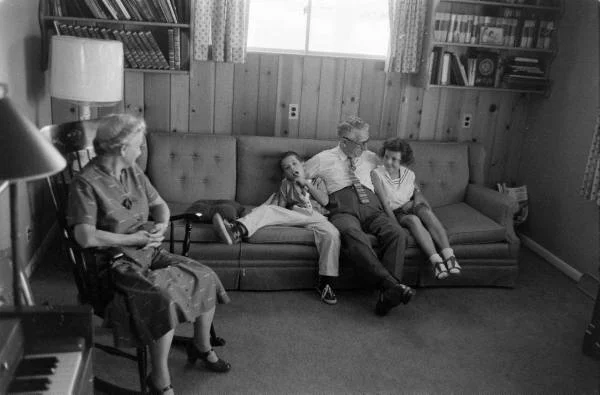
Retired man with family, 1959. Photograph by Stan Wayman for LIFE magazine. ©Time Inc.
On Memories and Memoir
DIARIST AS MEMOIR WRITER
An aspiring memoirist seeking famous writers’ letters and essays for motivation receives an inspired list of book recommendations. I can almost guarantee you’ll find something new to you and revelatory on the list.
“THIS IS MY LIFE”
“The past is a giant ball of tangled yarn that I simply do not know how to untangle,” writes N. West Moss in this keen meditation on the nature of memories. Later: “The thread of my own story spools from me like an endless ribbon. It says to me, ‘This is my life. This is my life.’”
CHOOSING YOUR STORIES
“If you answer a few interesting questions while you still draw breath, you will leave a gift of inestimable value to those who come after you,” writes Alison Taylor of Utah-based Pictures and Stories.
Pieces of the Past
FOOD OF LIFE
A reissue of Ntozake Shange’s If I Can Cook/You Know God Can (Beacon Press, 2019) prompts LitHub to share this deliciously personal excerpt. The book’s subtitle, “African American Food Memories, Meditations, and Recipes” merely hints at the rich and eclectic content within, a tribute to food as a people’s living legacy.
RECIPE FOR NOSTALGIA
“The internet is making paper recipes obsolete, but many modern cooks see the cards as tangible mementos of favorite foods and the beloved cooks who made them over and over again.” Frayed edges and oil stains? All the better.
VOICES FROM LONG AGO
Susan Hood of Remarkable Life Memoirs in New York shares a handful of handwritten letters she revisited among her parents’ things, feeling reconnected to them and gleaning a bit of family history along the way.
OBJECT LESSONS
We all know how photos and family heirlooms tell stories, but what about objects as mundane as bakeware? Are there simple objects that reflect significant truths about who you are?, asks Massachusetts–based personal historian Nancy West.
Family History Reads
DIGGING STUFF UP
“They’re the myths that are a part of the story of yourself, whether you like them or not,” Jaya Saxena writes of uncovering genealogical facts. “Learning your history is forced reckoning, asking you to consider whose stories you carry with you and which ones you want to carry forward.”
#NOTATROOTSTECH2019
You needn’t travel to Utah to benefit from the family history event of the year, RootsTech. Discover how you can learn about storytelling, interviewing, and genealogy from the comfort of your own home.
...and a Few More Links
Urban Archive invites New Yorkers to submit photos for their new crowdsourced history project.
Familygenealogy.online launched tools and resources for exploring family trees.
HippoCamp, a conference in PA for creative nonfiction writers, has opened early-bird registration.
“How to Turn Your Parents’ Stuff into Something Cool”
Short Takes
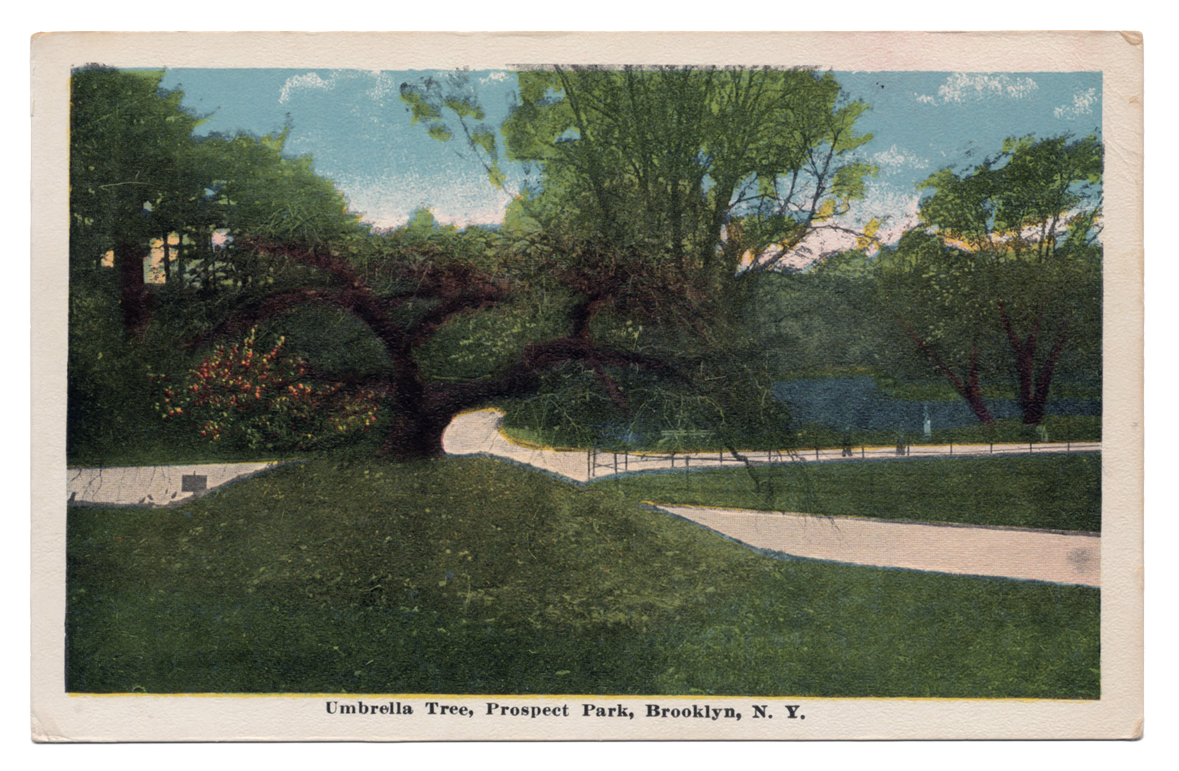
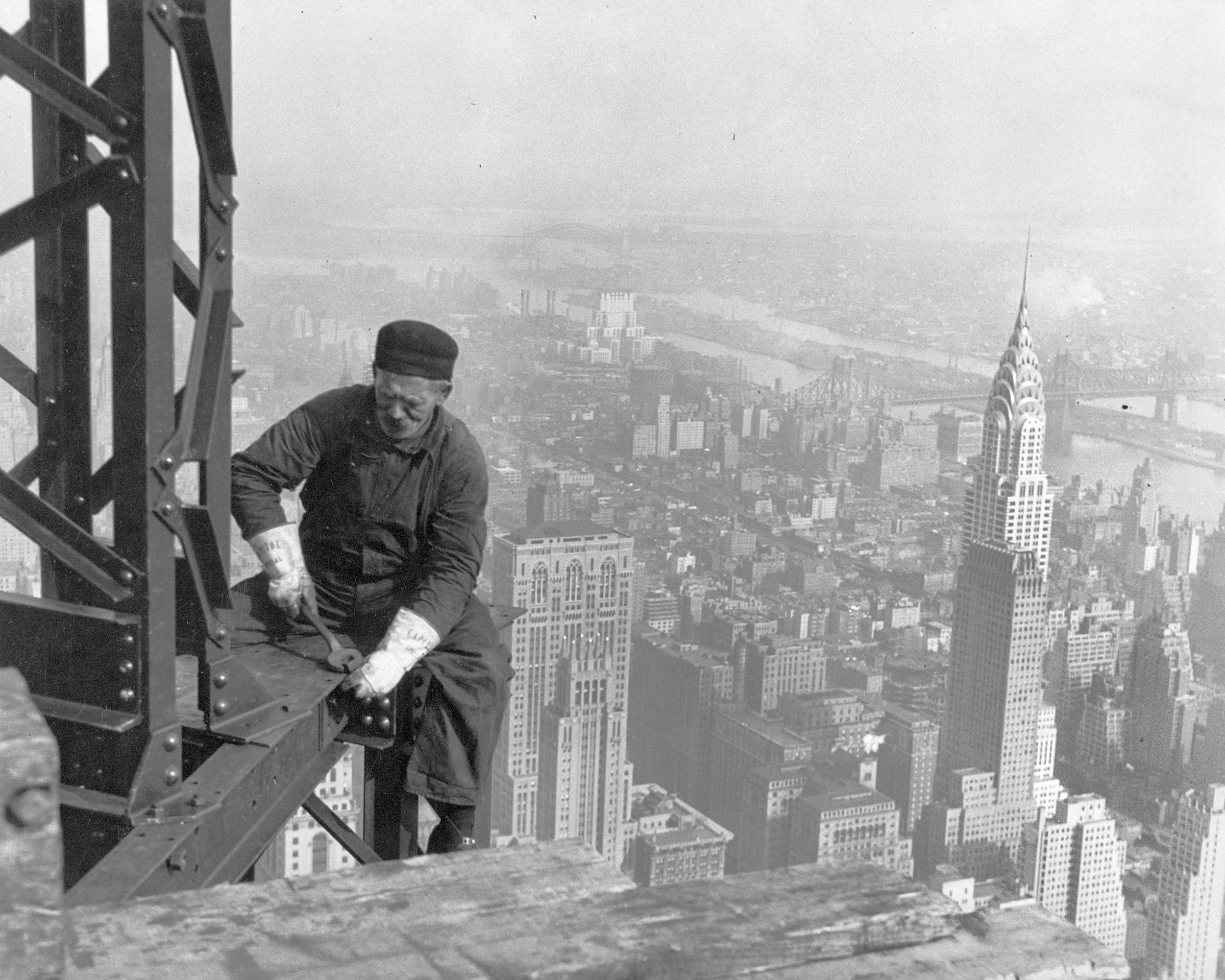
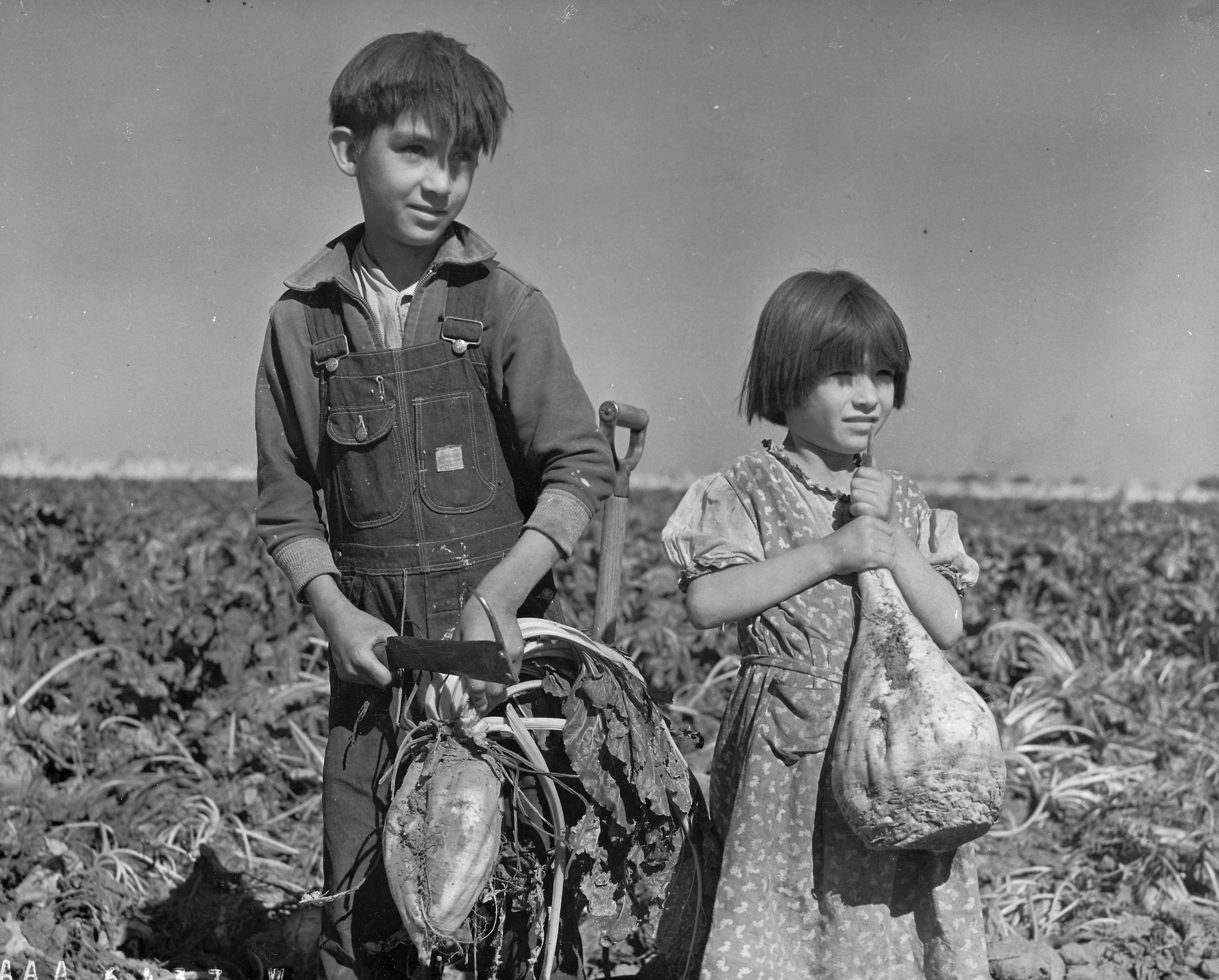
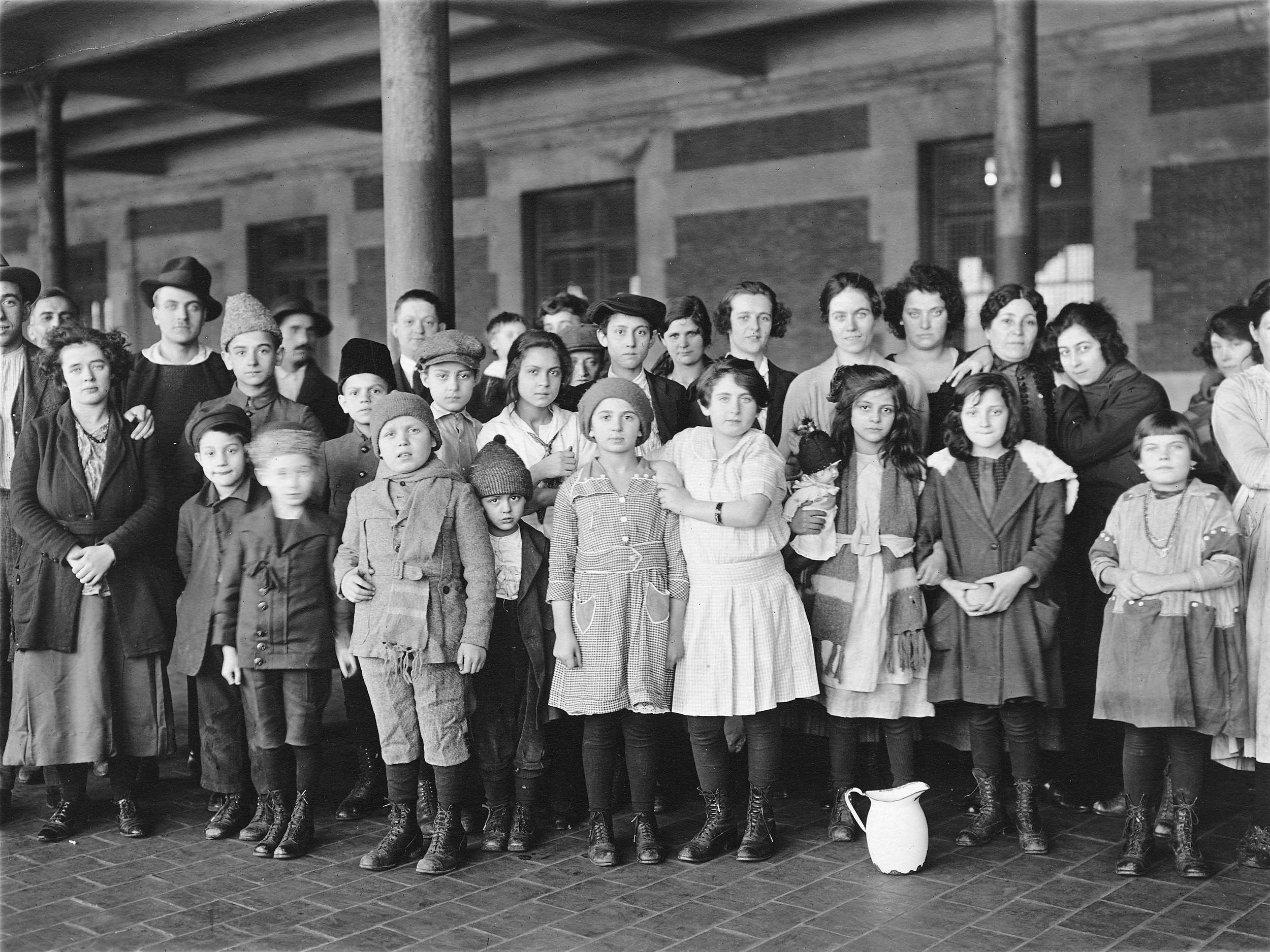
Dawn Roode’s curated roundup for the week of Sept. 23, 2026, is overflowing with recent reads on memoir, life story writing, and family history preservation.