
Memories Matter
Featured blog Posts

READ THE LATEST POSTS

Life Story Links: November 15, 2022
On tap this week: A host of memoir-ish media recommendations, plenty about preserving legacies of those who have come before us, and tips for writing our lives.
“So let us leave words for those we love in order that we may journey with them long after we are gone, and let it not take imminent death for us to find those words and craft a more meaningful legacy.”
—Rabbi Steve Leder
Vintage promotional photo for Automat coffee, courtesy of the Manuscripts and Archives Division, The New York Public Library Digital Collections.
Memoir-ish media
FAMOUS DIRECTOR’S AUTOBIOGRAPHICAL FILM
“I started thinking, what’s the one story I haven’t told that I’d be really mad at myself if I don’t? It was always the same answer every time: the story of my formative years growing up between 7 and 18.” Steven Spielberg gets personal.
WALKING WITH GHOSTS
“It’s not even so much about my life. I put my life out there so you can think about yours.” Gabriel Byrne on the stage adaptation of his acclaimed 2020 memoir, Walking With Ghosts.
ACCUMULATED MEMORY
“Memory permits us all to have an authentic relationship to our national narrative. These discrete stories and moments, anecdotes and memories, become the building blocks of our collective experience alongside our individual identities.” Ken Burns on the intersection of individual intimacy and national narrative.
AN UNDOCUMENTED CHILDHOOD
“My biggest fear is that with my parents will die the last of my ties to my familial roots. And in response to that fear, to preempt the feelings that might emerge, I am tempted give up and let those ties fade now.” Read a memoir excerpt from Qian Julie Wang.
COMPLICATED FAMILY HISTORY
When Rachel Knight started looking into her family’s genealogy, she came across a history her grandmother had typed years before, and a shocking discovery. She and her brother share this part of their family legacy in Invented Before You Were Born, previewed here:
Lasting legacies
‘HERE AFTER” AI
Digital clones of the people we love could forever change how we grieve. Are we ready for such technology that lets us “speak” to our dead relatives?
IN LOVING MEMORY
Last week I wrote about how I’ve gotten to know more than 50 people I’ve never met this year by editing tributes in their honor—and why this is a worthy endeavor.
GLOBAL ACCESS TO TESTIMONIES
USC Shoah Foundation has completely overhauled its Visual History Archive.“The result is an incredible new resource that humanizes testimony in a way that has never before been possible.”
HER PERSONAL UNDERTAKING
New York teen author Suzette Sheft says, “My father’s death forced me to understand the importance of preserving the stories of our loved ones before it is too late. At 13, I learned that I could not let my family’s stories fade away, no matter the pain that comes with remembering.”
Writing our lives
OVERCOMING STORY-INERTIA
“It takes courage and commitment to begin and maintain the process of creating a written narrative of the past,” New Hampshire–based personal historian Peggy Rosen writes in this piece offering approaches from Guided Autobiography.
WRITING ABOUT THE HARD STUFF
“I always find that if you are hesitant to share something difficult but feel a nudge to do so, you should go for it. It’s probably because you need to share to help yourself or someone else,” writes Rachel Trotter of Evalogue Life.
THROUGH LIVES, THROUGH DEATHS
“I didn’t believe I was a writer yet, but I made a note of it,” Sorayya Khan says of learning her father had 10 years to live. “Writing renders our world and ourselves. It has saved me more than once.”
...and a few more links
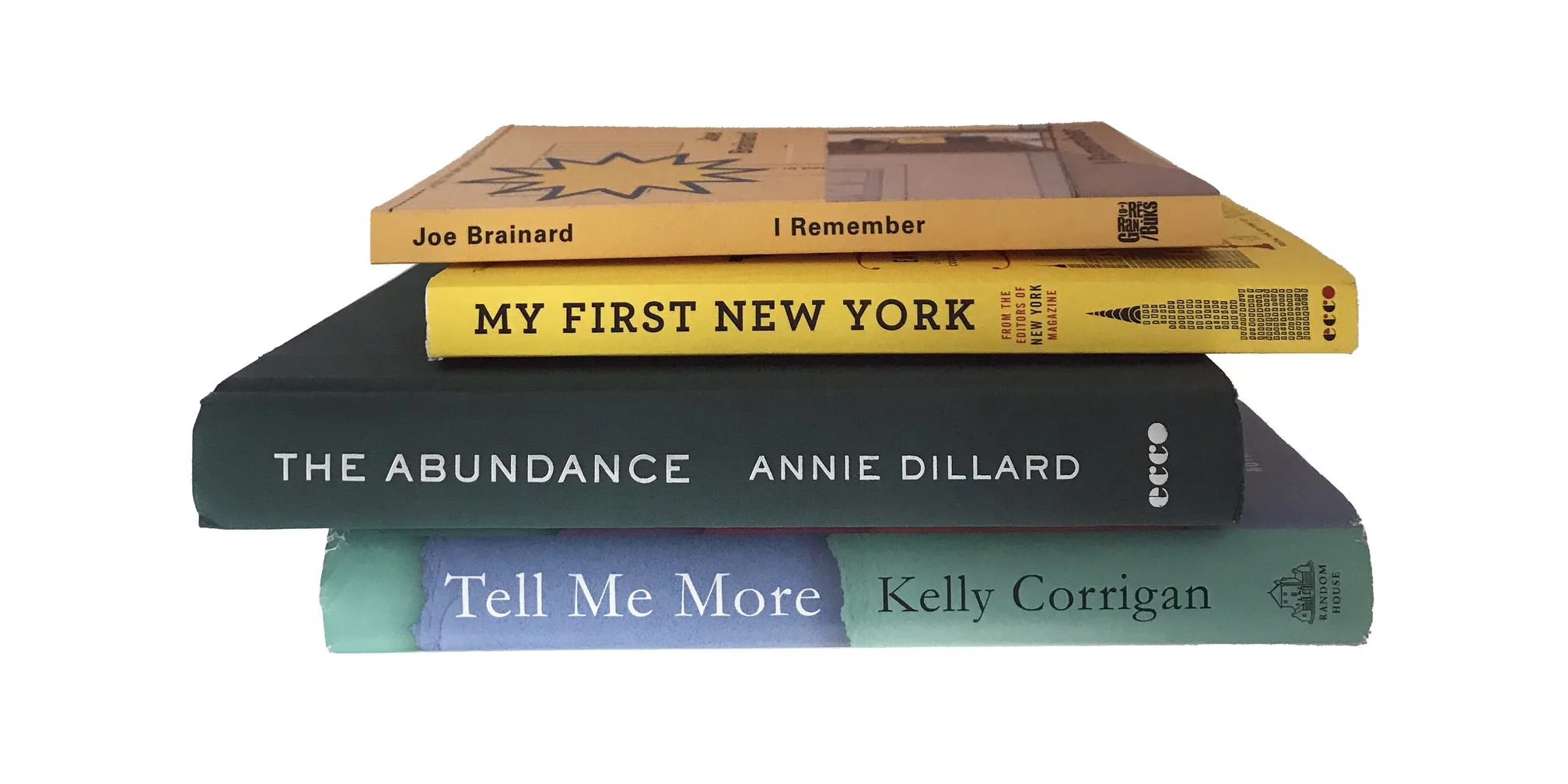
How Taylor Swift and Joe Brainard led one writer on an exploration of writing in the present tense
The author of Are You There, God? It’s Me, Margaret recalls the confusion and joy around a female rite of passage.
A wonderful way to honor veterans’ stories in Ontario
Short takes
Most anticipated memoir & craft books of 2022
Personal historian Dawn Roode of Modern Heirloom Books lists her most anticipated books of 2022 for fans of memoir and the craft of writing. Mark your faves!
Normally when I write about books it’s because I have read them and am recommending them for some specific reason (such as these books to help you with your life writing). Today, however, I am offering up a list of books that are forthcoming this year and that are on my radar. I thought you might like to check them out, too, and pre-order any that pique your interest.
Life writing, craft, and memory-keeping books
Who knows if the list for this first theme of books—about writing memoir and preserving legacies—will grow as the year goes on. For now, these are the three nonfiction titles I am anticipating in 2022. If you’re in the market for more books on how to write your stories, writing and memory prompts, and more craft-themed books, check out my reviews of current titles here.
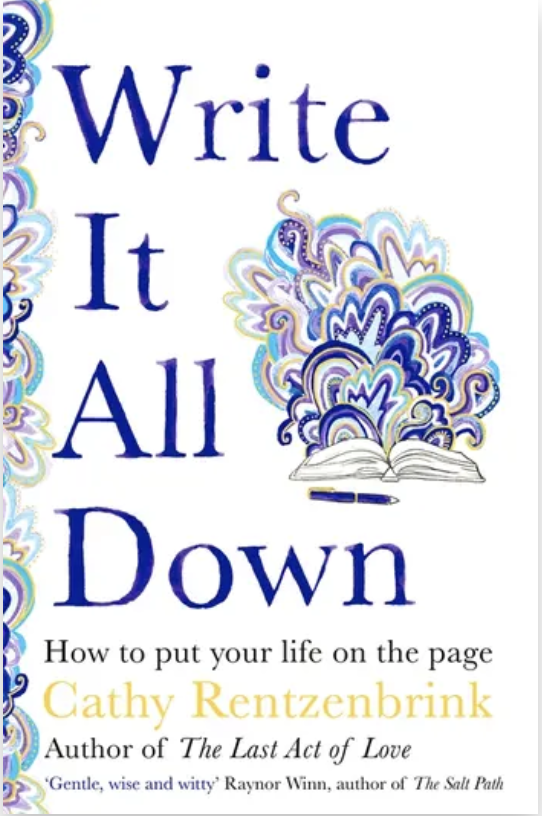
Write It All Down: How to Put Your Life on the Page
By Cathy Rentzenbrink (Pan Macmillan; January 2022)
From the publisher: “Why do we want to write and what stops us? How do we fight the worry that no-one will care what we have to say? What can we do to overcome the obstacles in our way? … Intertwined with reflections and exercises, Write It All Down is at once an intimate conversation and an invitation to share your story.”
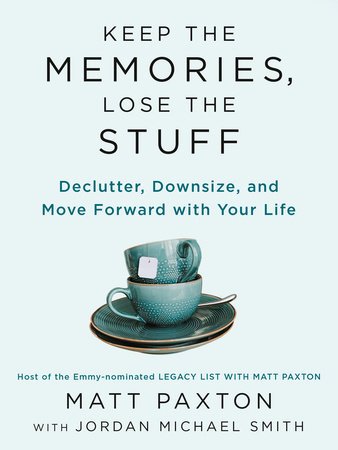
Keep the Memories, Lose the Stuff
By Matt Paxton (Portfolio; February 8)
From the publisher: “America’s top cleaning expert and star of the hit series Legacy List with Matt Paxton distills his fail-proof approach to decluttering and downsizing. Your boxes of photos, family’s china, and even the kids’ height charts aren’t just stuff; they’re attached to a lifetime of memories—and letting them go can be scary. With empathy, expertise, and humor, Keep the Memories, Lose the Stuff helps you sift through years of clutter, let go of what no longer serves you, and identify the items worth keeping so that you can focus on living in the present.”
This is a topic near and dear to my heart (see my free guide “After a Death: How to Make the Process of Going through Your Parents’ Photos Easier”), and I look forward to seeing how Paxton shares his wisdom. A favorite bit of personal historian advice with respect to sorting through your stuff: Take high-quality photographs of items that hold meaning but perhaps take up too much space or no longer feel relevant to your life; this way you can write about why these heirlooms mattered to you (and your family), where and when they originated, etc.—then, after preserving their history, you can give them away without unnecessary guilt.
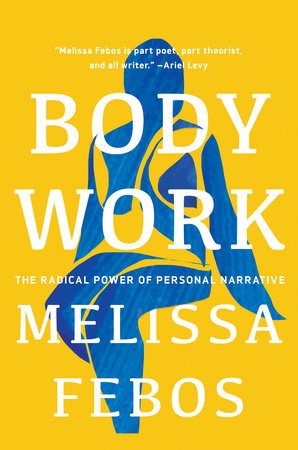
Body Work: The Radical Power of Personal Narrative
By Melissa Febos (Catapult; March 15, 2022)
“If I could do cartwheels, I would have cartwheeled across the room when I learned that the brilliant Melissa Febos is gifting us with a memoir craft book,” writes one reviewer on LitHub.
From the publisher: “How might we go about capturing on the page the relationships that have formed us? How do we write about our bodies, their desires and traumas? What does it mean for an author’s way of writing, or living, to be dismissed as ‘navel-gazing’—or else hailed as ‘so brave, so raw’? And to whom, in the end, do our most intimate stories belong? … Melissa Febos has created a captivating guide to the writing life, and a brilliantly unusual exploration of subjectivity, privacy, and the power of divulgence.”

How to Tell a Story: The Essential Guide to Memorable Storytelling from The Moth
By The Moth, Meg Bowles, Catherine Burns, Jenifer Hixson, Sarah Austin Jenness (April 26, 2022)
I’ve never been drawn to going up onstage to share my stories at a mic, but I am a frequent guest at story slams and Moth main stage performances (migrating to their storytelling podcast during the pandemic)—and I have always marveled at how well the coaching works. Seriously, introverted writers and self-declared non-performers shine when they’re telling their stories for The Moth, and often that can be attributed to having workshopped their material with a team of educators who help develop and shape their stories. Goals? “To hook us in. Make us care about you… [and] conclude as a different person.”
So of course I’m invested in reading their new book that promises to share “secrets of their time-honed process and [use] examples from notable and beloved storytellers,...[and to help you] mine your memories for your best stories.” Everyone has a story to share, so why not share it well?
Biography & Memoir
I firmly believe that reading memoir—good memoir, truthful and well-structured memoir—is a bridge to writing memoir. So beyond the mere sensory pleasure of reading any of the below suggestions, if you are someone who regularly writes about your life or has aspirations to pen your own memoir, take notes when you come across something especially compelling. Does the author employ dialogue to great effect? How do they weave the past and the present? How to they convey universal meaning from singular personal experiences?
My regular readers will know I have an affinity for memoirs told in shorter snippets—often referred to as vignettes—and I am especially eager to read the following from the list below, all examples of the memoir-in-essays form: Bomb Shelter: Love, Time, and Other Explosives by Mary Laura Philpott (April); The Crane Wife: A Memoir in Essays by CJ Hauser (July); and Crying in the Bathroom by Erika L. Sánchez (July).

Lost & Found: A Memoir
By Kathryn Schulz (Random House; January 11, 2022)
Named one of the most anticipated books of the year by The New York Times, Oprah Daily, The Washington Post, and others, Lost & Found is undoubtedly one of the most awaited books of 2022.
Eighteen months before the author’s father died, she met the woman she would marry. In Lost & Found, according to the publisher, “she weaves the stories of those relationships into a brilliant exploration of how all our lives are shaped by loss and discovery—from the maddening disappearance of everyday objects to the sweeping devastations of war, pandemic, and natural disaster; from finding new planets to falling in love.”
“Three very different American families form the heart of Lost & Found: the one that made Schulz’s father, a charming, brilliant, absentminded Jewish refugee; the one that made her partner, an equally brilliant farmer’s daughter and devout Christian; and the one she herself makes through marriage.”
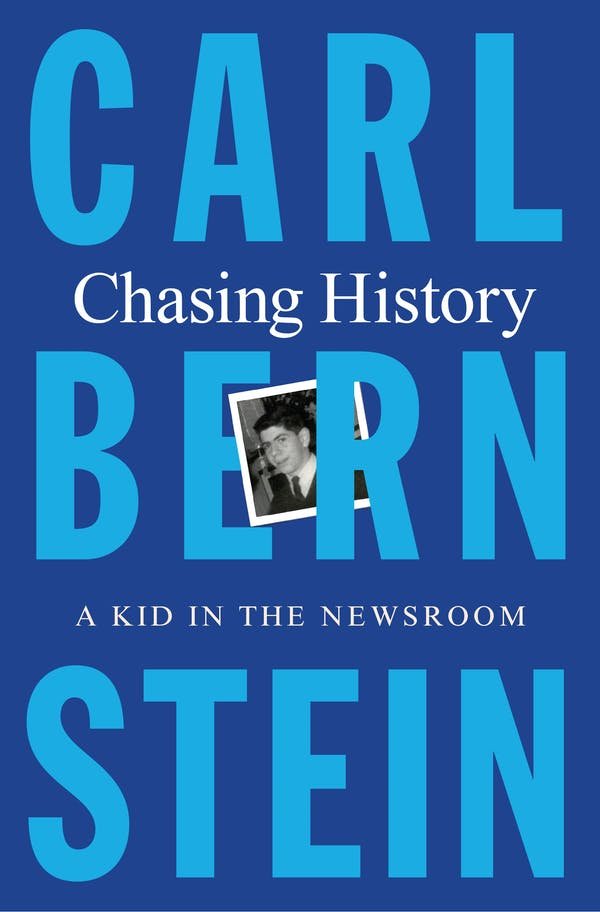
Chasing History: A Kid in the Newsroom
By Carl Bernstein (Henry Holt; January 11, 2022)
According to the publisher, in this book “Carl Bernstein, the Pulitzer Prize-winning coauthor of All the President’s Men and pioneer of investigative journalism, recalls his beginnings as an audacious teenage newspaper reporter in the nation’s capital—a winning tale of scrapes, gumshoeing, and American bedlam.” As a huge fan of the Alan Pakula–directed film and a former magazine editor myself, I am so on board for this account from one of journalism’s most iconic personalities.
Here’s Bernstein on first entering the newsroom of the Washington Evening Star as a high schooler: “The door by which I had entered was at the end of a dim, quiet corridor of the sort you would find in any ordinary place of business. The door through which Rudy Kauffmann now led me opened into another universe. People were shouting. Typewriters clattered and chinged. Beneath my feet, I could feel the rumble of the presses…. In my whole life I had never heard such glorious chaos or seen such purposeful commotion as I now beheld in that newsroom. By the time I had walked from one end to the other, I knew that I wanted to be a newspaperman.” Read an excerpt from Chasing History here.
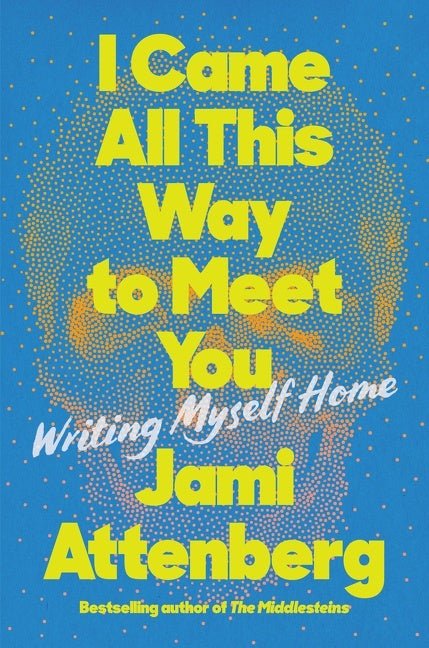
I Came All This Way to Meet You: Writing Myself Home
By Jami Attenberg (Ecco; January 11, 2022)
In her first memoir, acclaimed author “Jami Attenberg—described as a ‘master of modern fiction’ (Entertainment Weekly) and the ‘poet laureate of difficult families’ (Kirkus Reviews)—reveals the defining moments that pushed her to create a life, and voice, she could claim for herself,” shares the publisher. “What does it take to devote oneself to art? What does it mean to own one’s ideas? What does the world look like for a woman moving solo through it?”
In a review for Vogue, Jessie Heyman opines, “Her newest is an episodic collection of Attenberg’s life—her cross-country travels, debilitating injuries, bad plane rides, bad boyfriends—which are all told through her signature intimate and humorous style. But it’s her writing on her own work I found particularly revealing. ‘I became a fiction writer in the first place because stories are a beautiful place to hide,’ she writes.”

Aurelia, Aurélia
By Kathryn Davis (Graywolf; March 1, 2022)
From the publisher: “Kathryn Davis’s hypnotic new book is a meditation on the way imagination shapes life, and how life, as it moves forward, shapes imagination. At its center is the death of her husband, Eric. The book unfolds as a study of their marriage, its deep joys and stinging frustrations; it is also a book about time, the inexorable events that determine beginnings and endings.”
“She writes about being a teenager, trying on identities like clothes, and about being in late middle age, resolutely someone, and yet still wondering, still trying on the other clothes, even while liking her own,” notes a LitHub review.
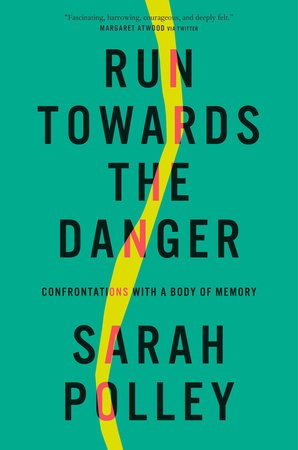
Run Towards the Danger: Confrontations with a Body of Memory
By Sarah Polley (Penguin Press; March 1, 2022)
“These are the most dangerous stories of my life,” Sarah Polley writes in her new memoir. “The ones I have avoided, the ones I haven’t told, the ones that have kept me awake on countless nights. As these stories found echoes in my adult life, and then went another, better way than they did in childhood, they became lighter and easier to carry.”
Polley, an Oscar nominated screenwriter, director, and actor, shares six essays, “each one [capturing] a piece of [her] life as she remembers it, while at the same time examining the fallibility of memory, the mutability of reality in the mind, and the possibility of experiencing the past anew, as the person she is now but was not then,” describes the publisher.
If you haven’t seen Polley’s 2012 film Stories We Tell, it too explores the vagaries of truth and the intersection of the past and present, and I highly recommend it (read my review here), perhaps as a prelude to her memoir.

In Love: A Memoir of Love and Loss
By Amy Bloom (Random House; March 8, 2022)
From one of my all-time favorite writers, Amy Bloom (I still recall discovering her book of stories Come to Me the year after I graduated college and knowing I would buy anything she wrote thereafter), this new memoir explores the period of time she accompanied her husband, Brian, through the final days of his life. After a diagnosis of early-onset Alzheimer’s, the pair begin a heartrending journey of finding a way that Brian can end his life with dignity.
“Most poignant are the intimate moments they share as they make the most of their last days together,” reads the starred review in Publisher’s Weekly. “As [Bloom] writes, ‘I imagine that Brian feels as alone as I do but I can tell he isn’t as afraid.’ The result is a stunning portrayal of how love can reveal itself in life’s most difficult moments.”

Ancestor Trouble: A Reckoning and a Reconciliation
By Maud Newton (Random House; March 29, 2022)
“I never expected to become interested in genealogy,” Maud Newton writes in this 2014 Harper’s cover story that led to her book deal. “When I did, slowly at first and then in great gusts of extreme obsession, I thought I owed the fascination to my mom, a natural storyteller descended from a collection of idiosyncratic Texans. One of her granddads was a strident Dallas socialist; the other killed a man with a hay hook. Her father, Robert Bruce, is said to have been married thirteen times to twelve women.”
According to the publisher, “Maud researched her genealogy…and sought family secrets through her DNA. But immersed in census archives and cousin matches, she yearned for deeper truths…. Searching, moving, and inspiring, Ancestor Trouble is one writer’s attempt to use genealogy—a once-niche hobby that has grown into a multi-billion-dollar industry—to expose the secrets and contradictions of her own ancestors, and to argue for the transformational possibilities that reckoning with our ancestors offers all of us.”

The Unwritten Book: An Investigation
By Samantha Hunt (FSG; April 5, 2022)
More reviews than I can count recommend this book to me. A few, to entice:
“Like a trunk in the attic, The Unwritten Book offers up the most extraordinary, eclectic, and heart-wrenching insights, historical facts, stories, and advice on how to live closer to the dead…. I feel more alive and wiser for having read it,” declares author Cathy Park Hong.
From Rumaan Alam: “The Unwritten Book is a disobedient work—not quite memoir (even as the author interrogates her own life); not quite philosophy (though with much to say on art, faith, ethics, and more); not quite classifiable.”
And from LitHub: ”Fueled by the discovery of her father’s unfinished manuscript, Samantha Hunt is on the hunt (sorry) for clues about all that is left unsaid. Part literary criticism, part memoir, part family history, this new book explores the things that have a hold on us. I, for one, am ready to be haunted by Samantha Hunt once again.”
“Each chapter gathers subjects that haunt: dead people, the forest, the towering library of all those books we’ll never have time to read or write,” notes the publisher. “Through literary criticism, family history, history, and memoir…Hunt explores questions of motherhood, hoarding, legacies of addiction, grief, how we insulate ourselves from the past, how we misinterpret the world.”

Left on Tenth: A Second Chance at Life: A Memoir
By Delia Ephron (Little Brown; April 12, 2022)
Time magazine calls Left on Tenth “a heart-wrenching tale of second chances at life and love” for author and screenwriter Delia Ephron, who chronicles her (often hilarious, always vulnerable) journey of falling in love again after the death of her husband. “But this was not a rom-com: four months later she was diagnosed with AML, a fierce leukemia.”

Bomb Shelter: Love, Time, and Other Explosives: A Memoir in Essays
By Mary Laura Philpott (Atria Books; April 12, 2022)
In this memoir in essays, Philpott sets out to “illuminate what it means to move through life with a soul made of equal parts anxiety and optimism (and while she’s at it, to ponder the mysteries of backyard turtles and the challenges of spatchcocking a turkey),” according to the publisher. “Philpott returns in her distinctive voice to explore our protective instincts, the ways we continue to grow up long after we’re grown, and the limits—both tragic and hilarious—of the human body and mind.”
One Off the Shelf reviewer highlighted this memorable line from Philpott’s book, which makes me even more eager to read it: “I keep trying to make sense of my life by stacking stories upon stories upon stories.” Indeed, don’t we all.
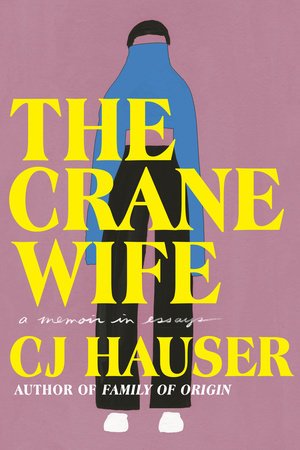
The Crane Wife: A Memoir in Essays
By CJ Hauser (Doubleday; July 12, 2022)
“I think I was afraid that if I called off my wedding I was going to ruin myself. That doing it would disfigure the story of my life in some irredeemable way, CJ Hauser wrote in The Paris Review essay, also called “The Crane Wife.”
“What I understood on the other side of my decision,” she wrote, “on the gulf, was that there was no such thing as ruining yourself. There are ways to be wounded and ways to survive those wounds, but no one can survive denying their own needs.”
From the publisher: In The Crane Wife, CJ Hauser “writes about friends and lovers, blood family and chosen family, and asks what more expansive definitions of love might offer us all. Told with the late-night barstool directness of your wisest, most bighearted friend, [this] is a book for everyone whose life doesn’t look the way they thought it would; for everyone learning to find joy in the not-knowing; for everyone trying, if sometimes failing, to build a new sort of life story, a new sort of family, a new sort of home, to live in.”
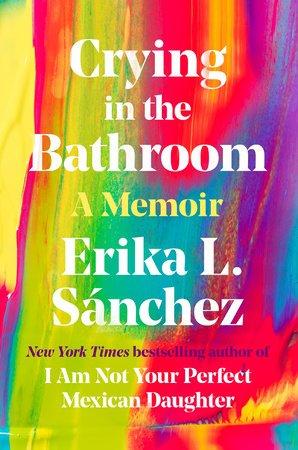
Crying in the Bathroom: A Memoir
By Erika L. Sánchez (Viking; July 12, 2022)
From the New York Times bestselling author of I Am Not Your Perfect Mexican Daughter comes an utterly original memoir-in-essays that promises to be as deeply moving as it is hilarious.
From the publisher’s page: “In these essays, Sánchez writes about everything from sex to white feminism to debilitating depression, revealing an interior life rich with ideas, self-awareness, and perception. Raunchy, insightful, unapologetic, and brutally honest, Crying in the Bathroom is Sánchez at her best—a book that will make you feel that post-confessional high that comes from talking for hours with your best friend.” I’m in.
As yet untitled MEMOIR of Paul Newman
(Knopf; Autumn 2022)
With the hope of debunking the numerous unsolicited biographies about Paul Newman over the years, the actor and philanthropist began recording his life story through oral history interviews with friend Stewart Stern in 1986 (“I should probably at least make some truthful self-examination so the unsolicited biographies wouldn’t be considered as gospel,” he reportedly told Stern).
According to the publisher, the “result is a portrait of the actor in full, from his early days to his years in the Navy, from his start in Hollywood to his rise to stardom, and with an intimate glimpse of his family life.
I met Newman when I volunteered to help set up his first camp, the Hole in the Wall Gang Camp in Ashford, Connecticut, when I was a senior in high school, and was in awe of his selfless nature (and wonderfully mischievous sense of humor), so I especially look forward to hearing stories from his life in his own words.
Diaries & journals

Gathering Blossoms Under Fire: The Journals of Alice Walker, 1965-2000
Edited by Valerie Boyd (Simon & Schuster; April 12, 2022)
From the publisher: “In an unvarnished and singular voice, [Alice Walker] explores an astonishing array of events: marching in Mississippi with other foot soldiers of the Civil Rights Movement, led by Martin Luther King, Jr.; her marriage to a Jewish lawyer, defying laws that barred interracial marriage in the 1960s South; an early miscarriage; writing her first novel; the trials and triumphs of the Women’s Movement; erotic encounters and enduring relationships; the ancestral visits that led her to write The Color Purple; winning the Pulitzer Prize; being admired and maligned, sometimes in equal measure, for her work and her activism; and burying her mother. A powerful blend of Walker’s personal life with political events, this revealing collection offers rare insight into a literary legend.”

The Diaries of Franz Kafka
Translated by Ross Benjamin (Schocken; December 6, 2022)
This new translation of Kafka’s handwritten diaries dating from 1909 to 1923, according to the publisher, contains “accounts of daily events, reflections, observations, literary sketches, drafts of letters, accounts of dreams, as well as finished stories. This volume makes available for the first time in English a comprehensive reconstruction of the diary entries and provides substantial new content, including details, names, literary works, and passages of a sexual nature that were omitted from previous publications. By faithfully reproducing the diaries' distinctive—and often surprisingly unpolished—writing in Kafka's notebooks, translator Ross Benjamin brings to light not only the author's use of the diaries for literary experimentation and private self-expression, but also their value as a work of art in themselves.”
Other memoir & biography titles to look out for in 2022
The Beauty of Dusk: On Vision Lost and Found by Frank Bruni (Avid Reader Press/Simon & Schuster; March 1, 2022)
I Was Better Last Night by Harvey Fierstein (Knopf; March 1, 2022)
Easy Beauty: A Memoir by Chloé Cooper Jones (Avid Reader Press/Simon & Schuster; April 5, 2022)
Happy-Go-Lucky by David Sedaris (Little, Brown and Company; May 31, 2022)
Affiliate disclosure: As an Amazon Associate, we may earn commissions from qualifying purchases from Amazon.com.





Life Story Links: November 30, 2021
This week's memory-keeping roundup includes audio recommendations, compelling personal essays, new memoirs, plus personal history news and trends.
“Lots of my food has a story to go along with it, and lots of my stories have some food to go along with them, too.”
—Ellen Stimson
Midnight supper at Nan Hannegan's twentieth birthday party, May 1943, Niagara Falls, New York; her mother took in girl war workers as boarders. Photograph by Marjory Collins, courtesy Library of Congress Digital Collection.
Listen Up
TALES OF LIFE AND MUSIC
Two musicians (and writers), Dave Grohl and Aimee Mann, shared stories from their lives in conversations held as part of the recent New Yorker Festival. Listen to the audio here.
DOCUMENT YOUR FAMILY HISTORY
This episode of NPR’s podcast Life Kit offers truly great (actionable!) tips for recording the “precious sounds of our biological or chosen families that we capture to help us understand who they are and to give us insights into who we are, too.” Click below to listen:
Recent First Person Reads of Note
KEEPING UP APPEARANCES
“My parents were good-looking, sexy, book-loving. They shone on each other, basking in the shared light, with their five kids just outside the glow.” Sarah Paley on the reliability of a mother’s love.
NAME AS DESTINY
“I feel the weight of my name over my head like a hood—warm and comfortable but a little disorienting. I am constrained by the grief and by the love it represents. Ten letters so specific, I am unsure how to wear them.” Sara Horowitz introduces herself.
Memory-Keeping Miscellany
UNIQUE HOLIDAY GIFT IDEAS
Last week I shared three specific ideas for meaningful gifts that put memories front and center, including helpful DIY tips for those so inclined, plus how to work with a pro to get them done.
DRAWING ROOMS
“I like to look at buildings as kind of like characters in our lives. We have commitments to buildings. We see buildings and we feel things and we feel connected to them.” How one artist keeps the memories of places alive.
Up Next: New Memoirs
READING LIST
“This year’s best nonfiction illuminated complicated subjects, deepened our understanding of history, and pulled back the curtain on fascinating lives.” This list from The Washington Post includes some of 2021’s best memoirs.
MEL BROOKS WRITES HIS MEMOIRS
“Why don’t you write your life story?” Mel Brooks’s son said to him during the pandemic. “Just tell the stories in the book that you told me when I was growing up, and you’ll have a big, fat book.” Indeed, the 95-year-old actor has lived a memoir-worthy life.
Proof Positive
WHO IS THE CAREGIVER OF YOUR FAMILY NARRATIVE?
According to research, the most helpful history for young people is “the oscillating family narrative”—a story of ups and downs, successes and setbacks, that helps children know that they belong to something bigger than themselves.
“THE RISE OF BESPOKE MEMOIRS”
“Since the start of lockdown the demand for bespoke memoirs has skyrocketed,” reports The Times of London. What’s behind the boom, and what’s your story worth, wonders the reporter.
...and a Few More Links
Their Holocaust testimonies shared details that helped reunite them decades later.
Mali Bain shares three books that may—or may not—help you get unstuck when writing your memoir.
Shelley Blanton-Stroud on the different ways we mythologize the past
The life and legacy of Stephen Sondheim
Who owns a recipe? An interesting read for anyone considering undertaking a heritage cookbook.
Short Takes
Life Story Links: November 16, 2021
This week's roundup includes a wealth of stories about memoir (both writing and reading), some fun reads about food memories and recipe preservation, and more.
“Stories in families are colossally important. Every family has stories: some funny, some proud, some embarrassing, some shameful. Knowing them is proof of belonging to the family.”
—Salman Rushdie
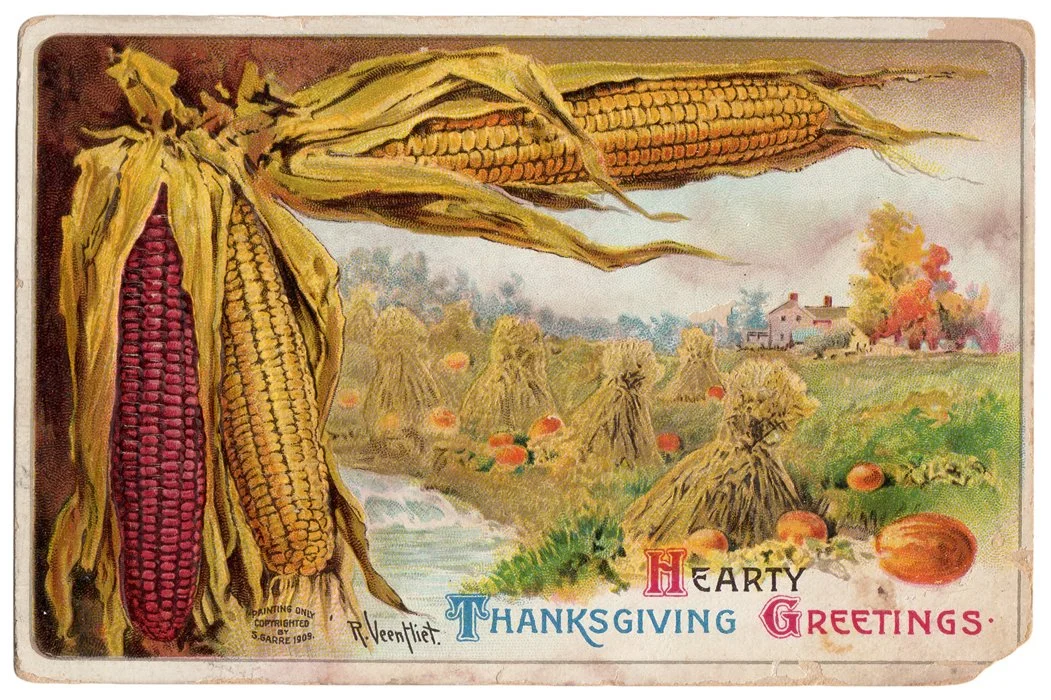
Autumn vibes on a vintage Thanksgiving postcard
Personal Stories on the Page
AN EIGHT-DECADES JOURNAL
“This page, these pages, these volumes are a labyrinth I cannot find my way out of. I have wasted a life in writing them. They are without value. And yet they’ve helped keep me sane,” Claude Fredericks wrote in what The New Yorker calls “the most ambitious diary in history.”
PARALLEL STORIES DIVERGE
One of my favorite memoir writing teachers, Joyce Maynard, remembers her mother and reflects on the once severed, ever-evolving relationship with her sister—the “only other person on Earth to know what it was to have Fredelle Bruser Maynard for her mother.”
THE POWER OF THE EPIGRAPH
“The story of writing my memoir is the story of what the body knows before the conscious mind follows,” Jan Beatty writes in this piece on how two dictionaries helped her define the terms of her adoption memoir.
ESSENTIAL READS FOR WRITERS
The first step in writing your life story book, the most daunting by far, says British Columbia–based personal historian Mali Bain, is creating your “messy first draft.” Here she suggests two books to help guide you through that process.
GAL ABOUT TOWN
“The early chapters [of Patricia Highsmith: Her Diaries and Notebooks, 1941-1995] are special. They comprise one of the most observant and ecstatic accounts I’ve read…about being young and alive in New York City.”
So They Say
CHALLENGING CONVERSATIONS
After years on the road giving presentations and engaging in deep conversations, performer Michael Fosberg—who recommends using personal stories to foster connection—has created seven tools to help foster authentic dialogue surrounding difficult issues of race and identity.
PASSING ON AN HEIRLOOM
“I am keenly aware that younger generations don’t always like the things their elders leave to them,” Hazel Thornton wrote in a letter to her niece. You may be surprised by how her mom’s good silverware was received by that niece.
HEAR HERE
“These stories will continue to evolve as we grow from overviews to deeper and more personal stories, more contextual stories, that move us. As we always say, it’s about the right story at the right time.” Kevin Costner on why he invested in an audio storytelling app.
PRICELESS AUDIO
“I’d really like to just give him a big fat kiss,” says the voice coming through the reel-to-reel tape. That voice belongs to the father of Rep. Dean Phillips—the father he never met because he died in the Vietnam War when Phillips was only six months old. Listen in as the lawmaker describes “one of the great blessings of my life”:
A Feast of Memories
DISHING UP STORIES
“As a fellow who has worked with senior citizens for decades, [Mike] Wallace said he grew to understand just how important it is that family histories be preserved, and he decided to start with his own parents.” Now he offers up 20 questions to use during your own holiday gathering.
FAMILY POTLUCK
Take advantage of your next holiday get-together to start preserving your food heritage with these tips for gathering family, recipes, and memories.
MEMORABLE MEALS
“How do we go about creating spaces for deep human connection around our family table? How do we serve up memories to last a lifetime at our next holiday gathering?” Texas-based video biographer Whitney Myers on honoring the people behind our most memorable get-togethers.
A FIVE-GENERATION TRADITION
“It’s amazing how if you don’t ask your grandparents...what they lived through you don’t hear all these stories.” Becca Gallick-Mitchell shares the story of her great-grandmother’s turkey kreplach and how her grandmother made them—at age seven—the night her mother went into labor.
...and a Few More Links
Sharing personal stories about his wife, journalist Cokie Roberts, was therapeutic during his time of grieving.
Shoah Foundation’s virtual archive was purchased by CSUN Library to preserve history.
“Why depth interviewing is essential to understanding individuals”
Julie McDonald Zander offers a series of questions to help you pay tribute to your parents.
New book tells the story of the invention of Betty Crocker, tracing the personal history of a fictional character many thought was real.
Florida–based personal historian Zoe Morrison gets the story behind one couple’s cuckoo clock collection.
Alan Cumming discusses his new memoir, Baggage.
Short Takes
Three writers use vignettes to craft moving memoirs
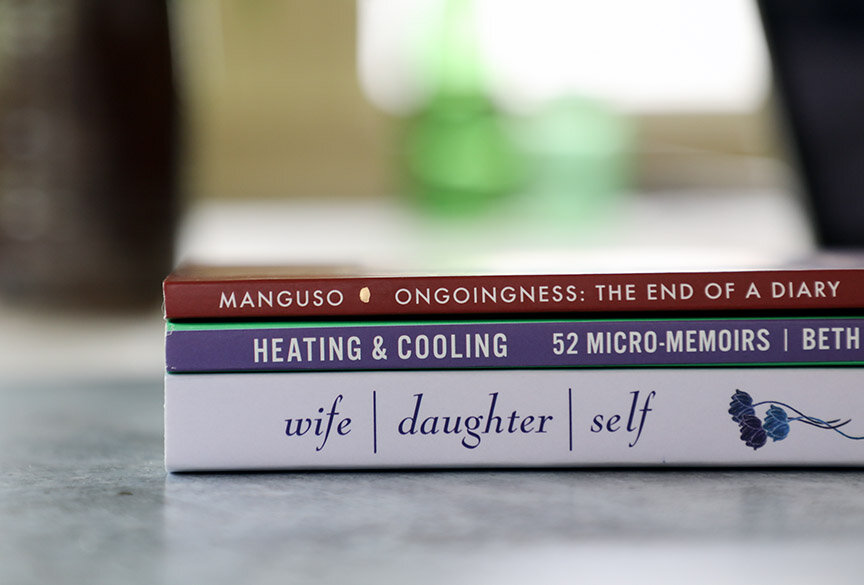
Memoirs by Sarah Manguso, Beth Ann Fennelly, and Beth Kephart each weave together short narratives to create evocative, textured self-portraits of the writers.
I have written often about using vignettes to tell the stories of your life, and I feel strongly that reading works by others to inspire your own writing is a humbling and essential practice. The three books that follow have one big thing in common: The writers weave together fragments—called alternatively essays, micro-memoirs, and meditations—to create a multi-faceted self-portrait. I recommend reading each of these to get a sense of just how powerful and evocative it can be to craft your memoir…vignette by vignette.
memoir in vignettes no. 1
Ongoingness: The End of a Diary
Ongoingness: The End of a Diary by Sarah Manguso (Graywolf Press, 2015) is a series of meditations on the author’s compulsion to keep a continuous diary. She writes early in the book, “From the beginning, I knew the diary wasn’t working, but I couldn’t stop writing. I couldn’t think of any other way to avoid getting lost in time.”
Manguso recalls a time in childhood when she didn’t yet need a diary because “I wasn’t yet aware of how much I was forgetting.” That’s at the heart of it here—the fear of losing memories, of losing pieces of oneself. So she records, she memorializes, and she fights the forgetting…until she has a child of her own, that is. And in Ongoingness, she explores the “welcome amnesia,” as the book jacket calls it, of the next chapter of her life.
Some of Manguso’s insights and observations are elliptical in nature: She circles back to them once and again, each time drawing more or new or different meaning from the same experience. Her prose is crystalline. Her insights are resonant.

Ongoingness: The End of a Diary by Sarah Manguso is a fine example of:
how everyday moments deserve primacy in our writing
how paying attention to details—select, apropos details—can elevate the personal to the universal
how memory is malleable and often elusive—and how, even then, we can mine truth from it in our writing
how “brief” does not mean “lacking”
memoir in vignettes no. 2
Heating & Cooling: 52 Micro-Memoirs
Heating & Cooling: 52 Micro-Memoirs by Beth Ann Fennelly (W.W. Norton & Co., 2017) is another sleek volume that brings the writer to life through what she calls “micro-memoirs” and what I would refer to as “vignettes.”
Don't be fooled: The autobiographical vignettes in Heating & Cooling were not randomly gathered from the author's journals; rather, they were thoughtfully woven together. There is a fine balance between entries that delve into deep waters and ones that skim lightly along the surface. There is a rhythm not only to the words, but to the pieces themselves (which range in length from a single sentence to six pages). There is a layering of themes and a range of moods, a sense of both evocative poetry and direct truth-telling.
Consider reading this book twice: Once, read a vignette or two every night (Ann Patchett calls each entry a “perfect pearl of memory,” and indeed they are worthy of relishing morsel by morsel); then, binge-read the book in one sitting (it's just over a hundred pages, after all, and I promise you the layered themes I mentioned will be all the more apparent to you this way).

Heating & Cooling: 52 Micro-Memoirs by Beth Ann Fennelly is a great example of:
making every word count (Daniel Wallace said, “Every sentence in this book could be sent to the Smithsonian Institution in case future readers want to know what a great sentence looks like.)
how to use humor effectively in your memoir writing
how to curate and compile telling moments from a life to reveal broader themes—and delight the reader
how to be wonderfully vulnerable and alive in your writing
how to construct a book of vignettes that build upon one another and all together draw a richly textured portrait of the writer
memoir in vignettes no. 3
Wife | Daughter | Self: A Memoir in Essays
Ah, perhaps my favorite of the bunch here, Beth Kephart's latest memoir, Wife | Daughter | Self (Forest Avenue Press, 2021) is a book to be savored. And for those of us who open to the first page with the intent of inspiring our own writing, how lucky we are that Kephart has included notes on how she created it in a thoughtful postscript. To wit:
"I write parts whose purpose is to find their way into an implicating whole, the choreography of the thing being the thing, the adjacencies and half sums. The rain that won't come answered, pages later, by the rain that will. The dead communicating with the living.”
Or:
"…the aggregation of parts that constitute this memoir reflect my belief that truth is not continuous, that stories live in the seams, that we remember in bursts and find wisdom in the juxtaposed…”
Kephart is a perpetual seeker of truth—of her truth, of the universal truth; she is on a quest for meaning, and it is through writing that she is most often able to find it. Does she find herself, though—the "self" in the title of this memoir? Do we as readers find her?
We glimpse her, we feel her, we intuit and recognize and yearn for her in the push and pull of her words. We find her in the seams (oh, how I love this notion: that “stories live in the seams,” as Kephart writes and teaches and ultimately manifests in this memoir). We are left to find traces of her and to piece together a fragmented whole ourselves—a whole I envision as a mobile made of shimmering stained-glass mosaics, blowing in the wind, simultaneously reflecting and catching the sun. We know her, even if perhaps we can't summarize who she is in words.
"If you asked about my process, I'd say music,” Kephart writes in the addendum. And there it is: While we are caught up in the music of her life, of her writing, then her craftsmanship—her cognizance of form and her attention to weaving fragments together so they convey more than the sum of their parts—all of that is invisible to us as readers. Beautifully, conspicuously invisible.

Wife | Daughter | Self: A Memoir in Essays by Beth Kephart is a stellar example of:
how to orchestrate a symphony from otherwise disjointed notes
how to carefully choose and weave details so that they become "telling details"
how to write towards truth, allowing the journey of writing to become part of the story; as Kephart says, “the truth is in the trying”
how “writing the same story twice is to puzzle out dimensions”
how considering yourself in relation to others—"Father's daughter. Husband's wife. Son's mother."—can be a gateway to finding oneself, period.

Download Free Writing Prompts Guide
Get all our life story vignette writing prompts in one easy-to-read printable guide!
Discover more posts to help with writing vignettes about your life




Affiliate disclosure: As an Amazon Associate, we may earn commissions from qualifying purchases from Amazon.com.

Life Story Links: April 27, 2021
For memory-keepers: A curated collection of recent stories about memoir (reviews & first person excerpts) and family history (as preserved through narrative).
“In guided autobiography, we encourage the use of metaphors; in the case of major branching points in life, we ask, ‘If your life is like a river, what caused it to flow in the directions it did?’”
—James Birren

Today, April 27, is National Tell a Story Day. This vintage photograph by Russell Lee shows the wife of a Farm Security Administration client reading to her son, April 1939. Image courtesy Library of Congress Digital Archive.
Exploring Family History Through Narrative
“THE WHOLE STORY“
“Listen to the songs your ancestors sing to you. Be mindful of the songs you sing to others.” The 2021 UCSF Last Lecture, delivered by Peter Chin-Hong, MD, encouraged exploring one’s personal history in order to find one’s true voice.
HERITAGE, QUESTIONS, STORIES
“We can’t tell the full story without each other.” Two women researched slavery in their family, but what they discovered held different meaning for each.
FORGING MEANING FROM TOUGH TIMES
“Survival becomes a pivotal point in our story that needs to be preserved. It is the part of our story that reminds us what we are capable of, what we can endure, and what we overcame.” Lisa Lombardi O’Reilly on “the times that remind.”
“DEAR FAMILY…”
Collected letters from Australian and New Zealand soldiers “held a sense of mana in the families, keeping the memory alive of someone that, in some cases, had died over a 100 years ago.”
MY GRANDMOTHER, THE SPY
“I was going through her things and found myself staring at a letter that I had seen in childhood and I didn't really understand. It had to do with some sort of covert work she had done for the British.” In a new podcast Enid Zentelis shares the story of her grandmother, who she learned was a WWII spy:

Click the image for a 3-minute video about Enid Zentelis’s mission to learn the truth about her late grandmother, a Hungarian-Jewish Holocaust survivor—and a spy. “I wondered how I could serve my grandmother’s story, and simultaneously communicate the effects of generational trauma; the way some family members succumb to it, and the way others turned it into a source of strength and determination,” Zentelis says.
Recommended First Person Reads
LOW COUNTRY LEGENDS
“Were those really the voices of loved ones long gone who called out my name in subway cars and expensive restaurants and while I brushed my teeth?” J. Nicole Jones on familiar ghosts and family legacies.
CROSSING BORDERS
“‘Berlin? Seriously?’ my Jewish friends marveled. If you want to bring conversation to a halt at your local Purim carnival, try mentioning that you’re relocating to the city where the Gestapo was headquartered.” Laura Moser on moving to the neighborhood where her grandfather lived before fleeing the Nazis.
LIFE IN THE DARK CITY
“When you are forty-three in New York City, raising children, you have already lost the New York that mattered to you at age twenty-three. The loss I am talking about is something else entirely.” Emily Raboteau on pandemic NYC.
THEIR STORIES ARE OUR STORIES
“Our stories are even richer and more complicated than we sometimes realize, especially stories that are the most familiar to us, the stories that have been passed down.” Menachem Kaiser in conversation about the ever-evolving nature of Holocaust memory and storytelling.
WRITING THROUGH GRIEF
“I wanted to write that person, share her writings, immortalize her in a small way—she who had not been able to author her legacy.” Maryanne O'Hara on turning to personal writing in the wake of her daughter’s death.
Hodgepodge
STORIES UNTOLD
“My life is not interesting enough” and “it’s too self-centered to write my memoir” top the list of reasons I hear for not writing about one’s life. Click to read about why I think these reasons are bunk.
FOUR MEMOIRS WITH REMARKABLY DIFFERENT APPROACHES
The University of Pennsylvania’s alumni magazine turns its attention to the writing lives of four of its cohorts including stories about “middle school memories, meditations on motherhood, a prismatic accounting of the self, and a long life well and furiously lived.”
AN ARCHIVAL PROJECT IN THE AGE OF COVID-19
In “Portraits of an Epicenter: NYC in Lockdown,” a group of creative college students share photo essays and written reflections of living through the pandemic. “Although the city was unified in this experience, no two experiences of the lockdown were the same.”
HONOR HER STORY
Mali Bain, a personal historian in British Columbia, Canada, says she has been inspired by her clients’ unique ideas for Mother’s Day gifts. Here, she shares a few of them.
Virtual Events that May Interest You
April 30: First conference of International Institute for Reminiscence and Life Review at its new home, UCONN School of Nursing
May 1: Virtual (paid) workshop: “The Power of a Legacy Letter and How to Write One”
May 19: Storykeep presents a free live webinar to acquaint you with private podcasting, a new tool for documenting and sharing family narratives and connecting family across generations.
...and a Few More Links
Short Takes

Life Story Links: November 19, 2019
A wealth of personal history news, from immigrant memoirs to Thanksgiving story sharing, from archives of the past to the value of writing and remembering.
How
Do I
Listen to others?
As if everyone were my Master
Speaking to me
His
Cherished
Last
Words.
—Hafiz, “How Do I Listen”
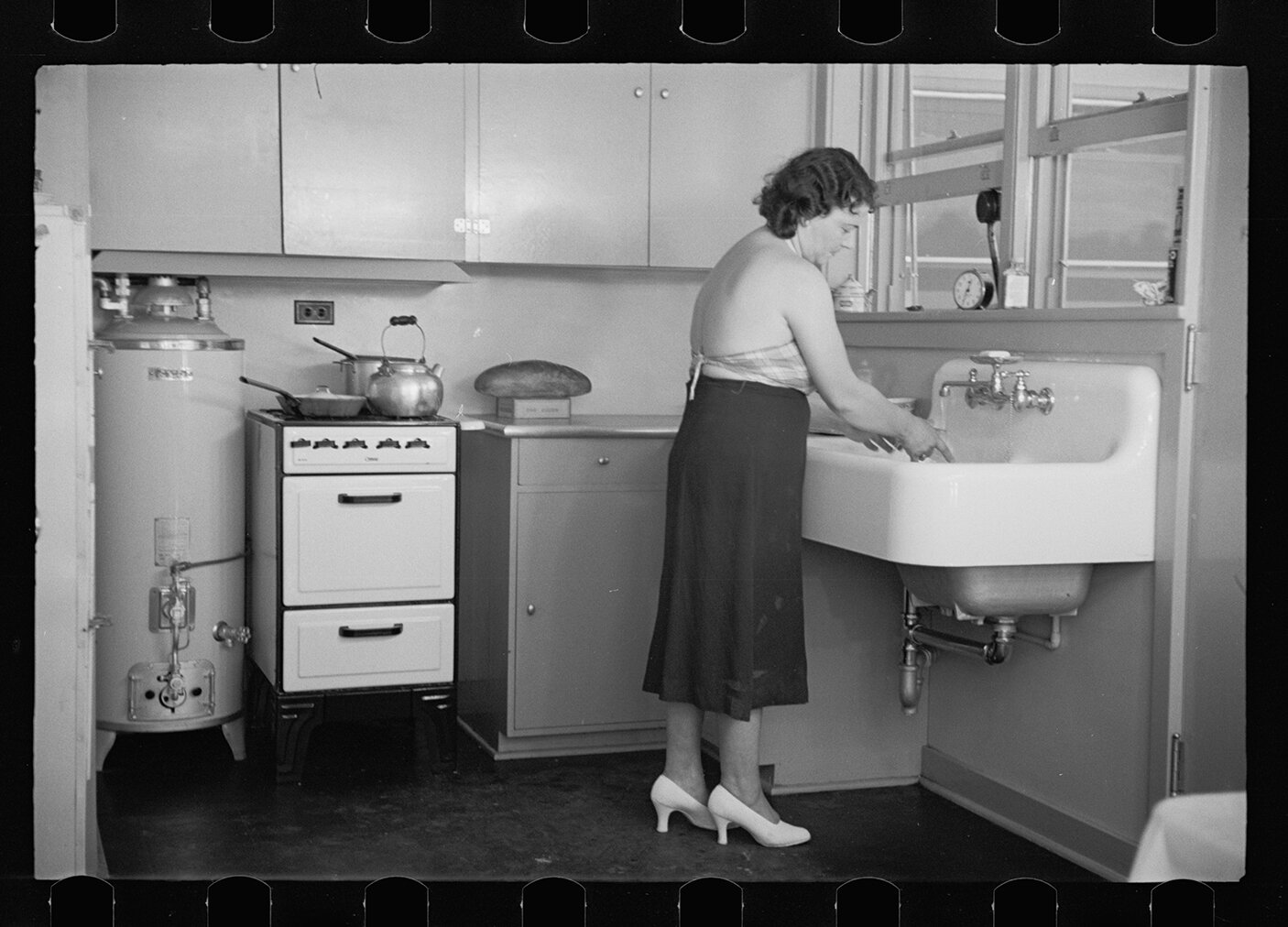
In the kitchen, Hightstown, New Jersey, 1938. Photographed by Dorothea Lange, Russell Lee, Carl Mydans, Arthur Rothstein for the Farm Security Administration. Photo courtesy Library of Congress.
Pass the Gravy, Tell a Tale
#THEGREATLISTEN 2019
Since 2015 when The Great Thanksgiving Listen was launched, thousands of Americans have recorded 100,000+ interviews, providing families with a priceless record of a loved one’s story for future generations to listen to and learn from. StoryCorps offers resources to help individuals and educators transform the holidays into a time of intergenerational sharing.
FOOD MEMORIES, PRESERVED
Launched in time for Thanksgiving host(ess) gift giving, these recipe card sets encourage families to record not only the ingredients and prep instructions for their favorite foods, but the stories behind them, as well.
A Case for Storytelling
GETTING RELATIVES TALKING
In “We’re Losing Generations of Family History Because We Don’t Share Our Stories,” California–based ghostwriter Rachael Rifkin shares her expertise for how to get kids, siblings, and parents talking.
FAMILY LORE
“Telling family stories about crazy Uncle Joe or other eccentric relatives is a favorite pastime when families gather for the holidays. But will squirming children or Instagram-obsessed teens bother to listen?” Yes, says research—and the impact is undeniably positive.
WRITING TO COPE
In The Lost Kitchen, an Alzheimer’s caregiver, Miriam Green, preserves memories of her mother through recipes and reflections. Green turned to writing, including recording family recipes, as a coping mechanism, and learned to enjoy “the present moments spent together.”
Preserving the Past, Uniquely
AN ARCHIVE OF CURIOSITIES & WONDERS
The Public Domain Review is “rocketing the oddities of the past into the present,” including galleries of historical artifacts and images as well as essays putting the various bits of ephemera it spotlights into context. A new book of collected essays is available for pre-order, too.
SAFEGUARDING FRAGILE MEMORY
In anticipation of seeing a screening of Who Will Write Our History at the 92nd Street Y tonight, I began reading up on the film and discovered a most unique historical treasure trove: UNESCO’s “Memory of the World,” which aims to preserve the documentary heritage of the world as a symbol of the collective memory of humanity (the 60,000 pages of eyewitness documentation of the Holocaust known as the Oyneg Shabes, on which the aforementioned film was based, is part of UNESCO’s archive).
HEIRLOOM ARTS
Portland–based personal historian Lisa Kagan announces a winter art workshop for women to “explore what resilience and renewal mean to you in the context of your personal journey.”
Recommended First Person Reads
MINE EYES HAVE SEEN…
“I started to wonder if I could ever give language to my grandmother’s memories across the generations between us. I began to doubt whether I could make my words bring to life all that she has seen, when I have never seen these things with my own eyes,” Julie Moon writes in this legacy-seeking piece.
FIRST IMPRESSIONS
Deirdre Bair, Samuel Beckett's biographer of record, recalls her first (long-delayed) meeting with the notoriously private author in this essay that makes me want to know more about their professional relationship over the next seven years; guess I’ll be checking out her latest book, Parisian Lives, which promises to “reveal secrets of the biographical art.” Listen to a brief excerpt from the audio book here:
ARTISAN OF WORDS
“We weave narratives as we weave cloth, and our words for them are bound together: text and textile share the same Latin root, textus, ‘that which is woven’,” Esther Rutter writes in “Making.”
...and a Few More Links
Eight inspiring immigrant memoirs from Celadon Books
California Camp Fire remembrance book shares “unified experience” of community.
Story Terrace relives their favorite revelations from TV’s Who Do You Think You Are?.
A family, a house, a city: The Yellow House, Sarah Broom’s memoir of New Orleans
Lest We Forget: Keep Their Stories Alive preserves WWI treasures and memories for a British digital archive.
Holocaust survivor and Oscar-winning producer of Schindler’s List dies at 87
Short Takes

Life Story Links: November 5, 2019
A virtual tour of what's worth reading this week about memoir, family history writing, and life story preservation, including how language impacts meaning.
“This has always been one of the cardinal problems of biography: to what extent can or should one tell the truth—and what, indeed, is the truth about any of us?”
—Iris Origo

Children playing on a front lawn in Washington, D.C., September 1935. Photographed by Carl Mydans, courtesy Office of War Information, Overseas Picture Division, via Library of Congress.
Foods of the Soul
THE LAST LAUGH
Over at The Family Narrative Project, Kim Winslow shares some flavorful tidbits from a relative’s repertoire—just remember to imagine Nana’s heavy Brooklyn accent, too.
“A CATHARTIC DINNER PARTY”
“Food can be such a lovely way into the heart of a story…. There's something about the sensory memories that really can pull us back into our childhood, or things we ate in times of celebration, or times of grief,” says Natalie Eve Garrett, editor of Eat Joy: Stories & Comfort Food from 31 Celebrated Writers, a book of personal essays, each paired with the “gift” of an associated recipe.
Matters of Memoir…
AN END-OF-YEAR-LIST TO BOOKMARK
Did your favorite make the cut in this list of the best memoirs of the past decade? I found my next few reads on the list, and enjoyed the critics’ comments on what distinguished each one.
MOTHER TONGUE
“It was my way of saying, ‘Yes, I know I’m married to English now, but Spanish was my first love.’” Reyna Grande on translating her own memoir into Spanish.
…Matters of Memory
VR REMINISCENCE THERAPY
When an eldercare team used Google Earth and virtual reality technology to ‘bring’ a patient with dementia back to her hometown in Sweden, the results were extraordinary: “She lit up with joy. She was smiling and pointing at the images. She started talking in her native language as she was touring us through the building.”
LIKE A SCRAPBOOK?
When I describe what I do to new friends, there is almost inevitably an excited reaction of, “How great, I never heard of that!” followed by genuine interest and lots of questions. One of the most common misassumptions is that I create photo books or scrapbooks for folks—so I decided to tackle that in last week’s blog post.
BLACK IN THE DAY
“The documentation of everyday moments and rituals led by Black British photographers allows us to look into the communities across the UK in a way that centers just being, rather than aiming to appease a white, mainstream gaze that often projects its own ideas of Blackness.”
All Is Not Lost
RADICAL EULOGY
“I have chosen to honor my family but also to honor my own experience as well—reconciling our differences and needs,” poet Diana Khoi Nguyen says about writing about her grief in the aftermath of her brother’s suicide.
SLAVERY, THE ORIGINAL IDENTITY THEFT
“To honor the memory, sacrifice, and very being of our ancestors, we say their name.” One woman feels called by her forebears to unearth her African American origins. Follow her journey.
...and a Few More Links
An excerpt from Still Here: The Madcap, Nervy, Singular Life of Elaine Stritch
Holocaust Museum honors Westchester woman whose documentary tells of grandfather’s survival
Shining a light on book arts in DC
Kinship is celebrating New York History Month with a discount on their NY genealogy books.
Patricia Highsmith’s private diaries to be published as a book
Cookbooks as memoir-like “souvenirs of experience”
Short Takes
Dawn Roode’s curated roundup for the week of Sept. 23, 2026, is overflowing with recent reads on memoir, life story writing, and family history preservation.