
Memories Matter
Featured blog Posts

READ THE LATEST POSTS

Life Story Links: August 7, 2018
Grandmothers, mothers, Vietnam veterans, and more tell their stories for the next generation; thoughts on the craft of life story preservation, memoir & memory.
“I think of a good conversation as an adventure. You create a generous and trustworthy space for it...so the other person will feel so welcome and understood that they will put words around something they have never put words around quite that way before.”
—Krista Tippett

In Their Own Words
TESTING THE WATERS
A grandmother discovers grace and self-forgiveness while offering a safe place for a child to explore: Massachusetts–based personal historian Marjorie Turner Hollman tells one of her own stories and, I hope, inspires others to allow themselves to be vulnerable enough to tell their own.
ON MEMORY & INHERITED TRAUMA
“I imagine the weight of her trauma in my palm, opaque and heavy,” Crystal Hana Kim writes of her grandmother in “Like You Know Your Own Bones.”
WAR STORIES
"I never talk about the war." Until now. Raul Roman undertook a three-year effort to document the lives and memories of North Vietnamese veterans and their families; hear some of their voices in Roman's recent NYT piece.
BEFORE IT'S TOO LATE
“Eight years ago, I decided I was going to interview my mother and last year, I finally did it. I’m not 100-percent clear on what took me so long,” writes Cari Shane. “Perhaps the reality of what and why I was recording my mother’s stories; it was an acknowledgment of her mortality.”
THE PRESCIENCE OF A NAZI-ERA DIARIST
“The past informs the present; human memory is frail and fallible; and the only way to mitigate the discord between these truisms is to chronicle current events in granular detail,” Daniel Crown writes of Victor Klemperer’s legacy.
Craft & Conscience
THE FUTURE OF BIOGRAPHY?
Historian Charlotte Gray wonders what tomorrow’s biographers will do to engage readers and bring “them as close as possible to a credible version of a life.”
VALUING VALUES
Bethesda–based writer and editor Pat McNees explores two topics of utmost interest (and importance) to the life story community:
a meandering conversation about “the rocky shoals of truth-telling” that happened six years ago but was worth her time to revisit anew;
and why a code of ethics is crucial for those of us helping others tell their personal stories.
PICTURE PRIMER
“You know how disappointing it is to come across an orphaned photo. You are the ancestor of future generations who will want to know who you were. Don't let them down!” writes Alison Taylor of Pictures & Stories in Utah. Learn how to—easily—add metadata to your photos.
MY OWN NEXT CHAPTER
On the heels of relaunching my own company’s website, I wrote about the journey from magazine editor to entrepreneur and announce a new signature line of bespoke books.
VANITY PROJECT?
“It’s anything but vanity to know yourself and to want to share your story with the generations still to come,” writes Samantha Shubert of NYC’s Remarkable Life Memoirs.
MORE MEMOIRS, MORE MEMORIES
A client attended her 60th school reunion and learned that the whole gang was working on memoirs. “I was pleasantly surprised to hear this and thought: Will family memoirs be as standard to future generations as wedding portraits are today?” says Massachusetts–based personal historian Nancy West.
THROUGH THE LENS OF OUR FAMILY ALBUMS
Thomas Allen Harris, who has gathered people for photo sharing events across 50 different cities for years, says it is the stories that emerge from the images that bring people together, connect generations, and “open up the communication of the heart”—for “the heart,“ he says, “has its own song.” He is working on a pilot for a new TV show, Family Pictures USA.
...and a Few More Links
Adam O’Fallon Price waxes poetic on the virtues of the semicolon
Memory study casts doubt on the first thing you remember from your childhood.
Ethical wills can be a critical part of one's legacy.
Seven reasons to honor your engaged daughter with an heirloom book
New survey shows that storytelling moves us far more than literary quality.
Short Takes

The quest for truth
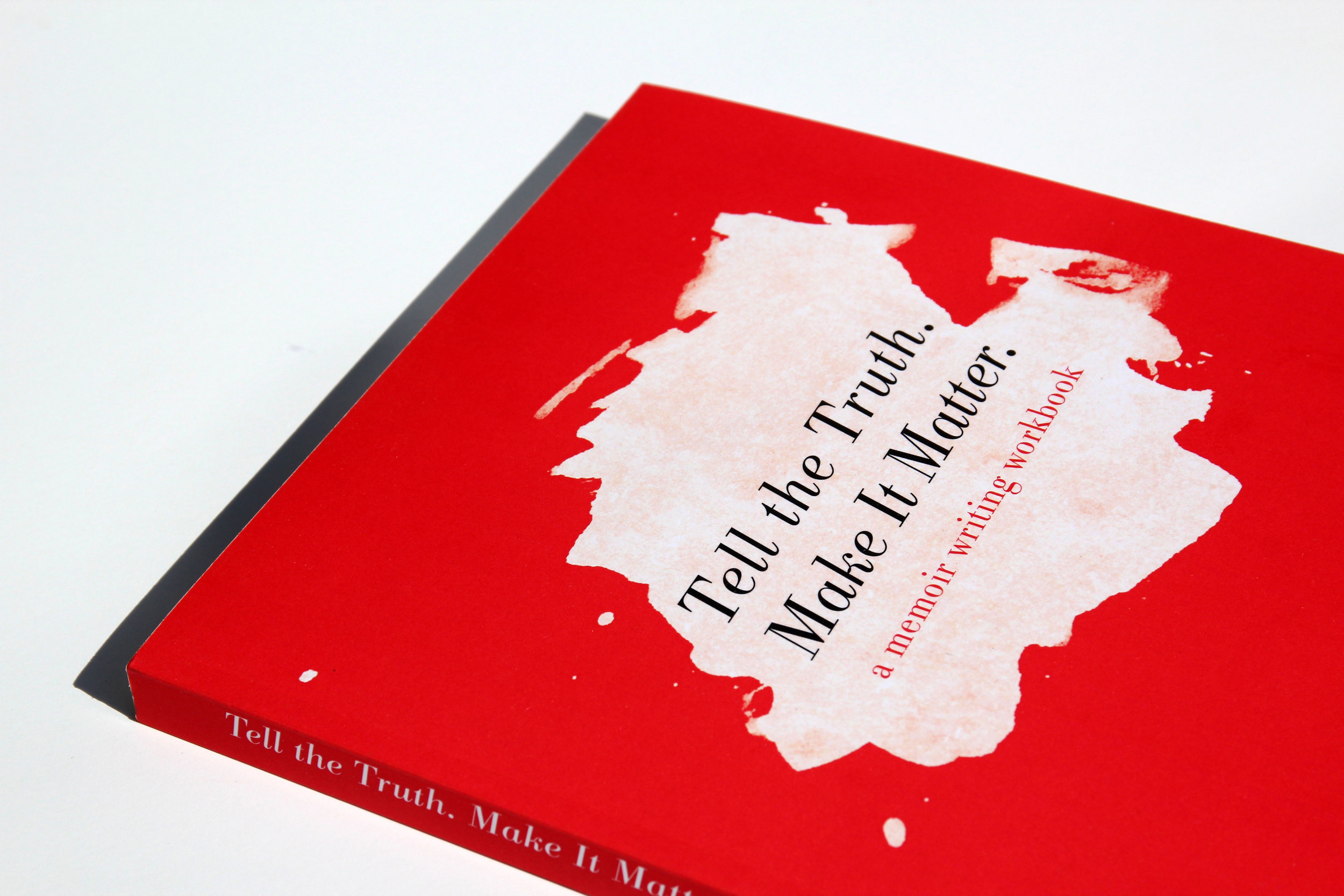
In Tell the Truth, Beth Kephart offers up a wonderfully original series of memoir-writing prompts that encourage self-reflection & striving toward the universal.
In a previous post I recommended 5 books for autobiographical writing—books helpful to you even if you are not a writer, but you want to explore and record your life stories anyway.
As memoirist Beth Kephart writes, “Journal keeping, diary making, blogging—it’s all a curious thing, and it isn’t…memoir. But it’s a start, an inroad, a gesture.” And, in my opinion, an undertaking worthwhile in its own right.
Tell the Truth. Make It Matter.
Memory is an ever-changing, elusive thing. Jogging our memory to call forth stories may not be easy, but there are ways to make your memories more accessible—to probe and to explore and to revisit them in ways that tease out not just recollections, but strands of truth that connect us to the universal. Personal writing is never more powerful than when a reader sees himself in new—hopefully deeper—ways through the writer’s experiences.
The greatest value in this workbook, in my opinion, is that it makes room for the truth. For your truth. For universal truths. It clears away the cobwebs of memory, sets your intention squarely in the direction of meaningful self-reflection, and encourages you to choose words that matter, too.
In Tell the Truth. Make It Matter (CreateSpace 2017, $18.95), National Book Award Finalist Beth Kephart encourages us to “move away from anecdote toward meaning,” to discover what matters most to you through the actual process of writing. Writing becomes an act of creating the self as much as creating memoir.
“Search for the truth, and write that truth, and you’re not just putting words on a page. You’re shaping your own sense of who you are and what you’re capable of.” —Beth Kephart
Tell the Truth is billed as “an illustrated memoir workbook created for those who write and teach memoir, those who recognize the power of truth in our everyday lives, and those who simply (though it is never simple) wish to remember.”
The prompts and exercises within are wonderfully original, expertly crafted (Kephart is, in fact, a seasoned memoirist and compassionate teacher), and simultaneously pointed and open-ended enough to have you furiously filling in those blank pages with purpose.
You are prompted to “tiptoe toward the writing of truth by writing a little bit of fiction,” to glimpse the truth through writing about objects and photographs and secrets, to write freely then build upon your thoughts, to experiment with language. Do you tend toward fine writing or plain prose? Either way, this workbook stretches you to try new approaches, and to understand which words have that “magnificent power to penetrate,” as Annie Dillard wrote.

Beth Kephart’s writing speaks to me on a visceral level; I luxuriate in her language, feel her words. Even in this workbook, where blank pages abound and words are spare, every word matters—hers (which will inspire) and yours (which I hope you will begin to put down on paper).
A small section of the book titled “On the Hunt for Memory” asks us to ponder how we remember—where do we go to find the past? In my work I often hear, “I don’t remember enough to share my stories.” Through guided reminiscence and conversational interviews, though, the stories and specificity of memories that emerge are often astounding. In this section of the workbook, Kephart offers a series of highly effective exercises for tapping into your memories, for rediscovering them as the raw materials for writing your life stories.
Life story writing of any kind is a journey, and Kephart recognizes that one workbook will not be your sole guiding force. “Your true story is a question waiting to be answered,” she writes.
Answer the questions in this workbook. Answer the questions in these unexpected resources. Most of all, answer the questions you write for yourself. What preoccupies you? What do you dream about? What probing conversations do you return to again and again around the dinner table over a bottle of wine?
Truth, Kephart says, “is a raw and quivering thing.” Are you ready to begin a journey to find—and write—your truth?
Tell us about your life story writing.
I would love to hear about your own journey towards writing your life. What are your biggest struggles? How do you access memory? Please comment below so we can keep the conversation going.

Related Reading
Read sample pages from Tell the Truth. Make It Matter. by Beth Kephart.
In need of inspiration? Read an excerpt from Beth Kephart’s book Still Love in Strange Places, and learn more about her memoir writing workshops.
“If not now, when?” What you can learn from Gloria Vanderbilt and Anderson Cooper.
Lots of food memories & family recipes passed down through generations? Consider making an heirloom book documenting those—but first, read from our Taste of the Past series for inspiration.
Note: This is an unsolicited review of a book I purchased at full price. I did not receive any compensation or free products in exchange, and the endorsements within this post are my own.
Dawn Roode’s curated roundup for the week of Sept. 23, 2026, is overflowing with recent reads on memoir, life story writing, and family history preservation.