
Memories Matter
Featured blog Posts

READ THE LATEST POSTS

Life Story Links: January 5, 2020
Ways of remembering, first-person essays worth your time, and efforts to tell stories of real peoples from all walks of life: new reads for the new year.
“The years on someone’s gravestone are when they lived. The dash represents how they lived.”
—David Allen Lambert
![On this day in 1920, the Boston Red Sox sold Babe Ruth to the New York Yankees for $125,000 in what would come to be known as the Curse of the Bambino. Pictured above: Lou Gehrig, George Herman [Babe] Ruth and Tony Lazzeri in a 1927 photograph by Un…](https://images.squarespace-cdn.com/content/v1/55d35604e4b08af97dadd334/1608672183720-I6KA9WATTCEDFFYYW7K5/lou-gehrig-babe-ruth-tony-lazzaeri-yankees.jpg)
On this day in 1920, the Boston Red Sox sold Babe Ruth to the New York Yankees for $125,000 in what would come to be known as the Curse of the Bambino. Pictured above: Lou Gehrig, George Herman [Babe] Ruth and Tony Lazzeri in a 1927 photograph by Underwood & Underwood, courtesy The Miriam and Ira D. Wallach Division of Art, Prints and Photographs: Photography Collection, The New York Public Library.
All Peoples
SHOULD OLD ACQUAINTANCE BE FORGOT?
“From the pews of a church where white deacons once refused to seat African Americans, a group of Black singers in Alabama reminds us why preserving our memories of this historic year is vital—even if we'd rather just leave 2020 behind.” Take three minutes and forty-five seconds to relish the sounds and watch here:
MAKING HISTORY RELATABLE
The Canadian War Museum made a conscious effort to include a diversity of voices in its latest exhibit, “Forever Changed: Stories from the Second World War,” which turns to individual stories to make an impact. “You learn something about the person—maybe it’s hopeful, maybe it’s sad, maybe it’s scary—but each one stands on its own as something that you can feel a connection to.”
SHARE YOUR PERSONAL HISTORY
Are you an immigrant of color in America? NPR invites you to share a short audio clip telling about your family’s history involving “themes of identity and assimilation in America” for a new project looking at our country’s melting pot.
Flickers from the Past
AH, MEMORIES!
Dan Rodrick writes that memories “are like old toys that need to be taken from storage and wound up to make sure they still work. If you don’t do that, they stop speaking to you, and one day you’ve forgotten the sound of your father’s voice.”
“THE GHOST ON THE ZOOM CALL”
Judy Bolton-Fasman reflects on the weekly group video calls she has with her mom, who is in a nursing home, and “the times she sees her mother, my abuela, inhabiting a Zoom cubicle…. Abuela has been dead for over forty years.”
IN LETTERS
“There will be no (or vanishingly few) books of collected emails, and who would want them?” Dwight Garner wonders in this piece mourning the letters that will no longer be written, and remembering the great ones that were.
First Person Reads Worth Your Time
SELF-DISCOVERY THROUGH READING
For Jenny Offill, “Mrs. Dalloway is…[a book] to which I have mapped the twists and turns of my own autobiography over the years. Each time [I reread it], I have found shocks of recognition on the page, but they are always new ones, never the ones I was remembering.”
A VIRTUAL BEST-OF
The editors at Narratively (“human stories, boldy told”) have picked their favorite stories from the past year, and I recommend perusing their list. A few of my favorites:
“I Quit My Job at 50 to Reinvent Myself. Pro Tip: Don’t Do This.” by Ivy Eisenberg, laced with a wonderfully acerbic self-deprecating wit and canny cultural touchstones
“Snowed in with a Ghost” by Krista Diamond: “‘Building’s haunted,’ the landlord said, with more boredom in his voice than the statement merited. ‘Ramona. That’s the ghost’s name. She was here when this was a brothel.“”
“My Secret Life as a Coronavirus Nomad” by JB Nicholas: “As a freelance journalist, I’ve struggled financially for years. Then the pandemic hit and I got thrown on the street. But I will go on — I always do.”
...and a Few More Links
A beloved WWII photo comes to life in a virtual reunion.
A year-by-year glance over the first ten years of The Public Domain Review
Tips for anyone considering creating a family website
A look back at “the lives they lived”: remembering some of the artists, innovators and thinkers we lost in the past year
Short Takes

Life Story Links: September 24, 2019
We've got help on your life story writing journey, reasons to tell your stories at all, and some moving examples of first person writing to inspire you.
“…though I try to grip the memories, they blur and shift with time. It seems that the more I take them out to look at them, the more I alter them by looking.”
—Laura Kennedy
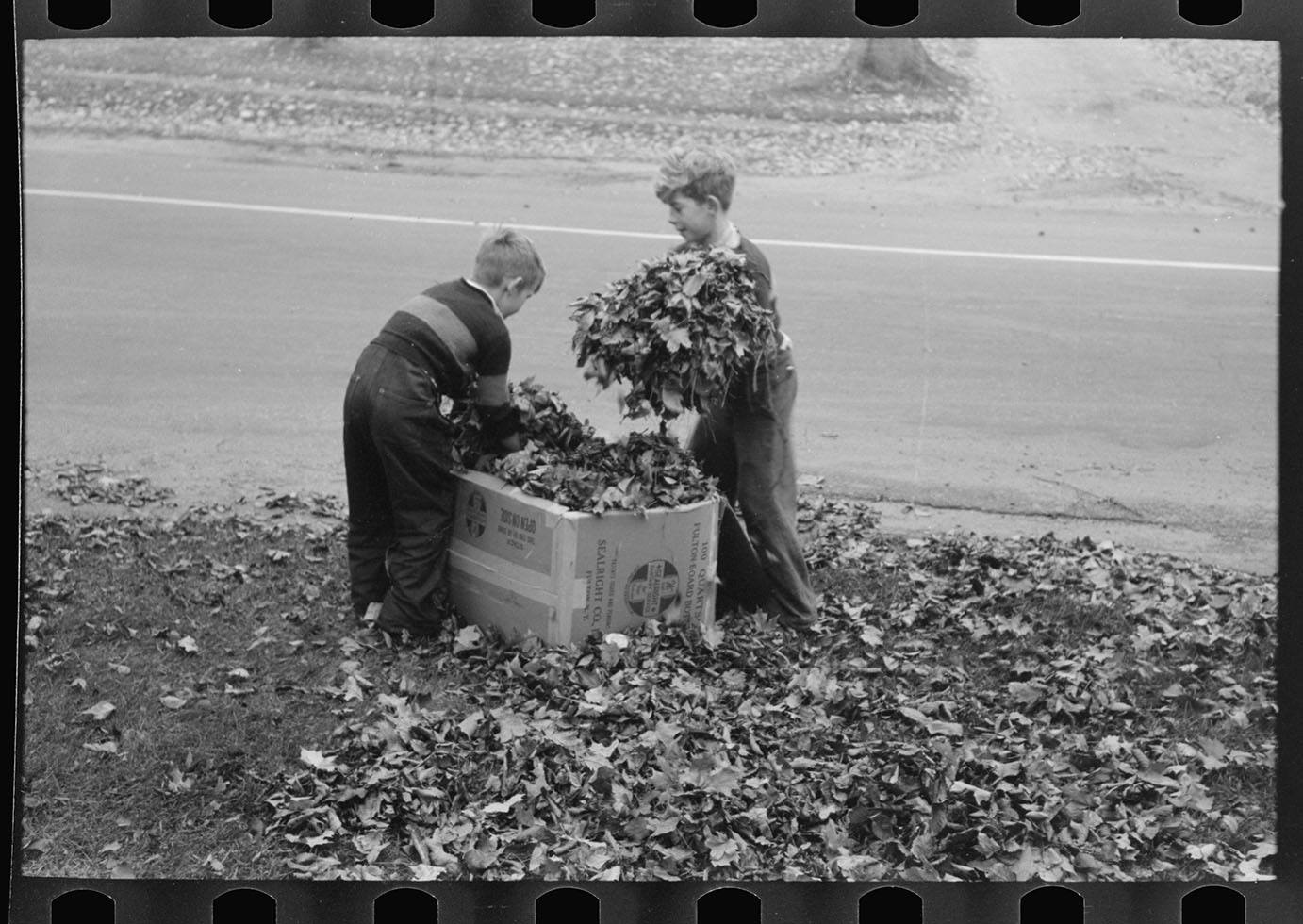
Boys gathering leaves, front lawn in Bradford, Vermont, October 1939. Photograph by Lee Russell, courtesy Office of War Information, Library of Congress.
Writing, and Revealing, Our True Selves
YOURSELF AS CHARACTER
Nicole Breit looks "at ways you can nurture the split between person and persona, and learn a few tricks to develop yourself as a character on the page” when writing memoir.
ILLUSTRATED JOURNAL
From the Amazon description of Journey, a book of visual and literary prompts: “It is a place where private dreams and musings, stories, and sketches come to life—and an ideal gift for those who wish to explore and then record their memories and dreams.”
THE MYTH OF DISINTEREST
When an acquaintance told me that her grown kids have no interest in listening to stories about her formative years and life experiences, I was compelled to revisit this topic once more: Your grown kids may not “care” about your stories now, but they will one day. They will.
WHAT NOW?
Are you stuck with your life story writing? “It’s not the lack of time. It’s not clutter. You don’t have ‘writer’s block.’ It’s probably that you just don’t know what to do next,” writes Alison Taylor of Pictures and Stories in Utah. She responds with some clear, actionable next steps to short-circuit your procrastination tendencies.
Reminders of Times Gone By
IMBUED WITH MEMORIES
"I didn’t want my grandfather’s things to just be another box of stuff. If you don’t pass these stories on, they get lost.” Five families talk about objects they could never part with—heirlooms they have cherished and preserved—because they hold meaning beyond their physical worth.
AS TOLD TO, FOOD EDITION
“Whatever else we put on the table, rice and shoyu was always the linchpin. We had it for dinner every single night of my childhood. It’s intimately tied to my sense of home.” Sanae Yamada on how returning to the foods of her childhood grounds her.
GERMAN PHOTOGRAPHY ARCHIVE
German culture minister looks into creating a central institution charged with archiving and sharing the country’s photographic cultural heritage to secure “the visual memory of our society.”
Celebrating Love
“WE GATHER HERE TODAY…”
At the book launch for one of her memoir clients, Nancy West was struck by how the gathering had all the best aspects of a memorial service: rich details about the person's life, loving tributes from his closest friends and family members. But there was one key difference—he was present to take part in it.
BUBBE DAYS
“I do want [my granddaughter] to remember me, not specific events so much as my presence. I want her to know that I helped care for her, comfort her and celebrate her. That I was there, a part of her life, and loved her ferociously,” Paula Span writes in this thoughtful piece about what our grandchildren will—and won’t—remember about us.
THAT TIME HE SHAVED MY LEGS…
Wisconsin–based Sarah White, who has been leading life writing groups since 2004, created “True Stories Well Told“ as a place to highlight stories of real life. Recently she shared her own sample of object writing, a piece of flash memoir she wrote guided by the prompt, “What is your earliest memory of your longest love partner?”
WAVING GOODBYE
Maria Rivas shares a remembrance of her mom, who was “strong in everything",” with StoryCorps Legacy, a project that gives people with life-threatening illnesses the chance to record their story, and their loved ones a chance to remember. Listen in:
...and a Few More Links
Google Photos hops on the memories bandwagon.
What indigenous stories can teach a new generation of farmers
'A Photo Album of Ireland' exhibit offers insights into personal histories.
Congrats to NYC–based Remarkable Life Memoirs on turning three!
Short Takes

Life Story Links: August 13, 2019
A wealth of first-person writing that probes the depths of self-reflection and identity, plus pieces on family history surprises, the art of interviewing & more.
“…being your own story means you can always choose the tone. It also means that you can invent the language to say who you are and what you mean…. From my point of view, which is that of a storyteller, I see your life as already artful, waiting, just waiting and ready for you to make it art."
—Toni Morrison, “Be Your Own Story,” Wellesley College commencement speech, 2004

In a photograph from the new book Buried (Catfish Press, 2019; Vira Rama, Charles Fox), the Rama family at the Chonburi Transit Center, leaving their refugee camp in Thailand. Learn more below.
Stories of Us
BURIED, UNBURIED
“Rama watched as his mother dug a hole under their small wooden hut just large enough for the bag of photos. He didn’t ask questions as she hid the traces of their middle-class life under a pile of banana leaves.” The unique journey of one family’s story of survival under the Khmer Rouge, Buried.
TOWARDS CHINATOWN
“By losing my relationship to Cantonese, what have I lost in my relationship with my parents?” Faced with the possibility of losing of her mother, Melissa Hung contemplates another loss—of her mother tongue.
SHARED HISTORIES AND DEFINING STRUGGLES
“We have history books that talk about wealthy politicians who were generally male, and generally white patricians, but we have all these other stories and we’re acknowledging their importance. The story is shifting to show that we all have something to add to the pot,” Thomas Allen Harris says in an interview about the premiere of Family Pictures USA on PBS.
ON MOM’S BOOKSHELVES
“I held those books so many times, their authors and titles were imprinted in my mind before I ever knew their importance,” Angelique Stevens writes in “The Books That Bear the Weight of the Living.”
REMEMBERING PRIMO LEVI
The Holocaust writer, born 100 years ago, managed to survive Auschwitz by chance. The Italian Jewish chemist then went on to write invaluable autobiographical accounts of life in the Nazi concentration camps and of displaced people after World War II. Through quotes and thoughtful analysis, one historian ponders the questions Levi’s writing continues to present us with.
How & Why We Share
TRANSCRIPTION HELP NEEDED
The Library of Congress is looking for volunteer assistants to transcribe 16,000 documents from suffragists—would you like to help? If you prefer to type the words of What Whitman, Susan B. Anthony, or Civil War soldiers, browse their other crowdsource campaigns.
MASTER INTERVIEWER, INTERVIEWED
“I still structure my interviews by trying to get people to lay out plot, beat by beat, even if the stories are very small.” Ira Glass on narrative storytelling and who he would prefer not to interview.
GRASPING MORTALITY
“The process of bringing coherence to one’s life story is what psychologist Dan McAdams calls creating a ‘narrative identity.’ People get better at identifying important life themes as they age, and those who are able to find the positive amid the negative are generally more satisfied with life,” Dhruv Khullar, M.D., writes in this exploration of what really matters to patients nearing end of life.
THE GOOD, THE BAD, AND THE UGLY
“[I] dare you not to be moved when you meet your ancestors!” Texas–based Allison Peacock of Family History Detectives writes in this piece on the traumas—and delights—that are often discovered as part of the genealogical journey.
...and a Few More Links
Finding connection at Ellis Island through a bit of Armenian graffiti
I combined all the free resources offered by Modern Heirloom Books in one handy toolkit. What other advice would you like to see added?
Brandon Shimoda on seeking ancestral connections through photos of his grandfather in a Japanese internment camp
From email to precious photos: passing on your digital assets
The benefits of dipping into the blog archives of Denis Ledoux’s The Memoir Network
Registration is open for the ASJA 2019 DC Writers Conference, with sessions on essay writing, the art of the interview, and marketing through podcasts.
Entrepreneur spotlight: Kinetic Legacy
Join the free virtual bookclub from the National Association of Memoir Writers this Thursday, August 15: a conversation with Beth Ricanati, author of Braided: A Journey of a Thousand Challahs.
Short Takes

Life Story Links: March 26, 2019
The symbiotic relationship between photography and memory; veteran voices and immigrant storytellers; plus lots of life story & family history audio treasures.
“Of course I have no right whatsoever to write down the truth about my life, involving as it naturally does the lives of so many other people, but I do so urged by the necessity of truth-telling, because there is no living soul who knows the complete truth; here, may be one who knows a section; and there, one who knows another section: but to the whole picture not one is initiated.”
—Vita Sackville-West

Writer Vita Sackville-West, a prolific diarist and letter writer, circa 1940
Past and Present
AMERICAN STORIES
In Search of Our Roots by Henry Louis Gates Jr. traces how 19 African Americans reclaimed their past. “All of us have ancestries defined at turns by people on the move—people with far more complicated arcs than might first appear in straight lines of descent,” he writes.
ACCESSING PAINFUL MEMORIES
“Once writing the book became the most important and life-affirming thing I could do, my nightly dreams provided me with the vivid memories that propelled me forward,” writes Holocaust survivor Max Eisen. “I was not aware of how cathartic an experience it would be.”
VETERAN VOICES
A debate about the utility and appropriateness of sharing the experiences of war has been waging over at The Havok Journal. In this three-part series writers contemplate what happens if silence becomes the story of your life; the reality of healing through sharing; and the possibility that you don’t get the chance to “work through” traumatic experiences.
THE AUDACITY OF STORYTELLERS
“If I believe that my own existence matters, I am even more confident that each of us has stories that matter,” Mary Ann Thomas writes in a piece exploring how as a nurse and writer, she works toward a culture of care.
Hear, Hear
FOR YOUR LISTENING PLEASURE
Last week I recommended three recent must-listen podcasts about memoir, narrative structure, family secrets, writing prompts, and more—and with each weighing in at under an hour, they’re easy to fit into your schedule.
AUDIO TREASURES
The Library of Congress has added 25 “audio treasures” to its National Recording Registry, including music from Jay-Z and Neil Diamond as well as a 1968 speech by Robert F. Kennedy. The oldest recordings on the list are the earliest-known recordings of Yiddish songs, made between 1901 and 1905. All of the audio treasures in the collection are available to listen to for free at the National Jukebox.
MEMORIES ON CASSETTE
Leora Troper of Portland-based Artisan Memoirs shares a brief post about why and how to digitize family stories that are currently stored on cassette tapes.
VOICES & GESTURES
In the video below, Steve Trainor of Remember Your Life Video in Hampton, Illinois, shares his enthusiasm for personal history with a local television reporter and gets to the heart of why capturing family stories now is of utmost importance. Kudos, Steve!
Photography & Memory
CAPTURING ‘OLD NEW YORK’
“My work is fueled by a sense of loss and nostalgia foretold,” Dimitri Mellos says of his photography project Chinatown. "The act of photographing affords me the illusory comfort that I am preserving a few bits and pieces of what life in this vibrant immigrant community has been like, in a form impervious to the passage of time.”
PHOTO CHAOS
Stumped for what to get someone you love this Mother’s Day or Father’s Day? “One of the greatest gifts that you can give to a parent is to help them to update and organize their treasure trove of photos," suggests Amy Blankson, who offers five steps to guide you through the process.
PHOTOGRAPHIC JOURNEY INTO PAST
“The sheer abundance of mementos, spilling from mobile photo galleries, bestows significance upon ordinary moments,” Veeksha Vagmita writes in this short meditation upon the nature of how memory is impacted by our photographic history, from tattered old albums to present-day phone scrolls.
TOUCH POINTS FOR INDIVIDUALS WITH MENTAL LOSS
“Touch the screen and a memory appears”: The free My House of Memories app has been designed for, and with, people living with dementia and their caregivers. It features historical photographs intended to spark meaningful conversation (personal photographs can be uploaded, as well).
Memoir Love
INSTRUCTIONAL MEMOIR, ANYONE?
”Are you a skilled cook or teacher or technician with a personal story underlying your expertise?" asks Massachusetts-based personal historian Nancy West. Consider combining a retelling of your life with information about how to do something, offering useful instructions that the reader might be able to apply directly to his or her own life.
BOOKTUBE WITH OBAMA
“It’s harder to hate up close. So let’s let each other in a bit more,” Michelle Obama says in this 10-minute interview about her bestselling memoir.
...and a Few More Links
A list to bookmark: The top 25 films that explore memory
Read the March/April issue of Hippocampus Magazine.
Sandra Day O’Connor and Alzheimer’s: a personal story
Social media sites are designed for sharing, not archiving.
Psychological counselor in India develops seven-step storytelling therapy.
An ode to (Australian) family history indexes
What will happen to our cloud-based keepsakes? A millennial’s take
Short Takes
Life Story Links: October 29, 2018
Plenty of first person and personal history reading, from stories of survival told through artifacts of memory to veteran experiences that honor and connect.
“Love is so short, forgetting so long.”
—Pablo Neruda

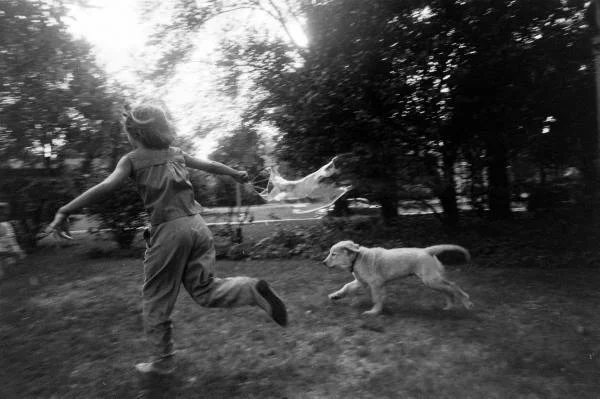
Kid's Bubble-Blowing Toy, 1959. Photograph by Stan Wayman for LIFE magazine. ©Time Inc.
Seeing Is Believing
OBJECT. IMAGE. MEMORY.
“A photo album, a china set, a teddy bear—even the most quotidian of artifacts—all resonate with special poignancy when associated with stories of persecution and loss,” Julia M. Klein writes of a Skokie, IL, museum exhibition called “Stories of Survival.”
BLURRY IS BEAUTIFUL
Blurry photos are often the first to get deleted from your film scroll—but photographer Yan Palmer offers up another perspective.
FILM REVIEW
I finally found time to screen the 2012 documentary Stories We Tell, and I recommend it as much for the dramatic exploration of one family's narrative as for the questions it raises about the malleability of truth.
Life Stories, Listening & Telling
#THEGREATLISTEN
In its 15th year StoryCorps continues to “create a culture of listening that echoes across the nation.” Resources compiled for its annual Great Thanksgiving Listen include a Great Questions List and Interview Planning Worksheet.
“THE ROLLING NOW”
Sarah White of Madison–based First Person Productions shares a short essay she calls an experiment in “The Rolling Now,” a structural technique described as "like rocking back and forth between past and present."
A LIVING TRIBUTE
The new National Veterans Memorial and Museum in Columbus, Ohio, which opened October 27, highlights personal stories of veterans from all branches of the military to inspire, honor, and connect.
CONFESSIONAL STORYTELLING
“I used to reassure prospective clients that they could simply leave out any personal stories that were too difficult to tell, says Massachusetts–based personal historian Nancy West. “But the more people share with me, the more I begin to think that nothing is too difficult for clients to share, once they become comfortable with the process.”
...and a Few More Links
The earliest memory in the first person testimonies of The HistoryMakers dates to the 1700s.
Kickstart your family history project with this November 14 webinar from archivist Margot Note.
In The Library of Congress’s new National Screening Room you can watch hundreds of hours of cinematic history for free, with films from 1890-1999.
Town & Country: “From Gates to Rockefeller, Wealthy Families Hire Personal Historians to Preserve Their Legacy”
Short Takes

Life Story Links: October 2, 2018
A roundup chock-full of life story stuff, from sharing painful memories to honoring a mother's legacy, plus pro tips on talking about money & managing workflows.
“Music does a lot of things for a lot of people. It’s transporting, for sure. It can take you right back, years back, to the very moment certain things happened in your life. It’s uplifting, it’s encouraging, it’s strengthening.”
—Aretha Franklin
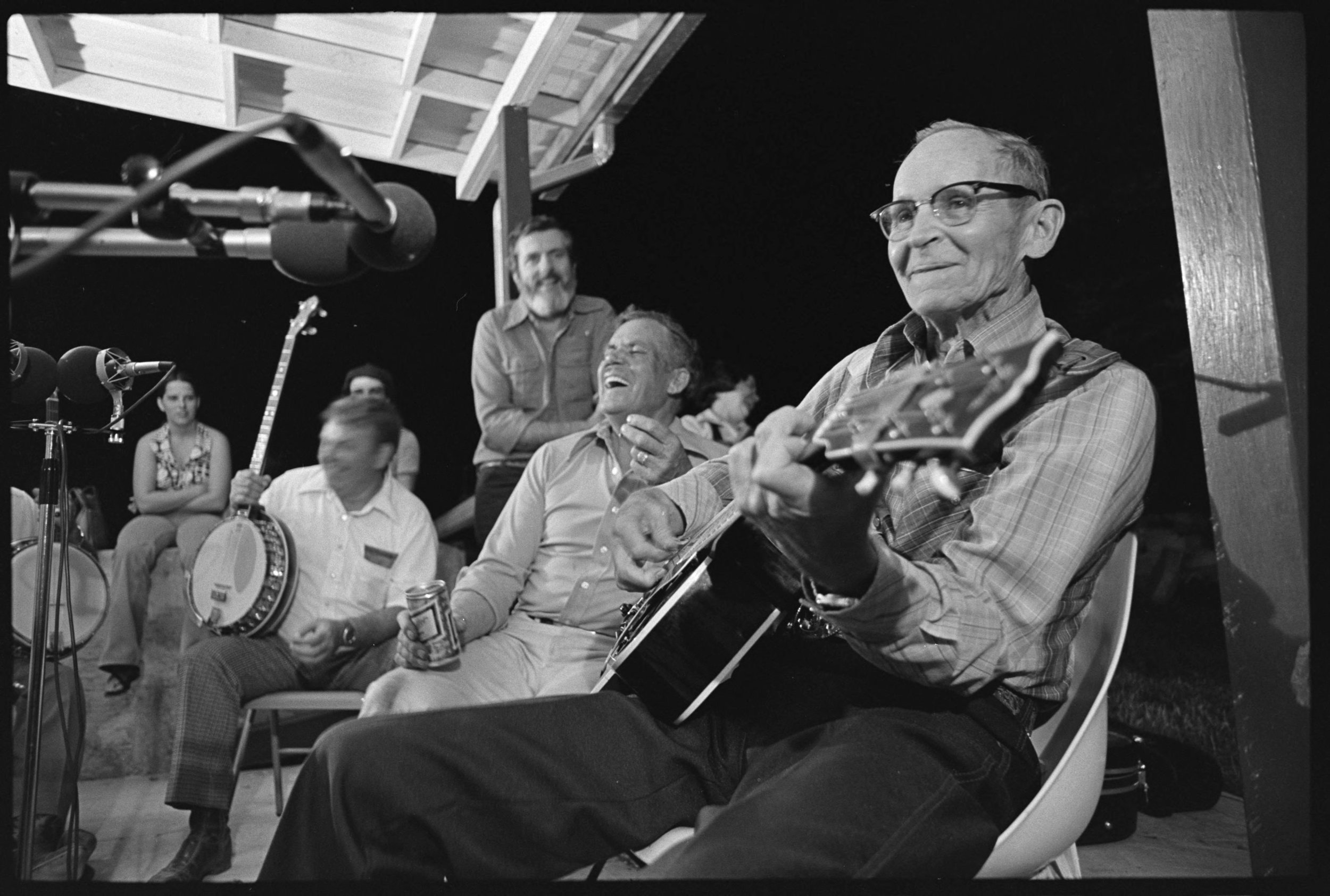
PHOTOGRAPH: Old time fiddling at Bernie Rasmussen's in Polson, Montana, July 22, 1979, from the Montana Folklife Survey collection at the Library of Congress.
Battle Scars
BRUISES AND ALL
“I understand that sharing difficult experiences is decidedly not for everyone,” writes Chicago–based personal historian Betsy Storm. “But nobody can underestimate the power of such stories to lift others up from their own tender and painful places.”
THE RELUCTANT INTERVIEWEE
This week I review the 1996 documentary Nobody’s Business, in which Alan Berliner interviews his (rather pugnacious!) father about family history. You’ll laugh and you’ll cringe at their father-son interplay.
On the Front Lines of History
OBJECT LESSONS
Check out Your Story Our Story, a national project exploring American immigration and migration through a crowd-sourced collection of stories about everyday objects of personal significance.
MOON MAN
Neil Armstrong’s personal papers land at Purdue, his alma mater, including approximately 70,000 pages of fan mail, which Armstrong continued to receive from around the world for years after he landed on the moon. (Archivists: Imagine the time it took to catalog this “finding guide” to the collection!)
Memories that Matter
IN REMEMBRANCE OF 朱苏勤
“She knew only two people who speak English fluently—myself and my father. Not able to tell her story herself, I want to use my voice to tell it for her,” writes Li Jin in “Saying Goodbye to My Grandmother.”
AN APP FOR THAT?
In the hope that preserving “one memory at a time” is less daunting for some than writing a “life story,” I explored digital story sharing services in my latest guest post for The Photo Organizers.
STORIES OF OUR STUFF
In What We Keep, 150 people share touching stories behind their most prized possessions. Read three excerpts here, and listen to co-author Bill Shapiro talk about how things become imbued with memories and meaning.
Pro Tips
UNFORESEEN CONSEQUENCES
Massachusetts–based personal historian Nancy West offers suggestions for looking at your life through a thematic lens. As she writes, “You might be surprised to find out that your life story has governing themes that go well beyond a simple linear list of dates and places.”
THAT (DREADED?) MONEY CONVERSATION
“Life story work is ‘heart-driven’ work, and like other service-oriented professions, it attracts people who may not feel comfortable with the money-making side of their business,” says Amy Woods Butler, founder of the Story Scribe in Kansas City. In the latest episode of her podcast she talks with educator and memoirist Sarah White about money matters.
...and a Few More Links
Is the ‘real you’ a myth? A medical take on the nature of memory
Museum educator discovers unexpected family ties to the place he works.
You don’t have to travel to D.C. or peruse 838 miles of shelves to visit the Library of Congress.
For life story professionals interested in creating efficient systems, download this free guide for creative entrepreneurs on Systems, Automation & Workflow (full disclosure: I authored one of the articles!).
A helpful and thorough comparison of print on-demand services
Short Takes
Dawn Roode’s curated roundup for the week of Sept. 23, 2026, is overflowing with recent reads on memoir, life story writing, and family history preservation.