
Memories Matter
Featured blog Posts

READ THE LATEST POSTS
Life Story Links: November 1, 2022
This week's curated roundup includes Dawn’s book and film picks, meditations on memoir, and more recent articles of interest to personal and family historians.
“Remembering is a serious business. It demands attention. For a journey into the past, you have to pick your moment.”
—Charles Fernyhough
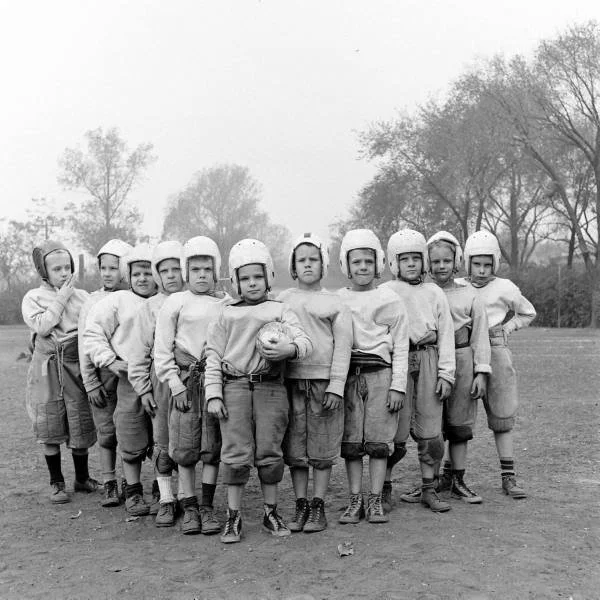
Vintage photo of a kids’ football team, October 1947, by Wallace Kirkland for LIFE magazine; © Time.
Memoir minutia
THOSE STORIES YOU’VE TUCKED AWAY
“For a long time, I used to say that I ran away from memoir by writing fiction. I don’t believe that anymore. I think if anything, my fiction writing helped lead me to my heart, to the stories I really wanted to write, to my essays and memoir.” Vanessa Mártir on writing the ghosts that haunt.
THE UNASSAILABILITY OF MEMORY
“Memory is a pinball in a machine — it messily ricochets around between image, idea, fragments of scenes, stories you’ve heard.” Mary Karr on navigating memory while writing memoir.
Life. legacies, POV
WHO GETS THE LAST WORD?
“It’s clear to those who have contributed material that the archive is about safeguarding Mr. Jobs’s legacy. It’s a goal that many of them support.” But some historians worry: Is it more tribute than archive?
OUTLIVING HIS FATHER
“At some point in my early twenties, it occurred to me that although he was no longer here, with me, my father’s life was like a map unfurling beneath mine.” Read an excerpt from Thomas Beller’s new book.
THE JOURNAL DILEMMA
“Like the journal itself, the question of what to do with them is deeply personal—and well worth contemplating.” Suleika Jaouad on making a plan for what becomes of your private writings, and who may be impacted by your choice.
ECHOES ACROSS TIME
When she was growing up, Massachusetts–based personal historian Marjorie Turner Hollman keenly felt the absence of her paternal grandfather. A trip to the Grand Canyon as an adult connected her to “Grampy” in surprising ways.
Media recommendations for personal history fans
BOOKS OF DELIGHT
There are all kinds of autobiographical writing, but oh how I love Ross Gay’s meandering yet distinct essays that, like the titles of his books promise, anticipate and deliver joy. His latest, Inciting Joy, came out October 25.
INTROSPECTIVE ACTOR & PHILANTHROPIST
“With all other people, some things were possible, but not everything. For us, the promise of everything was there from the beginning,” Paul Newman says of Joanne Woodward in this brief excerpt from his new memoir.
WITNESS
Last week I reviewed “Survivors: Faces of the Holocaust,” an exhibition showcasing 75 large-scale portraits taken by photographer Martin Schoeller to mark the 75th anniversary of the Liberation of Auschwitz in 2020.
‘FROM WHERE THEY STOOD’
A handful of prisoners in WWII camps risked their lives to take clandestine photographs and document the hell the Nazis were hiding from the world. The film From Where They Stood attempts to unearth the circumstances and the stories behind their photographs:
...and a few more links
Seeking advice: “Is it okay that my husband keeps mementos of his former love?”
Precious memories: 8 refugees share the things they brought to remind them of home.
“Dark Terrorism: an Unexpected Prisoner of War, Part 1” is a lovely example of compelling family history writing.
Research shows positive and negative memories are stored in different parts of the brain, and what this means for memory manipulation.
How explosive will Prince Harry’s memoir, due in January, be?
10 physician memoirs that offer inspiring accounts of life in medicine
Eliza Dumais cooks through the journals of Sylvia Plath, “a radical academic with a bend towards baking banana bread.”
Short takes

Life Story Links: August 24, 2021
A curated collection of recent stories about writing—and reading—memoir, creating lasting legacies, and telling family stories in engaging, truthful ways.
“A writer—and, I believe, generally all persons—must think that whatever happens to him or her is a resource. All things have been given to us for a purpose, and an artist must feel this more intensely. All that happens to us, including our humiliations, our misfortunes, our embarrassments, all is given to us as raw material, as clay, so that we may shape our art.”
—Jorge Luis Borges
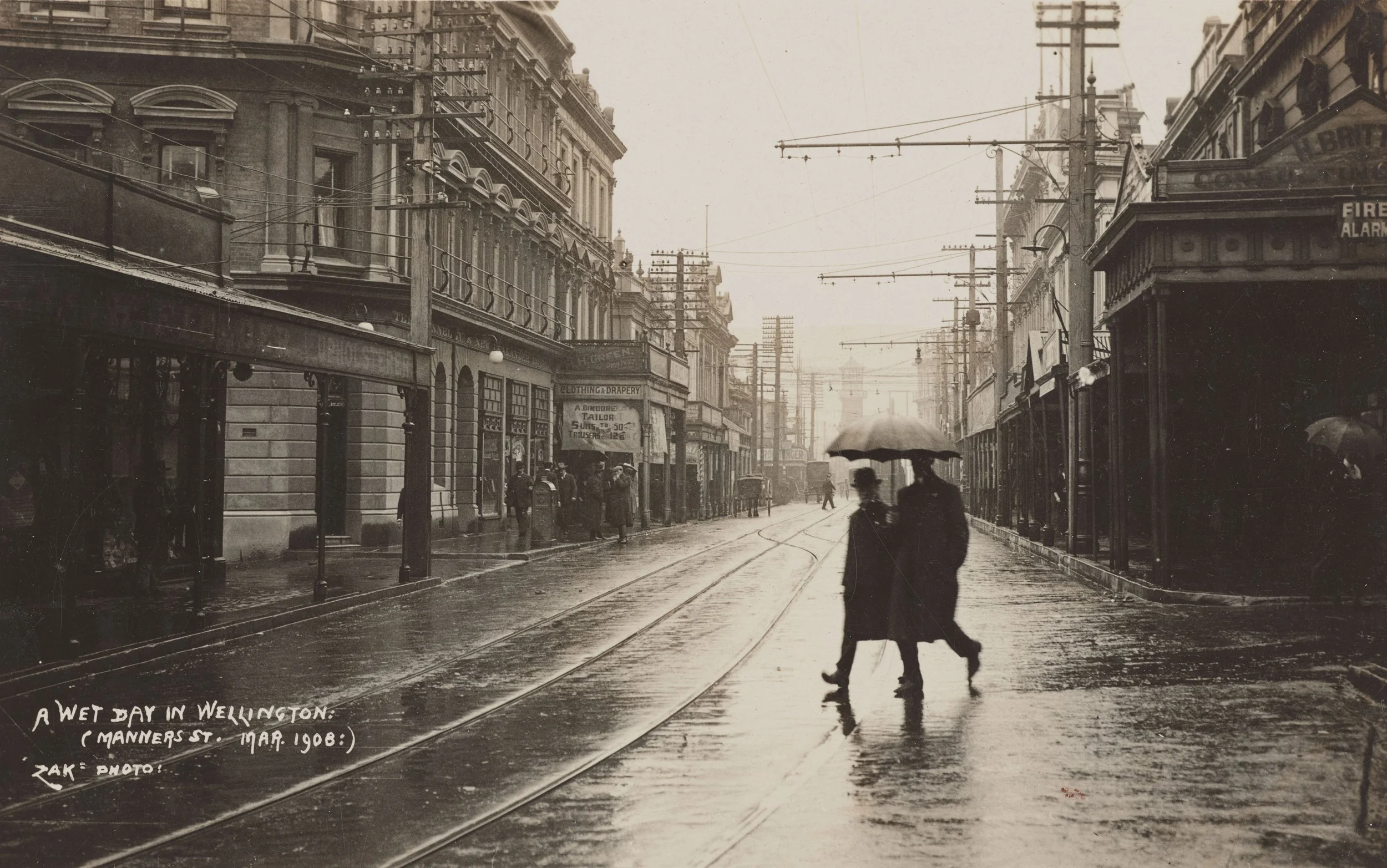
Vintage postcard of Trinity Church in Boston, 1899. Photograph courtesy of The Miriam and Ira D. Wallach Division of Art, Prints and Photographs: Photography Collection, The New York Public Library Digital Collections, 1898-1931.
Conversations Worth Having
JOURNEY TOGETHER
A memoir should be a conversation, not a monologue, Beth Kephart opines in this excerpt from her latest craft book, We Are the Words: The Master Memoir Class. “Find a place for a ‘we’ inside your pages. Step down from the stage. Lower the lights. Mingle with the audience.”
INTERVIEW SUBJECTS, GET READY!
Know someone who is about to be interviewed about their life? Share these six tips for getting comfortable with the idea of stepping up to the mic and telling great stories.
Behind the Memoirs
WHEN GUILT, GRIEF, AND SHAME COLLIDE
“I’m revealing major flaws about myself that I’m going to get judged for, but that’s what makes a story interesting,” memoirist Rachel Michelberg tells Marion Roach Smith on the QWERTY podcast. “I wrote it because it was my truth, and there was shame at the time, but there isn’t shame anymore.”
“WE SHARE THE SAME SKY”
“‘I had so much of my grandmother’s stuff that I probably could have written a biography of her life without ever leaving my bedroom,’ said [Rachael] Cerrotti, while sitting in her apartment in Portland. ‘But I wanted to hear the language, see the landscape, and explore what it all meant in my life.’” (I am completely engrossed in this the memoir right now, fyi!)
GUIDE TO GRIEVING
“It wasn’t even a year since my father had died, I hadn’t completed my Jewish mourning cycles and rituals, I was still a raw and cracked egg, and this book was born amidst my half-cooked grief.” Merissa Nathan Gerson on writing her grief in Forget Prayers, Bring Cake.
‘REMEMBERINGS’ OF A SINGER-SONGWRITER
“Early on, [Sinéad O’Connor] realizes, ‘In real life you aren’t allowed to say you’re angry but in music you can say anything.’ It turns out that she thought real life and music were the same thing.”
THE MORRIS SISTERS
“It didn’t take me long to realize that for women who were so famous within my family, there didn’t seem to be much written about them in the world.” Julie Klam on tracking down the truth and telling the story of her notable relatives.
Creating Legacies
PRESERVING HER FATHER’S PHOTO LEGACY
“I am so proud of my father’s body of work and the fact that his legacy will now live on in perpetuity…. Also, this legacy will no longer be my responsibility. For that, I am greatly relieved.” Houston–based video biographer Stefani Elkort Twyford prepares and ships off her father’s photo archive, with pride and a twinge of sadness.
HONORING A QUIETLY JOYFUL SOUL
While most people visit StoryCorps to interview a loved one, Libby Stroik recorded memories of her grandfather on her own, as his memories were fading. “If I could ask him something now I think I would probably ask him what his secret was,” she said, “cause he always seemed so grateful for living.”
HIDDEN HISTORY
How Vancouver–based personal historian Mali Bain went from a box of photos and ephemera to a richly researched book about the uncle her client never met.
Video Inspiration
LIFE INSPIRES ART
“Dear son, Charles wrote on the last page of the journal, ‘I hope this book is somewhat helpful to you. Please forgive me for the poor handwriting and grammar. I tried to finish this book before I was deployed to Iraq. It has to be something special to you.’” The upcoming movie A Journal for Jordan, due out in December and based on a true story, was inspired by this original New York Times article by Dana Canedy and the 200-page father’s journal her partner wrote for their son. Here’s a preview of the film:
A NEW CHANNEL FOR FAMILY STORYTELLING
Jamie Yuenger, who has long produced legacy videos for families as founder of StoryKeep, is now offering private podcasting as another medium for story sharing and preservation. Here she gives a brief intro to the concept:
...and a Few More Links
North Carolina documentarian aims to preserve family histories with video heirlooms.
How blockchain could have saved the Library of Alexandria (and what it can do for future historical preservation)
Netflix’s Misha and the Wolves is “as much about storytelling as it is about the Holocaust.”
Why Billie Jean King finally took control of her own story
Short Takes
Life Story Links: August 9, 2021
A bi-weekly roundup focused on ideas and practical tips for preserving your legacy, writing about your life, and reading memoir and biography as inspiration.
“I had already planned the journey back. During quiet afternoons I spread maps onto the floor and searched out possible routes to Ceylon. But it was only in the midst of this party, among my closest friends, that I realized I would be traveling back to the family I had grown from—those relations from my parents’ generation who stood in my memory like frozen opera. I wanted to touch them into words.”
—Michael Ondaatje, Running in the Family
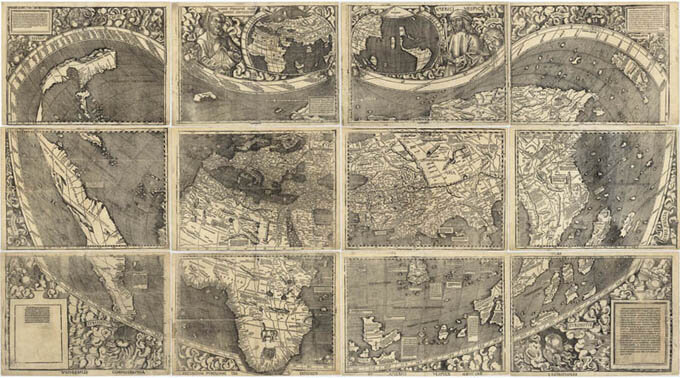
A little “on this day in history” trivia: On August 3, 1492, Christopher Columbus set sail for the New World. It is commonly believed that his contemporaries feared he would sail off the edge of the Earth, but the fact is that 15-century Europeans did not believe the Earth to be flat. This reproduction of a 1507 world map by Martin Waldseemuller (image courtesy of Library of Congress) is the first to label America and show it as a separate land mass.
What’s New in Memoir & Biography
FORWARD GLANCE TO POSTERITY
American writer Shirley Jackson “fully expected her correspondence to be published one day. (She implored her parents to save everything she wrote to them.)” This newly collected collection of her letters covers a range of quotidian concerns as well as her experience making a living as a writer while raising four children.
BY QIAN JULIE WANG
“Searing and unforgettable, Beautiful Country is an essential American story about a family fracturing under the weight of invisibility, and a girl coming of age in the shadows, who never stops seeking the light.”
AN EXPANSIVE BIOGRAPHY
“Even at the end of this extraordinarily intimate book, Mildred remains somewhat of an enigma. ‘Despite her wish to remain invisible,’ Donner writes, ‘she left a trail for us to follow.’” Why All the Frequent Troubles of Our Days is “a remarkable work of family history.”
HAPPY-GO-LUCKY
“‘Who are you?’ I want to ask the gentle gnome in front of me. ‘And what have you done with Lou Sedaris?’” A new personal essay by David Sedaris charms and intrigues.
Storytelling Miscellany
OPENING QUESTIONS
Last week I wrote about my three favorite questions to start a personal history interview with, and when to use each to initiate free-flowing and interesting family stories.
VISUALIZING FORGOTTEN STORIES
“Are women real keepers of our past? … How important in the context of collective memory is personal history, and should it be part of the school textbook? Is it possible that the carefully listened story will teach us sensitivity and openness to other people?” Questions raised by the Art & Memory exhibit based on oral histories of Polish women’s wartime memories.
FROM SUITCASE TO THE CLOUD
A new advertising campaign for cloud storage provider Dropbox portrays the company as a trusted partner for storing—and sharing—our most cherished digital mementos. Here’s a clip:
Learning from Memoir Masters
ANNE LAMOTT, UNCENSORED
“Now, we all love stories about ourselves, right? That’s what the tribal storyteller tells. And that’s what people like about my stories, because they’re the stuff in me that I know is universal and holds up a mirror to them.” Anne Lamott in conversation with Tim Ferriss about “the really real,” the writing life, and so much more.
BETH KEPHART, REFLECTIVE
Through teaching memoir, Beth Kephart has explored “how it feels to go unseen, how the fear creeps in when our stories keep their distance, how it is essential, always, to live with purpose so that we might write with meaning.”
Leaving a Legacy
ETHICAL WILLS
“You might make the mistake of believing you are in control of your legacy, when it is largely determined by the people who have been influenced by you in some way.” Massachusetts–based personal historian Susan Turnbull offers two-hour ethical will workshops.
INHERITING STORIES—AND RESPONSIBILITY
As the generation that experienced the world’s first atomic attack fades away, Hiroshima is training younger volunteers to share the experiences of nuclear survivors. The memory keepers, called denshosha, spend three years learning to tell a survivor’s story as the survivor wants it told.
LIFE WRITING AS RESPONSIBILITY
“Without stories imparted from grandmother to mother, to son to daughter, our DNA is as sterile as computer code, a raw set commands with no context.” A co-founder of Biograph on preserving generational wealth through intergenerational storytelling.
...and a Few More Links
Book publishing cost calculator: What to expect to pay for everything from manuscript editing to promotion
“Don’t be afraid to tell your stories. The world will be better because you tell them.”
Google Photos releases a memories widget for Android.
Show-and-tell for grownups in Toronto
Tips for how to make photography help, not harm, your memories
A list of things millenial kids might actually want to inherit from their parents (hint: they all involve family memories!)
Short Takes
Dawn Roode’s curated roundup for the week of Sept. 23, 2026, is overflowing with recent reads on memoir, life story writing, and family history preservation.