
Memories Matter
Featured blog Posts

READ THE LATEST POSTS

“Who listens to you?”
We are a world of talkers, but what we need is to listen, and to be listened to. Find inspiration from author Kate Murphy and personal historian Dawn Roode.
“When I interview people—whether it’s a person on the street, CEO, or celebrity—I often get the sense that they are unaccustomed to having someone listen to them. When I respond with genuine interest to what they are saying and encourage them to tell me more, they seem surprised; as if it’s a novel experience. They noticeably relax and become more thoughtful and thorough in their responses, assured I’m not going to rush them, interrupt, or glance at my phone. I suspect that is why so many end up sharing such tender things—unsolicited by me and wholly unrelated to the story I am writing. They find in me someone who will finally, at last, listen to them.”
This paragraph is from the introduction to You’re Not Listening: What You’re Missing and Why It Matters by Kate Murphy—I had jotted it down as a reminder to write about this phenomenon someday. The notation about the author and the book title was on the reverse side of the piece of paper I wrote the quote on. So when I unearthed the scrap among my things recently, I thought for a moment I had written these words; the sentiment and the experiences reflected within are as if my own (though, admittedly, it’s been a while since I interviewed a celebrity!).
It’s common—too common, really—for people to feel almost shocked when I maintain eye contact and do not interrupt their story sharing. More than one interview subject has teared up and needed to pause once they get going during our interview sessions—once it dawns on them that I am not going to interrupt them, and that I am listening intently.
Kate Murphy interviewed many people for her book, and among the questions she asked them, she writes, was, “Who listens to you?” The answers, as you can imagine, were not overwhelmingly positive: Many, many of us feel like we are not being listened to, and even, says Murphy, that we are not good listeners ourselves.
If you’re interested in exploring this—how we got here, how we can change course—I recommend picking up a copy of You’re Not Listening.
For a sampling of the author’s thinking and her voice, I recommend listening in to this Fully Booked podcast interview with Kate Murphy:
And for a few of my (very quick!) thoughts on the topic, read on.
Listening is an active endeavor.
Listening is not the same as hearing. Listening is a conscious act—being open to receiving the words and messages of another. “Listening is an act of community,” author Ursula K. LeGuin wrote. So next time you ask someone a question, pay attention to their answer; when it seems like they are done speaking, take a beat—awaiting more from them, perhaps, and listening to your shared silence. There is much there to hear.
Listening makes you a more empathetic person.
Empathy is the ability to understand and share the feelings of others. It can be developed through practice, and it's not a fixed trait. “When you talk, you are only repeating what you already know. But if you listen, you may learn something new.” This is an oft-quoted sentiment from the 14th Dalai Lama, and it resonates for a reason. By listening to (or reading) another’s stories, we are given the opportunity to see ourselves in their experiences—and in so doing, help us understand their perspective.
Everyone is interesting if you listen to them.
It’s partly a matter of asking the right questions, partly of giving someone space to share, but it’s mostly a matter, in my opinion, of listening—if you listen with an open heart and an abundance of curiosity, every person will show themselves to be interesting.
I hope you have someone in your life who listens to you—really listens to you. “Love is listening,” artist Titus Kaphar has said (and, oh, how I agree!)…and we are all worthy of love.
I leave you with this quote, written in my commonplace book years ago, from one of my most beloved writers:
“In the silence of listening, you can know yourself in everyone, the unseen singing softly to itself and to you.”
—Rachel Naomi Remen






The alchemy of story sharing: It takes two
Did you ever notice how joyful and empowering it can be to listen to someone else's stories? Magic happens when two people connect over story sharing.
“There is power in telling stories, of course. There is power in hearing them. But there is greater power in the interaction between the two.”
Plenty of people who want to preserve their stories for the next generation do so by writing a memoir or keeping a scrapbook. There are others, though, who take the approach of capturing their stories by recording conversations—one-on-one interviews either with another family member or with a professional personal historian like me.
One of the most common things I hear after an interview is some iteration of, “Wow, I had no idea how fun that would be!”
When we tell stories to an interested listener an exchange happens. As Murray Nossel, author of Powered by Storytelling, has said, “Listening is the air that stories breath.”
Magic happens when a story is received
The title of this post is “The Alchemy of Storytelling” for a reason: “alchemy” is defined by Merriam-Webster as “a process that changes or transforms something in a mysterious or impressive way.” There’s a magic to story sharing that can’t be fully defined.
A story isn’t really a story until it is received, is it?
Hearing a story is powerful. Because there’s a connection that forms between the storyteller and listener. There’s a sense of community and camaraderie that ensues, an actual exchange of ideas and feelings.
Bruce Feiler interviewed hundreds of people as part of his Life Story Project. He describes the exchanges this way: “We created something together that neither one of us could have created on our own. And when it was over, both of us wanted the same thing: To do it again. To hear another story. To share the process with almost anyone we knew.”
They each wanted a little bit more of that magic.
So, why is having a listener to our stories so impactful?
Top 3 benefits of having an active listener to your stories
1 - Your listener helps move the story along.
Research has shown that a listener to a story is not a passive recipient, but a co-narrator of the story being told, especially when they show empathy to the storyteller. And their reactions, both verbal and physical, prompt the storyteller to add more details, slow down, or clarify when necessary.
2 - If you’re paying attention, you’ll know when you’re veering off-course.
You can read your audience’s body language to know when things might be getting a little…boring (are they gazing into the distance or fidgeting?); confusing (are they furrowing their brow?); or even really good (are they leaning forward in their seat?). A storyteller who is attuned to his or her listeners will adjust the pace or level of detail to create an even better all-around story sharing experience.
3 - You’ll (both) feel validated.
No matter how specific and individual your story is, there’s a good chance sharing it with someone else will reveal it’s universality, too. That promotes a feeling of connection that can be elusive in today’s tech-driven world. It’s a joyful feeling to share stories like this—as Bruce Feiler said above, it’s contagious: One story shared leads to another…and another…
So, won’t you share a story from your life with someone you love today? Or ask them to share their story with you! Make some magic happen.

Life Story Links: February 4, 2020
A wealth of good reading on topics including Holocaust remembrance, telling our own stories, and bearing witness to the stories of others.
“Tell your story. Take the data of your life and turn it into real people doing real things and you will move mountains. You will change the world.”
—Dave Lieber

Camp buddies, Christmas Seals Camp, Haverstraw, New York, January 1, 1943. Photograph by Gordon Parks, courtesy Library of Congress.
Bearing Witness to Stories of Others
THE FINE ART OF LISTENING
“Good listeners ask good questions. One of the most valuable lessons I’ve learned as a journalist is that anyone can be interesting if you ask the right questions.” Kate Murphy, author of You’re Not Listening: What You’re Missing and Why It Matters, on how to talk less and listen more.
CREATING A NARRATIVE IDENTITY
“When the future is running out, can we make more of the past? I often struggle with my role as a caregiver for patients at the end of life. I know the most healing things I can offer aren’t the things I usually do,” writes Dhruv Khullar, M.D., M.P.P. in this thoughtful piece. What are those healing things? “To sit. To listen. To explore what it’s all meant.”
FULL CIRCLE
A son’s photographic journey through Alzheimer’s with his dad results in a grant with which he plans to create a book. What’s up next inspires me just as much: “He has begun making appointments with his mother, who is living in his childhood home, to photograph her…. She plays Mahjong, goes to the grocery store, keeps busy. She is full of life. And he wants to be there with her, documenting it.”
FIGHTING FOR THE ANONYMOUS
“It hurt like hell to hold her story. It hurts like hell to tell it. It would hurt a thousand times worse than hell if I hadn’t stopped to hear it. We are to blame when we do not memorialize the living,” writes Beth Kephart in this “memoirist’s chant.”
Telling Our Own Stories
SEALED WITH LOVE
“A different human wrote to the 24-year-old me than the one who wrote to the 44-year-old, but there are aspects of her in these later ages,” writes Ann Napolitano, a novelist who writes to her future self every ten years. “One of the lessons in these letters is that our lives have chapters—I just happen to have an envelope to mark each of mine.”
NO EXCUSES
For anyone intimidated by the idea of writing their life story, here are four specific tactics to write their way in, one memory at a time, and finally get that memoir started.
PICTURES HOLD STORIES
“Photos will spark your memory much better...if a small number of them are curated into an album. This more manageable collection of photos will increase the chances you’ll engage with them on a meaningful basis later on.”
Voices of the Holocaust
January 27, 2020, was International Holocaust Remembrance Day, and many media outlets helped to remember and honor the six million Jewish victims and millions of other victims of the Holocaust. A handful follow.
NEVER FORGET
Edith Fox sometimes told friends she wanted the words “Holocaust Survivor” on her tombstone. But she didn’t want to talk about what she had endured. It was simply too painful. Until her health recently began to fail and she decided, at age 90, that she didn’t want her story to die with her.
“LETTER FROM AN UNKNOWN WOMAN”
In an excerpt from A Bookshop in Berlin: The Rediscovered Memoir of One Woman’s Harrowing Escape from the Nazis, Patrick Modiano introduces us to the sweeping journey of Françoise Frenkel's No Place to Lay One’s Head, which Modiano opines belongs in the company of literary giants.
FACES, LIVES
Survivors: Faces of Life After the Holocaust is a photo portfolio by Martin Schoeller, who “felt that it was his professional and personal responsibility to not only reflect on and learn from the Holocaust, but to help memorialize it” with these unflinching portraits of survivors.
IN THEIR OWN WORDS
Echoes of Memory is an ongoing collection of survivor reflections and testimonies from the United States Holocaust Memorial Museum. The remembrances are varied and poignant, well worth reading—and sharing.
...and a Few More Links
Renovated museum celebrates New Orleans' Italian history; Sicilian visitors can also learn about their own personal history.
Using cutting edge technology to recover an audio treasure
Maia Fischler of Life Writer Personal Histories in Oregon celebrates a recent autobiography completion.
Residents of a senior living community in Minnesota have released their third book of personal histories, Distinctly I Remember: More Stories We Love to Tell.
Tips on archival preservation of your papers and mementos
How Phillip Lim learned to cook by following his nose back to the fragrant dishes of his childhood.
Helping young kids create a grandparent journal
Short Takes



100-percent listening
Humans of New York creator reveals his insights on why people open up—and it’s not the questions. How being 100 percent present invites honest storytelling.
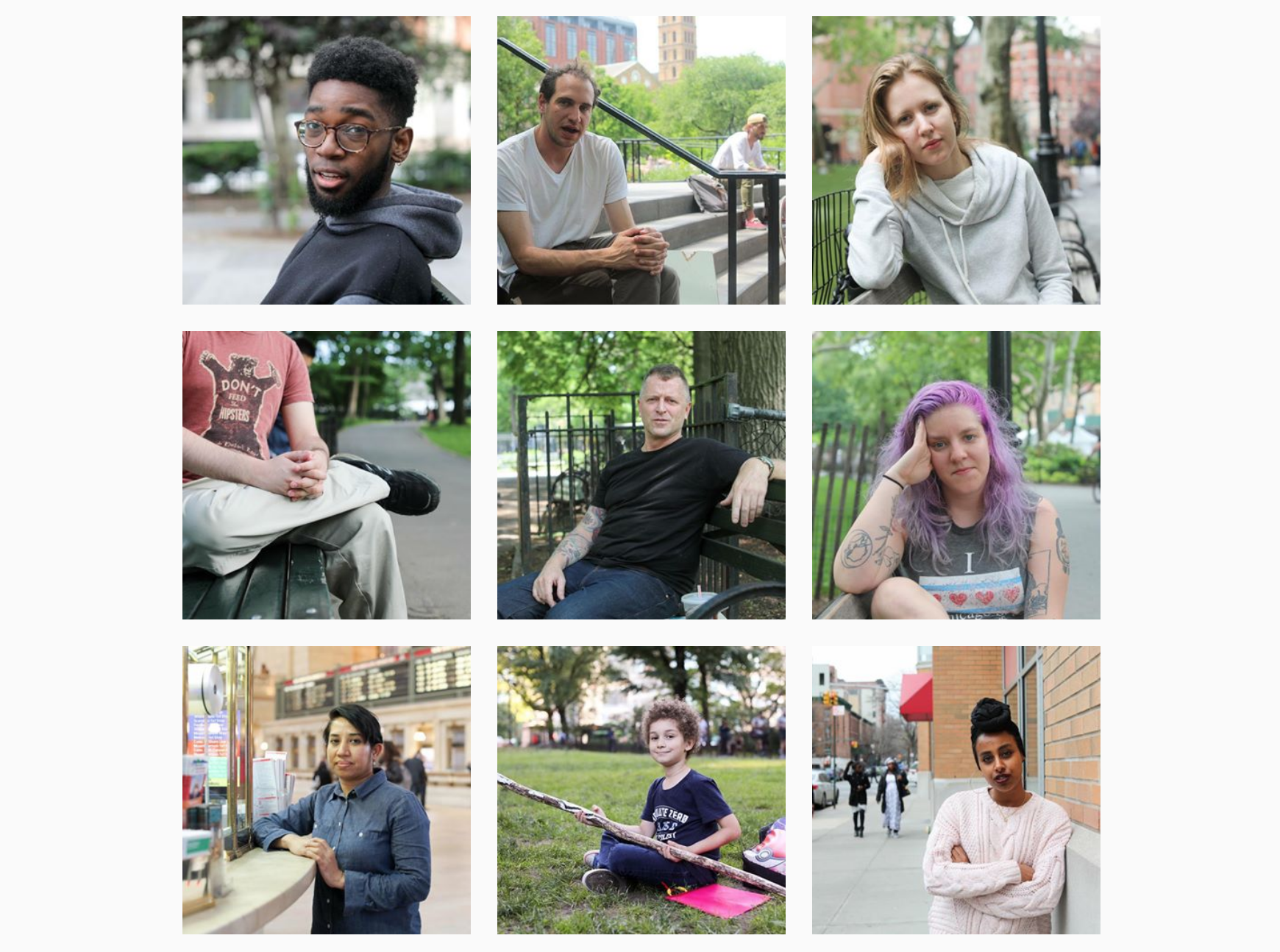
As both a Tim Ferriss fan and a Humans of New York devotee, I was eager to dive into Tim’s interview with HONY creator Brandon Stanton. The podcast turned the tables on Stanton, making him the subject of probing questions rather than the one holding the mic.
If you are not one of the 25 million followers of Humans of New York, here’s the scoop: Through photographs and enlightening captions (derived from much longer interviews) Stanton provides a glimpse into the lives of strangers on the streets of New York City and around the world. The snippets of conversation he shares alongside the portraits run the gamut from funny and warm to heart-wrenching and soul-satisfying—and they always, somehow, find a deep truth that taps into the universal.
“How Do You Get People to Share?”
Stanton says that the question he is most often asked is how he gets strangers to open up to him. I can understand why; his subjects allow themselves to become incredibly vulnerable during the interview process, revealing private experiences that have included physical abuse, gripping loneliness, falling off the wagon, and all sorts of painful decisions and emotions. He shares some moving accounts during the interview with Ferriss.
The HONY blog and social media accounts can be deceiving, though: It might seem as if the quotes are one-offs, that they were uttered immediately upon the questioner’s asking. The truth, however, is that Stanton often talks to his subject for more than an hour, often twice that. He earns their trust, he listens with curiosity, and he devotes himself fully to their exchange.
And his thoughts on that process—and his ability, after more than 10,000 interviews—to be truly present, are what interested me during this particular podcast.
“Humans of New York really works because the people on the street that I meet are so thankful to have somebody really listen to them,” Stanton says. “In that bubble, in that hour and a half where I’m sitting with a stranger on the street, this magic happens, where they’re willing to let me into a space in their mind or their soul or whatever it is, that they don’t really let other people into. It’s that place that I think connects with so many people.”
It’s not the questions themselves that prompt the sharing of such raw emotions and inner truths (though Stanton does list three of his standbys: What’s your biggest struggle? How has your life turned out differently than you expected it to? What do you feel most guilty about?). Rather, it is the listening, and the follow-up.
“Being heard like that is such a validating thing,” he says, and “that’s why people always share.”
The Power of Presence
“The planned questions are just springboards into a conversation,” Stanton tells Ferriss. “And how you get to that deep place with a person is absolute presence. It’s being 100 percent there.”
“You’re not thinking in the framework of an interview. You’re not looking at your list of questions. You’re not thinking about your next question. You’re not thinking about how this person fits into your idea of them and what you know about them. You’re 100 percent there, and you’re 100 percent listening to them. And your questions are 100 percent based on curiosity and what they are telling you, and nothing else.”
Amen. That’s what a good interview is all about.
Challenge Yourself to Listen
Listening to the stories that you hold dear is the biggest joy and privilege of what I do here at Modern Heirloom Books. I strive to earn your trust, and to listen with full attention and curiosity. It comes naturally for me as a genuinely curious soul, but I admit that what makes it within reach for me, truly, is the time set aside specifically for this purpose: for story sharing, for conversation, and for a true exchange, as Stanton might say, from one soul to another.
Let’s challenge ourselves, though, to partake in such meaningful conversations with someone in our lives unexpectedly. Ask questions, and listen. Give yourself the gift of time for this exchange, and give another the gift of listening—with 100 percent presence, 100 percent attention, 100 percent curiosity.
Who will you “interview”?
I’d love to hear what results!
Bonus Advice from Stanton
I couldn’t resist sharing this one last bit of advice from Stanton, who regards biography as “the best form of history”:
“Pick somebody that you admire and read their biography. If you really want some sort of guidance in your life, pick somebody who has done things that you want to do and that you really admire, and read a nice, fat 800-page biography of their lives. Find out the struggles that they went through, find out the twists and turns of their lives and the decisions they made. I don’t think there’s any better actionable road map, actionable education, than getting down to the granular level of somebody’s life and finding out how they navigated it.”
—Brandon Stanton, Humans of New York, as interviewed by Tim Ferriss
Related Reading
3 places to find unexpected questions that lead to meaningful life story writing
Extended Conversation: Anderson Cooper and his mother Gloria Vanderbilt maintained an email correspondence that delved deep—into the feelings they had previously not spoken about, and into their experiences both shared and wholly individual
This man’s stories were so clearly intriguing—to me, a stranger. Why wouldn’t they be of interest to his own children?