
Memories Matter
Featured blog Posts

READ THE LATEST POSTS

Life Story Links: August 13, 2019
A wealth of first-person writing that probes the depths of self-reflection and identity, plus pieces on family history surprises, the art of interviewing & more.
“…being your own story means you can always choose the tone. It also means that you can invent the language to say who you are and what you mean…. From my point of view, which is that of a storyteller, I see your life as already artful, waiting, just waiting and ready for you to make it art."
—Toni Morrison, “Be Your Own Story,” Wellesley College commencement speech, 2004

In a photograph from the new book Buried (Catfish Press, 2019; Vira Rama, Charles Fox), the Rama family at the Chonburi Transit Center, leaving their refugee camp in Thailand. Learn more below.
Stories of Us
BURIED, UNBURIED
“Rama watched as his mother dug a hole under their small wooden hut just large enough for the bag of photos. He didn’t ask questions as she hid the traces of their middle-class life under a pile of banana leaves.” The unique journey of one family’s story of survival under the Khmer Rouge, Buried.
TOWARDS CHINATOWN
“By losing my relationship to Cantonese, what have I lost in my relationship with my parents?” Faced with the possibility of losing of her mother, Melissa Hung contemplates another loss—of her mother tongue.
SHARED HISTORIES AND DEFINING STRUGGLES
“We have history books that talk about wealthy politicians who were generally male, and generally white patricians, but we have all these other stories and we’re acknowledging their importance. The story is shifting to show that we all have something to add to the pot,” Thomas Allen Harris says in an interview about the premiere of Family Pictures USA on PBS.
ON MOM’S BOOKSHELVES
“I held those books so many times, their authors and titles were imprinted in my mind before I ever knew their importance,” Angelique Stevens writes in “The Books That Bear the Weight of the Living.”
REMEMBERING PRIMO LEVI
The Holocaust writer, born 100 years ago, managed to survive Auschwitz by chance. The Italian Jewish chemist then went on to write invaluable autobiographical accounts of life in the Nazi concentration camps and of displaced people after World War II. Through quotes and thoughtful analysis, one historian ponders the questions Levi’s writing continues to present us with.
How & Why We Share
TRANSCRIPTION HELP NEEDED
The Library of Congress is looking for volunteer assistants to transcribe 16,000 documents from suffragists—would you like to help? If you prefer to type the words of What Whitman, Susan B. Anthony, or Civil War soldiers, browse their other crowdsource campaigns.
MASTER INTERVIEWER, INTERVIEWED
“I still structure my interviews by trying to get people to lay out plot, beat by beat, even if the stories are very small.” Ira Glass on narrative storytelling and who he would prefer not to interview.
GRASPING MORTALITY
“The process of bringing coherence to one’s life story is what psychologist Dan McAdams calls creating a ‘narrative identity.’ People get better at identifying important life themes as they age, and those who are able to find the positive amid the negative are generally more satisfied with life,” Dhruv Khullar, M.D., writes in this exploration of what really matters to patients nearing end of life.
THE GOOD, THE BAD, AND THE UGLY
“[I] dare you not to be moved when you meet your ancestors!” Texas–based Allison Peacock of Family History Detectives writes in this piece on the traumas—and delights—that are often discovered as part of the genealogical journey.
...and a Few More Links
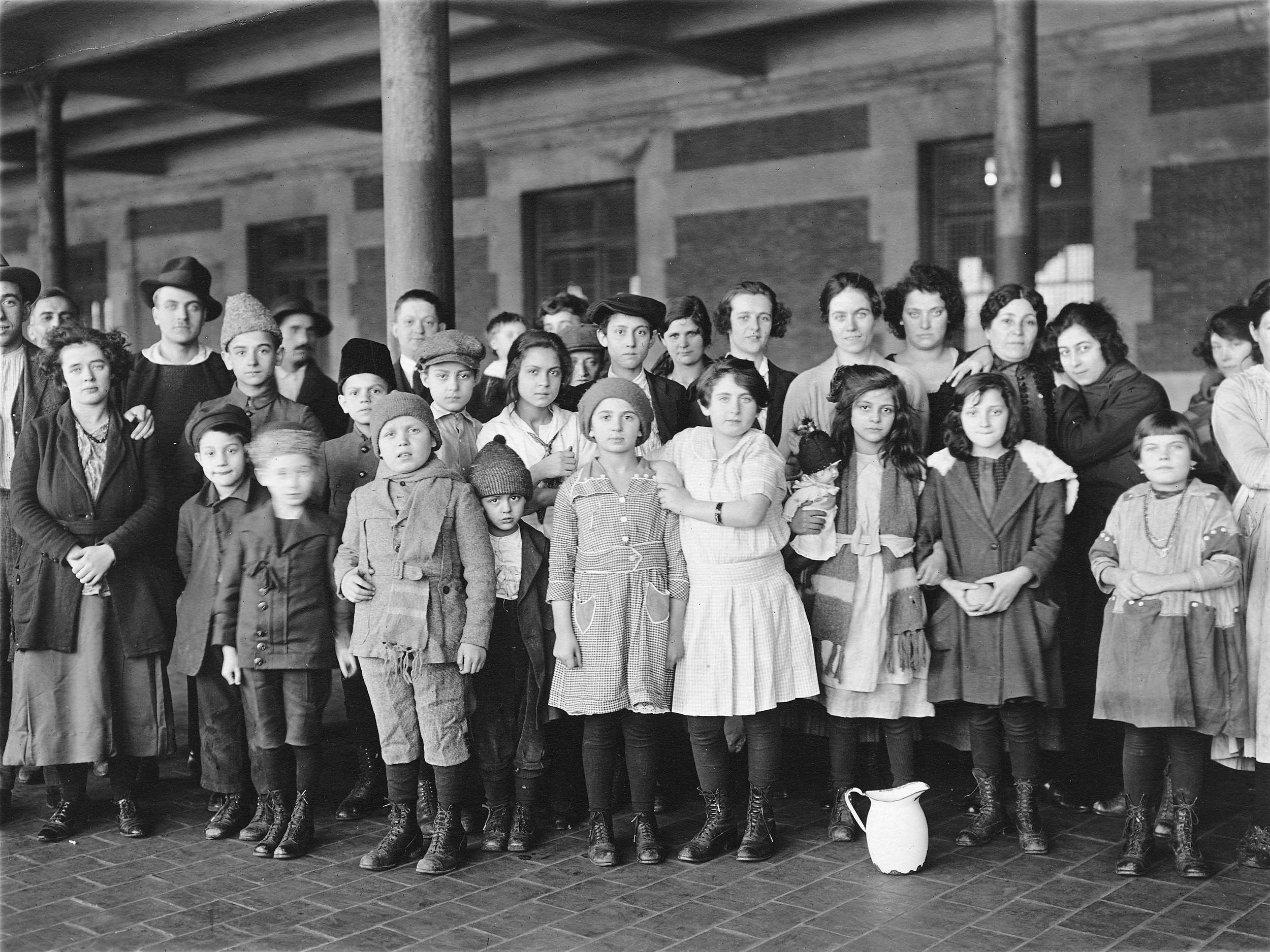
Finding connection at Ellis Island through a bit of Armenian graffiti
I combined all the free resources offered by Modern Heirloom Books in one handy toolkit. What other advice would you like to see added?
Brandon Shimoda on seeking ancestral connections through photos of his grandfather in a Japanese internment camp
From email to precious photos: passing on your digital assets
The benefits of dipping into the blog archives of Denis Ledoux’s The Memoir Network
Registration is open for the ASJA 2019 DC Writers Conference, with sessions on essay writing, the art of the interview, and marketing through podcasts.
Entrepreneur spotlight: Kinetic Legacy
Join the free virtual bookclub from the National Association of Memoir Writers this Thursday, August 15: a conversation with Beth Ricanati, author of Braided: A Journey of a Thousand Challahs.
Short Takes

Life Story Links: July 15, 2019
Memoir suggestions to inspire your own autobiographical writing, business-building courses, and lots of first-person pieces that reveal the powers of story.
“We tend to be preoccupied by the present, with one eye cocked on the future. But history, after all, isn’t really about the past. Our history is about who we are right now and where, as a society, we’re headed (just as an obituary isn’t about death but about a life).”
—Sam Roberts

Noah Garland with his sons and some of their families. Southern Appalachian Project near Barbourville, Knox County, Kentucky, November 1940. Photographed by Marion Post Wolcott, courtesy U.S. Farm Security Administration.
Turn the Page
READING LIST
Memoir reading suggestions to inspire your own vignette-style life story writing, from Annie Dillard and Kelly Corrigan to Robert Fulghum and Sandra Cisneros.
BOOKS FOR THE AGES
“Books are a portal to our personal histories. Pick up a worn copy of a childhood favorite and you might be transported to the warmth of a parent’s arms or a beanbag chair in a first-grade classroom or a library in your hometown. Avid readers could build autobiographies around their favorite books...” With that, the team at the Washington Post has developed a fabulous list of what to read at every age, from one to 100.
MUST-READ MEMOIRS
The New York Times’s book critics select the 50 best memoirs of the past 50 years. Cool feature: Click the asterisks throughout the article to create your own list of must-read books. Do your favorites make the list?
Continuing Education
THE ART OF EDITING
Patricia Charpentier’s Orlando–based Writing Your Life hosted its first live webinar, The Art of Editing, on June 8. Catch a replay of the educational 90-minute webinar here.
RESCUING HISTORY
Personal historian Mary Voell's 16-week online course The Making of a Family Historian provides a framework and tools to organize and research family history before beginning your autobiographical writing.
True Stories Uniquely Told
TWO SISTERS, ONE MEMOIR
“Recently two sisters in their seventies asked if I could help them write a joint memoir,” Massachusetts–based personal historian Nancy West says. Though they lived in the same household, the sisters had substantively different childhood experiences, making the exploration of their shared past that much more fascinating.
PERSONALIZING IMPERSONAL RECORDS
Thor Ringler has run the My Life, My Story program at the the William S. Middleton Memorial Veterans Hospital in Madison, Wisconsin, since 2013. In that time the program has recorded life stories of more than 2,000 veterans—and placed the short biographies in each vet's' electronic medical record.
IMMIGRANT FORGER
“At almost the exact moment my family left Warsaw for the long trip across Europe to Antwerp and a ship to America, a second group started the trip as well, this one carrying forged visas and passports with the names of my family members,” Kenneth D. Ackerman writes in this investigation into the “the immigrant forger” Joseph Rubinsky.
THE ACHES AND PAINS OF MEMOIR
“The risk of nonfiction is that people are like ‘I know everything about you,’ and I’m like no, you just know this fun house mirrored projection of the people in my life through one lens, which is mine.” T Kira Madden, Roxanne Gay, and other memoirists on the dialogue around their writing.
THIS IS MY BRAVE
After chronicling her challenges of living with mental illness while raising two young children, and striking a chord with many people, Jennifer Marshall morphed her blog into a powerful nonprofit that uses storytelling as a tool for healing.
Time for Headphones
PODCAST, PERSPECTIVE
Believable is a podcast from Narratively “about how our stories define who we are.” Each episode “dives into a personal, eye-opening story where narratives conflict, and different perspectives about the truth collide.” In this episode, a woman’s struggle to corroborate her own life:
EXTENDING YOUR REACH
Listen to Lettice Stuart discuss incorporating public speaking into your personal history business marketing plan on the latest episode of Amy Woods Butlers’ The Life Story Coach podcast.
...and a Few More Links
Preserving your legacy of love before it’s too late
Focus on historical photography: the Daguerreotype
The blogger quietly preserving Maryland’s culinary history
A practicing psychologist on why we need memoirs
Short Takes

Don’t wait for “someday”
Meet Josh: He plans to write his biography someday. Yet he has told his adult kids none of his life stories. How about you—are you waiting for “someday,” too?
“I am going to write my biography,” Joshua told me exuberantly. I met Josh in Central Park last week, and was interviewing him for an upcoming feature story for a professional association. For the past 15 minutes he had been discussing with me the reasons that, no, he does not tell his children stories from his childhood. “Why would they care?” he said with a laugh, before proudly telling me how close he is to them, and bragging of all their accomplishments.

Joshua in NYC's Central Park on November 9, the day we spoke. Photograph by Katie Bellini
Joshua’s children are adults, working professionally in cities far from their dad, but in regular contact with him. They are indeed close, as Joshua was to his own father—who, by the way, led an extraordinary life of which Joshua only knows some of the details firsthand.
Joshua, a 60-something man of Japanese descent who has lived in New York City for more than 40 years, is far from typical in his experiences. He enthused about his life, sharing stories in rapid-fire succession about everything from his father’s “double Holocaust” (he lost his family in a concentration camp, then, Joshua told me, in later years his wife took everything their young family owned and left Josh’s father to raise three children alone) to his aversion to books (“I’d rather watch people in the park”) to his enduring positive attitude (“no one can take that away from me”).
Empowered by a Listener
After a reluctant two minutes where he told me there was no way to do his story justice in a brief conversation—“that would take years!” he said on another laugh—Joshua launched into his storytelling. No prodding necessary.
This was no interview, really—once Joshua began to share, he couldn’t stop. I asked an occasional question in response to his stories, but he, so positively impacted by an eager listener, I think, was on a roll.
I was enthralled by Joshua’s stories, and by his enthusiasm. He radiated positivity, roaming Central Park with his adopted dog (whose collar, as Josh pointed out, read “Don’t shop - Adopt”) and punctuating his sentences with glorious belly laughs and expansive hand gestures.
And while I view Joshua’s experiences as singular, his attitude of guardedness with his own family is anything but.
The Myth of Disinterest
Josh’s stories were so clearly intriguing—to me, a stranger. Why wouldn’t they be of interest to his own children?
Joshua valued his life experiences enough to dream of writing his autobiography one day, but not of sharing his stories in person with his family. This is the case with so many people I speak with. And it saddens me.
They think that “the time will come” for them to share their stories.
They figure one day, when their kids get older and aren’t so busy, maybe the kid will ask questions.
Or they assume that no one cares; that their story matters to them, but not really to others.
I have heard a litany of excuses as to why people are waiting for “some other day” to tell their stories.
My opinion? Stop making excuses.
Today’s Lesson (There Will Be a Quiz)
Your stories matter. Share them. Don’t wait for “someday.” Someday is today.
Why?
Why should you share your stories?
Perhaps you want to leave a legacy.
Enrich the family history for the next generation.
Help others learn from your experiences.
Provide a few laughs.
There are so, so many reasons to share your life stories.
The one that I regard as of utmost value, however, is probably the least talked about: It will enrich your life.
Sharing stories with those you love is enriching, plain and simple. Whether you are telling tales of struggle and triumph, love and loss, hardship and pain, rollicking good fun and misadventures…whatever directions your stories veer, they will be welcomed.
There is joy in the telling, and gratitude in the receiving. Storytelling can be cathartic, healing, challenging, difficult. Always, though, storytelling will be rewarding.
Quiz (I Said There’d Be a Quiz, Didn’t I?)
When should you tell your stories?
Joshua would have failed this quiz. He is waiting for “someday.”
How about you?
Next Steps
If your “someday” is today, congratulations!
You’ll find plenty of tips & resources on our blog, including:
And we’re always here to partner with you on creating a professional heirloom coffee table book, with stories gathered through one-on-one interviews (the heart of our process!). If you would like help capturing your life stories, see how we can work together.
Dawn Roode’s curated roundup for the week of Sept. 23, 2026, is overflowing with recent reads on memoir, life story writing, and family history preservation.