
Memories Matter
Featured blog Posts


READ THE LATEST POSTS
Life Story Links: July 30, 2019
A memoir with a distinctive format, why the stories of yesterday matter today, life story writing advice, recommendations for first person reads, and more.
“So, why do we need memoir? In this world, and in our country—where so many of us feel a lack of connection, where the challenges seem so large—writers who dare to tell the brutal, honest truth about their humanity offer us a gift....They remind us that we are more alike than different. They make us feel less alone.”
—Liz Scott

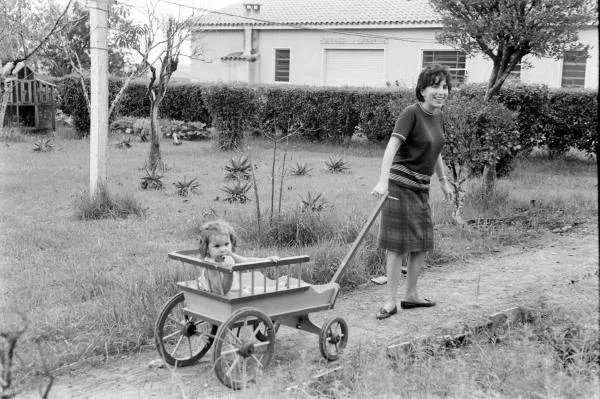
La Plata, Uruguay, 1964. Photograph by Leonard Mccombe for LIFE magazine. ©Time Inc.
Connections with the Past
RESCUED TWICE
“There’s a Yiddish concept called the ‘Di Goldene Keite,’ which talks about the historical link that ties each generation to the next. We are responsible for transmitting and preserving this heritage.” The archive that survived the Holocaust and a 2019 terrorist attack.
THE FLAVORS OF FAMILY FOLKLORE
“This master sauce could be perpetuated for generations—an irreplaceable family recipe. The DNA of meals past would be infused into each meal. You could literally eat what your grandmother ate,” Grace Hwang Lynch writes in this piece exploring genetics, food memories, and immigrant identity.
SEPARATE BUT EQUAL
In his new memoir, Aleksandar Hemon relates his family’s large encounters with history and their smaller everyday concerns in two separate narratives, packaged together in one book (just flip it over to read the next). One reviewer called it “a writer’s testament to the act of storytelling, the art of writing and the impulse, to paraphrase Joan Didion, to tell stories in order to live, to make sense, to survive.”
HISTORY REPEATS
“As leaders of organizations entrusted to tell the story of new Americans, we share a belief that our national identity is best understood and appreciated through the stories of yesterday’s immigrants whose lives have shaped our history.” Three guardians of history coauthor an op-ed on how America and the immigrant experience are intrinsically linked.
Writing and Relics
A SENSE OF AN ENDING
“The tricky thing about writing an ending for a memoir is that if you’re still alive to tell the story, it’s not really over yet.... So how do you end the story if you’re still living in its aftershocks?” Lilly Dancyger helps you write towards a resolution
UNEASY CONVERSATIONS
Why is it sometimes easier to talk about our life experiences with a stranger? Last week I wrote about how to get a reluctant storyteller to genuinely open up about his or her past.
SCRAPBOOKS, SHARED MEMORIES
“I think I should look at these albums on a regular basis as a necessary temperature check. They remind me how we only record what matters. Nary a page has a photo of an e-mail message or task list.”
PICTURES OF THE PAST
From the streets of Detroit to the shores of Southwest Florida and the farm fields of North Carolina, Family Pictures, USA, looks at family photo albums as an integral part of our social and cultural history. Premieres Monday August 12 on PBS (check local listings):
“MY DARLING MATEY”
Bruce Summers of Virginia–based Summoose Tales reflects on one of his earliest personal history collaborations, the story of a man and woman, half a world apart, and the barn that brought them together.
Recommended First-Person Stories
LIGHT THERAPY
“Before Tom died, when I pulled into the driveway, a glow from the den meant he was there in his favorite space... His warm hug welcomed me home. After his death, I could not bear arriving to a house in darkness,” Helen Collins Sitler writes in this touching flash-fiction piece.
OVER THE MOON
I simply adore the interplay in the back-and-forth between this couple, wed for 70 years, as they speak about how they met as kids and developed an undying love and affection for one another:
HISTORY, BIG AND SMALL
“What are some of the funny little connections you have to historic moments in the larger context?” Carol McLaren of Unique Life Stories in Arizona, wonders in this recounting of an impromptu dinner and story swap about the Apollo 11 moon landing.
...and a Few More Links
A roundup of writers on the topic of why we write memoir
“You’ve Told that Story 100 Times. Please Stop.”
Lucette Lagnado, whose memoirs epitomized “the art of reported memory,” dies.
A historian looks back at the legacy of slavery in her home state, incorporating personal history along the way.
Photographer captures the love of elderly couples who've been together for decades.
A wedding-day gift that will undoubtedly become the couple’s first family heirloom.
Short Takes


Life Story Links: July 15, 2019
Memoir suggestions to inspire your own autobiographical writing, business-building courses, and lots of first-person pieces that reveal the powers of story.
“We tend to be preoccupied by the present, with one eye cocked on the future. But history, after all, isn’t really about the past. Our history is about who we are right now and where, as a society, we’re headed (just as an obituary isn’t about death but about a life).”
—Sam Roberts

Noah Garland with his sons and some of their families. Southern Appalachian Project near Barbourville, Knox County, Kentucky, November 1940. Photographed by Marion Post Wolcott, courtesy U.S. Farm Security Administration.
Turn the Page
READING LIST
Memoir reading suggestions to inspire your own vignette-style life story writing, from Annie Dillard and Kelly Corrigan to Robert Fulghum and Sandra Cisneros.
BOOKS FOR THE AGES
“Books are a portal to our personal histories. Pick up a worn copy of a childhood favorite and you might be transported to the warmth of a parent’s arms or a beanbag chair in a first-grade classroom or a library in your hometown. Avid readers could build autobiographies around their favorite books...” With that, the team at the Washington Post has developed a fabulous list of what to read at every age, from one to 100.
MUST-READ MEMOIRS
The New York Times’s book critics select the 50 best memoirs of the past 50 years. Cool feature: Click the asterisks throughout the article to create your own list of must-read books. Do your favorites make the list?
Continuing Education
THE ART OF EDITING
Patricia Charpentier’s Orlando–based Writing Your Life hosted its first live webinar, The Art of Editing, on June 8. Catch a replay of the educational 90-minute webinar here.
RESCUING HISTORY
Personal historian Mary Voell's 16-week online course The Making of a Family Historian provides a framework and tools to organize and research family history before beginning your autobiographical writing.
True Stories Uniquely Told
TWO SISTERS, ONE MEMOIR
“Recently two sisters in their seventies asked if I could help them write a joint memoir,” Massachusetts–based personal historian Nancy West says. Though they lived in the same household, the sisters had substantively different childhood experiences, making the exploration of their shared past that much more fascinating.
PERSONALIZING IMPERSONAL RECORDS
Thor Ringler has run the My Life, My Story program at the the William S. Middleton Memorial Veterans Hospital in Madison, Wisconsin, since 2013. In that time the program has recorded life stories of more than 2,000 veterans—and placed the short biographies in each vet's' electronic medical record.
IMMIGRANT FORGER
“At almost the exact moment my family left Warsaw for the long trip across Europe to Antwerp and a ship to America, a second group started the trip as well, this one carrying forged visas and passports with the names of my family members,” Kenneth D. Ackerman writes in this investigation into the “the immigrant forger” Joseph Rubinsky.
THE ACHES AND PAINS OF MEMOIR
“The risk of nonfiction is that people are like ‘I know everything about you,’ and I’m like no, you just know this fun house mirrored projection of the people in my life through one lens, which is mine.” T Kira Madden, Roxanne Gay, and other memoirists on the dialogue around their writing.
THIS IS MY BRAVE
After chronicling her challenges of living with mental illness while raising two young children, and striking a chord with many people, Jennifer Marshall morphed her blog into a powerful nonprofit that uses storytelling as a tool for healing.
Time for Headphones
PODCAST, PERSPECTIVE
Believable is a podcast from Narratively “about how our stories define who we are.” Each episode “dives into a personal, eye-opening story where narratives conflict, and different perspectives about the truth collide.” In this episode, a woman’s struggle to corroborate her own life:
EXTENDING YOUR REACH
Listen to Lettice Stuart discuss incorporating public speaking into your personal history business marketing plan on the latest episode of Amy Woods Butlers’ The Life Story Coach podcast.
...and a Few More Links
Preserving your legacy of love before it’s too late
Focus on historical photography: the Daguerreotype
The blogger quietly preserving Maryland’s culinary history
A practicing psychologist on why we need memoirs
Short Takes

Life Story Links: June 25, 2019
The value of attaching stories to our stuff, ways to organize your memories around the artifacts of your life, and a moving eulogy honoring Gloria Vanderbilt.
“In writing, the big things in life are best illustrated by their small details. A recent widow struggling with the clasp of her charm bracelet for the first time since the death of her husband illustrates, illuminates and focuses in on grief. Go small and explode life’s large themes.”
—Marion Roach Smith

Boys just returned from hunting, Knox County, Kentucky, circa 1940. Photographed by Marion Post Wolcott, courtesy U.S. Farm Security Administration.
Lost & Found
MORE THAN STUFF
“If we want our family heirlooms and objects to have stories, then we must attach the story to them,” Kim Winslow writes. See how she does just that with a simple bench passed down from her husband’s mother.
FOUND PHOTOGRAPHS, MEMORIES GONE FERAL
Every photograph is “a marker, the living trace of a human who may otherwise survive only as a census entry, or not even that. We cannot discern their accompanying stories, and we can’t do anything for them.” The (missing) stories behind other people’s photos.
140,000 VHS TAPES
“This was not just a story about an archive, but a chance to use the archive to tell a story of the complicated person Marion [Roach] was,” filmmaker Matt Wolf says of his documentary Recorder: The Marion Stokes Project. I missed the screenings in NYC and Montclair, New Jersey, but hope to catch one soon.
After a Death
GRIEF VALLEY
“As much as I miss my dad (and I do miss him terribly) I miss the me that he knew, too. I grieve the loss of our shared story,” John Pavolovitz writes. When someone you love dies, you lose a part of yourself, too: “You lose the part of you that only they knew. You lose some of your story.”
GOODBYE TO AN ICON
Almost immediately after the news broke that Gloria Vanderbilt had passed away on June 17, tributes began pouring in on social media. Her son Anderson Cooper, with whom she wrote a revealing memoir, took to the air for this moving eulogy:
Ways In
TIMED WRITING EXERCISE
By limiting oneself in word count and time allotted for writing, undertaking any life story project becomes both more urgent and more relaxed. How to write a 300-word autobiographical vignette in 30 minutes.
CALL FOR SUBMISSIONS
Do you have a story about a time you were literally lost—maybe on a winding back road, in a sprawling city, or inside a cavernous building? Or maybe you were metaphorically lost, unsure of your life's direction, until that one moment or one person changed everything. Submit your writing to Hippocampus by Sept. 15, 2019, to be considered for their “Lost” themed issue.
OBJECT LESSONS
“Imagine telling your own story, your autobiography, around the artifacts of your life—your first trike, wagon and bicycle followed by the automobiles you owned…or other objects that are unique to your life”: Ideas for storytelling using objects as markers of time.
...and a Few More Links
He couldn’t talk about what he saw in WWII, so he painted it.
Memoir review: My Father Left Me Ireland
Check out the new website for Personal Historians Northeast Network.
Short Takes

Life Story Links: June 11, 2019
Storytelling in unexpected places, piecing together personal WWII histories, plus writing prompts, Scrivener notes, and curating our own legacies.
“I thought everything you wrote had to be about England; nobody ever told me you could write about growing up in Ireland.”
—Frank McCourt
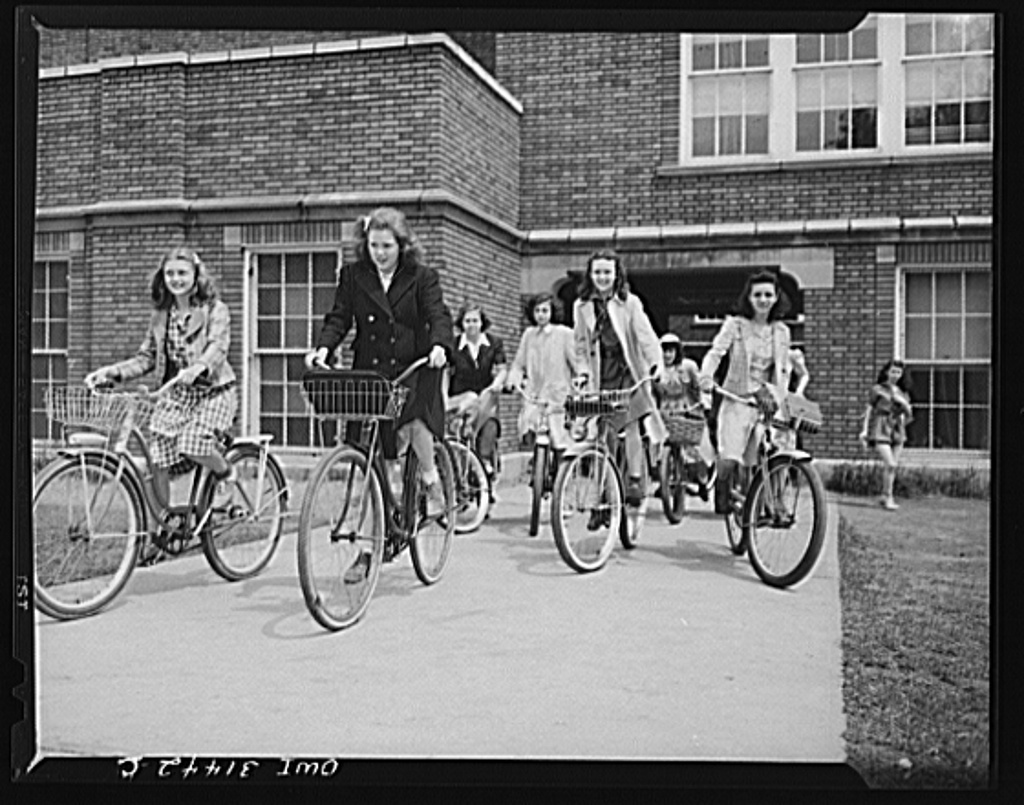
Schenectady, New York, June 1943. Photograph by Philip Bonn, courtesy Library of Congress Prints & Photographs Division.
What We Leave Behind
A MEANINGFUL LEGACY
“It’s easy to leave the house, the car, the money, the boxes of pictures,” Sarasota–based personal historian Curt Werner says. “But it’s much harder to leave pieces of yourself.”
MATTERS OF THE HEART
“I was looking for pictures that had the power to turn bitter memories into sweet. Images that said, ‘I love you more than anything.’ Images that whispered, ‘I can’t express how sorry I am to leave you.’” Mary Bergstrom curates her legacy while decorating a new home.
THE (DIGITAL) PIECES OF A LIFE
“If the only way to preserve her memories was to put together the pieces of her digital life, then we had to hack into her online accounts.” Historian Leslie Berlin recounts her desperation to break into her mother’s phone after she died.
Process of Discovery
A SCRIVENER WORKFLOW
Sarah White, whose First Person Productions is based in Madison, Wisconsin, describes her conversion from an occasional Scrivener user to a devotee who finds it “highly useful in finding the best structure for long-form writing projects.”
THE SELF-INTERVIEW
How interviewing yourself (follow-up questions and all!) can be a useful writing exercise for generating life story vignettes.
FILLING IN THE GAPS OF WWII VETERANS
“Those lauded as the Greatest Generation might just as easily be called the Quietest”—leaving family members to wish they had asked more, and to attempt to recreate their loved ones’ stories through a vast archive of war papers.
ONE FAMILY’S NUCLEAR HISTORY
“Never one to talk directly about his role as a pilot in the Second World War, my grandfather instead told my siblings and I scraps of his story that I would eventually stitch together into an incomplete whole,” Tyler Mills writes.
Storytelling in Unexpected Places
OFF THE CHARTS
“There is research that suggests when caregivers know their patients better, those patients have improved health outcomes.” See how personal storytelling is filling the gaps between patients and staff at VA hospitals.
DEPT. OF STORYTELLING
The city of Detroit has hired a Chief Storyteller. You heard that right—and with a team of storytellers on board, The Neighborhoods has become a platform that shares locals' stories and aims to change the traditional narrative surrounding the place they call home.
...and a Few More Links
Do you have (or need?) a writer’s will?
Some research suggests that events in our lives can affect the development of our children and perhaps even grandchildren.
Unique documentary series follows group of schoolchildren over six decades.
Have you listened to episodes from the new season of the StoryCorps podcast?
D-Day vet bonds with 9-year-old through the magic of music.
If you are interested in learning more about a family member who served in WWII, explore this Research a Veteran Guide.
New York State substitutes for the lost 1890 census
Short Takes

Life Story Links: May 29, 2019
Hospice biographers, illustrated journals, personal letters, and more reveal stories & cement legacies for the next generation. Plus, things that hold memories.
“The wondrous thing about being human—the beauty and banality of it—is that we all tend to dwell in the same handful of elemental struggles, joys and sorrows, which is why a book one person writes may help another process her own life a century later...”
—Maria Popova

A mother reading to her son in Marshall, Texas, 1939. Photograph by Russell Lee, courtesy Library of Congress Prints & Photographs Division.
A Legacy of Stories
ALL IN A LETTER
“There it was. My grandmother’s story, crystalizing out of the ether after 66 years.” An adopted man discovers more than he expected when searching for his birth mother’s country of origin.
HOSPICE BIOGRAPHERS
A charity in England that records people’s life stories in hospices is now set to expand its work to homeless people and prisoners.
CATCH-22
Their grandfather, Papa Julie, “could barely talk about the war at all”—so when his family discovered a journal that charts each mission’s bomb targets and casualties, “the war journal is so jarring to read.” Moreover, said grandfather just may have been the inspiration for one of literature’s most famous characters.
AN IMPRESSIONISTIC RETROSPECTIVE
What a treasure this grandfather left for his family! His hundreds of journals were “filled to the brim with thousands of illustrations, anecdotes, inventions, thoughts, dreams, adventures, misadventures, and historical events filtered through the lens of one family.” Take a peek:
RECKONING
Eve Ensler shares the story of her father’s abuse in a most original—and courageous, intimate—way in The Apology, in which she imagines an apology from her long dead father. Read an excerpt here.
Things We Hold Dear
THE ART OF CURATION
Whether you call it “culling,” as photographers do, or “curating,” as photo organizers do, it is an integral step in preparing your family photos for preservation in a book or video, or for preserving your family archive. Learn how to cull your photos for optimal storytelling and engagement.
PROTECTING FAMILY ARCHIVES
Jim Michael of the Personal History Center in Georgia shares an excerpt from his book Tell Your Story and Save the World. Find tips on preserving family archives including photographs, papers, digital media, and analog audio and video tape.
HOUSE OF MEMORIES
The Minnesota Historical Society launched a statewide dementia-awareness program that uses museum resources to teach professionals and family caregivers how to use everyday objects to draw stories out of people with memory loss.
...and a Few More Links
New biography of Susan Sontag based on hundreds of interviews with people who knew her well
Ten individuals win colorized photographs from their own family history collection.
A look back at a decade of The New York Times Lens column
Illinois man preserves the story of his family’s migration through art exhibit
Memories from a World War II scrapbook
“Lessons on Living from my 106-Year-Old Aunt Doris”
The Bob Dylan Archive finds a permanent, public home in Tulsa.
Short Takes

Life Story Links: May 14, 2019
A wealth of reading on the enduring power of family stories and the elusiveness of memories, plus recommended first-person reads and memoir writing prompts.
“Our mothers are our first homes, and that’s why we’re always trying to return to them.”
—Michele Filgate

In Honor of Mother’s Day
REMEMBRANCE OF SOUPS PAST
“Maybe, decades from now, my own kids will uncover a cookbook from long ago, turn to a yellowed page and a recipe for soup that they’ll remember from childhood,” John McMurtrie writes upon finding his mother in the pages of her favorite cookbook.
THIS BOY’S LIFE
“Even allowing for the vagaries of memory, for the various ways different people may interpret the same event, it doesn’t follow that the stories we tell from our experience are not to be trusted simply because they are personal.” Tobias Wolff on the iconic memoir he never intended to write.
MOTHERS AND DAUGHTERS
In this excerpt from What My Mother and I Don’t Talk About, writer Lynn Steger Strong revisits, with a fair amount of distance and a little bit of compassion, scenes (and recurring themes) from her relationship with her mom. In the eagerly anticipated new book, 14 other writers also “take the sacred mother-child ideal down from its pedestal and inspect it, dissect it, run tests on it, muck it up a bit.”
WISH YOU WERE HERE, MOM
Mother’s Day can be challenging for those of us who have lost our moms. I find that lingering in our memories can help (and, yes, also hurt). Here, a very personal tribute I wrote in grief, and love.
Then and Now
“AND NOW, I’LL NEVER KNOW”
“[My grandfather] always had the perfect anecdote for any situation at his fingertips,” Samantha Shubert, a NYC–based personal historian writes. And yet, she never asked him about certain aspects of his past, even as he entertained the family with stories well into his eighties.
SENSE MEMORIES
In Part One of an ongoing series on Life Story Vignettes Writing Prompts, I offer five specific exercises for writing about your memories by engaging all your senses.
WHAT WE KEEP
“Knowing that their mother and grandmother had held this very same object, had felt those same edges and that same weight, was part of the experience, enhancing the memory and also adding another layer to the emotional connection,” subjects told author Bill Shapiro of their most meaningful objects.
MEMORY LANE
Accenture is using Artificial Intelligence to combat elder loneliness and preserve generations of memories in Stockholm. Listen to a few conversations captured through the project, dubbed Memory Lane, and explore why the company took on such an important challenge.
Picture This
SECOND TIME’S THE CHARM
About 10 years ago video biographer Stefani Elkort Twyford, owner of Legacy Multimedia in Houston, scanned her parents’ large photo collection. Now she is taking on a re-do of the project, using her accumulated knowledge about genealogy and digital preservation to get it right—and is discovering some nice surprises along the way.
A PAST NOT OUR OWN
In “How Eudora Welty’s Photography Captured My Grandmother’s History,” Natasha Trethewey finds context and inspiration. “Welty’s photographs were, for me, a resource, a way to see a time and place I’d only encountered in history books and my grandmother’s stories.”
ONE PHOTOGRAPH
History of Memory, a brand collaboration with HP and a winner at the 2019 Tribeca Film Festival’s X Awards, is a series of short episodes that hone in on the power of photographs to move people—and even change lives. See a preview here:
Holocaust Remembrance
SURVIVOR STORIES EVER-RELEVANT
“As survivors become endangered, and their flames extinguish, they rely on the next generation to not only light new candles, but to bear witness—both for the dead and the living.”
“GATHERING THE FRAGMENTS”
"It's a small testimony to what happened, another drop in this sea of testimony. It doesn't uncover anything new. The facts are known. What happened happened, and this is another small proof of it." As the number of Holocaust survivors dwindles, Israel preserves their memories.
Recommended First-Person Reads
SELECTIVE MEMORY
“How can I blame them for choosing to forget in order to survive? And how can I not think about what may happen as a result—future generations, grasping in the dark for their own histories?” Victoria Huynh seeks the stories of her refugee family.
A MOST PERSONAL PERSONAL HISTORY
“Helping my aunt write her memoir, I realized that her story was my story, also,” Massachusetts–based personal historian Nancy West writes. “We are related by blood and DNA and history, and as she told me about her forebears, I saw my own backstory filling in with details I’d never known.”
BRIEF YET MIGHTY
Two distinctly divine pieces from the latest issue of Brevity that illustrate the power of concise, vivid writing from life: “A Legacy of Falling,” by Jenny Apostol, and “My One, My Only,” by Michaella A. Thornton.
...and a Few More Links
All the Way: Joe Namath memoir “as exciting as it is personal”
The StoryCorps podcast is back next week with a new season of stories.
Adam Gopnik on the new biography of Theodor Geisel, Becoming Dr. Seuss
In China, a podcast inspired by ‘This American Life’ showcases stories of everyday life.
Short Takes

Life Story Links: April 30, 2019
Ways in which the past is ever-present, artifacts made accessible, writing from our lives, the power of personal narrative in medicine, and new memoirs of note.
“No legacy is so rich as honesty.”
—William Shakespeare

Ruth Reichl as a young girl with her mother in the photograph that graced the cover of her 2009 memoir, Not Becoming My Mother: And Other Things She Taught Me Along the Way; Reichl has a new memoir, Save Me the Plums, out this month.
The Ever-Present Past
FACEBOOK’S DIGITAL MEMORIALS
Facebook is no longer just a social network; it’s also a scrapbook. “When users die, they may leave behind accounts containing over a decade of memories, and they might not have specified how they want that archive to be maintained,” Wired reports on the platform’s latest rollout of features for legacy contacts.
A WITCHY LEGACY
“I would never truly know my father or my Polish family, but I could know our homeland, its history.” How Michelle Tea found a spiritual home in her Polish heritage.
ON GRIEF, MEMORY, AND TIME
“When your beloved dies, your memory is at risk. Your past no longer fits your story of who you are,” Matthew Salesses writes. “To remember is not to time-travel; it is to alter how time feels.”
A STORYKEEPING MILESTONE
“Clinton Haby, founder of San Antonio–based StoryKeeping, celebrated a decade in business with a party filled with appreciative clients and likeminded family storytellers. “When you say ‘it’s been ten years’ I don’t believe it, but when I look at the [video] equipment I’m using and the productions I’m working on today I recognize it took a decade to get here,” Haby says. Congratulations, and cheers to the next 10 years!
Memoirs of Note
SAVE ME THE PLUMS
I was as eager to read the new memoir of everyone’s favorite foodie, Ruth Reichl, as much for the inside dish on Condé Nast (where I worked in the late nineties at the same time as Reichl) as for again encountering the author’s poignant and deliciously charming voice. (I brought Save Me the Plums along on vacation and devoured it on one trans-Atlantic flight.)
HER VERSION OF EVENTS
How do you write a memoir when you can’t remember? This conversation between ghostwriter Anna Wharton and Wendy Mitchell, subject of their jointly written memoir Somebody I Used to Know, ranges from using WhatsApp to communicate about the book to waiting for the fog of dementia to clear so their process could proceed.
AUTOBIOGRAPHY OF AN ENSLAVED MUSLIM
Omar Ibn Said was 37 years old when he was taken from his West African home and transported to Charleston, South Carolina, as a slave in the 1800s. His one-of-a-kind autobiographical manuscript has been translated from its original Arabic and housed at the Library of Congress, where it is challenging the American narrative:
Writing from Our Lives
PHOTOS AS WRITING PROMPTS
Family photos can be useful tools to jog memories and call forth stories. In a recent post I share six tips for determining which images will elicit the best family stories.
LOVED IN THE TRANSLATION
In just 15 lines Marie A. Mennuto-Rovello shows us how love and memories and setting can come alive through poetry (not all life story writing need be narrative!).
A LIFE MOSAIC
How the best life story vignettes are powerful ways to capture your past, and why writing short narrative pieces from your memories is an effective way to begin your memoir.
PROJECT PACE
When Massachusetts–based Nancy West isn't writing memoirs she is a journalist for a daily paper: “Tight deadlines and fast turnarounds are in my professional DNA,” she says. But sometimes her personal history clients need more time—so she is “learning to be patient with the process.”
BEHIND-THE-SCENES PEEK
Lisa O’Reilly says that finishing a book about her dad was her greatest accomplishment. “My whole life, he’s been the king of my world and now I can let everyone know why,” the California–based personal historian writes.“That makes it a precious gift to myself, as well as to him.”
Artifacts Made Accessible
FROM A VINTAGE VARSITY JACKET TO AN 1876 DIARY
Unless you live in Plano, Texas, knowing that the Genealogy Center at Haggard Library houses, behind lock and key, thousands of newspaper clippings, pieces of ephemera, and amazing historical and personal artifacts likely wouldn’t interest you. But I, an East Coast girl, was fascinated by the breadth of their collection, and find inspiration in the fact that this local team has, over the last 18 years, digitally preserved more than 30 thousand archives for the public to access!
DIGITAL AGE DIARY
“Being present in the moment doesn't mean I can't ever capture the moment,” Daryl Austin writes in this defense of using Instagram for “photo-journaling” his family’s daily lives. “Captions turn pictures into stories” and, he says, help you remember why a memory was worth safeguarding in the first place.
From Left Field, Perhaps?
A DOCTOR’S EDUCATION
I have written before about narrative medicine, and in this brief piece I was newly reminded of the power of personal story—of listening, of being attuned to someone—in a caregiving setting.
MAKING CONNECTIONS
When Maria Popova discovers books that her great-grandfather had annotated, “it was this sort of intellectual dance with another mind that you could see in the margins of his books,” she tells Krista Tippett on the On Being podcast. Popova’s Brain Pickings website is a treasure trove of interconnected themes and literary gems; she calls it “a record of my becoming who I am.”
...and a Few More Links
Rachel Howard names five great writer biographies.
Connecticut author publishes personal story of the Holocaust and its aftermath.
Is your smartphone already organizing your unwieldy digital photo collection?
An “intensely charming, a tinge eerie, and deliciously nostalgic” repurposing of old family photos
Prince’s memoir, due in August, will include handwritten song lyrics and portions of his own scrapbook.
Spotlight on Naperville, IL, digital preservation business Memory Keepers
Four hassle-free ways to get your Google Photos memories in order
“Surfing My DNA,” a live one-woman show in New Jersey, explores a unique family history.
Short Takes

Life Story Links: April 8, 2019
Preserving traumatic histories from Holocaust and American slavery, memories both remembered and forgotten by individuals with dementia, and more memoir reads.
“There is a real power in crafting a truthful narrative—or at least as truthful as you can make it, your emotional truth.”
—Steve Lickteig

Wkkeken, Southern Weekend, August 1951. Photograph by Lisa Larson for LIFE magazine. ©Time Inc.
The Power of the Past
A TRAUMATIC LEGACY
"Because our home lives are so influential on who we become...the question isn’t whether children of [Holocaust] survivors are psychologically affected by their family’s Holocaust experiences—it’s who will be and when,” Adam Kovac writes in this perceptive piece exploring how grandchildren of survivors grapple with their own psychological wounds.
FAMILY HISTORY HIGHLIGHTS
Last week I offered up the most memorable quotes and takeaways from family history experts at RootsTech 2019, including why and how to put yourself into your family history and curating (or tossing?) family heirlooms and documents.
STUFF, AND MORE STUFF
“We used to hold on to letters, tickets and playbills to remind us of the past,” writes Peter Funt in a short NYT opinion piece entitled “Does Anyone Collect Old Emails?” It's worth a read, certainly, but it's the 407 reader comments that reveal the most insight and range of opinions on the perceived value of all that ephemera.
THE RACE TO ARCHIVE SLAVERY RECORDS
For the true history of slavery to survive and be told, the original evidence must be preserved, and protected. The Enslaved project aims to gather research about historic slavery in one searchable digital hub, due to go online in 2020; currently, "much of that information has only been in books or museums, or scattered in corners of the Internet in different languages, hidden behind broken links."
Amidst the Forgetting
GRANDMA’S DEMENTIA
"While Grandma’s brain let go of many of her memories, her heart held on to some of the dearest ones," such as the birthdays of all 20 of her grandchildren and dates with her not-yet husband. She seemed to forget, however, her disapproval of same-sex marriages (and resulting estrangement from her gay daughter).
ONE LAST TIME
“What could have been a desperately sad visit that December—one filled with the painful realization that his time was coming to an end—instead became a precious opportunity to allow my father-in-law just a few minutes to soak in the life he had when life was good,” Karen Bender of Virginia–based Leaves of Your Life writes.
MOTHER AND SON, TIME AND MEMORY
Artist, son, caregiver Tony Luciani went on a voyage of discovery with his nonagenarian mother: The photographic project that changed both of their lives, MAMMA In the Meantime, “looks at her frailty, delves into her dementia and the angst she feels about being old now. But it also speaks about life, love, endurance, and will power. It talks about the love a mother and child have in sharing moments too quickly vanishing,” Luciani says in the book, which is available for purchase.
Remembering, Writing & Recording
CRAFT AND QUESTIONS
Nicole Breit calls writers questers. "Setting out to draft a new tale, we begin an archetypal hero’s journey. What initiates the quest are questions—about the memories that haunt us, no matter how many years have passed," she writes.
A PLACE TO SHARE
A podcasting studio in Hobart, Indiana is inviting people to come record their family histories and life stories using the professional audio equipment for a nominal fee; they also have a team who can visit people off-site who might be in assisted living or unable to drive. "You can sit and listen to family stories when growing up, but this a permanent record and memento," says a founder of The River Project, as it is called.
FORGET-ME-NOT
On the latest episode of The Life Story Coach podcast, Amy Butler interviews New Zealand life story writer Christine Norton on how she expanded her company by taking on business licensees.
First Person Reads
AIR: A RADIO ANTHOLOGY
Hippocampus has released the first of its The Way Things Were series, a line of anthologies that celebrate the things we miss, the things we long for—this one all about radio. ”From first jobs in small town stations to listening to baseball games with grandpa, the 20+ essays take place across the decades in studios of all sizes, in homes, in cars, and, really, wherever the airwaves take us.” Forthcoming titles will celebrate diners, small town newspapers, and mom and pop stores.
WHAT’S IN A NAME?
“Now I love it when people ask me how to say my name right, because, hearing it said out of someone else’s mouth makes me feel real,” Rebecca Tamás writes for Granta. “Like a TV being tuned through static that finally lands on a crisp, clear image. Ah, there I am.”
...and a Few More Links
Is the Writing from the Heart memoir workshop (starting tomorrow!) right for you?
How the “genealogies in Genesis show us the impact one life can have on that of another”
A columnist on “the good ole days” and how we never know they are that when they’re happening
Nine facts about your memory you’ll want to know
Best memory journal apps for Android
Read an excerpt from Valerie Jarrett’s new memoir, Finding My Voice: My Journey to the West Wing and the Path Forward.
On the real-time thrill of reading a writer’s diary
Just released: Questions I Am Asked about the Holocaust by Auschwitz survivor Hedi Fried
Short Takes