Memories Matter
Featured blog Posts


READ THE LATEST POSTS

The (real) value of your parents’ stuff
When aging parents have lots of stuff, their children often do not want it when they die—but it’s the memories associated with the stuff that makes them heirlooms.
My friend Donna has no space to store the fine china her mother would love to pass on to her. Derek has no desire to display his deceased mother’s antique Chippendale furniture—the mahogany color and elaborate carving don’t mesh with his home’s modern decor—yet he wrangled with guilt and family pressure when he decided to sell it.

I have written before about the Tyranny of the Family Heirloom: Many people simply don’t want to hold on to much of their parents’ “stuff,” but often their “things” may hold memories. When an object from a loved one’s life holds stories, they can become the best heirlooms.
Of course, they still amount to “stuff,” and stuff you very well may not have room for. Discover meaningful ways to preserve the stories behind those items that do hold emotional value before you donate or sell them: the process of remembering, of reflecting on what your parents meant to you while they were alive, is healing and rewarding unto itself, and at the end you will have a family heirloom that is beloved—and takes up less physical space.
It’s the memories of the things that matter, after all.
Why am I revisiting this topic? Because an article in this week’s New York Times reminded me that it is a topic that is not only incredibly relevant now, but that will become even more so in the near future:
“As baby boomers grow older, the volume of unwanted keepsakes and family heirlooms is poised to grow—along with the number of delicate conversations about what to do with them. According to a 2014 United States census report, more than 20 percent of America’s population will be 65 or older by 2030. As these waves of older adults start moving to smaller dwellings, assisted living facilities or retirement homes, they and their kin will have to part with household possessions that the heirs simply don’t want.” —Tim Verde, NY Times, Aug. 18, 2017
Resources for Handling the Things You Inherit
If you are facing the quandary of soon disposing of the beloved things your parents would love for you to inherit, here are a few articles that may be of assistance:
Which heirlooms matter—and which ones are even “heirlooms”? How to determine which items hold dear memories, and how to capture those stories for posterity.
After a death: How to make the process of going through your parent’s photos easier.
Check out Allison Gilbert’s book Passed and Present: Keeping Memories of Loved Ones Alive, which describes 85 practical and innovative ways to remember and celebrate deceased family members, including how to transform their things into meaningful keepsakes.
And read Gilbert’s grief and resilience blog, which is worth a visit for anyone who has lost a loved one, no matter how long ago.
The Healing Power of Remembrance: Memories are the connective tissue that binds one generation to the next, and the active nature of remembering is healing.
Notes from a Funeral: Memories of even the smallest moments, once shared, provide comfort and connection. Stories are a balm to our bruised hearts.

Reflections on What to Do with All that “Stuff”
The comments section of the aforementioned NY Times article is rich with ideas that provoke thought—and are sure to keep this important conversation going. A few of my favorites:
Hasty Pudding
“...what I wish I held onto? [My father’s] journals and other writing. After the pain of grief subsides, it's a way to get to know someone over again. Hasty disposal of many things can lead to regret.” —Andrea
Antidote to Angst
The joy of giving your stuff to people who will really appreciate and use it (after all, the sterling silver fork is still only a fork) while you can still realize the benefit that these folks will receive is, to me, the antidote to the family-related angst... —Sfojeff
Downsize Now
“The best gift you can give your kids is to downsize BEFORE you're too sick to do it, and for the love of God, when your kids say they don't want your stuff, believe them and don't lay on the guilt trip.” —Layla1st
Go Green
“I do not expect my kids to want much of what we have, and this does not hurt my feelings at all.... However, as far as furniture goes, I might remind the younger folks that if they are really as environmentally conscious as they profess to be, they should realize that ‘antiques’ are furniture being recycled and reused.” —Coopmindy
Generations of Junk
“...you’re not only inheriting your parent’s items, you’re taking on everything they received from older generations that they couldn't part with.... Now they’re my problem. I’m 53; I don’t plan to pass on the problem to the next generation.” —Larry
Unnecessary Conversation?
“Ms. Beauregard doesn’t have to keep the Lenox dinnerware, but why does she have to ‘break it to her mother’ that she’s going to get rid of it? What will that accomplish except for causing her mother pain?” —Diane
The Practical Approach
“Just use the china and silver—for everyday use. It doesn't need to sit in a closet.” —Arb
One Millennial’s Perspective
“I donate every month just to clear my clutter because it drives me nuts and I know others my age who do the same. It's just a different mentality. It’s not that we don’t care about memories or treasured items from generations past—we just connect with those memories differently. (In a simpler, less-cluttered, no-storage-unit-required kind of way). :) —Andrea
Verdict?
“Stuff is not memories.You get to keep the latter when you get rid of the former.” —Peter Scanlon
The healing power of remembrance
Allison Gilbert, Soledad O'Brien, and Henry Louis Gates, Jr., talk about the power of remembrance in the face of grief, & why family story sharing is healing.
I talk often about the power of story. Rarely, though, have I been so confronted with just how powerful story and remembrance can be specifically in the face of grief as I was this Monday at a talk at the New York Open Center.
In a discussion billed as “Keeping Alive the Memories of Lost Loved Ones for Healing and Resilience,” three luminaries—Henry Louis Gates, Jr., Soledad O’Brien, and Allison Gilbert—spoke openly about their own experiences and shed light on why the more you honor your family and friends who have passed, the more likely you are to reach your fullest potential in the present.
The ambivalence around memories for those who are grieving
“When loss is fresh, there is a school of thought that resurrecting memories is too painful. But the opposite is actually true,” said Allison Gilbert, author most recently of Passed and Present: Keeping Memories of Loved Ones Alive.
Anyone who has experienced loss will nod their heads in recognition at Gilbert’s words. It is in this time of need that other people so often remain quiet because they simply don’t know what to say.
Sheryl Sandberg, who has been making the talk-show rounds in support of her new book Option B: Facing Adversity, Building Resilience, and Finding Joy, echoes that experience, recently saying that after her husband Dave died, “People were so afraid of saying the wrong thing that they hardly said anything at all.”
When Sandberg lost her husband in 2015, she lost her bearings; and her book is as much a helpful guide for those who have suffered a recent loss as it is for those who aren’t sure how to talk about loss or approach their friends who are grieving.
“I think a lot of people wanted to reach out to her, but they didn’t know how,” says Facebook CEO Mark Zuckerberg. “You know, there’s this whole question of, Are you reopening a wound or something? And of course, what she would say is ‘You’re not reopening the wound. I mean, it’s, like, open and gaping.’” [Time]
Nostalgia: research says it’s good
“There’s no time limit for grieving,” Gates said at the New York Open Center.
“And there is no roadmap to remembering,” added Gilbert. “Mourning allows you to be passive when you need to be passive. But at some point you’ve got to pivot from passive mourning to active remembrance.”
Her book Passed and Present hones in on highly specific ways to keep memories of lost loved ones alive, from memorializing a family recipe on a platter to creating a tribute book in your loved one’s memory. (I highly recommend Gilbert’s book for anyone hungry for ways to keep the spirit of your lost loved ones near.)
Taking intentional steps to remember those of our loved ones who are no longer with us is essential to healing our grief, building our resilience, and empowering our positive action in the world. Indeed, there is a huge body of current research that shows nostalgia—a sentimental longing for the past—is good for us, Gilbert said.
“Momentous life events, the primary fodder of nostalgia, entail cherished time spent with family, friends, and relationship partners…. which, when reflected upon, serve to impart meaning,” reads one hallmark study.
As Gilbert describes, “When we feel an intense bond with loved ones from our past, we're more likely to feel similar bonds with those around us in the present,” and this deep sense of connection in turn may assuage our grief.
The value in active remembering
Gilbert’s children were born years after her mother’s death, and she said she “had this profound need to keep their memories alive for my children.” One powerful way to do that is through story sharing. “I don’t tell my kids stories about my mom and my dad. I tell them stories about their grandmother and their grandfather.”
“How we really communicate is through narrative,” O’Brien said. We are connecting people through the narrative: “You tell the story about your lost loved ones—it’s what you pass on. The narrative is what makes people live even if they’re dead.”
Memories are the connective tissue that binds one generation to the next, and the active nature of remembering is healing.
“The prescription for joy and healing after loss is to remember,” Gilbert said.
Legacy books as memory prompts
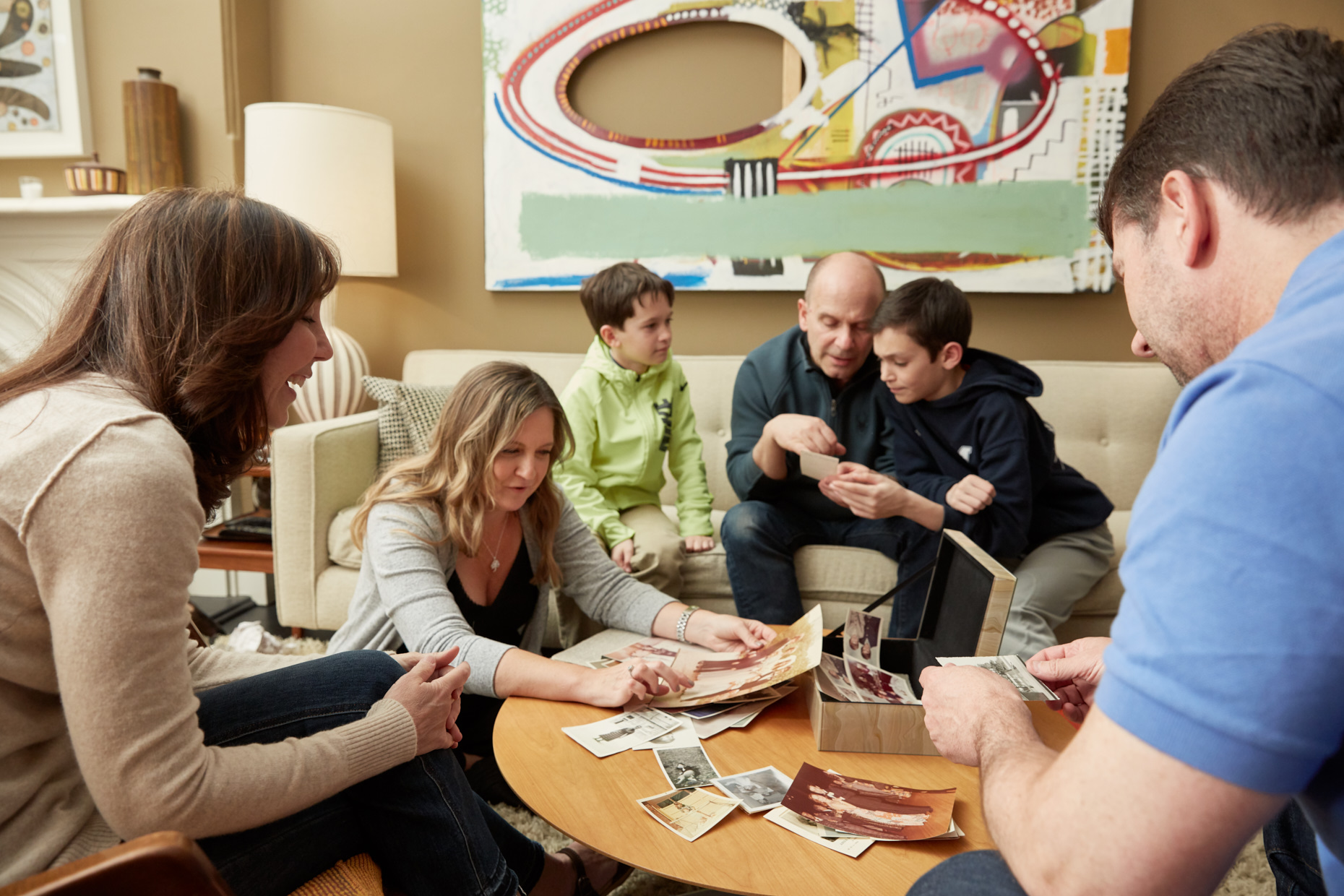
Photographs of our lost loved ones serve as effective prompts for jogging our memories and actively engaging in storytelling about them, Gilbert said.
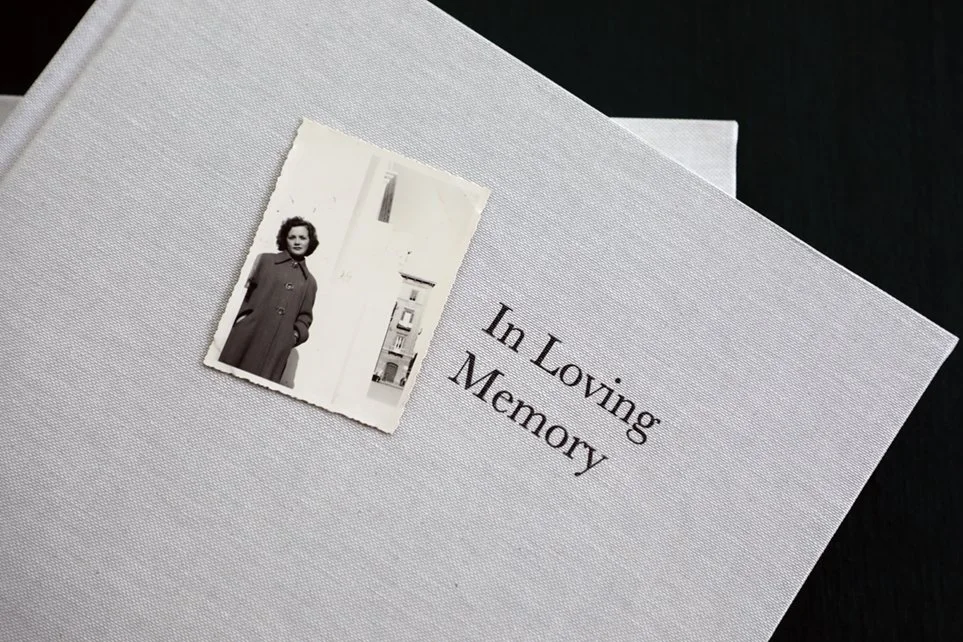
Capturing and preserving the deceased’s stories—their values and personality and experiences—in a tribute memory book, is an even more compelling way to cement their legacy. More importantly, a legacy book such as this is a living testimony in that it will continue to prompt story sharing and reminiscence about your lost loved one.
I personally experienced this last week when my son (who is seven going on 40) entered my room in his pajamas, hiding something behind his back. “Mom, I was wondering. I know it’s not our typical bedtime routine,” he began (see, 7 going on 40!), “but do you think we could look at this book about Nanny tonight for our bedtime story?”
He produced the small memory book I had made for him after his great-grandmother’s passing; she had lived with us and the two had been exceptionally close. The fact that my son proactively sought this time to remember her—and that he proudly retold many of their stories while we snuggled—warmed my heart in a most special way.
Gilbert described nostalgia, like empathy, as a social emotion: “It brings you closer to people not just in your past, but also in your present.” I can attest to that.
May you, too, find peace—and joy—in remembrance.
Related Reading:
Notes from a Funeral: Sharing memories about lost loved ones to heal—and why we don't honor our families through story sharing now.
Mommy & Me: How a struggle to tell my mother’s whole story turned into a more intimate portrait of love
Legacy Book FAQ: Answers to some common questions about what goes in a legacy book, and how they are created

Notes from a funeral
Reflections from a funeral on remembrance & grief: sharing memories about lost loved ones to heal—and why we don't honor our families through story sharing now.
When a loved one dies, the world around us ceases to exist for a time. We may post an obituary to Facebook and share beloved photo memories of the deceased, but we are going through the motions. Moving forward, as we must. There is a haze about our very existence.
I have found that it is in the months after the sympathy cards cease coming, after friends and family drop by to check on our welfare, that the weight of grief settles.

Losing a loved one
This week I attended the wake and funeral of a beloved family matriarch. Gloria was my in-law, ever-present at family gatherings big and small over the decade since I had joined her extended family. I knew her as a doting great-grandmother, as a grandmother with a surprising sense of humor, and as a compatriot to my own Nanny when she was alive.
But I learned more about her as an individual in the past three days since she passed than I had ever known before.
There is something wonderful about that, and something equally sad.
It’s not a revelation to notice that our loved ones’ stories are often buried treasures. It does sadden me, though, to notice again and again that often those stories remain buried.
At the end of a life, we are able to look back at said life in its entirety. It is natural and wondrous to talk of the milestones that marked a person’s journey.
Why don’t we reflect on our lives while we are living them, though?
The simplest and best answer I have is that we take our time together for granted. We live in the present moment—as well we should!—and flow with the fast-moving currents of time. We go from one baby shower to Sunday family dinner to the next, wielding a camera and smiling as the kids play, chatting over coffee and dessert before we head home and get invited to do it all over again soon.
The gift of remembrance
We may feel abundant love, even great gratitude, for our family members. We know them as they relate to us, but less often do we ask about them as a person unto themselves! What did Grandma do before she became a mother? What were her parents like? What games did she play as a child? Did she get good grades in school?
The nature of family gatherings changes for a while after a loved one dies. The person’s absence is palpable; they should be here. Our supreme awareness of their absence invokes sadness, for sure, but it prompts storytelling, too. Memories of even the smallest moments, once shared, provide comfort and connection. Stories are a balm to our bruised hearts.
In the aftermath of loss, we are surrounded by others who share our grief. We are not shy about remembering—out loud—our loved one. We tell stories, and relish when we hear stories we had not heard before. When we learn something new, no matter how small, about our deceased loved one, we grasp it tightly, cherish it as a most special gift.
We seek, and find, connection in those also connected to our loved one.
Remembering, always
During his eulogy of the deceased, the priest thanked the gathered family members for “sharing Gloria with us.” This phrasing struck me: She was a faithful church attendant and community volunteer; she had friends from all stages of her life; and yet, she belonged to her family.
For those who knew and loved Gloria, may your memories of her continue to provide comfort and even joy amidst the gaping sadness of her loss. Don’t stop sharing those stories.
Your perpetual remembrance is a celebration of her love and life. Be strengthened by her spirit, and know that you are her legacy.
And for everyone who loves someone: Ask them questions. Discover their stories. Now, while you can share in the emotions and relive the memories together. Celebrate your loved ones’ lives while they are being lived as much as you undoubtedly will when your loved ones are gone.
Remember, celebrate, and connect. Create a legacy together.

The tyranny of the family heirloom
Maybe it's true that "nobody wants your parents' stuff," but before you donate their things, tell the stories of your family heirlooms, preserving your memories.
“Sorry, Nobody Wants Your Parents’ Stuff,” reads the Forbes headline. The article explores how so much of what we inherit from our parents does not get saved, but rather donated, sold, or trashed.
“If you’re thinking your grown children will gladly accept your parents' items, if only for sentimental reasons, you’re likely in for an unpleasant surprise.”
I get it: Most of us aren’t buying fine china to entertain with, and we don’t want to be weighed down by more stuff. But despite this article’s pessimism (“‘I don’t think there is a future’ for the possessions of our parents’ generation”), I have faith that we can find creative ways to preserve the heirlooms that matter—and still donate most of their STUFF to charity.

So, which heirlooms matter—and which ones are even ‘heirlooms’?
Just because your parents left you everything in their house doesn’t mean you need to keep everything. Or even half. Or any of it. But while you’re assessing their possessions for potential monetary worth, I beg you to spend some time with those things that hold memories.
Consider the historical value (I'm talking family history here) and the sentimental value (and by that, I do not mean feeling guilty that you should hold on to something, but feeling a poignant tug at your heartstrings when you think of a particular item).
Did your father sit in “his chair” to read the newspaper à la Archie Bunker every day? Was that cushioned window seat your mom’s favorite reading nook? Is the painting on the wall an original passed down through generations?
Many of our things are just that—functional things that make our lives comfortable or easier. Many of our things, though, hold stories. Those, in my opinion, are the best heirlooms.
Find treasures to keep as keepsakes.
Pick one or two things (more if you’re sentimental) that hold special meaning for you, and keep them. I recommend choosing items that you can keep close in some way:
a painting, blanket, or piece of furniture that you can incorporate into your home and use on a regular basis;
an item of jewelry, a shawl, or some other accessory that you can wear;
or something practical that your loved one used that you can, too—such as their e-reader, favorite books, or a kitchen appliance.
Having something tangible from your loved one’s life nearby can be consoling, reassuring, even healing.
Give new life to old items, guilt-free.
Do you adore your dad’s chair in theory, but think it’s ugly as sin? Love the idea of cuddling in your grandmother’s sweater, but hate the style and musty smell?
Allison Gilbert had her father’s collection of silk neckties woven into a wall hanging, and her grandmother’s handwritten coffee cake recipe memorialized on an everyday plate. She has made an art form out of transforming our loved ones’ STUFF into something meaningful, and details 85 very specific ways to do so in her book Passed and Present: Keeping Memories of Loved Ones Alive.
It’s the memories of the things that matter, after all.
A thing is only special if we have enlivened it with some special meaning. It is an heirloom when it has a story to tell—and someone (you?) tells it for posterity.
So once you narrow your lost loved one's belongings to those precious items that hold some emotional value, do something with them. Check out Gilbert's book for ideas (there really is something unique to suit everyone's tastes and values, in my opinion) or come up with something on your own.
Whatever you do, let the stories of those things shine through.

In her family history book, Kathleen Rath Smith remembers how her father would always read in “his” chair next to the radio. “When he came in, we got out of that chair!” We used photographs to show her parents' home and surroundings, and Kathleen as narrator recounts the stories of her childhood.
Tell the stories of their stuff.
How can you maintain the specialness your loved one's things convey without inheriting the bulk of all that stuff?
How can you transform their things into cherished family heirlooms?
Take pictures of the items before donating them.
Why not consider having your most special items professionally photographed, whether for an heirloom legacy book or for an impactful wall hanging?
A professional photographer such as The Heirloomist's Shana Novak can turn an artful lens on everyday items, imbuing them with a graphic punch that can be surprisingly emotional. Check out how Bob Woodruff's wife, Lee, turned a pair of her husband's combat boots into a meaningful work of art shot by Novak; or read stories of such seemingly mundane items as a cassette tape, a stuffed bear, and even a set of yellow pencils, brought to life through heirloom photography. The resulting pieces of art preserve your loved one's things visually, and moreover spark conversation so that the stories can be told and retold in the future.
You can now keep these images in remembrance of the loved one you have lost and wish to honor—and unburden yourself of the items themselves.
Don't just capture the stories of your heirlooms, but write them, too.
Whether you jot down memories on an index card and tape it to the back of your photograph or go the extra mile and create an heirloom legacy book from your stories, do tell your stories. We've offered advice on how to use old family photos as memory prompts; so now we thought we'd share examples of how to tell the story of a THING.
Here are two spreads from two different client books, both works in progress. The stories of these things are short vignettes that add insight into the subject's broader stories, but each can stand alone as a short read that honors their memories and begins to create a unique family legacy.
As you can see, the stories of these heirlooms are not really stories of things at all; rather, they are the stories of those who held, touched, and lived with those things. Your heirlooms' stories are the stories of your loved ones.
What things in your life have a special story to tell? What has a deceased parent or grandparent left you that might lend itself to sharing a wonderful story?
How a struggle to tell my mother’s whole story turned into a more intimate portrait of love
The first legacy book I designed was as personal as it gets: a book honoring my beloved mother. But after struggling to find a way to tell her whole story, I realized that simply was not possible. And I didn't want some long, boring biography, anyway. What resulted is a book that is precious to me, and I hope will one day be inspiring to my son...and the children I envision he will someday have himself. May you be inspired to tell the story of one of your loved, ones, too!

Mother & daughter: an enduring friendship cut too short
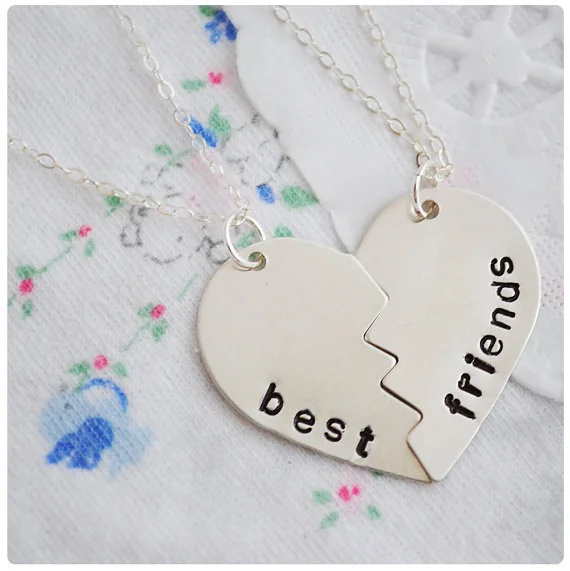
When I was a teenager I gifted my mom with one of those split-heart necklaces declaring each bearer the other’s “best friend.” It never occurred to me to be embarrassed. My relationship with my mother was beyond special, and I always felt keenly aware of how blessed I was to have it.
Three months after I delivered my son, my mother died unexpectedly. At exactly the moment I felt most close to her, I lost her.
That was 2009. Every day since, well, I think of her. I ache for her, love her still. Remember her. And try to honor her memory by being the best person and mother I can be.
That my mother was able to meet her grandson, that I have a few beautiful photos of her holding my son, 12 weeks’ worth of memories of her bonding with him—just, thank God. Conversely, none of that makes up for the fact that my boy won’t remember his grandmother. He won’t know her purity of heart, her generosity, her surprising sense of humor.
I talk about my mom often, sometimes sharing stories that reveal her character or my favorite memories from my own childhood. Occasionally I just drop small references: Your grandmother adored daisies. She would have loved that dance move! I learned how to make this spinach quiche from my mom.
My mother’s spirit permeates my life. But without having other family members to talk of her with, without having relatives with whom I might be able to relive memories...I worry the memories will fade.
“Without having relatives with whom I might be able to relive memories...I worry the memories will fade.”
Procrastinating, or ruminating?
I spent countless hours going through boxes of old photos: black-and-whites of my mother, mostly from her teenage years. Many of my favorites were of her posed in some fashionable ensemble epitomizing the decade: festooned in a sleek belted dress in the late ’50s, donning a leopard-print faux-fur jacket in the ’60s, rocking a hand-crocheted pom-pom hat in the ’70s.
I cherish the scattered few pictures from her early childhood. And seeing photographs that showed everyday scenarios got me excited—they gave me visuals of her life before me.
When it came time to sit down and put together a photo book honoring my mother, though, I was stumped. At first I struggled with how to adequately bring this woman to life. How could I make others see—really see—how remarkable she truly was? How could I give a rounded impression of the person I knew and loved?
I couldn’t.
This depressed me for a while. I abandoned the book idea, and instead lost myself from time to time in re-examining the pictures in all those boxes. The sense of joy that came with happening upon a photo of her laughing, or again picking up one of her that reminds me of my son now, became addictive. I would begin to sort the photographs, setting aside a few favorites each time to scan, but would soon find myself down a rabbit hole, replacing the stacks back in the boxes to be rediscovered a different day. I was frustrated that I had made no progress in organizing the images or putting together a book. Yet I think I subconsciously relished the idea of being able to come back to the boxes anew, preserving some sense of serendipity: The boxes were a treasure chest, and I wanted to touch and feel the golden treasures within at will.
One day it dawned on me: Don’t make a book about her. Tell our story.
“Mommy & Me: A Love Story”
I knew I’d never be able to paint a full enough picture of my mother. And I didn’t want a boring (typically lengthy) biography, anyway. I had a trove of letters we each had saved over the years, from our correspondence when I was in college (at a time before the Internet made snail-mail almost obsolete) all the way until I got married and then pregnant. Despite daily phone calls, we both still felt compelled to share our love and feelings in writing. What a gift.
The process of putting this book together was cathartic and healing. I know now that I procrastinated in doing so because I needed time—time to let the ideas percolate in the back of my mind, and time to be ready to finish the grieving process. No, I’ll never truly be done grieving; but I do feel (almost) whole again, and proud of the book I have made in my mother’s honor.
This book, a gift to myself and eventually to my son, is as personal as it gets. Rather than post the entire book, I decided to share a slightly condensed version: I want to give you ideas for crafting your own story, plant some seeds of inspiration. And give you a glimpse into my relationship with my beloved mother.
The full book—with pages that reveal some incredibly personal letters and depict details from my life—I am reserving for my son...and hopefully the family he bears in the future.
Who would you like to honor?
I waited until my mother was gone from this Earth before endeavoring to tell our story in book form; but we were creating our story all along. As you are doing with those you love, I hope--living life out loud and mindfully, being present in the moment, allowing yourself to truly experience the full gamut of emotions.
Writer Allison Gilbert recently posted a quote that moved me on Instagram: “Make this year the year to remember loved ones intentionally.”
Who would you choose to honor with a legacy book? A grandparent who has recently deceased? A great-grandparent you’ve never met but heard plenty of family stories about over the years (preserve those!)? What about your living parents? What a gift to be able to interview your parents now, to not take their stories and wisdom for granted!
I can’t wait to “meet” the members of your family legacies and to help you honor them. Please reach out today to see how we can work together to create the book of your dreams.