
Memories Matter
Featured blog Posts


READ THE LATEST POSTS

The best Mother’s Day gift ever: memories
The best Mother's Day gift is the one Mom really wants: Memories! Ideas for bringing mom's memories to life in a most unique heirloom book she will always cherish.
Moms want memories. To know that they are loved, and considered. Why not give her what she wants this year?
We're all about preserving your most precious family memories in the most grand style. From a family history book to a tribute book in honor of a deceased loved one, our heirloom books make the most unique gifts.
To get you started thinking about the best Mother's Day gift for your mom, we've put together five ideas for Mother’s Day books. Choose one of these to make you the hero this Mother's Day, or be inspired to create your own idea for a tribute book for the most special woman in your life.

1 Taste of the Past: Family Recipe Book
Here's one of our most straightforward book ideas! Handwritten recipes passed down through generations, plus stories of family meals, celebrations, and treats, artfully packaged for a truly sweet gift. The tastes and aromas of our favorite foods stir the memory, and provide an excellent jumping-off point for sharing family stories.
Don't worry, you don't have to do the legwork: Buy your mom (or another beloved mother in your life!) a gift certificate, and we'll lovingly package a beribboned wooden spoon with our “Recipe for a Successful Mother's Day.”

2 Love Letters: Tribute Book to Mom
Let’s get letters—written by hand, not via text—with notes both funny and poignant addressed to Mom. We will craft a mini-tribute in honor of the holiday, or spend considerable time perusing old journals and letters to flesh out a more substantive story.
This book is a wonderful option for large or scattered families, and can be put together more quickly than some—so for you last-minute holiday shoppers out there, get on it!

3 Wedding Book Redux
Is your parents’ wedding album dated or damaged? It’s almost certainly not digital. We’ll scan, restore, and color correct their wedding images, then design a modern coffee table book with a digital companion for posterity. Turning your parents' fading wedding album into an archival heirloom book—now that's a Mother's Day idea we bet you hadn't thought of yet.

4 Conversations with Grandma
Wouldn't you love to know your mom's and grandmom's stories? In their own words?! Beyond the few tales you may have heard around the dinner table 20 years ago...? We’ll conduct the interviews, gather memorabilia, and find the narrative thread that resonates. The resulting book promises to be beyond your (and her) dreams.
For this Mother's Day gift idea, we suggest you get your loved one a gift certificate that will get her started on the journey of sharing her stories. Because honestly, it's that journey that your grandmother (or mother) will enjoy as much as the final book: Sharing stories and memories can be wonderfully gratifying, and often healing.

5 Favorite Photos Through the Years
Why let all those amazing family photos and #ThrowbackThursday posts flounder on social media? The flood of “likes” are gratifying, but they lack permanence. A series of nostalgic pictures will be a brag book for the ages, especially for the grandmothers on your list. Check out this Instagram book we did for one New York City mom for inspiration, or gather a random array of old photographs that have been sitting in drawers and boxes for far too long (trust me, they don’t need to have been posted to social media at all!). Honor your photographs and memories of motherhood by preserving them this Mother's Day!
How to get your Mother's Day gift from Modern Heirloom Books
Mother's Day this year falls on Sunday, May 9, 2021.
If you are interested in preparing a book that you can actually gift to your mother, grandmother, or other special mom in your life on that day, it's crucial that you contact us now to get the ball rolling. While we can work fairly quickly, all of our books are handcrafted and take time to create.
A gift certificate with details about the project can be elegantly packaged for a Mother's Day gift that holds the promise of even more to come.
Call our founder Dawn Roode to discuss what Mother's Day gift book option you are interested in, learn about next steps, or to purchase a gift certificate now.
Or fill out this quick form to set up a free half-hour consultation to discuss your questions, time frame, or project ideas.
I look forward to helping you celebrate the special mothers in your life!
Bonus: More Mother’s Day book ideas—for “special” moms
In addition to the ideas above, which may be appropriate for a wide spectrum of mothers, we've also come up with a few ideas for particular women in your life—adoptive mothers, moms-to-be, and moms of twins.
*The original post was published before Mother’s Day 2017. It was updated for timeliness and accuracy on March 31, 2021.

The tyranny of the family heirloom
Maybe it's true that "nobody wants your parents' stuff," but before you donate their things, tell the stories of your family heirlooms, preserving your memories.
“Sorry, Nobody Wants Your Parents’ Stuff,” reads the Forbes headline. The article explores how so much of what we inherit from our parents does not get saved, but rather donated, sold, or trashed.
“If you’re thinking your grown children will gladly accept your parents' items, if only for sentimental reasons, you’re likely in for an unpleasant surprise.”
I get it: Most of us aren’t buying fine china to entertain with, and we don’t want to be weighed down by more stuff. But despite this article’s pessimism (“‘I don’t think there is a future’ for the possessions of our parents’ generation”), I have faith that we can find creative ways to preserve the heirlooms that matter—and still donate most of their STUFF to charity.

So, which heirlooms matter—and which ones are even ‘heirlooms’?
Just because your parents left you everything in their house doesn’t mean you need to keep everything. Or even half. Or any of it. But while you’re assessing their possessions for potential monetary worth, I beg you to spend some time with those things that hold memories.
Consider the historical value (I'm talking family history here) and the sentimental value (and by that, I do not mean feeling guilty that you should hold on to something, but feeling a poignant tug at your heartstrings when you think of a particular item).
Did your father sit in “his chair” to read the newspaper à la Archie Bunker every day? Was that cushioned window seat your mom’s favorite reading nook? Is the painting on the wall an original passed down through generations?
Many of our things are just that—functional things that make our lives comfortable or easier. Many of our things, though, hold stories. Those, in my opinion, are the best heirlooms.
Find treasures to keep as keepsakes.
Pick one or two things (more if you’re sentimental) that hold special meaning for you, and keep them. I recommend choosing items that you can keep close in some way:
a painting, blanket, or piece of furniture that you can incorporate into your home and use on a regular basis;
an item of jewelry, a shawl, or some other accessory that you can wear;
or something practical that your loved one used that you can, too—such as their e-reader, favorite books, or a kitchen appliance.
Having something tangible from your loved one’s life nearby can be consoling, reassuring, even healing.
Give new life to old items, guilt-free.
Do you adore your dad’s chair in theory, but think it’s ugly as sin? Love the idea of cuddling in your grandmother’s sweater, but hate the style and musty smell?
Allison Gilbert had her father’s collection of silk neckties woven into a wall hanging, and her grandmother’s handwritten coffee cake recipe memorialized on an everyday plate. She has made an art form out of transforming our loved ones’ STUFF into something meaningful, and details 85 very specific ways to do so in her book Passed and Present: Keeping Memories of Loved Ones Alive.
It’s the memories of the things that matter, after all.
A thing is only special if we have enlivened it with some special meaning. It is an heirloom when it has a story to tell—and someone (you?) tells it for posterity.
So once you narrow your lost loved one's belongings to those precious items that hold some emotional value, do something with them. Check out Gilbert's book for ideas (there really is something unique to suit everyone's tastes and values, in my opinion) or come up with something on your own.
Whatever you do, let the stories of those things shine through.

In her family history book, Kathleen Rath Smith remembers how her father would always read in “his” chair next to the radio. “When he came in, we got out of that chair!” We used photographs to show her parents' home and surroundings, and Kathleen as narrator recounts the stories of her childhood.
Tell the stories of their stuff.
How can you maintain the specialness your loved one's things convey without inheriting the bulk of all that stuff?
How can you transform their things into cherished family heirlooms?
Take pictures of the items before donating them.
Why not consider having your most special items professionally photographed, whether for an heirloom legacy book or for an impactful wall hanging?
A professional photographer such as The Heirloomist's Shana Novak can turn an artful lens on everyday items, imbuing them with a graphic punch that can be surprisingly emotional. Check out how Bob Woodruff's wife, Lee, turned a pair of her husband's combat boots into a meaningful work of art shot by Novak; or read stories of such seemingly mundane items as a cassette tape, a stuffed bear, and even a set of yellow pencils, brought to life through heirloom photography. The resulting pieces of art preserve your loved one's things visually, and moreover spark conversation so that the stories can be told and retold in the future.
You can now keep these images in remembrance of the loved one you have lost and wish to honor—and unburden yourself of the items themselves.
Don't just capture the stories of your heirlooms, but write them, too.
Whether you jot down memories on an index card and tape it to the back of your photograph or go the extra mile and create an heirloom legacy book from your stories, do tell your stories. We've offered advice on how to use old family photos as memory prompts; so now we thought we'd share examples of how to tell the story of a THING.
Here are two spreads from two different client books, both works in progress. The stories of these things are short vignettes that add insight into the subject's broader stories, but each can stand alone as a short read that honors their memories and begins to create a unique family legacy.
As you can see, the stories of these heirlooms are not really stories of things at all; rather, they are the stories of those who held, touched, and lived with those things. Your heirlooms' stories are the stories of your loved ones.
What things in your life have a special story to tell? What has a deceased parent or grandparent left you that might lend itself to sharing a wonderful story?

Let’s make genealogy a thing of the past
You’ll never eradicate the need for tracing your ancestors’ history. But you can ensure that the next generation will NOT need to search, scour, recreate, or imagine your own generation’s experience. Let's make genealogy a thing of the past for the next generation.
What we should be doing to make the genealogical quest easier—or nonexistent—for the next generation.

Everyone’s a genealogist.
Family history is a booming business. Television programs such as Finding Your Roots and Who Do You Think You Are—part treasure hunt, part reality-TV at its most personal—use celebrities as a hook, but they ultimately tap into our deepest desires for connection and pedigree.
Genealogy has been transformed by technology and science. On the tech side, the Internet has made discovering archival documents including census records, birth and death certificates, and ship manifests easier than ever. And on the science side, DNA analysis is now accessible to the masses, relatively cheap and certainly easy to obtain. As a result, more and more people are making strides uncovering their family history through sites such as Ancestry and FamilySearch, among many others.
Researching your family tree takes time—and is rife with brick walls.
Memes among genealogy buffs poke fun at the addictive nature of researching one’s family tree, and the elusiveness of stories than shed light on one’s ancestors.

Brick walls, names with variant spellings, destroyed records, and incorrectly transcribed documents are just a few of the common problems the questing family historian encounters.
And yet…
Do you want to leave a family mystery for the next generation?
And yet, while many folks get lost in the past, uncovering clues and clicking on those alluring green hint leaves, they never bother to create a paper trail or an archive of stories for their own ancestors. Do we all want to leave a mystery for the next generation? Do you think that spending hours in local libraries and municipal archives searching for your great-grandparents is fun?
Maybe, sure. It is fun—especially when you discover something unexpected, or when you finally score a photo of a long-lost relative.
But wouldn’t it be abundantly more rewarding (and time-efficient!) to have been left a book of your families’ stories, complete with captioned photographs that identify the subjects and documents that reveal their path to the present?
Many people catch the genealogy bug when a parent or other family elder dies and leaves a handful of mysterious documents that ultimately require further research. Why were they saved? What will they lead to?
Imagine discovering not just a file of mysterious papers or a drawer full of dusty, unlabeled family photos, but a thoughtful history of your family? How great would it be to be handed down a full genealogical record? Even better, a series of stories that showcase your ancestors’ personalities, struggles, and journeys?
How you can help make genealogy a thing of the past.
Okay, that’s an exaggeration. Genealogy will be around forever; and the further back one successfully traces one’s roots, the further back yet one still wants to go! Meaning: You’ll never eradicate the need for tracing your ancestors’ history. But you can ensure that the next generation will NOT need to search, scour, recreate, or imagine your own generation’s experience.
Leave them records. Most importantly, leave them stories. Share your knowledge. Be generous with your wisdom and your time (sharing your stories can be one of the most rewarding things you do in life, after all!).
Would you like to preserve your memories and leave a complete family history for your children? Here are a few simple ways to get started (admittedly, some more fun than others):
1 Sort your photos.
Depending on the sheer volume of your family photos, this may be an enjoyable endeavor or a dreaded chore. If it seems daunting, set aside a corner of a room for the project so you can leave the mess accessible and revisit your organizing when the mood strikes. Ask your family members to pitch in.

Archival photo storage boxes such as this are a great way to store your family photos long-term, but consider simply using piles and sticky notes during the organization phase.
2 Label your photos.
You don’t have to label every picture. (Professional genealogists might disagree with this approach, but I want you to get started, and being realistic is key to that, in my opinion.) Use a photo-safe pen, plug in metadata for your digital images, or use a trustworthy digital app to record details. The most important thing is labeling at least some of the pictures with your family’s full names, spelled correctly and written legibly; along with place names and event details if you have them (what was the occasion for the photograph? where was it taken? how old were the subjects?).
3 Digitize your photos.
I recommend hiring a professional to scan your photos. If you do it yourself, make sure to scan at a minimum of 300dpi (higher for much smaller photos you may want to enlarge later). The best thing about using a professional photo organizer, in my opinion, is that your photos will be accessible—not a jumble of unidentifiable files named IMG_1983 and IMG_5910. What good is a hard drive full of photos if you can’t find the ones you want when you want them?
4 Talk about your childhood.
Around the dinner table, on long car drives, over the phone. At family reunions, yes, but in everyday scenarios, too. Sharing stories helps us raise resilient, emotionally happy children, and it’s rewarding. You may roll your eyes when recalling your own grandfather’s tales of “back in the day, I had to walk to school…”—but I bet you do so with a gleam in your eye and a tingle down your spine. Help develop a family lore—or, as Bruce Feiler calls it, a “family narrative.”
5 Write your stories.
Whether you keep a journal or write in one of the myriad family memory-keeping books available in bookstores, just do it! Scribble two sentences a day if that's all you have time for, or set aside an hour every Sunday to contemplate your past. Whatever your approach, I guarantee whatever you write will be cherished by those you love.
6 Organize your documents.
If you’re anything like me, your birth certificate was filed at one point, but after the passport needed renewal, well, I’m not quite sure where I left it. When my mother passed away, I was meticulous with the record-keeping—but now those files contain a wealth of papers that can be tossed, and they’re all mixed up with her vital documents I’d like to preserve (and I DON”T want to leave this entire box as a burden to my own child one day). This is admittedly a big—unappealing—organization project, one of those critical things that remains on my to-do list…but I vow to join you in GETTING THIS DONE. Let’s do it.
7 Find your family stories.
Did your parents or grandparents leave behind a journal? Do you have a stash of letters amidst your family heirlooms? Maybe you or your spouse kept diaries or scrapbooks as children. Even your ancestor’s handwritten recipe file may be a wonderful trove of stories worth handing down. And photos are undoubtedly one of the best memory prompts.
Gather those precious keepsakes, and go through them. They’ll provide fodder for story-sharing with your kids, and spark memories you’d thought long forgotten. Consider digitizing the most important and meaningful items, whether yourself with a phone app or by a professional.

This Royal Albert teacup is lovely, sure, but I saved just one of my mother's set after she passed away so I could commune with her in my memories over tea. I photographed it and recorded its stories, too—yes, this teacup holds plenty of vivid stories, and I'm sure your family heirlooms do as well.
8 Record the provenance of your family heirlooms.
We’re talking the 3-dimensional kind of heirlooms here—think jewelry, a watch, furniture, a set of china dinnerware. Not everything will be worth saving or passing on to the next generation, of course, but for those things that you consider worthy, fill out a simple tag with vital information (Hannah Bergen Heirlooms offer beautiful ones). When the time comes, your kids and their kids will have all they need to fairly consider whether or not they want to bring those ugly dishes that hold “sentimental value” into their homes!
Without realizing it, you’ve set the stage for a beautiful family heirloom book.
If you’ve done all of the above, then you’ve no doubt come to value your own family stories and respect the need to preserve them for future generations. What you might not have realized is that you’ve also gathered most of the materials you need for creating a genuinely unique family heirloom.
Would you like to see how we could honor your stories in a bespoke book? With all the legwork done, taking the next step is easy…and hopefully inevitable.
If you're just getting started on preserving your family's stories and lineage, why not print this page and check things off as you go? Sometimes just having a reminder can help set us on the right path.
Congratulations on taking the first step in creating your own legacy!
#genealogy #lifestories #memoriesmatter #familyhistory #familyphotos #storytelling
One Word: Remember
#remember That’s it: Remember. One word. One hashtag. One very important prompt. Help us transform #ThrowbackThursday into a mindful act of remembering, and inspire everyone around you to share their stories, too.
It’s a new year, a time for resolutions and reflections.
I’m not big on resolutions. In my mind, if it’s good enough to want to do, it’s good enough to want to do NOW (whenever that may be).
Reflections, though…yeah, I’m big on those.
As I’ve written about before, there are plenty of substantive reasons for wanting to preserve and share your family stories, from helping to raise more resilient children to supporting adults with dementia.
But let’s be real: You don’t need a reason to preserve your family stories.
You know you want to.
In the spirit of making it easier—and fun—to share your memories, we’re launching a new movement on social media:
#remember
That’s it: Remember.
One word. One hashtag. One very important prompt.
Remember something from your own childhood that makes you smile. Remember something meaningful a loved one did for you. Remember that advice your parents gave you as a child—maybe you rolled your eyes then, but you cherish it now.
Every week we’ll give you a new prompt of what to remember.
It's more than just remembering, though.
The most important thing is that you don’t just remember it passively, alone with your thoughts. You must share your memory, tell your story. With an old family photo. With two sentences of reflection. Or with a full-blown story.
Share it with your co-workers over lunch. Share it with your friends—in real life, not just via text. And share it with the world on social media.
It’s one thing to remember: We relive our memories and are transported back in time. It’s another thing entirely to remember together: We are heard, validated, CONNECTED.
Help us transform #ThrowbackThursday into a mindful act of remembering, and inspire everyone around you to share their stories, too.

#Remember today: Mom and me.
Let's start today! Your prompt: Mom and me.
It's as simple as that: Share a photo and a brief memory about some time spent with your mom.
I've done so above, sharing one of my favorite family photos of my mother Lillian on the boardwalk in Atlantic City, NJ. You can find it shared on Instagram, Twitter, and Facebook, too, just so you can see how easy it is!
Just choose where you want to share your memory, then do it.
You may want to copy and paste the following hashtags, or come up with your own. Just remember to tag friends and family who you think will appreciate your shared story—chances are, they'll comment with their own memories, making the process all the more special!
#remember #memoriesmatter #familyphotos #savefamilyphotos #legacy #modernheirloombooks #familystories #littlelifestories #throwbackthursday #tt
We'd love it is you tag Modern Heirloom Books, too, so we can relish your memories, comment, and share as well!
On Twitter, we're @heirloombooks
On Instagram, tag us at @modernheirloom
And on Facebook, we're @modernheirloombooks
The Potato Chip Effect: You can't share just one story.
Remembering is the first step in preserving your memories for your children and for future generations.
Sharing just one memory and one photo is the first step on a road to gathering your personal stories. One memory becomes two, becomes three, and then becomes…a chapter. Keep remembering, keep sharing, and your heart will swell with emotion…and your stories may one day equal a book.
Learn about what makes a Modern Heirloom Book different.
Explore related stories:

Google’s new app: Great way to preserve your old photos before they fade away
The new Google PhotoScan app allows users to digitally capture their old family photos with ease—and without glare. While the app isn't ideal for scanning high-resolution images for use in print, it has enormous value in quickly and effectively scanning those precious boxes of old family photos you—and your extended family members—have lying around your homes. See why it's a recommended download.

The new Google PhotoScan app allows users to digitally capture their old family photos with ease—and without glare.
Maybe you’ve got boxes or drawers full of old photographs you inherited from your parents. Or perhaps you have just a handful of cherished, dog-eared black-and-white pictures representing your entire family history. No matter how many of those old physical family photos you have, their quality is being eroded by the mere passage of time. With PhotoScan, Google has made preserving those pictures easier—and better—than ever.
The standalone app (available on iOS and Android), rolled out by Google on Tuesday along with added functionality to Google Photos, allows you to scan your printed photos in seconds, glare-free.
It’s as simple as placing your image on a flat surface and aiming your phone’s camera at the picture—you then capture four dots on your screen, kind of like a game. “Each time you capture one of those dots, the app is capturing an image of the print underneath,” said Julia Winn, a product manager for PhotoScan. “Then we take all those images, stack them on top of one another so that they are perfectly aligned, and throw out any pixels that are bright white and are not in common between the four images—those are glare.”
Machine learning technology also crops out the background, straightens uneven corners and photo edges, and does minor color enhancement to restore faded color—leaving you with a scan of the original that is significantly better quality than if you had taken a picture of it with your phone.
This is not a solution for family memory-keepers who want to eventually print family photos in a book or make enlargements to hang on the wall. Quality depends on the device used to perform the scan as well as the quality of the original, but it will never be sufficient for that kind of use. At a Google press event in Manhattan on Tuesday, I was impressed with the quality of printouts from scanned images, but note that they were all printed approximately the same size as the original photo.
PhotoScan, though, is the best option I have found for preserving a lot of old photographs quickly and sharing them easily. And that is something I urge everyone to do!
Since scanning photos with traditional scanners takes time, and since many people are reluctant to part with their photos temporarily to utilize a third-party digitizing service, risking loss and damage, too many people are doing nothing with their precious family photos. But those photos are indeed fading physically, not to mention fading from our memories as they sit neglected in that box.
Download the free Google PhotoScan app if you want to:
scan photos (even framed ones) at a relative’s home this Thanksgiving
easily get a stash of #ThrowbackThursday posts onto your phone
share childhood photos among siblings and extended family members easily
Google Photos has made sharing albums with anyone easier than ever.
One of the main draws of Google Photos as a primary photo management tool, in my opinion, is the functionality of its shared albums. Once you create an album, Google Photos allows you to invite friends via email, text message, or through Google Photos directly to add photos and caption information to the shared album. Your contacts are accessible through the app, and recipients receive notification and a link to the album via whatever contact method you choose.

Your contacts automatically load from your device into the Google Photos interface, making sharing across platforms simple.
So if you went to a graduation party or on vacation and five different individuals took photos, gather them all together in a shared album. Anyone who is invited can add photos, even if they are not a Google Photos user.
Why not create an album for different sides of your family, and begin creating a photo library of past generations? By inviting cousins and extended family members to contribute, you just might be surprised what photographic gems you’ll discover when they add pictures from their own collections!
Yes, PhotoScan is worthwhile even if you plan on having an heirloom book made.
While the scans from Google PhotoScan are not of a high enough quality for high-end print production, going through the exercise of gathering your family photos, identifying your favorites, and particularly inviting others to share their own snapshots with you, is a great first step in conceiving your book.
Some pictures might spark memories and elicit a favorite, once forgotten, family story.
Your great aunt Marilyn might scan in a photo of your mother in all her hippie splendor…or your father in his Catholic school uniform you’d never seen…or you at the age of one with that bowl haircut you forgot all about…
Beginning to catalog your family photos digitally will help an editor begin to see themes and understand what types of images she will have access to when creating your book (though you will need to gather originals for high-resolution scanning to occur for print purposes down the road).

There were various vintage cameras around the demo areas at Google's recent press event. Remember those cube-shaped flash bulbs for the Kodak Instamatic?
Conclusion?
Google PhotoScan is a must-download, free app that you will be glad to have on your phone the next time you come across an old family photo.
Whether or not you use Google Photos to organize your photo library, the PhotoScan app is a useful tool in your family history, genealogy, or memory-keeping arsenal.
Just don't forget: The resulting scans will not be suitable for enlarging prints or using in a high-end print book.

What you can learn from Gloria Vanderbilt & Anderson Cooper
You might be surprised to learn what Anderson Cooper calls “the most valuable year of my life.” It's the period when he and his mother Gloria Vanderbilt maintained an email correspondence that delved deep—into the feelings they had previously not spoken about, and into their experiences both shared and wholly individual. The back-and-forth format of questions and stories is engaging, and most meaningful in its sense of discovery, of a grown man coming to know his mother in wonderful new ways. Why not be inspired to follow in their conversational footsteps?

I recently finished reading The Rainbow Comes and Goes: A Mother and Son on Life, Love, and Loss (HarperCollins 2016) by Anderson Cooper and Gloria Vanderbilt. Do I recommend this book? Sure I do—it's chock full of details about these celebrities' lives, and in particular accounts of young Gloria's early years read like high fiction. But it's not the drama and inside scoop that endear this book to me; it's the naturally unfolding "getting-to-know-you" that happens between mother and son.
Cooper and his mother undertook an extended email conversation, one in which they were able to—finally—explore deep emotions and speak of tragedies of which they had previously chosen to remain silent. Vanderbilt's words are poetic, ripe with passion, honesty, and resilience. Cooper's questions are probing, and raw in their search for an understanding not only of his mother, but of the impact their relationship and experiences have had on him as a person.
“[Even as adults] we don’t often explore new ways of talking and conversing, and we put off discussing complex issues or raising difficult questions,” Cooper writes. “We think we’ll do it one day, in the future, but life gets in the way, and then it’s too late.”
“I didn’t want there to be anything left unsaid between my mother and me, so on her ninety-first birthday I decided to start a new kind of conversation with her, a conversation about her life. Not the mundane details, but the things that really matter, her experiences that I didn’t know about or fully understand....”
And what a gift these two gave to one another! Check this book out from the library, or better yet, buy it for yourself. I hope you may be inspired to embark upon your own extended conversation (theirs was via email over the course of a year) with a parent or other loved one.
“If not now, when?”
Why not...start an extended email conversation with your parents to discover the experiences that shaped them?
Anderson Cooper did. And it resulted in the most meaningful year of his life.

Of course you can open a wonderful dialogue with a loved one by writing good old-fashioned letters (and who doesn't love getting a hand-written letter!), but email is by far a more expedient way to communicate—and one that may be easier to turn into your own keepsake book later, should that idea appeal.
“The most valuable year of my life”
Not sure your mother or father would find such an exchange worthwhile? Perhaps give them the book. Or just bite the bullet and express your desire to get to know them better: Simply ask.
Vanderbilt was new to email at the time she began this endeavor with her son, but despite some initial reservations, her written correspondence matured and deepened over the course of the year they wrote to one another. And I can almost guarantee that once the floodgates are open—and each of you is able to see how deeply affected you are by the other's insights and memories—the richer the experience will become.
As Cooper writes:
“It’s the kind of conversation I think many parents and their grown children would like to have, and it has made this past year the most valuable of my life. By breaking down the walls of silence that existed between us, I have come to understand my mom and myself in ways I never imagined.
I know now that it’s never too late to change the relationship you have with someone important in your life: a parent, a child, a lover, a friend. All it takes is a willingness to be honest and to shed your old skin, to let go of the longstanding assumptions and slights you still cling to.”
I hope this book, or even just the idea of it, will encourage you to think about your own relationships and perhaps help you start a new kind of conversation with someone you love.
After all, if not now, when?

Don’t rely on social media to save your photo memories
Your memories matter too much to lose them to some virtual void. Here's why Facebook and Instagram are NOT the places to save your precious photos.

Enjoy photos on social media now—just don't rely on those platforms to preserve your pictures for posterity!
To reiterate the headline: Don’t rely on social media to save your photo memories! That’s a big N-O in my book: Relying on Facebook or Instagram to safeguard your precious images and memories is shortsighted.
I am active on various social media platforms, including those I mention; they are great for connecting, venting, passing the time on a commute. They are wonderful platforms for sharing pictures of your family’s favorite moments (I do love such everyday history!) and capturing tidbits we might otherwise forget (from that thing you couldn’t believe your 3yo just uttered to the quote posted near the Starbucks register).
But think about this:
Facebook was never intended as a place to store your photos. A photo shared on your timeline is a vehicle for social interaction; it is not a receptacle for keeping those photos.
Images uploaded to Facebook are converted to a lower resolution (read: lower quality) immediately. So if you want to retrieve that image from the platform later, it will be optimized for web viewing—definitely not for printing.
Any social media platform may change its terms of service at any moment, and none of them can guarantee the longevity of your data. It’s your responsibility to back up your original digital images, whether on an external hard drive or in the cloud.
Do you enjoy endless scrolling to find the picture you want? Despite hashtags on Instagram and the ability to make albums on Facebook, the actual search and sort functionality of these platforms is slim to none. The longer you have been posting pictures, the more challenging it becomes to find them on these sites.
And then there’s this:
Does what you post to Facebook accurately reflect your life the way you want to recall it?
There is a handful of companies that will generate an annual memory book straight from your Facebook feed. A nice idea in theory, but I am willing to bet some of the things you post are a bit more throwaway than legacy material. If I were to have a book such as this made, amidst the photo shares from my son’s first day of school and holidays would appear such non sequiturs as a photo of the kale smoothie I ate for breakfast on January 23; a picture of the sign that made me smile at a professional conference (“Toilet out of order; please use the floor below”); political articles galore (brave shares during these politically divisive times!) and myriad lip-synch battles and carpool karaoke videos. If Facebook were to tell my life story, I’d be just a tad embarrassed.
If your Instagram feed is awesome, preserve it.
The best camera is the one that’s within reach. And so it is that so many everyday, often compelling, moments are captured and shared on Instagram. For some, the phone has become the family camera.
If that’s you, consider an annual Instagram book, an offbeat way to memorialize the shots you love. We can create a modern square heirloom book with glossy lay-flat pages that give life to your photographs in fun and engaging ways. Hashtags become bold graphic elements, user comments (especially from friends and family) may add humor or context. The final result is a whimsical, contemporary book that documents your life in a fun yet precious way.
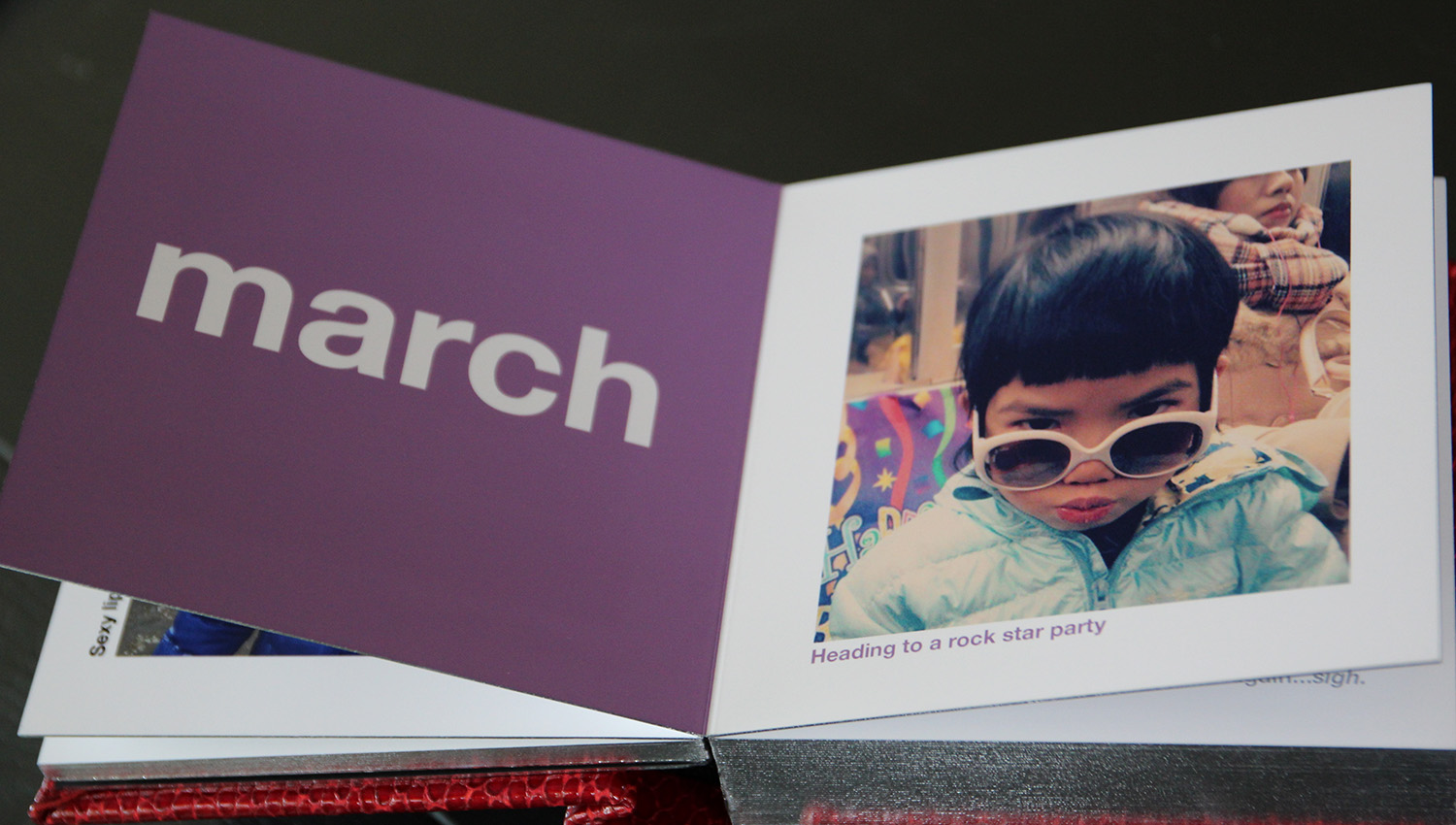
A square-shaped, textured-leather covered book with silver page gilding is an unconventional and oh-so-fun choice for a family Instagram annual.

Hashtags and captions (above and below) add context and a modern graphic feel to an Instagram book. #FamilyAnnual #YearInPictures


A book based on social media posts may seem light-hearted, but that doesn't mean it shouldn't be substantive—this heirloom's got weight and whimsy!
Whatever you do, don’t let any of your social media platforms become your primary storage place, whether by accident or default. Your memories matter too much to lose them to some virtual void.
#MemoriesMatter #InstagramBook #Facebook #SocialMedia #FamilyMemories #Legacy
*This post was updated for timeliness on March 25, 2021.

“Billee’s ‘Famous’ Foods”
Gramma Billee kept a jar for bacon drippings on her stove; she used it liberally and kept it full. She knew everyone’s favorite foods and provided them—often.
Gramma Billee kept a jar for bacon drippings on her stove; she used it liberally and kept it full. But one of the most important ingredients she cooked with was intention: She knew everyone’s favorite foods and provided them. Often. Decades later, her granddaughter shares remembrance and recipes so that Billee’s descendants may nourish their own families with her “famous” foods.
As I have written about before, tastes conjure memories in a most primal way, and can transport us right back to our childhood kitchens. As such, they are excellent jumping-off points for writing or talking about your memories and crafting them into a story for generations to come (not to mention, the kids will be thrilled to have those cherished recipes actually written down).
In this latest contribution in our series, A Taste of the Past, we are treated to one family’s “famous” foods, as skillfully and lovingly prepared by Gramma Billee—and now, her descendants.
A Taste of the Past
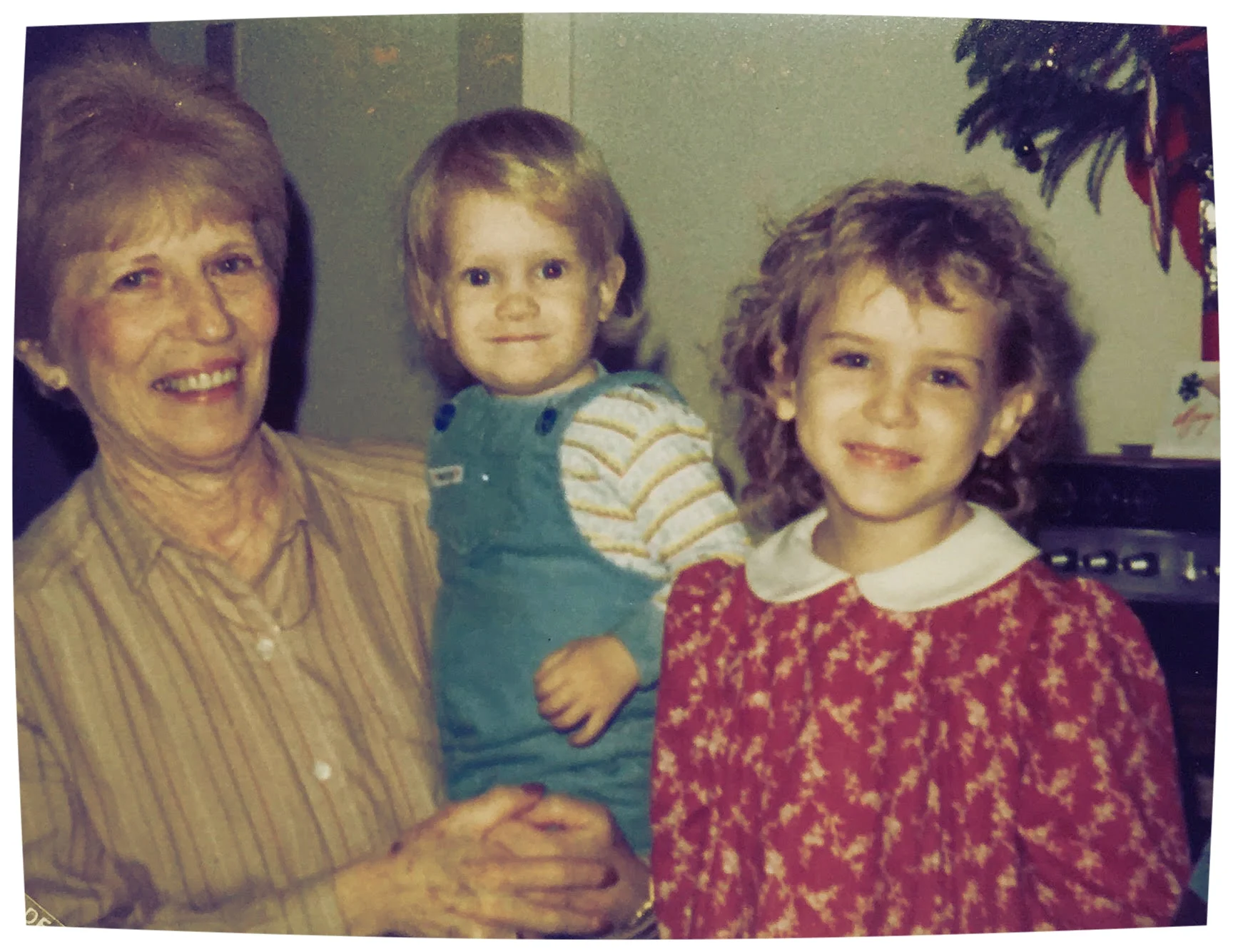
Gramma Billee, the writer's baby brother, and the writer as a little girl, 1982
Billee’s “Famous” Foods
By Melissa Finlay
I visited my grandmother Billee in person for the last time when she was 90 years old. I spent several days interviewing her, recording her memories and anything else she wanted to leave for posterity. She told me plenty of stories about her life and details about our ancestry, but she most wanted me to record her recipes, to pass her food legacy on to her grandchildren and great-grandchildren. Her recipes were close to her heart, full of memories of friends and family, and preciously held knowledge of who loved which food the most.
Stories of struggle, and hope
While I recorded her recipes, I was the fortunate recipient of my grandmother’s stories, as each dish sparked memories anew.
Billee’s dishes were famous among everyone who knew her. Her recipes came to be referred to as “Billee’s Famous Enchiladas,” “Billee’s Famous Cherry Pie,” “Billee’s Famous Hummingbird Cake,” even “Billee’s Famous Hot Cocoa.” Not that her dishes were necessarily original—she liked to collect recipes from newspapers, magazines, and friends—it’s just that she made them so well, and shared them so generously. She cooked for family get-togethers. She brought overflowing platters to church potlucks and work parties (I think they may have held extra work parties to score more of her foods!). Billee knew everyone’s food favorites, and provided them.
Her life wasn’t always full of ample food, though. During the Great Depression, Billee’s father struggled to find work and her mother suffered from serious health problems. Billee’s maternal grandparents stepped in to help the family get through these lean years.
Billee recalled walking with her younger sister to their grandparents’ corner grocery store each morning on the way to school. Her grandmother gave them each a “store lunch” to take with them. After school, Billee returned to the store to work for a few hours to repay her grandparents’ generosity.
Billee’s own young family moved from Oklahoma City, Oklahoma, to Lake Jackson, Texas, on the Gulf of Mexico, in the mid-1950s. Here she learned how to cook with seafood, not as a premium ingredient but as an affordable protein to feed her growing children. When Billee was widowed at 47, she struggled financially while training to enter the workforce. She did her best to nourish herself and her youngest son during this difficult time.
A granddaughter’s perspective
By the time I came on the scene, Gramma Billee had a steady career and an active social life. She was constantly in the kitchen. As I watched her cook, I asked her plenty of questions. She answered every one, but never invited me to pitch in; she did the gourmet cooking and baking herself. She was the master! Cinnamon rolls filled with pecans and raisins. Shrimp quiche. Stuffed mushrooms. Tender brisket. Squash casserole. Molasses cookies. Pie, pie, and more pie.
When I was a child, her dishes always seemed luxurious to me—indulgent even. She used copious amounts of seafood, avocados, cream, pecans, butter, and shortening, ingredients not commonly used at my home. Billee kept a jar for bacon drippings on her stove; she used it liberally and kept it full. Dessert was a standard course on her menus. Yet, for all her decadent cooking, she always watched her own portions and remained slender throughout her life.
Gramma Billee introduced me to many new southern foods. I knew if Gramma made it, it would be delicious, so I tried every strange new thing she offered me. I loved so many! Billee made the only liver and venison I would ever eat, the texture and flavor superb with bacon and onions. Shrimp Victoria became a favorite with tender, succulent shrimp swimming in a rich sour cream gravy. Gramma knew it was my favorite, and made it for me often. I enjoyed the crunchy, salty bites of her fried okra. I can still recall the smells of apricot fried pies bubbling in the cast iron skillet. Nothing, however, could tempt my sweet tooth more than Billee's sweet-tart cherry pie.
I have begun to record the recipes for many of grandmother Billee’s “famous” offerings, transcribing her hand-written (often butter-stained) notes for other members of the extended family. So that her grandchildren and great-grandchildren can choose a favorite dish. So they can make it often and think of her. So her nourishing legacy can live on.
Recipes from Billee’s repertoire
I will start by sharing my favorite dishes that she made “just for me” every time I visited. These dishes still bring me the comfort of being with my gramma every time I eat them.
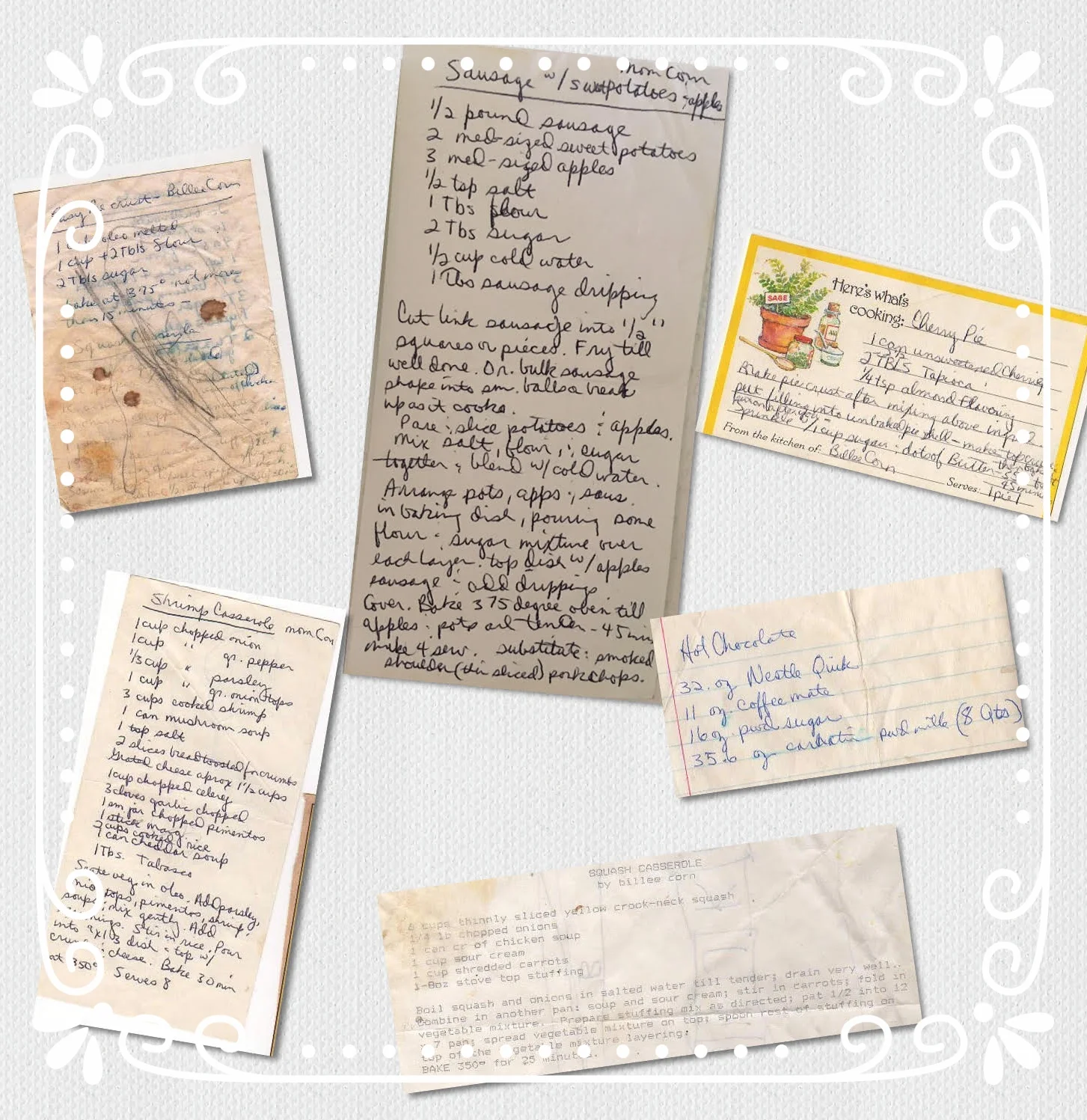
An array of Billee’s handwritten recipes—well-loved and well-used, all!
Shrimp Victoria
1 pound shrimp, peeled and de-veined
½ pound mushrooms, cleaned and sliced
1 onion, diced
2 cloves garlic, minced
½ cube of real butter
1 tub of sour cream
Salt, to taste
Red pepper, to taste
Sauté onion and garlic in butter until softened. Add mushrooms and spices and sauté until soft. Add shrimp and sauté until just pink. Take off the heat and stir in half the sour cream. When dished up over a hot bed of rice or egg noodles, top with a dollop of sour cream. Serve with a salad and a nice loaf of French bread.
Orange-Avocado Salad
1 medium head lettuce, torn, about 6 cups
1 small cucumber, thinly sliced
1 avocado, peeled and sliced
One 11-oz. can mandarin oranges
2 tablespoons sliced green onions
In large salad bowl, combine lettuce, cucumber, avocado, oranges, and onion. Just before serving, pour on dressing and toss.
For dressing:
½ teaspoon grated orange peel
¼ cup orange juice
½ cup salad oil
2 tablespoons sugar
2 tablespoons red wine vinegar
1 tablespoons lemon juice
¼ teaspoon salt
Combine all ingredients in screw-top jar. Cover tightly and shake well.
Cherry Pie
1 can unsweetened cherries
2 tablespoons tapioca
¼ teaspoon almond extract
Mix above ingredients and let rest while making pie crust.
For easy pie crust (makes two crusts, top and bottom):
1 cube oleo, melted (Gramma’s name for shortening)
1 cup + 2 tablespoons flour
2 tablespoons sugar
Mix ingredients until they form a soft ball. Roll, and form half in pie plate.
Pour cherry filling into unbaked pie shell. Sprinkle filling with 1 cup sugar, generous dots of butter. Place top crust over filling. Bake at 350 degrees for 45 minutes.
Melissa Finlay is an avid genealogist, a garden guru, a homeschooler, mama to 7, and wife to the love of her happily-ever-after. She and her husband recently created an app, Little Family Tree, to introduce children to their family history.