
Memories Matter
Featured blog Posts


READ THE LATEST POSTS
This Week in Personal History... July 11
The weekly roundup of blogs for July 11, 2017 includes posts on family reunions, legacy letters, & stories of mom, curated by Dawn Roode for all memory-keepers.
“Every man's memory is his private literature.”
― Aldous Huxley
Welcome back, memory-keepers! I hope you had a festive and safe Fourth of July week, and that (if you must) you're easing back into the work week with a smile on your face ; )
This week we take a dive into family reunions, legacy letters, and stories of mom.
Please leave comments about any of the topics featured here (they’re nothing if not conversation starters, I hope!) and share with other like-minded memory-keepers. And if you're a blogger with content you'd like to see featured here, of course click the link and share what you’ve got!
Roundup of Personal History Blogs - July 11, 2017
In the News
“Aunts, uncles, friends, neighbors, children and grandchildren—everyone who grieves my Opa has different memories, different recollections of him. Standing by that photo album, I realized we were putting our memories & knowledge & stories together like a puzzle to see a larger picture of the man we’d lost.” Read more in Love by the Puzzle Pieces.
“People almost always tend to gravitate to very personal, impactful stories in their lives. So if you say, ‘Tell us something that's really important to you,’ most people tell something that makes them tear up at a certain point.” Read about an interesting community oral history endeavor in Southern Colorado.
On the Blogs
LEGACY LETTERS
Legacy writing can be both healing and historical, and can make a lasting difference to your family & friends. Here are 5 tips on how to write a ‘love’ letter to your family from Sarah Hamer.
FAMILY REUNION FUN
“On the eve of the reunion a few of the cousins gathered at my parents’ house to celebrate my father’s 85th birthday and started sharing stories,” writes Bruce Summers of Summoose Tales, whose post focuses on how he integrated “adult Show & Tell” at his latest family reunion.
Check out the inspiration behind Bruce's story-sharing device and find a Show & Tales event near you (from personal experience, I can attest you won't be disappointed!).
IN SEARCH OF...
Meghan Vigeant of Stories to Tell is seeking women to interview about their experiences gathering their own mother’s stories. Have you interviewed or recorded your mother telling her stories, delved through her journals, or interviewed other family members about your mom? If so, reach out to Meghan—who knows where the conversation will lead?!
Worth Checking Out
One of the best ways to get to the heart of someone's story is to ask them great questions.
Even oral historians who have conducted countless interviews still hone their craft. A new (rather meta) podcast, The Turnaround with Jesse Thorn, turns the tables on interviewers, making them the interviewees. The first episode with Ira Glass was a delight.
Radio Rookies, produced by WNYC, has compiled resources to help students conduct better interviews—but I would say these links (which include advice on how to record interviews, how to choose a topic, and a handy question generator) are great tools for anyone wanting to interview their own family members to capture stories for posterity.
What Are You Reading?
Let me know what you've read that the rest of us might enjoy—memoirs, how-to or business books, even articles.
#MemoriesMatter #Legacy #LifeStories #Memoir
This Week in Personal History... June 27, 2017
Weekly roundup of blogs & news stories of interest to personal historians, memory keepers, and life storytellers curated by Dawn Roode. Comment, share, contribute!
“Live, love, laugh, leave a legacy.” –Stephen R. Covey
If you’re visiting this site, it means you’re a memory-keeper, a storyteller, the family archivist. However you identify yourself, I am fairly certain you’d agree that preserving our most meaningful stories for the next generation is paramount.
Welcome to the first in what promises to be a weekly roundup of stories geared just for you!
Personal history is a vital industry that includes oral historian bookmakers like myself, videographers, ghostwriters, genealogists, biographers…and many more; we are united by a shared mission of preservation & story gathering. This site has plenty of advice and book ideas & inspiration, and we’d love to work with you to create a coffee table book bringing your stories to life. But we can also refer you to personal historians with services more closely geared to what you’re looking for, or who are closer to your home—many of them whose blogs are featured in this roundup.
Please leave comments about any of the topics featured here (they’re nothing if not conversation starters, I hope!) and share with other like-minded memory-keepers. And if you're a blogger with content you'd like to see featured here, of course click the link and share what you’ve got!
Roundup of Personal History Blogs - June 27, 2017
In the News
Explore 22k immigration photos & read the accompanying personal stories from the @naagovau's collection on the revamped “Destination: Australia” site
Did you know your home movies may be unwatchable soon?
“Why You Need to Stop Procrastinating and Transfer Your VHS Tapes to Digital ASAP”
“Videotapes Are Becoming Unwatchable As Archivists Work To Save Them”
Some insightful writing & glorious photos documenting lesbians from all walks of life, from perhaps a surprising source: “American Women: Pride”
On the Blogs
“Turn, Turn, Turn” by Verissima Productions' Pam Pacelli Cooper on the nature of change, and her company's next big documentary endeavor (can't wait to learn more!).
“Stories Are Everything” by Dawn Roode of Modern Heirloom Books: Why Soledad O'Brien and Henry Louis Gates, Jr. value stories so much.
“In the Beginning, or How We Created Something from Nothing,” a conversation between personal historians and partners Samantha Shubert and Susan Hood on the occasion of the first anniversary of their business, Remarkable Life Memoirs: “There’s such a market for preserving people's stories that I feel really positive about how it’s going to go for us.” So do we, so do we! Happy first anniversary, ladies ; )
What Are You Reading?
Let me know what you've read that the rest of us might enjoy—memoirs, how-to or business books, even articles.
#MemoriesMatter #Legacy #LifeStories

“Stories are everything.”
Two major benefits of stories & story sharing are bringing genealogy to life, and helping us feel connected to the past. Learn why experts value stories so much.
During an evening discussion focused on grief and resilience, one theme continued to pop up: the importance of stories and story sharing.
The noted panelists at the New York Open Center, including award-winning journalist Soledad O'Brien and noted Harvard scholar Henry Louis Gates, Jr., opened up about their own family histories, personal loss, and the things that helped them heal. And amidst the many nuggets of wisdom they passed on to the audience, quite a few of their prescriptions for resilience were applicable at any time in our lives, not only during a period of grieving.

Here are two huge benefits of storytelling that were highlighted during this dynamic conversation.
Stories help us feel connected.
I remember asking my grandmother where we were from. “America,” she would say. Before that? “It doesn’t matter.”
I once asked her something about her school years; she teared up, but remained silent. “I did not have a happy childhood.” Case closed.
My grandparents’ past was a complete mystery to me. And I am not alone.
While some kids grew up with tales of “remember when” and “when I was little…” around the dinner table, many others—often children of immigrants—were told little to nothing about their family’s narrative before they were born.
Soledad O’Brien, whose father came from Australia and her mother from Cuba, says her parents both decidedly left the past behind. “We’ll just start anew,” she says was their prevailing attitude. Like my family, O’Brien’s didn’t talk about the past at all. “Repressing things is a very solid strategy!” she said with a laugh.
Of course, it’s a strategy for coping and, yes, beginning anew. But apart from fueling that fresh start, the decision to bury family history—so common among immigrants in the first half of the 20th century—does nothing to connect the next generation to their past.
O’Brien was a Season Three guest on Finding Your Roots, and she says that she derived great value from learning more about her family history. “As you’re trying to figure out yourself, these threads begin to matter more and more,” she said.
“At the time, I was feeling insecure as an entrepreneur,” O’Brien said; but recalling her family’s history of perseverance, and drawing from that history of strength, “felt heartening, and emotional. There is this story that I’m connected to.”
Those stories helped O’Brien “feel somehow rooted to a place.” The stories made her feel connected. “Even if you don’t know you have a gaping hole, you do,” O’Brien said.
Stories bring genealogy to life.
DNA drove the original idea for Gates’s previous genealogical series, African American Lives, which explored race, roots, and identity with guests including Oprah Winfrey, Ben Carson, and Chris Rock. Gates would watch his subjects stare at new genealogical documents; they would read the words, but as he says, it wasn’t the pages of data that moved them. “They broke down and cried over the stories,” he recalls.
And so it is the stories that take center stage in his current PBS series, Finding Your Roots, whose fourth season, currently in production, will air this fall (guests include Larry David, Bernie Sanders, Amy Shumer, Ted Danson, and Paul Rudd).
“Every society has a genealogy tradition,” Gates said at the Open Center event.
“You are, in part, the sum of your ancestors” Gates said in the Washington Post, and researching one’s background helps people figure out “how you became uniquely you.”
“What you get from a genealogist is a binder of documents; you don’t get stories,” Gates said. “You have to translate that stuff into stories, and I’m very proud to be able to do that.”
Often guests on Finding Your Roots hire the team of genealogists from the show to continue their family research privately. They want to flesh out their family trees even further—and to “meet” more family members...discover their stories.
What is revealed can be life-changing to the guests, Gates said.
His own most treasured family heirloom remains to this day the one that jump-started his interest in family history: a photograph of his great-great grandmother Jane Gates. “It’s precious to me.” That connection with his own roots—Gates says he passes by and looks at the photo every day in his home—“gives me solidity and stability. It makes me feel good.”
And maybe that’s the best part of sharing stories, after all: Stories make us feel good.
As Soledad O’Brien said, “Stories are everything.”
Related reading:
- There are plenty of reasons to share family stories, from raising resilient kids to helping understand oneself.
- No one will tell your life stories but you. Start small by saving family photos & preserving stories so you create a lasting, meaningful legacy, one step at a time.
- Interested in working with a personal historian who can interview you or a family member to elicit & shape your stories for a book? Let's chat.

9 reasons why your adoption journey is worth preserving
Nine reasons why preserving your family’s story in an Adoption Journey book is a worthwhile investment, including making it part of your Gotcha Day celebration.

“On our wedding day, Mike and I vowed willingly to accept children from God. Little did we know on that day how our journey would take form...””
Mary Lou and Mike Engrassia of West Babylon, NY, were amazed, overjoyed, and even a bit overwhelmed as a path to parenthood they never expected unfurled before them.
That journey, and the memories of feelings, experiences, and challenges met, is a part of their life they cherish. Their adoption journey made them who they are as parents, but more importantly, who they are as a family with their daughter.
One way to preserve that journey for the future is to create an Adoption Journey book, highlighting for your child(ren) a side of their parents—and their unique family—that likely wasn’t evident from any child-centric baby books, or even their own treasured life book.
Here are nine reasons why an Adoption Journey book may be an investment well worth making.
1. An heirloom book takes your unique adoption journey into the future.
Whether you have a formal way of presenting your special recollections of your adoption journey or not, you no doubt regularly make the effort to share them with your child verbally. “I have told my children the stories many times,” says Teresa Baldinucci, a mom of three adopted children in Patchogue, NY, who sees the value in preserving those stories in book form, as well.
An Adoption Journey book ensures your family’s precious journey will carry on intact to your grandchildren and beyond. Indeed, pulling it out, like any family memory book, is a surefire way to spark conversation and reminiscing—essentially, keeping the family story sharing going.

2. Your journey to becoming a parent makes the story of your family different.
Once an adopted child is settled into his or her forever family, milestones and the related keepsakes become much the same as for any other family. “It is the journey to that day that makes the story different. And the journey of adoption starts long before your child is placed in your arms,” Mary Lou says.
For her and Mike, that journey included heartfelt talks about their options, much research, even more paperwork (including numerous rounds of fingerprinting), and a home study before they finally got The Call. “‘It’s a girl!’ Then over the fax at work came a blurry photo of the most adorable baby with full cheeks—Yuan Le Yi—waiting for us in the Hunan Province.” Along with 13 other families, the couple spent 11 days in several different places in China. The endless paperwork was finally capped off with a sealed brown envelope given to them when they left China, along with strict instructions not to open it. “Upon going through customs at LAX, the envelope was opened, and Yuan Le Yi became a United States citizen,” Mary Lou shares.
Now that's a story worthy of preservation in a book!
3. You may forget all the moving parts that synchronized to make you a family.
“When we were going through the process, every day seemed like an eternity. Funny, though, as I try to recall all of it now, years later, I really had to try and think about the timeline,” Mary Lou says. Recreating a visual timeline of the adoption journey can help spark memories, and for children, bring a new understanding of the emotional journey their parents undertook to become a family.
Having an editor who can help recreate the entire adoption process by going through files and stacks of papers, your old date planner and photographs, is a proven way to document your family’s origin story accurately. But going beyond that with interviews of your recollections and feelings during that time is what brings your family's story to life, what gives it power and depth.
4. It’s a beautiful thing to commit the dreams for your family’s future to memory.
While you think you’ll remember Every. Single. Thing. from the time you get home with your child, well...most new parents simply don’t. Sleep deprivation is an equal-opportunity affliction for ALL parents, after all!
During the first weeks at home, emotions run so high that specific, detailed memories may not gel for the long term. Adoptive parents often have the additional challenge of a child who is “mourning” the loss of familiar people and surroundings. Even a baby who came from less-than-ideal circumstances is still undergoing a major adjustment. “Our daughter immediately bonded with me, but it took her longer to bond with Mike,” Mary Lou says. “During those first weeks together as a family, we experienced a wide gamut of emotions: joy, stress, tears, though most of all intense love.”
And it’s not just the whats, whens, and hows that can begin to fade from memory; it’s the notions of what the future may hold, as well. “It's no different than when expecting a birth child. As a parent, you hold dreams for your as yet unknown child, and those are things you want to share with them in the future,” Teresa says. An Adoption Journey book is a wonderful option to not only celebrate your child(ren) and the family you have become, but to reflect upon your dreams for the future. What do your children dream of? What do you hope for them? Including handwritten notes in your book can be a heartfelt way to connect the past journey and the future of your family.
5. It has the potential to become a “holiday” tradition.
Whether you call it Family Day or Gotcha Day, the yearly celebration of the day you all officially became a family calls for a sentimental tradition. Thumbing through an Adoption Journey book is an ideal way to spark memories—and increasingly thoughtful observations and questions from your growing child.
6. It can simplify your life.
Mementos of your adoption journey can multiply, and get misplaced. “An adoption journey book is a great idea, one I wish I had, rather than having to have so many different ‘tools’ that I have used to create keepsakes of our journey. I have notebooks and files, photos in boxes, and more,” Mary Lou says. But even if, like Mary Lou, you’ve already saved your keepsakes in an organized way, you might want to consider having your mementos digitized (to save space) and memorialized in a book (to reveal and preserve their stories, beyond just their sentimental value).
Even digital photos, videos, and other electronic files can be challenging to find years later, especially as platforms evolve and laptops and other personal devices are upgraded. A book is a forever platform, and one that is always accessible for prompting remembrance and joy.
7. Family stories are gifts to our children.
Not only do the stories we tell our kids help them relate and feel like an essential part of the family, they strengthen them and, research shows, make them undeniably more resilient. As author Bruce Feiler wrote in a viral NYT piece:
The single most important thing you can do for your family may be the simplest of all: develop a strong family narrative.
By preserving your family’s unique narrative in an Adoption Journey Book, you are giving your child(ren) a valuable tool that, in the long run, will not only help stir memories, but will also help solidify their identity.
8. It may ease your anxiety.
You know that perpetual worry—stoked by your friends’ relentless Pinterest-board updates—that you’re not doing enough in the way of memory-keeping? That your photos are scattered across devices and that you only made a milestone book for your first child, then...nothing?
Creating an Adoption Journey book with a personal historian is a guaranteed way to ease that nagging guilt, to create something worthwhile and meaningful without any of the DIY angst. We do the heavy lifting; you get the heirloom of a lifetime.
Oh, and one more (not-so-little) thing:
9. Remembering is an enjoyable process.
Any family that wants to preserve their adoption journey in a heirloom book must commit to doing two essential things:
Gathering materials (adoption files, mementos such as plane tickets and fingerprint cards, family photos), and
Talking about your memories and journey with a professional family biographer.
The “talking” part is not only easy, it is rewarding. The act of reminiscing about your family's stories with an open-hearted and interested listener can be healing, empowering, and centering. So even before you've received your book, you will have received a real gift: the gift of sharing.
What is your reason for wanting to preserve your family’s adoption journey?
We're willing to bet there are many reasons for preserving your adoption journey as there are reasons for adopting in the first place. Why do you want to preserve your family’s adoption journey in a book? Please share with us in the comments below, or give our founder, Dawn, a call at 917.922.7415 to see how we can work together.
Related Reading:
An Adoption Book Primer: Learn the difference between a life book, an adoption story book, and an Adoption Journey book.
Spread the love.
Do you know any adoptive parents who might be interested in an Adoption Journey book?
Please share this post on social media or via email and help us spread the love!

Who will tell your life story?
No one will tell your life stories but you. Start small by saving family photos & preserving stories so you create a lasting, meaningful legacy, one step at a time.

Chances are, nobody will. That is, unless you tell your story.
May is Personal History Month: a time to raise awareness about the importance of preserving our own stories, of recording memories and family history in a way that can be accessed—and appreciated—by our future generations.
Perhaps it’s obvious that your memories and stories matter. But be honest: What have you done to preserve them? Have you taken the first step to ensuring your legacy?
Even the family memory keeper needs help.
I have always been the memory-keeper in my family. Even as a young child I took pictures at every party or outing, crafted scrapbooks with meticulously handwritten captions, and have kept journals with varying levels of commitment throughout my life (beginning with a little lock-and-key Holly Hobbie diary).
But over the years my gathered ephemera took on the weight of “stuff” as I moved from college dorm to a barely-there Manhattan apartment to a Brooklyn brownstone with just one closet. With an ambivalent heart during one streak of “practicality,” I tossed my childhood diaries and stacks of letters. I even removed many of the things I had once carefully arranged in those scrapbooks, opting to pile them into a shoebox that fit more easily into my limited storage space instead.
Necessary, perhaps, but shortsighted nonetheless. I certainly don’t advocate saving every little thing (oh, how minimalism appeals!), but my point is this: Even for a devoted, lifelong memory keeper such as me, many of the things that trigger memories—and prompt the stories that make up our lives—get lost along the way.
And as our lives become more and more entrenched in the digital realm, artifacts of our youth—of the milestones and life transitions and the special moments—get buried deeper and deeper in the digital abyss.
Start saving your stories, one at a time.
It can be daunting to think of writing (or even telling!) your life story. So don’t.
Start saving your stories, one at a time. For now, at least, forget about culling all those boxes of old family photos from the attic. Don’t stress about fleshing out your family tree.
Just start small:

1 - Save your family photos.
Begin setting aside the best few photographs from each major life event—or from any small yet joyful moment in a ‘regular’ day. (It doesn’t have to be a monumental moment to be worth remembering; some of my favorite memories are of the everyday variety!) Make sure to record the details, too: who, what, where, when. Put them in a digital image’s metadata (it’s easier than you think) or write captions on the back of your printed pictures.
2 - Share one story.
What’s the one story Grandpa tells every time the family gathers at Thanksgiving? Or the story your kids always beg you to re-tell at bedtime? Is there a childhood adventure you think of often that you’ve never shared with your kids? Whether it’s a story so often cited that it’s become family lore or a brand new gem, if you don’t proactively record it, it will be forgotten. It pains me to type that last sentence, but let’s face it: The oral history traditions of our ancestors have long since fallen by the wayside, and it’s up to each of us to preserve our own personal histories.
3 - Do something special with that story.
Did you hit “record” on your smart phone when you told your one story? Did you type it up? However you chose to capture your story, take it one step further and make something with it—then share it. I’ve got a few easy and unique ideas for you in an upcoming blog post, but for starters, why not have dinner with a few loved ones who would appreciate the story, and share it again? (It’s my experience that once the story-sharing starts, it’s contagious—and that always makes for a joy-filled get-together full of reminiscing!)
Your one story might turn into “Chapter One.”
The reason for starting small is to avoid being paralyzed by the overwhelming possibility of telling your WHOLE story. The irony of starting small is that, more often than not, one story becomes two, and two becomes four. You get the idea: Stories multiply quickly.
In honor of Personal History Month, why not take the first step in preserving your memories? Follow the simple three-step plan above, and get in the storytelling spirit!
Are you doubtful that you’ve got any stories worth telling? Check out this list of reasons why your story—yes yours!—matters. And read this, too.
Trust me, your stories convey your values, forge connections with loved ones, and contribute to your family history. Your stories are a most meaningful legacy.
Your stories—even just “Chapter One”—matter. But you must tell them.
The healing power of remembrance
Allison Gilbert, Soledad O'Brien, and Henry Louis Gates, Jr., talk about the power of remembrance in the face of grief, & why family story sharing is healing.
I talk often about the power of story. Rarely, though, have I been so confronted with just how powerful story and remembrance can be specifically in the face of grief as I was this Monday at a talk at the New York Open Center.
In a discussion billed as “Keeping Alive the Memories of Lost Loved Ones for Healing and Resilience,” three luminaries—Henry Louis Gates, Jr., Soledad O’Brien, and Allison Gilbert—spoke openly about their own experiences and shed light on why the more you honor your family and friends who have passed, the more likely you are to reach your fullest potential in the present.
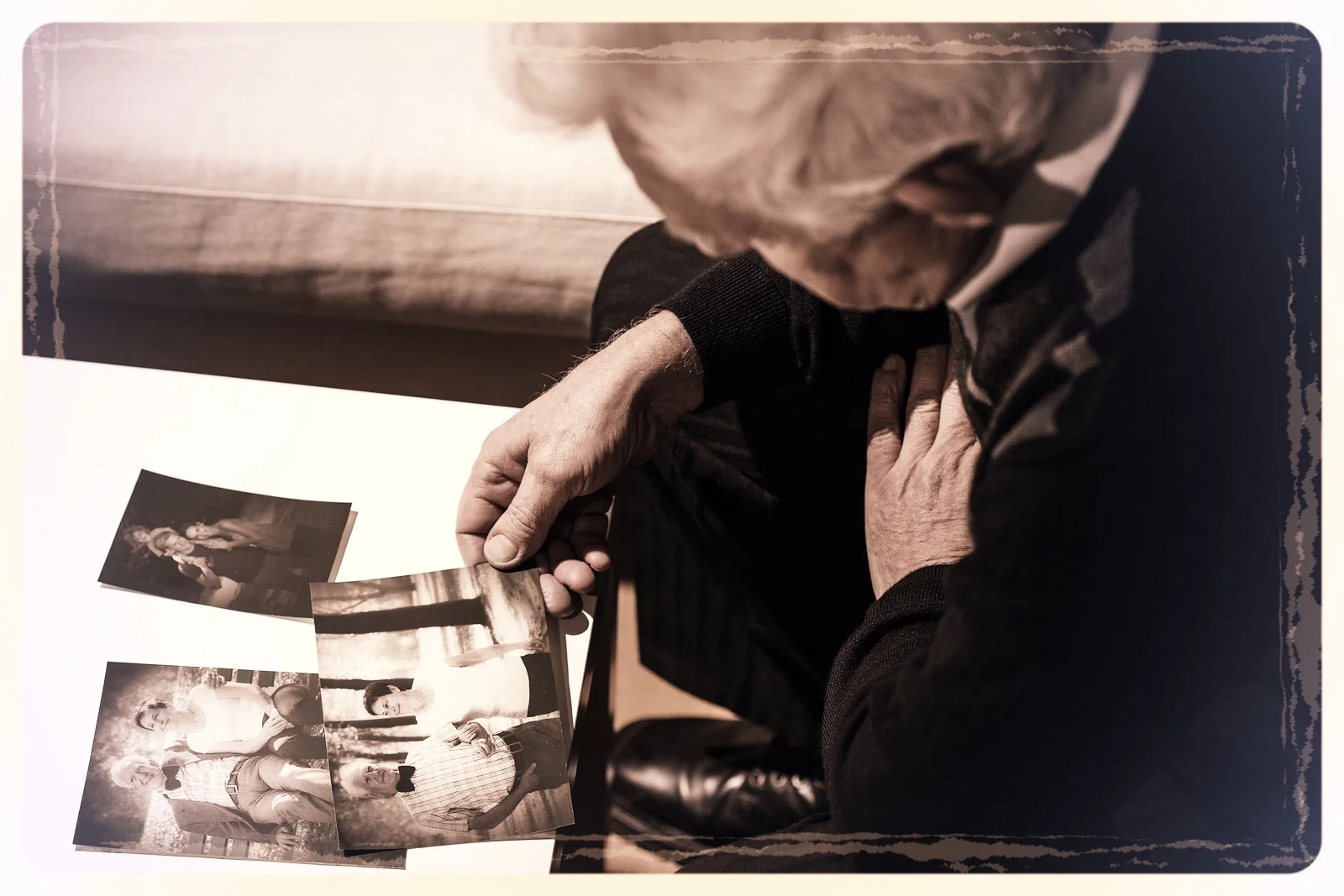
The ambivalence around memories for those who are grieving
“When loss is fresh, there is a school of thought that resurrecting memories is too painful. But the opposite is actually true,” said Allison Gilbert, author most recently of Passed and Present: Keeping Memories of Loved Ones Alive.
Anyone who has experienced loss will nod their heads in recognition at Gilbert’s words. It is in this time of need that other people so often remain quiet because they simply don’t know what to say.
Sheryl Sandberg, who has been making the talk-show rounds in support of her new book Option B: Facing Adversity, Building Resilience, and Finding Joy, echoes that experience, recently saying that after her husband Dave died, “People were so afraid of saying the wrong thing that they hardly said anything at all.”
When Sandberg lost her husband in 2015, she lost her bearings; and her book is as much a helpful guide for those who have suffered a recent loss as it is for those who aren’t sure how to talk about loss or approach their friends who are grieving.
“I think a lot of people wanted to reach out to her, but they didn’t know how,” says Facebook CEO Mark Zuckerberg. “You know, there’s this whole question of, Are you reopening a wound or something? And of course, what she would say is ‘You’re not reopening the wound. I mean, it’s, like, open and gaping.’” [Time]
Nostalgia: research says it’s good
“There’s no time limit for grieving,” Gates said at the New York Open Center.
“And there is no roadmap to remembering,” added Gilbert. “Mourning allows you to be passive when you need to be passive. But at some point you’ve got to pivot from passive mourning to active remembrance.”
Her book Passed and Present hones in on highly specific ways to keep memories of lost loved ones alive, from memorializing a family recipe on a platter to creating a tribute book in your loved one’s memory. (I highly recommend Gilbert’s book for anyone hungry for ways to keep the spirit of your lost loved ones near.)
Taking intentional steps to remember those of our loved ones who are no longer with us is essential to healing our grief, building our resilience, and empowering our positive action in the world. Indeed, there is a huge body of current research that shows nostalgia—a sentimental longing for the past—is good for us, Gilbert said.
“Momentous life events, the primary fodder of nostalgia, entail cherished time spent with family, friends, and relationship partners…. which, when reflected upon, serve to impart meaning,” reads one hallmark study.
As Gilbert describes, “When we feel an intense bond with loved ones from our past, we're more likely to feel similar bonds with those around us in the present,” and this deep sense of connection in turn may assuage our grief.
The value in active remembering
Gilbert’s children were born years after her mother’s death, and she said she “had this profound need to keep their memories alive for my children.” One powerful way to do that is through story sharing. “I don’t tell my kids stories about my mom and my dad. I tell them stories about their grandmother and their grandfather.”
“How we really communicate is through narrative,” O’Brien said. We are connecting people through the narrative: “You tell the story about your lost loved ones—it’s what you pass on. The narrative is what makes people live even if they’re dead.”
Memories are the connective tissue that binds one generation to the next, and the active nature of remembering is healing.
“The prescription for joy and healing after loss is to remember,” Gilbert said.
Legacy books as memory prompts
Photographs of our lost loved ones serve as effective prompts for jogging our memories and actively engaging in storytelling about them, Gilbert said.
Capturing and preserving the deceased’s stories—their values and personality and experiences—in a tribute memory book, is an even more compelling way to cement their legacy. More importantly, a legacy book such as this is a living testimony in that it will continue to prompt story sharing and reminiscence about your lost loved one.
I personally experienced this last week when my son (who is seven going on 40) entered my room in his pajamas, hiding something behind his back. “Mom, I was wondering. I know it’s not our typical bedtime routine,” he began (see, 7 going on 40!), “but do you think we could look at this book about Nanny tonight for our bedtime story?”
He produced the small memory book I had made for him after his great-grandmother’s passing; she had lived with us and the two had been exceptionally close. The fact that my son proactively sought this time to remember her—and that he proudly retold many of their stories while we snuggled—warmed my heart in a most special way.
Gilbert described nostalgia, like empathy, as a social emotion: “It brings you closer to people not just in your past, but also in your present.” I can attest to that.
May you, too, find peace—and joy—in remembrance.
Related Reading:
Notes from a Funeral: Sharing memories about lost loved ones to heal—and why we don't honor our families through story sharing now.
Mommy & Me: How a struggle to tell my mother’s whole story turned into a more intimate portrait of love
Legacy Book FAQ: Answers to some common questions about what goes in a legacy book, and how they are created

Notes from a funeral
Reflections from a funeral on remembrance & grief: sharing memories about lost loved ones to heal—and why we don't honor our families through story sharing now.
When a loved one dies, the world around us ceases to exist for a time. We may post an obituary to Facebook and share beloved photo memories of the deceased, but we are going through the motions. Moving forward, as we must. There is a haze about our very existence.
I have found that it is in the months after the sympathy cards cease coming, after friends and family drop by to check on our welfare, that the weight of grief settles.

Losing a loved one
This week I attended the wake and funeral of a beloved family matriarch. Gloria was my in-law, ever-present at family gatherings big and small over the decade since I had joined her extended family. I knew her as a doting great-grandmother, as a grandmother with a surprising sense of humor, and as a compatriot to my own Nanny when she was alive.
But I learned more about her as an individual in the past three days since she passed than I had ever known before.
There is something wonderful about that, and something equally sad.
It’s not a revelation to notice that our loved ones’ stories are often buried treasures. It does sadden me, though, to notice again and again that often those stories remain buried.
At the end of a life, we are able to look back at said life in its entirety. It is natural and wondrous to talk of the milestones that marked a person’s journey.
Why don’t we reflect on our lives while we are living them, though?
The simplest and best answer I have is that we take our time together for granted. We live in the present moment—as well we should!—and flow with the fast-moving currents of time. We go from one baby shower to Sunday family dinner to the next, wielding a camera and smiling as the kids play, chatting over coffee and dessert before we head home and get invited to do it all over again soon.
The gift of remembrance
We may feel abundant love, even great gratitude, for our family members. We know them as they relate to us, but less often do we ask about them as a person unto themselves! What did Grandma do before she became a mother? What were her parents like? What games did she play as a child? Did she get good grades in school?
The nature of family gatherings changes for a while after a loved one dies. The person’s absence is palpable; they should be here. Our supreme awareness of their absence invokes sadness, for sure, but it prompts storytelling, too. Memories of even the smallest moments, once shared, provide comfort and connection. Stories are a balm to our bruised hearts.
In the aftermath of loss, we are surrounded by others who share our grief. We are not shy about remembering—out loud—our loved one. We tell stories, and relish when we hear stories we had not heard before. When we learn something new, no matter how small, about our deceased loved one, we grasp it tightly, cherish it as a most special gift.
We seek, and find, connection in those also connected to our loved one.
Remembering, always
During his eulogy of the deceased, the priest thanked the gathered family members for “sharing Gloria with us.” This phrasing struck me: She was a faithful church attendant and community volunteer; she had friends from all stages of her life; and yet, she belonged to her family.
For those who knew and loved Gloria, may your memories of her continue to provide comfort and even joy amidst the gaping sadness of her loss. Don’t stop sharing those stories.
Your perpetual remembrance is a celebration of her love and life. Be strengthened by her spirit, and know that you are her legacy.
And for everyone who loves someone: Ask them questions. Discover their stories. Now, while you can share in the emotions and relive the memories together. Celebrate your loved ones’ lives while they are being lived as much as you undoubtedly will when your loved ones are gone.
Remember, celebrate, and connect. Create a legacy together.

Special Ideas for Special Moms: More Unique Mother's Day Book Ideas
Unique Mother's Day gift ideas for expecting moms, moms of multiples, and adoptive mothers—books that celebrate mothers with words and pictures, story and style.
Last week we shared five ideas for creating the most special gifts for Mother's Day, including
a book of food memories and family recipes;
a book collecting letters and notes from loved ones telling mom (or Grandma!) how much she is appreciated;
and a photo-driven book that goes well beyond #ThrowbackThursday to capture and preserve those special moments throughout the year that, all together, make up the stories of your life.
Now we present a few ideas geared specifically to three distinct parent groups: expecting moms, moms of multiples, and adoptive mothers.
While any woman would no doubt appreciate whichever book you had customized with her in mind, these ideas hone in on their particular experiences, and just may be the most unique gift ideas for Mother's Day around.

For Pregnant Moms: The First Nine Months Book
Parents are diligent about recording baby's milestones, from that first word spoken to those first tentative steps taken. What about the first kick inside mom's belly? Or the mom-to-be's craziest craving? More importantly, what about all the hopes and dreams parents begin to have the moment their baby is conceived? Encourage your expecting loved one to give voice to the dreams she holds for her child, the vision she has for her burgeoning family, for the parent she'd like to be.
To tell her unique pregnancy story, we'll conduct brief interviews throughout mom's pregnancy, and provide easy-to-answer questions for which she and dad can jot down answers, even record quick sound bites on their smart phone while on the go. We make it easy for the prospective parents to record their pregnancy journey.
This one's a gift for the mother, no doubt—she'll cherish the time she sets aside to ponder her baby!—but it's as much a future gift for your child. Just imagine: In addition to the traditional baby book, your child will have mom's memories of a time when the possibilities were endless—and love was brand new. Make her FIRST Mother's Day one to remember.

For Moms of Multiples: Twice Upon a Time
Or thrice upon a time. Whether the special woman in your life is a mother of twins, triplets, quadruplets, or more (!), her memory books will overflow with love.
Because all our books are completely customized, we work with parents to create just the right books. No need to search for a baby memory book that includes only the things you want in the style you want (an impossible task, to be sure!).
Perhaps you'd like one book that celebrates your kids' togetherness, likenesses, and adventures alongside sections that call out each child's unique nature and personality. We've got you covered. Or maybe you'd like a three-volume set for your triplets, consisting of three slim books, one for each child, beautifully presented in a slipcase.
A photo-driven book comes to life when we include excerpts from an interview with the parents—or even letters you have written to your babies, bits of advice or wisdom you think of while nursing them or watching them sleep. Set up a free consultation to share how you envision your multiples' memory book—and let us help you make it a reality.

For Adoptive Mothers: Adoption Story Book
As an adult adoptee, I find myself wanting to hear my adoption story just one more time—although it is more like a million more times. Hearing it was simply never enough. I wanted to have something I could visually remember, or an experience that I could always look back on. I wanted to flip page after page and see how two people, once strangers, took a leap of faith to adopt me and became my heroes. They are my parents. I want to remember...
Written by Jessenia Arias on Adoption.net, those words resonate deeply, and bring home to many just how important preserving one's adoption story is, both for the children and for the family as a whole.
In addition to the memories and photos from the parents' journey, spiritual and physical, we'll include a visual timeline, a map for international adoptions, excerpts from journals or diaries kept during the often long process of adopting a child.
This is a book that can be undertaken at the inception of the adoption process, in which case we'll provide worksheets for keeping meaningful notes and dates, and suggest what types of photos and memorabilia might be most appreciated down the road. Or it can be completed years after a child has become part of your family—while piecing together the timeline and accessing some of the more raw memories may be challenging, you'll have the added perspective wrought by time.
Preserving adoption stories is important in helping foster connections and understanding between adopted children and parents. Flipping through the pages of a book—a book that shows just how valued, how wanted, and how special the adopted children are—is a helpful conversation starter when children reach an age of questioning, of searching for identity. Most of all, the adoption story is a gift to every member of the family, one that documents and celebrates the biggest gift of all.
P.S. This is an auspicious Father's Day gift, too, and it's never too soon to reach out to get the ball rolling!