
Memories Matter
Featured blog Posts

READ THE LATEST POSTS

Life Story Links: April 13, 2021
A curated reading list for memory keepers with recent pieces about the stories of heirlooms and family photos, preserving food memories & connecting generations.
“Don’t be afraid of writing into the heart of what you’re most afraid of. The story of a life lives in what you would rather not admit or say.”
—Kate Christensen

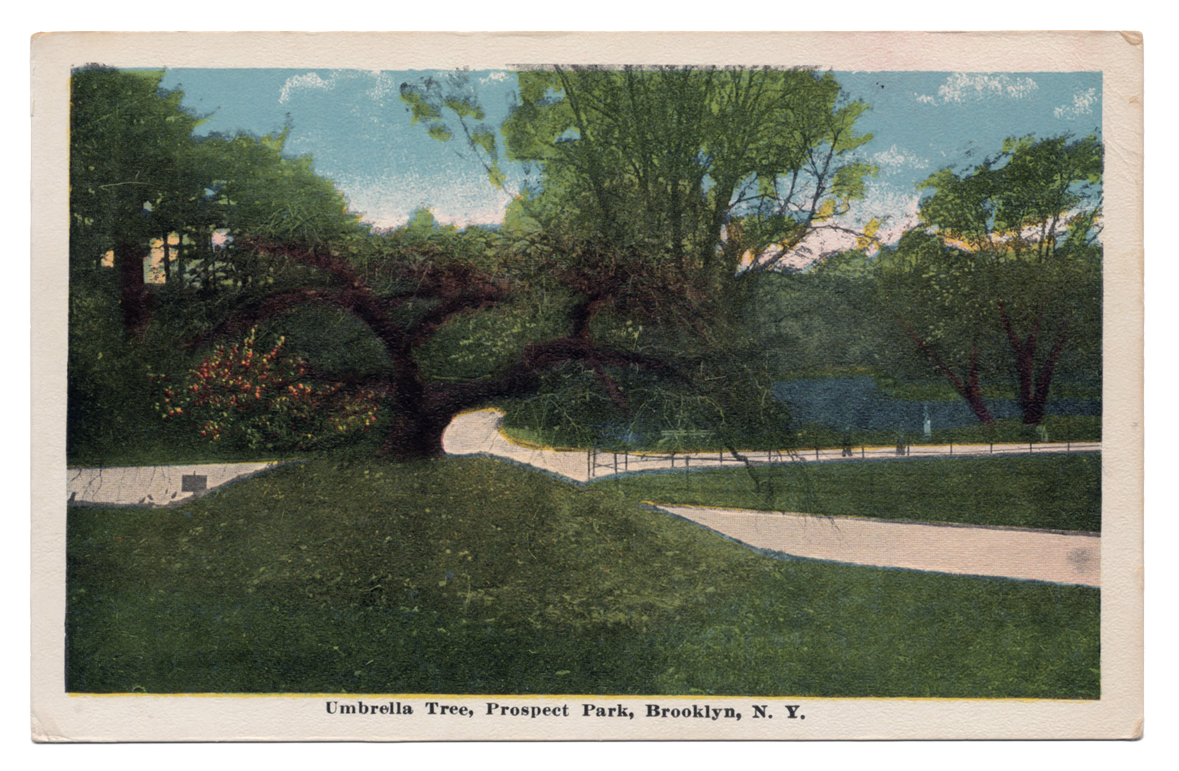
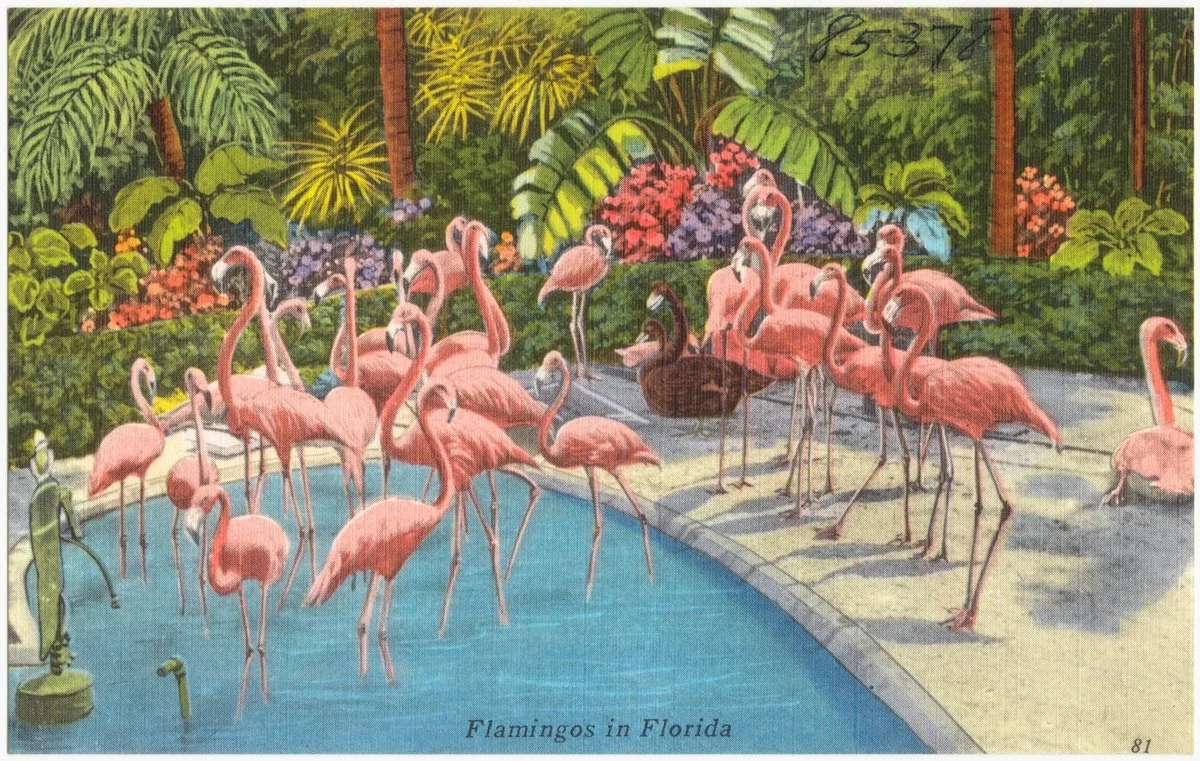
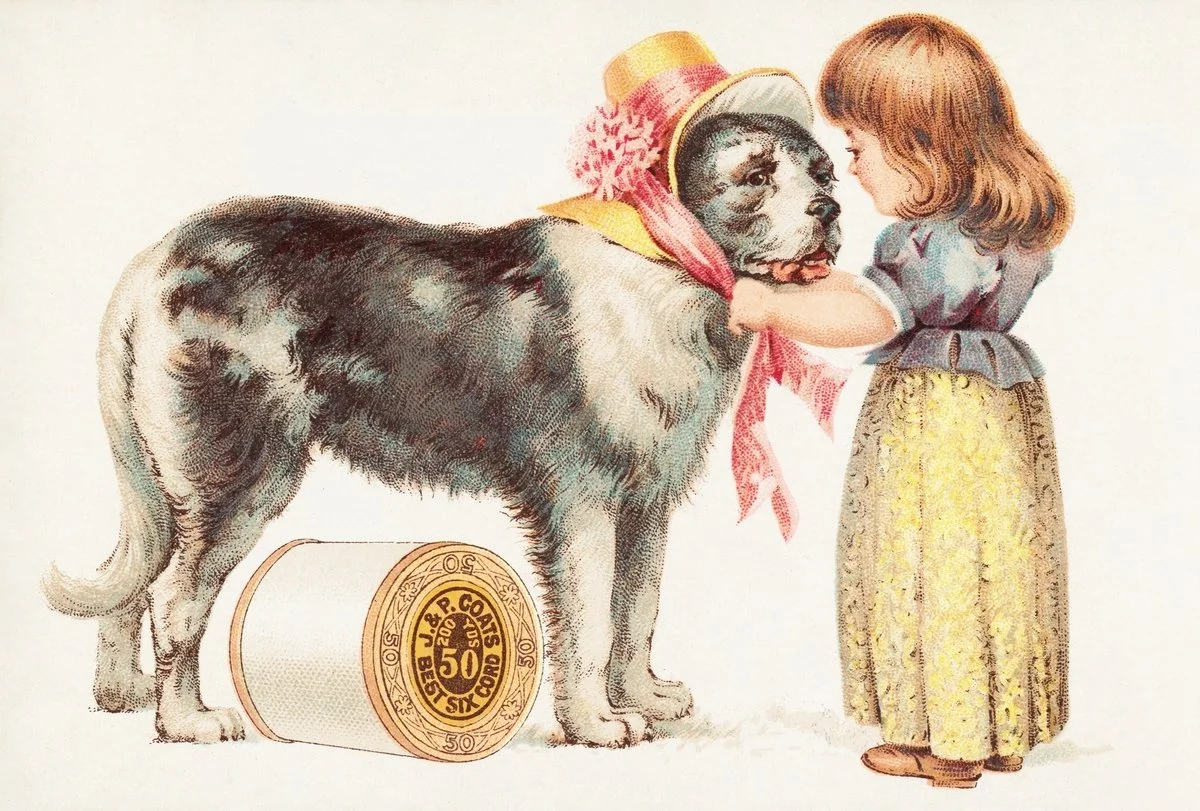
Vintage postcard. Happy spring!
Memory Palace
THE ART OF FORGETTING
“The fragments of experience that do get encoded into long-term memory are then subject to ‘creative editing.’ To remember an event is to reimagine it.” A look at Lisa Genova’s new book, Remember.
LOOKING BACK…
“As we look back on ‘the good old days,’ we need to ask ourselves: Was the past actually as great as we remember it? And what can we learn from all these walks down memory lane?” Is romanticizing the past okay?
STORY TIME
“Grandchildren who come to their grandparents with genuine curiosity will inevitably tap a rich well of stories from their elders.” Last week I wrote about why grandparents are excited to share stories with their grandkids (and how to go about getting them).
Food Memories, Preserved
AN OMNIVOROUS WRITER
In her hybrid memoir-cookbook, The Book of Difficult Fruit: Arguments for the Tart, Tender, and Unruly (with recipes), Kate Lebo explores fruit “as a way to understand her memories of broken hearts and health issues, by giving attention to its messier bits—all with accompanying ways to make jams, smoothies, shrubs, and more.”
SCHMALTZY SALON
Limited spots are available for a short live event on April 20th in which Israeli author Shifra Cornfeld tells a story about her complicated relationship with her father and a quest to discover his past through his love of pecan pie.
The Stories Behind Our Stuff
“WHAT LOSS LOOKS LIKE”
“We couldn’t hold her hand as she left us. But now we had something that represented her at the very end,” Elinor Halligan says of her mother's pendants. Browsing this collection of artifacts—remnants from loved one’s lives, stories collected in the fabric, wood, and stone of things—is an emotional endeavor.
LIFELONG POSSESSIONS NO MORE?
“Isn’t that how this is supposed to work? We pass on possessions that tie the generations together as they move through the family.” Every year or so a major publication tackles the idea that family heirlooms are frequently getting thrown out instead of passed on. This month a Wall Street Journal writers tackles the notion that our kids don’t want our stuff.
The Big Picture
REDISCOVERED CHILDHOOD PORTRAIT
Alice Neel painted two neighborhood boys in her studio in the 1960s, but the finished painting was never seen by them. Decades later, the sole surviving brother saw his likeness hanging in the Met.
PHOTO INHERITANCE
Feeling burdened by all your old family photos? Many people think giving them to the kids now is a great idea—but then stress about how to split them up. Mollie Bartelt, a photo estate planner, has some tips in the video below.
And for families where the parents didn’t divvy up those photos among the kids already, going through boxes and meaningful mementos after the death of a parent can be challenging. Download this free guide for expert—and compassionate—guidance.
The Business of Personal History
MONEY MATTERS
Rhonda Lauritzen of Evalogue Life gets real with an in-depth conversation about what life story professionals do (and should) charge for their services, and why sometimes we do a project “just for love”:
...and a Few More Links
“Everybody's stories matter”: New Haven Museum collects accounts of pandemic life
Filmmaker weaves decades’ worth of home movie footage into film to create “an indelible portrait of a family separated by incarceration.”
Tips for keeping a memorable travel journal
In the Oscar-nominated documentary short A Concerto Is a Conversation, composer Kris Bowers' family lineage is traced through discussions with his 91-year-old grandfather, Horace.
Inspired by a similar project at Columbia University, Bowdoin Moments seeks to create “a living autobiography.”
A review of Wife|Daughter|Self: A Memoir in Essays by Beth Kephart
Short Takes

Life Story Links: January 19, 2021
Timely reads on new memoirs and biographies, tips for fine-tuning your life story writing & curating your family photo archive, plus more links to bookmark now.
“I could tell this story with myself as the villain or the hero, innocent bystander or agent provocateur, and each time I’d be telling a form of the ‘truth.’ What is the value of a truth that has an infinite number of forms?”
—Marc Hammer

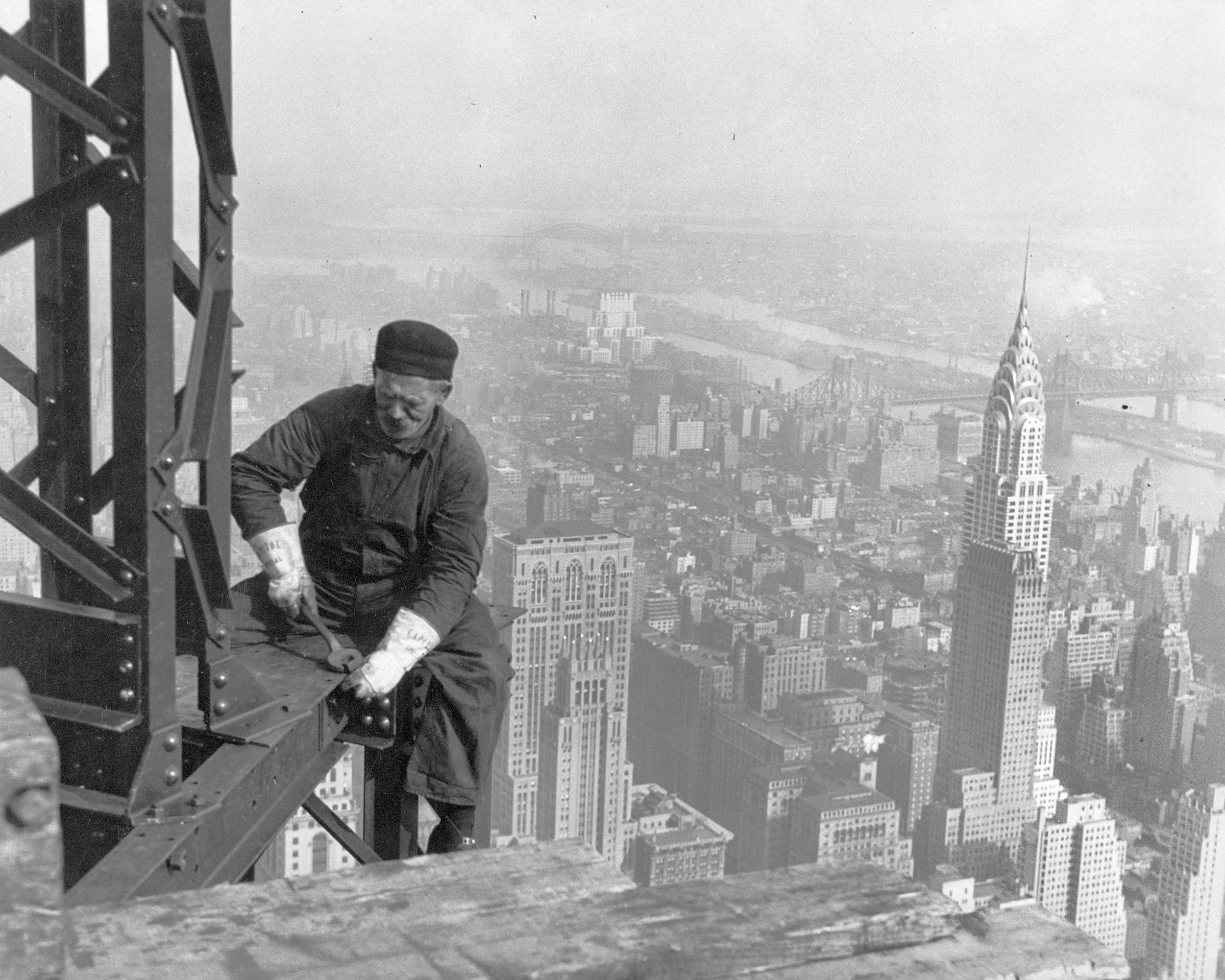
On this day in history: Snow fell for the first time in Miami on January 19, 1977 (though for the most part the flakes melted when they hit the ground).
Recent Memoir & Biography
“SUFFERING WITHOUT SENTIMENTALITY”
“I wanted to abandon all this personal history, its darkness and secrecy, its private grievances, its well-licked sorrows and prides—to thrust it from me like a manhole cover,” Bette Howland wrote in her 1974 memoir W-3, which has been recently reissued.
ON WRITING AND LIFE
Gabriel Byrne’s new memoir, Walking with Ghosts, has been hailed as a “masterpiece” by Colum McCann and as “dreamy, lyrical, and utterly unvarnished” by Colm Toibin. Listen in as Byrne talks about memory, loneliness, and more.
ANOTHER SIDE OF SYLVIA
“There’s this sense in other biographies that she was only writing to please other people—to get love from her mother, her professors, her teachers—and I thought that short-changed her own sense of ambition and determination and the pleasure that she got out of writing.” Heather Clark on not falling into the Sylvia Plath trap.
Timely Tips
TREASURE, NOT TRASH
Last week I wrote about what everyone can do to ensure their own family photo collections are inviting to the next generation—for, whether we want to believe it or not, many kids simply throw away those once cherished pictures.
LISTEN UP
“What might happen if you read your memoir aloud as if talking to a therapist…?” David Perez ponders in this piece on the power of speaking your writing to life (spoiler alert: there is substantial power in the exercise).
FREE SELF-PUBLISHING WEBINAR JAN. 25
During “Everything You Want to Know About Self-Publishing but Are Afraid to Ask” you’ll “leave with a roadmap to the self-publishing journey so you can start taking action now.” Register for the free January 25 Zoom class here.
...and a Few More Links
The Statue of Liberty—Ellis Island Foundation has opened a new online shop.
“You can’t tell a life story or family history with 60,000 photos.”
Learn all about the Army Navy “E” Award, a.k.a. the Excellence in War Production Award (WWII).
Study sheds light on how the timing of memory is encoded in the hippocampus.
Singer Billie Eilish set to release photo book filled with personal memories.
Read the current issue of Brevity.
California–based personal historian Perry Hamilton reflects on a wedding.
Preserving memories one image at a time
Short Takes

Life Story Links: August 31, 2020
A wealth of reading on the value of family photos for prompting memories and stories, plus memoir writing tips and how to leave a meaningful legacy.
“One thing I have learned about remembering is that it is a social process: it happens in collaboration with other people. [My grandmother’s] memories with me may not be the same as her memories with others. The reality of remembering is always contextual.”
—Charles Fernyhough

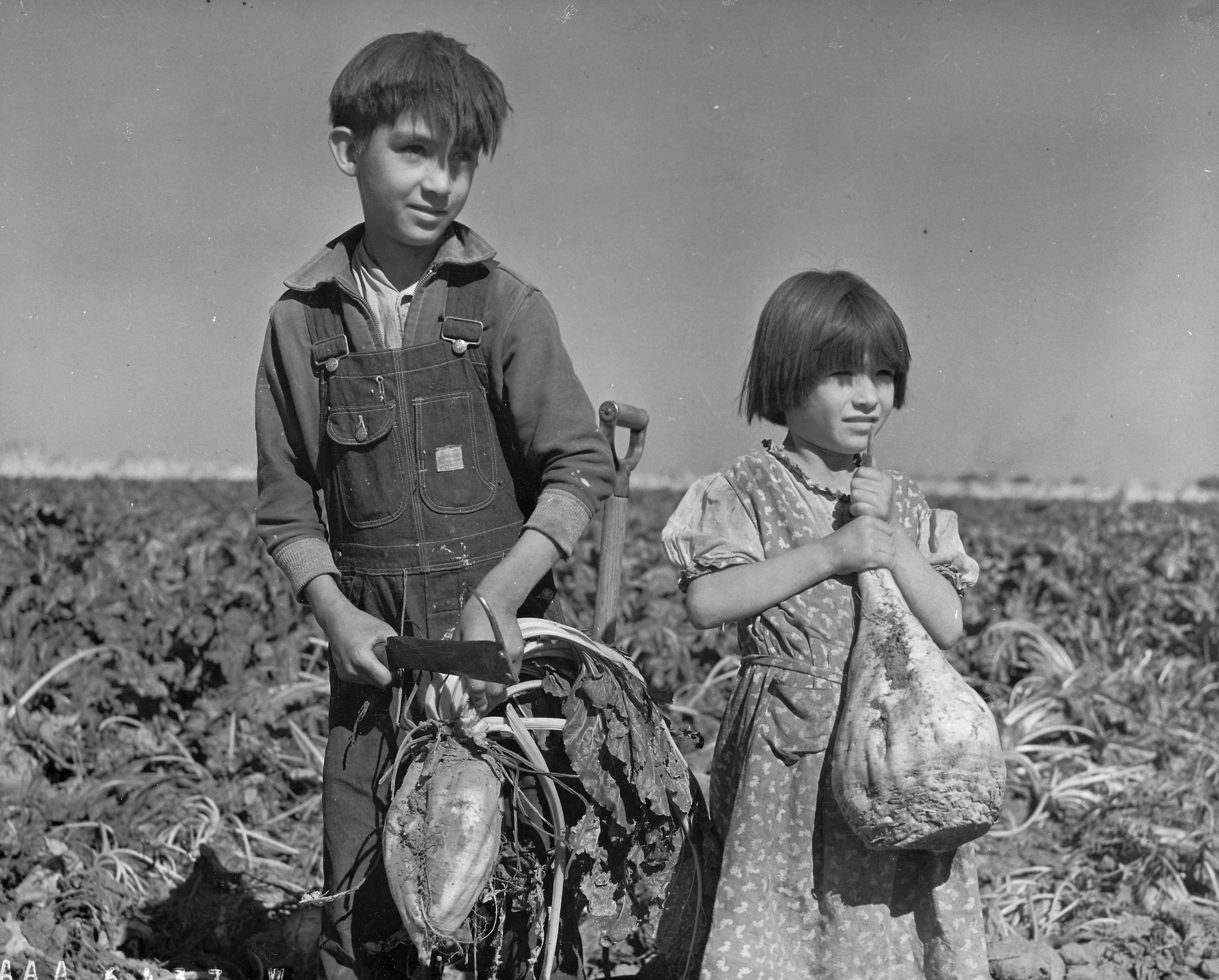
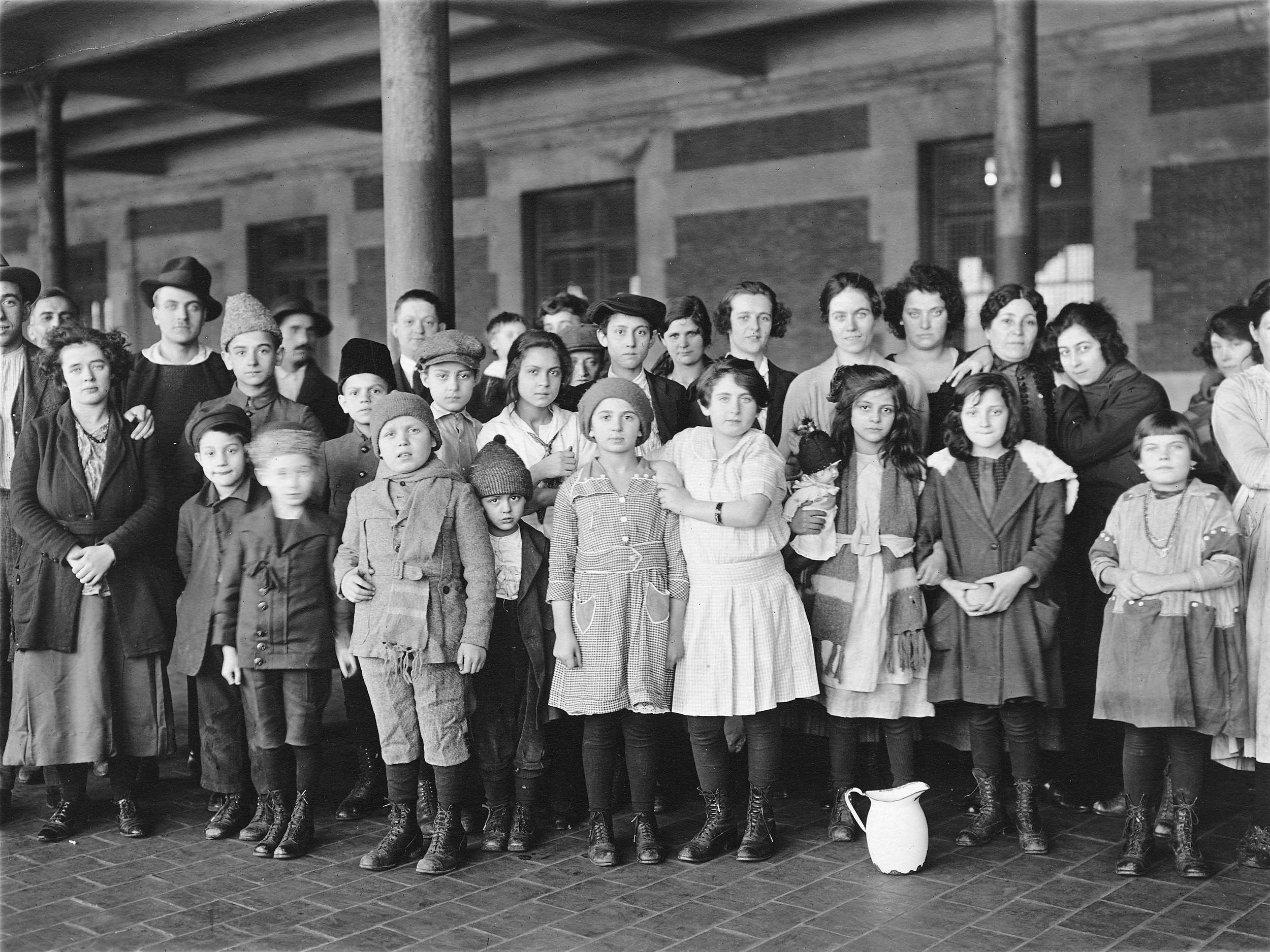
Ah, if only the back-to-school season were as carefree as past years… Kids in an unidentified school circa 1913. Photograph by William Davis Hassler, printed from original glass plate negative, courtesy New-York Historical Society, New York Heritage Digital Collections.
Kitchen Confidential
THE STORIED RECIPE
Last week I interviewed Becky Hadeed, the story- and food-loving host of the inspiring podcast The Storied Recipe. Read about a few of my favorite episodes here (probably unsurprisingly, they’re with everyday folks about their most cherished food memories).
A LIFETIME’S WORTH OF FADED RECIPES
“My recipes tell stories. If they were pared down, edited and orderly, my memories would be, too.” Joyce Purnick makes a case for revisiting your old, grease-stained recipes every once in a while (even if you no longer cook from them).
The Power of Photographs
A PLACE FOR PICTURES
“There’s nothing wrong with storing your favorite snapshots on Instagram or in the cloud, but digitally browsing through your memories will never feel as special as taking a photo album off the shelf and physically flipping through the pages.” Amen. The Strategist showcases 10 great photo albums for every occasion.
SAVE YOUR PHOTOS MONTH
September is Save Your Photos Month, and among the 40 free virtual classes available are a few by personal historians including my own, Share the Story of Just One Photo, as well as Martie McNabb’s live Show & Tale: Where Were You On 9/11? Pre-registration is required, but you are free to watch the videos at your convenience through November 1, 2020.
SORTING YOUR FAMILY PHOTOS
“The difference between 3,000 unlabeled photos versus 300 photos organized by category can be the difference between your child learning their history or not,” Eric Niloff of photo organization company EverPresent says in this piece that provides a basic framework for getting your own mass of family photos in some semblance of order.
TREASURE HUNT
“Through experience, I have learned what does and doesn’t work when it comes to reaching out to long-lost cousins” in an effort to get family history photos that aren’t online, Melissa Knapp writes in this post with concrete tips for using descendancy research to find new (old) photos of your relatives.
“REBOOTING MEMORIES”
“People are forgetting wartime memories. We need to revitalize those old memories by using the latest method of expression and delivering it to the hearts of many people.” In this case, “melting frozen memories” via colorized photographs.
Personal Iconography
BELOVED STUFF, REBORN
“It’s so satisfying to give new life—and new purpose—to old stuff. You get to keep the memories while renewing your home.” Susan Hood of NYC–based Remarkable Life Memoirs shares some inspired ideas from her own life.
POSTER GIRL
“Even before I’d seen a single episode of Sex and the City, I was versed in the art of performative self-reflection. And then Carrie Bradshaw sashayed into my life. She didn’t just make auto-documentary look glamorous. She made it look like a job.” Brittany K. Allen uses touchstones of popular culture to walk us through her journey as a writer.
On Nonfiction Writing
ELEVATE YOUR MEMOIR
National Association of Memoir Writers is running a six-week virtual Memoir Boot Camp starting September 22 with a different teacher each session, including Jacqueline Woodson, Claire Bidwell Smith, and Larry Smith.
AN INVITATION FROM HISTORY
“The pandemic is only one of the seismic forces that converged on American life this year,” Oregon–based personal historian John Hawkins writes. “There is a certain advantage to being the one using the keyboard or the microphone instead of relying on others to record their thoughts.”
TRUTH OR DARE
“I’d done my best to get the facts correct as I wrote, but I had thousands of pages of archival documents, photos, trial transcripts, and newspaper clippings, as well as hours of interviews.” Emma Copley Eisenberg thoroughly and thoughtfully dives into the topic of fact-checking nonfiction writing.
STORY SHARING FOR NON-WRITERS
The experts at the Biographers Guild of Greater New York this week share three basic approaches you can take to ensuring your life stories are told and preserved for the next generation, even if you do not consider yourself a writer.
Legacy through Stories
A LETTER TO THE DEAD
I often tell people who are struggling to craft a meaningful tribute of their lost loved one to write a letter to them—tell the deceased directly what you loved and admired about them. This letter to John Lewis in the wake of his recent passing is a sublime example of this approach.
“MY FAMILY’S SHROUDED HISTORY”
“Inhibited by the silences in our families, we turn to books. But here was something rare: the answers to questions I hadn’t known how to ask, and a way to map my family’s stories into what I had learned of this history, each illuminating the other,” Alexander Chee writes.
THEIR PAPU
Ricardo Ovilla “lives on in his granddaughters’ stories. To them, he will always be the tender hearted, marimba-loving, menudo aficionado who stopped at nothing to see his children laugh. They knew him simply as ‘Papu.’ ” Listen in below:
DIASPORA, RECONSTRUCTED
“My Kashmiri grandmother is illiterate. I wonder what she’d say if she knew her progeny wrote her unsent letters, wrote so she wouldn’t be lost to history. My grandmother, all four feet and nine inches of her. Housewife. Teen bride. When she video calls, she stares at my father and she cries and she cries.” High school student Yasmeen Khan on her fractured provenance.
...and a Few More Links
Photographs of generations of Black suffragists crafted narratives and became “decidedly civic currency.”
A look at an array of services for creating a digital legacy for a lost loved one
Watch Thomas Allen Harris in dialogue with Marci Brennan, a professional photo organizer, followed by a Labor Day–themed community photo share.
Colorful murals help prompt memories for people with dementia.
Short Takes

Two New Year’s resolutions worth making—and keeping
Imagine New Years resolutions you actually want to keep—we've got two that are not only easy to stick to, but that will make you and your loved ones happier.

I have never been big on New Year’s resolutions.
For starters, I still regard September, not January, as signaling a “new year”; the turning leaves and crisp fall winds usher in thoughts of back-to-school shopping and beginning anew.
Beyond that, self-discipline is not among my most laudable traits.
Nonetheless, I am surrounded by friends and family resolving to eat better, run faster, work harder, love stronger…you get the idea. When is the last time your own resolution lasted long enough to become an ingrained habit?
I’m not suggesting that you ignore your instincts to better yourself through New Year’s resolutions—on the contrary, I wish you luck and stick-with-it-ness!
And, I put forth suggestions for two resolutions that will be EASY to keep, and bring you JOY. Let me know if you’re in!
resolution no. 1
Digitize 10 old photos.
Maybe it’ll become the start of a bigger project, maybe it won’t. But the undertaking
of choosing 10 photos from a larger stash,
of visiting with the memories they stir up,
and of being able to easily share those images with loved ones—whether on social media, via prints you frame for them, on a family history website, or during in-person conversations (see below)—
is enough to bring you joy (!!), and to make the tiniest dent in your family history preservation efforts.
resolution no. 2
Have meaningful conversations.
This one is important to me.
When is the last time you used your phone for something other than a quick text to communicate?
When is the last time you dropped by a friend’s house unannounced? (Did you cringe at the mere thought?!)
How about welcoming one of your parents over ungrudgingly—not to watch the kids or do your familial duty, but to visit without agenda or time limit? To chat over a cup of tea, to have extended conversation around the dinner table well into the evening, or to learn their recipes in person, in action?
I am the first to fall into the trap of “busy-ness.” I often regret not calling my family members more, or wish I had more time to meet up with friends, sans kids.
But, as Debbie Millman says, busy is a decision. “Simply put: You don’t find the time to do something; you make the time to do things.”
So let’s both resolve to make more time for real conversation, shall we? To share our thoughts and stories, and to listen, generously, to those of our friends and loved ones—maybe even to someone new you meet at the library.
Let’s connect!

Photographers call it culling
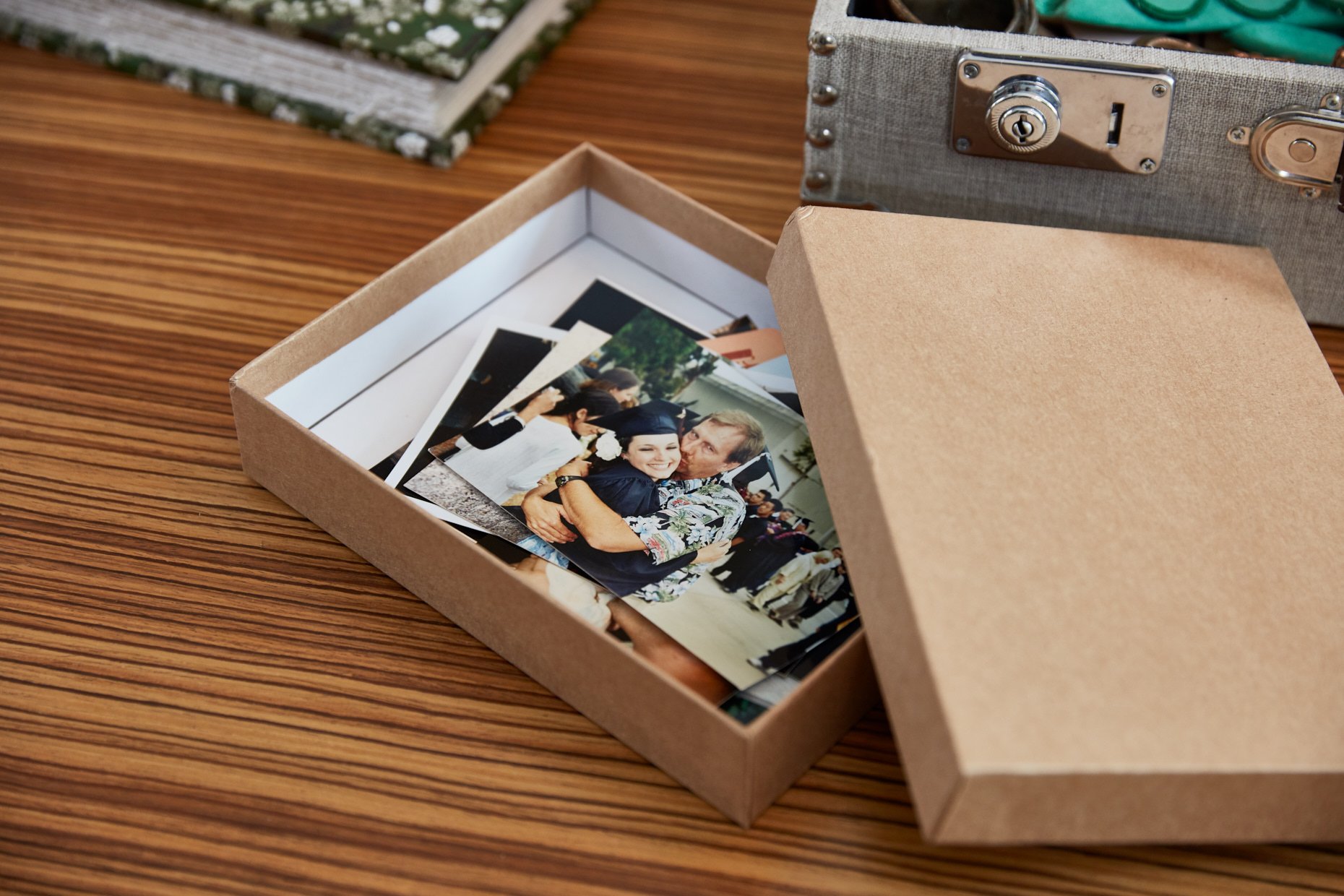
Culling your collection of family photos—whether a year's worth of images or just the shots from your latest vacation—helps retain their value—and stories.

Culling is the process of going through a large collection of images to select those that are the best, whether for delivering to a client (for a professional photographer) or for using in a family album of some kind (for a family photographer).
Culling is not always the most fun part of preserving our memories (it can be tedious, for one thing, and it is almost always time-consuming). It is, however, a critical step in preserving our memories beautifully.
Consider your friend who posts every photo from his recent weekend getaway to Facebook—including images so dark you can barely tell who is present, 10 shots of the same group pose (ugh!), and a few mystery shots that seem to make no sense (think: a corner of a menu or a pile of rocks).
There’s a reason you cringe, at worst, or pass right by that friend’s albums, at best: because the meaning of the group of photos has been diminished by not first culling them.
Why culling matters
Nobody wants to page—or scroll—through endless photos that seem like they were dumped right from your camera’s memory card. As I see it, if you, the photographer, do not respect the photos, why should I?
Culling matters because:
Weeding out poor images is respectful of the recipient’s time.
Including only the best photos helps tell a story and bestow meaning on your experiences.
Presenting a purposefully curated selection of photographs ensures that those you would like to see them—your family, your friends, your descendants—will indeed feel compelled to revisit them, hopefully often.
Culling regularly helps keep your photo collection organized and manageable, making it easier to access a particular photo when you want it, and enabling family genealogists to also find what they may need.
How to approach culling
What NOT to Include
Do not include overly dark images (if, of course, there is one meaningful shot that is too dark but can be salvaged by photo retouching, then by all means, edit it and include!).
Did you snap a series of the same shot in hopes of capturing the best light, or of having everyone smiling, eyes open? Then choose the best ONE. You don’t have to delete the rest, but at least put them in a separate folder called “Outtakes” that you archive in case needed later.
What about shots that mean something only to you (previously mentioned pile of rocks, for example)? Consider your audience, and either caption the photo to reveal its story (“the rocks that would soon become our new backyard fire pit”) or do not include it in your project.
Determining Your Best Images
How you define “best” is contingent upon what you are doing with your photos. If you are creating a vacation memory book, for instance, you will want a mix of pictures that show the places you visited (close-ups, panoramas, textures) and the joys you felt (facial expressions, action shots). If you are editing a wedding shoot, you will want to make sure everyone important is represented, and that key moments are all covered.
It helps to be deliberate: When I am feeling overwhelmed, I often review shots of a similar scene or person side by side, eliminating one at a time as if I were in an eye exam: THIS ONE or THIS ONE? THAT ONE or THIS ONE?
There are many methods for culling—using stars or other labels in Lightroom, say, or creating digital albums in Google Photos. Whatever your approach, be consistent. Not only will that make for an efficiently organized photo collection, but it will also enable you to perfect the craft of culling; you’ll get faster each time you give it a go, and know that types of shots that resonate for you.
The best bit of guidance I can give is to select images that, together, tell a story. Back to that family vacation album: You needn’t include a photo of every.single.place you went, but do select the places that meant something to you, that sparked joy, that you would like to return to some day—and include details that bring said place to life (zooming in on hands in action is always a favorite of mine—hands eating a favorite meal, hands waving a sparkler or steering a boat or resting on a child’s lap…you get the idea?).
Taking the next steps
CULL again?
Your first pass at culling a collection of images might have resulted, still, in a large group. That’s totally fine, but depending upon what you would like to do with your photo collection, you may want to do a second or third pass (selecting images for a family annual book, perhaps, and a smaller collection for a social media share).
CULL, THEN EDIT
Always do any image editing after your have finished culling, There is no sense spending time adjusting anything if you may toss the image later!
INPUT METADATA
Family historians in particular may want to consider adding detailed metadata to photos so names, places, and dates are embedded in the digital files for later reference.
SELECT IMAGES FOR WRITING PROMPTS
Family photos can be especially powerful tools for jogging our memories and recalling stories from our childhood. Select a few photos (read how to choose the best ones here) and, after digitizing and archiving them, schedule some time to reminisce and capture stories. Even if you don’t anticipate writing a full-fledged family history, preserving detailed captions that go beyond who, what, when, and where is a worthwhile endeavor, one that will be cherished long into the future.




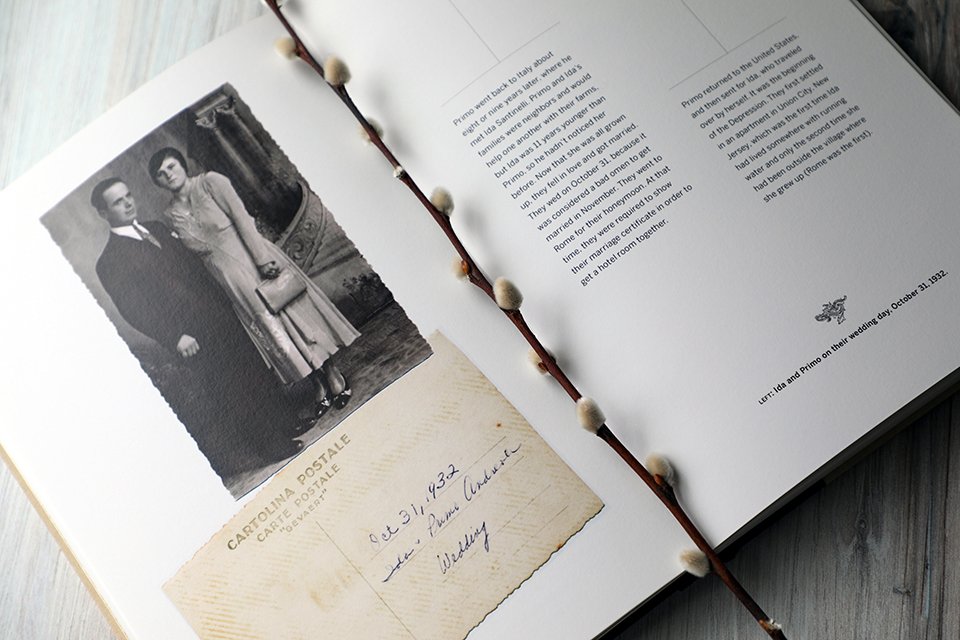


6 tips for choosing the best family photos to use as writing prompts
Family photos can be useful tools to jog memories and call forth stories. We share how to determine which images will elicit the best family stories.
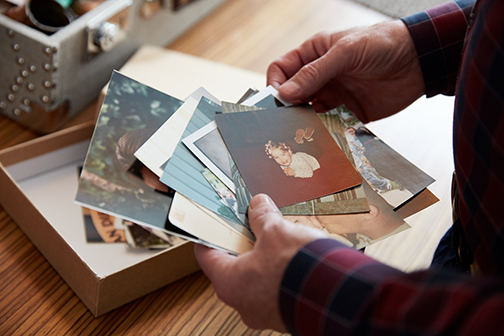
There are no rules for how to choose a photo that will be effective as a biographical writing prompt, but we can offer a few guidelines for the types of images that often elicit storytelling that is deeper and more meaningful than a mere identifying caption.
That’s the goal, after all: To use a photo as a starting point for your storytelling—as a jumping off point for memories, a touchstone for emotions, a lead-in to a narrative from your life.
So get out your old family photo albums or that dusty box of print photographs from the basement! Then…
Step One: Choose 10-20 pictures to start with.
Begin randomly looking at photos.
Rather than focusing on those that are frame-worthy, look for photos that elicit a strong feeling from the viewer (you, or the family member from whom you would like to capture stories).
Set aside 10-20 images that stopped you in your tracks in number two (even if you stopped to wonder about the image as opposed to reliving memories as a result of looking at it; sometimes it’s the mysteries behind a photo that draw forth particularly revelatory stories).
Now it’s time to choose a photo with which to begin your reminiscing. Whether you are using the photo as a writing prompt or as a vehicle to jump-start conversation in a personal history interview, the following suggestions will be helpful in selecting images that lead to substantial storytelling.
“Photos reveal themselves in layers,” Maureen Taylor (aka ‘The Photo Detective’) writes on her blog. “You study the clues and talk to family but every time you look at it or show it off to family you might learn something new. One thing leads to another.”
Step Two: Determine if the photo is story-worthy,
Ask yourself if the photo you are holding does any of the following six things—and if the answer to one or more of them is yes, then you’ve got yourself a winner. Set it aside and make sure it’s on hand the next time you want to delve into some family history writing!

The photo invokes an emotional response.
Do you feel a rush of excitement or a flush of scarlet creep up your face when you first spy the picture? It may make you feel anguish or sorrow, pride or exasperation, abundant joy or abiding love—the key is, it makes you feel.
If a family photo has such a visceral effect on you, this will be most fruitful for writing its story.
“Photographs are about one specific second, but they can also be about the future,” Beth Kephart writes in The Quest for Truth. “Photographs can operate as metaphor and counterweight, as tease and opposition, as the other half of a parenthesis.”
That photo that moves you is a doorway to your past that is clearly connected to your present in some way. Explore why you feel the way you do, and how this feeling fits into your life then and now. Provide context for your feelings; set the scene.
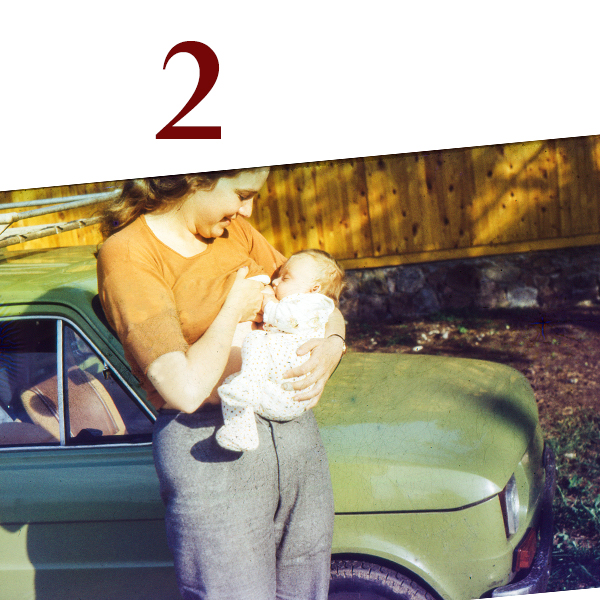
The picture tells a visual story.
Sometimes a picture itself already reveals a story: If the who, what, where, when, and why (or most of those) are apparent just from looking at the photo, then it’s likely a good candidate for embellishing upon. Of course, it’s ideal to choose images whose stories matter to you in some way.
The snapshot of this woman breastfeeding certainly tells a story about who she was as a mother—and if the mores of the time period and the town are known, and her character as well, then the storyteller can dive deep. A grown child looking at this image might use it as a jumping-off point for talking about their relationship over the years; or perhaps how their mom was part of a strong line of women before her; maybe she was only able to have one child, or 10, or only girls…
A photo is a moment in time, but on the periphery are details that help make up its narrative. What photo would have been shot just before this one? Just after? What’s in the frame? What (and notably who) is not in the frame? By starting with a picture whose story seems readily available, we can develop depth by asking such probing questions and tapping our memories for more.

Details draw your attention.
Your facial expression at the time the picture was snapped. The pattern of your grandmother’s well-worn house dress. A missing button on your dad’s shirt, or the papers falling from his briefcase. The water stain on the bedroom wallpaper. If some detail in a photo draws your eye again and again, there is more to be probed.
What does the detail begin to tell you? What beyond the frame of the photo—on that day, or a decade before or after the photo was taken—makes you focus on it? By taking the time to meditate upon all that the detail calls forth in your mind, you will reveal a greater meaning to this photo than could ever be revealed upon initial inspection.
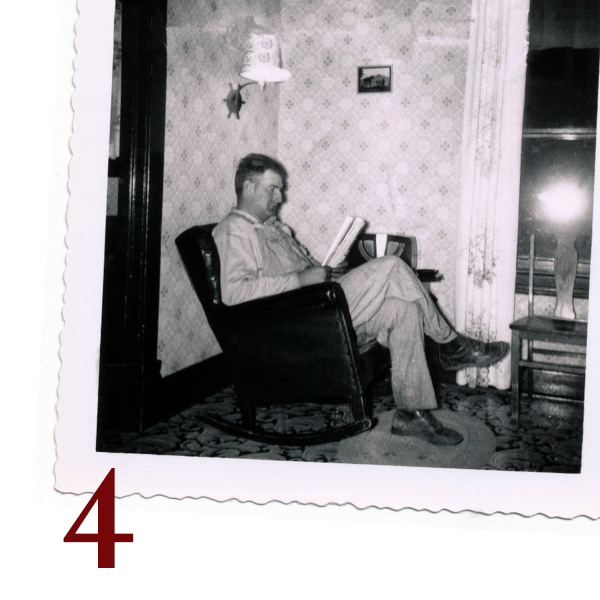
The photo portrays part of the subject’s everyday world.
My favorite type of modern family pictures could be described as documentary family photography: people in their natural environment, doing what they do every day. (Check out talented photographer Jen Grima’s work for inspiration.) I love capturing our routine family narrative this way because the resulting photos are so evocative of time and place, and they set us in scenes that are real and personal, uniquely ours.
Many old family photos do so less consciously, perhaps, but the impact is the same. We are drawn to such pictures because they reveal what our or our ancestor’s life was like back then. So if a snapshot of your aunt holding you while she’s hanging the laundry crosses your path, use it to tell a story. If you find a picture of grandpa reading in his favorite recliner, dad trimming the hedges at your childhood home, or your baby crawling amidst the messy remnants of Christmas wrapping paper, use them all—find their stories.

The image intrigues you.
Is it a curious shot? Out of the ordinary for your family or for the time period? Is someone missing who you would have expected to be present in that scene?
If it makes you wonder, then it very well may lead to a worthwhile story. Perhaps you end up asking for relatives’ input to get to the bottom of your intrigue, or maybe in lieu of concrete answers you surmise the story behind the old photo, thereby revealing a narrative of your own in relation to the photo. Chances are, whatever your approach the resulting observations will be as alluring to the next person as the original photograph was to you.
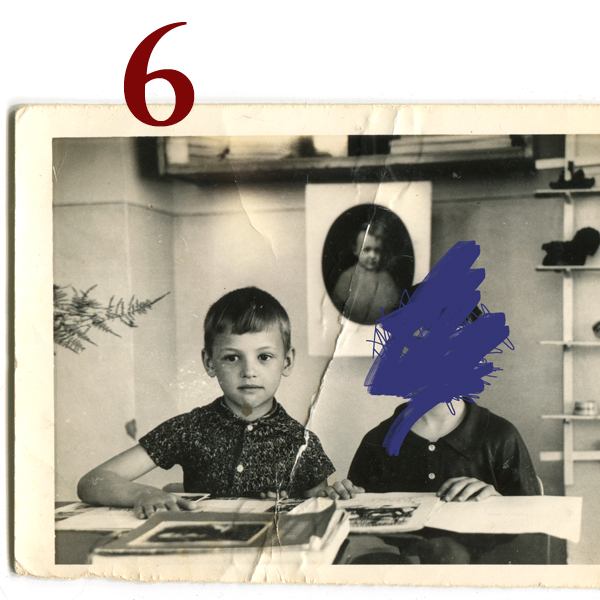
The physical print tells its own story.
My grandmother had a tendency to hold a grudge, so it was not too surprising to find among her things photos that had an individual literally cut out of the scene (or crossed out with ballpoint pen). Now there’s a story to be revealed! The same could be said for pictures that have been torn, damaged by flood or fire, or found tucked away in a book.
Sometimes getting to the story behind the photo is as fun—and constructive—as getting to the story that resides within it.
Step 3: Start sharing your stories.
Read more about how to use old family photos as biographical writing prompts—we’re talking nitty-gritty advice, from where to begin after looking at the photo to how to capture your memories.
Download the advice in a handy printer-friendly booklet here, entitled “How to Use Photographs as Prompts for Writing Life Stories.”
Explore more intense self-reflective writing prompts in Beth Kephart’s memoir writing workbook.
Once you’ve written your first life story vignette, consider doing something special with it—we’ve got five easy ideas.
Dawn Roode’s curated roundup for the week of Sept. 23, 2026, is overflowing with recent reads on memoir, life story writing, and family history preservation.