
Memories Matter
Featured blog Posts

READ THE LATEST POSTS

A coffee table book about quirky heirlooms? Yes, please!
Shana Novak photographed 100 personal keepsakes and shares the heartfelt stories behind each in her beautiful new coffee table book, “The Heirloomist.”
The latest addition to my own coffee table: this warm-and-fuzzy, beautifully photographed book from Shana Novak, The Heirloomist: 100 Treasures and the Stories They Tell (Chronicle Books, April 2024).
Back in 2016, when Modern Heirloom Books was yet a newborn baby, I was working on one of my first big projects—a retrospective of a family-owned film company that was celebrating 30 years in business. It was an in-depth undertaking, with multiple interviews with the founder and a series of interviews with a handful of other players in the company’s history. One of the most fun aspects of the initial research was first watching a bunch of their early footage, then getting to explore the basement archive of the physical media that held the original films. Having spanned three decades, their stash of films covered a whole landscape of moviemaking technology—formats included 35mm, 16mm, 2-inch video, 1-inch video, three-quarter-inch video, VHS, DV, DV-Cam, HDV, Beta, Beta SP, Digi-Beta, DVC-Pro, DVC-ProHD, XD-Cam, and on…and on. So, of course I wanted to photograph some of them for the book—a little visual timeline, if you will.
The photographer I tapped to capture these images was experienced in both editorial and commercial work, and we were connected through our tenure in national magazines—and her personal brand, The Heirloomist, was in many ways, like Modern Heirloom Books, a newborn business baby at the time. I adored her clean and creative approach to photographing things, but more so was drawn to her instinctive sense that she was photographing the stories behind the things. That’s what mattered to me, and it’s what mattered to her, too.

A spread from an heirloom book I created in 2016 celebrating the 30th anniversary of a family-run business—it shows an old film canister photographed by Shana Novak for the project. For this client, their films help tell their story, and the striking visuals help bring that story to vivid life.
I have been thrilled to watch from the sidelines as Shana Novak (aka The Heirloomist) has turned her love of quirky heirlooms and photography not only into a thriving business, but now, into a beautiful coffee table book from Chronicle! The Heirloomist: 100 Treasures and the Stories They Tell (Chronicle, April 2024), as you can no doubt tell from the subtitle, is a book after my own heart.
“The definition of heirloom, in my family, is clearly open to interpretation,” Shana writes in the book’s introduction (I won’t give away exactly what she is talking about—you’ll have to pick up a copy of the book for yourself).
And it’s that element of surprise that I love most about the book. Sure, there are what some might consider ‘traditional’ heirlooms within (think jewelry and baby shoes, for instance) but it’s the unexpected items—and the personal stories attached to them—that resonate with me.
“It’s garbage to anyone else but me,” one subject says about a fork—yes, a fork—that she treasures…with good reason, as the brief, vulnerable story accompanying the photograph of the fork attests. There are wonderfully touching, funny, and warm stories about heirlooms as idiosyncratic as a twenty-something-year-old Etch-a-Sketch (perhaps my favorite heirloom in the book) and a Styrofoam cup.
Memories are attached to these things, memories that those who hold onto the objects cherish—and through the majesty of her photography, Shana honors those memories in a most unique and lasting way.
Some of the treasures in The Heirloomist are expensive, and some are worth nothing from a monetary perspective. “But all are priceless, precisely because their stories will play your heartstrings like a symphony,” Shana writes. Indeed, they will.
For anyone who loves stories, I recommend this book.
For anyone who loves photography, I recommend this book.
And for anyone who might want some inspiration around telling the stories of your own family’s unique heirlooms, I highly recommend this book.
What (unique, unexpected) heirlooms are stashed in your family archive?
Note: This is an unsolicited review of a book I purchased at full price. I did not receive any compensation or free products in exchange, and any endorsements within this post are my own.

More Modern Heirloom inspiration: Heirlooms can be unexpected—such as the gorgeous glass doorknobs on this spread: “I was born into the bedroom with the glass doorknob and I didn’t leave it until I got married at age 23,” the subject remembers; she uses the object as a jumping-off point for stories from her life in that home (she even took the doorknob with her when the house was sold—a true heirloom). Read more about interesting graphics to consider adding to your family history book here.
















How to preserve the stories behind your family heirlooms
Whether your family heirloom collection consists of generations’ worth of antiques or a handful of sentimental items, catalog them for the next generation.
Photographing your family heirlooms is a first step in preserving their legacy. You can go as basic as snapping a few simple pictures with your phone’s camera or taking the time to style and properly light your heirlooms like I did with this image of my mother’s rosary beads.
So often a family history book has its genesis when a family decides to downsize. The kids are grown and have homes of their own—and they've yet to collect all the things that have been saved in boxes labeled MEMORIES. Going through those things inevitably sparks some pangs: What are we going to do with all this stuff? How can we part with ANY of this? Will the kids even remember what it all means?
The “stuff” holds stories, and it's often those stories we aim to uncover and preserve through personal history interviews—again, usually before donating or tossing much of the stuff…
Sometimes, though, the stuff matters as much as the stories. Just because you plan to hold onto the physical objects (fingers crossed subsequent generations will want to do the same) doesn't mean you shouldn't still capture their stories!
First step: Make an inventory of all the things you consider heirlooms. Next: Prioritize which ones hold the most meaning and begin to capture their history.
Just a few heirlooms?
>> Capture their stories, one heirloom at a time.
Whether you are writing a full-fledged family history or compiling just a few of your favorite personal stories, consider photographing the heirlooms that mean the most to you and writing about them.
Include each object's provenance:
Who owned it first, and who was it passed down to? Write the list in reverse-chronological order, and include years and locations (where the owner lived) whenever possible—these details are gold for any future family historians.
Where was it made/purchased?
Why does it hold meaning?
Do you personally have any special associations with the item (favorite memories, or stories you remember recounted by a grandparent, for instance)?
Lastly, even though you are including a photograph of the heirloom, write a brief description of the object: material (such as an oak cabinet), model (such as of a vintage pistol or a watch), size, etc. This is especially important if you are getting rid of the item or if it becomes separated from this history you are preparing.
Consider recording all of these details in a binder (one sheet per heirloom, stored in clear archival sleeves) or in a recipe box (one index card per heirloom, with a photo and name on the front and details on the back). Other options: Purchase an heirloom journal to capture all the history (I love this one from Hannah Bergen, who also has an heirloom provenance kit), or hire a personal historian to help you put it all in an heirloom book (reach out if interested!).
Loads and loads of artifacts?
>> Create a family heirloom catalog.
Maybe you are cataloguing generations' worth of heirlooms, or maybe you've got a treasure trove of vintage cabinet cards and other photographic heirlooms to make sense of. If you've got more than 20 heirlooms, consider creating a custom index of all of them.
In some ways, this type of project is as straightforward as the previous recommendation: You'll begin by photographing each heirloom (or digitizing your print photos, if you’re dealing with a family photo collection) and recording its provenance in writing. The subsequent steps, though, will elevate this catalog into a family history tool that will be an heirloom unto itself.
First, take your inventory and create categories for your heirlooms to fit into. These will be used to organize the structure of your catalog and to create a useful index for finding heirlooms in various ways, so be as intuitive and descriptive as possible (and know that some heirlooms may fit into multiple categories). Consider creating tags in various categories, such as:
Time period: Civil War Era, 19th Century, 18th Century, 1960s, etc.
Object type: Furniture, Jewelry, Household Object, Photograph, etc.
Owner(s): [names of specific family members who may have at one time had possession of this object]
Value: Sentimental, Financial, Historical
Second, assign tags from each category to every item in your collection. It may be helpful to use a spreadsheet to record all of this data (this is an especially relevant step when dealing with a large number of heirlooms, as you will be able to sort columns by categories or alphabetically—and therefore more easily generate an index).
Third, decide on the broadest categories to create your book architecture—these will be used as de facto chapter headings and will be reflected in your catalog's table of contents. You may want to present your heirlooms based on branches of your family tree, for example (so you may have broad headings of MATERNAL LINE and PATERNAL LINE, then family surnames used to designate chapters within each of those; or instead organize by type of heirlooms, so your chapter titles would derive from those subcategories (Photographs, Furniture, Jewelry, etc.). Choose what makes the most sense for your distinct collection.
Sound like a big undertaking? It is, but if you set parameters early and tackle a few heirlooms per week, it's a project you can complete in a year for even the largest family heirloom collections!
No heirlooms?
>> (I doubt it. Let’s see…)
It's a rare individual who hasn't held onto something of meaning from their childhood or ancestors. Chances are you just wouldn't think of calling those things ‘heirlooms.’
If you hear the word heirloom and think of a dignified mahogany clock or a great-grandmother's passed-down wedding ring, you're right on—that's an heirloom, and Merriam Webster would agree:
1 : a piece of property that descends to the heir as an inseparable part of an inheritance of real property.
But what about the second dictionary definition?
2 : something of special value handed down from one generation to another.
…and who's to say what holds value? You say, that's who. An heirloom in no way needs to be worth a lot of money! Consider these items that I certainly consider heirlooms:
the grease-stained recipe cards my mom saved (including a few of the ones with recipes clipped from old Better Homes & Gardens magazines)
my mom’s wooden spoon, which I use almost daily
my grandfather’s playing cards
my son’s tattered stuffed lion that holds more love and stories than almost any other item from his childhood.
What sentimental items come to mind for you? Once you've gone a nostalgic journey remembering the stories associated with those, consider recording their stories…and calling them heirlooms.


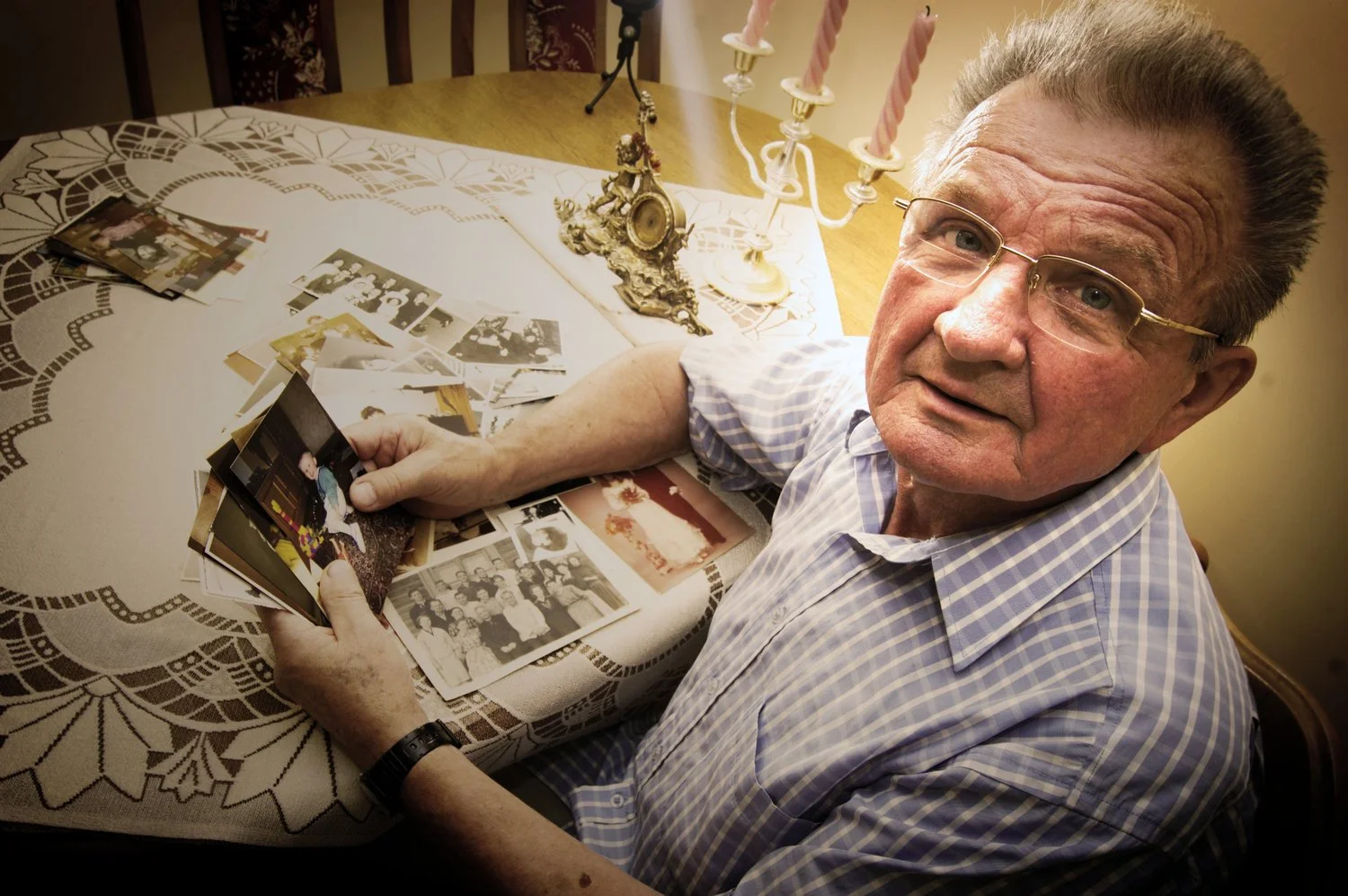





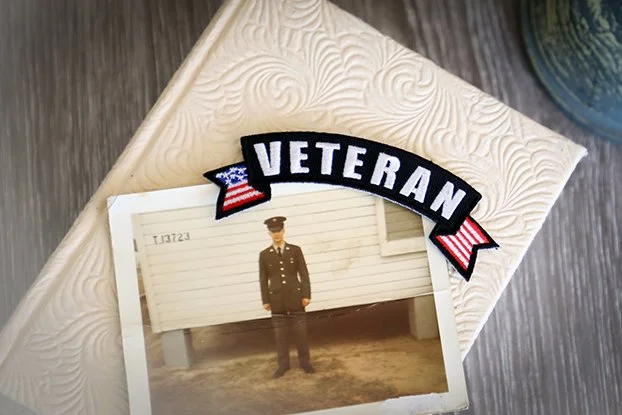








Why not make your own legacy list?
Whether you're downsizing or consciously sorting through your stuff, make a legacy list of items that hold memories—it's a cheat sheet to your family history.
A well-loved donut cutter has been passed through generations of my neighbor’s family—and best of all, they continue to use it and share stories of those who used it before them! An heirloom doesn’t have to be so precious that it sits in a box untouched; those we stitch into the fabric of our lives through regular use are often even more meaningful!
How making a “legacy list” can set stories—and guilt—free
Things can hold memories. But those same things—maybe even more so because they hold memories—can feel like a burden.
Rather than let the stuff of your past overwhelm you—with clutter, with guilt—let’s look at a few ways to take control of the things so you can focus on the stories associated with them.
Have you ever seen the PBS show Legacy List with Matt Paxton? I hadn’t until fairly recently, but I love it! TV promotions describe the series as exploring the hidden treasures within our homes: “As millions of Baby Boomers downsize their own homes or settle the estates of family members, they will discover the most important museum in the world is in their family home.” In each episode Paxton and his expert team of organizers and historians clean through one family’s home with the intent of uncovering the most special things within—what he calls a legacy list.
“A legacy list is really just a list of items that help you tell your family history,” Paxton says.
“Lose the stuff, keep the memories” is a mantra for many downsizers or minimalists, but you don’t have to be either of those things to want to get rid of at least some of your stuff. Consider it a courtesy for the next generation (I speak from experience when I say going through my mother’s things after she died was not an easy task). And think of it, too, as a way to ensure that the things that really matter get preserved, not discarded.
Make your own “legacy list.”
1 - Write your legacy list.
Start with a list of items you think you want to find. Watch the episode of Legacy List below for some inspiration, or think about the following questions to help you identify things that may hold meaning within your house:
Are there items associated with specific family members that help tell their story?
Are there certain items that were used by ancestors that are still functional?
Are there handmade items among your treasures?
Do you have handwritten recipes that have been passed down through generations?
What items, if any, hold historical value, or perhaps help tell the story of the region?
Some examples:
In the episode below, “Home on the Range,” the family matriarch treasures her mother’s early handwritten school notebooks, which symbolize her intelligence and the sacrifice she made of quitting school at the age of 13 to care for her siblings.
Things don’t need to be big or monumental to be imbued with meaning! I, for example, think of my mom every time I bake and use her small offset spatula; and I gave a friend who loves to knit my grandmother’s collection of knitting needles so they would continue to be used with love.
I adore my mother’s chimes, and rather than stow them away in a box, I consider them an everyday heirloom and smile every time I hear their song from my backyard. I also cherish the crocheted blankets she made for me when I was away at college, and the ring I inherited with her birthstone (which I wear often).
2 - Allow yourself to be surprised.
There will be things you “just know” are packed away that you can’t find, and others that you never knew existed. Remind yourself that it’s okay for some things to have gone missing; you can write down your memories associated with them so those are not lost, too, and even search for photos that might represent the items in a more concrete way.
3 - Go beyond finding the things on your legacy list—tell their stories, too.
When Paxton asks the family matriarch why she gets such a sense of comfort from her ancestors’ stuff, she says, “I guess it’s just all a part of me…. I think that if I let go of the stuff, the memories will fade, too.”
“I think that if I let go of the stuff, the memories will fade, too.”
Those memories will fade as time goes on, though, if they are not recorded in some permanent way. With each new generation, the experiences and firsthand memories become further removed.
So grab a pen (or hit “record” on a digital audio or video recorder) and tell those stories! Many pieces may need explanation (how was that plow yoke used? for instance). Some may have important documentation associated with them (a dated certificate of authenticity, for example). But mostly, strive for heartfelt stories (for a recipe—how the smell alone alerted you to the holiday and Poppy’s presence; for a photograph—when it was taken and what the context was…and why it holds a special place in your memory).
And take a lesson from the show: Interview members of every generation to hear about their memories and associations with the items on your family legacy list. As you’ll hear in this episode, even the grandchildren may surprise you with distinct and meaningful memories.
As Paxton reminds viewers, if an item is properly chronicled, it will be cherished forever.
Watch an episode from the recent season of Legacy List with Matt Paxton below, or browse all available episodes on PBS.
Dawn Roode’s curated roundup for the week of Sept. 23, 2026, is overflowing with recent reads on memoir, life story writing, and family history preservation.